W. Joseph Campbell

Posts Tagged ‘1968’

Reported, but unconfirmed: The columnist and the ‘Cronkite Moment’

In Cronkite Moment, Debunking, Media myths on September 2, 2010 at 9:40 am

Sometimes, media-driven myths are just too juicy and delicious to shun, even if the narrator is unsure about their veracity.

Such was the case with Cal Thomas’ syndicated column this week, which invokes the purported “Cronkite Moment” of 1968. That was when CBS anchorman Walter Cronkite’s on-air assessment about the Vietnam War supposedly led President Lyndon Johnson to realize the war effort was hopeless.

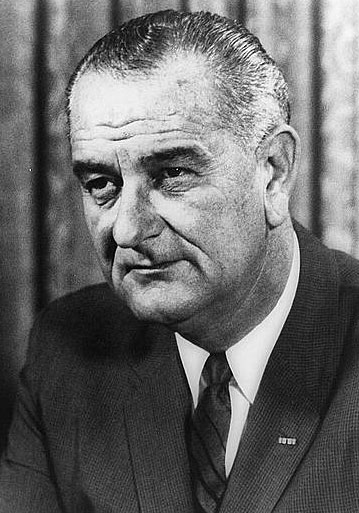
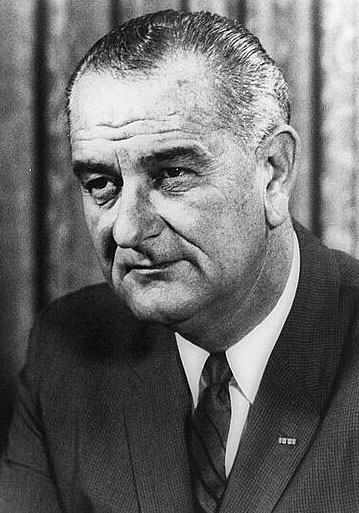
Johnson at the hour of the 'Cronkite Moment'

Thomas wrote in his column:

“President Obama may have experienced his Walter Cronkite moment over the economy.

“Responding to Cronkite’s reporting from Vietnam four decades ago that the only way to end the war was by negotiating with the North Vietnamese, President Lyndon Johnson was reported (though never confirmed) to have said, ‘If I’ve lost Cronkite, I’ve lost Middle America.’

“Now President Obama appears to have ‘lost’ New York Times liberal economic columnist Paul Krugman. …”

Whether Obama has indeed “lost” the columnist Krugman is unimportant here.

What is relevant, and striking, is Thomas’ sly use of a well-known but dubious anecdote, one introduced by the ambiguous phrase, “reported (though never confirmed).” Such a preface leaves one to wonder: Why invoke the anecdote at all?

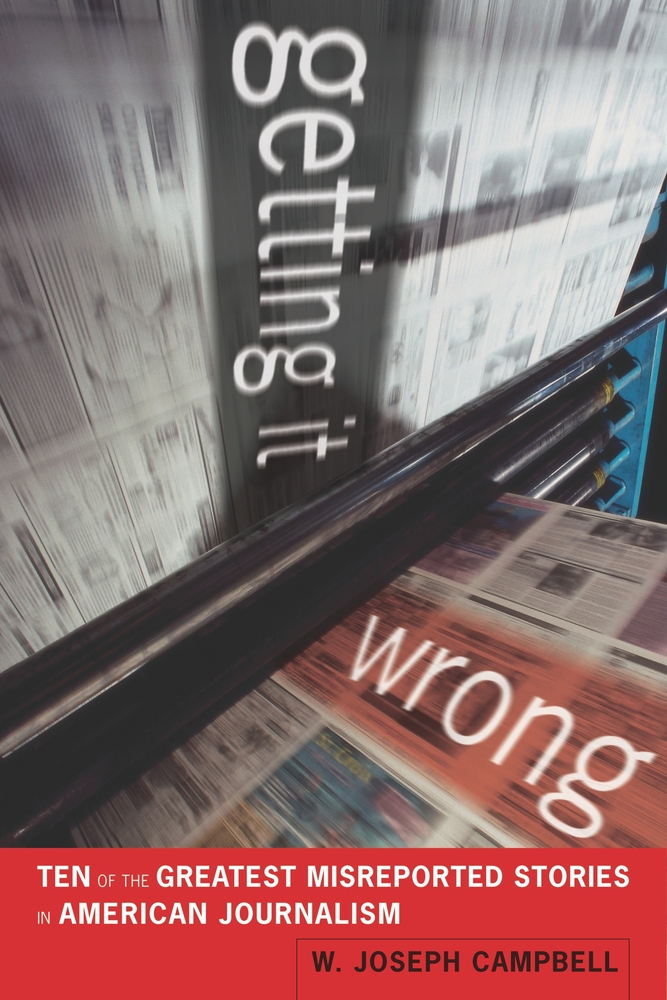
And there is ample good reason to avoid the anecdote of the “Cronkite Moment,” one of 10 prominent media myths addressed, and debunked, in my new book, Getting It Wrong.

For starters, President Johnson did not see Cronkite’s assessment about Vietnam, which aired the night of February 27, 1968.

As I point out in Getting It Wrong, Johnson at the time was in Austin, Texas, attending the 51st birthday party of a longtime political ally, Governor John Connally (see photo, above).

About the time Cronkite was wrapping up his report, asserting that the U.S. military was “mired in stalemate” in Vietnam, Johnson was offering light-hearted remarks about Connally’s age, saying:

“Today you are 51, John. That is the magic number that every man of politics prays for—a simple majority.”

Johnson said nothing about having “lost Cronkite.”

Moreover, there is no evidence Johnson watched Cronkite’s program on videotape.

As I write in Getting It Wrong:

“The power of the ‘Cronkite moment’ resides in the sudden, unexpected, and decisive effect it supposedly had on the president.

“Such an effect would have been absent, or greatly diminished, had Johnson had seen the program on videotape at some later date.”

It is interesting to note that Johnson struck a vigorously hawkish tone about Vietnam earlier in the day, telling an audience in Dallas:

“I do not believe that America will ever buckle” in pursuit of its objectives in Vietnam. “I believe that every American will answer now for his future and for his children’s future. I believe he will say, ‘I did not buckle when the going got tough.’”

The president also declared:

“Thousands of our courageous sons and millions of brave South Vietnamese have answered aggression’s onslaught and they have answered it with one strong and one united voice. ‘No retreat,’ they have said. Free men will never bow to force and abandon their future to tyranny. That must be our answer, too, here at home. Our answer here at home, in every home, must be: No retreat from the responsibilities of the hour of the day.”

I note in Getting It Wrong that the bravado of the president’s “no retreat” speech in Dallas is “hardly consistent with the crestfallen and resigned tenor of Johnson’s supposed reaction to the Cronkite program later that day.

“It is difficult indeed to imagine how the president’s mood could swing so abruptly, from vigorously defending the war to throwing up his hands in despair. But if the anecdote of the ‘Cronkite moment’ is to be believed, such a dramatic change in attitude is exactly what happened, within just hours of the hawkish speech in Dallas.”

The “Cronkite Moment” is a particularly delicious media myth, I’ll grant that. But as a framing device, as a way to set up a column or commentary, it’s  often not effective.

WJC

Related:

Mythical ‘Cronkite Moment’ invoked in ‘USA Today’

In Cronkite Moment, Debunking, Media myths, Year studies on August 21, 2010 at 10:08 am

In his column this week, Al Neuharth, founder of USA Today, invokes the dubious “Cronkite Moment” of 1968 and suggests an outspoken television journalist today could help end the U.S. military presence in Afghanistan.

Neuharth’s column refers to Walter Cronkite’s special report on Vietnam, which aired February 27, 1968. Near the end of the report, the CBS anchorman declared the U.S. war effort was “mired in stalemate.” Cronkite suggested that negotiations might represent a “rational” way out of Vietnam.

Neuharth then invokes the mythical component of the “Cronkite Moment,” writing that President Lyndon Johnson, upon hearing “the CBS shocker,” declared:

“If I’ve lost Cronkite, I’ve lost Middle America.”

As I write in Getting It Wrong, my new book debunking the “Cronkite Moment” and nine other prominent media-driven myths, Johnson did not see the Cronkite program when it aired. Nor is there evidence he watched the program later, on videotape.

Johnson on the night of the program was in Austin, Texas, at the 51st birthday party of Governor John Connally. About the time Cronkite was intoning his “mired in stalemate” assessment, Johnson was offering light-hearted remarks about Connally’s age.

Johnson at Connally's party

“Today you are 51, John,” the president said. “That is the magic number that every man of politics prays for—a simple majority. Throughout the years we have worked long and hard—and I might say late—trying to maintain it, too.”

Even if Johnson later saw the Cronkite program, he “gave no indication of having taken the anchorman’s message to heart,” I write in Getting It Wrong.

It represented no epiphany for him.

Indeed, in the days and weeks immediately following Cronkite’s program, Johnson’s rhetoric on the war remained hawkish. On March 18, 1968, for example, Johnson delivered a rousing speech in Minneapolis, in which he urged “a total national effort” to win the war in Vietnam.

He also declared in that speech:

“We love nothing more than peace, but we hate nothing worse than surrender and cowardice.”

Moreover, it’s clear that by early 1968, Cronkite’s “mired in stalemate” assessment about the war was unremarkable. Mark Kurlansky said as much in his well-received year-study about 1968.

Nearly seven months before Cronkite’s report on Vietnam, the New York Times published a front-page news analysis that said victory in southeast Asia “is not close at hand. It may be beyond reach.”

The Times analysis was published in August 1967 and carried the headline, “Vietnam: The Signs of Stalemate.”

And as I’ve noted at Media Myth Alert, former NBC newsman Frank McGee offered an analysis about Vietnam in March 1968 that was more forceful and direct Cronkite’s “mired in stalemate” characterization.

“The war,” McGee said on an NBC News program March 10, 1968, “is being lost by the [Johnson] administration’s definition.”

“Being lost,” McGee said: No hedging there.

But almost no one remembers Frank McGee’s blunt assessment.

I note in Getting It Wrong that the purported “Cronkite Moment” has become for many American journalists “an ideal, a standard that suggests both courage and influence in wartime reporting. It is an objective that contemporary practitioners at times seem desperate to recapture or recreate.”

Neuharth’s column makes  just that point, stating:

“The TV man—or woman—who suggests a ‘rational’ way out of Afghanistan could become today’s Cronkite.”

Not likely, not in today’s diverse and splintered media landscape in which audiences for network television have been in sustained decline.

In any case, it’s interesting to note that until late in his life, Cronkite disputed the notion that his 1968 report on Vietnam had much of an effect.

In his 1997 memoir, for example, Cronkite characterized his “mired in stalemate” assessment in decidedly modest terms, stating that it represented for Johnson “just one more straw in the increasing burden of Vietnam.”

He reiterated the “just one more straw” analogy in interviews promoting the book.

But by 2007, two years before his death, Cronkite had embraced the purported power of the “Cronkite Moment,” saying in an interview with the Gazette of Martha’s Vineyard:

“There are a lot of journalists out there today who if they chose to take that strong stand and course [in opposing the Iraq War] would probably enjoy a similar result.”

WJC

Related:

Country turned against Vietnam before ‘Cronkite Moment’

In Cronkite Moment, Debunking, Media myths, Year studies on August 12, 2010 at 6:33 am

Politico posted an item yesterday asserting that President Barack Obama “has lost the most trusted man in the Hispanic media”–the Univision anchorman, Jorge Ramos.

Ramos and Obama, in chummier times

Ramos, Politico said, “has been called the Walter Cronkite of Spanish-language media, an unparalleled nationwide voice for Hispanics. And just like the famed CBS newsman’s commentary helped turn the country against the Vietnam War, Ramos may be on the leading edge of a movement within the Hispanic media to challenge the president on immigration—a shift that some observers believe is contributing to Obama’s eroding poll numbers among Latino voters.”

There’s no doubt Obama’s poll numbers are sliding. But the Cronkite analogy is in error. And misleading.

Cronkite’s commentary–an on-air assessment in February 1968 that the U.S. military effort was “mired in stalemate”–did little to “turn the country against the Vietnam War.”

That’s because public opinion had been souring on Vietnam for months before Cronkite’s commentary aired on February 27, 1968.

As I write in Getting It Wrong, my new book debunking prominent media-driven myths, the Gallup Organization reported in October 1967 that a plurality of Americans (47 percent to 44 percent) said deploying U.S. troops to Vietnam had been a mistake.

A roughly similar response was reported in early February 1968, three weeks before Cronkite’s offered his “mired in stalemate” assessment.

Anecdotally, journalists also detected a softening in support for the war.

I point out in Getting It Wrong that Don Oberdorfer, then a national correspondent for the Knight newspapers, wrote in December 1967 “that the ‘summer and fall of 1967 [had] been a time of switching, when millions of American voters—along with many religious leaders, editorial writers and elected officials—appeared to be changing their views about the war.'”

More recently, Greg Mitchell, then editor of the trade journal Editor & Publisher, noted in 2005: “Those who claim that [the Cronkite program] created a seismic shift on the war overlook the fact that there was much opposition to the conflict already.”

By late February 1968, then, “Cronkite’s ‘mired in stalemate’ assessment was neither notable nor extraordinary,” I note in Getting It Wrong. I cite Mark Kurlansky’s year-study of the 1968 which said that Cronkite’s view was “hardly a radical position” for the time.

Indeed, just four days before Cronkite’s assessment, the Wall Street Journal declared in an editorial that the U.S. war effort in Vietnam “may be doomed” and that “everyone had better be prepared for the bitter taste of defeat beyond America’s power to prevent.”

So reservations and pessimism were abundant and growing by the time of Cronkite’s commentary (which nowadays is often referred to as the “Cronkite Moment”).

As Jack Gould, the New York Times’ television critic, noted in a column soon after the purported “Cronkite Moment,” the anchorman’s assessment about America’s predicament in Vietnam “did not contain striking revelations.”

WJC

Related:

The wide appeal of the bra-burning meme

In Bra-burning, Debunking, Media myths, Newspapers on August 10, 2010 at 11:34 am

I’ve written from time to time about the striking international appeal of media-driven myths, those dubious and improbable tales about the news media that masquerade as factual.

The Times newspaper in South Africa  underscored that appeal the other day in an interesting and amusing commentary titled, “From A to double D: a history of the bra.”

The commentary included a reference to bra-burning, stating:

At the 'Freedom Trash Can,' 1968

“One of the abiding symbols of the feminist movement is the burning of the bra. As a representation of liberation from the oppression of patriarchy, the alleged incineration of the intimate was meant to signify the death of male domination over women’s self-image. …

“In any case, most sources say the bra-burning never really happened.”

My research indicates otherwise, however.

As the commentary noted–and as I discuss in my new book about media-driven myths, Getting It Wrong–the bra-burning trope stems from the women’s liberation protest of the 1968 Miss America Pageant at Atlantic City.

As I write in Getting It Wrong:

“The demonstrators denounced the pageant as a ‘degrading Mindless-Boob-Girlie symbol’ that placed ‘women on a pedestal/auction block to compete for male approval,’ and promoted a ‘Madonna Whore image of womanhood.'”

They carried placards declaring: “Up Against the Wall, Miss America,” “Miss America Sells It,” and “Miss America Is a Big Falsie.”A centerpiece of the protest was a burn barrel, which the demonstrators dubbed the “Freedom Trash Can.” Into the “Freedom Trash Can” they tossed items and articles they said repressed and demeaned women–bras, girdles, high-heels, as well as copies of Cosmopolitan and Playboy magazines.

The protest’s organizers have long insisted that nothing was set ablaze that day at Atlantic City. The lead organizer, Robin Morgan, has asserted, for example:

“There were no bras burned. That’s a media myth.”

But in researching Getting It Wrong, I found a long-overlooked, contemporaneous account in the Press of Atlantic City that said “bras, girdles, falsies, curlers, and copies of popular women’s magazines burned in the ‘Freedom Trash Can.’”

The Press article was published September 8, 1968, a day after the protest, and appeared beneath the headline:

“Bra-burners blitz boardwalk.”

Its author, a veteran newspaperman named John Boucher, died in 1973.

As I note in Getting It Wrong, Boucher’s article “did not elaborate about the fire and the articles burning in the Freedom Trash Can, nor did it suggest the fire was all that important. Rather, the article conveyed a sense of astonishment that an event such as the women’s liberation protest could take place near the venue of the pageant.”

Separately, I tracked down and interviewed Jon Katz, who also had covered the Miss America protest for the Press.

Katz said in interviews with me that he recalled that bras and other items were set afire during the demonstration and that they burned briefly.

“I quite clearly remember the ‘Freedom Trash Can,’ and also remember some protestors putting their bras into it along with other articles of clothing, and some Pageant brochures, and setting the can on fire. I am quite certain of this,” Katz said.

The contemporaneous Press article and Katz’s recollections represent, I write, “evidence that bras and other items were set afire, if briefly, at the 1968 Miss America protest in Atlantic City.”

At very least, the accounts offer fresh dimension to the widely appealing legend of bra-burning.

WJC

Related:

<!–[if !mso]> They carried placards declaring: “Up Against the Wall, Miss America,” “Miss America Sells It,” “Miss America Is a Big Falsie,”[i] and “Miss America Goes Down.”


[i] Cited in Alice Echols, Daring to be Bad: Radical Feminism in America, 1967–1975 (Minneapolis: University of Minnesota Press, 1989), 96.

Long reach of the ‘Cronkite Moment’

In Cronkite Moment, Debunking on August 1, 2010 at 8:33 am

The long reach and international appeal of the mythical Cronkite Moment–when in 1968 the words of Walter Cronkite supposedly altered U.S. war policy in Vietnam–is reconfirmed by the anecdote’s appearance today in a Sri Lankan newspaper.

Johnson in Austin

I’ve periodically noted at MediaMythAlert how media-driven myths, those dubious and improbable tales about the American news media, often find application in contexts abroad. The Sri Lanka newspaper, the Nation, invoked the “Cronkite Moment” in a commentary about last week’s WikiLeaks disclosure of military documents about the war in Afghanistan.

The commentary stated:

“When anchor and newsman Walter Cronkite, called the most trusted man in America, reported from Vietnam in 1967 [sic] that the war cannot be won, JFK’s successor, President Lyndon Johnson famously remarked to an aide, ‘If I’ve lost Cronkite, I’ve lost America.’

“The WikiLeaks revelations may not have a similar effect on the war in Afghanistan,” the commentary adds, “but it would surely make the task of victory, or even honourable withdrawal, even more difficult for the United States and its coalition partners.”

The Nation commentary certainly is on target about the impact of the WikiLeaks disclosure: Its effect has been notably modest.

But, then, so was the impact of the “Cronkite Moment,” when the CBS anchorman asserted in a special report broadcast February 27, 1968, that the U.S. war effort was “mired in stalemate.”

As I note in Getting It Wrong, my new book debunking media-driven myths, Cronkite’s assessment about the U.S. predicament in Vietnam was scarcely original or exceptional in early 1968.

The New York Times’ television critic, Jack Gould, noted in a review of the Cronkite’s program that the anchorman’s assessment “did not contain striking revelations” but served instead “to underscore afresh the limitless difficulties lying ahead and the mounting problems attending United States involvement.”

The power of the “Cronkite Moment” flows from its purported effect on Lyndon Johnson who, as the Nation commentary says, supposedly watched the program and as it ended uttered something to the effect of: “If I’ve lost Cronkite, I’ve lost America.”

A more common version has Johnson saying, “If I’ve lost Cronkite, I’ve lost Middle America.” But the accounts of what the president said vary markedly.

In any case, Johnson did not see the Cronkite program when it aired. The president at the time was in Austin, Texas, making light-hearted comments at the 51st birthday party of Governor John Connally (see photo, above).

Moreover, I write in Getting It Wrong:

“Even if he later heard—or heard about— Cronkite’s assessment, it was no epiphany for Johnson. Not long after the program, Johnson gave a rousing, lectern-pounding speech in which he urged a ‘total national effort’ to win the war in Vietnam.”

Johnson’s change of heart on Vietnam, I note in Getting It Wrong, “came about through a complex process in which Cronkite’s views counted for little. Among the forces and factors that influenced Johnson’s thinking … was the counsel of an influential and informal coterie of outside advisers known as the ‘Wise Men.’

“They included such foreign policy notables as Dean Acheson, a former secretary of state; McGeorge Bundy, a former National security adviser to Kennedy and Johnson; George Ball, a former under-secretary of state; Douglas Dillon, a former treasury secretary; General Omar Bradley, a former chairman of the joint chiefs of staff, and Abe Fortas, a U.S. Supreme Court justice and friend of Johnson.

“The ‘Wise Men’ had met in November 1967, and expressed their near-unanimous support for Johnson’s Vietnam policy. They met again, at the request of the White House, in late March 1968.”

Largely, though not unanimously, the “Wise Men,” expressed opposition to escalating the war in Vietnam. And Johnson appeared shaken by the advice.

The counsel of the Wise Men represented a tipping point in Johnson’s deciding to seek“peace in Vietnam through negotiations. And in a speech March 31, 1968, the president announced a limited halt to U.S. aerial bombing of North Vietnam as an inducement to the communist government in Hanoi to enter peace talks.

He also announced then he would not seek reelection to the presidency.

WJC

Related:

WikiLeaks disclosure no ‘Cronkite Moment’

In Cronkite Moment, Debunking, Media myths on July 27, 2010 at 9:39 am

The WikiLeaks disclosure of thousands of secret military documents about the war in Afghanistan has been likened–erroneously–to the mythical “Cronkite Moment” of 1968, when CBS anchorman Walter Cronkite declared the U.S. war effort in Vietnam was “mired in stalemate.”

Cronkite

A commentary posted today at the Huffington Post is among the latest to make the dubious connection. The commentary said Cronkite’s “assessment of the war is often credited as the turning point for American public opinion, moving opposition to the U.S.’s involvement in Vietnam into the mainstream. Reportedly, upon hearing this commentary, President Lyndon Johnson said, ‘If I’ve lost Cronkite, I’ve lost middle America.’

“I can’t help wonder if the release of the Afghan War Logs by WikiLeaks is our Cronkite moment for Afghanistan. In fact, when I consider the totality of the recent news on our efforts in Afghanistan, I can’t reach any other conclusion than that if Cronkite was still alive, he would say we have.”

Given that the WikiLeaks documents contain little that was previously unknown about the conflict, disclosure is unlikely to amount to the “Cronkite moment for Afghanistan.”

More important, the “Cronkite Moment” wasn’t very decisive at all.

It really wasn’t much of a “moment.”

As I discuss in Getting It Wrong, my new book about media-driven myths, Cronkite himself disputed the notion that his assessment about Vietnam had had much effect on Johnson or on U.S. war policy. For example, in promoting his memoir in 1997, Cronkite likened his “mired in stalemate” commentary to a straw on the back of a crippled camel.

He repeated the analogy in 1999, stating in an interview with CNN: “I think our broadcast simply was another straw on the back of a crippled camel.”

Only late in his life did Cronkite embrace the presumptive power of the so-called “Cronkite Moment,” telling Esquire in 2006: “To be honest, I was rather amazed that my reporting from Vietnam had such an effect on history.”

As I further discuss in Getting It Wrong, President Johnson did not see Cronkite’s show when it aired February 27, 1968, and therefore “did not have–could not have had–the abrupt yet resigned reaction that so often has been attributed to him.”

At the time Cronkite intoned his “mired in stalemate” assessment, Johnson was in Austin, Texas, offering light-hearted remarks at the birthday party for Texas Governor John Connally, a longtime political ally.

“Today you are 51, John,” the president said. “That is the magic number that every man of politics prays for—a simple majority. Throughout the years we have worked long and hard—and I might say late—trying to maintain it, too.”

Even if Johnson later saw the Cronkite program on videotape, he “gave no indication of having taken the anchorman’s message to heart,” I write in Getting It Wrong.

Not long after Cronkite’s program, Johnson delivered a rousing speech in Minneapolis, in which he urged “a total national effort” to win the war in Vietnam. That speech was given March 18, 1968, and in it, the president declared:

“We love nothing more than peace, but we hate nothing worse than surrender and cowardice.”

Johnson’s aggressive remarks are quite difficult to square with his supposedly downcast, self-pitying reaction to the supposed “Cronkite Moment.”

Moreover, as I discussed yesterday at MediaMythAlert, public opinion polls show that Americans’ views about the war had begun to shift in 1967, months before the “Cronkite Moment.”

WJC

Related:

Mangling the ‘Cronkite Moment’

In Cronkite Moment, Debunking, Media myths, New York Times on July 26, 2010 at 6:38 pm

I’m amazed how international news media love to indulge in, and inevitably mangle, some of American journalism’s best-known media myths.

Cronkite in Vietnam, 1968

Take, for example, a post today at a blog sponsored by the the London Guardian newspaper.

The blog post invoked the so-called “Cronkite Moment” of February 27, 1968, when CBS anchorman Walter Cronkite’s report on the Vietnam War supposedly swung public opinion against the conflict.

The post read, in part:

“Cronkite, who died just recently, was America’s most authoritative TV newsman. In February 1968, when he told America after spending some time in Vietnam that the war wasn’t winnable, public support for the war went through the floor.”

Let’s unpack that.

First, Cronkite died not “recently,” but in July 2009.

Second, Cronkite did not say in his special report on Vietnam that the war “wasn’t winnable.” He said the U.S. war effort in Vietnam was “mired in stalemate” and suggested that negotiations with the communist North Vietnamese eventually might prove to be a way out for the United States.

Third, American public opinion did not go “through the floor” because of Cronkite’s on-air assessment.

Far from it.

Public opinion polls as well as anecdotal evidence indicate that Americans’ views about the war had begun to shift in 1967, months before the “Cronkite Moment.”

As I note in Getting It Wrong, my new book debunking prominent media-driven myths, by October 1967, a plurality of Americans (47 percent) maintained that sending U.S. forces to Vietnam had been a mistake, according to Gallup surveys.

In a Gallup poll completed in early February 1968, three weeks before the Cronkite program, the proportion saying entering the war was a mistake stood at 46 percent; 42 percent said it had not been a mistake.

Gallup asked the question again in a poll completed the day the Cronkite program aired, finding that 49 percent of the respondents said U.S. military intervention in Vietnam had been a mistake; 42 percent said it had not.

In April 1968, after Cronkite’s program, Gallup reported that 48 percent of Americans thought sending U.S. troops to Vietnam had been a mistake; 40 percent disagreed.

Moreover, as I write in Getting It Wrong:

“Journalists also had detected a softening in support of the war. In December 1967, for example, Don Oberdorfer, then a national correspondent for the Knight newspapers, noted that the ‘summer and fall of 1967 [had] been a time of switching, when millions of American voters—along with many religious leaders, editorial writers and elected officials—appeared to be changing their views about the war.'”

And I point out in Getting It Wrong that in early 1968, Cronkite’s “mired in stalemate” assessment was neither notable nor extraordinary.

“Leading American journalists and news organizations had … weighed in with pessimistic assessments about the war long before Cronkite’s special report on Vietnam,” I write, adding that Mark Kurlansky, in his year-study about the events of 1968, wrote that Cronkite’s view was “hardly a radical position” for the time.

Indeed, the Wall Street Journal said in an editorial four days before Cronkite’s special report that the U.S. war effort in Vietnam “may be doomed” and that “everyone had better be prepared for the bitter taste of defeat beyond America’s power to prevent.”

And nearly seven months before Cronkite’s “mired in stalemate” assessment, New York Times correspondent R.W. Apple Jr. had cited “disinterested observers” in reporting that the war in Vietnam “is not going well.”

Apple’s report appeared on the front page of the Times, beneath the headline:

“Vietnam: The Signs of Stalemate.”

WJC

Related:

‘Lyndon Johnson went berserk’? Not because of Cronkite

In Cronkite Moment, Debunking, Media myths, Year studies on July 21, 2010 at 1:13 pm

President Lyndon Johnson supposedly “went berserk” when he heard Walter Cronkite’s on-air assessment in 1968 that the U.S. war effort in Vietnam was “mired in stalemate.”

So claims Tom Hayden, the 1960s antiwar activist in a commentary posted yesterday at the online site of the Nation magazine.

Johnson, unberserk

Hayden’s commentary invoked what often is called the “Cronkite Moment” in saying:

“Cronkite went to Vietnam in April 1968 to survey the state of that war, just as [MSNBC’s Rachel] Maddow spent time in Afghanistan investigating the current reality. When Cronkite pronounced Vietnam as ‘mired in stalemate,’ it is said that Lyndon Johnson went berserk.”

It’s a striking way of describing the mythical “Cronkite Moment”: I’ve never before read that Johnson supposedly “went berserk” in response to Cronkite’s characterization.

In any case, Hayden’s descriptions of Cronkite’s program and Johnson’s reaction are in error.

The trip to which Hayden refers took place not in April 1968 but in February that year. Cronkite went to Vietnam then to gather material for a special report that aired on CBS on February 27, 1968.

Johnson, however, did not see the Cronkite program when it aired.

As I discuss in Getting It Wrong, my new book debunking the “Cronkite Moment” and nine other media-driven myths, Johnson was in Austin, Texas, at the time Cronkite intoned his “mired in stalemate” assessment.

Johnson wasn’t going “berserk” on that occasion. Rather, he was offering light-hearted remarks at the birthday party for Texas Governor John Connally, a longtime political ally.

“Today you are 51, John,” the president said. “That is the magic number that every man of politics prays for—a simple majority. Throughout the years we have worked long and hard—and I might say late—trying to maintain it, too.”

Even if Johnson later saw the Cronkite program on videotape, he “gave no indication of having taken the anchorman’s message to heart,” I write in Getting It Wrong. The show represented no epiphany for the president, no occasion for going “berserk.”

Not long after Cronkite’s program, Johnson delivered a rousing speech in Minneapolis, in which he urged “a total national effort” to win the war in Vietnam. That speech was given March 18, 1968, and in it, the president declared:

“We love nothing more than peace, but we hate nothing worse than surrender and cowardice.”

He criticized war critics as wanting the United States to “tuck our tail and violate our commitments.”

Johnson’s aggressive remarks are quite difficult to square with his supposedly downcast, self-pitying reaction to Cronkite’s assessment about Vietnam.

Moreover, Cronkite’s “mired in stalemate” assessment about Vietnam was an unremarkable characterization by early 1968. Mark Kurlansky said as much in his well-received year-study about 1968.

Indeed, nearly seven months before the “Cronkite Moment,” the New York Times published on its front page a news analysis that said victory in Vietnam “is not close at hand. It may be beyond reach.”

The Times analysis was published in August 1967 beneath the headline “Vietnam: The Signs of Stalemate.”

I’ve noted at Media Myth Alert that former NBC newsman Frank McGee in March 1968 offered an analysis about Vietnam that was more direct and punchier than Cronkite’s “mired in stalemate” characterization.

“The war,” McGee said on an NBC News program that aired March 10, 1968, “is being lost by the [Johnson] administration’s definition.”

No hedging there about the war effort being “mired in stalemate.”

Lost.

Related:

Considering the irresistible ‘Cronkite Moment’

In Cronkite Moment, Debunking, Media myths, Year studies on July 17, 2010 at 1:15 pm

Cronkite (Library of Congress)

Legendary CBS newsman Walter Cronkite died one year ago today. The myth that helps define his celebrated standing in American journalism is as robust and irresistible as ever.

The myth is that of the “Cronkite Moment” of February 27, 1968, when the anchorman’s on-air assessment of the war in Vietnam as “mired in stalemate” supposedly swung public opinion against the conflict, altered U.S. policy, and encouraged President Lyndon Johnson not to seek reelection.

All of which is exaggerated. All of which represents a serious misreading of history.

As I discuss in Getting It Wrong, my new book debunking prominent media-driven myths, public opinion had begun turning against the Vietnam War weeks and months before Cronkite’s special report in late February 1968.

By October 1967, a plurality of Americans–47 percent–said having sent U.S. forces to Vietnam was a mistake, according to Gallup surveys.

Moreover, Cronkite’s “mired in stalemate” assessment was, I write in Getting It Wrong, “neither notable nor extraordinary,” noting that author Mark Kurlansky in his year-study of 1968 described Cronkite’s critique as “hardly a radical position” for the time.

Indeed, nearly seven months before the “Cronkite moment,” the New York Times published on its front page as analysis that said victory in Vietnam “is not close at hand. It may be beyond reach.” The Times analysis was published in August 1967 beneath the headline:

“Vietnam: The Signs of Stalemate.”

Cronkite’s assessment in late February 1968 was much less assertive than the observations offered less than two weeks later by Frank McGee of the rival NBC network.

“The war,” McGee said on an NBC News program that aired March 10, 1968, “is being lost by the [Johnson] administration’s definition.”

In any case, Johnson wasn’t much moved by such assessments–if he saw them at all.

The crucial component of the “Cronkite Moment” is that Johnson watched the program at the White House and, after hearing Cronkite’s “mired in stalemate” characterization, snapped off the television set, telling an aide or aides:

“If I’ve lost Cronkite, I’ve lost Middle America.”

Or words to that effect.

That purported comment infuses the “Cronkite Moment” with power, decisiveness, and enduring appeal. The comment was reiterated just yesterday, for example, in a blog post at the New American online site, which claimed:

“When famed evening news broadcaster Walter Cronkite delivered an editorial expressing his opinion that the war in Vietnam was not winnable, Johnson is reported to have said, ‘If I’ve lost Cronkite, I’ve lost Middle America.'”

Johnson

But the anecdote’s defining and most delicious element is in error: Johnson did not see the Cronkite program when it aired. He was at the time in Austin, Texas, at the 51st birthday party of Governor John Connally. Thus Johnson could not have had “the abrupt yet resigned reaction that so often has been attributed to him,” I write in Getting It Wrong.

Moreover, there is no evidence that Johnson watched the Cronkite program later, on videotape.

Even if he had, the program represented no epiphany for Johnson. Indeed, not long after Cronkite’s report, the president gave a rousing speech in Minneapolis, in which he urged a “total national effort” to win the war in Vietnam.

That speech was delivered March 18, 1968, and in it, the president declared:

“We love nothing more than peace, but we hate nothing worse than surrender and cowardice.”

He criticized war critics as wanting the United States to “tuck our tail and violate our commitments.”

Johnson’s aggressive remarks are difficult to square with his supposedly downcast, self-pitying reaction to Cronkite’s assessment about Vietnam.

As for Johnson’s decision not to seek reelection, the “Cronkite moment” certainly was a non-factor. Johnson’s announcement came at the end of March 1968, a month after the Cronkite program–and a couple of weeks after the president’s poor showing as a write-in candidate in the Democratic primary in New Hampshire.

What’s more, there’s evidence Johnson never intended to seek reelection, that he had privately decided in 1967 against another campaign.

He said as much in his memoirs, writing that he had told Connally early in 1967 that he had “felt certain [he] would not run” for another term.

WJC

Related:

The expanding claims for the ‘Cronkite Moment’

In Cronkite Moment, Debunking, Media myths, Year studies on July 16, 2010 at 12:23 pm

Prominent media-driven myths tend to “ascribe power, significance, and sometimes great courage to the news media and their practitioners,” I write in my new book, Getting It Wrong.

That’s an important reason why media myths are so appealing to journalists, and so tenacious. They serve to identify a time when the news media were decisive forces in American life, told truth to power, and prompted change for the better.

As I write in Getting It Wrong, “media myths invite indulgence in the ‘golden age fallacy,’ the flawed but enticing belief that there really was a time when journalism and its practitioners were respected and inspiring.”

Few media myths illustrate the yearnings inherent in the golden age fallacy as well as the so-called “Cronkite Moment” of February 1968, when CBS newsman Walter Cronkite took to the air and declared the U.S. military was “mired in stalemate” in Vietnam.

Cronkite’s assessment supposedly prompted a reappraisal of U.S. policy in Vietnam, swung public opinion against the war, and helped Lyndon Johnson decide against seeking reelection to the presidency.

To that roster of presumed effects, the blog Firedoglake would add revelations that “our leaders had lied and our policy might fail” in Vietnam.

A writer at the blog made those claims yesterday, in a post asserting that the U.S. news media news media “are not providing enough in-depth coverage to foster an informed debate about war policy” in Afghanistan. During the Vietnam War, he wrote, the “news media didn’t focus deeply enough on the possibility that our leaders had lied and our policy might fail until Walter Cronkite said so on CBS.”

In reality, the prospects of failure in Vietnam had been discussed in the news media long before Cronkite’s program (which did not accuse U.S. military and political leaders of having lied about the war).

As I point out in Getting It Wrong, Cronkite’s “mired in stalemate” assessment was neither notable nor extraordinary in early 1968.

“Leading American journalists and news organizations had … weighed in with pessimistic assessments about the war long before Cronkite’s special report on Vietnam,” I note, adding that Mark Kurlansky, in his year-study about the events of 1968m wrote that Cronkite’s view was “hardly a radical position” for the time.

Moreover, the Wall Street Journal said in an editorial four days before the Cronkite program that the U.S. war effort in Vietnam “may be doomed” and that “everyone had better be prepared for the bitter taste of defeat beyond America’s power to prevent.”

And nearly seven months before Cronkite’s “mired in stalemate” assessment, New York Times correspondent R.W. Apple Jr. had cited “disinterested observers” in reporting that the war in Vietnam “is not going well.”

Victory, Apple wrote, “is not close at hand. It may be beyond reach.”

Apple’s downbeat analysis was published on the Times’ front page in August 1967, beneath the headline:

“Vietnam: The Signs of Stalemate.”

Several months before that, in late March 1967, the nationally syndicated columnists Rowland Evans and Robert Novak ruminated about “the frustrations of … a seemingly endless war [in Vietnam] that will not yield to the political mastery of Lyndon Johnson. Never before in his career as a political leader … has Mr. Johnson been so immobilized.”

So Cronkite’s editorial comments about Vietnam offered no startling insight, no fresh analysis.

As Jack Gould, the New York Times’ television critic, noted in his column at the time, Cronkite’s assessment about America’s predicament in Vietnam “did not contain striking revelations.” It served instead, Gould wrote, “to underscore afresh the limitless difficulties lying ahead and the mounting problems attending United States involvement.”

A reminder, it was: Not a revelation.

WJC

Related: