W. Joseph Campbell

Archive for the ‘1897’ Category

‘War means profits’? It didn’t for Hearst’s papers

In 1897, Debunking, Furnish the war, Media myths, Newspapers, Spanish-American War, Yellow Journalism on April 3, 2010 at 9:05 am

William Randolph Hearst’s purported vow to “furnish the war” with Spain in the late 1890s may be the anecdote most often told in American journalism.

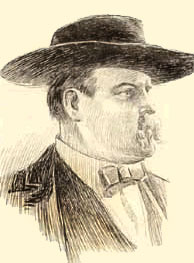
Hearst

It’s a woolly tale that’s been in circulation since 1901, and it lives on despite repeated and thorough debunking. It’s one of the ten media-driven myths examined in my forthcoming book, Getting It Wrong.

“Furnish the war” is so tenacious because it offers a tidy summary of the news media at their worst. And it’s a pithy quotation, easily digested and readily recalled.

The anecdote reemerged the other day, in a commentary posted at TheCitizen.com, an online news site of Fayette Publishing in Fayetteville, GA. The commentary stated:

“William Randolph Hearst in 1897 [told] the artist Frederic Remington: ‘You furnish the pictures and I’ll furnish the war.’ Think for a minute what that statement means. War means business, war means profits and war means death.”

Hearst’s purported message to Remington is almost certainly apocryphal–as is the notion that war meant profits for Hearst’s newspapers. In their intensive coverage of the four-month Spanish-American War of 1898, his papers lost money.

As I wrote in my 2001 book, Yellow Journalism: Puncturing the Myths, Defining the Legacies, the Spanish-American War generally boosted newspaper circulation. But advertising revenues fell, as advertisers feared the war would undercut the nascent recovery from the hard economic times of the 1890s.

In addition, newsprint costs soared, as did news-gathering expenditures.

The trade journal Fourth Estate estimated in 1899 that Hearst’s New York Journal had spent $50,000 a week—the equivalent these days of more than $1 million—on cable tolls, reporters’ salaries, and dispatch boats that ferried correspondents’ reports from the war’s principal theater in Cuba to Jamaica and elsewhere for transmission to New York.

Hearst's 'New York Evening Journal'

The Journal scoffed at claims that it helped foment the conflict in a cynical scheme to build circulation and boost profits.

“Would you like to know what effect the war had on the money-making feature of this particular newspaper? The wholesale price of paper was greatly increased. Advertising diminished, expenses increased enormously,” the Journal said, adding that its expenses related to covering the conflict exceeded $750,000—the equivalent these days of more than $20 million.

During the war, which lasted 114 days, the Journal‘s racy sister publication, the Evening Journal,  produced as many as forty extra editions a day–a late 19th century manifestation of what contemporary journalists would recognize as the unrelenting, 24-hour news cycle.
WJC

Recalling journalism’s ‘greatest escape narrative’

In 1897, Debunking, Yellow Journalism on February 17, 2010 at 12:06 am

That Canadian newspaper column I blogged about yesterday included erroneous and exaggerated references to one of the most brazen and spectacular moments in late 19th century journalism–the jailbreak in Havana organized by a reporter for William Randolph Hearst’s New York Journal.

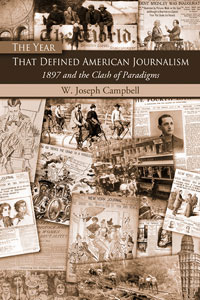
It was, I wrote in my 2006 book, The Year That Defined American Journalism: 1897 and the Clash of Paradigms, the “greatest escape narrative” in U.S. media history, “an episode unique in American journalism.”

Evangelina Cisneros

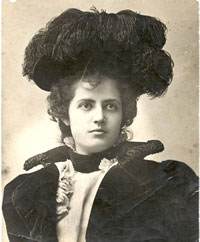
The central figure in the jailbreak was a 19-year-old political prisoner named Evangelina Cisneros, who had been held for more than a year without charges. She was suspected of plotting to kill a senior Spanish military officer who, she said, had made her the target of unwelcome sexual advances.

In late summer 1897, as Cuba’s guerrilla war against Spanish colonial rule wore on, Hearst sent a reporter named Karl Decker to Cuba, ostensibly as the Journal‘s correspondent in Havana.

In reality, Decker was under orders to organize the escape of Evangelina Cisneros.

With the quiet help of U.S. diplomatic personnel in Cuba, and with the vital support of a clandestine smuggling network in Havana, Decker succeeded in early October 1897 in breaking Cisneros out of jail.

She was hidden for nearly three days at the home of Carlos Carbonell, an American-educated Cuban banker whom she later married. Then, dressed as a boy, Cisneros was smuggled aboard the Seneca, a passenger steamer bound for New York City, where Hearst organized a thunderous welcome for her.

The column, published the other day in the Guardian newspaper of Charlottetown on Prince Edward Island, offers a grubbier and error-strewn account of the Cisneros case, saying:

“Evangelina was a beautiful, teenage virgin caught in the grasp of evil, dark-haired, poorly shaven, leering captors determined to do horrible things to her. She had to be rescued. At least, that was Hearst’s version of the story.

“He milked her plight for three weeks, until, with the help of a Hearst-funded rescuer, she sawed her way through the bars of her cell, climbed out on the ladder connecting it to an adjoining building, and crawled to freedom.

“Readers loved it. None of it was true, of course.

“A bribe had been paid so she could walk out, but that was the last thing Hearst wanted to see in a story. He wanted action.”

Hearst certainly was an advocate of activist journalism. In 1897, he advanced a model called the “journalism of action,” in which he argued newspapers should do more than gather and comment on the news. Rather, he claimed, newspapers had an obligation to inject themselves routinely and conspicuously to address the ills of society.

The Cisneros jailbreak was just such a case: For Hearst’s Journal, the leading exemplar of flamboyant “yellow journalism,” her rescue was “epochal,”  a “supreme achievement of the journalism of action.” (Illicit “jail-breaking journalism” was more like it, scoffed the Chicago Times-Herald.)

Decker

As for the claim that Cisneros sawed through the bars herself: Not so. Decker and his accomplices broke the bars of her cell, using a heavy Stillson wrench.

And as for the claim the rescue was a farce, that Decker paid bribes to win Cisneros’ release: The evidentiary record to support that claim is very, very thin.

As I wrote in The Year That Defined American Journalism:

“No one has identified to whom bribes were paid, how much, by what method, and how the purported payoffs secured the enduring silence of the authorities.

“A conspiracy of silence that included … Spanish authorities in Cuba would have been so extensive—so many people would have known—that concealment could not possibly have lasted for long, certainly not 100 years and more.”

I further wrote:

“The allegations or suspicions of bribery rest more on assertion—and newspaper rivals’ contempt for the Journal—than on specific, persuasive documentation. They are supported more by argument than evidence.”

The Cisneros jailbreak was not a hoax. It was, rather, the successful result of an intricate plot in which Cuba-based operatives and U.S. diplomatic personnel filled vital roles—roles that remained obscure for more than 100 years.

WJC

‘Newspapers must learn from their history’

In 1897, Debunking, Furnish the war, Media myths, Spanish-American War on February 16, 2010 at 8:03 am

So read the headline over a column the other day in a Canadian newspaper, the Guardian of Charlottetown, which says it covers Prince Edward Island “like the dew.”

“Newspapers must learn from their history.”

A fine sentiment, that.

As the Guardian headline suggests, many journalists tend to be ahistoric: They have but a dim understanding of journalism’s past.

It’s not entirely their fault, though: The task of finding lessons in journalism history is complicated because journalism history often is badly mangled, and distorted by myth.

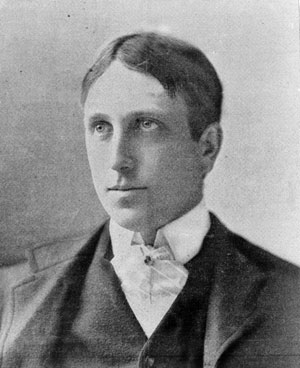
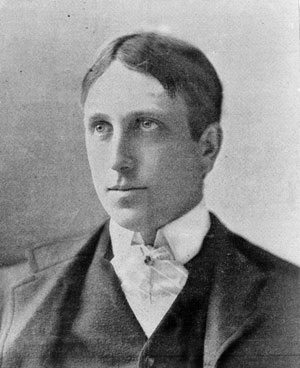
Young W.R. Hearst

The Guardian column offers a case in point: Despite its call to learn from the past, the column mangled an often-mangled moment in journalism history.

That is, it indulged in a hardy media-driven myth–the myth of the purported vow of New York newspaper publisher William Randolph Hearst to provide the war with Spain at the end of the 19th century.

Here’s what the Guardian column said:

“Hearst was embroiled in a newspaper war in New York City. He figured a war would do wonders for circulation. Cuba was run by the Spanish, and that didn’t seem right, so a war there seemed logical.

“Get down there and cover the war, he told his reporting staff. Those assigned to the story promptly booked passage on the next boat. Once there, however, they discovered they had a rather serious problem.

“Have arrived, but there doesn’t seem to be a war, they said in a cable.

“You provide the stories, I’ll provide the war, Hearst replied.”

So where to begin in unpacking this account?

As I write in Getting It Wrong, my forthcoming book about media-driven myths, the anecdote about Hearst’s vowing to bring about war with Spain is almost certainly apocryphal.

Here are some reasons why:

  • The telegram that supposedly contained Hearst’s vow has never turned up.
  • Hearst denied ever sending such a message.
  • Spanish censors in Cuba surely would have intercepted, and called attention to, such an inflammatory message, had it been sent.

And the anecdote lives on despite an irreconcilable internal inconsistency: It would have been absurd for Hearst to vow to furnish or provide the war because war—the Cuban rebellion against Spanish colonial rule—was the reason Hearst sent correspondents to Cuba in the first place.

In most retellings, the anecdote about Hearst’s vow revolves around the purported exchange of telegrams with the famous artist, Frederic Remington, whom Hearst sent to Cuba in early 1897. Paired with him on the assignment was the famous writer, Richard Harding Davis.

Remington and Davis were there at a time when anyone reading U.S. newspapers would have been well aware that Cuba was the theater of a nasty war. By then, Spain had sent nearly 200,000 soldiers in a failed attempt to put down the rebellion, which led in 1898 to the Spanish-American War.

Although the Guardian column suggested that Hearst blithely sought to foment a war as a ploy to boost readership (“a war would do wonders for circulation”), the causes of the conflict with Spain were of course far more profound and complex.

The Cubans who rebelled against Spanish rule were determined to win political independence, and would settle for nothing short of that.

The Spanish, for domestic economic and political reasons, would not grant Cuba its independence.

And the Americans could no longer tolerate the disruptions and human rights abuses created by Spain’s failed attempt to put down the Cuban rebellion.

That impasse became the formula for the U.S. war with Spain over Cuba in 1898.

It is quite likely the United States would have gone to war no matter what Hearst printed in his newspapers.

WJC

The murky derivation of ‘All the News That’s Fit to Print’

In 1897, Media myths, New York Times, Year studies on February 11, 2010 at 8:39 am

Prominent and famous though it is, the derivation of “All the News That’s Fit to Print,” the New York Times’ famous motto, is shrouded in a bit of media myth.

The version the Times advanced at its centenary in 1951, in a house newsletter called Times Talk, described the motto as “a hybrid.” Times Talk said Adolph Ochs, who acquired the then-beleaguered Times in 1896, borrowed a key portion of the slogan from the Philadelphia Times.

The Times Talk account was cited by Susan E. Tifft and Alex S. Jones in their prodigious study, The Trust: The Private and Powerful Family Behind The New York Times.

Supposedly, Ochs borrowed “All the News,” the motto of the Philadelphia Times, appended “That’s Fit to Print,” and thus concocted the most famous seven-word phrase in American journalism.

The account, however, is incorrect.

The Philadelphia Times never used “All the News” as its motto during the summer and fall of 1896, when Ochs acquired control of the Times and began using “All the News That’s Fit to Print” as a marketing and advertising slogan.

A thorough review of issues of the Philadelphia Times published in the summer and fall of 1896 showed that the newspaper carried a number of promotional statements, none of which was particularly pithy, or memorable.

As I wrote in my 2006 book, a year study titled The Year That Defined American Journalism: 1897 and the Clash of Paradigms, the nearest approximation to “All the News” was this rambling assertion, which appeared a few times beneath the front page nameplate of the Philadelphia Times:

“If You Want All the News of Every Description Attractively Presented You Will Read the Times.”

That clunky phrase appeared in the Philadelphia Times on August 4, 11, and 17, 1896. Ochs, according to Tifft and Jones, was installed as the New York Times publisher on August 18, 1896.

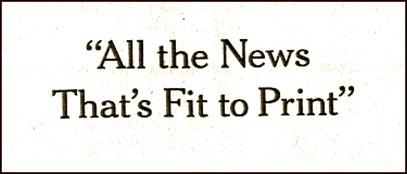
“All the News That’s Fit to Print” did not makes its début until early October 1896, spelled out in a row of red lights on an advertising sign above New York’s Madison Square.

Later that month, “All The News That’s Fit to Print” appeared in New York Times advertisements published in the trade journal Fourth Estate. By the end of October 1896, the phrase had taken a place in a corner of the Times’ editorial page.

And 113 years ago yesterday, on February 10, 1897, the Times moved the phrase without notice or fanfare to the upper left corner, the left “ear,” of its front page—a place of prominence that it has occupied ever since.

What prompted the motto’s move to the front page is not entirely clear. But the intent seems undeniable: To offer a rebuke to the bold, self-promoting yellow journalism of William Randolph Hearst and Joseph Pulitzer.

But it appears that “All the News That’s Fit to Print” was Ochs’ creation, as Harrison E. Salisbury maintained in Without Fear or Favor: The New York Times and Its Times, an impressive insider’s study of the Times. (Salisbury cited as his source an Ochs manuscript in the Times archives.)

By the way, I quote Salisbury’s Without Fear or Favor in Getting It Wrong, my forthcoming book about media-driven myths.

Without Fear or Favor was a useful source in the chapter in Getting It Wrong that addresses the myth surrounding the Times’ reporting in the run-up to the Bay of Pigs invasion in April 1961.

WJC

‘Yours neatly, sweetly, completely’: Revisiting the Times’ motto contest

In 1897, New York Times, Year studies, Yellow Journalism on February 10, 2010 at 12:06 am

How about this as the motto for the New York Times? “Clean, crisp, bright, snappy; read it daily and be happy.”

Or this? “Bright as a star and there you are.”

Or? “Pure in Purpose, Diligent in Service.”

Or? “You do not want what the New-York Times does not print.”

They were among thousands of entries submitted in a “motto contest” organized by the Times and its new owner, Adolph Ochs, in autumn 1896.

The contest ostensibly was to encourage readers to propose “a phrase more expressive of the Times’ policy” than “All the News That’s Fit to Print,” which Ochs had begun using as a marketing and advertising slogan in early October 1896. By the end of that month, the phrase had taken a modest place in a corner of the Times’ editorial page.

And on February 10, 1897–113 years ago today–“All the News That’s Fit to Print” appeared in the upper left corner, the “left ear,” of the Times’ front page, a place the motto has occupied ever since.

The 1896 motto contest was in reality a way to call attention to the Times in New York’s crowded newspaper market—one dominated by the yellow journalism of William Randolph Hearst and Joseph Pulitzer. Ochs had acquired the beleaguered Times in August 1896 and faced such rough going that Pulitzer’s New York World declared several months later:

“The shadow of death is settling slowly but surely down upon” the Times.

The motto contest, cheesy though it may seem today, stirred a fair amount of attention–and reader interaction–in 1896. The Times promised to pay $100 to the person who proposed in ten words or fewer a slogan deemed better than “All the News That’s Fit to Print,” which had first appeared in early October 1896, spelled out in a row of red lights on an advertising sign above New York’s Madison Square.

Among the entries sent to the Times were clunky such suggestions as: “All the News Worth Telling,” “All the News That Decent People Want,” and “The Fit News That’s Clean and True.”

Other were:

“Full of meat, clean and neat.”

“Instructive to all, offensive to none.”

“The people’s voice, good the choice.”

“Aseptic journalism up to date.”

“Yours neatly, sweetly, and completely.”

As I wrote in my 2006 book, a year study titled The Year That Defined American Journalism: 1897 and the Clash of Paradigms: “Before the contest ended, the Times altered the stakes by making clear it would not abandon ‘All the News That’s Fit to Print.’

“The Times justified this change of heart by saying no phrase entered in the contest was more apt and expressive than ‘All the News That’s Fit to Print.’ The $100 prize would be awarded, to the person adjudged to have submitted the best entry. But the motto would not be changed.”

Indeed, “All the News That’s Fit to Print” lives on as the most famous slogan in American journalism, the “leitmotif not merely for the Times, but also … for most other general-interest papers in the country,” a columnist for the Wall Street Journal once wrote.

The Times characterized its motto contest not as a grubby publicity stunt but as an opportunity for high-minded rumination about New York City newspapers. The contest, it said, had “set the people of this city to thinking upon the subject of newspaper decency in a more attentive and specific way than has been their custom.”

In any event, a committee of Times staffers winnowed the entries to 150 semi-finalists, which were submitted to Richard Watson Gilder, editor of The Century magazine. Gilder selected four finalists, which were:

  • Always decent; never dull.
  • The news of the day; not the rubbish.
  • A decent newspaper for decent people.
  • All the world’s news, but not a school for scandal.

As I wrote in The Year That Defined American Journalism, Gilder noted “that terms of the contest had changed from the original intent of selecting a slogan that ‘more aptly express the distinguishing characteristics of the New-York Times’ to the more theoretical task of determining which entry ‘would come nearest to it in aptness.’”

That entry, Gilder determined, was submitted by D.M. Redfield of New Haven, Connecticut. Redfield’s suggestion:

“All the world’s news, but not a school for scandal.”

Catchy.

WJC

The seven most famous words in American journalism

In 1897, New York Times on February 9, 2010 at 8:10 am

I’ve written that 1897 was a decisive year in American journalism.

The evocative sneer “yellow journalism” first appeared in print in 1897.

What became the best-known, most-reprinted editorial in American journalism, the New York Sun‘s “Is There A Santa Claus?,” was published in 1897.

William Randolph Hearst’s New York Journal developed its bold and interventionist model of “journalism of action” in 1897.

And the seven most famous words in American journalism, “All the News That’s Fit to Print,” took a permanent place on the front page of the New York Times in 1897.

The motto appeared without comment, notice, or fanfare in the upper-left corner, the left “ear,” of the Times front page 113 years ago tomorrow — February 10, 1897.

The smug and tidy slogan has occupied the spot ever since. As  I noted in my 2006 book, The Year That Defined American Journalism: 1897 and the Clash of Paradigms, the motto represents “an enduring statement of guiding principle of what has long been recognized as the best newspaper in America.”

I also noted that the Times motto has been endlessly parodied and analyzed. Even admirers of the newspaper have acknowledged it’s a bit “overweening” and “elliptical.”

The motto has evoked lofty claims over the years. The Times in 1901, at the fiftieth anniversary of its founding, referred to “All the News That’s Fit to Print” as its “covenant.”

An historian of the Times, Elmer Davis, said the motto had served as “a war cry.”

In 2001, a columnist for the Wall Street Journal described the motto as the “leitmotif not merely for the Times, but also, by a process of osmosis and emulation, for most other general-interest papers in the country, as well as for much of the broadcast media.”

It was also, I wrote in The Year That Defined American Journalism, “a pithy summation of the Times’ … vision for American journalism,” a model of detachment in newsgathering “that stood in apposition to the extravagance and self-promotion” of Hearst’s “journalism of action.”

Indeed, “All the News That’s Fit to Print” is a timeless rebuke to the practices of Hearst and, to an extent, of Joseph Pulitzer — aggressive and flamboyant techniques that critics scorned as “yellow journalism.”

Interestingly, “All the News That’s Fit to Print” was at first a feature of a marketing campaign by the Times which, in August 1896, had been acquired in bankruptcy court by Adolph S. Ochs, a newspaperman from Tennessee. “All The News That’s Fit to Print” appeared in advertisements in the trade journal Fourth Estate in mid-October 1896. By month’s end, the phrase had taken a modest place in a corner of the Times’ editorial page.

The seven most famous words in American journalism made their debut in early October 1896, in a row of red lights arrayed across a huge advertising sign above Manhattan’s Madison Square. The illuminated sign was on the north wall of the old Cumberland Hotel building at Broadway and 22d Street.

Ochs, who turned 39 in 1897, had a bit of a flair for self-promotion, as the illuminated sign at Madison Square suggested. Securing the space “was nothing less than a coup” for the newcomer to New York journalism, I wrote in The Year That Defined American Journalism.

“The sign’s bright, multi-colored lights could be seen for many blocks away. Nowhere in the country, or in Europe, the Times immodestly crowed, was there ‘so large and perfect a display.'”

It was illuminated by four rows of lights. White lights of the top and bottom rows spelled, “New-York Times” and “Have You Seen It?” A row of blue, white, and green lights spelled out “Sunday Magazine Supplement.” The red lights, which formed the second row of illumination, announced:

“All the News That’s Fit to Print.”

WJC

in mid-October 1896 and by month’s end had taken a place in the upper-left corner of the newspaper’s editorial page.

More than merely sensational

In 1897, Media myths, Yellow Journalism on February 1, 2010 at 8:36 am

Yellow journalism” lives on in as ready shorthand for sensationalism, for reckless and lurid treatment of the news.

“Yellow journalism” is a delicious and versatile sneer, a term that first appeared in print in late January 1897 and routinely invoked in the decades since to describe egregious journalistic misconduct of almost any kind.

But such casual, shorthand characterizations are not very accurate.

Young W.R. Hearst

They fail to capture or reflect the complexity and vigor of yellow journalism, the leading practitioners of which were the newspapers of William Randolph Hearst and, to a lesser extent, those of Joseph Pulitzer.

Yellow journalism was flamboyant and aggressive, to be sure. Especially so was Hearst’s New York Journal. But to equate “yellow journalism” simply to sensationalism is to misunderstand what a dynamic phenomenon it was.

As I wrote my 2001 book, Yellow Journalism: Puncturing the Myths, Defining the Legacies, “in its most developed and intense form, yellow journalism was characterized by” these features:

  • the frequent use of multicolumn headlines that sometimes stretched across the front page.
  • a variety of topics reported on the front page, including news of politics, war, international diplomacy, sports, and society.
  • the generous and imaginative use of illustrations, including photographs and other graphic representations such as locator maps.
  • bold and experimental layouts, including those in which one report and illustration would dominate the front page. Such layouts sometimes were enhanced by the use of color.
  • a tendency to rely on anonymous sources, particularly in dispatches of leading reporters.
  • a penchant for self-promotion, to call attention eagerly to the paper’s accomplishments. This tendency was notably evident in crusades against monopolies and municipal corruption.

As defined above and as practiced more than a century ago, yellow journalism, I wrote in the book, “certainly could not be called predictable, boring, or uninspired”—complaints of the sort often raised about contemporary American newspapers.

Moreover, yellow journalism “was a product of a lusty, fiercely competitive, and intolerant time, when newspapers routinely traded brickbats and insults,” I wrote.

“The latter practice was remarkably well-developed at the end of the nineteenth century. The Journal and [Pulitzer’s] World, for example, were ever eager to impugn, denounce, and sneer at each other; so, too, were conservative newspapers.”

More generally, “yellow journalism reflected the brashness and the hurried pace of urban America at the turn of the twentieth century,” I wrote.

“It was a lively, provocative, swaggering style of journalism well suited to an innovative and expansive time—a period when the United States first projected its military power beyond the Western Hemisphere in a sustained manner. The recognition was widespread at the end of the nineteenth century that the country was on the cusp of rapid, perhaps even disruptive transformation.”

Yellow journalism, moreover, “was a genre keen to adapt and eager to experiment.” It took risks; it shook up and even shocked the field.

Were that mainstream news media of the 21st century so inclined.

WJC

Yellow journalism: A sneer is born

In 1897, Anniversaries, Spanish-American War, Yellow Journalism on January 31, 2010 at 9:30 am

Erwin Wardman, New York Press

It’s a little-recognized, never-celebrated anniversary in American journalism, granted.

But today marks the 113th year since the term “yellow journalism” first appeared in print, in the New York Press, edited by the austere Ervin Wardman.

The phrase “the Yellow Journalism” appeared in a small headline on the Press’ editorial page on January 31, 1897. The phrase also appeared that day in the Press’ editorial page gossip column, “On the Tip of the Tongue.”

“Yellow journalism” caught on quickly, as a way to denigrate what then was called the “new journalism” of William Randolph Hearst’s New York Journal and of Joseph Pulitzer‘s New York World.  By the end of March 1897, references to “yellow journalism” had appeared in newspapers in Providence, Richmond, and San Francisco.

In the decades since then, “yellow journalism” has become a widely popular sneer, a derisive shorthand for denouncing sensationalism and journalistic misconduct of all kinds, real and imagined. “It is,” as I noted in my 2001 book Yellow Journalism: Puncturing the Myths, Defining the Legacies, “an evocative term that has been diffused internationally, in contexts as diverse as Greece and Nigeria, as Israel and India.”

Precisely how Wardman and the Press landed on the phrase “yellow journalism” is not clear.

The newspaper’s own, brief discussion of the origins was vague and unrevealing: “We called them Yellow because they are Yellow,” it said in 1898 about the Journal and the World.

In the 1890s, the color yellow sometimes was associated with depraved literature, which may have been an inspiration to the Harvard-educated Wardman, a figure largely lost to New York newspaper history.

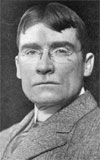
Wardman was tall and stern-looking. He once was described as showing his “Calvinistic ancestry in every line of his face.” He did little to conceal his disdain for Hearst and Hearst’s journalism.

His contempt was readily apparent in the columns of the Press, of which Wardman became editor in chief in 1896 at the age of 31. (The Press is long defunct; it is not to be confused with the contemporary alternative weekly by the same name.)

Wardman’s Press took to taunting Hearst, Hearst’s mother, and Hearst’s support for Democratic candidate William Jennings Bryan in the 1896 presidential election. Hearst’s Journal was virtually alone among New York newspapers in supporting Bryan’s “free silver” candidacy.

The Press disparaged Hearst, then 34, as a mama’s boy, as “Billy” and “little Willie.” It referred to the Journal as “our silverite, or silver-wrong, contemporary.”

The Press also experimented with pithy if stilted turns of phrase to denounce “new journalism.”

“The ‘new journalism,’” the Press said in early January 1897 “continues to think up a varied assortment of new lies.”

Later in the month, the Press asked in a single-line editorial comment:

“Why not call it nude journalism?”

It clearly was a play on “new journalism” and meant to suggest the absence of “even the veneer of decency.”

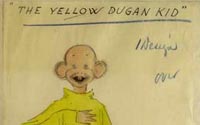
Before long, Wardman and the Press seized upon the phrase “yellow-kid journalism,” which evoked the Hearst-Pulitzer rivalry over a popular cartoon character known as the “Yellow Kid.” Both the Journal and the World at the time were publishing versions of the kid.

The Yellow Kid (Library of Congress)

At the end of January 1897, the phrase “yellow-kid journalism” was modified  to “the Yellow Journalism,” and the sneer was born.

After landing on that sneering pejorative, Wardman turned to it often, invoking the term in brief editorial comments and asides such as: “The Yellow Journalism is now so overripe that the little insects which light upon it quickly turn yellow, too.”

The diffusion of “yellow journalism” was sealed when Hearst’s Journal embraced the term in mid-May 1898, during the Spanish-American War. With typical immodesty, it declared:

“… the sun in heaven is yellow—the sun which is to this earth what the Journal is to American journalism.”

WJC

New Pulitzer biography: An opportunity missed

In 1897, Media myths, Yellow Journalism on January 25, 2010 at 1:35 pm

I recently completed a review of Pulitzer: A Life in Politics, Print, & Power, a forthcoming biography of Joseph Pulitzer, who is routinely—but undeservedly—regarded as an iconic figure in American journalism.

Pulitzer (Library of Congress)

The new biography, by James McGrath Morris, indulges in the cliché of Pulitzer the great innovator. The author calls him the “midwife to the birth of the modern mass media.”

My review, written for the peer-reviewed quarterly journal American Journalism, notes that the book contains ample material for what could have been a long-overdue reinterpretation of Pulitzer, one that would take him down several pegs.

“All the elements are there,” I write, “to depict Pulitzer not as innovator but as a cruel, ruthless, self-absorbed newspaper owner who became a millionaire championing the cause of the dispossessed while eager to rub elbows with the moneyed classes.”

Pulitzer was a hypocrite and an absentee publisher. But the opportunity for a much-needed reinterpretation was missed.

Pulitzer’s correspondence, which Morris tapped extensively, certainly encourages revisionist treatment. As I noted in my 2006 book, The Year That Defined American Journalism:

“Pulitzer’s mean-spirited letters to senior managers do little to support the reputation historians have accorded him, that of a heroic and innovative journalistic icon.”

The new biography also indulges in a media myth in describing William Randolph Hearst, Pulitzer’s rival in New York City journalism in mid- and late 1890s, as an imitator of Pulitzer’s flagship newspaper, the New York World.

It’s quite conventional to make such a claim.

And misleading, too.

Hearst’s significant model was a British journalist named William T. Stead, who in the mid-1880s offered a vision of “government by journalism.” Stead argued that the journalist was “the ultimate depository of power in modern democracy.”

Hearst clearly borrowed from Stead in developing his model of the “journalism of action,” which sought to do much more than gathering, printing, and commenting on the news. As Hearst’s New York Journal put it in 1897, the “journalism of action” obliged a newspaper to inject itself conspicuously and often into public life, to “fitly render any public service within its power.”

It was a breathtaking model of activism that went well beyond the stunt journalism of Pulitzer’s World.

Oddly, the new biography fails to acknowledge Pulitzer’s nod to Hearst’s success with the Journal.

As infirm and disagreeable as Pulitzer had become by 1897, he was not without moments of keen insight. In a letter late that year to his business manager, Pulitzer invoked “Geranium,” his code name for Hearst’s Journal, and declared:

“I personally think Geranium a wonderfully able & attractive and popular paper, perhaps the ablest in the one vital sense, of managing to be talked about; of attracting attention; of constantly furnishing something which will compel people wherever they meet, whether in the drawing room, or in the poor house, elevated car or dinner table, to talk about something in that paper. That is the sort of brains the World needs. Pardon me for saying also, that with all its faults, which I should not like to copy—though they have been exaggerated—it is a newspaper.”

WJC

‘Furnish the war,’ en espagnol

In 1897, Debunking, Furnish the war, Spanish-American War on December 30, 2009 at 11:54 am

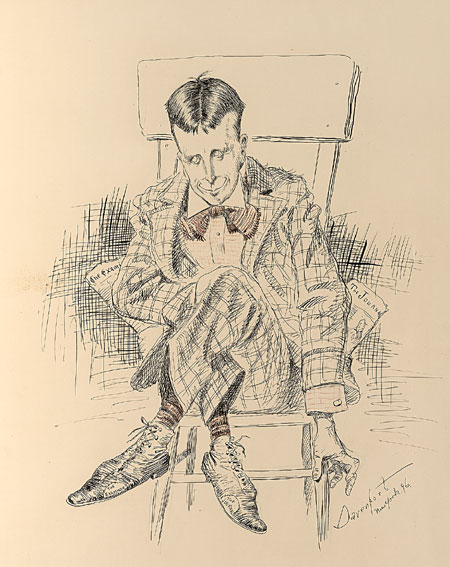
Hearst, under the pen of Homer Davenport, 1896

William Randolph Hearst’s purported vow to “furnish the war” with Spain is such a delicious and tenacious media-driven myth that it’s hardly surprising it has crossed over to other languages.

Spanish among them.

Just the other day, the online publication elmercuriodigital.es posted a commentary that invoked the Hearst quote. It read in part:

“El dibujante, Frederic Remington, telegrafió a su jefe pidiéndole autorización para regresar, pues no había ninguna guerra, y por lo tanto no había nada para cubrir. ‘Todo en calma. No habrá guerra’, dijo Remington. La respuesta del empresario periodístico fue célebre: ‘Le ruego que se quede. Proporcione ilustraciones, yo proporcionaré la guerra’.”

The passage recounts the essential portion of the anecdote, that the artist Frederic Remington, on assignment to Cuba for Hearst’s New York Journal, supposedly found “everything … quiet” and, in a cable to Hearst, asked permission to return.

In reply, as the myth has it, Hearst told Remington: “Please remain. You furnish the pictures, and I’ll furnish the war.”

As I write in my forthcoming book, Getting It Wrong:

“Hearst’s famous vow to ‘furnish the war’ has achieved unique status as an adaptable, hardy, all-purpose anecdote, useful in illustrating any number of media sins and shortcomings. It has been invoked to illustrate the media’s willingness to compromise impartiality, promote political agendas, and indulge in sensationalism. It has been used, more broadly, to suggest the media’s capacity to inject malign influence into international affairs.”

It lives on, I further write, “despite a nearly complete absence of supporting documentation.

“It lives on even though telegrams supposedly exchanged by Remington and Hearst have never turned up. It lives on even though Hearst denied ever sending such a message.”

And it lives on despite an irreconcilable internal inconsistency. Hearst had assigned Remington and the correspondent Richard Harding Davis to Cuba at the end of 1896. After several delays, they arrived in January 1897 — 15 months before the start of the Spanish-American War.

Anyone reading U.S. newspapers in early 1897 would have been well aware that Cuba was the theater of a nasty war, a rebellion against Spain’s armed forces which, by the time Remington and Davis arrived, had reached island-wide proportion.

So it would have been incongruous and inconceivable for Hearst to have vowed to “furnish the war” when war was the very reason he sent Remington and Davis to Cuba in the first place.

WJC

<!–[if !mso]> <! st1\:*{behavior:url(#ieooui) } –>

“Please remain. You furnish the pictures, and I’ll furnish the war.”[i]


[i] See Creelman, On the Great Highway, 177–178.