W. Joseph Campbell

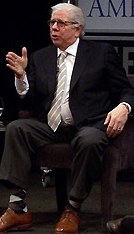
Carl Bernstein, at it again

In Debunking, Washington Post, Watergate myth on October 1, 2011 at 11:25 am

Carl Bernstein, he of Watergate fame, was in London the other day, waxing indignant about the phone-hacking scandal that shook Rupert Murdoch’s media operations in Britain over the summer and forced the closure of the raunchy News of the World tabloid.

Mentions reporters' ethical lapses

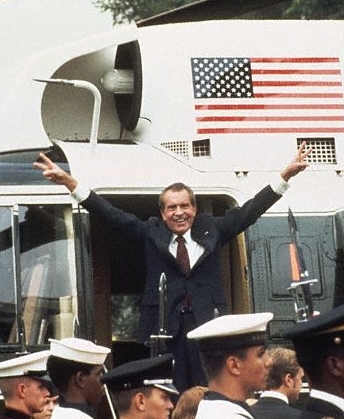
As he has in the past, Bernstein conveniently avoided reference to his own suspect conduct as a Washington Post reporter covering Watergate, the scandal that brought down Richard Nixon’s corrupt presidency in 1974.

Bernstein, who comes across as something of a sanctimonious windbag, sounded aghast in London, telling a panel convened by the Guardian newspaper that he was stunned by the notion of “criminals working for a newspaper, being a substitute for reporters” at the News of the World.

“Gathering news through criminal acts — it’s absolutely stunning,” Bernstein declared.

Bernstein, though, is an odd, curious choice to criticize such conduct, given his own ethical lapses in reporting Watergate.

It’s not often recalled these days, but Bernstein and his Washington Post colleague, Bob Woodward, sought out federal grand jurors in December 1972, inviting them to break their oaths of secrecy and discuss Watergate-related testimony that they had heard.

The reporters were that desperate for leads in what was a slowly unfolding scandal.

The private entreaties to grand jurors nearly landed Bernstein and Woodward in jail for contempt.

As recounted in All the President’s Men, Bernstein and Woodward’s book about their Watergate reporting, none of the grand jurors was cooperative and the overtures soon were made known to John J. Sirica, chief judge of U.S. District Court in the District of Columbia.

The judge was livid.

According to All the President’s Men, Edward Bennett Williams, the Post’s  lawyer and well-known Washington insider, went to lengths to persuade Sirica — known as “Maximum John” for the severe sentences he often imposed — not to punish Bernstein and Woodward.

“John Sirica is some kind of pissed at you fellas,” Williams was quoted as saying in the book. “We had to do a lot of convincing to keep your asses out of jail.”

The reporters wrote in All the President’s Men, which came out in 1974 just as Watergate was nearing its climax, that in seeking out grand jurors, they “had chosen expediency over principle and, caught in the act, their role had been covered up.” That is, they managed to dodge media scrutiny of their misconduct.

All the President’s Men also described how Bernstein sought, and obtained, information from private telephone records of Bernard Barker, one of the men who in June 1972 broke into headquarters of the Democratic National Committee, the signal crime of Watergate.

Seeking Barker’s records was another case of choosing “expediency over principle” — not to mention a bit of phone-hacking, 1970s style.

WJC

Recent and related:

A ‘certain American paper brought down a certain president’

In Debunking, Media myths, Newspapers, Washington Post, Watergate myth on September 29, 2011 at 4:14 am

It’s impressive how strictly American media myths can win such eager embrace in international contexts.

A certain American president leaves office

The heroic-journalist myth of Watergate is a telling example.

India’s leading English-language newspaper, the Hindu, invoked that myth the other day in a commentary that declared:

“More than 30 years ago, a certain American newspaper brought down a certain president by courageously exposing his wrongdoings entirely on the strength of information supplied by an anonymous source. It was not until some quarter of a century later that the real identity of Washington Post’s source for its expose of the Watergate scandal was revealed.”

Alright, let’s unbundle that myth-freighted paragraph:

  • Richard Nixon’s corrupt presidency was not brought down by the Washington Post, or by any other American newspaper — a topic I discuss in my media mythbusting book, Getting It Wrong.
  • Nixon’s fall in 1974 had nothing to do with “information supplied by an anonymous source” — a reference to the Post’s stealthy, high-level contact code-named “Deep Throat.” In 2005, a former senior FBI official named W. Mark Felt announced that he had been the Post’s Deep Throat.”

I note in Getting It Wrong that the heroic-journalist interpretation of Watergate — “the endlessly appealing notion that the dogged reporting of two young, hungry, and tireless Washington Post journalists, Bob Woodward and Carl Bernstein, brought down Nixon and his corrupt presidency” — has become the dominant narrative of the greatest scandal in American political history.

“But to explain Watergate through the lens of the heroic-journalist is,” I write, “to abridge and misunderstand the scandal and to indulge in a particularly beguiling media-driven myth.”

I point out that the heroic-journalist trope “minimizes the far more decisive forces that unraveled the scandal and forced Nixon from office.”

Those forces, I write, included “the collective if not always the coordinated forces of special prosecutors, federal judges, both houses of Congress, the Supreme Court, as well as the Justice Department and the FBI.”

But even then, Nixon likely would have served out his second term as president if not for the audiotape recordings he secretly made of most conversations in the Oval Office of the White House.

Only when compelled by the Supreme Court in July 1974 did Nixon surrender the recordings that captured him plotting to cover up his administration’s ties to the burglary at the headquarters of the Democratic National Committee in Washington.

I note that the heroic-journalist interpretation “has become the dominant popular narrative of the Watergate scandal for several reasons,” including:

Woodward and Bernstein’s book about their reporting of the unfolding Watergate scandal; the popular cinematic version of their book, All the President’s Men, and the years-long guessing game about the identity of “Deep Throat,” with whom Woodward (but never Bernstein) met periodically in 1972 and 1973, while investigating Watergate.

The role of “Deep Throat,” the reporters wrote in All the President’s Men, was to “confirm information that had been obtained elsewhere and to add some perspective.”

Those factors, I write, “combined to place Woodward and Bernstein at the center of Watergate in popular consciousness” while projecting and reinforcing the erroneous notion that the scandal’s outcome pivoted on disclosures reported by the news media.

WJC

Recent and related:

The ‘stories that brought down a president’: Sure, they did

In Debunking, Media myths, Washington Post, Watergate myth on September 26, 2011 at 3:31 am

The Guardian, one of London’s top newspapers, bought into Watergate’s dominant myth yesterday in a flattering article about Carl Bernstein, who teamed with Bob Woodward to report the scandal for the Washington Post.

Referring to the resignation of President Richard Nixon in 1974 at the height of Watergate, the Guardian asserted that Bernstein and Woodward produced “a string of stories that brought down a president.”

That claim may be the dominant narrative of Watergate. But it’s simplistic, a media-centric misreading of history.

As I discuss in my latest book, Getting It Wrong, the heroic-journalist interpretation of Watergate — the notion that Bernstein and Woodward’s dogged reporting forced Nixon from office in disgrace — “minimizes the far more decisive forces that unraveled the scandal and forced Nixon from office.”

Bernstein: Didn't bring down Nixon

Those forces included special Watergate prosecutors, federal judges, bipartisan panels of both houses of Congress, the U.S. Supreme Court, as well as the Justice Department and the FBI.

To explain Watergate through the lens of the heroic-journalist interpretation, I write in Getting It Wrong, is to short-change and “misunderstand the scandal and to indulge in a particularly beguiling media-driven myth.”

The myth, though, is endlessly appealing – as the Guardian article suggested.

Interestingly, though, not even the Washington Post embraces the heroic-journalist trope.

For example, Michael Getler, then the newspaper’s ombudsman wrote in 2005:

“Ultimately, it was not The Post, but the FBI, a Congress acting in bipartisan fashion and the courts that brought down the Nixon administration. They saw Watergate and the attempt to cover it up as a vast abuse of power and attempted corruption of U.S. institutions.”

And Ben Bradlee, the Post’s executive editor during and after Watergate, said on the Meet the Press interview show in 1997:

[I]t must be remembered that Nixon got Nixon. The Post didn’t get Nixon.”

Even Woodward has dismissed the heroic-journalist interpretation, stating in an interview with American Journalism Review:

To say the press brought down Nixon, that’s horse shit.”

What brought down Nixon’s presidency was evidence of his guilty role in the crimes of Watergate — evidence captured on audiotapes that he secretly made of his conversations at the White House.

The decisive evidence — known as the “Smoking Gun” tape — revealed that Nixon at a meeting with his top aide, H.R. Haldemann, on June 23, 1972, sought to deflect or derail the FBI investigation into the Watergate burglary.

Bernstein and Woodward didn’t reveal the contents of that tape, which Watergate prosecutors had subpoenaed and which Nixon refused to surrender until ordered by the U.S. Supreme Court to comply.

Nor did Bernstein and Woodward reveal the existence of Nixon’s taping system, which proved so crucial to Watergate’s outcome.

In All the President’s Men, their book about their Watergate reporting, Bernstein and Woodward said they had received a tip about the taping system a few days before its existence was made public in July 1973.

But according to the book, Bradlee, the executive editor, suggested not expending much energy pursuing the tip. And they didn’t.

WJC

Recent and related: