W. Joseph Campbell

Posts Tagged ‘1897’

The murky derivation of ‘All the News That’s Fit to Print’

In 1897, Media myths, New York Times, Year studies on February 11, 2010 at 8:39 am

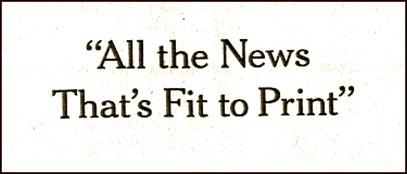
Prominent and famous though it is, the derivation of “All the News That’s Fit to Print,” the New York Times’ famous motto, is shrouded in a bit of media myth.

The version the Times advanced at its centenary in 1951, in a house newsletter called Times Talk, described the motto as “a hybrid.” Times Talk said Adolph Ochs, who acquired the then-beleaguered Times in 1896, borrowed a key portion of the slogan from the Philadelphia Times.

The Times Talk account was cited by Susan E. Tifft and Alex S. Jones in their prodigious study, The Trust: The Private and Powerful Family Behind The New York Times.

Supposedly, Ochs borrowed “All the News,” the motto of the Philadelphia Times, appended “That’s Fit to Print,” and thus concocted the most famous seven-word phrase in American journalism.

The account, however, is incorrect.

The Philadelphia Times never used “All the News” as its motto during the summer and fall of 1896, when Ochs acquired control of the Times and began using “All the News That’s Fit to Print” as a marketing and advertising slogan.

A thorough review of issues of the Philadelphia Times published in the summer and fall of 1896 showed that the newspaper carried a number of promotional statements, none of which was particularly pithy, or memorable.

As I wrote in my 2006 book, a year study titled The Year That Defined American Journalism: 1897 and the Clash of Paradigms, the nearest approximation to “All the News” was this rambling assertion, which appeared a few times beneath the front page nameplate of the Philadelphia Times:

“If You Want All the News of Every Description Attractively Presented You Will Read the Times.”

That clunky phrase appeared in the Philadelphia Times on August 4, 11, and 17, 1896. Ochs, according to Tifft and Jones, was installed as the New York Times publisher on August 18, 1896.

“All the News That’s Fit to Print” did not makes its début until early October 1896, spelled out in a row of red lights on an advertising sign above New York’s Madison Square.

Later that month, “All The News That’s Fit to Print” appeared in New York Times advertisements published in the trade journal Fourth Estate. By the end of October 1896, the phrase had taken a place in a corner of the Times’ editorial page.

And 113 years ago yesterday, on February 10, 1897, the Times moved the phrase without notice or fanfare to the upper left corner, the left “ear,” of its front page—a place of prominence that it has occupied ever since.

What prompted the motto’s move to the front page is not entirely clear. But the intent seems undeniable: To offer a rebuke to the bold, self-promoting yellow journalism of William Randolph Hearst and Joseph Pulitzer.

But it appears that “All the News That’s Fit to Print” was Ochs’ creation, as Harrison E. Salisbury maintained in Without Fear or Favor: The New York Times and Its Times, an impressive insider’s study of the Times. (Salisbury cited as his source an Ochs manuscript in the Times archives.)

By the way, I quote Salisbury’s Without Fear or Favor in Getting It Wrong, my forthcoming book about media-driven myths.

Without Fear or Favor was a useful source in the chapter in Getting It Wrong that addresses the myth surrounding the Times’ reporting in the run-up to the Bay of Pigs invasion in April 1961.
WJC

‘Yours neatly, sweetly, completely’: Revisiting the Times’ motto contest

In 1897, New York Times, Year studies, Yellow Journalism on February 10, 2010 at 12:06 am

How about this as the motto for the New York Times? “Clean, crisp, bright, snappy; read it daily and be happy.”

Or this? “Bright as a star and there you are.”

Or? “Pure in Purpose, Diligent in Service.”

Or? “You do not want what the New-York Times does not print.”

They were among thousands of entries submitted in a “motto contest” organized by the Times and its new owner, Adolph Ochs, in autumn 1896.

The contest ostensibly was to encourage readers to propose “a phrase more expressive of the Times’ policy” than “All the News That’s Fit to Print,” which Ochs had begun using as a marketing and advertising slogan in early October 1896. By the end of that month, the phrase had taken a modest place in a corner of the Times’ editorial page.

And on February 10, 1897–113 years ago today–“All the News That’s Fit to Print” appeared in the upper left corner, the “left ear,” of the Times’ front page, a place the motto has occupied ever since.

The 1896 motto contest was in reality a way to call attention to the Times in New York’s crowded newspaper market—one dominated by the yellow journalism of William Randolph Hearst and Joseph Pulitzer. Ochs had acquired the beleaguered Times in August 1896 and faced such rough going that Pulitzer’s New York World declared several months later:

“The shadow of death is settling slowly but surely down upon” the Times.

The motto contest, cheesy though it may seem today, stirred a fair amount of attention–and reader interaction–in 1896. The Times promised to pay $100 to the person who proposed in ten words or fewer a slogan deemed better than “All the News That’s Fit to Print,” which had first appeared in early October 1896, spelled out in a row of red lights on an advertising sign above New York’s Madison Square.

Among the entries sent to the Times were clunky such suggestions as: “All the News Worth Telling,” “All the News That Decent People Want,” and “The Fit News That’s Clean and True.”

Other were:

“Full of meat, clean and neat.”

“Instructive to all, offensive to none.”

“The people’s voice, good the choice.”

“Aseptic journalism up to date.”

“Yours neatly, sweetly, and completely.”

As I wrote in my 2006 book, a year study titled The Year That Defined American Journalism: 1897 and the Clash of Paradigms: “Before the contest ended, the Times altered the stakes by making clear it would not abandon ‘All the News That’s Fit to Print.’

“The Times justified this change of heart by saying no phrase entered in the contest was more apt and expressive than ‘All the News That’s Fit to Print.’ The $100 prize would be awarded, to the person adjudged to have submitted the best entry. But the motto would not be changed.”

Indeed, “All the News That’s Fit to Print” lives on as the most famous slogan in American journalism, the “leitmotif not merely for the Times, but also … for most other general-interest papers in the country,” a columnist for the Wall Street Journal once wrote.

The Times characterized its motto contest not as a grubby publicity stunt but as an opportunity for high-minded rumination about New York City newspapers. The contest, it said, had “set the people of this city to thinking upon the subject of newspaper decency in a more attentive and specific way than has been their custom.”

In any event, a committee of Times staffers winnowed the entries to 150 semi-finalists, which were submitted to Richard Watson Gilder, editor of The Century magazine. Gilder selected four finalists, which were:

  • Always decent; never dull.
  • The news of the day; not the rubbish.
  • A decent newspaper for decent people.
  • All the world’s news, but not a school for scandal.

As I wrote in The Year That Defined American Journalism, Gilder noted “that terms of the contest had changed from the original intent of selecting a slogan that ‘more aptly express the distinguishing characteristics of the New-York Times’ to the more theoretical task of determining which entry ‘would come nearest to it in aptness.’”

That entry, Gilder determined, was submitted by D.M. Redfield of New Haven, Connecticut. Redfield’s suggestion:

“All the world’s news, but not a school for scandal.”

Catchy.

WJC

The seven most famous words in American journalism

In 1897, New York Times on February 9, 2010 at 8:10 am

I’ve written that 1897 was a decisive year in American journalism.

The evocative sneer “yellow journalism” first appeared in print in 1897.

What became the best-known, most-reprinted editorial in American journalism, the New York Sun‘s “Is There A Santa Claus?,” was published in 1897.

William Randolph Hearst’s New York Journal developed its bold and interventionist model of “journalism of action” in 1897.

And the seven most famous words in American journalism, “All the News That’s Fit to Print,” took a permanent place on the front page of the New York Times in 1897.

The motto appeared without comment, notice, or fanfare in the upper-left corner, the left “ear,” of the Times front page 113 years ago tomorrow — February 10, 1897.

The smug and tidy slogan has occupied the spot ever since. As  I noted in my 2006 book, The Year That Defined American Journalism: 1897 and the Clash of Paradigms, the motto represents “an enduring statement of guiding principle of what has long been recognized as the best newspaper in America.”

I also noted that the Times motto has been endlessly parodied and analyzed. Even admirers of the newspaper have acknowledged it’s a bit “overweening” and “elliptical.”

The motto has evoked lofty claims over the years. The Times in 1901, at the fiftieth anniversary of its founding, referred to “All the News That’s Fit to Print” as its “covenant.”

An historian of the Times, Elmer Davis, said the motto had served as “a war cry.”

In 2001, a columnist for the Wall Street Journal described the motto as the “leitmotif not merely for the Times, but also, by a process of osmosis and emulation, for most other general-interest papers in the country, as well as for much of the broadcast media.”

It was also, I wrote in The Year That Defined American Journalism, “a pithy summation of the Times’ … vision for American journalism,” a model of detachment in newsgathering “that stood in apposition to the extravagance and self-promotion” of Hearst’s “journalism of action.”

Indeed, “All the News That’s Fit to Print” is a timeless rebuke to the practices of Hearst and, to an extent, of Joseph Pulitzer — aggressive and flamboyant techniques that critics scorned as “yellow journalism.”

Interestingly, “All the News That’s Fit to Print” was at first a feature of a marketing campaign by the Times which, in August 1896, had been acquired in bankruptcy court by Adolph S. Ochs, a newspaperman from Tennessee. “All The News That’s Fit to Print” appeared in advertisements in the trade journal Fourth Estate in mid-October 1896. By month’s end, the phrase had taken a modest place in a corner of the Times’ editorial page.

The seven most famous words in American journalism made their debut in early October 1896, in a row of red lights arrayed across a huge advertising sign above Manhattan’s Madison Square. The illuminated sign was on the north wall of the old Cumberland Hotel building at Broadway and 22d Street.

Ochs, who turned 39 in 1897, had a bit of a flair for self-promotion, as the illuminated sign at Madison Square suggested. Securing the space “was nothing less than a coup” for the newcomer to New York journalism, I wrote in The Year That Defined American Journalism.

“The sign’s bright, multi-colored lights could be seen for many blocks away. Nowhere in the country, or in Europe, the Times immodestly crowed, was there ‘so large and perfect a display.'”

It was illuminated by four rows of lights. White lights of the top and bottom rows spelled, “New-York Times” and “Have You Seen It?” A row of blue, white, and green lights spelled out “Sunday Magazine Supplement.” The red lights, which formed the second row of illumination, announced:

“All the News That’s Fit to Print.”

WJC

in mid-October 1896 and by month’s end had taken a place in the upper-left corner of the newspaper’s editorial page.

More than merely sensational

In 1897, Media myths, Yellow Journalism on February 1, 2010 at 8:36 am

Yellow journalism” lives on in as ready shorthand for sensationalism, for reckless and lurid treatment of the news.

“Yellow journalism” is a delicious and versatile sneer, a term that first appeared in print in late January 1897 and routinely invoked in the decades since to describe egregious journalistic misconduct of almost any kind.

But such casual, shorthand characterizations are not very accurate.

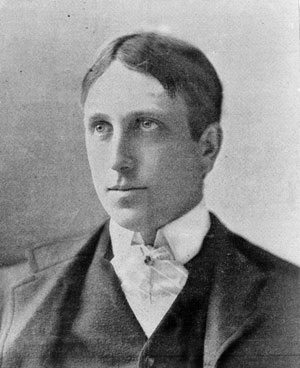
Young W.R. Hearst

They fail to capture or reflect the complexity and vigor of yellow journalism, the leading practitioners of which were the newspapers of William Randolph Hearst and, to a lesser extent, those of Joseph Pulitzer.

Yellow journalism was flamboyant and aggressive, to be sure. Especially so was Hearst’s New York Journal. But to equate “yellow journalism” simply to sensationalism is to misunderstand what a dynamic phenomenon it was.

As I wrote my 2001 book, Yellow Journalism: Puncturing the Myths, Defining the Legacies, “in its most developed and intense form, yellow journalism was characterized by” these features:

  • the frequent use of multicolumn headlines that sometimes stretched across the front page.
  • a variety of topics reported on the front page, including news of politics, war, international diplomacy, sports, and society.
  • the generous and imaginative use of illustrations, including photographs and other graphic representations such as locator maps.
  • bold and experimental layouts, including those in which one report and illustration would dominate the front page. Such layouts sometimes were enhanced by the use of color.
  • a tendency to rely on anonymous sources, particularly in dispatches of leading reporters.
  • a penchant for self-promotion, to call attention eagerly to the paper’s accomplishments. This tendency was notably evident in crusades against monopolies and municipal corruption.

As defined above and as practiced more than a century ago, yellow journalism, I wrote in the book, “certainly could not be called predictable, boring, or uninspired”—complaints of the sort often raised about contemporary American newspapers.

Moreover, yellow journalism “was a product of a lusty, fiercely competitive, and intolerant time, when newspapers routinely traded brickbats and insults,” I wrote.

“The latter practice was remarkably well-developed at the end of the nineteenth century. The Journal and [Pulitzer’s] World, for example, were ever eager to impugn, denounce, and sneer at each other; so, too, were conservative newspapers.”

More generally, “yellow journalism reflected the brashness and the hurried pace of urban America at the turn of the twentieth century,” I wrote.

“It was a lively, provocative, swaggering style of journalism well suited to an innovative and expansive time—a period when the United States first projected its military power beyond the Western Hemisphere in a sustained manner. The recognition was widespread at the end of the nineteenth century that the country was on the cusp of rapid, perhaps even disruptive transformation.”

Yellow journalism, moreover, “was a genre keen to adapt and eager to experiment.” It took risks; it shook up and even shocked the field.

Were that mainstream news media of the 21st century so inclined.

WJC

Yellow journalism: A sneer is born

In 1897, Anniversaries, Spanish-American War, Yellow Journalism on January 31, 2010 at 9:30 am

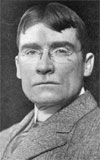
Erwin Wardman, New York Press

It’s a little-recognized, never-celebrated anniversary in American journalism, granted.

But today marks the 113th year since the term “yellow journalism” first appeared in print, in the New York Press, edited by the austere Ervin Wardman.

The phrase “the Yellow Journalism” appeared in a small headline on the Press’ editorial page on January 31, 1897. The phrase also appeared that day in the Press’ editorial page gossip column, “On the Tip of the Tongue.”

“Yellow journalism” caught on quickly, as a way to denigrate what then was called the “new journalism” of William Randolph Hearst’s New York Journal and of Joseph Pulitzer‘s New York World.  By the end of March 1897, references to “yellow journalism” had appeared in newspapers in Providence, Richmond, and San Francisco.

In the decades since then, “yellow journalism” has become a widely popular sneer, a derisive shorthand for denouncing sensationalism and journalistic misconduct of all kinds, real and imagined. “It is,” as I noted in my 2001 book Yellow Journalism: Puncturing the Myths, Defining the Legacies, “an evocative term that has been diffused internationally, in contexts as diverse as Greece and Nigeria, as Israel and India.”

Precisely how Wardman and the Press landed on the phrase “yellow journalism” is not clear.

The newspaper’s own, brief discussion of the origins was vague and unrevealing: “We called them Yellow because they are Yellow,” it said in 1898 about the Journal and the World.

In the 1890s, the color yellow sometimes was associated with depraved literature, which may have been an inspiration to the Harvard-educated Wardman, a figure largely lost to New York newspaper history.

Wardman was tall and stern-looking. He once was described as showing his “Calvinistic ancestry in every line of his face.” He did little to conceal his disdain for Hearst and Hearst’s journalism.

His contempt was readily apparent in the columns of the Press, of which Wardman became editor in chief in 1896 at the age of 31. (The Press is long defunct; it is not to be confused with the contemporary alternative weekly by the same name.)

Wardman’s Press took to taunting Hearst, Hearst’s mother, and Hearst’s support for Democratic candidate William Jennings Bryan in the 1896 presidential election. Hearst’s Journal was virtually alone among New York newspapers in supporting Bryan’s “free silver” candidacy.

The Press disparaged Hearst, then 34, as a mama’s boy, as “Billy” and “little Willie.” It referred to the Journal as “our silverite, or silver-wrong, contemporary.”

The Press also experimented with pithy if stilted turns of phrase to denounce “new journalism.”

“The ‘new journalism,’” the Press said in early January 1897 “continues to think up a varied assortment of new lies.”

Later in the month, the Press asked in a single-line editorial comment:

“Why not call it nude journalism?”

It clearly was a play on “new journalism” and meant to suggest the absence of “even the veneer of decency.”

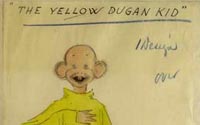
Before long, Wardman and the Press seized upon the phrase “yellow-kid journalism,” which evoked the Hearst-Pulitzer rivalry over a popular cartoon character known as the “Yellow Kid.” Both the Journal and the World at the time were publishing versions of the kid.

The Yellow Kid (Library of Congress)

At the end of January 1897, the phrase “yellow-kid journalism” was modified  to “the Yellow Journalism,” and the sneer was born.

After landing on that sneering pejorative, Wardman turned to it often, invoking the term in brief editorial comments and asides such as: “The Yellow Journalism is now so overripe that the little insects which light upon it quickly turn yellow, too.”

The diffusion of “yellow journalism” was sealed when Hearst’s Journal embraced the term in mid-May 1898, during the Spanish-American War. With typical immodesty, it declared:

“… the sun in heaven is yellow—the sun which is to this earth what the Journal is to American journalism.”

WJC

New Pulitzer biography: An opportunity missed

In 1897, Media myths, Yellow Journalism on January 25, 2010 at 1:35 pm

I recently completed a review of Pulitzer: A Life in Politics, Print, & Power, a forthcoming biography of Joseph Pulitzer, who is routinely—but undeservedly—regarded as an iconic figure in American journalism.

Pulitzer (Library of Congress)

The new biography, by James McGrath Morris, indulges in the cliché of Pulitzer the great innovator. The author calls him the “midwife to the birth of the modern mass media.”

My review, written for the peer-reviewed quarterly journal American Journalism, notes that the book contains ample material for what could have been a long-overdue reinterpretation of Pulitzer, one that would take him down several pegs.

“All the elements are there,” I write, “to depict Pulitzer not as innovator but as a cruel, ruthless, self-absorbed newspaper owner who became a millionaire championing the cause of the dispossessed while eager to rub elbows with the moneyed classes.”

Pulitzer was a hypocrite and an absentee publisher. But the opportunity for a much-needed reinterpretation was missed.

Pulitzer’s correspondence, which Morris tapped extensively, certainly encourages revisionist treatment. As I noted in my 2006 book, The Year That Defined American Journalism:

“Pulitzer’s mean-spirited letters to senior managers do little to support the reputation historians have accorded him, that of a heroic and innovative journalistic icon.”

The new biography also indulges in a media myth in describing William Randolph Hearst, Pulitzer’s rival in New York City journalism in mid- and late 1890s, as an imitator of Pulitzer’s flagship newspaper, the New York World.

It’s quite conventional to make such a claim.

And misleading, too.

Hearst’s significant model was a British journalist named William T. Stead, who in the mid-1880s offered a vision of “government by journalism.” Stead argued that the journalist was “the ultimate depository of power in modern democracy.”

Hearst clearly borrowed from Stead in developing his model of the “journalism of action,” which sought to do much more than gathering, printing, and commenting on the news. As Hearst’s New York Journal put it in 1897, the “journalism of action” obliged a newspaper to inject itself conspicuously and often into public life, to “fitly render any public service within its power.”

It was a breathtaking model of activism that went well beyond the stunt journalism of Pulitzer’s World.

Oddly, the new biography fails to acknowledge Pulitzer’s nod to Hearst’s success with the Journal.

As infirm and disagreeable as Pulitzer had become by 1897, he was not without moments of keen insight. In a letter late that year to his business manager, Pulitzer invoked “Geranium,” his code name for Hearst’s Journal, and declared:

“I personally think Geranium a wonderfully able & attractive and popular paper, perhaps the ablest in the one vital sense, of managing to be talked about; of attracting attention; of constantly furnishing something which will compel people wherever they meet, whether in the drawing room, or in the poor house, elevated car or dinner table, to talk about something in that paper. That is the sort of brains the World needs. Pardon me for saying also, that with all its faults, which I should not like to copy—though they have been exaggerated—it is a newspaper.”

WJC

‘Furnish the war,’ en espagnol

In 1897, Debunking, Furnish the war, Spanish-American War on December 30, 2009 at 11:54 am

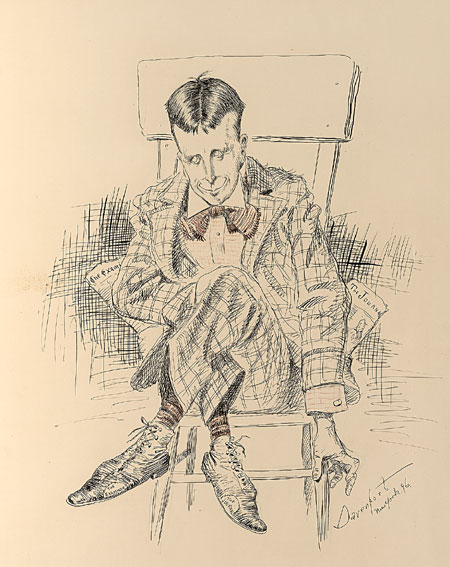
Hearst, under the pen of Homer Davenport, 1896

William Randolph Hearst’s purported vow to “furnish the war” with Spain is such a delicious and tenacious media-driven myth that it’s hardly surprising it has crossed over to other languages.

Spanish among them.

Just the other day, the online publication elmercuriodigital.es posted a commentary that invoked the Hearst quote. It read in part:

“El dibujante, Frederic Remington, telegrafió a su jefe pidiéndole autorización para regresar, pues no había ninguna guerra, y por lo tanto no había nada para cubrir. ‘Todo en calma. No habrá guerra’, dijo Remington. La respuesta del empresario periodístico fue célebre: ‘Le ruego que se quede. Proporcione ilustraciones, yo proporcionaré la guerra’.”

The passage recounts the essential portion of the anecdote, that the artist Frederic Remington, on assignment to Cuba for Hearst’s New York Journal, supposedly found “everything … quiet” and, in a cable to Hearst, asked permission to return.

In reply, as the myth has it, Hearst told Remington: “Please remain. You furnish the pictures, and I’ll furnish the war.”

As I write in my forthcoming book, Getting It Wrong:

“Hearst’s famous vow to ‘furnish the war’ has achieved unique status as an adaptable, hardy, all-purpose anecdote, useful in illustrating any number of media sins and shortcomings. It has been invoked to illustrate the media’s willingness to compromise impartiality, promote political agendas, and indulge in sensationalism. It has been used, more broadly, to suggest the media’s capacity to inject malign influence into international affairs.”

It lives on, I further write, “despite a nearly complete absence of supporting documentation.

“It lives on even though telegrams supposedly exchanged by Remington and Hearst have never turned up. It lives on even though Hearst denied ever sending such a message.”

And it lives on despite an irreconcilable internal inconsistency. Hearst had assigned Remington and the correspondent Richard Harding Davis to Cuba at the end of 1896. After several delays, they arrived in January 1897 — 15 months before the start of the Spanish-American War.

Anyone reading U.S. newspapers in early 1897 would have been well aware that Cuba was the theater of a nasty war, a rebellion against Spain’s armed forces which, by the time Remington and Davis arrived, had reached island-wide proportion.

So it would have been incongruous and inconceivable for Hearst to have vowed to “furnish the war” when war was the very reason he sent Remington and Davis to Cuba in the first place.

WJC

<!–[if !mso]> <! st1\:*{behavior:url(#ieooui) } –>

“Please remain. You furnish the pictures, and I’ll furnish the war.”[i]


[i] See Creelman, On the Great Highway, 177–178.

Editorial writers and ‘Is There A Santa Claus?’ What they say today

In 1897, New York Sun on December 25, 2009 at 3:45 pm

New Hampshire Public Radio’s “Word of Mouth” program yesterday aired a quite interesting segment about what editorial writers say these days about the most famous editorial in American journalism, “Is There A Santa Claus?”

It made for thoughtful listening.

And that’s not just because the producer, Avishay Artsy, included some of my observations.

Virginia O'Hanlon

The famous editorial was written in 1897 by Francis P. Church of the New York Sun. The editorial was prompted by a letter from Virginia O’Hanlon, an eight-year-old New York City girl who implored the Sun:

“Please tell me the truth; is there a Santa Claus?”

In time, Church’s editorial — which included the memorable (if now cliched) passage, “Yes, Virginia, there is a Santa Claus” — became an unrivaled classic in American journalism.

As I pointed out in the “Word of Mouth” segment, the editorial “is very cerebral, almost written above the head of an eight year old. But it’s also written in a fashion that he, Francis P. Church, the author, was not condescending. He’s not talking down to her, and that was a real trick he pulled off there.”

Church’s editorial invoked a romanticism seldom found in newspaper editorials, the “Word of Mouth” segment noted in quoting Drew Cline, editorial page editor at the New Hampshire Union Leader.

Church, Cline said, “takes such a unique approach in connecting the unseen world, the world of fantasy and romance to her regular life. And I just thought that was so beautiful. But I just don’t think you could see anything like that today. I just think that connection with the romantic idealism of that era is so far gone at this point.”

Cline also noted that these days, an eight-year-old surely not write to a newspaper but instead “would go to her parents’ computer and Google ‘Santa, real,’ and see what comes up.”

Ron Dzonkowski at the Detroit Free Press suggested that questions about Santa’s existence may be especially pressing to children in Michigan this Christmas, given the state’s beleaguered economy.

“We have by far the worst economy in the nation, the auto industry is in the middle of an enormous shakeout,” Dzonkowski said on “Word of Mouth.”

“We will have lost one million jobs in this state in the decade from 2001 to 2010. And so I suspect that there already are a number of young children in this state that already have been told by their parents, ‘don’t expect too much from Santa Claus this year.’ And so that may have planted the question in their minds, is there really a Santa Claus?”

Peter Cannelos of the Boston Globe said Church’s editorial remains relevant in another respect.

The essay signals, Cannelos said, “what we as newspapers should do and what can be a real lynchpin of our survival and our redefinition of our mission going forward. And that is we should speak to the community in a way that reflects broad recognition of the community values, and speak for people who don’t have a voice.”

Well, maybe.

But rather than speaking for people who lack a voice, Church more likely was guided by the view, current in the 1890s, that editorials should strive for boldness. “Better no editorials than dreary ones,” a journalists’ trade publication had advised in 1894. “Audacity is a necessary feature of every good editorial.”

Audacity certainly characterized “Is There A Santa Claus?” The editorial was published September 21, 1897, more than three months before Christmas.

Perhaps most striking is how generations  of readers have found solace, joy, and inspiration in the editorial’s passages.

“Though I am getting old,” said a letter-writer to the Sun in 1914, the editorial’s “thoughts and expressions fill my heart with overflowing joy.”

A letter-writer said in 1926 that the editorial offered “a fine relief from the commercialism and unsentimental greed” of the Christmas season.

And in 1940, a writer to the Sun likened the editorial to “a ray of hope on the path to human understanding in our troubled times.”

Merry Christmas.

WJC

Recalling Francis P. Church: No self-promoting author, he

In 1897, New York Sun on December 24, 2009 at 3:40 pm

Christmas Eve certainly is a fitting moment to recall Francis P. Church, one of the few editorial writers whose name is to known to generations of Americans.

Church of the Sun (Courtesy Century Club)

Church wrote the most-reprinted editorial in American journalism, “Is There A Santa Claus?” The editorial appeared in the New York Sun in 1897, and over time became recognized as an unrivaled classic, a timeless and lyrical tribute to childhood, faith, and the Christmas spirit.

Church, ironically, was a reticent, retiring man, little known outside a tight circle of friends and colleagues.

He was no self-promoter.

As I wrote in my 2006 book, The Year That Defined American Journalism: 1897 and the Clash of Paradigms, Church shunned the spotlight and venerated the anonymity of the editorial page. He probably wouldn’t have appreciated being identified as the man who wrote “Is There A Santa Claus?”

His authorship was revealed soon after his death in April 1906, in what, for the Sun, was eloquent and extraordinary tribute. In an editorial note, the newspaper said:

“At this time, with the sense of personal loss strong upon us, we know of no better or briefer way to make the friends of the Sun feel that they too have lost a friend than to violate custom by indicating him as the author of the beautiful and often republished editorial article affirming the existence of Santa Claus, in reply to the question of a little girl.”

The little girl was Virginia O’Hanlon, who wrote to the Sun shortly after her eighth birthday in July 1897, imploring: “Please tell me the truth; is there a Santa Claus?”

The task of writing a reply fell to Church, who then was 58-years-old. He and his wife never had children.

Church was said to have taken on the assignment grudgingly.

Edward P. Mitchell, the Sun’s editorial page editor, recalled in his book that Church “bristled and pooh-poohed at the subject when I suggested he write a reply to Virginia O’Hanlon; but he took the letter and turned with an air of resignation to his desk” to write.

Church quickly produced a 500-word reply, without a hint that his editorial would become a classic, and would ensure him a measure of enduring and posthumous fame.

“Virginia,” Church wrote, “your little friends are wrong. They have been affected by the skepticism of a skeptical age. They do not believe except they see. They think that nothing can be which is not comprehensible by their little minds. All minds, Virginia, whether they be men’s or children’s, are little.”

After ruminating a little about the limitations and narrow dimensions of human imagination, Church began a new paragraph and wrote the editorial’s most lasting and memorable lines:

“Yes, Virginia, there is a Santa Claus. He exists as certainly as love and generosity and devotion exist, and you know that they abound and give to your life its highest beauty and joy. Alas! how dreary would be the world if there were no Santa Claus. It would be as dreary as if there were no Virginias.”

Church closed the editorial with this reassurance:

“No Santa Claus! Thank God! he lives, and he lives forever. A thousand years from now, Virginia, nay, ten times ten thousand years from now, he will continue to make glad the heart of childhood.”

The editorial that became an unrivaled classic in American journalism was essentially buried in its first appearance: It was published in the third of three legs (or columns) of editorials on September 21, 1897.

“Is There A Santa Claus?” was subordinate that day to seven other commentaries, which discussed matters such as “British Ships in American Waters,” ambiguities in Connecticut’s election law, and features of the chainless bicycle anticipated in 1898.

Although it was published at a time when newspaper editors routinely commented on—and often disparaged—the work and content of their rivals, the oddly timed editorial about Santa Claus prompted no comment from the Sun’s competitor newspapers in New York City.

But readers noted it, and found it memorable. In untold numbers over the years, they urged the Sun to reprint the essay.

Requests often came from parents of young children, such as the letter-writer in 1918 whom the Sun identified only as D.F.C.:

“I am an old time reader of the Sun and have a little girl, Anna, who seemingly is doubtful about there being a ‘Santa Claus.’ I have told her that if she looks in the Sun on Christmas morning she will be convinced by reading the famous reply of one of your staff writers to little Virginia O’Hanlon, which I have oftentimes read with much pleasure. Please do not fail to reprint it in your coming Christmas number.”

It is unlikely Church would have been much pleased by the Sun’s disclosing his authorship.

He was a guarded, reticent man who respected and even cultivated, the anonymity of editorial-writing. Church spent more than thirty years writing editorials for the Sun. He joined the newspaper fulltime in 1878 after the demise of Galaxy, a literary magazine he established with his brother.

According to J.R. Duryee, a friend whose testimonial the Sun published in April 1906, “Mr. Church by nature and training was reticent about himself, highly sensitive and retiring. Even with intimates he rarely permitted himself to express freely his inner thought.

“I doubt if an editor was ever more consistently loyal in maintaining the privacy of the sources of his journal’s statements,” Duryee wrote. “In our talks together, I have frequently referred to an editorial my intuition told me was from his pen, but never could induce him to own the writing. … I have never known a literary man as ingenuous as he in his self-repression.”

In what he presumed to have been Church’s work, Duryee said he found the imprint of “gentle humor” and “a simple, chaste style.”

His work in “a lighter vein,” Duryee wrote, possessed “rare charm” and was notable in its delicacy of touch.

Duryee did not say so, specifically, but he could well have been referring to “Is There A Santa Claus?”

Merry Christmas.

WJC

Adapting ‘Yes, Virginia’: Interestingly done

In 1897, New York Sun on December 23, 2009 at 11:13 am

The editorial “Is There A Santa Claus?” is inarguably the most famous in American journalism.

It was published September 21, 1897, in the New York Sun, in response to the query of a New York City girl named Virginia O’Hanlon. She had written to the newspaper shortly after her eighth birthday, asking:

“Some of my little friends say there is no Santa Claus. Papa says ‘if you see it in the Sun, it’s so.’ Please tell me the truth; is there a Santa Claus?”

The editorial written in reply reassured the little girl and included these memorable passages:

Virginia O'Hanlon

“Yes, Virginia, there is a Santa Claus. He exists as certainly as love and generosity and devotion exist, and you know that they abound and give to your life its highest beauty and joy. Alas! how dreary would be the world if there were no Santa Claus. It would be as dreary as if there were no Virginias.”

Over the years, the phrase “Yes, Virginia,” has become a cliche, invoked in contexts of all kinds, most of them unrelated to the editorial, Christmastime, and American journalism.

The editorial has become the centerpiece of a number of enduring myths. And it has inspired no small amount of imitation, some of it flip, most of it utterly forgettable.

A notable exception, though, was the “Yes, Virginia,” adaptation posted last week by technology writer Michael S. Malone at his “Silicon Insider”  column at ABCNews.com.

Malone’s takeoff was amusing, even ingenious. He pitched the column as a  reply to a 21st century Virginia O’Hanlon, who had written to ABCNews.com, asking:

“Some of my friends say there is no Santa Claus. My dad says, ‘If you read it on the Web, it must be so.’ Please tell me the truth, is there a Santa Claus?”

In a reply embedded with knowing references to iphones, quarks, and Facebook, Malone wrote:

“Yes, Virginia, there is a Santa Claus. I know if you surf the Web you’ll be linked to more web pages and blogs that suggest that he is just a myth or worse, a joke than that he is real. Saddest of all are those sites that argue that Santa Claus is impossible, that reindeer can’t fly or that no one could visit so many homes in a single night. These last stories are written by confused adults who don’t believe in miracles and want to force children to think as they do. They call it ‘being realistic.’ …

“Oh, Virginia, there are so many miracles. Think of that computer chip in your Wii or iPhone that goes through as many thoughts in a second as you will have heartbeats in your entire life. Or of those thousands of people in the world now who carry around transplanted hearts and livers and lungs. Or those amazing rovers that explored the surface of Mars. Even that H1N1 flu shot you just got. These are miracles, Virginia, every one of them. …

“Not believe in Santa Claus! You might as well not believe in Facebook, or electrons, or black holes. Nobody sees Santa Claus, but that doesn’t mean there is no Santa Claus. No one has seen a quark either, or a computer bit, but that’s no proof they aren’t there. The most real things in the world are those that neither children nor adults can see. Great new discoveries and wonderful acts of human kindness are made every day. Nobody can conceive or imagine all the wonders that are unseen or unseeable in this world. …

“No Santa Claus? Of course there is. He has been with us now for a thousand years. As long as little boys and girls like you believe in miracles, Santa Claus will gladden the heart of childhood. And he will live forever.”

Malone’s column may not be quite as stirring, evocative, or cerebral as the Sun‘s 1897 original. But it’s an althogether imaginative, accessible, and even wry adaptation.

And it’s well worth a second read.

WJC