Legendary broadcast journalist Edward R. Murrow is a touchstone for courage in journalism, a model against which contemporary journalists almost always are found wanting.

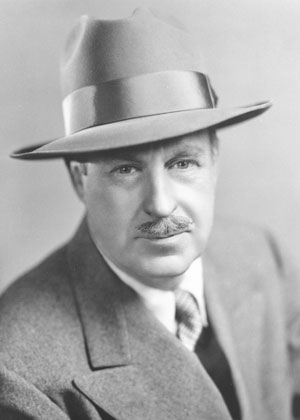
Murrow in 1954 (Library of Congress)
Emblematic of Murrow’s courage was his standing up to Joseph R. McCarthy, the Red-baiting Republican senator from Wisconsin, at a time when, supposedly, no one else dared.
The occasion was Murrow’s 30-minute See It Now television program on CBS. The program aired March 9, 1954, and focused on McCarthy’s bullying tactics and taste for half-truth and reckless exaggeration.
That Murrow’s See It Now program brought down McCarthy is a great story. It’s also a delicious and tenacious media-driven myth, one embraced and advanced by worshipful biographers, journalists, Murrow admirers, and even some media critics.
The myth was reiterated today in a commentary posted at the Cleveland Leader online alternative news outlet.
“It took a major media figure as Edward R. Murrow,” the commentary declared, “to strike the blow to reveal the truth of Sen. McCarthy.”
Well, not exactly.
As I write in Getting It Wrong, my forthcoming book about media-driven myths, Murrow “was very late in confronting McCarthy” and “did so only after other journalists had challenged the senator and his tactics for months, even years.”
I note that Eric Sevareid, Murrow’s friend and CBS colleague, chafed at the misleading interpretation, noting that Murrow’s program “came very late in the day.”
In an interview published in 1978, Sevareid added:
“The youngsters read back and they think only one person in broadcasting and the press stood up to McCarthy and this has made a lot of people feel very upset, including me, because that program came awfully late.”
Sevareid was correct. Interestingly, even Murrow acknowledged his role in taking down McCarthy was exaggerated. “It’s a sad state of affairs when people think I was courageous,” Murrow told Newsweek shortly after the See It Now show on McCarthy.
Well before that program aired, a number prominent journalists—the Washington-based syndicated columnist Drew Pearson among them—had become “persistent and searching critics of McCarthy, his record, and his tactics,” I write in Getting It Wrong.
Pearson, I note, “first wrote about McCarthy’s wild allegations [about communists in government] on February 18, 1950, just days after McCarthy had begun raising them. Pearson called McCarthy the ‘harum-scarum’ senator and said that when he ‘finally was pinned down, he could produce … only four names of State Department officials whom he claimed were communists.'”
And none of the charges held water, Pearson wrote.
The legendary status associated with Murrow and his See It Now program has obscured and diminished the contributions of journalists such as Pearson who took on McCarthy long before March 1954, when doing so held no small risk.
It’s one of the hazards of media-driven myths: they can extend credit where credit is not entirely due.



 Media Myth Alert