An undying myth of American journalism is that yellow journalism, as practiced by William Randolph Hearst and Joseph Pulitzer, led the country to war with Spain in April 1898.
That notion, I wrote in my 2001 book, Yellow Journalism: Puncturing the Myths, Defining the Legacies, “tidily, if mistakenly, serves to illustrate the power and the lurking malevolence of America’s news media.” That’s an important reason the yellow journalism myth lives on.
And on.
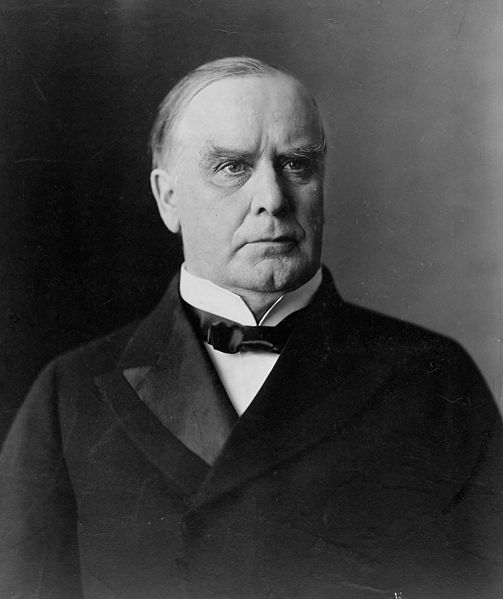
William McKinley
The myth reemerged the other day in a Time magazine online feature listing the “top 10 forgettable presidents” of the United States. Leading the list was Martin Van Buren. In eight place was William McKinley, about whom Time said:
“McKinley was a savvy politician who listened carefully to the public. Though he opposed it at first, McKinley brought the country to war with Spain in 1898 as Pulitzer and Hearst’s ‘yellow journalism’ juiced the nation’s appetite for a fight. America’s claim to Puerto Rico and Guantanamo Bay count among the war’s legacies.”
So the yellow journalism “juiced” the country’s war appetite, eh?
Like many media-driven myths, this one’s certainly a juicy story–almost too juicy to be false. Like many media myths, it offers a simplistic explanation to a complex question: It is far easier, after all, to blame the yellow press for pushing the country into war than it is to recall the factors accounting for the diplomatic impasse that led the United States and Spain to go to war over Cuba, which at the time was up in arms against Spanish rule.
Significantly, the newspapers of Hearst and Pulitzer–the New York Journal and New York World, respectively– exerted no more than limited agenda-setting influence on the U.S. press in the run-up to the war.
As I wrote in Yellow Journalism:
“A significant body of research indicates that newspapers in small-town and rural America scoffed at, condemned, and ignored the exaggerated and fanciful reports appearing in New York City’s yellow journals before and after the Maine’s destruction” in Havana harbor in mid-February 1898.
The destruction of the battleship U.S.S. Maine killed more than 260 Navy sailors and officers, and helped trigger the war.
“Rather than taking a lead from accounts published in the Journal and World, newspapers in the American heartland turned away from their excesses,” I further wrote.
Moreover, I noted, “claims that the yellow press fomented the Spanish-American War contain almost no discussion about how, specifically, that influence was brought to bear within the McKinley administration.
“The reason for such a gap is straightforward.
“There is almost no evidence that the content of the yellow press, especially during the decisive weeks following the Maine’s destruction, shaped the thinking, influenced the policy formulation, or informed the conduct of key White House officials.”



 Media Myth Alert