Media-driven myths can be tenacious because they offer simplified, easy-to-grasp versions of complex events of the past.
That’s why, for example, the Watergate myth — that the reporting of Bob Woodward and Carl Bernstein for the Washington Post brought down Richard Nixon’s corrupt presidency — is so hardy. It’s easy to grasp and easy to retell.

Hearst’s Evening Journal
So it is with the Spanish-American War, a brief conflict in 1898 that confirmed the United States as a global power.
The media myth of the Spanish-American War — the simplified but inaccurate account of the conflict’s origins — is that it was fomented by the “yellow press” of William Randolph Hearst, then the publisher of the New York Journal, the New York Evening Journal, and the San Francisco Examiner.
But the notion is absurd, embraced by few if any serious historians of the era — and by no recent biographer of Hearst.
Nonetheless, the hoary myth made an appearance at Politico Magazine the other day, in a commentary titled “The Neocon Surge.”
The commentary said prominent neoconservatives “are going into overdrive to pin the blame for the collapse of Iraq on anyone other than themselves.” And it called out the scholar Robert Kagan, saying he had “sounded his favorite, and the neocons’, favorite theme” in his 2006 book, Dangerous Nation.
“He depicted America as uniquely virtuous, pursuing idealistic aims, while presenting all other great powers as fighting for venal and self-interested motives. So assiduous was Kagan in his fanciful interpretation of American actions,” the Politico commentary said, “that even the Spanish-American War, seen by most historians as the product of William Randolph Hearst’s yellow press and the U.S. desire to expand its influence on behalf of economic imperialism, becomes something else entirely — a bright and shining crusade for freedom….”
What especially interests Media Myth Alert is not resurgent neoconservatism but the claim that the Spanish-American War was a “product” of Hearst’s yellow press, a claim Politico vaguely attributed to “most historians.”
Politico is wrong on both counts.
As I wrote in my 2001 book, Yellow Journalism: Puncturing the Myths, Defining the Legacies, the yellow press of Hearst and his rival, Joseph Pulitzer, “did not force — it could not have forced— the United States into hostilities with Spain over Cuba in 1898. The conflict was, rather, the result of a convergence of forces far beyond the control or direct influence of even the most aggressive of the yellow newspapers, William Randolph Hearst’s New York Journal.”
Claims that the yellow press brought on the war, I wrote, “are exceedingly media-centric, often rest on the selective use of evidence, and tend to ignore more relevant and immediate factors that give rise to armed conflict.”
In 1898, those factors centered around a diplomatic impasse between the United States and Spain over Spanish rule of Cuba, which had been the scene of an islandwide rebellion since early 1895.
In a failed attempt to put down the rebellion, Spanish authorities sent as many as 200,000 troops to the island and imposed a policy called “reconcentration,” which forcibly removed thousands of Cubans — mostly old men, women, and children — into garrison towns where they could offer neither support nor supplies to the Cuban rebels.
Spain’s “reconcentration” policy gave rise to malnutrition and disease: Unknown tens of thousands of Cuban non-combatants died from illness and starvation.
The humanitarian disaster on Cuba “inevitably stirred outrage and condemnation in the United States,” I wrote in Yellow Journalism. The desperate conditions on Cuba were in 1897 and early 1898 a frequent topic of reporting in the American press — including, but certainly not limited to, the newspapers of Hearst. The yellow press reported on but it did not create the terrible effects of Spain’s disastrous “reconcentration” policy.
A leading historian of that period, Ivan Musicant, quite correctly observed that the abuses and suffering caused by that policy “did more to bring on the Spanish-American War than anything else the Spanish could have done.”
In the end, the humanitarian crisis on Cuba, and Spain’s inability to resolve the crisis, weighed decisively in the U.S. decision to go to war in 1898 — not the content of the yellow press, and not “economic imperialism,” as Politico put it.
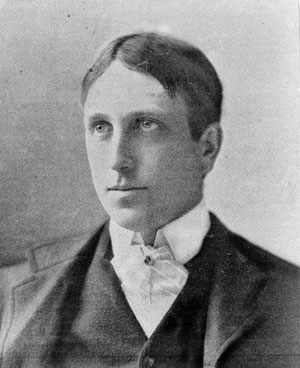
Young Hearst: No warmonger
Almost always unaddressed in claims that Hearst fomented the war is any discussion about how his newspapers’ content accomplished the trick: By what mechanism was newspaper content transformed into policy and military action?
It’s left unaddressed because there was no such mechanism.
The mechanism wasn’t an agenda-setting function: Hearst’s newspapers, attention-grabbing though they were, did not set the news agenda for the other 2,000 or so daily newspapers in the United States in the late 1890s.
A significant body of research compiled over the years indicates that newspapers in small-town and rural America often scoffed at, condemned, and ignored the sometimes-exaggerated reports in New York’s yellow journals in the run-up to the war. Rather than take their lead from Hearst’s Journal or Pulitzer’s World, newspapers in the American heartland tended to reject their excesses and flamboyance.
Moreover, top officials in the administration of President William McKinley largely disregarded the content of the yellow press. They certainly didn’t turn to it for guidance in policymaking. As I pointed out in Yellow Journalism, diary entries of White House officials disparaged the yellow press as a nuisance but gave it no credit as a factor in developing or shaping policy.
The content of the yellow press, I further noted, was “regarded neither as a source of insight into popular thinking in the United States nor as a useful guide in pursuing the delicate and ultimately futile negotiations with Spain” over conditions on Cuba, negotiations that preceded the declaration of war.
At most, Hearst’s newspapers were irritants to policymakers in Washington. They did not, as Lewis Gould, a political historian of the late nineteenth century has correctly observed, “create the real differences between the United States and Spain” that gave rise to war.
More from Media Myth Alert:
- The Remington-Hearst media myth invoked anew
- Those ‘warmongering’ papers of William Randolph Hearst
- On sensationalism and yellow journalism: Not synonymous
- Obama, journalism history, and ‘folks like Hearst’
- Wikileaks and the Spanish-American War?
- Juan Williams’ new book repeats Spanish-American War myth
- ‘War Lovers’: A myth-indulging disappointment
- Halberstam the ‘unimpeachable’? Try myth-promoter
- ‘They even started wars’: Nonsense in the Economist’s holiday double issue
- Fact-checking WaPo columnist on the ‘McKinley moment’
- NYT’s Keller and the dearth of viewpoint diversity in newsrooms
- ‘Getting It Wrong’ wins SPJ award for Research about Journalism

 Media Myth Alert
[…] No, Politico: Hearst did not cause the Spanish-American War […]
[…] No, Politico, Hearst did not cause the Spanish-American War […]
[…] No, Politico: Hearst did not cause the Spanish-American War (posted June 20, 2014): No media myth is hoarier than the notion that the Spanish-American War of […]
[…] No, Politico: Hearst did not cause the Spanish-American War […]
[…] Politico yesterday posted an intriguing if flawed account about the file the FBI kept on Ben Bradlee, executive editor of the Washington Post during the Watergate scandal that toppled Richard Nixon’s presidency in 1974. […]
[…] No, Politico: Hearst did not cause the Spanish-American War […]
[…] No, Politico: Hearst did not cause the Spanish-American War […]
[…] errs in claiming that Hearst’s flamboyant journalism of the late 19th century brought on the Spanish-American War, […]
[…] repeated one of American journalism’s best-known myths, the purported vow of William Randolph Hearst to “furnish the war” with […]
[…] No, Politico: Hearst did not cause the Spanish-American War […]
[…] It is, as I discussed in my media-mythbusting book, Getting It Wrong, Exhibit A in support of the dubious notion that Hearst brought on the Spanish-American War. […]
[…] file the FBI kept on Ben Bradlee, the Washington Post’s executive editor during Watergate, Politico invoked the hardy media myth that the Post’s reporting on the scandal “brought down a […]
[…] No, Politico: Hearst did not cause the Spanish-American War […]
[…] No, Politico: Hearst did not cause the Spanish-American War […]
[…] No, Politico: Hearst did not cause the Spanish-American War […]
[…] of its zombie-like character was in effect offered by Politico in December, in an essay about the “long and brutal history of fake news.” Politico cited, as […]
[…] The True Flag, a new book about America’s emergence as a colonial power during and after the Spanish-American War of […]
[…] No, Politico: Hearst did not cause the Spanish-American War. […]
[…] anecdote lives on because it represents apparently unequivocal evidence for the notion that Hearst brought about the Spanish-American War. That dubious, media-centric interpretation is, however, endorsed by no serious contemporary […]
[…] debunking, the tale lives on, largely because it represents apparent evidence for the notion that Hearst and his newspapers fomented the Spanish-American War. That dubious, media-centric interpretation is, however, endorsed by no serious contemporary […]