NBC’s Today show yesterday featured Jessica Lynch, perhaps the best-known American soldier of the Iraq War, as central figure of one of the decade’s “buzziest” news stories.
“Buzziest.”
That’s how the Lynch segment was introduced.
It was a brief report (see transcript here), in which Lynch talked about her life since she was catapaulted to sudden, unsought fame in the first days of the war in Iraq. Lynch then was a private, a supply clerk in the Army’s 507th Maintenance Company.
On March 23, 2003, elements of the 507th were ambushed by Iraqi irregulars in the southern city of Nasiriyah. Lynch was badly injured in the crash of her Humvee and was taken prisoner.
Nine days later, she was rescued from a hospital in Nasiriyah by a U.S. special operations unit.

The Washington Post's front page report about Jessica Lynch
Two days after that, the Washington Post published a sensational account on its front page, reporting that Lynch had “fought fiercely” in Nasiriyah and had “shot several enemy soldiers after Iraqi forces ambushed” her unit, “firing her weapon until she ran out of ammunition.”
The Post‘s report cited “U.S. officials” who otherwise were unidentified as saying that Lynch had “continued firing at the Iraqis even after she sustained multiple gunshot wounds and watched several other soldiers in her unit die around her in fighting March 23.” One official was quoted anonymously as saying:
“‘She was fighting to the death. She did not want to be taken alive.'”
It was a great story, one picked up by news outlets across the United States and around the world.
Only it wasn’t true.
The Post‘s report not only was grievously in error; it became the launchpad for a tenacious media-driven myth, one that the Today show yesterday helped promote.
Meredith Vieira, the Today show personality who interviewed Lynch, described her as “a pawn of the military that was trying to sell, some said, a war to the American public.”
In reality, though, the U.S. military did little to promote the hero-warrior story about Lynch, who then was 19-years-old. The Lynch case is discussed in a chapter in my forthcoming book, Getting It Wrong .
One of the authors of the Post‘s erroneous report, Vernon Loeb, told an NPR radio program in late 2003 that “the Pentagon … wouldn’t say anything about Jessica Lynch.”
Loeb also said: “I just didn’t see the Pentagon trying to create a hero where there was none.”
Even so, the notion that the military promoted a phony hero-warrior lives on, and has become a central element of the narrative about the Lynch case.
The hoopla over Jessica Lynch in the first days of the Iraq War had another, lasting effect: That of obscuring recognition of an Army sergeant named Donald Walters who did fight to the death at Nasiriyah.
Walters’ heroics were mistakenly attributed to Lynch, apparently because of faulty translation of Iraqi battlefield reports.
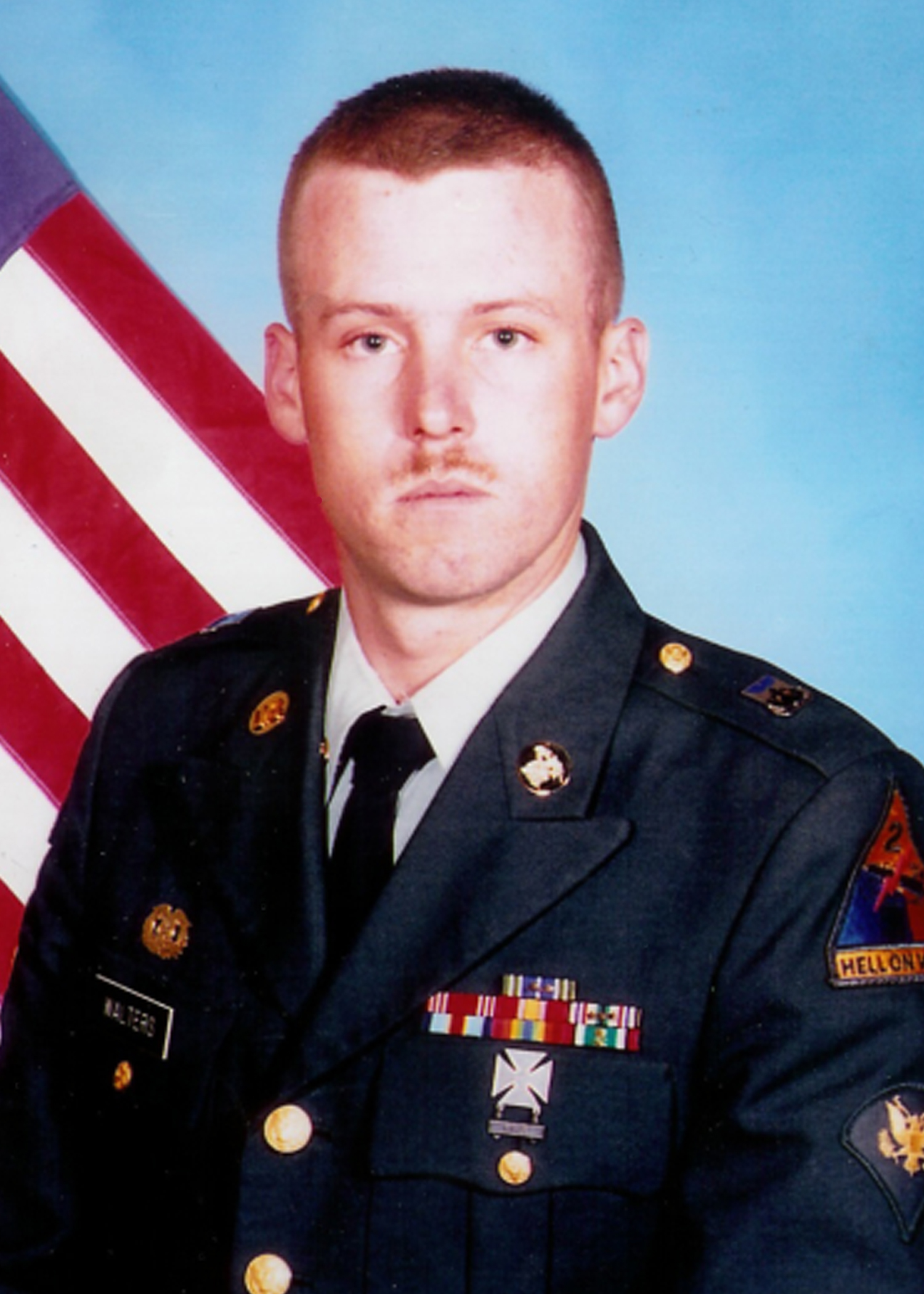
Sgt. Donald Walters
Walters stayed behind as the ambushed 507th tried to flee Nasiriyah. He was captured when his ammunition ran out and was executed. His body was recovered the day Lynch was rescued from the hospital in Nasiriyah.
Walters’ actions, when they became known, attracted little more than passing interest from the American news media.
And not surprisingly, they were not mentioned yesterday on the Today show’s “buzziest” segment.
Nor did Today point out that the Lynch myth took hold because of over-the-top reporting in the Washington Post. The segment contained nary a word about that.
Related:
- Jessica Lynch one of ‘Time’ magazine’s ‘faces of decade’
- WaPo’s belated and puzzling Lynch correction
- Seven years after ‘fighting to the death’: Who was the Post’s source?
- Ignoring the astonishing reporting lapses in Lynch case
- Too good to be disbelieved: The military, myth, and Jessica Lynch
- ‘Good narrative trumps good history’
- Sniffing out media myths

 Media Myth Alert