W. Joseph Campbell

Archive for the ‘Year studies’ Category

Country turned against Vietnam before ‘Cronkite Moment’

In Cronkite Moment, Debunking, Media myths, Year studies on August 12, 2010 at 6:33 am

Politico posted an item yesterday asserting that President Barack Obama “has lost the most trusted man in the Hispanic media”–the Univision anchorman, Jorge Ramos.

Ramos and Obama, in chummier times

Ramos, Politico said, “has been called the Walter Cronkite of Spanish-language media, an unparalleled nationwide voice for Hispanics. And just like the famed CBS newsman’s commentary helped turn the country against the Vietnam War, Ramos may be on the leading edge of a movement within the Hispanic media to challenge the president on immigration—a shift that some observers believe is contributing to Obama’s eroding poll numbers among Latino voters.”

There’s no doubt Obama’s poll numbers are sliding. But the Cronkite analogy is in error. And misleading.

Cronkite’s commentary–an on-air assessment in February 1968 that the U.S. military effort was “mired in stalemate”–did little to “turn the country against the Vietnam War.”

That’s because public opinion had been souring on Vietnam for months before Cronkite’s commentary aired on February 27, 1968.

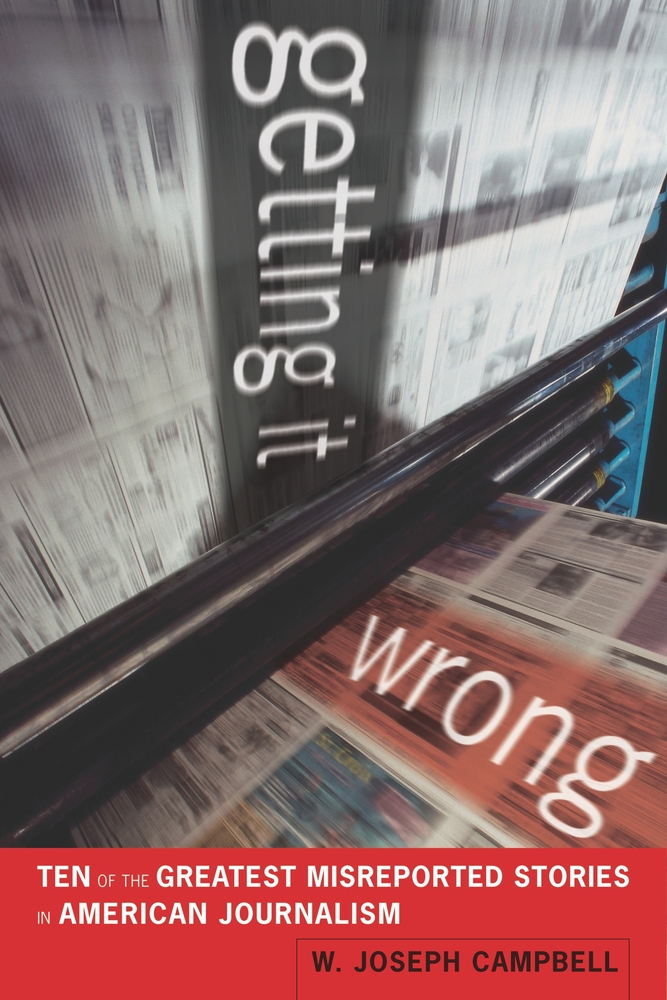
As I write in Getting It Wrong, my new book debunking prominent media-driven myths, the Gallup Organization reported in October 1967 that a plurality of Americans (47 percent to 44 percent) said deploying U.S. troops to Vietnam had been a mistake.

A roughly similar response was reported in early February 1968, three weeks before Cronkite’s offered his “mired in stalemate” assessment.

Anecdotally, journalists also detected a softening in support for the war.

I point out in Getting It Wrong that Don Oberdorfer, then a national correspondent for the Knight newspapers, wrote in December 1967 “that the ‘summer and fall of 1967 [had] been a time of switching, when millions of American voters—along with many religious leaders, editorial writers and elected officials—appeared to be changing their views about the war.'”

More recently, Greg Mitchell, then editor of the trade journal Editor & Publisher, noted in 2005: “Those who claim that [the Cronkite program] created a seismic shift on the war overlook the fact that there was much opposition to the conflict already.”

By late February 1968, then, “Cronkite’s ‘mired in stalemate’ assessment was neither notable nor extraordinary,” I note in Getting It Wrong. I cite Mark Kurlansky’s year-study of the 1968 which said that Cronkite’s view was “hardly a radical position” for the time.

Indeed, just four days before Cronkite’s assessment, the Wall Street Journal declared in an editorial that the U.S. war effort in Vietnam “may be doomed” and that “everyone had better be prepared for the bitter taste of defeat beyond America’s power to prevent.”

So reservations and pessimism were abundant and growing by the time of Cronkite’s commentary (which nowadays is often referred to as the “Cronkite Moment”).

As Jack Gould, the New York Times’ television critic, noted in a column soon after the purported “Cronkite Moment,” the anchorman’s assessment about America’s predicament in Vietnam “did not contain striking revelations.”

WJC

Related:

‘Lyndon Johnson went berserk’? Not because of Cronkite

In Cronkite Moment, Debunking, Media myths, Year studies on July 21, 2010 at 1:13 pm

President Lyndon Johnson supposedly “went berserk” when he heard Walter Cronkite’s on-air assessment in 1968 that the U.S. war effort in Vietnam was “mired in stalemate.”

So claims Tom Hayden, the 1960s antiwar activist in a commentary posted yesterday at the online site of the Nation magazine.

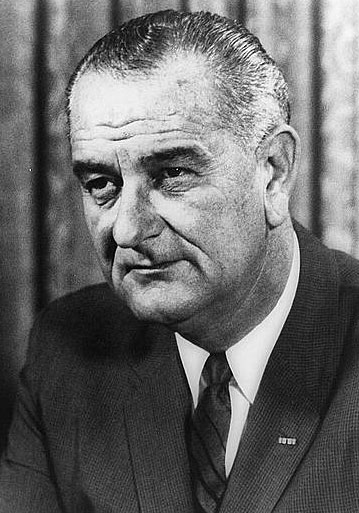
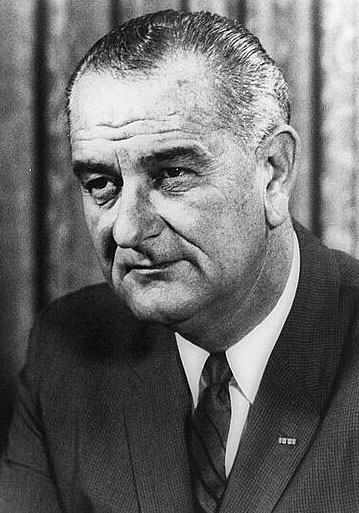
Johnson, unberserk

Hayden’s commentary invoked what often is called the “Cronkite Moment” in saying:

“Cronkite went to Vietnam in April 1968 to survey the state of that war, just as [MSNBC’s Rachel] Maddow spent time in Afghanistan investigating the current reality. When Cronkite pronounced Vietnam as ‘mired in stalemate,’ it is said that Lyndon Johnson went berserk.”

It’s a striking way of describing the mythical “Cronkite Moment”: I’ve never before read that Johnson supposedly “went berserk” in response to Cronkite’s characterization.

In any case, Hayden’s descriptions of Cronkite’s program and Johnson’s reaction are in error.

The trip to which Hayden refers took place not in April 1968 but in February that year. Cronkite went to Vietnam then to gather material for a special report that aired on CBS on February 27, 1968.

Johnson, however, did not see the Cronkite program when it aired.

As I discuss in Getting It Wrong, my new book debunking the “Cronkite Moment” and nine other media-driven myths, Johnson was in Austin, Texas, at the time Cronkite intoned his “mired in stalemate” assessment.

Johnson wasn’t going “berserk” on that occasion. Rather, he was offering light-hearted remarks at the birthday party for Texas Governor John Connally, a longtime political ally.

“Today you are 51, John,” the president said. “That is the magic number that every man of politics prays for—a simple majority. Throughout the years we have worked long and hard—and I might say late—trying to maintain it, too.”

Even if Johnson later saw the Cronkite program on videotape, he “gave no indication of having taken the anchorman’s message to heart,” I write in Getting It Wrong. The show represented no epiphany for the president, no occasion for going “berserk.”

Not long after Cronkite’s program, Johnson delivered a rousing speech in Minneapolis, in which he urged “a total national effort” to win the war in Vietnam. That speech was given March 18, 1968, and in it, the president declared:

“We love nothing more than peace, but we hate nothing worse than surrender and cowardice.”

He criticized war critics as wanting the United States to “tuck our tail and violate our commitments.”

Johnson’s aggressive remarks are quite difficult to square with his supposedly downcast, self-pitying reaction to Cronkite’s assessment about Vietnam.

Moreover, Cronkite’s “mired in stalemate” assessment about Vietnam was an unremarkable characterization by early 1968. Mark Kurlansky said as much in his well-received year-study about 1968.

Indeed, nearly seven months before the “Cronkite Moment,” the New York Times published on its front page a news analysis that said victory in Vietnam “is not close at hand. It may be beyond reach.”

The Times analysis was published in August 1967 beneath the headline “Vietnam: The Signs of Stalemate.”

I’ve noted at Media Myth Alert that former NBC newsman Frank McGee in March 1968 offered an analysis about Vietnam that was more direct and punchier than Cronkite’s “mired in stalemate” characterization.

“The war,” McGee said on an NBC News program that aired March 10, 1968, “is being lost by the [Johnson] administration’s definition.”

No hedging there about the war effort being “mired in stalemate.”

Lost.

Related:

Considering the irresistible ‘Cronkite Moment’

In Cronkite Moment, Debunking, Media myths, Year studies on July 17, 2010 at 1:15 pm

Cronkite (Library of Congress)

Legendary CBS newsman Walter Cronkite died one year ago today. The myth that helps define his celebrated standing in American journalism is as robust and irresistible as ever.

The myth is that of the “Cronkite Moment” of February 27, 1968, when the anchorman’s on-air assessment of the war in Vietnam as “mired in stalemate” supposedly swung public opinion against the conflict, altered U.S. policy, and encouraged President Lyndon Johnson not to seek reelection.

All of which is exaggerated. All of which represents a serious misreading of history.

As I discuss in Getting It Wrong, my new book debunking prominent media-driven myths, public opinion had begun turning against the Vietnam War weeks and months before Cronkite’s special report in late February 1968.

By October 1967, a plurality of Americans–47 percent–said having sent U.S. forces to Vietnam was a mistake, according to Gallup surveys.

Moreover, Cronkite’s “mired in stalemate” assessment was, I write in Getting It Wrong, “neither notable nor extraordinary,” noting that author Mark Kurlansky in his year-study of 1968 described Cronkite’s critique as “hardly a radical position” for the time.

Indeed, nearly seven months before the “Cronkite moment,” the New York Times published on its front page as analysis that said victory in Vietnam “is not close at hand. It may be beyond reach.” The Times analysis was published in August 1967 beneath the headline:

“Vietnam: The Signs of Stalemate.”

Cronkite’s assessment in late February 1968 was much less assertive than the observations offered less than two weeks later by Frank McGee of the rival NBC network.

“The war,” McGee said on an NBC News program that aired March 10, 1968, “is being lost by the [Johnson] administration’s definition.”

In any case, Johnson wasn’t much moved by such assessments–if he saw them at all.

The crucial component of the “Cronkite Moment” is that Johnson watched the program at the White House and, after hearing Cronkite’s “mired in stalemate” characterization, snapped off the television set, telling an aide or aides:

“If I’ve lost Cronkite, I’ve lost Middle America.”

Or words to that effect.

That purported comment infuses the “Cronkite Moment” with power, decisiveness, and enduring appeal. The comment was reiterated just yesterday, for example, in a blog post at the New American online site, which claimed:

“When famed evening news broadcaster Walter Cronkite delivered an editorial expressing his opinion that the war in Vietnam was not winnable, Johnson is reported to have said, ‘If I’ve lost Cronkite, I’ve lost Middle America.'”

Johnson

But the anecdote’s defining and most delicious element is in error: Johnson did not see the Cronkite program when it aired. He was at the time in Austin, Texas, at the 51st birthday party of Governor John Connally. Thus Johnson could not have had “the abrupt yet resigned reaction that so often has been attributed to him,” I write in Getting It Wrong.

Moreover, there is no evidence that Johnson watched the Cronkite program later, on videotape.

Even if he had, the program represented no epiphany for Johnson. Indeed, not long after Cronkite’s report, the president gave a rousing speech in Minneapolis, in which he urged a “total national effort” to win the war in Vietnam.

That speech was delivered March 18, 1968, and in it, the president declared:

“We love nothing more than peace, but we hate nothing worse than surrender and cowardice.”

He criticized war critics as wanting the United States to “tuck our tail and violate our commitments.”

Johnson’s aggressive remarks are difficult to square with his supposedly downcast, self-pitying reaction to Cronkite’s assessment about Vietnam.

As for Johnson’s decision not to seek reelection, the “Cronkite moment” certainly was a non-factor. Johnson’s announcement came at the end of March 1968, a month after the Cronkite program–and a couple of weeks after the president’s poor showing as a write-in candidate in the Democratic primary in New Hampshire.

What’s more, there’s evidence Johnson never intended to seek reelection, that he had privately decided in 1967 against another campaign.

He said as much in his memoirs, writing that he had told Connally early in 1967 that he had “felt certain [he] would not run” for another term.

WJC

Related:

The expanding claims for the ‘Cronkite Moment’

In Cronkite Moment, Debunking, Media myths, Year studies on July 16, 2010 at 12:23 pm

Prominent media-driven myths tend to “ascribe power, significance, and sometimes great courage to the news media and their practitioners,” I write in my new book, Getting It Wrong.

That’s an important reason why media myths are so appealing to journalists, and so tenacious. They serve to identify a time when the news media were decisive forces in American life, told truth to power, and prompted change for the better.

As I write in Getting It Wrong, “media myths invite indulgence in the ‘golden age fallacy,’ the flawed but enticing belief that there really was a time when journalism and its practitioners were respected and inspiring.”

Few media myths illustrate the yearnings inherent in the golden age fallacy as well as the so-called “Cronkite Moment” of February 1968, when CBS newsman Walter Cronkite took to the air and declared the U.S. military was “mired in stalemate” in Vietnam.

Cronkite’s assessment supposedly prompted a reappraisal of U.S. policy in Vietnam, swung public opinion against the war, and helped Lyndon Johnson decide against seeking reelection to the presidency.

To that roster of presumed effects, the blog Firedoglake would add revelations that “our leaders had lied and our policy might fail” in Vietnam.

A writer at the blog made those claims yesterday, in a post asserting that the U.S. news media news media “are not providing enough in-depth coverage to foster an informed debate about war policy” in Afghanistan. During the Vietnam War, he wrote, the “news media didn’t focus deeply enough on the possibility that our leaders had lied and our policy might fail until Walter Cronkite said so on CBS.”

In reality, the prospects of failure in Vietnam had been discussed in the news media long before Cronkite’s program (which did not accuse U.S. military and political leaders of having lied about the war).

As I point out in Getting It Wrong, Cronkite’s “mired in stalemate” assessment was neither notable nor extraordinary in early 1968.

“Leading American journalists and news organizations had … weighed in with pessimistic assessments about the war long before Cronkite’s special report on Vietnam,” I note, adding that Mark Kurlansky, in his year-study about the events of 1968m wrote that Cronkite’s view was “hardly a radical position” for the time.

Moreover, the Wall Street Journal said in an editorial four days before the Cronkite program that the U.S. war effort in Vietnam “may be doomed” and that “everyone had better be prepared for the bitter taste of defeat beyond America’s power to prevent.”

And nearly seven months before Cronkite’s “mired in stalemate” assessment, New York Times correspondent R.W. Apple Jr. had cited “disinterested observers” in reporting that the war in Vietnam “is not going well.”

Victory, Apple wrote, “is not close at hand. It may be beyond reach.”

Apple’s downbeat analysis was published on the Times’ front page in August 1967, beneath the headline:

“Vietnam: The Signs of Stalemate.”

Several months before that, in late March 1967, the nationally syndicated columnists Rowland Evans and Robert Novak ruminated about “the frustrations of … a seemingly endless war [in Vietnam] that will not yield to the political mastery of Lyndon Johnson. Never before in his career as a political leader … has Mr. Johnson been so immobilized.”

So Cronkite’s editorial comments about Vietnam offered no startling insight, no fresh analysis.

As Jack Gould, the New York Times’ television critic, noted in his column at the time, Cronkite’s assessment about America’s predicament in Vietnam “did not contain striking revelations.” It served instead, Gould wrote, “to underscore afresh the limitless difficulties lying ahead and the mounting problems attending United States involvement.”

A reminder, it was: Not a revelation.

WJC

Related:

Myth resurfaces in Cronkite-collaborator report

In Cronkite Moment, Debunking, Media myths, Year studies on May 15, 2010 at 10:28 am

The Yahoo News report yesterday that venerable CBS anchorman Walter Cronkite may have quietly collaborated with antiwar activists in the late 1960s stirred a modest flurry of commentary in the blogosphere.

Cronkite in Vietnam, 1968

Few mainstream media outlets appear to have touched the story, which I find to be something of a stretch. An exception was Rupert Murdoch’s  New York Post, which carried a brief article, essentially a rewrite of the Yahoo report.

That report cited newly released FBI documents in saying that in late 1969, “Cronkite encouraged students at Rollins College in Winter Park, Fla., to invite Maine Sen. Edmund Muskie to address a protest [against the war] they were planning near Cape Kennedy (now known as Cape Canaveral). Cronkite told the group’s leader that Muskie would be nearby for a fundraiser on the day of the protest, and said that ‘CBS would rent [a] helicopter to take Muskie to and from site of rally.'”

Inevitably, the report recalled Cronkite’s famous on-air editorial comment delivered February 27, 1968, at the end of a special report on Vietnam. On that occasion, Cronkite declared the U.S. war effort in Vietnam was “mired in stalemate.”

A post yesterday at mediaite.com noted Cronkite’s 1968 commentary, saying it “is often credited with turning the tide of public opinion against the war.”

Cronkite’s commentary that night has become the stuff of legend. But it was scarcely so powerful or decisive as to much move public opinion.

As I discuss in Getting It Wrong, my forthcoming book about media-driven myths, public opinion had begun turning against the Vietnam War months before the Cronkite program.

In October 1967, a Gallup survey reported that the percentage of respondents saying that U.S. military presence in Vietnam was a mistake had reached a plurality—47 percent. That was 4½ months before Cronkite delivered his on-air commentary. (In August-September 1965, just 24 percent of Gallup poll respondents said sending troops to Vietnam was a mistake.)

In a Gallup poll completed in early February 1968, three weeks before the Cronkite program, the proportion saying the war was a mistake stood at 46 percent; 42 percent said it had not been a mistake.

Gallup asked the question again in a poll completed the day the Cronkite program aired, finding that 49 percent of the respondents said U.S. military intervention in Vietnam had been a mistake; 42 percent said it had not.

By late February 1968, Cronkite’s “mired in stalemate” assessment was, I write in Getting It Wrong, “neither notable nor extraordinary.”

I also note that Mark Kurlansky, author of a year-study about 1968, declared Cronkite’s view “hardly a radical position” for the time.

Cronkite’s remarks that night were fairly mild–certainly less emphatic than comments offered about two weeks later by Frank McGee of the rival NBC network.

“The war,” McGee declared on an NBC News program March 10, 1968, “is being lost by the administration’s definition.”

As I’ve noted previously, it is a bit surprising that McGee’s pointed editorial comments are not more often remembered.

WJC

‘Getting It Wrong’ at Kensington’s ‘Day of the Book’

In 1897, Debunking, Media myths, Year studies on April 25, 2010 at 8:19 am

I participated today in the “Day of the Book” festival in the antique row section of  Kensington, MD.

The event represented first book-event exposure for Getting It Wrong, my forthcoming book that addresses, and debunks, 10 prominent media-driven myths.

Getting It Wrong will be published this summer by University of California Press. Chapter One may be read here.

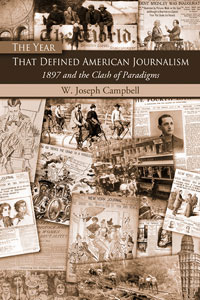
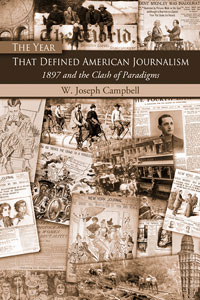
Also on display at the “Day of the Book” was my year study, The Year That Defined American Journalism: 1897 and the Clash of Paradigms, which was published in 2006. The book tells the story of a decisive year in American journalism.

Book signing in Kensington (AMR photo)

Principal organizer of the “Day of the Book” was Kensington Row Bookshop and at least 80 authors and poets had registered for the event.

The threat of rain kept some of them away. But nasty weather was a no-show and a fine time was had.

I enjoyed meeting several other local authors, including Bernadette LeDoux-Brodsky,  a Parisienne who used to teach French at Georgetown University; Bob Gregg, a retired dean and professor at American University, and Ben Farmer, a young author who graduated a few years ago from Kenyon College.

Bernadette said the ambiance in Kensington evoked for her the cafe scene of streets in Paris–sans les apéritifs, of course. She sold copies of her Ici et Ailleurs: Parisienne dans le Maryland. Bob sold several of his novels, among them The Scarecrow in the Vineyard. And the gregarious Ben Farmer seemed to make a lot of friends as well several sales of his new novel, Evangeline.

For me, the event was mostly a chance to gauge interest in Getting It Wrong. And more men than women stopped by to chat about the book and/or take a flyer.

There also was some mild interest in The Year That Defined American Journalism (see book-signing photo, above).

The dog in the picture? That’s Lil, our bichon frise. She was at the book fair, too, and proved to be quite the magnet.

WJC

Today’s Boston Marathon: Recalling the 1897 inaugural run

In 1897, Anniversaries, Year studies, Yellow Journalism on April 19, 2010 at 7:17 pm

An ESPN columnist said it well today:

“The Boston Marathon turned 114 years old on Monday, but it never gets old.”

Indeed. The Boston Marathon is perhaps the most famous and prestigious race of its kind in the United States.

The first running of the storied marathon was in 1897, the year that defined American journalism.  The race was one of the year’s landmark moments.

As I wrote in a book by that title, the inaugural Boston Marathon was run April 19, 1897, having been “inspired by the revival of the marathon race at the first modern Olympic games in 1896.”

The course, I noted in The Year That Defined American Journalism, began in Ashland, Massachusetts, and was 24.5 miles long–about 1.5 miles shorter than that of a contemporary marathon race.

Fifteen men were in the field in 1897.

Some  of them, said the Boston Post, in revealing a delicious sense for detail, “looked as if they could spare a few pounds.”

Winner of the 1897 Boston Marathon

Along the course that spring day, “the runners answered the cheers of spectators with bows and waves.”

The winner of the inaugural run was John J. McDermott of the Pastime Athletic Club in New York. He finished the course in 2 hours, 55 minutes, and 10 seconds, which the Boston Globe said exceeded the record time of the 1896 Olympics.

McDermott supposedly dropped nine pounds during the race, suffered severe leg cramps, and was forced to cut through a funeral procession as the marathon neared the finish line, where some 3,000 spectators awaited.

“This probably will be my last long race,” McDermott said afterward. “I hate to quit now, because I will be called a quitter and a coward, but look at my feet.

“Do you blame me for wanting to stop it? I only walked about a quarter of a mile in the whole distance and it was 20 miles before I lagged a step.”

But, he added, “I think I shall be all right tomorrow.”

McDermott entered the 1898 edition of Boston Marathon, and finished fourth.

WJC

<!–[if !mso]>

The winner was John J. McDermott of the Pastime Athletic Club in New York, who finished the course in 2 hours, 55 minutes, and 10 seconds, which the Boston Globe said exceeded the record time of the 1896 Olympics.[i] McDermott dropped nine pounds, suffered severe leg cramps, and was forced to cut through a funeral procession on the last leg of the race. Some 3,000 spectators awaited at the finish line.[ii] “This probably will be my last long race,” McDermott said afterward. “I hate to quit now, because I will be called a quitter and a coward, but look at my feet. Do you blame me for wanting to stop it? I only walked about a quarter of a mile in the whole distance and it was 20 miles before I lagged a step. I think I shall be all right tomorrow.”


[i]. “Record Time,” Boston Globe (20 April 1897): 1.

[ii]. The crowd estimate appeared in “Beat the Greeks,” Boston Post (20 April 1897): 8.

The murky derivation of ‘All the News That’s Fit to Print’

In 1897, Media myths, New York Times, Year studies on February 11, 2010 at 8:39 am

Prominent and famous though it is, the derivation of “All the News That’s Fit to Print,” the New York Times’ famous motto, is shrouded in a bit of media myth.

The version the Times advanced at its centenary in 1951, in a house newsletter called Times Talk, described the motto as “a hybrid.” Times Talk said Adolph Ochs, who acquired the then-beleaguered Times in 1896, borrowed a key portion of the slogan from the Philadelphia Times.

The Times Talk account was cited by Susan E. Tifft and Alex S. Jones in their prodigious study, The Trust: The Private and Powerful Family Behind The New York Times.

Supposedly, Ochs borrowed “All the News,” the motto of the Philadelphia Times, appended “That’s Fit to Print,” and thus concocted the most famous seven-word phrase in American journalism.

The account, however, is incorrect.

The Philadelphia Times never used “All the News” as its motto during the summer and fall of 1896, when Ochs acquired control of the Times and began using “All the News That’s Fit to Print” as a marketing and advertising slogan.

A thorough review of issues of the Philadelphia Times published in the summer and fall of 1896 showed that the newspaper carried a number of promotional statements, none of which was particularly pithy, or memorable.

As I wrote in my 2006 book, a year study titled The Year That Defined American Journalism: 1897 and the Clash of Paradigms, the nearest approximation to “All the News” was this rambling assertion, which appeared a few times beneath the front page nameplate of the Philadelphia Times:

“If You Want All the News of Every Description Attractively Presented You Will Read the Times.”

That clunky phrase appeared in the Philadelphia Times on August 4, 11, and 17, 1896. Ochs, according to Tifft and Jones, was installed as the New York Times publisher on August 18, 1896.

“All the News That’s Fit to Print” did not makes its début until early October 1896, spelled out in a row of red lights on an advertising sign above New York’s Madison Square.

Later that month, “All The News That’s Fit to Print” appeared in New York Times advertisements published in the trade journal Fourth Estate. By the end of October 1896, the phrase had taken a place in a corner of the Times’ editorial page.

And 113 years ago yesterday, on February 10, 1897, the Times moved the phrase without notice or fanfare to the upper left corner, the left “ear,” of its front page—a place of prominence that it has occupied ever since.

What prompted the motto’s move to the front page is not entirely clear. But the intent seems undeniable: To offer a rebuke to the bold, self-promoting yellow journalism of William Randolph Hearst and Joseph Pulitzer.

But it appears that “All the News That’s Fit to Print” was Ochs’ creation, as Harrison E. Salisbury maintained in Without Fear or Favor: The New York Times and Its Times, an impressive insider’s study of the Times. (Salisbury cited as his source an Ochs manuscript in the Times archives.)

By the way, I quote Salisbury’s Without Fear or Favor in Getting It Wrong, my forthcoming book about media-driven myths.

Without Fear or Favor was a useful source in the chapter in Getting It Wrong that addresses the myth surrounding the Times’ reporting in the run-up to the Bay of Pigs invasion in April 1961.

WJC

‘Yours neatly, sweetly, completely’: Revisiting the Times’ motto contest

In 1897, New York Times, Year studies, Yellow Journalism on February 10, 2010 at 12:06 am

How about this as the motto for the New York Times? “Clean, crisp, bright, snappy; read it daily and be happy.”

Or this? “Bright as a star and there you are.”

Or? “Pure in Purpose, Diligent in Service.”

Or? “You do not want what the New-York Times does not print.”

They were among thousands of entries submitted in a “motto contest” organized by the Times and its new owner, Adolph Ochs, in autumn 1896.

The contest ostensibly was to encourage readers to propose “a phrase more expressive of the Times’ policy” than “All the News That’s Fit to Print,” which Ochs had begun using as a marketing and advertising slogan in early October 1896. By the end of that month, the phrase had taken a modest place in a corner of the Times’ editorial page.

And on February 10, 1897–113 years ago today–“All the News That’s Fit to Print” appeared in the upper left corner, the “left ear,” of the Times’ front page, a place the motto has occupied ever since.

The 1896 motto contest was in reality a way to call attention to the Times in New York’s crowded newspaper market—one dominated by the yellow journalism of William Randolph Hearst and Joseph Pulitzer. Ochs had acquired the beleaguered Times in August 1896 and faced such rough going that Pulitzer’s New York World declared several months later:

“The shadow of death is settling slowly but surely down upon” the Times.

The motto contest, cheesy though it may seem today, stirred a fair amount of attention–and reader interaction–in 1896. The Times promised to pay $100 to the person who proposed in ten words or fewer a slogan deemed better than “All the News That’s Fit to Print,” which had first appeared in early October 1896, spelled out in a row of red lights on an advertising sign above New York’s Madison Square.

Among the entries sent to the Times were clunky such suggestions as: “All the News Worth Telling,” “All the News That Decent People Want,” and “The Fit News That’s Clean and True.”

Other were:

“Full of meat, clean and neat.”

“Instructive to all, offensive to none.”

“The people’s voice, good the choice.”

“Aseptic journalism up to date.”

“Yours neatly, sweetly, and completely.”

As I wrote in my 2006 book, a year study titled The Year That Defined American Journalism: 1897 and the Clash of Paradigms: “Before the contest ended, the Times altered the stakes by making clear it would not abandon ‘All the News That’s Fit to Print.’

“The Times justified this change of heart by saying no phrase entered in the contest was more apt and expressive than ‘All the News That’s Fit to Print.’ The $100 prize would be awarded, to the person adjudged to have submitted the best entry. But the motto would not be changed.”

Indeed, “All the News That’s Fit to Print” lives on as the most famous slogan in American journalism, the “leitmotif not merely for the Times, but also … for most other general-interest papers in the country,” a columnist for the Wall Street Journal once wrote.

The Times characterized its motto contest not as a grubby publicity stunt but as an opportunity for high-minded rumination about New York City newspapers. The contest, it said, had “set the people of this city to thinking upon the subject of newspaper decency in a more attentive and specific way than has been their custom.”

In any event, a committee of Times staffers winnowed the entries to 150 semi-finalists, which were submitted to Richard Watson Gilder, editor of The Century magazine. Gilder selected four finalists, which were:

  • Always decent; never dull.
  • The news of the day; not the rubbish.
  • A decent newspaper for decent people.
  • All the world’s news, but not a school for scandal.

As I wrote in The Year That Defined American Journalism, Gilder noted “that terms of the contest had changed from the original intent of selecting a slogan that ‘more aptly express the distinguishing characteristics of the New-York Times’ to the more theoretical task of determining which entry ‘would come nearest to it in aptness.’”

That entry, Gilder determined, was submitted by D.M. Redfield of New Haven, Connecticut. Redfield’s suggestion:

“All the world’s news, but not a school for scandal.”

Catchy.

WJC

A nod to ‘Big Years’

In 1897, Year studies on December 13, 2009 at 8:21 pm

The “Outlook” section of today’s Washington Post carries an interesting look at recent books about important years.  “Year studies,” as they’re known in the academy.

The Post article, by the “Outlook” editor Carlos Lozada, noted that several studies were published in 2009 about years that changed the world or changed everything. “In an homage to anniversaries divisible by 10,” Lozada wrote, these books “focus on 1959, 1969, 1979 and, of course, 1989 (though ’99 is absent. Too soon?).”

As it turns out, he added, “there is plenty of competition in the Big Years department; identifying history’s most consequential calendar is a well-worn genre for journalists and historians, producing books such as David McCullough’s ‘1776,’ Margaret MacMillan’s ‘Paris 1919,’ Ray Huang’s brilliantly titled ‘1587: A Year of No Significance’ and countless more.”

Lozada might well have mentioned the first year study about U.S. media — my 2006 book, The Year That Defined American Journalism: 1897 and the Clash of Paradigms.

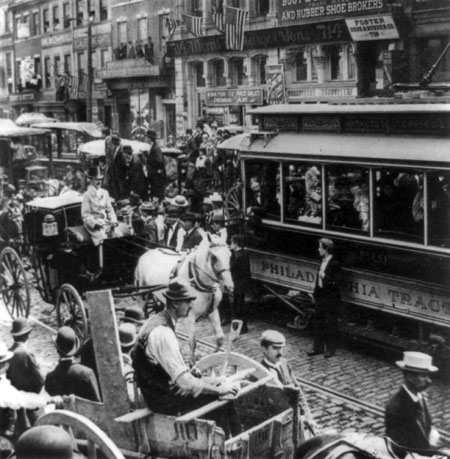
Philadelphia street scene in 1897

As I wrote in The Year That Defined American Journalism:

“Significantly, 1897 was the year when American journalism came face-to-face with a choice among three rival and incompatible visions, or paradigms, for the profession’s future. The emergence of these rival visions is central to the exceptionality of 1897. The choices that materialized then were to set a course for American journalism in the twentieth century and beyond.

“The most dramatic of the three paradigms was the self-activated, participatory model of [William Randolph] Hearst’s yellow journalism. Hearst called it the ‘journalism of action’ or the ‘journalism that acts.’ It was a paradigm of agency and engagement that went beyond gathering and publishing the news. Hearst’s New York Journal, the leading exemplar of the activist paradigm, argued that newspapers were obliged to inject themselves, conspicuously and vigorously, in righting the wrongs of public life, and in filling the void of government inaction and incompetence. …

“The antithesis of the ‘journalism of action’ was the conservative, counter-activist paradigm represented by the New York Times [of Adolph Ochs] and its lofty commitment to ‘All the News That’s Fit to Print.’ The Times model emphasized the detached, impartial, yet authoritative treatment of news. Unlike its conservative counterparts such as the New York Sun, the Times was not reluctant to adapt innovative technologies of the 1890s. The Times in 1897 made memorable use of halftone photographs in its upscale Sunday magazine supplement, presenting the images in a sober, restrained manner quite unlike the flashy treatment typical of Hearst’s yellow journalism.

The Year That Defined American Journalism: About the 'Big Year,' 1897

“The most eccentric of the three paradigms was non-journalistic, even anti-journalistic: It was a literary approach pursued by Lincoln Steffens upon his becoming city editor of the New York Commercial Advertiser in late 1897. Deliberately, and even demonstratively, Steffens shunned veteran newspapermen and instead recruited college-educated writers who had little or no experience in journalism. He then sent them out to write, to hone their talent by telling stories about the joys, hardships, and serendipity of life in New York City.”

Eighteen-ninety-seven also was the year of publication of what became American journalism’s best-known, most-reprinted editorial, the New York Sun‘s “Is There A Santa Claus?” It also was the year when the term “yellow journalism” first appeared in print, in the old New York Press. And the Times motto, “All the news that’s fit to print,” was given a permanent berth on the newspaper’s front page in 1897.

Moreover, the cinema in 1897 was in its “novelty year.” The presidential inauguration of William McKinley in March 1897 was the first to be captured on film.

But back to Lozada: He closed his article by ruminating about whether 2009 eventually will be recalled as a “Big Year.”

At this point, of course, who can tell? Lozada’s take: “it may not be a 1776 or a 1989, but 2009 seems destined to go down as a year of at least some significance. What for? Who knows. We just live here. Fortunately, it needn’t be for something that actually happened in these past 12 months, but perhaps for some future event that will be linked to our calendar.”

Not everyone finds the year study very appealing. A snarky review published during the summer in Canada’s National Post began by noting:

“Lately, it seems not a year goes by without a new book proclaiming a certain 12-month period the Most Important Year Ever.” That’s a fair point.

But in mild defense of the year-study approach, allow me to say that The Year That Defined American Journalism brought a measure of methodological freshness to journalism history. Before then, the single-year study had been neglected or overlooked in the field.

WJC