W. Joseph Campbell

‘We’re trying to toughen you up’: Never happened with Obama and news media

In Debunking, Media myths on October 7, 2012 at 8:39 am

“We’re trying to toughen you up.”

Remember that?

It was nearly six years ago when New York Times columnist Maureen Dowd made the comment to then-Senator Barack Obama, as his campaign for the presidency was unfolding.
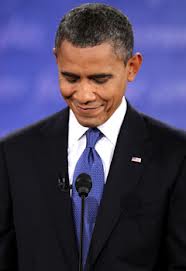
Obama at the debate

Her remark was in reply to Obama’s criticism — uttered perhaps half in jest — about Dowd’s having mentioned his prominent ears. (She wrote in a column in October 2006: “He’s intriguingly imperfect: His ears stick out, he smokes, and he’s written about wrestling with pot, booze and ‘maybe a little blow’ as a young man.”)

“You talked about my ears,” Obama told her later, “and I just want to put you on notice: I’m very sensitive about — what I told them was I was teased relentlessly when I was a kid about my big ears.”

Dowd said in response:

“We’re trying to toughen you up.”

Of course, “toughen up” never happened. The mainstream U.S. news media rarely have treated Obama with anything but swooning deference. He and his policies seldom have been exposed to rigorous and critical assessment. Not in any sustained way, and certainly not during the 2012 election season.

As Andrew Klavan wrote recently in City Journal: “No other president could have … presided over such a crippled economy and such universal failures at war and in foreign policy and escaped almost without mainstream blame.”

The upshot of media deference was on vivid display Wednesday night, when Obama’s economic record was eviscerated by Republican challenger Mitt Romney in a debate stunning for its lopsidedness.

Not even Richard Nixon lost so utterly in 1960 in his debates with John F. Kennedy.

For the first time in his presidency, Obama was called to account publicly and prominently for the economic failings of his administration. And he had nothing in rebuttal: Romney’s unrelenting pressure left Obama looking flustered, hapless.

Since then, the mainstream news media have been inclined to blame Obama’s performance on Romney’s having told nothing but lies, on the clumsy moderation of Jim Lehrer of PBS, and (in Al Gore’s telling) on the altitude in Denver, the debate’s host city.

Even now, the mainstream news media are little inclined to “toughen up” Obama, even with two debates ahead and his presidency very much in the balance.

An inevitable reason for all this can be traced to the dearth of intellectual diversity at leading U.S. news organizations. The ideological imbalance in newsrooms is hardly a secret: News organizations themselves have called attention to this defect from time to time.

For example, the then-ombudsman for the Washington Post, Deborah Howell, wrote in a post-election column in November 2008:

“I’ll bet that most Post journalists voted for Obama. I did. There are centrists at The Post as well. But the conservatives I know here feel so outnumbered that they don’t even want to be quoted by name in a memo.”

Howell’s column quoted Tom Rosenstiel, director of the Project for Excellence in Journalism, as saying:

“The perception of liberal bias is a problem by itself for the news media. It’s not okay to dismiss it. Conservatives who think the press is deliberately trying to help Democrats are wrong. But conservatives are right that journalism has too many liberals and not enough conservatives.

“It’s inconceivable that that is irrelevant.”

More recently, in his farewell column in August, Arthur Brisbane, the New York Times public editor (or ombudsman), chided the newspaper’s “political and cultural progressivism” which, he said, “virtually bleeds through the fabric of The Times.

“As a result,” Brisbane declared, “developments like the Occupy movement and gay marriage seem almost to erupt in The Times, overloved and undermanaged, more like causes than news subjects.”

Rather than treat the “overloved and undermanaged” critique as a matter of serious consideration, the Times’ executive editor, Jill Abramson, rejected it out of hand, dismissing it as obviously erroneous.

Brisbane’s observations, the product of two years as the newspaper’s ombudsman, deserved a reception far more thoughtful and serious-minded than that. Especially given the newspaper’s mostly forgotten internal report in 2005 which said in part:

“Both inside and outside the paper, some people feel we are missing stories because the staff lacks diversity in viewpoints, intellectual grounding and individual backgrounds. We should look for all manner of diversity. We should seek talented journalists who happen to have military experience, who know rural America first hand, who are at home in different faith.” (Emphasis added.)

The critique of the news media’s ideological imbalance is more than impressionistic, more than “perception”: A survey in 2008 of journalists for national news publications reported that 8 percent identified themselves as “conservative,” 32 percent as “liberal,” and 53 percent as “moderate.”

Such imbalance has given rise to the occasional vague promise to promote intellectual diversity in the newsroom.

But nothing much changes.  As I pointed out in my 2010 book, Getting It Wrong, “Viewpoint diversity is an issue not much discussed” in American newsrooms — “places that sometimes seem to be bastions of group-think.”

In that regard, I quoted Michael Kelly, former editor of National Journal, who once observed:

“Reporters like to picture themselves as independent thinkers. In truth, with the exception of 13-year-old girls, there is no social subspecies more slavish to fashion, more terrified of originality and more devoted to group-think.”

Obama has thrived for years within the reassuring confines of the media cocoon which, when ripped away as it was Wednesday night, makes for dramatic theater. But it does little for the news media and their sagging credibility.

WJC

Recent or related:

1960 myth ricochets around the media in advance of Obama-Romney debate

In Debunking, Error, Media myths, Media myths and radio, Television on October 3, 2012 at 1:58 pm

Kennedy, Nixon at their mythical debate

In the hours before tonight’s encounter between President Barack Obama and Republican challenger Mitt Romney, the beguiling myth of the first-ever presidential debate — the notion that image trumped spoken word — has ricocheted across the U.S. news media.

News organizations of all types have been invoking the myth, which has it that television viewers overwhelmingly felt John F. Kennedy won the first televised debate in 1960 while radio listeners thought Richard M. Nixon had the best of it.

Here are a few examples of media indulgence in that fable:

  • The Boston Globe:  “According to those listening on the radio, Nixon won the debate or it was a draw. But most Americans watched it on TV, and they overwhelmingly were impressed by the … collected performance” of Kennedy.
  • The Hartford (Connecticut) Courant:  “Famously, those who listened to the radio thought that Nixon had defeated Kennedy in their famous first debate in 1960. By contrast, those watching on television thought that the dapper and cool Kennedy had won.”
  • Entertainment Weekly: “Radio audiences thought Nixon won the debate, but those who watched on television were convinced that Kennedy dominated.”
  • Huffington Post: “Richard Nixon’s haggard appearance vs. John F. Kennedy’s vigor is widely cited as contributing to a Kennedy victory in the first 1960 debate. But polls showed that was true mostly for those who watched it on TV, while those listening to the radio generally picked Nixon as victor.”
  • NBC Channel 5 in Chicago: “Pollsters found that people who listened to this debate on the radio thought that Nixon, the vice president, beat Kennedy. But those who followed on television … sided with Kennedy, who won the election.”
  • A blog of the Voice of America, the U.S. government’s voice abroad: ” Nixon’s refusal to wear makeup did not hurt him with those listening on the radio. They gave him the edge.  But Kennedy had the advantage with TV viewers and the rest, as they say, is history.”

Make that bad history.

There is quite simply no persuasive evidence to support the notion that television viewers and radio listeners decisively disagreed about the outcome of the first Kennedy-Nixon debate, which took place in Chicago on September 26, 1960.

That such an effect did occur — or must have occurred — is attractive for a number of reasons: It acknowledges the presumptive power of the televised image. It renders uncomplicated the intricacies of an important political moment of long ago. And it offers an enduring though misguided lesson that content matters less than appearance.

Significantly, the broad media embrace of the debate myth ignores the powerful dismantling published 25 years ago by scholars David L. Vancil and Sue D. Pendell.

In their article in Central States Speech Journal, Vancil and Pendell noted that one “of the most perplexing legacies of the first Kennedy-Nixon debate is the claim that radio listeners and television viewers came to opposite conclusions about the debate winners.”

They proceeded to explode that notion, pointing out that accounts of viewer-listener disagreement about the debate typically were anecdotal and impressionistic — hardly representative of the American electorate in 1960.

They also called attention to “a false impression” that “major polling organizations, such as Gallup, concentrated part of their attention on the reactions of radio listeners.” That hardly was the case.

The one polling organization that did identify radio listeners in a post-debate survey was Sindlinger & Co.

Sindlinger reported that poll respondents who listened to the debate on radio thought Nixon won, by a 2-to-1 margin.

But the Sindlinger sub-sample of radio listeners included 282 respondents — of whom only 178 offered an opinion about the debate winner, far too few to permit meaningful generalizations or conclusions.

Not only was the sub-sample unrepresentative, it did not identify from where the sub-sample of radio listeners was drawn. “A location bias in the radio sample,” Vancil and Pendell pointed out, “could have caused dramatic effects on the selection of a debate winner. A rural bias, quite possible because of the relatively limited access of rural areas to television in 1960, would have favored Nixon.”

Those and several other defects render the Sindlinger result meaningless.

It should be noted that the run-up to tonight’s debate has brought some faint recognition about the mythical character of viewer-listener disagreement in the 1960 debate.

For example, the latest Washington Examiner column of political commentator Michael Barone reads as if he had consulted recent posts at Media Myth Alert.

Barone wrote:

“It is generally held that television viewers felt Kennedy won the first debate, while those listening on radio, unaware of Nixon’s improvised makeup, felt Nixon won. That’s probably overstated. Contemporary [news] accounts suggest most viewers felt both candidates did well, while the single poll of radio listeners had a small sample possibly tilted toward pro-Nixon rural areas lacking TV reception.”

Such observations, however well-reasoned, likely are to be of scant effect in countering the present contagion of the 1960 debate myth.

Like many media-driven myths, it is after all almost too delicious not to be true.

WJC

Recent or related:

In run-up to Obama-Romney encounter, myth of first presidential debate circulates anew

In Anniversaries, Debunking, Error, Media myths, Television on September 30, 2012 at 5:20 am

The runup to this week’s televised debate between President Barack Obama and Republican challenger Mitt Romney has, inevitably, spurred the renewed circulation of a hoary media myth centered around the first such presidential debate, in September 1960.

That encounter, between John F. Kennedy and Vice President Richard M. Nixon, gave rise to the media myth of viewer-listener disagreement: Those who watched the debate on television supposedly thought Kennedy got the best of it; those who listened on radio thought Nixon was the winner.

The myth of viewer-listener disagreement was demolished long ago, in a journal article by scholars David L. Vancil and Sue D. Pendell.

But demolition hasn’t killed the myth.

Indeed, the notion that viewers and listeners came away with markedly different impressions of the debate’s outcome is just too delicious, and too appealing, for journalists to sidestep. After all, viewer-listener disagreement suggests the primacy of television and the triumph of image over substance.

And that’s just what the Chicago Tribune suggests, in an article today recalling the first Kennedy-Nixon debate, which took place September 26, 1960.

The Tribune account says Kennedy won an “unexpected and devastating victory” in that encounter — the first of four debates during that campaign.

“Yet,” the Tribune declares, “not everyone thought Kennedy had won the debate. Pollsters found that those who heard the radio broadcast thought Nixon won. The very first televised debate wasted no time in demonstrating that the ‘medium is the message,’ a maxim coined by communications guru Marshall McLuhan a few years later and leveraged by campaign managers ever since. Television viewers experienced a different debate from radio listeners.”

Who the “pollsters” were, the Tribune doesn’t say.

Only one polling organization, Sindlinger & Company, conducted a survey of any size that included a sub-sample of radio listeners.

The Sindlinger survey, taken the day after the Kennedy-Nixon debate, indicated that radio listeners thought Nixon had prevailed, by a margin of 2-to-1.

But in their article published in Central States Speech Journal in 1987, Vancil and Pendell pointed out that the Sindlinger survey included more than 2,100 respondents — of whom only 282 had listened to the debate on radio.

They noted that “a subordinate group of 282 interviews is below the threshold normally required for a national sample.” Not only that, but just 178 of the 282 respondents “expressed an opinion on the debate winner,” Vancil and Pendell wrote.

Moreover, they said, the Sindlinger sample did not specify where the radio listeners lived, adding:

“A location bias in the radio sample … could have [had] dramatic effects on the selection of a debate winner.  A rural bias, quite possible because of the relatively limited access of rural areas to television in 1960, would have favored Nixon.”

Given the defects of the unrepresentative Sindlinger sample, Nixon’s reported 2-to-1 margin over Kennedy among radio listeners dissolves as meaningless.

And was the first debate really such a “devastating victory” for Kennedy?

You wouldn’t know it from reading the Tribune’s day-after coverage.

“It was a battle, not of minds, but of personalities,” the newspaper reported in its main story about the Kennedy-Nixon encounter. The candidates, the newspaper said, “were almost subdued in demeanor.”

The Tribune further noted that the debate produced “no flashes of wit, no memorable phrases, no give-and-take with a personal flavor.”

It was, the Tribune, said, “a political television show familiar to many viewers ….”

WJC

Recent or related: