W. Joseph Campbell

Posts Tagged ‘Version variability’

Newsman tells ‘a simple truth,’ changes history: Sure, he did

In Cronkite Moment, Debunking, Media myths on November 21, 2010 at 2:42 pm

Media-driven myths, I write in my latest book, Getting It Wrong,  “tend to minimize or negate complexity in historical events and offer simplistic and misleading interpretations instead.”
Cronkite

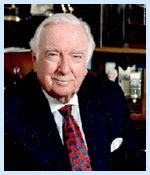
So it is with the mythical “Cronkite Moment,” one of the most tenacious myths of American journalism.

An important reason for the myth’s hardiness is that it presents a simplified version of a supposed turning point in the long political career of President Lyndon Johnson.

The “Cronkite Moment” has it that CBS News anchorman Walter Cronkite told truth to power in reporting that the U.S. military was “mired in stalemate” in Vietnam.

Supposedly, Johnson watched Cronkite’s special report on Vietnam, which aired February 27, 1968. Upon hearing the anchorman’s “mired in stalemate” assessment, the president switched off the television set and told an aide or aides:

“If I’ve lost Cronkite, I’ve lost Middle America.”

Or something to that effect.

A blogger at CapeCodToday.com recounted the familiar and delicious tale of the “Cronkite Moment” yesterday, writing:

“President Lyndon Johnson is reported to have said … after hearing Cronkite’s report, ‘If I’ve lost Cronkite, I’ve lost middle America.’ Not long after that, LBJ stepped down from office, refusing to run for a second term.

“A news person had told a simple truth, and it had helped change history.”

Of course Cronkite’s report on Vietnam had no such effect on history.

There is quite simply no link between the “Cronkite Moment” and Johnson’s decision–announced at the end of March 1968–not to stand for reelection that year.

None.
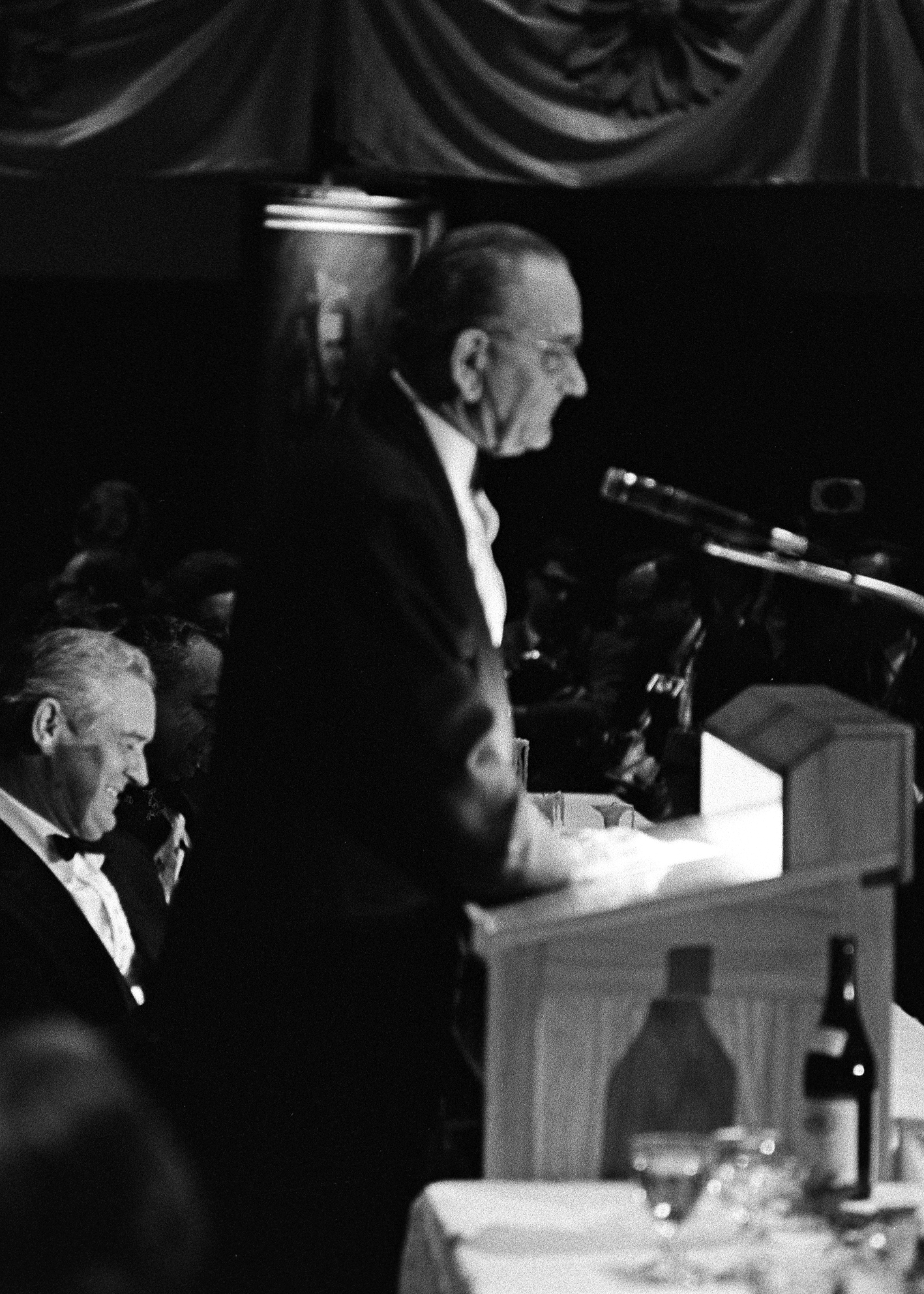
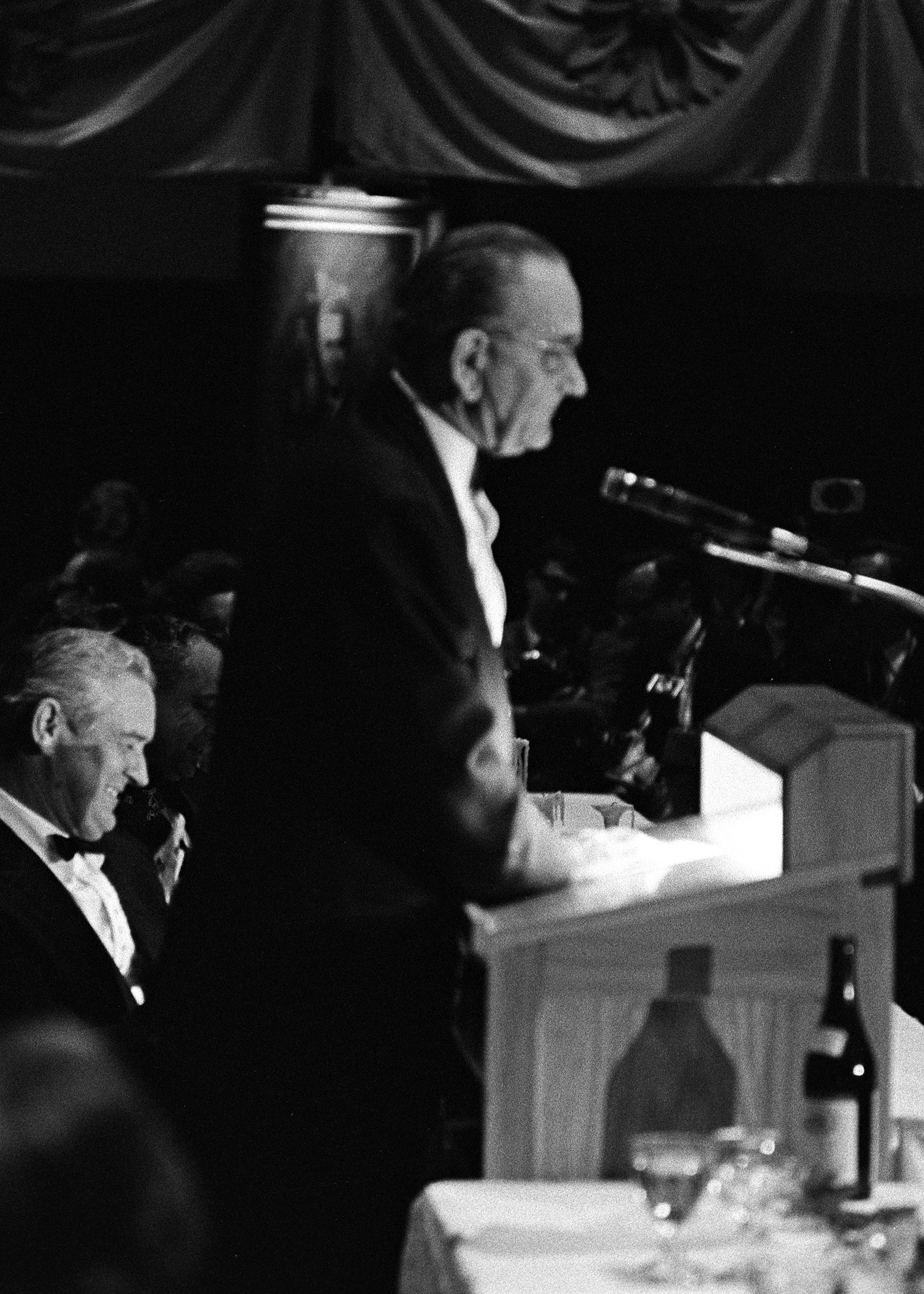
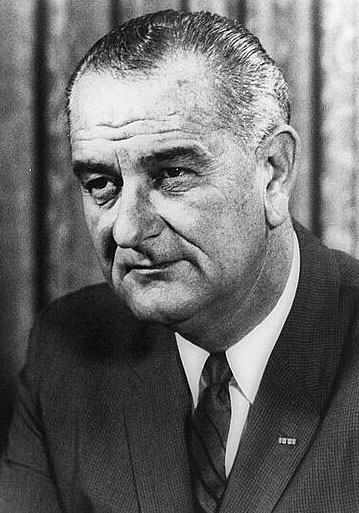
LBJ at moment of 'Cronkite Moment': Telling a joke

For starters, Johnson did not see the Cronkite report when it aired.

As I note in Getting It Wrong, the president at the time was in Austin, Texas, attending the 51st birthday party of Governor John Connally, a longtime political ally.

At about the moment Cronkite was intoning his “mired in stalemate” interpretation, Johnson was offering light-hearted banter about Connally’s age, saying:

“Today you are 51, John. That is the magic number that every man of politics prays for—a simple majority.”

So at the time of the purported “Cronkite Moment,” Johnson wasn’t agonizing about having lost Cronkite’s support; he wasn’t overcome with angst about the war effort in Vietnam.

Johnson was telling a joke.

And it’s hard to argue that the president could have been much moved by a television report that he didn’t see.

Not only that, but Johnson may have decided in 1967 or even earlier not to stand for reelection in 1968. He wrote in his memoir, The Vantage Point: “Long before I settled on the proper forum to make my announcement, I had told a number of people of my intention not to run again.”

Given those factors, Cronkite’s show at the end of February 1968 recedes into trivial insignificance as a reason for Johnson’s decision–announced a month later–not to stand for reelection.

It certainly is an appealing notion that a newsman such as Cronkite could tell “a simple truth” and, by doing so, help change history.

But such a notion is more often the recipe for a media-driven myth than it is the foundation of historical accuracy.

WJC

Recent and related:

‘When I lost Cronkite’–or ‘something to that effect’

In Cronkite Moment, Debunking, Media myths, Reviews on November 20, 2010 at 9:46 am

I discuss in my mythbusting book Getting It Wrong how accounts vary widely as to what President Lyndon Johnson purportedly said in reacting to Walter Cronkite’s on-air commentary in 1968 that the U.S. military effort in Vietnam was “mired in stalemate.”

Acute version variability has taken hold over the years and, as suggested by a theatrical review in yesterday’s Washington Times, fresh versions as to what Johnson said keep popping up.

Many published accounts have said Johnson’s reaction was: “If I’ve lost Cronkite, I’ve lost the country.”

Other accounts quote the president as saying: “If I’ve lost Cronkite, I’ve lost the American people.”

Or: “If I’ve lost Cronkite, I’ve lost the war.”

Or: “If we lose Cronkite, we lose America.”

The most common published version probably is: “If I lost Cronkite, I’ve lost Middle America.” It’s the version Cronkite included in his 1997 memoir, A Reporter’s Life.

In any case, version variability of such magnitude, I write in Getting It Wrong, signals more than laziness and reluctance to trace the derivation of a popular anecdote. The shifting versions of what Johnson supposedly said are an indicator the Cronkite-Johnson anecdote is bogus, a marker of a media-driven myth.

After all, the remarks and utterances of the president of the United States are among the most carefully chronicled. The many inconsistent accounts of Johnson’s remarks are akin to the effects of a tall tale that changes with frequent retelling.

The latest version of Johnson purported response appeared in the Washington Times review of a comedy titled Walter Cronkite Is Dead, which recently opened at the Signature Theatre in Arlington, Virginia, in suburban Washington, D.C.

The play isn’t much about Cronkite, the former CBS News anchorman who died 16 months ago. But the reviewer carries on about Cronkite at some length, and indulges in media myth in writing:

“Walter was regarded as the Gospel when it came to reporting the Vietnam War and his reports were instrumental in turning around the nation’s support for that war.

“Lyndon Johnson was reputed to have said of his own prospects, ‘When I lost Cronkite, I lost the election,’ or something to that effect. Not long after his observation, the beleaguered president dropped out of the 1968 electoral contest.”

Let’s consider the passages in bold: Both are dubious claims.

First, the notion that Cronkite’s views on the war in Vietnam “were instrumental” in altering public opinion.

As I discuss in Getting It Wrong, American public opinion had begun shifting against the war months before Cronkite offered his “mired in stalemate” assessment in special report that aired February 27, 1968.

By October 1967, 47 percent of Americans, a plurality, maintained that U.S. military presence in Vietnam was a mistake, according to Gallup surveys.

In a Gallup poll completed in early February 1968, three weeks before the Cronkite special report, the proportion saying the war was a mistake stood at 46 percent. Forty-two percent said it had not been a mistake.

As for the purported Johnson comment, “When I lost Cronkite, I lost the election”–it’s assuredly bogus. Johnson had stood in no election at the time of Cronkite’s commentary. The Democratic primary election in New Hampshire was a couple of weeks away, and Johnson would win as a write-in candidate.

More important, Johnson did not see the Cronkite program when it aired.

The president at the time was in Austin, Texas, attending the 51st birthday party of Governor John Connally, a longtime political ally.

Quite simply, Johnson could not have had “the abrupt yet resigned reaction that so often has been attributed to him,” as I write in Getting It Wrong. It’s illogical to argue he was much moved by a television report he hadn’t seen.

There is, moreover, no evidence Johnson later watched the Cronkite program on videotape.

And as I note in Getting It Wrong:

“The power of the ‘Cronkite moment’ resides in the sudden, unexpected, and decisive effect it supposedly had on the president. Such an effect would have been absent, or greatly diminished, had Johnson had seen the program on videotape at some later date.”

WJC

Recent and related:

Koppel goes on NPR, indulges in media myth

In Cronkite Moment, Debunking, Media myths, Murrow-McCarthy myth on November 18, 2010 at 6:19 am

Ted Koppel, the former host of ABC’s Nightline program, has been back in the public eye of late, following his smug but widely noted lament in the Washington Post about the partisanship of cable TV news.

Koppel (Wikicommons)

Koppel renewed his complaint in an interview the other day on NPR’s Talk of the Nation–during which he indulged in some of American journalism’s most alluring mythology.

Specifically, Koppel embraced the mythical “Cronkite Moment” of 1968 and saluted Edward R. Murrow’s legendary report about Senator Joseph McCarthy in 1954–much as Keith Olbermann, Koppel’s nemesis of late, did the other night on his MSNBC show, Countdown.

In the interview on Talk of the Nation, Koppel said one of the most memorable programs in Cronkite’s years as CBS News anchorman was “the piece that he did when he came back after a couple of weeks in Vietnam and of which President Johnson famously said, ‘If I’ve lost Walter Cronkite, I’ve lost the country.'”

As for Murrow, Koppel said that “what is most remembered about what Ed Murrow did is the extraordinary See It Now piece that he did on Joseph McCarthy.”

Let’s unpack both dubious claims.

Cronkite first.

As I write in my latest book, Getting It Wrong, President Lyndon Johnson “did not have—could not have had—the abrupt yet resigned reaction that so often has been attributed to him. That’s because Johnson did not see the [Cronkite] program when it was aired.”

And there’s no evidence he ever saw it on videotape, either.

As such, it’s quite difficult to make a case that Johnson was much moved by a program he didn’t see.

Cronkite closed his report on Vietnam, which aired February 27, 1968, with an editorial comment that the U.S. military effort  was “mired in stalemate” and that negotiations might eventually offer a way out.

Media myth has it that Johnson, at the White House, saw the Cronkite program and, upon hearing the anchorman’s “mired in stalemate” assessment, leaned over, snapped off the television set, and said to an aide or aides:

“If I’ve lost Cronkite, I’ve lost the country.”

Another, more common version quotes Johnson as saying, “If I’ve lost Cronkite, I’ve lost Middle America.”

There are other versions, too, of what the president supposedly said in reaction.

But Johnson wasn’t at the White House that night. He wasn’t in front of a television set, either.

Johnson at Austin

At the time Cronkite offered his downbeat commentary, Johnson was offering light-hearted banter in Austin, Texas, at the 51st birthday party of Governor John Connally.

The president wasn’t agonizing about his policy in Vietnam. He wasn’t wringing his hands about losing the country. He was teasing Connally about his age: “Today you are 51, John,” the president said. “That is the magic number that every man of politics prays for—a simple majority.”

What’s more, Cronkite’s “mired in stalemate” opinion was, by February 1968, neither exceptional nor stunning. Indeed, nearly seven months before Cronkite’s program, the  New York Times published a front-page report that cited “disinterested observers” as saying the war in Vietnam was “not going well.” Victory, the Times reported, “is not close at hand. It may be beyond reach.”

That analysis was published in August 1967, beneath the headline:

“Vietnam: The Signs of Stalemate.”

As for Murrow’s “extraordinary” show about McCarthy: It wasn’t all that extraordinary. It aired March 9, 1954–years after other journalists had begun scrutinizing the senator’s exaggerated claims and hard-ball tactics in campaigning against communists in government.

Long before the See It Now program,” I note in Getting It Wrong, “several prominent journalists—including the Washington-based syndicated columnist Drew Pearson—had become persistent and searching critics of McCarthy, his record, and his tactics.”

Some critics at the time pointed out that the See It Now program had offered nothing new about McCarthy.

“Murrow said nothing, and his cameras showed nothing, that this and some other newspapers have not been saying—and saying more strongly—for three or four years,” Jay Nelson Tuck, the New York Post’s television writer, wrote after the program. He was referring to the 17-part series on McCarthy that ran in the Post in 1951.

“The news” in Murrow’s program, Tuck added, “was in the fact that television was saying it at all.”

Murrow’s collaborator and co-producer, Fred W. Friendly, also rejected claims the See It Now program about Murrow was exceptional or decisive.

Friendly wrote in his memoir:

“To say that the Murrow broadcast of March 9, 1954, was the decisive blow against Senator McCarthy’s power is as inaccurate as it is to say that Joseph R. McCarthy … single-handedly gave birth to McCarthyism.”

Interestingly, a book that Murrow and Friendly compiled in 1955 about the best of the See It Now omitted the 1954 show on McCarthy, the one that Koppel claims was so “extraordinary.”

WJC

Recent and related:

Media history with Olbermann: Wrong and wrong

In Cronkite Moment, Debunking, Media myths, Murrow-McCarthy myth on November 17, 2010 at 7:15 am

MSNBC host Keith Olbermann invoked media history the other night in a blustering, on-air response to criticism by Ted Koppel, the former host of ABC’s Nightline, about hyperpartisanship on cable TV news.

Trouble is, Olbermann got it wrong in the two history lessons he cited–the mythical “Cronkite Moment” of 1968 and the Murrow-McCarthy encounter of 1954.

In both cases, Olbermann bought into tenacious media-driven myths.

The so-called “Cronkite Moment” came on February 27, 1968, when CBS News anchorman said in an on-air commentary that the U.S. war effort in Vietnam was “mired in stalemate” and suggested that negotiations might offer a way out of the morass.

Declared Olbermann: “All that newscast did was convince the 36th president of the United States to not seek reelection.”

It had no such effect.

The media-driven myth surrounding the “Cronkite Moment”–one of 10 media myths debunked in my latest book, Getting It Wrong–has it that Lyndon Johnson, the 36th president, saw the program and, upon hearing the anchorman’s commentary, told an aide or aides, “If I’ve lost Cronkite, I’ve lost Middle America.”

Or words to that effect.

But Johnson didn’t see the show when it aired. He was in Austin, Texas, at the time, offering light-hearted banter at the 51st birthday party of Governor John Connally, a longtime political ally.

The president couldn’t have been much moved by–or decided his political future on–a show he hadn’t seen. And there’s no evidence that he watched it on videotape at some later date.

Johnson announced at the end of March 1968 that he would not seek reelection. It was a stunning development–but the Cronkite show had nothing to do with the president’s decision.

Johnson’s announcement came a couple of weeks after his surprisingly poor showing as a write-in candidate in the Democratic primary in New Hampshire. The president won the primary with 49 percent of the vote. But Senator Eugene McCarthy won 42 percent, an unexpectedly strong result.

Within days, Senator Robert F. Kennedy entered the race for the Democratic presidential nomination. So Johnson faced a brutal course to winning the party’s nomination, not to mention reelection.

Moreover, there’s strong evidence that Johnson never intended to seek another term, that in 1967, or even earlier, he had decided against another campaign for the presidency. (Johnson wrote in his memoir, The Vantage Point: “Long before I settled on the proper forum to make my announcement, I had told a number of people of my intention not to run again.”)

Given those factors, Cronkite’s show at the end of February 1968 recedes into trivial insignificance as a factor in Johnson’s decision not to stand for reelection.

Olbermann in his commentary referred to Edward R. Murrow as “a paragon of straight reporting” and claimed the American press “stood idly by” as Senator Joseph R. McCarthy pursued his communists-in-government witch-hunt.

But on March 9, 1954, on a 30-minute television show called See It Now, “Murrow slayed the dragon,” Olbermann declared.

But neither Murrow, nor his producer Fred Friendly, bought the dragon-slaying interpretation. (The latter wrote in his memoir, Due to Circumstances Beyond Our Control: “To say that the Murrow broadcast of March 9, 1954, was the decisive blow against Senator McCarthy’s power is as inaccurate as it is to say that Joseph R. McCarthy … single-handedly gave birth to McCarthyism.”)

And it’s quite clear that the American press did not stand “idly by” as the scourge of McCarthyism emerged.

Drew Pearson

As I write in Getting It Wrong:

“Long before the See It Now program, several prominent journalists—including the Washington-based syndicated columnist Drew Pearson—had become persistent and searching critics of McCarthy, his record, and his tactics.”

Indeed, Pearson was McCarthy’s most relentless and implacable media foe during the senator’s witch-hunt.

In his widely read column, Pearson ridiculed McCarthy as the “harum-scarum” senator and dismissed his allegations “way off base.” And those characterizations came in February 1950–more than four years before Murrow’s See It Now show on McCarthy.

Pearson was unrelenting in his scrutiny of McCarthy, calling attention to the senator’s tax troubles in Wisconsin and to questionable payments McCarthy received from a government contractor.

McCarthy was so annoyed by Pearson’s probing that he threatened the columnist at a Gridiron Club dinner in Washington, D.C., in May 1950. On that occasion, McCarthy placed a hand on Pearson’s arm and muttered:

“Someday I’m going to get a hold of you and really break your arm….”

That was a prelude to a violent encounter in December 1950, when McCarthy cornered Pearson in the cloakroom of the hush-hush Sulgrave Club in Washington and either kneed the columnist in the groin or slapped him hard across the face.

So, no, the press didn’t stand “idly by” in face of the McCarthy menace.

As I write in Getting It Wrong, by March 1954 Americans weren’t “waiting for a white knight like Murrow to tell them about the toxic threat the senator posed.”

They already knew, from the work of Pearson and others.

And Pearson took on McCarthy when doing was not risk-free.

WJC

Recent and related:

The sporting version of the ‘Cronkite Moment’

In Cronkite Moment, Debunking, Media myths, New York Times, Year studies on November 9, 2010 at 8:01 am

The mythical “Cronkite Moment” is a hardy and impressively flexible tale.

As a presumptive lesson about journalism’s capacity to tell truths to power, the “Cronkite Moment” turns up in the media in all sorts of ways.

He of the 'Cronkite Moment'

It appears even on the sports pages.

The “Cronkite Moment“–in which the downbeat assessment of CBS New anchorman Walter Cronkite supposedly forced President Lyndon Johnson to understand the futility of his Vietnam War policy–turned up yesterday in a column posted at cbssports.com.

In discussing the firing of Wade Phillips as head coach of the Dallas Cowboys football team, columnist Ray Ratto wrote:

“Cronkite one night came out against the war, right there on the evening news (when there were just three networks and the evening news meant something), and Johnson knew at that moment that he was finished. ‘If I’ve lost Cronkite,’ Johnson is alleged to have said, ‘I’ve lost Middle America.””

Flexibility may make the anecdote appealing and long-lived. But it doesn’t mean it’s true.

As I discuss in my latest book, Getting It Wrong, the “Cronkite Moment” is  a media-driven myth, a tall tale about the news media masquerading as factual.

Let’s unpack what Ratto wrote:

  • Cronkite didn’t really come “out against the war”: He described the U.S. military effort in Vietnam as “mired in stalemate,” which hardly was a striking or novel interpretation at time his assessment was offered in early 1968.
  • Cronkite didn’t present his “mired in stalemate” commentary on the evening news: It came at the end of an hour-long special report about Vietnam that aired February 27, 1968.
  • Johnson did not know “at that moment that he was finished.” Johnson, as I discuss in Getting It Wrong, didn’t even see the Cronkite program when it aired. The president at the time was in Austin, Texas, making light-hearted comments at the 51st birthday party of Governor John Connally, a longtime political ally.

At about the time Cronkite was uttering his “mired in stalemate” comment, Johnson wasn’t in front of a television set. He didn’t exclaim, “If I’ve lost Cronkite, I’ve lost Middle America”–or words to that effect. He said:

“Today you are 51, John. That is the magic number that every man of politics prays for—a simple majority. Throughout the years we have worked long and hard—and I might say late—trying to maintain it, too.”

There was no woe-is-me about having “lost Cronkite.” There was no epiphany for the president that his war policy was a shambles.

Only a light-hearted comment about Connally’s turning 51.

The power of the “Cronkite Moment,” I write in Getting It Wrong, lies “in the sudden, unexpected, and decisive effect it supposedly had on the president.” Had Johnson seen the program later, on videotape, it would not have carried the sudden, unexpected punch that the “Cronkite Moment” is presumed to have had.

Indeed, I write, “Such an effect would have been absent, or greatly diminished, had Johnson had seen the program on videotape at some later date.”

As I say, Cronkite’s “mired in stalemate” view was neither notable nor extraordinary in early 1968. Mark Kurlansky wrote in his fine year-study about 1968 that Cronkite’s view was “hardly a radical position” for the time.

Indeed, nearly seven months before Cronkite’s program, a report in the  New York Times had cited “disinterested observers” in reporting that the war in Vietnam “is not going well.” Victory, the Times reported, “is not close at hand. It may be beyond reach.”

This analysis was published on the Times’ front page in August 1967, beneath the headline:

“Vietnam: The Signs of Stalemate.”

WJC

Recent and related:

LBJ ‘changed Vietnam policy based on Cronkite’s views’? Hardly

In Cronkite Moment, Debunking, Media myths on November 7, 2010 at 10:16 am

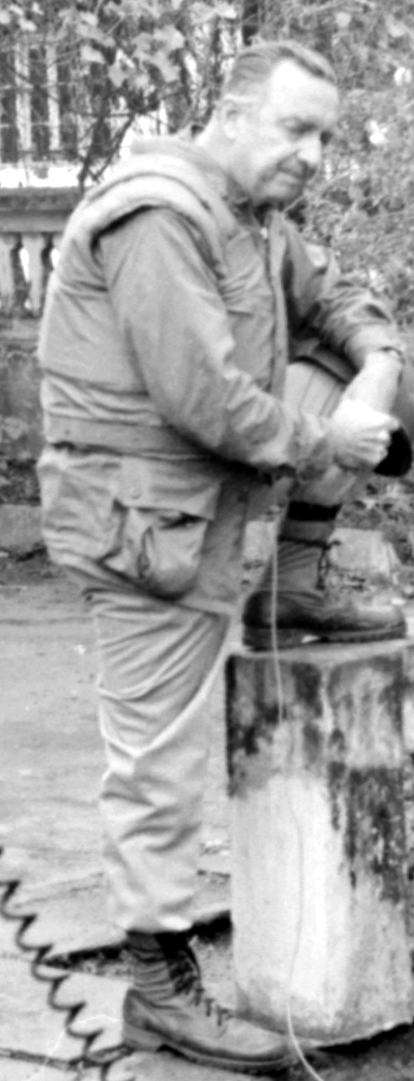
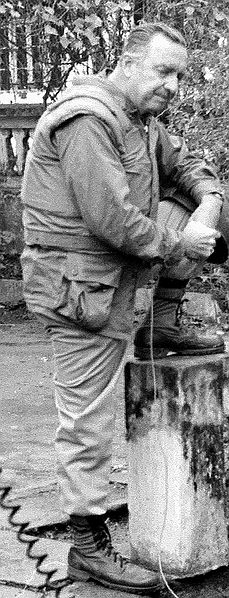
Cronkite in Vietnam, 1968

The presumptive “Cronkite Moment” is one of American journalism’s most memorable occasions. It was a time, supposedly, when a leading media figure offered analysis so penetrating and revealing that it altered U.S. foreign policy.

That notion was reiterated the other day in a commentary posted at the Big Journalism online site. The commentary alluded to the broadcast in February 1968 in which CBS News anchorman Walter Cronkite declared that the U.S. war effort in Vietnam was “mired in stalemate.” President Lyndon Johnson supposedly saw the Cronkite report and, upon hearing the anchorman’s assessment, realized his war policy was a  shambles.

“If I’ve lost Cronkite,” Johnson purportedly declared, “I’ve lost Middle America.”

Another version has the president saying: “If I’ve lost Cronkite, I’ve lost the war.”

In a clear reference to the mythical “Cronkite Moment,” the Big Journalism commentary stated:

“LBJ was afraid of the activist old media when he changed his Vietnam policy based on what Walter Cronkite thought. Nothing could be more sad and pathetic than that and America paid a dear price for Johnson’s fear of the media.”

As I discuss in my latest book, Getting It Wrong, the Cronkite program on Vietnam quite simply did not have the powerful effects so often attributed to it. The “Cronkite Moment” is one hardy media-driven myth.

I further note in Getting It Wrong:

“Scrutiny of the evidence associated with the program reveals that Johnson did not have—could not have had—the abrupt yet resigned reaction that so often has been attributed to him. That’s because Johnson did not see the program when it was aired.”

The president was not in front of a television set when Cronkite’s report on Vietnam aired on the evening of February 27, 1968. He was not at the White House. He was in Austin, Texas, attending the 51st birthday party of a longtime political ally, Governor John Connally.

And about the time Cronkite was intoning his “mired in stalemate” assessment, Johnson wasn’t throwing up his hands in despair over his war policy. He was offering light-hearted banter about Connally’s age, saying:

“Today you are 51, John. That is the magic number that every man of politics prays for—a simple majority. Throughout the years we have worked long and hard—and I might say late—trying to maintain it, too.”

There is no evidence that Johnson ever watched a recording of the Cronkite show. Johnson’s memoir, The Vantage Point, is silent about the program, offering no clue as to whether he ever saw it or, if he did, what he thought of it.

In any case, the power of the reputed “Cronkite Moment” lies “in the sudden, unexpected, and decisive effect it supposedly had on the president,” I note in Getting It Wrong. “Such an effect would have been absent, or greatly diminished, had Johnson had seen the program on videotape at some later date.”

I also write:

“Even if he had seen Cronkite’s program on videotape, Johnson gave no indication of having taken the anchorman’s message to heart.

“Just three days after the program aired, Johnson vowed in remarks at a testimonial dinner in Texas that the United States would ‘not cut and run’ from Vietnam. ‘We’re not going to be Quislings,’ the president said, invoking the surname of a Norwegian politician who helped the Nazis take over his country. ‘And we’re not going to be appeasers.'”

In the immediate aftermath of the Cronkite program, Johnson remained hawkish on the war in Vietnam. He was not moved by a TV show he had not seen.

WJC

Recent and related:

Considering the irresistible ‘Cronkite Moment’

In Cronkite Moment, Debunking, Media myths, Year studies on July 17, 2010 at 1:15 pm

Cronkite (Library of Congress)

Legendary CBS newsman Walter Cronkite died one year ago today. The myth that helps define his celebrated standing in American journalism is as robust and irresistible as ever.

The myth is that of the “Cronkite Moment” of February 27, 1968, when the anchorman’s on-air assessment of the war in Vietnam as “mired in stalemate” supposedly swung public opinion against the conflict, altered U.S. policy, and encouraged President Lyndon Johnson not to seek reelection.

All of which is exaggerated. All of which represents a serious misreading of history.

As I discuss in Getting It Wrong, my new book debunking prominent media-driven myths, public opinion had begun turning against the Vietnam War weeks and months before Cronkite’s special report in late February 1968.

By October 1967, a plurality of Americans–47 percent–said having sent U.S. forces to Vietnam was a mistake, according to Gallup surveys.

Moreover, Cronkite’s “mired in stalemate” assessment was, I write in Getting It Wrong, “neither notable nor extraordinary,” noting that author Mark Kurlansky in his year-study of 1968 described Cronkite’s critique as “hardly a radical position” for the time.

Indeed, nearly seven months before the “Cronkite moment,” the New York Times published on its front page as analysis that said victory in Vietnam “is not close at hand. It may be beyond reach.” The Times analysis was published in August 1967 beneath the headline:

“Vietnam: The Signs of Stalemate.”

Cronkite’s assessment in late February 1968 was much less assertive than the observations offered less than two weeks later by Frank McGee of the rival NBC network.

“The war,” McGee said on an NBC News program that aired March 10, 1968, “is being lost by the [Johnson] administration’s definition.”

In any case, Johnson wasn’t much moved by such assessments–if he saw them at all.

The crucial component of the “Cronkite Moment” is that Johnson watched the program at the White House and, after hearing Cronkite’s “mired in stalemate” characterization, snapped off the television set, telling an aide or aides:

“If I’ve lost Cronkite, I’ve lost Middle America.”

Or words to that effect.

That purported comment infuses the “Cronkite Moment” with power, decisiveness, and enduring appeal. The comment was reiterated just yesterday, for example, in a blog post at the New American online site, which claimed:

“When famed evening news broadcaster Walter Cronkite delivered an editorial expressing his opinion that the war in Vietnam was not winnable, Johnson is reported to have said, ‘If I’ve lost Cronkite, I’ve lost Middle America.'”

Johnson

But the anecdote’s defining and most delicious element is in error: Johnson did not see the Cronkite program when it aired. He was at the time in Austin, Texas, at the 51st birthday party of Governor John Connally. Thus Johnson could not have had “the abrupt yet resigned reaction that so often has been attributed to him,” I write in Getting It Wrong.

Moreover, there is no evidence that Johnson watched the Cronkite program later, on videotape.

Even if he had, the program represented no epiphany for Johnson. Indeed, not long after Cronkite’s report, the president gave a rousing speech in Minneapolis, in which he urged a “total national effort” to win the war in Vietnam.

That speech was delivered March 18, 1968, and in it, the president declared:

“We love nothing more than peace, but we hate nothing worse than surrender and cowardice.”

He criticized war critics as wanting the United States to “tuck our tail and violate our commitments.”

Johnson’s aggressive remarks are difficult to square with his supposedly downcast, self-pitying reaction to Cronkite’s assessment about Vietnam.

As for Johnson’s decision not to seek reelection, the “Cronkite moment” certainly was a non-factor. Johnson’s announcement came at the end of March 1968, a month after the Cronkite program–and a couple of weeks after the president’s poor showing as a write-in candidate in the Democratic primary in New Hampshire.

What’s more, there’s evidence Johnson never intended to seek reelection, that he had privately decided in 1967 against another campaign.

He said as much in his memoirs, writing that he had told Connally early in 1967 that he had “felt certain [he] would not run” for another term.

WJC

Related:

Invoking the ‘Cronkite Moment’ in Canada

In Cronkite Moment, Debunking, Media myths on July 10, 2010 at 9:28 am

Media-driven myths not only can be remarkably hardy; they often find use and application in contexts well beyond their original incarnation.

Cronkite in Vietnam, 1968

Evidence for that appears today in a column in Canada’s leading newspaper, the Globe and Mail. The column invokes the hoary myth of the “Cronkite Moment” to underscore how, in a splintered media landscape, no single television anchor projects exceptional influence.

(Or ever did, I would argue.)

In any case, the Globe and Mail column, which discusses the coming retirement of long-time Canadian TV news anchor Lloyd Robertson, declares:

“When venerable CBS broadcaster Walter Cronkite declared the Vietnam War could not be won, U.S. President Lyndon Johnson remarked. ‘If I’ve lost Cronkite, I’ve lost Middle America.'”

As I write in Getting It Wrong, my new book debunking 10 prominent media-driven myths:

“Scrutiny of the evidence associated with the program reveals that Johnson did not have—could not have had—the abrupt yet resigned reaction that so often has been attributed to him. That’s because Johnson did not see the program when it was aired.”

The Cronkite program about Vietnam was broadcast on the evening February 27, 1968, not long after the anchorman had returned from a visit to what then was South Vietnam.

Legend has it that Johnson was at the White House and watched the show. After Cronkite editorialized that the U.S. military effort in Vietnam was “mired in stalemate,” Johnson supposedly reached over, snapped off the television set, and exclaimed to an aide or aides:

“If I’ve lost Cronkite, I’ve lost Middle America.”

Or words to that effect. Versions vary.

In reality, Johnson was not at the White House that evening. He was not in front of a television set.

He was on the campus of the University of Texas at Austin, attending the 51st birthday party of a long-time political ally, Governor John Connally.

As I note in Getting It Wrong, at about the time Cronkite intoned his “mired in stalemate” assessment, Johnson was offering light-hearted banter about Connally’s age, saying:

“Today you are 51, John. That is the magic number that every man of politics prays for—a simple majority. Throughout the years we have worked long and hard—and I might say late—trying to maintain it, too.”

Even if Johnson later saw the Cronkite program on videotape, the president “gave no indication of having taken the anchorman’s message to heart,” I write in Getting It Wrong, adding:

“Just three days after the program aired, Johnson vowed in remarks at a testimonial dinner in Texas that the United States would ‘not cut and run’ from Vietnam. ‘We’re not going to be Quislings,’ the president said, invoking the surname of a Norwegian politician who helped the Nazis take over his country. ‘And we’re not going to be appeasers….'”

So in the days and even weeks following the Cronkite program, Johnson remained openly hawkish on the war.

The “Cronkite Moment” is a particularly delicious media myth in that it exerts enduring, and international, allure. But the notion that a sitting president would be suddenly and dramatically moved by the on-air assessment of a television anchorman is highly improbable.

“It is exceedingly rare for any news report to trigger a powerful, immediate and decisive reaction akin to” the “Cronkite Moment,” I write in Getting It Wrong. “Researchers long ago dismissed the notion the news media can create such profound and immediate effects, as if absorbing media messages were akin to receiving potent drugs via a hypodermic needle.”

It just doesn’t work that way.

WJC

Related:

Catching up: Great movie misquotations

In Cinematic treatments, Cronkite Moment, Debunking on February 8, 2010 at 12:16 pm

Heavy snows that have shut down much of metropolitan Washington, D.C., including American University today, have allowed the opportunity to work away at a stack of back issues of newspapers.

So only belatedly have I caught up with the “movie misquotations” item published January 15 in the “On Language” column of the Sunday New York Times magazine.

The column's headline

It’s an entertaining and revealing column that notes that “many of the most frequently cited motion-picture lines turn out to be misquotations.”

One well-known line, usually attributed to the Clint Eastwood character in Dirty Harry, is: “Do you feel lucky, punk?”

What the Eastwood character said was:

“You’ve got to ask yourself one question: ‘Do I feel lucky?’ Well, do ya, punk?”

The column points out that another frequent misquotation is Robert Duvall’s napalm line in Apocalypse Now, which often is cited as:

“I love the smell of napalm in the morning. It smells like victory.”

The Duvall character’s remark was much more detailed and complex:

“I love the smell of napalm in the morning. You know, one time we had a hill bombed for 12 hours. When it was all over, I walked up. We didn’t find one of ’em, not one stinkin’ . . . body. The smell, you know that gasoline smell, the whole hill. Smelled like victory.”

The column’s author, Fred R. Shapiro editor of Yale Book of Quotations, identifies several factors for the emergence of movie misquotations, including:

  • a tendency toward compression, as the Apocalypse Now example suggests.
  • a impulse to improve upon the original passage “by offering a better rhythm or cadence.”
  • an inclination for greater euphony. The famous Mae West line–“Why don’t you come up and see me sometime?”–really was: “Why don’t you come up sometime and see me?” In another movie, she said: “Why don’t you come up sometime?”
  • an effort “to keep up with colloquial speech.” The line commonly recalled as “Badges? We don’t need no stinking badges!,” was uttered in The Treasure of the Sierra Madre as: “I don’t have to show you any stinking badges!”

Shapiro’s column is evocative of the phenomenon of “version variability,” which I note in Getting It Wrong, my forthcoming book about media-driven myths.

“Version variability” is the the imprecision that alters or distorts an anecdote in its retelling, leading to differing versions of what was said or done. It can be a marker of media-driven myths.

The so-called “Cronkite Moment” of February 27, 1968, when CBS News anchorman Walter Cronkite went on air to say the U.S. war effort in Vietnam was “mired in stalemate,” offers a striking example of “version variability.”

President Lyndon Johnson supposedly was at the White House and watched the Cronkite report that night. Upon hearing the anchorman’s dire assessment, Johnson turned to an aide or aides and said:

“If I’ve lost Cronkite, I’ve lost Middle America.”

Another version quotes Johnson as saying: “I’ve lost Cronkite, I’ve lost the country.”

Yet another version has it this way: “If I’ve lost Cronkite, I’ve lost the American people.”

And: “If I’ve lost Cronkite, I’ve lost the war.”

And: “If we lose Cronkite, we lose America.”

Version variability of  such magnitude is a strong signal of implausibility.

As I note in Getting It Wrong, Johnson wasn’t at the White House when the Cronkite program on Vietnam aired. The president was in Austin, Texas, at a party marking the 51st birthday of his longtime political ally, John Connally.

WJC

Cronkite Moment: What Johnson supposedly said

In Cronkite Moment, Media myths on December 6, 2009 at 12:35 pm

A guest columnist for the Lancaster Eagle Gazette in Ohio today offers a new version of President Lyndon Johnson’s famous comment,  supposedly made in response to Walter Cronkite’s dire assessment in 1968 about the war in Vietnam.

As the story goes, Johnson watched the special televsion program that Cronkite prepared in the aftermath of the North Vietnamese communists’ Tet offensive in February 1968. Cronkite said the U.S. war effort had become “mired in stalemate.” And he closed program by suggesting the time had come to consider opening negotiations to end the war.

For Johnson, Cronkite’s report supposedly was an epiphany. The president realized that the war was all but lost and uttered in dismay:

“If I’ve lost Cronkite, I’ve lost Middle America.”

Other versions have Johnson saying: “If I’ve lost Cronkite, I’ve lost the country.”

Or, “If I’ve lost Cronkite, I’ve lost the American people.”

Or, “If I’ve lost Cronkite, I’ve lost the war.”

The guest columnist in the Lancaster paper has Johnson as saying: “If we lose Cronkite, we lose America.”

What I call acute version variability dogs this anecdote — and it’s one of the indicators that the story is  a media-driven myth. Version variability of  such magnitude is a signal of implausibility. And it’s a marker of a media myth.

As I write in my forthcoming book, Getting It Wrong, the famous, often-cited Cronkite-Johnson anecdote is almost assuredly a media myth.

For starters, Johnson did not see the program when it was aired. He was in Austin, Texas, at the time, offering light-hearted comments at a birthday party for Governor John Connally.

Johnson at Connally's birthday party

Moreover, Johnson’s supposedly downbeat reaction to Cronkite’s on-air assessment about Vietnam clashes sharply with the president’s aggressive characterization about the war. Only hours before the Cronkite program aired, Johnson was in Dallas, Texas, where he delivered a little-recalled but rousing speech on Vietnam, a speech cast in Churchillian terms.

It seems inconceivable that Johnson’s views would have changed so swiftly, so  dramatically, upon hearing the opinions of a television news anchor.

Even if Johnson later heard—or heard about— Cronkite’s assessment, it represented no epiphany. Not long after the Cronkite program, Johnson gave a rousing, lectern-pounding speech in which he urged a “total national effort” to win the war in Vietnam.

No, the Cronkite program in late February 1968 prompted no great change. Nor did it prompt any famous presidential utterances.

WJC