W. Joseph Campbell

Archive for July, 2014|Monthly archive page

Watergate made boring

In Anniversaries, Media myths, Newspapers, Scandal, Washington Post, Watergate myth on July 31, 2014 at 9:45 am

The Washington Post brought together its legendary Watergate reporters last night for a lengthy look back at the scandal that culminated 40 years ago next week with the resignation of President Richard Nixon.

The program was notable for how it made Watergate seem tedious and stale.
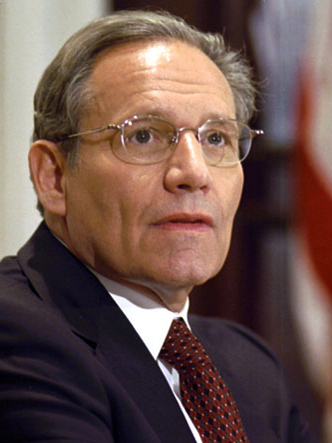
(Woodward (Jim Wallace/Smithsonian)

Woodward: Not much new

It was striking how little new the reporters, Carl Bernstein and Bob Woodward, had to say about covering a scandal that catapulted them to fame and wealth. In that, perhaps, was implicit recognition that their reporting contributed marginally at best to Watergate’s outcome.

Given that the program was convened in an auditorium at the Post, it was a bit surprising there were no self-congratulatory claims that Woodward and Bernstein brought down Nixon’s presidency, no embrace of what I call the hero-journalist myth of Watergate.

To his credit, Bernstein acknowledged the forces that combined to end Nixon’s presidency, including the Senate select committee that uncovered the decisive evidence of Watergate — the existence of Nixon’s White House taping system — and the U.S. Supreme Court, which unanimously ordered Nixon to turn over the tape recordings subpoenaed by prosecutors.

But mostly, the program lurched from topic to topic, from a lengthy discussion about Nixon’s abuses and his “tortured mind” (as the moderator, Ruth Marcus, put it) to non-Watergate topics such as the scandalous IRS conduct in targeting conservative political organizations for scrutiny.

Woodward and Bernstein took turns plugging each other’s books. Author Elizabeth Drew, who also was on the panel, went on and on and on about Nixon’s criminality and about how the IRS scandal is nothing like Watergate.

Bernstein, invariably voluble as well, lavished praised on Ben Bradlee and Katharine Graham, the Post’s executive editor and publisher during the Watergate period. Woodward cracked a few jokes, injecting what little humor the program offered. And Marcus asked a ludicrous and unanswerable question about what Watergate would be like had it happened in age of Twitter.

Notably missing was any insightful appraisal of the journalism of Watergate or any discussion of the scandal’s enduring mysteries (such as did Nixon know in advance about the seminal crime of Watergate — the break-in in June 1972 of the headquarters in Washington of the Democratic National Committee). Woodward and Bernstein rehashed a few reporting anecdotes familiar to people knowledgeable about Watergate; among them, Attorney General John Mitchell’s vulgar remark that Graham risked finding her tit caught in a ringer.
WaPo panel_crowd

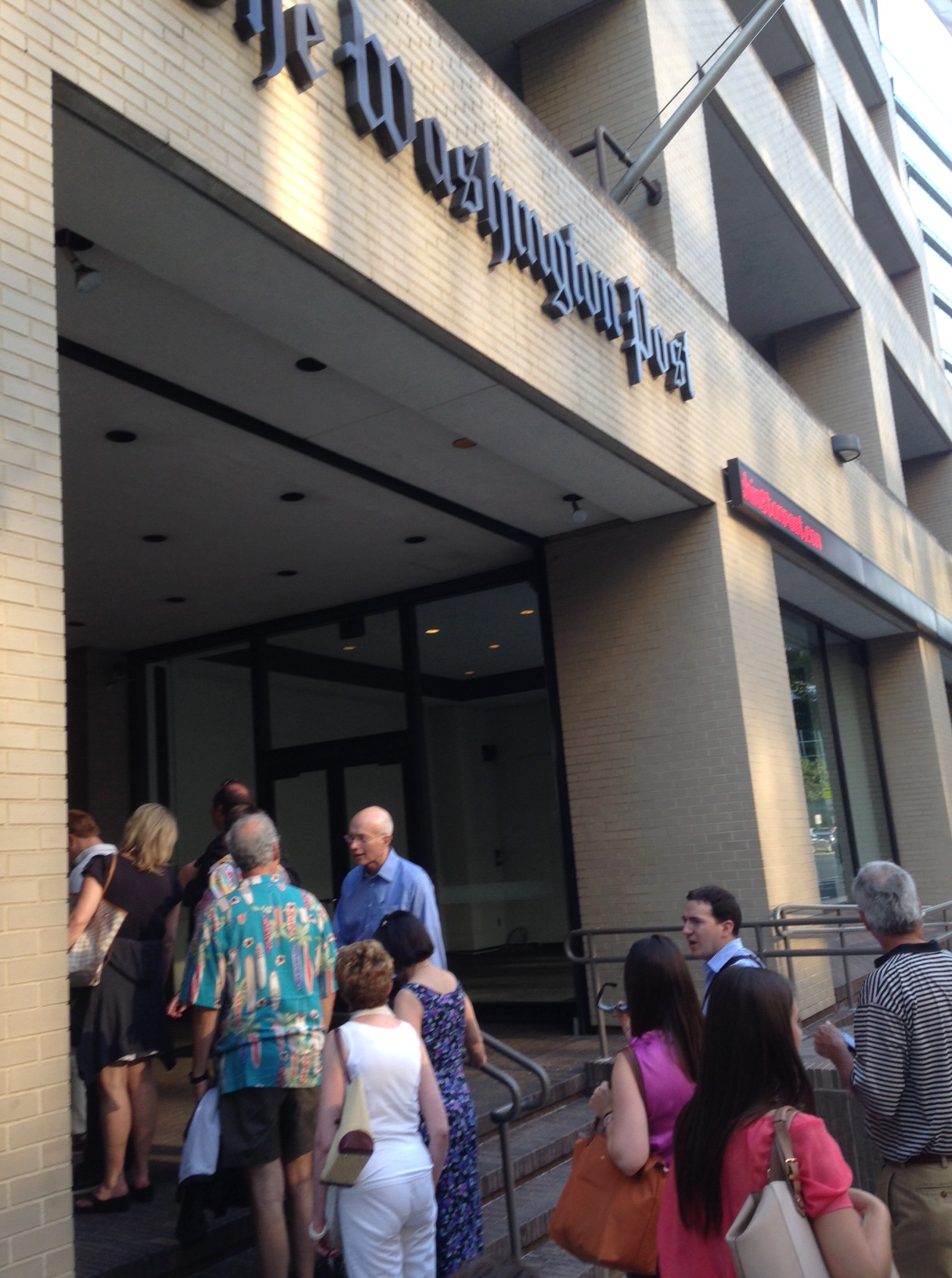
In line for a tedious program

What was most impressive about the two-hour program was the turnout it attracted: Easily 1,000 people showed up, crowding the newspaper’s auditorium and an adjacent overflow room. (The editor of the Post’s “Book World” section, Ron Charles, said in a Tweet last night that he had “never seen a crowd at The Post like the one lined up for … Woodward & Bernstein talk on Watergate.”)

The Post’s public relations staff clearly was ill-equipped to handle such a crowd. More than a few people who thought they had registered online found that the Post staff had no record of their having signed up. And at one point, the video feed to the overflow room went dark, prompting dozens of people to enter the already crowded auditorium to stand and watch as the panelists droned on.

WJC

More from Media Myth Alert:

WaPo now embracing the dominant myth of Watergate?

In Debunking, Error, Media myths, Scandal, Washington Post, Watergate myth on July 22, 2014 at 8:05 pm

To its credit, the Washington Post over the years has mostly declined to embrace the dominant media myth about the Watergate scandal, which culminated 40 years ago with the resignation of President Richard Nixon.

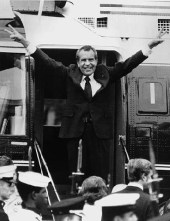
Nixon resigns_1974

Not the Post’s doing: Nixon resigns, 1974

The dominant narrative is that Post reporters Bob Woodward and Carl Bernstein uncovered evidence that brought down Nixon and his corrupt presidency. It’s one of 10 media-driven myths debunked in my 2010 book, Getting It Wrong.

Principals at the Post, among them Katharine Graham, the newspaper’s publisher during Watergate, typically have steered well clear of what I call the hero-journalist myth. Graham, who died in 2001, said in 1997:

“Sometimes people accuse us of bringing down a president, which of course we didn’t do.”

Graham added, quite accurately: “The processes that caused [Nixon’s] resignation were constitutional.”

Michael Getler, who was an outstanding ombudsman for the Post, wrote in 2005:

“Ultimately, it was not The Post, but the FBI, a Congress acting in bipartisan fashion and the courts that brought down the Nixon administration. They saw Watergate and the attempt to cover it up as a vast abuse of power and attempted corruption of U.S. institutions.”

In earthier terms, Woodward, too, has scoffed at the dominant narrative, declaring in an interview in 2004:

To say the press brought down Nixon, that’s horse shit.”

But of late, such myth-avoidance has slipped.

In an article last month about the planned demolition of the parking garage where Woodward periodically conferred with a stealthy, high-level source codenamed “Deep Throat,” the Post said the source “provided Woodward with information that exposed the Nixon administration’s obstruction of the FBI’s Watergate investigation.”

The source — who revealed himself years later to have been W. Mark Felt, formerly the FBI’s second-ranking official — did no such thing.

As I noted soon after the Post article appeared, if Felt had shared obstruction-of-justice evidence with Woodward — and if the Post had published such information — the uproar would have been so intense that Nixon certainly would have had to resign the presidency long before he did in August 1974.

But it was not until late summer 1974 — several months after Felt’s retirement from the FBI — when unequivocal evidence emerged about Nixon’s attempt to block FBI’s investigation into the foiled burglary in 1972 at Democratic National Committee headquarters at the Watergate building in Washington.

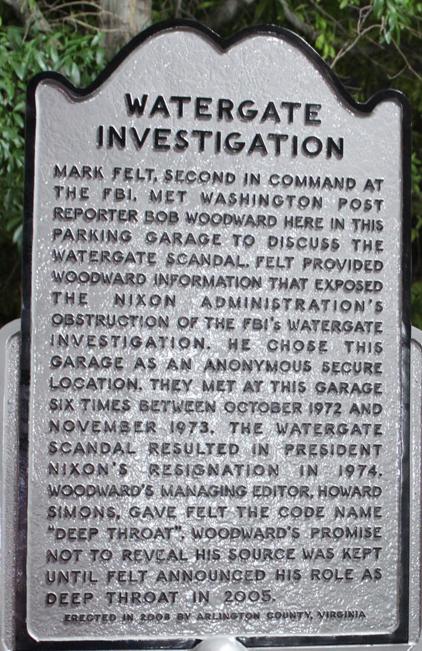
Watergate marker_cropped

The marker with the error

(I also pointed out that the Post’s erroneous description of the information Felt shared with Woodward was almost word-for-word identical to a passage on the historical marker that was placed outside the garage in 2011. The marker says: “Felt provided Woodward information that exposed the Nixon administration’s obstruction of the FBI’s Watergate investigation.” The Post article said Felt “provided Woodward with information that exposed the Nixon administration’s obstruction of the FBI’s Watergate investigation.”)

In any case, the Post hasn’t corrected its mischaracterization about the information Felt passed on to Woodward.

And in today’s issue, John Kelly, a popular Post columnist, referred to Bernstein as “the former Washington Post reporter famous for his role in bringing down a president.”

Kelly’s column neither explained nor elaborated on Bernstein’s putative “role in bringing down” Nixon. As I wrote in Getting It Wrong, the reporting of Woodward and Bernstein was not decisive in Watergate’s outcome. Their contributions — while glamorized in the cinematic version of their book, All the President’s Men — were marginal in forcing Nixon’s resignation.

Rolling up a scandal of Watergate’s dimension and complexity required the collective efforts of special prosecutors, federal judges, both houses of Congress, the Supreme Court, as well as the Justice Department and the FBI.

And even then, as I noted in Getting It Wrong, Nixon likely would have survived the scandal and served out his term if not for the audiotape recordings that he secretly made of conversations in the Oval Office of the White House.

Only when compelled by the Supreme Court did Nixon surrender the recordings, which captured him approving a plan to divert the FBI’s investigation into  the break-in at Democratic National Committee headquarters, seminal crime of Watergate.

It is not clear whether the recent examples of myth-embrace reflect laziness, inattentive editing, or a gradual inclination to embrace an interpretation of Watergate that is beguiling but misleading. It is an easy-to-remember, simplified version of the history of America’s greatest political scandal.

And it’s wrong.

WJC

More from Media Myth Alert:


Check out The 1995 blog

In Anniversaries, Year studies on July 2, 2014 at 6:00 am

Readers of Media Myth Alert are invited to visit the just-launched 1995 blog, which will be directing attention to the important moments of 1995, and helping to promote my forthcoming book about that decisive year.

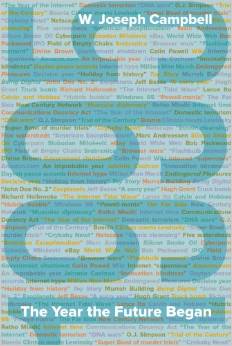
1995bookcoverThe book is 1995: The Year the Future Began and will be published later this year by the University of California Press. (The book may be pre-ordered through Amazon.com, the retailing giant that began selling books online in July 1995, as well as Barnes & Noble)

The respective chapters of 1995 are:

  • “The Year of the Internet,” which considers the emergence of the Internet and World Wide Web into mainstream consciousness
  • “Terror in the heartland,” which discusses the Oklahoma City bombing and its consequences
  • “O.J., DNA, and the ‘Trial of the Century,” which takes up the sensational, months-long double-murder trial of O.J. Simpson
  • “Peace at Dayton and the ‘hubris bubble,’” which revisits the U.S.-brokered peace talks that ended the vicious war in Bosnia, and
  • “Clinton meets Lewinsky,” which addresses the origins and effects of the sex-and-lies scandal that led to the impeachment in 1998 of President Bill Clinton.

These events and moments were, as I write in 1995, “profound in their respective ways and, taken together, they define a watershed year at the cusp of the millennium. Nineteen ninety-five in many ways effectively marked the close of the one century, and the start of another.”

I also write about 1995:

“It is striking how a sense of the improbable often flavored the year and characterized its watershed moments. Oklahoma City was an utterly improbable setting for an attack of domestic terrorism of unprecedented dimension. Dayton, Ohio, was an improbable venue for weeks of multiparty negotiations that concluded by ending the faraway war in Bosnia. The private study and secluded hallway off the Oval Office at the White House were the improbable hiding places for Clinton’s dalliance” with a 22-year-old intern named Monica Lewinsky.

“The improbable,” I add, “was a constant of the year.”

1995 is my sixth book. I have also written Getting It Wrong: Ten of the Greatest Misreported Stories in American Journalism, an award-winning work that the University of California Press brought out in 2010.

I also have written The Year That Defined American Journalism: 1897 and the Clash of Paradigms (2006); The Spanish-American War: American Wars and the Media in Primary Documents (2005); Yellow Journalism: Puncturing the Myths, Defining the Legacies (2001), and The Emergent Independent Press in Benin and Cote d’Ivoire: From Voice of the State to Advocate of Democracy (1998).

WJC

More from Media Myth Alert: