 A better way to put it is that it offers up a hoary media myth. That at least was a fundamental flaw of last night’s first installment of the quasi-documentary series known as “Race for the White House.”
They pointed out that no public opinion surveys conducted in the immediate aftermath of the debate were aimed at gauging the reactions of radio audiences.
They wrote that the few surveys that even hinted at a viewer-listener clash were too small and unreliable to allow for telling assessments.

Debate, 1960: Not everyone thought Nixon looked terrible
They also observed: “Even if viewers disliked Nixon’s physical appearance, the relative importance of this factor is a matter of conjecture.”
It’s revealing to note that a good deal of post-debate commentary described the Kennedy-Nixon encounter as a draw.
Indeed, contemporaneous assessments of columnists and critics were hardly unanimous about who won the debate. The commonplace belief nowadays — that Kennedy looked so good on television that he won the debate hands down — was not at all a dominant theme in news reports and commentaries published in the days after the debate, the first of four that fall.
For example, a reporter for the old Philadelphia Evening Bulletin wrote that “it could hardly be said that either man had won.” Syndicated columnist Joseph Alsop observed:
“Neither man fell flat on his face. Neither even stumbled.”
The debate moderator, Howard K. Smith, later said he thought “Nixon was marginally better” than Kennedy.
James Reston, then the Washington bureau chief for the New York Times, wrote: “Who took the first round is a matter of individual opinion. My own view is that Kennedy gained more than Nixon, but it was a fielder’s choice, settling nothing.”
The Washington Post saw Nixon as the winner, stating in a post-debate editorial:
“Of the two performances, Mr. Nixon’s was probably the smoother. He is an accomplished debater with a professional polish, and he managed to convey a slightly patronizing air of a master instructing a pupil.”
To be sure, not everyone thought Nixon looked terrible that night. Saul Pett, a prominent feature writer for the Associated Press who won a Pulitzer Prize several years later, gave Nixon high marks for cordiality.
“On general folksiness both before and during the debate,” Pett wrote, “my scorecard showed Nixon ahead at least 8 to 1. … He smiled more often and more broadly, especially at the start and close of a remark. Kennedy only allowed himself the luxury of a quarter-smile now and then.”
Syndicated columnist Harriett Van Horne described both candidates as “visibly anxious, watching as a tiger while his opponent was speaking. … Mr. Nixon looked made up. Obviously somebody had de-fluffed his shaggy brows. Sen. Kennedy’s hair no longer falls in his eyes … but he looked as if he’d not slept well recently.”
Partisan leanings inevitably edged into post-debate assessments.
Thomas O’Neill, a political columnist for the Baltimore Sun and no friend of Nixon, likened the vice president’s appearance on television to that of a mug shot on a wanted poster. (O’Neill’s name appeared on Nixon’s “enemies list” that was released in 1973 during the Watergate scandal.)
The conservative San Diego Union, no friend of Kennedy, said in an editorial that the debate had “emphasized the painful superficiality and intellectual cynicism of Sen. Kennedy.”
Probably more damaging to Nixon than his washed-out appearance that night were his tactics, especially at the outset of the debate. He committed the elementary mistake of seeming to concur with Kennedy’s points rather than disputing them. Nixon blundered in projecting a “me-too” sentiment from the start.
The columnist Alsop wrote, sarcastically, that “Vice President Nixon insisted so strongly that he shared all Senator Kennedy’s worthy goals that one expected a Nixonian endorsement of the Democratic platform at any moment.”
The CNN program contained other errors. The journalist-historian Evan Thomas was among the authorities interviewed for the show and he claimed that Kennedy prepared for the debate by taking time away from the campaign trail. Not so: As the Chicago Tribune reported, Kennedy received “a boisterous welcome” in an appearance on the afternoon of the debate at a carpenters union convention in Chicago.
The program also referred to Kennedy as almost unknown at the time of his run for the presidency.
Not true, either: A flattering illustration of Kennedy, his wife Jackie, and their infant daughter appeared on the cover of Life magazine in April 1958. He also appeared Life’s cover in August 1959, with his wife posed in the foreground. The headline on the cover read:
“Jackie Kennedy: A front runner’s appealing wife.”
Kennedy, the junior U.S. senator from Massachusetts, was so well known in the late 1950s that he ran well ahead of Nixon in some presidential trial heats that the Gallup polling organization conducted nationally in late 1958 and 1959.
- Appearance decisive in politics? Revisiting the Kennedy-Nixon debate
- 1960 myth ricochets around media in advance of Obama-Romney debate
- USA Today invokes Kennedy-Nixon debate myth
- Who won ’60 debate? Can’t say: Didn’t see it on TV
- Kennedy-Nixon debate myth emerges — as predicted
- Kennedy took responsibility?
- Recalling George Romney’s ‘brainwashing’ — and Gene McCarthy’s ‘light rinse’ retort
- Just what we need: Barbra Streisand, media critic
- ‘A debunker’s work is never done’
- No, ‘Politico’ — Nixon never said he had a ‘secret plan’ for Vietnam
- Check out The 1995 Blog
- ‘Getting It Wrong’ wins SPJ award for Research about Journalism
 It’s a tempting if reductive
 The chestnut made an appearance yesterday in a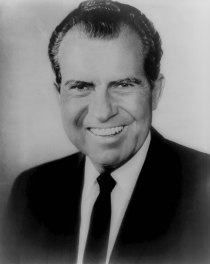


 Media Myth Alert