W. Joseph Campbell

Archive for the ‘1897’ Category

Newspaper endorsements don’t much matter — except maybe at the margins

In 1897, Newspapers on November 5, 2012 at 6:54 am

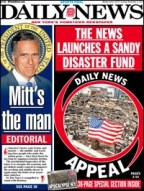
Romney endorsed by New York Daily News

It’s long been apparent that newspaper endorsements for high political office are rarely decisive.

Back in 1897, when print made up the mass media, newspapers were shocked when their endorsements had little impact on the outcome of the New York City mayoral election.

The Tammany Hall candidate, an obscure judge named Robert A. Van Wyck, won the election decisively — without giving a speech and without receiving the editorial support of the city’s leading newspapers.

Nowadays, in a world of myriad digital options, many U.S. daily newspapers are but shells of their former selves. Few of them really presume to set an agenda for their communities and their endorsements for high political office are all but irrelevant. More than a handful of newspapers no longer endorse candidates for president.

Still, it is conceivable that newspaper endorsements could make a difference in close elections in a few places in tomorrow’s presidential election. Enough readers could take cues from newspaper endorsements to tip the outcome in very tight races — as perhaps in Iowa and Florida.

It’s speculative, but not implausible.

In Iowa and Florida, prominent newspapers that endorsed Barack Obama in 2008 are backing Republican Mitt Romney this year. And the Obama-Romney race is close in both states. Polling data compiled and aggregated at RealClearPolitics indicate that Obama leads by three percentage points in Iowa and that Romney is narrowly ahead in Florida.

The largest-circulation newspaper in Iowa, the Des Moines Register, has endorsed Romney, citing his “strong record of achievement in both the private and public sectors.”

In Florida, the Orlando Sentinel and the Fort Lauderdale Sun-Sentinel have come out for Romney.

The Sentinel asserted in its editorial endorsement: “We have little confidence that Obama would be more successful managing the economy and the budget in the next four years. For that reason, though we endorsed him in 2008, we are recommending Romney in this race.”

And the Sun-Sentinel said: “When President Obama came into office in 2009, the economy was in freefall and though untested, he inspired us with his promise of hope and change. Now, four years later, we have little reason to believe he can turn things around.

“So while we endorsed Obama in 2008, we recommend voters choose Republican Mitt Romney on Nov. 6.”

That those newspapers have turned away from Obama probably matters much only to a few readers. But editorial endorsements that sway even a few readers could make a difference if the statewide race is very close.

This point was made the other day by a leading political analyst and numbers-cruncher, Michael Barone. Writing in the Washington Examiner, Barone said the Des Moines Register’s endorsement “could make a significant difference” in the outcome in Iowa.

Some indirect evidence suggests that newspaper endorsements can signal the outcomes of close races.

Greg Mitchell, formerly editor of the trade journal Editor & Publisher, noted in a recent commentary at the Nation that just before the presidential election in 2008,  he “went out on a limb and predicted which candidates would win in the thirteen key ‘toss-up’ states based purely on newspaper endorsements in those states — not polls or common sense or anything else.”

Mitchell said he “got them right, except for one.”

Based on newspaper endorsements in swing states this year, Mitchell has predicted that Obama will narrowly defeat Romney. Mitchell’s breakdown has five swing states for Obama, five for Romney, and one (Virginia) undecided, which seems more like a toss-up.

In any case, data compiled by the American Presidency Project at the University of California, Santa Barbara, show that 12 newspapers that endorsed Obama in 2008 are supporting Romney this year. They include the New York Daily News, the country’s fifth-largest newspaper, and Newsday of Long Island, the 13th largest daily.

Those endorsements aren’t likely to matter much, though, given that Obama is a sure bet to carry New York State.

WJC

‘Not Likely Sent’ article about Hearst’s ‘vow’ a top 50 selection in AEJMC flagship journal

In 1897, Debunking, Furnish the war, Media myths, Newspapers, Quotes, Spanish-American War, Yellow Journalism on August 10, 2012 at 12:45 pm

AEJMC, the journalism educators organization, announced yesterday the 50 top articles to have appeared in its flagship journal — and among the selections was “Not Likely Sent,” my 2000 myth-busting study about William Randolph Hearst and his purported vow to “furnish the war” with Spain.

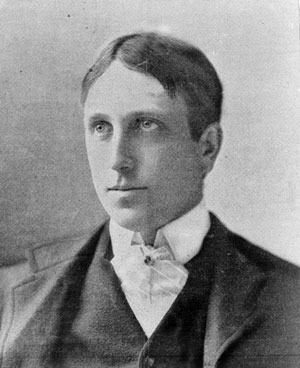
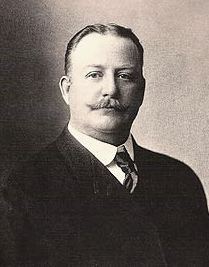
Hearst

“Not Likely Sent” was published in the summer 2000 issue of the peer-reviewed Journalism & Mass Communication Quarterly.

The article challenged as implausible the often-retold anecdote about Hearst’s supposed exchange of telegrams with the artist Frederic Remington, in which Hearst is said to have declared:

You furnish the pictures, and I’ll furnish the war.”

Remington at the time of purported exchange was in Cuba, on assignment for Hearst’s New York Journal. Remington spent six days on the island in January 1897, preparing sketches to illustrate aspects of the Cuban insurrection against Spain’s colonial rule.

Among the reasons for dismissing the famous anecdote — which has been invoked over the decades by scores of journalists and historians — is Hearst’s denial, and the implausibility of the supposed exchange.

That is, Spanish censors who controlled all incoming and outgoing telegraphic traffic surely would have intercepted and called attention to Hearst’s message to Remington, had it been sent.

I also pointed out in “Not Likely Sent” that Hearst’s supposed vow ran counter “to the Journals editorial positions in January 1897. The newspaper in editorials at the time expected the collapse of the Spanish war effort and resulting independence for Cuban insurgents. The Journal was neither anticipating nor campaigning for U.S. military intervention to end the conflict.”

The Cuban rebellion, however, ground on and became a stalemate. In April 1898, the United States entered the conflict, principally to end a human rights disaster that was festering in Cuba.

The editor of Journalism and Mass Communication Quarterly, Daniel Riffe, said in a statement that selecting the journal’s top 50 articles was “a piece of research in itself.” The process included tapping the advice of his predecessors as editor, as well as consulting citation guides and Google Scholar.

“I finally assembled a list of 50 articles that I hope our members agree have been influential in our field,” Riffe said.

The top 50 articles were selected and announced as part of the centennial celebration of AEJMC — the Association for Education in Journalism and Mass Communication.

Predecessor titles of Journalism and Mass Communication Quarterly were Journalism Quarterly and The Journalism Bulletin.

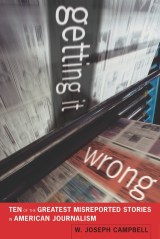
An elaboration of “Not Likely Sent” appeared as a chapter in my 2001 book, Yellow Journalism: Puncturing the Myths, Defining the Legacies. Separately, a chapter in my latest book, Getting It Wrong, described how Hearst’s purported vow came to be embedded in the lore of American journalism.

Despite the repeated debunkings, however, the anecdote about “furnish the war” lives on — a timeless, pithy, and easily recalled example of the news media at their supposed worst.

As I wrote in the article:

“The Remington-Hearst anecdote is indeed ‘a beautiful story,’ a succinct and delicious tale, one rich in hubris and in swaggering recklessness. It is, however, a story altogether dubious and misleading.

“It suggests a power that the press, including Hearst’s Journal, did not possess, that of propelling the country into a war that it did not want.”

WJC

Recent or related:

Renewing the Hearst-Remington association in a $200,000 grant

In 1897, Debunking, Furnish the war, Media myths, Quotes, Spanish-American War on July 8, 2012 at 10:10 am

The most tenacious myth in American journalism tells of a purported exchange of telegrams in January 1897 between  newspaper magnate William Randolph Hearst and the artist Frederic Remington.

Remington

Supposedly, in answering Remington’s telegram, Hearst vowed to “furnish the war” with Spain, which broke out 15 months later, in April 1898.

Despite repeated efforts to debunk it, the tale about Hearst’s reckless vow lives on — a story just too delicious to be discarded.

So I found intriguing the news the other day that the Hearst Foundations — which Hearst set up in the 1940s — have agreed to a $200,000 grant to the Frederic Remington Art Museum in Ogdensburg, N.Y.

Most of the money, $150,000, is to put toward extensive restoration work on the museum’s main building, which dates to 1810. The remainder, $50,000, is for educational purposes, if matched by the museum before year’s end.

Hearst

The grant — the foundations’ second to the Remington museum since 2009 — represents a reminder and a renewal of sorts of the long ago Hearst-Remington association.

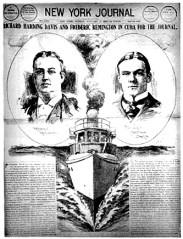
In early 1897, Remington and the writer Richard Harding Davis arrived in Cuba on assignment from Hearst’s New York Journal to cover the rebellion against Spanish colonial rule, the conflict that gave rise to the Spanish-American War.

It was a coup for the Journal to have lined up talent such as Remington and Davis, who were paid handsomely for what was to be a month-long assignment.

It was during that assignment when the purported exchange of the telegrams supposedly took place — an exchange described by neither Hearst nor Remington, but by James Creelman, a Hearst correspondent who was in Madrid at the time.

The tale of Hearst’s vow is almost surely apocryphal, for reasons I discuss in my latest book, Getting It Wrong.

Among the reasons (typically overlooked) is that Hearst denied having sent such a message. Remington, apparently, never discussed the anecdote, which Creelman recounted, without documentation, in a memoir published in 1901.

Further reason for doubting the tale is that Spanish authorities controlled incoming and outgoing telegraphic traffic from Havana. They surely would have intercepted and called attention to Hearst’s incendiary message to Remington, had it been sent.

Additionally, the anecdote rests on irreconcilable illogic. As I write in Getting It Wrong, it “would have been absurd for Hearst to vow to ‘furnish the war’ because war— specifically, the Cuban rebellion against Spain’s colonial rule — was the very reason Hearst sent Remington to Cuba in the first place.

“Anyone reading U.S. newspapers in early 1897 would have been well aware that Cuba was a theater of a nasty war. By then, the Cuban rebellion had reached island-wide proportion and not a single province had been pacified by Spain’s armed forces.”

Hearst’s Journal gave prominent display to Remington’s sketches beginning in late January 1897, following the artist’s return to New York after a stay in Cuba of just six days.

The Journal gushed over Remington’s work, introducing his sketches with extravagant headlines such as:

“War Sketches Gathered in the Field by Frederic Remington; The Gifted Artist, Visiting Cuba Especially for the Journal, Describes with Pen and Pencil Characters That Are Making the War Famous and Infamous.”

Remington, though, grumbled that his work did not reproduce well in Hearst’s newspaper.

The artist returned to Cuba for Hearst in June 1898, to cover the Cuban campaign of the Spanish-American War. He did not distinguish himself.

Overweight and ailing, Remington suffered in the Cuban summer. He seldom was near the front and became what biographers Peggy and Harold Samuels termed “the chronicler of the battle’s rear.”

Remington died in 1909. The museum devoted to his work was established in Ogdensburg in 1923.

The museum’s executive director, Ed LaVarnway, said by phone yesterday that the Hearst Foundations’ grants to the museum weren’t made in recognition of the late 19th century association between Hearst and Remington.

But Hearst representatives knew about those connections and about the anecdote about the purported exchange of telegrams, he said.

Vital to securing the latest grant, LaVarnway noted, was Gilbert C. Maurer, a Hearst Foundations director and a benefactor of St. Lawrence University in Canton, N.Y., Remington’s hometown. Canton is 18 miles from Ogdensburg.

He “was in the museum’s corner,” LaVarnway said of Maurer, formerly the chief operating officer of Hearst Corp., which William Randolph Hearst established 125 years ago.

WJC

Recent or related:

Those ‘warmongering’ papers of William Randolph Hearst

In 1897, Debunking, Furnish the war, Media myths, Spanish-American War, Yellow Journalism on May 1, 2012 at 5:35 am

The first major engagement of the Spanish-American War took place 114 years ago today — in the Philippines, where U.S. warships attacked and destroyed a Spanish naval squadron in Manila Bay.

Warmonger?

The battle was a thoroughly unexpected development in a conflict fought over Spain’s harsh rule of Cuba, a conflict often but inaccurately blamed on the yellow press of William Randolph Hearst.

A commentary in the Tennessean newspaper took up that hoary myth the other day and added for good measure the apocryphal tale of Hearst’s having vowed to bring on the war.

The commentary said of Hearst:

“His most infamous manipulation was the warmongering his papers did in pushing the U.S. into war with Spain in 1898. He sent artist Frederick Remington to Cuba to cover the native uprising against Spain. Remington reportedly cabled Hearst that there was no war in Cuba. Hearst responded, ‘You get me the pictures; I’ll get you the war.’ He was true to his word.”

No serious historian embraces the notion that Hearst’s newspapers were decisive or much of a factor at all in the U.S. declaration of war against Spain in April 1898. That is a simplistic explanation about a war that was fought largely on humanitarian grounds — those of ending Spain’s long and harsh rule of Cuba.

As often is the case when such mediacentric claims are advanced, the commentary in the Tennessean left wholly unaddressed the method or mechanism by which the content of Hearst’s newspapers — he published three in 1898 —  was transformed into military action.

Three was, in fact, no such mechanism.

As I pointed out in my 2001 book, Yellow Journalism: Puncturing the Myths, Defining the Legacies, top officials in the administration of President William McKinley largely disregarded the content of the Hearst press. They certainly didn’t turn to it for policy guidance.

“If the yellow press did foment the war,” I wrote in Yellow Journalism, “researchers should be able to find some hint of, some reference to, that influence in the personal papers and the reminiscences of policymakers of the time.

“But neither the diary entries of Cabinet officers nor the contemporaneous private exchanges among American diplomats indicate that the yellow newspapers exerted any influence at all. When it was discussed within the McKinley administration, the yellow press was dismissed as a nuisance or scoffed at as a complicating factor.”

Advocates of the mediacentric interpretation of the Spanish-American War invariably cite — as the Tennessean did — the tale about Hearst’s vowing to furnish the war. It’s their Exhibit A.

While colorful, the tale of the purported Hearstian vow is a media-driven myth, one of the hardiest in American journalism.

It’s more than 110-years-old; during that time, no compelling evidence has ever emerged to support or document the tale.

Hearst denied making such a vow, which he purportedly sent in a telegram to Remington, an artist on assignment to Spanish-ruled Cuba in early 1897 for Hearst’s New York Journal.

The telegram to Remington has never surfaced. And Remington apparently never discussed the tale, which was first recounted in 1901, in a brief, unsourced passage in memoir by James Creelman, a blowhard journalist known for frequent exaggeration.

Creelman

Perhaps the most compelling reason for doubting Creelman’s undocumented account rests on an irreconcilable internal inconsistency.

As I write in my latest book, Getting It Wrong, it “would have been absurd for Hearst to vow to ‘furnish the war’ because war — specifically, the Cuban rebellion against Spain’s colonial rule — was the very reason Hearst sent Remington to Cuba in the first place.

“Anyone reading U.S. newspapers in early 1897 would have been well aware that Cuba was a theater of a nasty war.”

WJC

Recent and related:

James Fallows and ‘furnish the war’: Indulging in a media myth

In 1897, Debunking, Furnish the war, Media myths, Spanish-American War on March 3, 2012 at 11:00 am

Young Hearst

In deploring “carefree talk” about pre-emptively bombing Iran’s nuclear installations, Atlantic correspondent James Fallows invokes the mythical tale about William Randolph Hearst’s vow to “furnish the war” with Spain in the late 1890s.

The “furnish the war” anecdote can be just too delicious to resist, as Fallows demonstrates in a rambling commentary posted yesterday at the Atlantic online site.

In it, Fallows writes that “only twice before in my memory, and maybe thrice in American history, has there been as much carefree talk about war and unprovoked strikes as we’ve had concerning Iran in recent months ….

“The twice in my experience were: during the runup to the invasion of Iraq in 2002, and in the ‘bomb ’em back to the stone age’ moments of the early Vietnam era.

“The time that even I don’t remember was the ‘you furnish the pictures, I’ll furnish the war’ yellow journalism drumbeat before the war with Spain in 1898. This is not good company for today’s fevered discussion to join.”

The line, “you furnish the pictures, and I’ll furnish the war,” was attributed to Hearst more than 110 years ago. But as decades passed, no compelling evidence ever emerged to support or document the tale.

Indeed, it’s often overlooked that Hearst denied making such vow, which he purportedly included in a telegram to the artist Frederic Remington, who was on assignment to Spanish-ruled Cuba in early 1897 for Hearst’s New York Journal.

The telegram to Remington has never surfaced. And Remington apparently never discussed the anecdote, which was recounted first in 1901, in a brief passage in memoir by James Creelman, a blowhard journalist known for frequent exaggeration.

Creelman did not explain how he learned of the “furnish the war” tale which, as I describe in my latest book, Getting It Wrong, is almost surely apocryphal.

Not only does story live on despite the absence of supporting documentation; it lives on despite an irreconcilable internal inconsistency.

That is, it would have been absurd for Hearst to have vowed to “furnish the war” because war — specifically, the Cuban rebellion against Spain’s colonial rule — was the reason he sent Remington to Cuba in the first place.

Cuba in early 1897 was the theater of a nasty war. By then, Spain had dispatched nearly 200,000 troops in a failed attempt to put down the rebellion, which gave rise in 1898 to the Spanish-American War.

Spanish authorities controlled and censured international cable traffic to and from Cuba. They surely would have intercepted — and called attention to — Hearst’s bellicose message, had it been sent. There is little chance the cable would have moved unimpeded from Hearst in New York to Remington in Cuba.

But despite the compelling evidence arrayed against it, the vow attributed to Hearst lives on, and on.

That’s because it has, as I write in Getting It Wrong, “achieved unique status as an adaptable, hardy, all-purpose anecdote, useful in illustrating any number of media sins and shortcomings.

“It has been invoked to illustrate the media’s willingness to compromise impartiality, promote political agendas, and indulge in sensationalism. It has been used, more broadly, to suggest the media’s capacity to inject malign influence into international affairs.”

Which is what Fallows does.

WJC

Recent and related:

Online at BBC News: Recalling the derivation of ‘All the news that’s fit to print’

In 1897, Anniversaries, New York Times, Newspapers, Yellow Journalism on February 11, 2012 at 12:10 am

The most famous seven words in American journalism — “All the news that’s fit to print” — took a permanent place 115 years ago yesterday in the upper left corner, or left “ear,” of the New York Times masthead.

On front page for 115 years

And I recalled that occasion in a piece for the BBC News online site, writing:

“The motto appeared on the Times’ front page without notice, commentary, or fanfare. In the years since, the phrase has been admired as a timeless statement of purpose, interpreted as a ‘war cry’ for honest journalism, and scoffed at as pretentious, overweening, and impossibly vague.

“Even the Times hasn’t been entirely consistent in its embrace and interpretation of those seven words. In 1901, at the 50th anniversary of its founding, the Times referred to ‘All the news that’s fit to print’ as its ‘covenant. In 2001, a Times article commemorating the newspaper’s 150th anniversary said of the motto:

“’What, exactly, does it mean? You decide. The phrase has been debated, and endlessly parodied, both inside and outside the Times for more than a century.’

“On occasion, the motto has been taken far too seriously, as in 1960 when Wright Patman, a U.S. congressman from Texas, asked the Federal Trade Commission to investigate whether ‘All the news that’s fit to print’ amounted to false and misleading advertising.

“’Surely this questionable claim has a tendency to make the public believe, and probably does make the public believe, that the New York Times is superior to other newspapers,’ Patman wrote.

“The Trade Commission declined to investigate, saying: ‘We do not believe there are any apparent objective standards by which to measure whether “news” is or is not “fit to print.”’

“No matter how it’s interpreted, the motto certainly is remarkable in its permanence. One-hundred fifteen years on the front page has invested the motto with a certain gravitas. It often has been associated with fairness, restraint, and impartiality — objectives that nominally define mainstream American journalism.

“A commentary in the Wall Street Journal in 2001 addressed those sentiments, describing the motto as the ‘leitmotif not merely for the Times, but also, by a process of osmosis and emulation, for most other general-interest papers in the country, as well as for much of the broadcast media.

“Interestingly, the ‘leitmotif’ of American journalism had its origins in marketing and advertising.

“’All the news that’s fit to print’ first appeared on an illuminated advertising sign, spelled out in red lights above New York’s Madison Square in early October 1896. That was about six weeks after Adolph S. Ochs had acquired the newspaper in bankruptcy court.

“Ochs, patriarch of the family that still controls and publishes the Times, had come to New York from Tennessee. His task was to differentiate the Times from its larger, aggressive, and wealthier rivals — notably the yellow press of William Randolph Hearst and Joseph Pulitzer. It was a tall order, given the beleaguered status of the Times in New York’s crowded newspaper market.

“Ochs possessed a keen sense of promotion and turned to a number of techniques to call attention to the Times. The illuminated sign at Madison Square was one. An even more successful promotion was a contest inviting readers to propose a better motto.

“In late October 1896, the Times announced it was offering $100 for the phrase of ten words or fewer that ‘more aptly’ captured the newspaper’s ‘distinguishing characteristics’ than ‘All the news that’s fit to print.’

“Hundreds of entries poured in. …  As the contest unfolded in the fall of 1896, the Times amended the rules, making clear it would not abandon ‘All the news that’s fit to print’ but would still pay $100 for the best suggestion. And entries kept coming in.

“A committee of Times staff narrowed the field to 150, which in turn was winnowed to four by the motto contest judge, Richard W. Gilder, editor of The Century magazine. The finalists were:

  • “Always decent; never dull”
  • “The news of the day; not the rubbish”
  • “A decent newspaper for decent people”
  • “All the world’s news, but not a School for Scandal”

“The latter entry, Gilder determined, was the best of the lot, and the Times paid the prize money to the author of the phrase, D.M. Redfield of New Haven, Connecticut.

“What exactly prompted Ochs to move ‘All the news that’s fit to print’ to the front page 115 years ago is not entirely clear. But his intent was unmistakable — to throw down a challenge to the yellow press, a challenge that Ochs ultimately won. The Times has long outlived the New York newspapers of Hearst and Pulitzer.

“So the motto lives on as a reminder, as a daily rebuke to the flamboyant extremes of fin-de-siècle American journalism that helped inspire ‘All the news that’s fit to print.'”

WJC

Recent and related:

‘Yellow journalism’: The back story to a sneer, 115 years on

In 1897, Anniversaries, Spanish-American War, Yellow Journalism on January 31, 2012 at 6:35 am

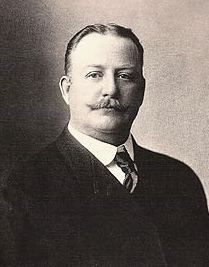
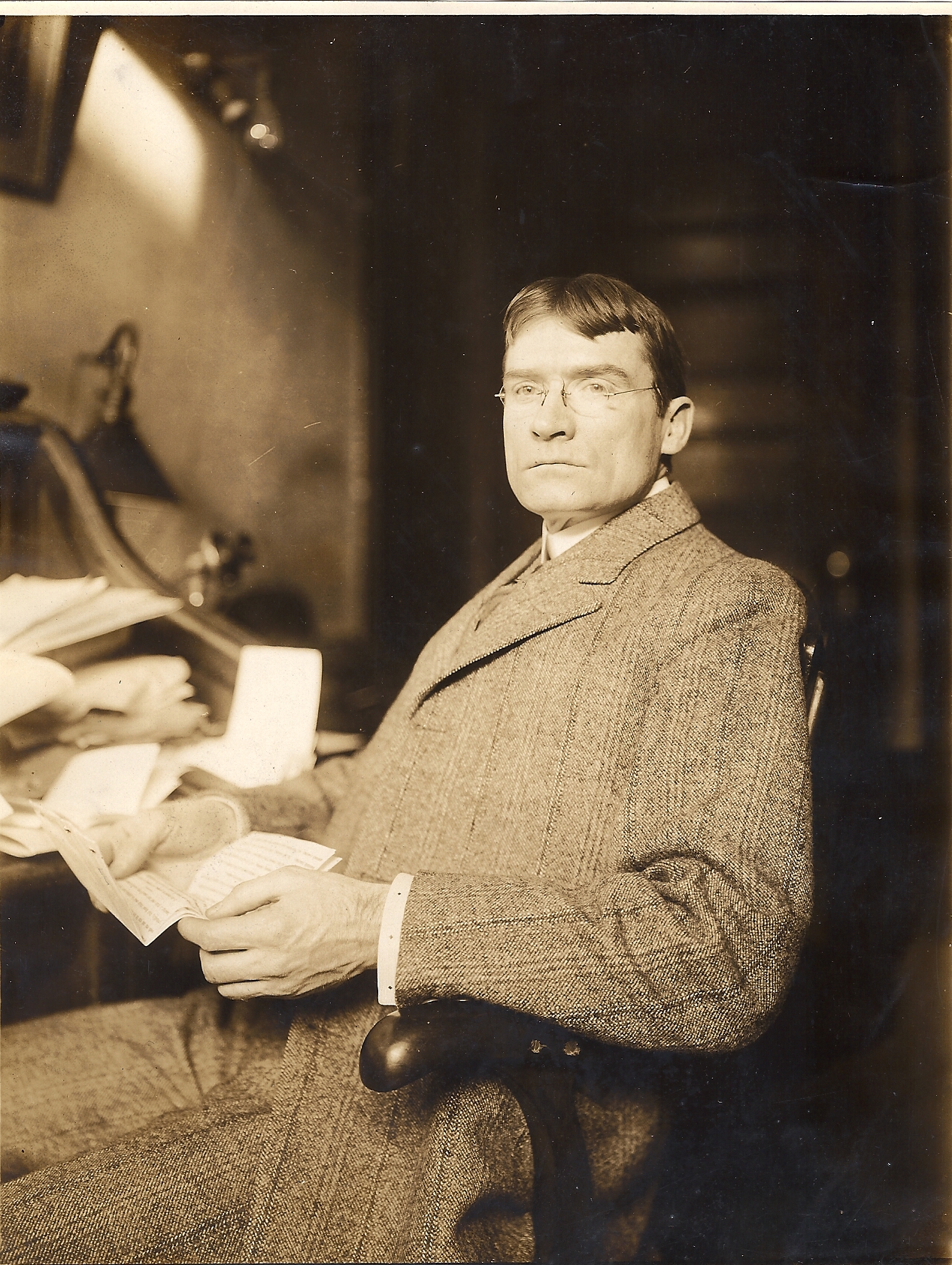
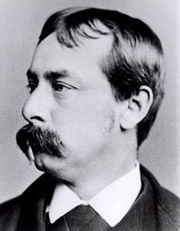
Wardman: Gave us 'yellow journalism'

Yellow journalism” is a disparaging epithet often invoked in journalism, even though its derivation is little known.

This is the back story to a sneer that trips easily off the tongue with scorn and condescension.

The first verified use of the term was 115 years ago today, when “yellow journalism” appeared in the old New York Press.

The phrase “the Yellow Journalism” appeared in a small headline on the Press’ editorial page on January 31, 1897. The phrase also appeared that day in the newspaper;s editorial page gossip column, “On the Tip of the Tongue.”

Yellow journalism” was quickly embraced in American newspapering, as a way to disparage and denigrate the freewheeling practices of William Randolph Hearst and his New York Journal as well as Joseph Pulitzer and the New York World.

Within weeks of the first use of the term, references to “yellow journalism” had appeared in newspapers in Providence, Richmond, and San Francisco.

In the 115 years since then, “yellow journalism” has turned into a derisive if vague shorthand for denouncing sensationalism and journalistic misconduct of all kinds.

“It is,” I wrote in my 2001 book, Yellow Journalism: Puncturing the Myths, Defining the Legacies, “an evocative term that has been diffused internationally, in contexts as diverse as Greece and Nigeria, as Israel and India.”

I also noted that yellow journalism emerged in “a lusty, fiercely competitive, and intolerant time, when newspapers routinely traded brickbats and insults” and even threats.

Just how Wardman and the Press came up with “yellow journalism” is not clear.

The newspaper’s own, brief discussion of the term’s derivation was decidedly unrevealing. “We called them Yellow because they are Yellow,” the Press said in 1898 in a comment about the Journal and the World.

In the 1890s, the color yellow sometimes was associated with depraved literature, which may have been an inspiration to Wardman, an austere figure largely lost to New York newspaper history. (The New York Times said in 1923 in its obituary of Wardman: “Like many another anonymous worker in journalism, his name was not often conspicuously before the public, and he was content to sink his personality in that of the papers which he served.”)

Wardman, who earned a bachelor’s degree in three years at Harvard University, once was described as showing “Calvinistic ancestry in every line of his face.” He did little to conceal his contempt for Hearst and Hearst’s flamboyant style of journalism.

Disdain routinely spilled into the columns of the Press, of which Wardman became editor in chief in 1896 at the age of 31. (The Press ceased publication in 1916.)

The Press took to taunting Hearst, Hearst’s mother, and Hearst’s support for Democratic candidate William Jennings Bryan in the 1896 presidential election. Hearst’s Journal was virtually alone among New York newspapers in supporting Bryan’s “free silver” candidacy.

The Press taunted Hearst, then 34, as a mama’s boy and “little Willie.” It referred to the Journal as “our silverite, or silver-wrong, contemporary.”

The Press also experimented with pithy if stilted turns of phrase to denounce “new journalism,” Hearst’s preferred term to characterize his style of newspapering.

“The ‘new journalism,’” the Press said in early January 1897 “continues to think up a varied assortment of new lies.”

Later in the month, the Press asked in a single-line editorial comment:

“Why not call it nude journalism?”

It clearly was a play on “new journalism” and was meant to suggest the absence of “even the veneer of decency.”

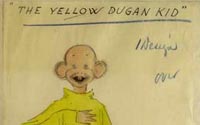
It wasn’t long before Wardman and the Press seized upon the phrase “yellow-kid journalism,” which evoked the Hearst-Pulitzer rivalry over a popular cartoon character known as the “Yellow Kid.” Both the Journal and the World at the time were publishing versions of the kid.

The Yellow Kid (Library of Congress)

At the end of January 1897, the phrase “yellow-kid journalism” was modified  to “the Yellow Journalism,” and the sneer was born.

Wardman turned often to this delicious pejorative, invoking it in a number of brief editorial comments such as:

“The Yellow Journalism is now so overripe that the little insects which light upon it quickly turn yellow, too.”

The diffusion of “yellow journalism” was confirmed when Hearst’s Journal embraced the term in mid-May 1898, during the Spanish-American War. With typical immodesty, it declared:

“… the sun in heaven is yellow—the sun which is to this earth what the Journal is to American journalism.”

WJC

Adapted from an essay posted in 2010 at Media Myth Alert.

Recent and related:

Sketches published 115 years ago undercut a tenacious media myth

In 1897, Anniversaries, Debunking, Furnish the war, Media myths, Spanish-American War on January 24, 2012 at 5:25 am

On assignment for Hearst

The artist Frederic Remington was back from Havana just a few days when on January 24, 1897, William Randolph Hearst’s New York Journal began publishing his sketches of the Cuban rebellion against Spanish colonial rule.

Remington later confided that he didn’t think much of the Journal’s reproduction techniques. But the newspaper played up Remington’s artwork, publishing them beneath an extravagant headline that read:

“Cuban War Sketches Gathered in the Field by Frederic Remington; The Gifted Artist, Visiting Cuba Especially for the Journal, Describes with Pen and Pencil Characters That Are Making the War Famous and Infamous.”

The prominent display given the sketches, and the Journal’s flattering references to the artist, serve to undercut a tenacious and prominent media-driven myth, an anecdote that ranks as one of the most popular in American journalism.

And that is the hoary tale that Hearst, in a telegraphic exchange with Remington, vowed to “furnish the war” with Spain.

As I discuss in my latest book, Getting It Wrong, the exchange, if it happened, would have occurred on or about January 17, 1897, when Remington was preparing to leave Cuba and return to New York.

Hearst had sent Remington and the correspondent Richard Harding Davis to Cuba to report on the rebellion against Spanish rule, a vicious conflict that gave rise in 1898 to the Spanish-American War.

Remington and Davis didn’t get along and parted ways after only a few days in Cuba. According to legend, Remington before leaving sent a cable to Hearst that said:

Everything is quiet. There is no trouble here. There will be no war. I wish to return.”

In reply, Hearst supposedly told Remington:

Please remain. You furnish the pictures, and I’ll furnish the war.”

Remington left anyway, taking the passenger steamer Seneca to New York, arriving January 21, 1897. His Cuba sketches began appearing in the Journal 115 years ago today.

So how do those sketches help debunk the tale about Hearst’s vow “furnish the war”?

As I discuss in Getting It Wrong, the sketches “depict unmistakable (if unremarkable) scenes of a rebellion — a scouting party of Spanish cavalry with rifles at the ready; a cluster of Cuban non-combatants trussed and bound and being herded into Spanish lines; a scruffy Cuban rebel kneeling to fire at a small Spanish fort; a knot of Spanish soldiers dressing a comrade’s leg wound.”

Their subject matter effectively disputes the notion that Remington had found “everything … quiet” in Cuba.

Remington, 'gifted artist'

That the sketches were accompanied by glowing references to Remington as a “gifted artist” indicates that Hearst was not angry with Remington as he surely would have been had the artist left Cuba after being told “please remain.”

Indeed, it is difficult to believe Hearst would have been so generous in his compliments and ordered such prominent display of Remington’s work had the artist in fact disregarded Hearst’s instructions to stay in Cuba.

“Far from being irritated and displeased with Remington,” I write in Getting It Wrong, “Hearst was delighted with his work. He recalled years later that Remington and Richard Harding Davis, the celebrated writer who traveled to Cuba with the artist, ‘did their work admirably and aroused much indignation among Americans’ about Spanish rule of the island.”

The sole source of the “furnish the war” anecdote was James Creelman, who in January 1897 was neither with Hearst in New York nor with Remington in Cuba. Creelman then was in Spain, as the Journal’s “special commissioner,” or correspondent, on the Continent.

Creelman incorporated the anecdote about the Remington-Hearst exchange in a book of reminiscences, On the Great Highway, which was published in 1901. Creelman, a blustery, cigar-chomping egotist, did not say how he learned about the purported Remington-Hearst exchange, which he presumes to quote verbatim.

Hearst denied ever having sent such a message. Remington apparently never spoke about the supposed exchange.

The display Remington’s sketches received in Hearst’s Journal, and the newspaper’s compliments about the artist, are two of several compelling reasons for doubting the anecdote and treating it as a media myth.

Another reason is that the telegrams Remington and Hearst supposedly sent have never turned up.

The anecdote, moreover, is illogical on its face: It would have made no sense for Hearst to have vowed to “furnish the war” because war — the rebellion against Spanish rule — was the reason he sent Remington to Cuba in the first place.

WJC

Recent and related:

Virginia (of ‘Yes, Virginia’) tells of her famous letter, 97 years ago

In 1897, Anniversaries, New York Sun, Newspapers on December 23, 2011 at 4:55 am

Young Virginia O'Hanlon

In a newspaper database of the Library of Congress, I found a long-overlooked interview conducted 97 years ago with Virginia O’Hanlon, who as an 8-year-old in 1897 wrote the letter that prompted the most famous newspaper editorial in American journalism.

O’Hanlon said in the interview on Christmas Eve 1914 that she had sent her letter despite her father’s admonition:

“A newspaper has no time to waste on a little girl.”

The editorial that became a classic was published in the old New York Sun, in response to Virginia’s imploring: “Please tell me the truth. Is there a Santa Claus?”

The Sun in its timeless reply reassured young Virginia as well as generations of children who have read the editorial, which memorably declares:

“Yes, Virginia, there is a Santa Claus. He exists as certainly as love and generosity and devotion exist, and you know that they abound and give to your life its highest beauty and joy. Alas! how dreary would be the world if there were no Santa Claus. It would be as dreary as if there were no Virginias.”

The editorial’s closing passages were similarly reassuring in saying:

“No Santa Claus! Thank God! he lives, and he lives forever. A thousand years from now, Virginia, nay, ten times ten thousand years from now, he will continue to make glad the heart of childhood.”

In the interview with the Sun 97 years ago, Virginia O’Hanlon discussed her motivation in writing to the newspaper and her proud reaction when the essay was published — comments that offer revealing insight about the back story to the famous editorial.

“I think that I have never been so happy in my life as when the Sun told me that there was a Santa Claus and that he would live forever,” she said in the interview.

Virginia O’Hanlon was then 25-years-old and had been married 18 months to Edwin Malcolm Douglas. Her only child, Laura Virginia Douglas, was nine months old.

O’Hanlon said in the 1914 interview that she decided to write to the Sun in part because of its importance in her family’s household.

She said her father, Philip, “was always talking about the Sun and how you could always find what you wanted in the Sun, and how mother, who loved whist, wrote letters to the whist editor.”

O’Hanlon recalled telling her father: “I am going to write to the Sun and ask it to tell me the truth, the honest to goodness truth, about Santa Claus,” whose existence her schoolmates had scoffed at.

She added: “If the Sun says there isn’t any [Santa Claus] I’ll believe it; if it tells me Santa Claus is real I’ll make those girls at school sorry they ever teased me.

“Father laughed,” she recalled, quoting him as saying:

“The Sun is too busy writing about Presidents and Governors and important people, Virgina. … A newspaper has no time to waste on a little girl. Write if you want to, but don’t be disappointed if you never hear from your letter.”

“Well,” Virginia said, “I sat down and wrote a short letter, trying to say just what was in my heart. Day after day I looked for a letter in reply. I never for a minute thought the Sun would print a long editorial mentioning me by name and using my whole letter.

“Father teased me now and then,” she said, “but I kept hoping and finally” her letter was answered, in an essay published September 21, 1897, in the third of three columns of editorials.

(O’Hanlon indicated on another occasion that she wrote her letter shortly after her eighth birthday in July 1897. “My birthday was in July and, as a child, I just existed from July to December, wondering what Santa Claus would bring me,” she told an audience of Connecticut high school students in 1959. “I think I was a brat.”)

Word that the newspaper had published an editorial to answer her letter prompted Philip O’Hanlon to rush from their home on West 95th Street in Manhattan to buy a stack of that day’s Sun.

“Father hustled out and came back loaded down like a pack mule,” she said. “He scattered them all over town, I think, he was so proud.

“And me? It spoiled me for a while until I was big enough to understand that I, Virginia O’Hanlon, didn’t count for much in the editorial but that the important thing was the beautiful thoughts expressed by Mr. Church and the charming English in which he put his philosophy.”

She was referring to Francis P. Church, a veteran journalist who wrote the essay in the course of a day’s work, without an inkling it would become a classic.

His authorship was revealed by the Sun shortly after his death in April 1906.

The Sun’s editorial, O’Hanlon said in the interview, “was a wonderful thing in my life, and I mean it to be a wonderful thing in my baby’s. As soon as she masters her A B C’s, it will be the first thing she will read.”

The comment anticipated the commitment of her descendants who, over the years, have embraced the obligations associated with the much-remembered and often-reprinted editorial.

O’Hanlon’s grandchildren, notably, have become what the New York Times last year described as “ambassadors of the Christmas spirit, crossing the country to appear at events honoring her, and reading the letter and the response to children in schools and to their own children at home.”

Virginia O’Hanlon was 81 when she died in 1971. The Times reported her death on its front page.

But by then, though, the Sun had ceased to exist as an independent publication. It was merged with another New York newspaper, the World-Telegram, in January 1950.

WJC

Recent and related:

‘Yes, Virginia’: History does trump TV animation

In 1897, Debunking, Media myths on December 9, 2011 at 11:28 am

CBS is to air tonight its vapid Christmas season special, “Yes Virginia,” which is based on the old New York Sun’s timeless editorial reply to an 8-year-old girl, who in 1897 inquired about the existence of Santa Claus.

The charmless, animated CBS program takes great liberties with the real back story to the “Yes, Virginia” editorial, which was published in the Sun on September 21, 1897, in the third of three columns on editorials.

The Sun’s editorial was a response to young Virginia O’Hanlon who shortly after her 8th birthday in July 1897 wrote to the newspaper, imploring:

“Please tell me the truth; is there a Santa Claus?”

Francis P. Church

The Sun’s reply, written by a retiring editorial writer named Francis P. Church, said in part:

“Yes, Virginia, there is a Santa Claus. He exists as certainly as love and generosity and devotion exist, and you know that they abound and give to your life its highest beauty and joy. Alas! how dreary would be the world if there were no Santa Claus. It would be as dreary as if there were no Virginias.”

In the CBS interpretation, Virginia is waddling, round-headed, and strangely obsessed with the existence of Santa Claus.

Church, the editorial’s author, is depicted as scowling, abrupt, hard-hearted.

Neither portrayal is convincing, neither is realistic.

Church is cast as the editor of the Sun, which is shown as a tabloid newspaper. Church wasn’t editor; he was an editorial writer. And the Sun of 1897 was no tabloid.

What’s more, the CBS show had Virginia writing her letter, and the Sun publishing its reply, in December, as Christmas approached.

Not so.

As I discussed in my 2006 book, The Year That Defined American Journalism: 1897 and the Clash of Paradigms, Virginia wrote the letter in the summer of 1897. The Sun published its editorial-reply on page 6 of its issue of September 21, 1897.

What became the famous essay in American journalism was, in its first appearance, inconspicuous and obscure: It certainly was not introduced with large headlines on the front page, as the CBS show has it.

Its headline posted a timeless question:

“Is There A Santa Claus?”

The editorial was no instant sensation. It was not an immediate hit. And the Sun did not reprint the editorial every year at Christmastime, as is commonly believed.

Indeed, it took years for the newspaper to embrace “Is There A Santa Claus?”

As I noted in The Year That Defined American Journalism, it wasn’t until the mid-1920s when the Sun began routinely publishing the essay in its editorial columns at Christmastime.

What helped kept the editorial alive were the newspaper’s readers.

They found it memorable. They found joy, solace, and inspiration in the passages of “Is There A Santa Claus?”

In untold numbers over the years, readers asked the Sun to reprint the essay.

A letter-writer told the newspaper in 1926 that the editorial offered “fine relief from the commercialism and unsentimental greed” of the Christmas season.

In 1940, a writer to the Sun likened the essay to “a ray of hope on the path to human understanding in our troubled times.”

The CBS program hints at none of that. It offers no indication that the editorial’s fame rests at least in part on generations of readers who, collectively, proved to be far more perceptive than editors of the Sun in identifying the essay’s significance and enduring appeal.

If anything, the tedious CBS show demonstrates anew that history’s back story is often far richer, and far more interesting, than TV fare.

There’s of course little surprise in that observation. As Richard Bernstein wrote in 1989 in a terrific essay about movies and history:

“There are, after all, times when the facts speak far more dramatically than any fictionalized account of them ever could.”

WJC

Recent and related: