W. Joseph Campbell

Archive for the ‘Spanish-American War’ Category

Advance copies arrive

In 1897, Furnish the war, Media myths, Spanish-American War on May 7, 2010 at 4:11 pm

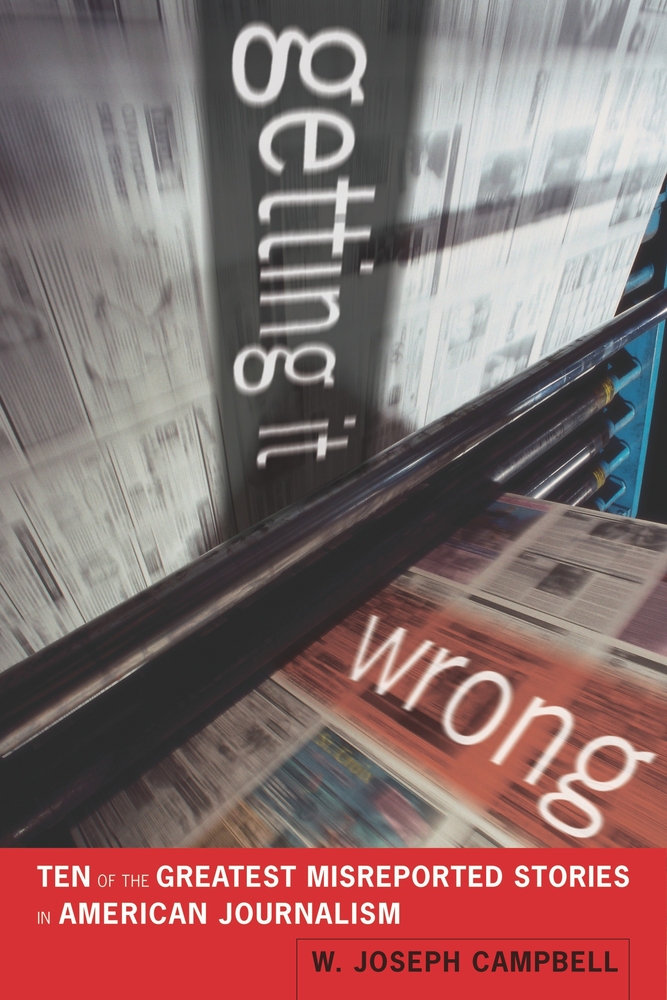
I received two advance copies of Getting It Wrong this afternoon. My wife says they look great, so that’s got to be the final word on that matter.

They do look very good.

I had a feeling the advances were being delivered when the UPS truck rolled up in front of the house.

Getting It Wrong–which addresses and debunks 10 prominent media-driven myths–is being published by University of California Press. Reed Malcolm, the acquisition editor with whom I worked, enclosed a generous note, saying copies of the book are en route to warehouses on the East and West coasts.

Getting It Wrong should be on sale next month.

The book‘s opening chapter,  which revisits William Randolph Hearst’s purported vow to “furnish the war” with Spain in the late 19th century, is available here.

Getting It Wrong has already attracted a measure of attention. I guest-blogged about the book at the Washington Post‘s “Political Bookworm” site and the newspaper’s “Outlook” section carried a short writeup about last month about three myths the book debunks.

WJC

‘War Lovers’: A myth-indulging disappointment

In 1897, Furnish the war, Media myths, Spanish-American War, Yellow Journalism on May 2, 2010 at 3:37 pm

I had a chance today to thumb through The War Lovers, the widely reviewed new book by Evan Thomas about the run-up to Spanish-American War.

But I didn’t buy it. It’s a myth-indulging disappointment.

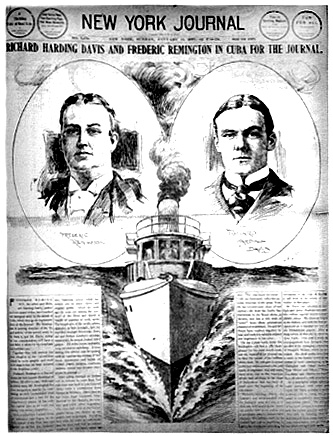
Remington in Cuba

In sections of the book about the yellow press period at the end of the 19th century, Thomas ignored–or was unaware of–recent scholarship that has cast serious doubt on anecdotes he included.

Notably, Thomas embraced the media-driven myth of William Randolph Hearst’s purported vow to “furnish the war” with Spain–a vow supposedly contained in a telegram to the artist Frederic Remington, on assignment in Cuba.

It is perhaps American journalism’s best-known tale. But as I wrote in my 2001 book, Yellow Journalism: Puncturing the Myths, Defining the Legacies, the anecdote almost certainly is apocryphal.

It lives on despite a nearly complete absence of supporting documentation. It lives on even though the telegram Hearst’s reputedly sent has never turned up. It lives on even though Hearst denied ever sending such a message.

And it lives on despite an obvious and irreconcilable internal inconsistency: It would have been absurd for Hearst to have vowed to “furnish the war” because war—specifically, the Cuban rebellion against Spain’s colonial rule—was the reason Hearst sent Remington to Cuba in the first place.

Remington was there in early 1897, at a time when anyone reading U.S. newspapers would have been quite aware that Cuba for two years had been a theater of a very nasty war. By 1897, Spain had sent nearly 200,000 soldiers to Cuba in a failed attempt to put down the rebellion, which in 1898 gave rise to the Spanish-American War.

Thomas–whose biography at Amazon.com says he “is one of the most respected historians and journalists writing today”–overlooked almost all of that.

He cited as his authority James Creelman, the pompous, hyperbolic reporter for Hearst’s New York Journal who recounted the anecdote, without documentation, in his 1901 memoir, On the Great Highway.

Creelman presented the “furnish the war” anecdote in an admiring way, saying it demonstrated how Hearst’s “yellow journalism” had an eye toward the future and was good at anticipating events. But over the years, the vow has taken on the more sinister overtones, of the sort that Thomas invoked in his book.

The anecdote’s evolution over the past 110 years is discussed in Chapter One of Getting It Wrong, my forthcoming book on media-driven myths.

Creelman, by the way, wasn’t with Remington in Cuba in early 1897. He wasn’t in New York with Hearst, either. Creelman was in Europe, as the Journal‘s special correspondent on the continent. So he would not have had first-hand knowledge about the “furnish the war” telegram, had Hearst sent it to Remington in Cuba.

Thomas indulged in another myth of yellow journalism, one that centers around what I call the greatest escape narrative in American media history.

In what also is known as the case of “jail-breaking journalism,” Hearst’s Journal organized the escape in 1897 of a 19-year-old Cuban political prisoner named Evangelina Cisneros.

By then, she had been held in a Havana jail, without trial, for 15 months on suspicion of conspiring to kill a senior Spanish military officer. Cisneros claimed the officer had made her the target of unwelcome sexual advances.

As I described in my 2006 book, a year-study titled The Year That Defined American Journalism: 1897 and the Clash of Paradigms,  Hearst sent a reporter named Karl Decker to Cuba, ostensibly as the Journal correspondent in Havana.

In reality, Decker was under orders to organize the rescue of Cisneros.

With the quiet help of U.S. diplomatic personnel in Cuba, and with the vital support of a clandestine smuggling network in Havana, Decker succeeded: He and two accomplices broke Cisneros out of jail in early October 1897. She was smuggled aboard a passenger steamer to New York City, where Hearst organized a delirious reception for her.

Thomas claimed that Decker, in articles the Journal published about jailbreak, “neglected to inform readers that he had bribed the guards, who arranged the theater of the escape as a way to save face.”

Decker

Such claims have circulated since 1897, mostly as a way to denigrate the Journal and its brazen accomplishment. Decker did say he tried, but failed, to bribe the jailer.

As is noted in The Year That Defined American Journalism, the evidentiary record to support the claim that bribes were paid is very, very thin.

“No one has identified to whom bribes were paid, how much, by what method, and how the purported payoffs secured the enduring silence of the authorities,” I wrote, adding:

“The allegations or suspicions of bribery rest more on assertion—and newspaper rivals’ contempt for the Journal—than on specific, persuasive documentation.”

It’s a good story, though. Like many media-driven myths, the Decker-bribery tale is delicious and enticing.

But it withers under scrutiny.

WJC

Halberstam the ‘unimpeachable’? Try myth-promoter

In Bay of Pigs, Cronkite Moment, Debunking, Furnish the war, Media myths, New York Times, Spanish-American War on April 24, 2010 at 9:02 am

A book review in the New York Times the other day referred to David Halberstam, the legendary author and journalist, as an “unimpeachable” source.
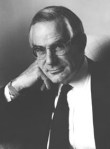
Halberstam, who died in an automobile accident three years ago, certainly built an outsize reputation. But unimpeachable?

I’d say no way.

Halberstam, in his hefty and still-popular 1979 study of the news media, The Powers That Be, encouraged the rise of two prominent media-driven myths and endorsed a third.

As I note in Getting It Wrong, my forthcoming book about media-driven myths, Halberstam’s Powers That Be was an important source, perhaps the original source, for the so-called “Cronkite Moment” of February 27, 1968.

That was when CBS anchorman Walter Cronkite asserted in a special report that the U.S. war effort in Vietnam was “mired in stalemate.”

In Halberstam’s telling, Cronkite’s report represented “the first time in American history a war had been declared over by an anchorman.”

Halberstam wrote that President Lyndon Johnson was in Washington and watched the Cronkite special that night. Upon hearing Cronkite’s dire assessment about Vietnam, the president said that if he had lost Cronkite, he had lost Mr. Average Citizen.

Interestingly, Halberstam did not place Johnson’s purported lament inside quotation marks. He paraphrased the remarks and said Johnson had directed  them to presidential press secretary George Christian.

But as I write in Getting It Wrong, Johnson was not in Washington that night. He did not see the Cronkite program when it aired. Thus, he could not have had the abrupt, dramatic, yet resigned reaction that Halberstam, and others, have attributed to him.

Johnson that night was in Austin, Texas, at the 51st birthday party of a political ally, Governor John Connally.

About the time Johnson supposedly made the comment about losing Cronkite, he was offering light-hearted banter about Connally’s age, saying:

“That is the magic number that every man of politics prays for—a simple majority. Throughout the years we have worked long and hard—and I might say late—trying to maintain it, too.”

The “Cronkite Moment,” I write in Getting It Wrong, “is a media-driven myth. It did not have the effects that Halberstam and many others have attributed to it.”

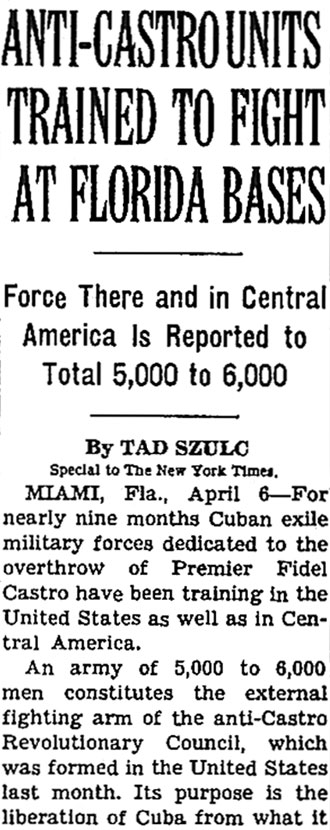
Halberstam’s Powers That Be also offered a graphic, if exaggerated, account that President John Kennedy supposedly called James Reston of the New York Times in April 1961 and urged him not to publish a report about the pending Bay of Pigs invasion.

Kennedy “argued strongly and passionately,” Halberstam wrote, that the Times by reporting the story would damage his policy. Halberstam also wrote that in his call to Reston, Kennedy said the Times risked having blood on its hands were the article published and the invasion failed.

Such a conversation never happened, according to Reston and others quoted in Harrison Salisbury’s insider’s account of the Times, Without Fear or Favor.

Indeed, there is no evidence that Kennedy called anyone at the Times in advance of the report–which was written by Tad Szulc and published April 7, 1961, on the Times front page (see right).

As I note in Getting It Wrong:

“The Kennedy Library in Boston says that the White House telephone logs reveal no calls were placed to Reston” or other Times executives on April 6, 1961, the day the story was prepared for publication.

“Moreover,” I note, “Kennedy had almost no chance to speak with those executives during the interval from when Szulc’s story arrived at the Times building in midtown Manhattan and when it was set in type. … During that time, Kennedy was otherwise preoccupied. He spent the last half of the afternoon of April 6, 1961, playing host to Harold Macmillan, the British prime minister, on a lengthy cruise down the Potomac River to Mount Vernon.”

In addition, Halberstam’s Powers That Be invoked one of the most enduring media myths–the anecdote about William Randolph Hearst’s purported vow to “furnish the war” with Spain at the end of the 19th century.

That anecdote is revisited, and dismantled, in the first chapter of Getting It Wrong.

The Powers That Be was a popular success, reaching the second spot on the New York Times best-selling list in May 1979. But the book wasn’t without persuasive critics.

Among them was David Culbert, an historian at Louisiana State University who years ago raised questions about the “Cronkite Moment,” noting that Johnson was in Texas when the program aired.

In a devastating review published in the American Historical Review, Culbert called The Powers That Be overlong and declared:

“The absence of a developed thesis, lack of proper documentation, and numerous errors of fact for events before the 1960s suggest that historians will have to use this book with caution. There is much here that might be true and, if true, valuable, but there is also no certainty that sloppy research does not undermine the very parts that seem most interesting.”

WJC
Read Chapter One: ‘Furnish the war’

In Debunking, Furnish the war, Media myths, Spanish-American War on April 23, 2010 at 10:07 am

The opening chapter of Getting It Wrong, my forthcoming work debunking 10 prominent media-driven myths, is available at the Web site for the book sponsored by the publisher, University of California Press.

Chapter One is titled “‘I’ll furnish the war'” and examines one of the hardiest myths in American journalism–William Randolph Hearst’s purported vow to “furnish the war” with Spain, at the end of the 19th century.

As I write in Chapter One:

“Like many media-driven myths, it is succinct, savory, and easily remembered. It is almost too good not to be true. Not surprisingly, Hearst’s vow to ‘furnish the war’ has made its way into countless textbooks of journalism. It has figured in innumerable discussions about Hearst and about the news media and war. It has been repeated over the years by no small number of journalists, scholars, and critics of the news media such as Ben Bagdikian, Helen Thomas, Nicholas Lemann, and the late David Halberstam.”

I further write:

“Interestingly, the anecdote lives on despite a nearly complete absence of supporting documentation. … It lives on even though Hearst denied ever sending such a message.”

The sole original source for the now-famous anecdote was a slim memoir, On the Great Highway, written by James Creelman and published in 1901.

I note in Getting It Wrong that Creelman’s taste for hyperbole represents one of many solid reasons for doubting “that Hearst ever vowed ‘to furnish the war.’ Creelman’s record of exaggeration offers compelling reason to challenge the anecdote’s authenticity.”

I refer to the anecdote “Creelman’s singular contribution to American journalism” and note how it “feeds popular mistrust of the news media and promotes the improbable notion the media are powerful and dangerous forces, so powerful they can even bring on a war.”

Getting It Wrong will be out this summer. It is set in a Sabon typeface, which is quite handsome.

WJC

Remembering the Maine — and a myth of yellow journalism

In Anniversaries, Debunking, Media myths, New York Times, Spanish-American War on April 6, 2010 at 5:33 pm

American yellow journalism of the late 19th century, led by the newspapers of William Randolph Hearst, has been often blamed for bringing on the Spanish-American War, which began 112 years ago this month.

Wreckage of the Maine (Library of Congress)

Wreckage of the Maine

It is an enduring media-driven myth, a misleading, media-centric interpretation that refuses to die, despite considerable evidence to the contrary.

The media myth of the Spanish-American War was invoked in a commentary posted today at the conservative online news site, Human Events.

The commentary–which contemplated parallels in the recent sinking of a South Korean Navy vessel and the destruction in Havana harbor in 1898 of the USS Maine– declared:

“While the cause of the explosion [that destroyed the Maine] remained a mystery, newspapers fighting for readership jumped on the incident as a means to increase sales. Exploiting and distorting the news—an industry art form that came to be called ‘yellow journalism’—reporters slanted the news to sensationalize it. As the Navy continued its investigation [into the causes of the battleship’s loss], the newspapers worked the American public’s emotions into a frenzy.”

There is, quite simply,  little evidence to support such a claim. (And coining the term “yellow journalism” predated the Maine‘s destruction by more than a year.)

Rather than stirring emotions “into a frenzy” in late winter 1898,  the American press was “notably becalmed and restrained,” as I wrote in my 2001 book, Yellow Journalism: Puncturing the Myths, Defining the Legacies.

I cited the trade journal Fourth Estate, which observed that the “frightful news from Havana, telling of the destruction of the . . . Maine, was treated here as a terrible calamity. The natural suspicion that Spanish methods of warfare had destroyed the ship moved men to cry for war, but the press as a whole published and reiterated the message from the [Maine’s] Captain, to ‘suspend judgment.’”

The trade journal also noted:

“Some of our papers, overheated with natural anger, have clamored for war, but the great majority have shown to the world that the press of the United States is in accord with the Government and is anxious for war only when it must be.” (Emphasis added.)

The Fourth Estate‘s reference to “some” papers clamoring for war no doubt was a reference to Hearst’s New York Journal and its racy sister publication, the Evening Journal. Hearst’s papers, as well as those of Joseph Pulitzer, were often speculative and over-the-top in their reporting.

But these newspapers, the leading exemplars of yellow journalism, hardly set an agenda for the American press in the aftermath of the Maine‘s destruction.

As I wrote in Yellow Journalism, scholarly “studies of the heartland press in 1898 signal the limited influence of the Hearst and Pulitzer newspapers—and note that few local newspapers immediately and vigorously advocated war” because of the loss of the Maine in a harbor under Spanish control.

The staid New York Times, which in the late 19th century began emerging as the antithesis to yellow journalism, also noted the generally calm reaction in the United States after the Maine‘s destruction.

The Times stated in late February 1898:

“No Latin race, we imagine, would have kept its head as well as the American people have kept theirs during the disturbing events of the past two weeks. In Spain or France or Italy there would have been tumultuous assemblages, much outcry in the streets, and incitements to riots.

“Outside of the reckless newspapers there has been no raving here.”

So it scarcely can be said that newspapers “worked the American public’s emotions into a frenzy” that led to the Spanish-American War. There is  little to support the notion that a journalistic war cry arose in the wake of the Maine’s destruction.

WJC

‘War means profits’? It didn’t for Hearst’s papers

In 1897, Debunking, Furnish the war, Media myths, Newspapers, Spanish-American War, Yellow Journalism on April 3, 2010 at 9:05 am

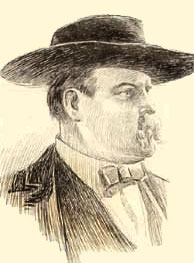
William Randolph Hearst’s purported vow to “furnish the war” with Spain in the late 1890s may be the anecdote most often told in American journalism.

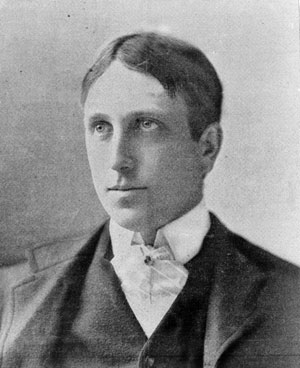
Hearst

It’s a woolly tale that’s been in circulation since 1901, and it lives on despite repeated and thorough debunking. It’s one of the ten media-driven myths examined in my forthcoming book, Getting It Wrong.

“Furnish the war” is so tenacious because it offers a tidy summary of the news media at their worst. And it’s a pithy quotation, easily digested and readily recalled.

The anecdote reemerged the other day, in a commentary posted at TheCitizen.com, an online news site of Fayette Publishing in Fayetteville, GA. The commentary stated:

“William Randolph Hearst in 1897 [told] the artist Frederic Remington: ‘You furnish the pictures and I’ll furnish the war.’ Think for a minute what that statement means. War means business, war means profits and war means death.”

Hearst’s purported message to Remington is almost certainly apocryphal–as is the notion that war meant profits for Hearst’s newspapers. In their intensive coverage of the four-month Spanish-American War of 1898, his papers lost money.

As I wrote in my 2001 book, Yellow Journalism: Puncturing the Myths, Defining the Legacies, the Spanish-American War generally boosted newspaper circulation. But advertising revenues fell, as advertisers feared the war would undercut the nascent recovery from the hard economic times of the 1890s.

In addition, newsprint costs soared, as did news-gathering expenditures.

The trade journal Fourth Estate estimated in 1899 that Hearst’s New York Journal had spent $50,000 a week—the equivalent these days of more than $1 million—on cable tolls, reporters’ salaries, and dispatch boats that ferried correspondents’ reports from the war’s principal theater in Cuba to Jamaica and elsewhere for transmission to New York.

Hearst's 'New York Evening Journal'

The Journal scoffed at claims that it helped foment the conflict in a cynical scheme to build circulation and boost profits.

“Would you like to know what effect the war had on the money-making feature of this particular newspaper? The wholesale price of paper was greatly increased. Advertising diminished, expenses increased enormously,” the Journal said, adding that its expenses related to covering the conflict exceeded $750,000—the equivalent these days of more than $20 million.

During the war, which lasted 114 days, the Journal‘s racy sister publication, the Evening Journal,  produced as many as forty extra editions a day–a late 19th century manifestation of what contemporary journalists would recognize as the unrelenting, 24-hour news cycle.

WJC

Yellow journalism ‘juiced’ the appetite for war? Not likely

In Debunking, Media myths, Spanish-American War, Yellow Journalism on February 18, 2010 at 5:39 am

An undying myth of American journalism is that yellow journalism, as practiced by William Randolph Hearst and Joseph Pulitzer, led the country to war with Spain in April 1898.

That notion, I wrote in my 2001 book, Yellow Journalism: Puncturing the Myths, Defining the Legacies, “tidily, if mistakenly, serves to illustrate the power and the lurking malevolence of America’s news media.” That’s an important reason the yellow journalism myth lives on.

And on.

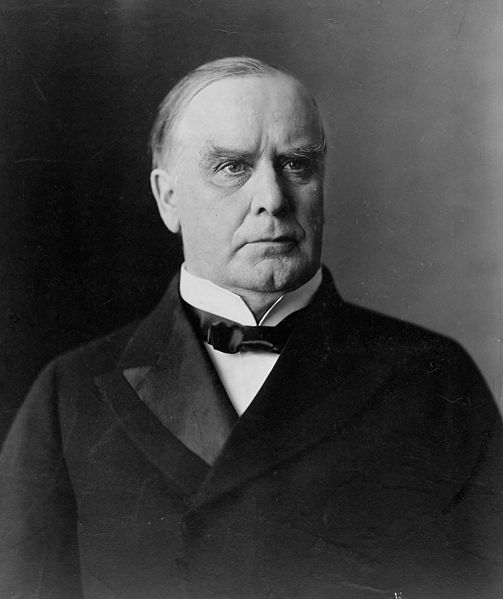
William McKinley

The myth reemerged the other day in a Time magazine online feature listing the “top 10 forgettable presidents” of the United States.  Leading the list was Martin Van Buren. In eight place was William McKinley, about whom Time said:

“McKinley was a savvy politician who listened carefully to the public. Though he opposed it at first, McKinley brought the country to war with Spain in 1898 as Pulitzer and Hearst’s ‘yellow journalism’ juiced the nation’s appetite for a fight. America’s claim to Puerto Rico and Guantanamo Bay count among the war’s legacies.”

So the yellow journalism “juiced” the country’s war appetite, eh?

Like many media-driven myths, this one’s certainly a juicy story–almost too juicy to be false. Like many media myths, it offers a simplistic explanation to a complex question: It is far easier, after all, to blame the yellow press for pushing the country into war than it is to recall the factors accounting for the diplomatic impasse that led the United States and Spain to go to war over Cuba, which at the time was up in arms against Spanish rule.

Significantly, the newspapers of Hearst and Pulitzer–the New York Journal and New York World, respectively– exerted no more than limited agenda-setting influence on the U.S. press in the run-up to the war.

As I wrote in Yellow Journalism:

“A significant body of research indicates that newspapers in small-town and rural America scoffed at, condemned, and ignored the exaggerated and fanciful reports appearing in New York City’s yellow journals before and after the Maine’s destruction” in Havana harbor in mid-February 1898.

The destruction of the battleship U.S.S. Maine killed more than 260 Navy sailors and officers, and helped trigger the war.

“Rather than taking a lead from accounts published in the Journal and World, newspapers in the American heartland turned away from their excesses,” I further wrote.

Moreover, I noted, “claims that the yellow press fomented the Spanish-American War contain almost no discussion about how, specifically, that influence was brought to bear within the McKinley administration.

“The reason for such a gap is straightforward.

“There is almost no evidence that the content of the yellow press, especially during the decisive weeks following the Maine’s destruction, shaped the thinking, influenced the policy formulation, or informed the conduct of key White House officials.”

WJC

‘Newspapers must learn from their history’

In 1897, Debunking, Furnish the war, Media myths, Spanish-American War on February 16, 2010 at 8:03 am

So read the headline over a column the other day in a Canadian newspaper, the Guardian of Charlottetown, which says it covers Prince Edward Island “like the dew.”

“Newspapers must learn from their history.”

A fine sentiment, that.

As the Guardian headline suggests, many journalists tend to be ahistoric: They have but a dim understanding of journalism’s past.

It’s not entirely their fault, though: The task of finding lessons in journalism history is complicated because journalism history often is badly mangled, and distorted by myth.

Young W.R. Hearst

The Guardian column offers a case in point: Despite its call to learn from the past, the column mangled an often-mangled moment in journalism history.

That is, it indulged in a hardy media-driven myth–the myth of the purported vow of New York newspaper publisher William Randolph Hearst to provide the war with Spain at the end of the 19th century.

Here’s what the Guardian column said:

“Hearst was embroiled in a newspaper war in New York City. He figured a war would do wonders for circulation. Cuba was run by the Spanish, and that didn’t seem right, so a war there seemed logical.

“Get down there and cover the war, he told his reporting staff. Those assigned to the story promptly booked passage on the next boat. Once there, however, they discovered they had a rather serious problem.

“Have arrived, but there doesn’t seem to be a war, they said in a cable.

“You provide the stories, I’ll provide the war, Hearst replied.”

So where to begin in unpacking this account?

As I write in Getting It Wrong, my forthcoming book about media-driven myths, the anecdote about Hearst’s vowing to bring about war with Spain is almost certainly apocryphal.

Here are some reasons why:

  • The telegram that supposedly contained Hearst’s vow has never turned up.
  • Hearst denied ever sending such a message.
  • Spanish censors in Cuba surely would have intercepted, and called attention to, such an inflammatory message, had it been sent.

And the anecdote lives on despite an irreconcilable internal inconsistency: It would have been absurd for Hearst to vow to furnish or provide the war because war—the Cuban rebellion against Spanish colonial rule—was the reason Hearst sent correspondents to Cuba in the first place.

In most retellings, the anecdote about Hearst’s vow revolves around the purported exchange of telegrams with the famous artist, Frederic Remington, whom Hearst sent to Cuba in early 1897. Paired with him on the assignment was the famous writer, Richard Harding Davis.

Remington and Davis were there at a time when anyone reading U.S. newspapers would have been well aware that Cuba was the theater of a nasty war. By then, Spain had sent nearly 200,000 soldiers in a failed attempt to put down the rebellion, which led in 1898 to the Spanish-American War.

Although the Guardian column suggested that Hearst blithely sought to foment a war as a ploy to boost readership (“a war would do wonders for circulation”), the causes of the conflict with Spain were of course far more profound and complex.

The Cubans who rebelled against Spanish rule were determined to win political independence, and would settle for nothing short of that.

The Spanish, for domestic economic and political reasons, would not grant Cuba its independence.

And the Americans could no longer tolerate the disruptions and human rights abuses created by Spain’s failed attempt to put down the Cuban rebellion.

That impasse became the formula for the U.S. war with Spain over Cuba in 1898.

It is quite likely the United States would have gone to war no matter what Hearst printed in his newspapers.

WJC

Yellow journalism: A sneer is born

In 1897, Anniversaries, Spanish-American War, Yellow Journalism on January 31, 2010 at 9:30 am

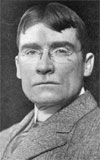
Erwin Wardman, New York Press

It’s a little-recognized, never-celebrated anniversary in American journalism, granted.

But today marks the 113th year since the term “yellow journalism” first appeared in print, in the New York Press, edited by the austere Ervin Wardman.

The phrase “the Yellow Journalism” appeared in a small headline on the Press’ editorial page on January 31, 1897. The phrase also appeared that day in the Press’ editorial page gossip column, “On the Tip of the Tongue.”

“Yellow journalism” caught on quickly, as a way to denigrate what then was called the “new journalism” of William Randolph Hearst’s New York Journal and of Joseph Pulitzer‘s New York World.  By the end of March 1897, references to “yellow journalism” had appeared in newspapers in Providence, Richmond, and San Francisco.

In the decades since then, “yellow journalism” has become a widely popular sneer, a derisive shorthand for denouncing sensationalism and journalistic misconduct of all kinds, real and imagined. “It is,” as I noted in my 2001 book Yellow Journalism: Puncturing the Myths, Defining the Legacies, “an evocative term that has been diffused internationally, in contexts as diverse as Greece and Nigeria, as Israel and India.”

Precisely how Wardman and the Press landed on the phrase “yellow journalism” is not clear.

The newspaper’s own, brief discussion of the origins was vague and unrevealing: “We called them Yellow because they are Yellow,” it said in 1898 about the Journal and the World.

In the 1890s, the color yellow sometimes was associated with depraved literature, which may have been an inspiration to the Harvard-educated Wardman, a figure largely lost to New York newspaper history.

Wardman was tall and stern-looking. He once was described as showing his “Calvinistic ancestry in every line of his face.” He did little to conceal his disdain for Hearst and Hearst’s journalism.

His contempt was readily apparent in the columns of the Press, of which Wardman became editor in chief in 1896 at the age of 31. (The Press is long defunct; it is not to be confused with the contemporary alternative weekly by the same name.)

Wardman’s Press took to taunting Hearst, Hearst’s mother, and Hearst’s support for Democratic candidate William Jennings Bryan in the 1896 presidential election. Hearst’s Journal was virtually alone among New York newspapers in supporting Bryan’s “free silver” candidacy.

The Press disparaged Hearst, then 34, as a mama’s boy, as “Billy” and “little Willie.” It referred to the Journal as “our silverite, or silver-wrong, contemporary.”

The Press also experimented with pithy if stilted turns of phrase to denounce “new journalism.”

“The ‘new journalism,’” the Press said in early January 1897 “continues to think up a varied assortment of new lies.”

Later in the month, the Press asked in a single-line editorial comment:

“Why not call it nude journalism?”

It clearly was a play on “new journalism” and meant to suggest the absence of “even the veneer of decency.”

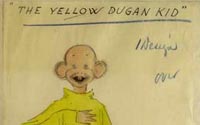
Before long, Wardman and the Press seized upon the phrase “yellow-kid journalism,” which evoked the Hearst-Pulitzer rivalry over a popular cartoon character known as the “Yellow Kid.” Both the Journal and the World at the time were publishing versions of the kid.

The Yellow Kid (Library of Congress)

At the end of January 1897, the phrase “yellow-kid journalism” was modified  to “the Yellow Journalism,” and the sneer was born.

After landing on that sneering pejorative, Wardman turned to it often, invoking the term in brief editorial comments and asides such as: “The Yellow Journalism is now so overripe that the little insects which light upon it quickly turn yellow, too.”

The diffusion of “yellow journalism” was sealed when Hearst’s Journal embraced the term in mid-May 1898, during the Spanish-American War. With typical immodesty, it declared:

“… the sun in heaven is yellow—the sun which is to this earth what the Journal is to American journalism.”

WJC

‘Furnish the war,’ en espagnol

In 1897, Debunking, Furnish the war, Spanish-American War on December 30, 2009 at 11:54 am

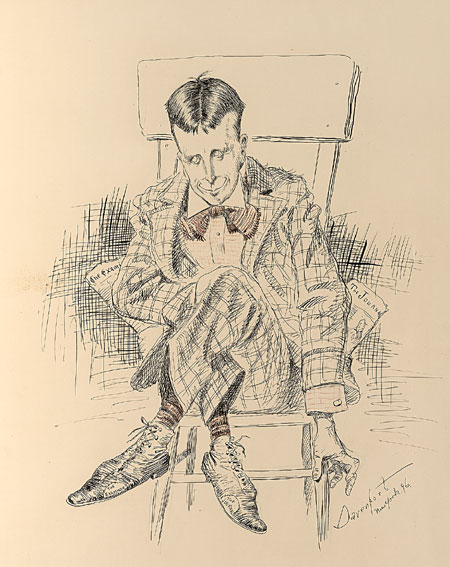
Hearst, under the pen of Homer Davenport, 1896

William Randolph Hearst’s purported vow to “furnish the war” with Spain is such a delicious and tenacious media-driven myth that it’s hardly surprising it has crossed over to other languages.

Spanish among them.

Just the other day, the online publication elmercuriodigital.es posted a commentary that invoked the Hearst quote. It read in part:

“El dibujante, Frederic Remington, telegrafió a su jefe pidiéndole autorización para regresar, pues no había ninguna guerra, y por lo tanto no había nada para cubrir. ‘Todo en calma. No habrá guerra’, dijo Remington. La respuesta del empresario periodístico fue célebre: ‘Le ruego que se quede. Proporcione ilustraciones, yo proporcionaré la guerra’.”

The passage recounts the essential portion of the anecdote, that the artist Frederic Remington, on assignment to Cuba for Hearst’s New York Journal, supposedly found “everything … quiet” and, in a cable to Hearst, asked permission to return.

In reply, as the myth has it, Hearst told Remington: “Please remain. You furnish the pictures, and I’ll furnish the war.”

As I write in my forthcoming book, Getting It Wrong:

“Hearst’s famous vow to ‘furnish the war’ has achieved unique status as an adaptable, hardy, all-purpose anecdote, useful in illustrating any number of media sins and shortcomings. It has been invoked to illustrate the media’s willingness to compromise impartiality, promote political agendas, and indulge in sensationalism. It has been used, more broadly, to suggest the media’s capacity to inject malign influence into international affairs.”

It lives on, I further write, “despite a nearly complete absence of supporting documentation.

“It lives on even though telegrams supposedly exchanged by Remington and Hearst have never turned up. It lives on even though Hearst denied ever sending such a message.”

And it lives on despite an irreconcilable internal inconsistency. Hearst had assigned Remington and the correspondent Richard Harding Davis to Cuba at the end of 1896. After several delays, they arrived in January 1897 — 15 months before the start of the Spanish-American War.

Anyone reading U.S. newspapers in early 1897 would have been well aware that Cuba was the theater of a nasty war, a rebellion against Spain’s armed forces which, by the time Remington and Davis arrived, had reached island-wide proportion.

So it would have been incongruous and inconceivable for Hearst to have vowed to “furnish the war” when war was the very reason he sent Remington and Davis to Cuba in the first place.

WJC

<!–[if !mso]> <! st1\:*{behavior:url(#ieooui) } –>

“Please remain. You furnish the pictures, and I’ll furnish the war.”[i]


[i] See Creelman, On the Great Highway, 177–178.