W. Joseph Campbell

Posts Tagged ‘Nixon’

In Wikileaks, a hint of Watergate? Not so much

In Cinematic treatments, Debunking, Media myths, New York Times, Washington Post, Watergate myth on December 1, 2010 at 12:30 pm

It was just a matter of time before someone found a hint of Watergate in the recent, massive Wikileaks disclosures of sensitive U.S. diplomatic traffic.

Voilá. A commentary posted today at examiner.com invokes such a linkage in arguing that leaked cables describing Afghan President Hamid Karzai’s misconduct underscore the importance of turning him from office.

The commentary refers to Bob Woodward and Carl Bernstein, who reported on Watergate for the Washington Post, and asserts that Wikileaks disclosures “add to the well-documented trail of President Karzai’s abuse of Presidential power and his incessant attempts to exceed his constitutional authority.

Nixon quits, August 1974

“I have written before and shall point out again,” the commentary’s author stated, “that there is … the same amount of evidence derived from open source intelligence alone to impeach Karzai as Woodward and Bernstein had amassed to force Nixon to resign.”

Of keen interest to Media Myth Alert is not so much Karzai’s brazenness but the extravagant claim about the Watergate reporting of Woodward and Bernstein, that they “amassed” evidence to “force” Nixon’s resignation. He quit in 1974.

As I point out in my latest book, Getting It Wrong, their reporting had at best only a marginal effect on the outcome of the scandal, in which 19 men associated with Nixon’s presidency or his 1972 reelection campaign went to jail.

“To roll up a scandal of such dimension,” I write in Getting It Wrong, “required the collective if not always the coordinated forces of special prosecutors, federal judges, both houses of Congress, the Supreme Court, as well as the Justice Department and the FBI.”

Efforts of that dimension were required to uncover evidence implicating Nixon and his top aides in what was a sprawling scandal.

And even then, Nixon likely would have served out his second term if not for secret audiorecordings he made of many conversations in the Oval Office–conversations that captured his guilty role in authorizing a coverup of the Watergate scandal.

“Only when compelled by the Supreme Court,” I note, “did Nixon surrender those recordings, which captured him plotting the cover-up and authorizing payments of thousands of dollars in hush money.”

So against that tableau, the contributions of Woodward, Bernstein, and the Washington Post recede to minor significance: They were not decisive to the outcome of Watergate.

But because the scandal was so intricate, and because it is no longer a day-to-day preoccupation, the details have become blurred and what I call the “heroic-journalist” interpretation has taken hold as the dominant popular narrative of Watergate.

And that’s the endlessly appealing notion–propelled by the mediacentric motion picture All the President’s Men–that Woodward and Bernstein’s tireless and dogged reporting brought down Nixon.

The heroic-journalist interpretation, I write in Getting It Wrong, “has become the most familiar storyline of Watergate,” noting that it’s “ready short-hand for understanding Watergate and its denouement, a proxy for grasping the scandal’s essence while avoiding its forbidding complexity.”

It’s a view that’s widely held. Even the New York Times, the keenest rival of the Washington Post, has embraced the heroic-journalism interpretation of Watergate.

Interestingly, though, principals at the Post have over the years disputed the notion the newspaper was decisive in Nixon’s fall.

Katharine Graham, the newspaper’s publisher during and after the Watergate period, said in 1997, at the 25th anniversary of the foiled burglary at Democratic national headquarters that touched off the Watergate scandal:

“Sometimes people accuse us of bringing down a president, which of course we didn’t do. The processes that caused [Nixon’s] resignation were constitutional.”

And Woodward, himself, has concurred, if in earthier terms.  In an interview several years ago with American Journalism Review, Woodward declared:

To say that the press brought down Nixon, that’s horseshit.”

WJC

Recent and related:

Jimmy Carter fumbles Watergate history

In Debunking, Media myths, Washington Post, Watergate myth on November 23, 2010 at 6:28 am

Former President Jimmy Carter went on CNN’s Reliable Sources the other day to plug his new book and offered up the heroic-journalist myth of the Watergate scandal.

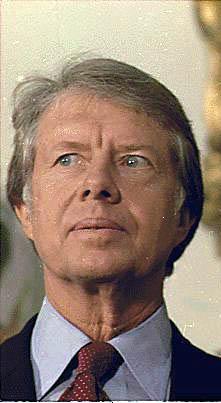
Carter (1980 photo)

The heroic-journalist meme, which has become the scandal’s dominant popular narrative, maintains Washington Post reporters Bob Woodward and Carl Bernstein, in their dogged coverage, brought down the corrupt presidency of Richard Nixon.

Carter invoked this media myth in response to a fairly pointed question from the show’s host, Howard Kurtz, about whether the former president felt “the press had it for you.”

Carter in reply referred to his term in office and said:

“I came in at a time when the press was in the post-Watergate period, and when two reporters in the Washington Post had become famous because they had revealed some secrets that had brought down the Nixon administration. And when I got there, shortly thereafter, I think a lot of the reporters were looking for something within my administration that might be scandalous or put them in the headlines as very notable investigative reporters.”

Hmm. “Brought down the Nixon administration.”

As notable as the reporting of Woodward and Bernstein may have been, it didn’t bring down the Nixon administration.

As I point out in my latest book, Getting It Wrong, the work of Woodward and Bernstein was at best marginal to Watergate’s outcome–the resignation of Nixon in 1974 and the eventual jailing of nearly 20 of his top aides and reelection campaign officials.

“To roll up a scandal of such dimension,” I note in Getting It Wrong, “required the collective if not always the coordinated forces of special prosecutors, federal judges, both houses of Congress, the Supreme Court, as well as the Justice Department and the FBI.”

Even then, I add:

“Nixon likely would have served out his term if not for the audiotape recordings he secretly made of most conversations in the Oval Office of the White House. Only when compelled by the Supreme Court did Nixon surrender those recordings, which captured him plotting the cover-up and authorizing payments of thousands of dollars in hush money.”

I further point out in Getting It Wrong that the heroic-journalist interpretation of Watergate “has become the most familiar storyline” of the scandal, because it is such an effective “proxy for grasping the scandal’s essence while avoiding its forbidding complexity.”

But to indulge in the heroic-journalist interpretation, I write, “is to abridge and misunderstand the scandal and to indulge in a particularly beguiling media-driven myth.

“The heroic-journalist interpretation minimizes the far more decisive forces that unraveled the scandal and forced Nixon from office.”

As Carter’s comment suggests, though, the heroic-journalist trope offers an accessible and simplistic explanation for a sprawling scandal that unfolded many years ago.

It’s interesting to note that Woodward and Bernstein’s reporting–for which they won the Pulitzer Prize for public service in 1973–never disclosed the key “secrets” of the scandal.

They did not disclose the hush-money payments made in an attempt to cover up the seminal crime of Watergate, the break-in at Democratic party offices in June 1972. Nor did they disclose the existence of the taping system that Nixon had installed to record most of his conversations in the Oval Office.

So it’s really not clear what Carter had in mind in asserting that the Post reporters “revealed some secrets that … brought down the Nixon administration.”

Interestingly, Kurtz did not challenge Carter on that point. Kurtz formerly was the media writer for the Post who, in 2005, pointedly disputed the heroic-journalism myth of Watergate.

He wrote in a column for the Post:

“Despite the mythology, The Post didn’t force Richard Nixon from office—there were also two special prosecutors, a determined judge, bipartisan House and Senate committees, the belated honesty of [White House counsel] John Dean and those infamous White House tapes.”

That’s a fine summary of the forces that truly did bring down Nixon’s presidency.

WJC

Didn’t: A Watergate primer

In Debunking, Media myths, Newspapers, Washington Post, Watergate myth on October 23, 2010 at 5:10 pm

“Didn’t” can be a fairly effective way of understanding contributions of the Washington Post in the Watergate scandal, to which I devote a chapter in my new mythbusting book, Getting It Wrong.

Nixon resigns, 1974

The Post and its reporters Bob Woodward and Carl Bernstein didn’t bring down Richard Nixon’s corrupt presidency. Even principals of the Post have dismissed that notion, as note in Getting It Wrong.

They didn’t break open the cover-up that Nixon and his close aides plotted in June 1972, soon after the break-in of Democratic headquarters at the Watergate complex.

And they certainly didn’t expose the Watergate burglary, the scandal’s signal crime.

“Didn’t” as a way to consider Watergate occurred to me in reading an article posted online yesterday by the Worcester (Massachusetts) Telegram and Gazette; the article mistakenly asserted that Woodward “exposed the 1972 Watergate break-in with colleague Carl Bernstein.”

The Watergate break-in was thwarted by Washington, D.C., police and the story began circulating within hours.

In fact, the names of Woodward and Bernstein didn’t appear in the byline of the story the Post published June 18, 1972, about the foiled break-in. Woodward and Bernstein were listed among the eight reporters who contributed the report, which carried the byline of Alfred E. Lewis, a veteran police reporter for the Post.

“Didn’t” also characterizes another element of Watergate and the Post.

The secret, high-level source called “Deep Throat,” to whom Woodward periodically turned as the scandal unfolded, didn’t advise him to “follow the money”– or, in other words, to scrutinize the contributions to Nixon’s reelection campaign as a roadmap for understanding the scandal.

“Follow the money” is one of the most memorable phrases of Watergate-era American journalism, and it was uttered by the “Deep Throat” character in the cinema version of Woodward and Bernstein’s book, All the President’s Men.

But the “follow the money” didn’t appear in All the President’s Men, the book.

According to an item posted today at the online site of National Public Radio, the phrase was “kind of made up for the movie.”

The item discussed the variety of research conducted over the years by NPR’s research librarian, Kee Malesky. It noted that NPR reporters “have asked Malesky to look up some fairly obscure, though fascinating pieces of information.”

Malesky, who discusses her research in a new book titled All Facts Considered, recalled that Daniel Schorr once asked her “to find the phrase ‘follow the money’ in the book All The President’s Men.

She was quoted as saying that “because my policy was to go to any length to get Dan Schorr what he needed, I went through the book page by page, and that phrase does not appear there.

“And then in talking to Bob Woodward and the screenwriter, William Goldman, Dan discovered that [the phrase is] actually kind of made up for the movie.”

It’s a great anecdote, nicely retold.

Former Nixon speechwriter William Safire offered a somewhat more detailed version of the anecdote in 1997, writing in the New York Times Sunday Magazine that Woodward and Goldman blamed each other for having made up the line.

“The screenplay was written by William Goldman,” Safire wrote. “When Schorr called him, the famed screenwriter at first insisted that the line came from the book; when proved mistaken about that, he said: ‘I can’t believe I made it up. I was in constant contact with Woodward while writing the screenplay. I guess he made it up.”’

Safire wrote that Schorr “then called Woodward, who could not find the phrase in his exhaustive notes of Watergate interviews. The reporter told Schorr he could no longer rely on his memory as to whether Deep Throat had said the line and was inclined to believe that Goldman had invented it.”

This thin slice of Watergate arcana certainly is intriguing. And it testifies to how movies can propel media-driven myths.

The cinematic version of All the President’s Men is, I write in Getting It Wrong, an important reason why the heroic-journalist interpretation has become the dominant narrative of the Watergate scandal.

The movie version placed Woodward and Bernstein at the center of the unraveling of Watergate while downplaying or dismissing the efforts of investigative agencies such as the FBI.

“The effect,” I write in Getting It Wrong, “was to solidify and elevate the heroic-journalist myth, giving it dramatic power, and sustaining it in the collective memory.”

WJC

Recent and related:

Pew: Woodward, Bernstein ‘unraveled Watergate cover-up’

In Debunking, Media myths, Washington Post, Watergate myth on October 1, 2010 at 8:27 am

Bob  Woodward’s new book, Obama’s Wars, was the single most-discussed topic in news links posted at Web logs Monday through Friday last week,  the Pew Research Center’s Project for Excellence in Journalism said yesterday.

Woodward (Library of Congress)

Pew said that 35 percent of news links at blogs during the period September 20-24 were about the book, which has received mostly so-so reviews. (For example, the Wall Street Journal said in its critique yesterday, “To read ‘Obama’s Wars’ is to feel trapped in a daylong meeting in an airless room. That’s because much of the book consists of a near-verbatim account of meetings—specifically the National Security Council meetings last fall where the administration hashed out its Afghanistan policy.”)

The book and blog posts about it are of mild interest to Media Myth Alert.

What caught this blog’s attention was assertion in Pew’s news release–duplicated in a separate release by the Project for Excellence in Journalism–that referred to Woodward as “a Washington Post associate editor and half of the famous reporting duo that unraveled the Watergate cover-up.”

That last bit, about having “unraveled the Watergate cover-up,” is in error.

As I discuss in Getting It Wrong, my new book that debunks 10 prominent media-driven myths, Woodward and his Post colleague Carl Bernstein, “did not uncover defining and decisive elements” of Watergate—including the cover-up of the break-in at offices of the Democratic National Committee, the scandal’s signal crime.

The Watergate cover-up was exposed incrementally in 1973 and 1974 by the combined forces of such subpoena-wielding entities as federal prosecutors, federal grand juries, and U.S. Senate investigators. Ultimately the U.S. Supreme Court ordered President Richard Nixon to hand over audiotapes of secretly recorded conversations at the White House that unequivocally demonstrated Nixon’s guilty role in the cover-up.

The Supreme Court decision was handed down in July 1974. Nixon resigned soon after.

Woodward and Bernstein’s award-winning reporting on Watergate was published in summer and fall 1972, as the scandal slowly unfolded during the weeks and months following the break-in at Democratic headquarters.

By late October 1972, I note in Getting It Wrong, “the Post’s investigation into Watergate ‘ran out of gas,’ as Barry Sussman, then the newspaper’s city editor, acknowledged.”

Edward Jay Epstein pointed out in his classic essay about the press and Watergate that “it was not because of the reporting of Woodward and Bernstein, but because of the pressures put on the conspirators by Judge John Sirica, the grand jury, and Congressional committees that the cover-up was unraveled.”

Sirica, a federal judge, presided at the trial of the Watergate burglars that ended in guilty pleas in January 1973. Afterward, the judge “made it abundantly clear,” Epstein wrote, that the convicted burglars “could expect long prison sentences unless they cooperated with the investigation” of the Senate select committee on Watergate.

One of the burglars, James McCord, soon wrote to Sirica, saying that “perjury had been committed at the trial and the defendants had been induced by ‘higher-ups’ to remain silent,” Epstein pointed out.

McCord’s letter thus began the unraveling of the Watergate cover-up.

I discuss in Getting It Wrong factors that help account for the tenacity of the “heroic-journalist” interpretation of Watergate–the erroneous notion that the reporting of Woodward and Bernstein brought down Nixon’s corrupt presidency.

“Media myths,” I write, “often emerge from an eagerness to find influence and lasting significance in what journalists do and tend to extend credit where credit is not entirely due.

“The heroic-journalist myth of Watergate is a telling example. The myth holds that the reporting of Bob Woodward and Carl Bernstein in the Washington Post brought down Richard Nixon. In reality, the Post and other news organizations were marginal factors in unraveling the Watergate scandal.”

Media myths thus can be self-flattering; they offer heroes like Woodward and Bernstein to a profession that is more used to criticism than applause.

Besides, claiming that Woodward and Bernstein brought down Nixon, or that they “unraveled the Watergate cover-up,” long ago became a ready if misleading way for journalists to distill what was a sprawling scandal.

WJC

Recent and related:

Indulging in myth on debate’s 50th anniversary

In Anniversaries, Debunking, Media myths, Washington Post, Watergate myth on September 27, 2010 at 7:12 am

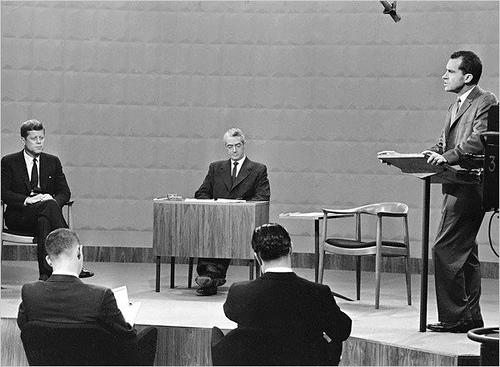
News outlets indulged in the myth of viewer-listener disagreement right through the 50th anniversary yesterday of the first Kennedy-Nixon debate.

The myth holds that people who watched the debate on television thought that Senator John F. Kennedy won; those who listened on radio thought Vice President Richard Nixon had the best of it.

The myth was long ago debunked by scholars David L. Vancil and Sue D. Pendell, in an article in Central States Speech Journal. They noted that reports of viewer-listener disagreement typically were anecdotal, and the few surveys that hinted at a viewer-listener disconnect were too small and unrepresentative by which to make confident judgments.

While it has been thoroughly dismantled, the myth lives on as irresistible testimony about the power of television and the importance of image in presidential politics.

An item posted yesterday at Andrew Breitbart’s Big Journalism online site said as much, declaring:

“The face of TV and politics changed forever on this date in history. …

“Those who watched the broadcast of the first ever televised presidential debate declared Kennedy the winner, those who listened on the radio gave the nod to Nixon. Thus, the political world changed forever.”

WLS-TV in Chicago, the city where the debate took place on September 26, 1960, said at its online site yesterday: “Most of the 70 million people who watched the event on television were convinced Kennedy won, and they voted for him in the presidential election of 1960.

“Surveys showed, though, that most of the people who listened on the radio thought Nixon won. It was the first time a nominee’s appearance may have affected voters.”

In addition, CBS Channel 2 in Chicago declared at its online site:

“Some listening on radio said it seemed like Nixon won. But as many as 74 million Americans were watching on television, and the medium became an overnight unexpected game-changer in our political system.”

As I’ve noted, specific evidence almost never is cited to support such claims about the debate. It’s as if the notion of viewer-listener disagreement is just too good, too delicious to check out–a factor that often characterizes the telling of media-driven myths. It’s a point I make in Getting it Wrong, my new book that debunks 10 prominent media myths. (While certainly prominent, the 1960 debate myth is not included in Getting It Wrong.)

There is evidence that a plurality of registered voters thought Kennedy fared better than Nixon in the debate 50 years ago.

But such impressions did not alter the campaign’s dynamic: The race remained a toss-up to Election Day.

Here’s what the evidence shows: A Gallup poll released in October 1960 reported that 43 percent of voters thought Kennedy “did the better job” in the first debate (of four debates during the campaign). Twenty-three percent thought Nixon was better; 29 percent said both candidates were about the same. Five percent offered no opinion.

The same survey reported Kennedy was narrowly ahead in the race, by 49 percent to 46 percent, with 5 percent undecided.

That result represented a slight change from Gallup’s survey taken just before the debate, which reported Nixon leading narrowly, by 47 percent to 46 percent.

Gallup called the post-debate shift too slight to be meaningful.

“The prudent reader can see,” George Gallup, head of the polling organization, wrote in reporting the results, “that polling accuracy has not reached the degree of accuracy required to say with certainty which candidate is ahead in a close race such as the present one.”

So, no: The debate 50 years ago didn’t change the “political world … forever.” Television wasn’t an “overnight … game-changer” in presidential campaigns. Nothing of the sort.

Media-driven myths are known to give rise to spin-off or subsidiary myths, a phenomenon I discuss in Getting It Wrong.

An example is the heroic-journalist myth of Watergate, which holds that the investigative reporting of Washington Post reporters Bob Woodward and Carl Bernstein brought down Nixon’s presidency in the 1970s. The spin-off or subsidiary myth is that Woodward and Bernstein’s work was so widely appealing that it prompted a surge in college students majoring in journalism.

But that wasn’t so: The surge in enrollments in journalism programs predated the Watergate scandal and was due in measure to young women entering the field.

A spin-off of the Kennedy-Nixon debate myth is that the widely watched televised encounter helped Kennedy become better known among Americans. Before then, the argument goes, Kennedy lacked much national recognition. Nixon, on the other hand, was well-known, having been vice president for almost eight years.

But in fact Kennedy had become nationally prominent long before the first debate.

So well-known that he ran well ahead of Nixon in many of the presidential trial heats that Gallup conducted nationally in late 1958 and 1959.

These matchups, while volatile, were seen by Gallup as early tests of a prospective candidate’s political strength.

The Gallup trial heat in December 1958 had Kennedy leading Nixon by 59 percent to 41 percent.

Kennedy was favored over Nixon by a larger margin, 61 percent to 39 percent, in the trial heat reported in July 1959.

To have polled as well as he did so long before the 1960 campaign, Kennedy simply could not have been an unknown in national politics.

WJC

Recent and related:

My many thanks to fivefeetoffury and Ed Driscoll for linking to this post.

Who won ’60 debate? Can’t say: Didn’t see it on TV

In Anniversaries, Debunking, Media myths on September 26, 2010 at 8:33 am

Sander Vanocur has been much in demand in the run-up to today’s 50th anniversary of the first Kennedy-Nixon televised presidential debate.

The 82-year-old Vanocur is sharp, witty, and droll–and the sole surviving member of the media panel that questioned the candidates during the debate on September 26, 1960.

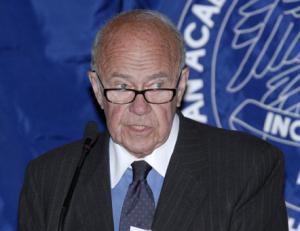
Vanocur

Vanocur, a retired NBC newsman, has appeared on a number of panels in Washington that have examined the implications and legacies of the encounter between Senator John F. Kennedy and Vice President Richard Nixon. He’s also to participate on a panel today in Chicago, where the Kennedy-Nixon debate took place.

Among the comments that Vanocur has offered at these look-back events is:

“I don’t know who won the debate: I didn’t see it on television.”

He made such a remark yesterday, during a panel discussion at the Newseum, the $450 million museum of news in downtown Washington. (It’s where my new myth-busting book, Getting It Wrong, was launched in June.)

The comment “I didn’t see it on television” suggests the tube was decisive that night 50 years ago–and even was decisive to the outcome of the 1960 election.

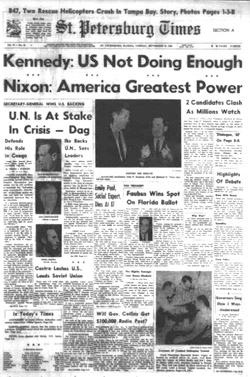
Debate coverage, 1960

Which it wasn’t.

Nixon supposedly lost the debate among television viewers because he looked so poorly, what with sweaty brow, wan complexion, and ill-chosen gray suit. But among radio listeners, he is said to have bested Kennedy.

That, anyway, is the widely told media myth that has come to define the first presidential debate.

It is also an explanation for Vanocur’s comment: You had to see the debate on television to appreciate fully the importance that image made that night.

Time magazine was among the news organizations to have repeated the debate myth in the run-up to the 50th anniversary, stating:

“As the story goes, those who listened to the debate on the radio thought Nixon had won. .. Those that watched the debate on TV thought Kennedy was the clear winner. Many say Kennedy won the election that night.”

But television images were decisive neither in the debate (the first of four during the fall campaign), nor in the 1960 election.

David L. Vancil and Sue D. Pendell, in an article in the Central States Speech Journal in 1987, thoroughly dismantled the notion that disagreement among TV viewers and radio listeners characterized the debate 50 years ago.

They identified serious flaws in the anecdotal reports and the limited post-debate surveys that suggested there had been such a divergence of opinion in assessing the Kennedy- Nixon encounter.

Vancil and Pendell also challenged the notion that Nixon’s beleaguered appearance much contributed to views about the debate.

“Appearance problems, such as Nixon’s perspiring brow, could have had a negative impact on viewer perceptions,” Vancil and Pendell wrote, “but it is also possible for viewers to be sympathetic to such problems, or to interpret them as evidence of attractive or desirable qualities.”

They added: “Even if viewers disliked Nixon’s physical appearance, the relative importance of this factor is a matter of conjecture.”

Indeed. The Washington Post declared in its post-debate editorial:

“Of the two performances Mr. Nixon’s probably was the smoother.”

Vancil and Pendell also pointed out that “the inference that appearance problems caused Nixon’s loss is classic post hoc fallacy.”

Nixon’s supporters may have been dismayed by his appearance that night; but that factor was scarcely enough to prompt them to alter their opinions about the vice president’s candidacy and opt for Kennedy.

The debate 50 years ago only slightly nudged public opinion–and any effect it had on voters dissipated by election day in November.

On the eve of that debate, the U.S. electorate was split. According to the Gallup poll before the encounter in Chicago, 47 percent of registered voters favored Nixon, 46 percent favored Kennedy, and 7 percent were undecided.

The Gallup poll immediately after the first debate put Kennedy ahead by three percentage points, 49-46, among registered voters. (Gallup noted in reporting the post-debate results: “polling accuracy has not reached the degree of accuracy required to say with certainty which candidate is ahead in a close race such as the present one.”)

The popular vote for president was quite close: Kennedy won by about 113,000 votes–a margin of just 0.1 percent.

The first debate had at best a modest effect in shifting public opinion–and was a wash in the overall sweep of the 1960 presidential campaign.

WJC

Recent and related: