W. Joseph Campbell

Posts Tagged ‘Research’

‘Salon’ offers up repudiated Lynch-source claim

In Debunking, Jessica Lynch, Washington Post on December 21, 2011 at 8:47 am

The fallout is unending from the botched Washington Post story about Jessica Lynch’s heroics early in the Iraq War.

The online news and commentary site Salon offered up the other day the discredited claim that the hero-warrior tale about Jessica Lynch was the work of a former White House communications official named Jim Wilkinson.

Salon asserted, without attribution, that Wilkinson was known “for inventing the false story of Jessica Lynch,” a 19-year-old Army supply clerk whom the Post erroneously said had fought fiercely in the ambush of her unit in Iraq in March 2003.

The Post’s electrifying report was published April 3, 2003, and picked up by news organizations around the world. The story soon proved utterly wrong in its most important details, notably that Lynch had never fired a shot in the attack.

Salon’s claim about Wilkinson was an echo of a since-repudiated assertion in Jon Krakauer’s 2009 book, Where Men Win Glory: The Odyssey of Pat Tillman.

Krakauer claimed — without attribution — that Wilkinson was the Post’s source on the Lynch story. Krakauer asserted that Wilkinson was  “a master propagandist” and “the guy who deserved top billing for creating the myth of Jessica Lynch.”

Wilkinson — who at the time was director of strategic communications for the commander of U.S. forces in Iraq, General Tommy Franks — vigorously denied he was the newspaper’s source.

The Post has never identified the sources who led it so badly awry on the Lynch report.

Wilkinson said he discussed corrections with Krakauer late last year. The unflattering claims about him were removed in a recent paperback printing of Where Men Win Glory, which included a footnote, saying:
“Earlier editions of this book stated that it was Jim Wilkinson ‘who arranged to give the Washington Post exclusive access’ to this leaked intelligence [about Jessica Lynch]. This is incorrect. Wilkinson had nothing to do with the leak.”

Salon’s claim about Wilkinson was included in a commentary posted Monday, that scoffed at speculation that former U.S. Secretary of State Condoleezza Rice might seek the Republican nomination for vice president.

Asked by email about Salon’s claim about his “inventing” the Lynch hero-warrior tale, Wilkinson replied:

“Craziness! Wish they would leave me alone.”

The author of the Salon commentary, Alex Pareene, said by email yesterday that he had relied on Krakauer’s book in offering the claim about Wilkinson.

Pareene also said:

“I was unaware of Krakauer’s correction, and it’s worth an explanatory note.”

He later appended a footnote to his commentary, citing Krakauer’s rollback and stating that Wilkinson “apparently isn’t responsible for falsifying [Lynch’s] actions or leaking that false story to the press.”

So now, how about some transparency from the Washington Post?

By disclosing the identities of its sources on the Lynch case, the Post would help put an end to the erroneous speculation of the kind that has injured Wilkinson’s reputation.

Disclosing its sources also would puncture the false narrative that the U.S. military concocted the story about Lynch’s heroics in a cynical and devious attempt to bolster popular support in the United States for the war in Iraq.

As I point out in my latest book, Getting It Wrong, one of the Post reporters on the botched report about Lynch has said flatly, “Our sources for that story were not Pentagon sources.”

What’s more, public opinion polls in the early days of the Iraq War showed “there was little reason for morale-boosting among Americans,” I write in Getting It Wrong, adding:

“It may be little-recalled now, but the U.S.-led invasion of Iraq was widely supported by the American public. Polling data from March and April 2003, the opening days and weeks of the war, show an overwhelming percentage of Americans supported the conflict and believed the war effort, overall, was going well.”

WJC

Recent and related:

Lynch blames ‘military, media’ for bogus hero story, ignores WaPo

In Debunking, Jessica Lynch, Media myths, Washington Post on December 19, 2011 at 8:09 am

Jessica Lynch has blamed the “military and the media” for the bogus story about her battlefield heroics in the opening days of the Iraq War — but ignored mentioning the Washington Post, which was solely responsible for circulating the erroneous if electrifying tale.

Lynch’s remarks were made in an as-told-to article posted yesterday at the Daily Beast, an online site affiliated with Newsweek magazine.

“Though I didn’t know it at the time,” she said, “the military and the media labeled me a hero. They said I’d gone down guns blazing, like Rambo, when really my rifle had jammed and I hadn’t shot a soul.”

She was referring to the hero-warrior tale the Washington Post thrust into the public domain in a sensational, front-page report on April 3, 2003.

The Post said Lynch, then a 19-year-old Army private, had fought fiercely in the ambush of her unit, the 507th Maintenance Company, at Nasariyah in March 2003.

The botched hero-warrior story

The Post referred anonymously to “U.S. officials” in reporting that Lynch shot several enemy soldiers” in the ambush and “continued firing at the Iraqis even after she sustained multiple gunshot wounds and watched several other soldiers in her unit die around her” in the fighting.

The hero-warrior tale — published beneath the headline “‘She was fighting to the death'” — made terrific copy, and news organizations around the world picked up the story.

As I note in my latest book, Getting It Wrong, Lynch became the best-known Army private of the war.

But the story soon proved thoroughly in error. Lynch never fired a shot in the ambush. She was neither shot nor stabbed. She suffered shattering injuries in the crash of a Humvee as it attempted to flee the ambush.

The bogus story clearly wasn’t the work of multiple news organizations. It was the Post’s story, exclusively.

The Post has never fully explained how it got the dramatic story about Lynch so utterly wrong; nor has the newspaper disclosed the identity of its sources on the bogus story.

Its silence about the sources has allowed a false narrative to fester and spread — namely, that the military concocted the story about Lynch’s heroics and fed it to the Post in a cynical attempt to bolster popular support in the United States for the war in Iraq.

That version, though quite vague, has proved very popular, as suggested by Lynch’s comments posted at the Daily Beast.

But we know from one of the Post reporters on the botched hero-warrior story that the Pentagon wasn’t the newspaper’s source.

The reporter, Vernon Loeb, told NPR in mid-December 2003: “Our sources for that story were not Pentagon sources.”

He also said in the NPR interview that military officials “wouldn’t say anything about Jessica Lynch.

“I’ve never believed that at least as far as the story we wrote goes, that it was a Pentagon attempt to create a hero there.”

Loeb said that “we basically told our readers that day what basically the U.S. intelligence community was telling senior members of the U.S. government. It just kind of goes back to the old adage, you know, that initial reports from the battlefield are almost always wrong.”

It bears repeating: Responsibility for spreading the erroneous account lies neither with the “military” nor with the “media”; it rests solely with the Washington Post.

WJC

Recent and related:

USAT evokes mythical ‘crack baby’ scare in report on drug-dependent newborns

In Debunking, Media myths on November 15, 2011 at 7:56 am

USA Today evoked the media-hyped crack baby scare yesterday in a front page report telling of “explosive growth” in numbers of newborns supposedly hooked on prescription drugs.

The report, which appeared with the headline “Surge in babies addicted to drugs,” offered scant hard data and over-the-top word choice, not unlike news accounts of the supposed crack baby epidemic in the 1980s and 1990s.

As I note in my latest book, Getting It Wrong, the crack baby scare “was a media-driven myth based more on anecdote than solid, sustained research.” It turned out to be, as the New York Times put it in 2009, “the epidemic that wasn’t.”

The USA Today article opened with alarming-sounding news that medical authorities “are witnessing explosive growth in the number of newborn babies hooked on prescription painkillers, innocent victims of their mothers’ addictions.

“The trend,” the newspaper declared, “reflects how deeply rooted abuse of powerful narcotics, such as OxyContin and Vicodin, has become.”

To support the claim of “explosive growth,” USA Today turned to a lawyer-politician, the Florida attorney general, who was quoted as saying:

“I’m scared to death this will become the crack-baby epidemic.”

Which, of course, proved mostly an epidemic of media hype.

It didn’t take long for the USA Today account to turn squishy, acknowledging in the fourth paragraph a lack of hard data on this “explosive” topic.

“National statistics on the number of babies who go through withdrawal are not available,” we’re told, “and states with the worst problems have only begun to collect data.”

So USA Today really doesn’t know whether, or just where, the “explosive growth” in drug-dependent newborns is taking place.

The article offered data from Florida, stating that “the number of babies with withdrawal syndrome soared from 354 in 2006 to 1,374 in 2010,” without explaining how the data were collected, or for how long. Or without saying how many children were born those years in Florida.

Lamely, the article stated:

“Scattered reports show the number of addicted newborns has doubled, tripled or more over the past decade.” Which hardly supports the assertion of “explosive growth” in addicted newborns.

Readers also were told of a range of symptoms that drug-hooked newborns exhibit: “They scream, twitch and vomit. They have trouble breathing and eating. They rub their noses with their fists so much their skin bleeds.”

It’s all evocative of the news media’s crack-baby hype, especially in what Jane Brody of the New York Times called “a wide spectrum of ill effects that can result from fetal exposure to cocaine.”

Those effects, Brody wrote in 1988, “include retarded growth in the womb and subtle neurological abnormalities, which may afflict a majority of exposed newborns. In more extreme cases, cocaine can cause loss of the small intestine and brain-damaging strokes. … The litany of threats to newborns is long and growing.”

Indeed, Brody declared, so powerful was the drug that “research suggests that a single cocaine ‘hit’ during pregnancy can cause lasting fetal damage.”

Which was an extraordinary overstatement.

The much-predicted social catastrophe of crack babies, I write in Getting It Wrong, “never materialized.”

Fears that American society “would be overwhelmed by a lost generation of crack-damaged misfits proved wildly exaggerated, a ‘grotesque media stereotype,’ in the words of Deborah A. Frank, one of the country’s leading authorities on prenatal drug exposure.”

I also note:

“The adverse effects that journalists so often attributed in the late 1980s and early 1990s to prenatal exposure to crack turned out to be associated with a variety of factors — such as use during pregnancy of tobacco, alcohol, or marijuana — as well as the quality of the newborn’s environment and the quality of the mother’s prenatal care.”

The crack-baby myth was buoyed, I write, by a tendency among journalists “to neglect or disregard the tentativeness that characterizes serious scientific and biomedical research, and to reach for certainty and definitiveness that are not often found in preliminary findings.”

Journalists pushed too hard on thin, preliminary, and sketchy data, and extrapolated rather extravagantly from small numbers of anecdotes.

It’s a pattern that tends to repeat itself, as journalists fail to take lessons from misreported drug scares of the past.

“What reporters need to do,” the inestimable media critic Jack Shafer has written,  “is challenge their sources in criminal justice, medicine, drug treatment, legislatures, and the user community when they make assertions of fact.

“Among the great failings of the press corps during the crack panic was its enthusiastic endorsement of the trend of ‘crack babies.’ Experts of all stripes lectured the press about these infants, whose chances at normal, healthy lives had been destroyed because their mothers were habituated to cocaine or crack.

“It was all lies.”

None of this is intended to endorse, advocate, or excuse the misuse of prescription drugs.

It is, rather, to underscore and call out the easy temptations of drug-scare stories.

WJC

Many thanks to Instapundit
Glenn Reynolds for linking to this post

Recent and related:

Ignore new Jefferson-paternity study, see accuracy suffer

In Debunking, Media myths on October 20, 2011 at 9:53 am

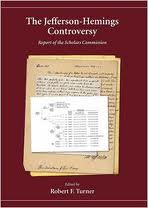
The mainstream news media have largely shunned a significant new book that disputes the notion Thomas Jefferson had a long, loving relationship with a slave, Sally Hemings.

The drawbacks of ignoring the book, The Jefferson-Hemings Controversy: A Report of the Scholars Commission, are suggested by a Politico item posted yesterday.

Politico asserted:

“Most historians have concluded that, as a widower, Jefferson may have had as many as six children with Hemings, maintaining a 38-year relationship with her until his death in 1826.”

“Most historians”?

That’s a stretch, as The Jefferson-Hemings Controversy suggests.

It’s a collaborative work of 13 scholars, 12 of whom are either historians of Jefferson and his times or experts on politics and government. The outlier, as it were, is a biochemist, an expert on DNA testing.

The members of the scholars commission — empaneled by the Thomas Jefferson Heritage Society, which seeks to protect the reputation of the third president — describe in the book their collective credentials, writing:

“Most of us have studied Thomas Jefferson and his era for at least two decades, and we have held teaching or research appointments at Harvard, Yale, Stanford, Brown, Virginia, North Carolina, Kentucky, Indiana, Bowdoin, and many other respected institutions of higher learning.”

They also state that “after a careful review of all of the evidence, the commission agrees unanimously that the allegation [against Jefferson] is by no means proven. … With the exception of one member … our individual conclusions range from serious skepticism about the charge to a conviction that it is almost certainly false.”

But it’s “by no means proven.”

And yet media reports, such as that in Politico, typically treat the purported Jefferson-Hemings relationship as if it were settled history.

An important reason for the misinterpretation stems from DNA test results reported in 1998. The tests were widely misreported as identifying Jefferson as the father of Hemings’ youngest son, Eston.

The results were published in the journal Nature, which placed this erroneous headline above the article:

“Jefferson fathered slave’s last child.”

The Nature headline and its misreported findings had significant agenda-setting power.

The scholars commission, which was chaired by Robert Turner of the University of Virginia, note in the book that “much of the public has been misled about the significance of the DNA tests … reported in the journal Nature in November 1998.

“While the tests were professionally done by distinguished experts, they were never designed to prove, and in fact could not have proven, that Thomas Jefferson was the father of any of Sally Hemings’ children.”

The Jefferson-Hemings Controversy addresses the DNA evidence in some detail, noting that the tests “did no more than establish that Eston Hemings’ father was almost certainly a Jefferson.”

A Jefferson.

More than two dozen Jefferson men, including Thomas, could have been the father.

By then, though, Thomas Jefferson was 64-years-old — scarcely a leading paternity candidate.

The Jefferson-Hemings Controversy offers an intriguing hypothesis about why the DNA tests of 1998 were so widely misunderstood.

“Most Americans,” the book points out, “learned about DNA testing during the period leading up to and during the 1995 murder trial of O.J. Simpson, and they read in USA Today and other major papers than DNA ‘genetic fingerprints’ are ‘99.9 accurate’ or even ‘99.99 percent accurate.’

“When the Jefferson-Hemings story broke [nearly] four years later, it was not surprising that many people assumed scientists had matched Thomas Jefferson’s DNA with that of Sally Hemings’ children, and conclusively established Jefferson’s paternity by this remarkable new technology.

“But that is clearly not the case.”

WJC

Recent and related:

‘DNA evidence is all in’ on Jefferson? Got that wrong

In Debunking, Media myths on October 19, 2011 at 12:02 pm

Nearly 13 years have passed since the release of DNA testing evidence that was widely misreported as evidence that Thomas Jefferson had fathered children by a purported slave-mistress, Sally Hemings.

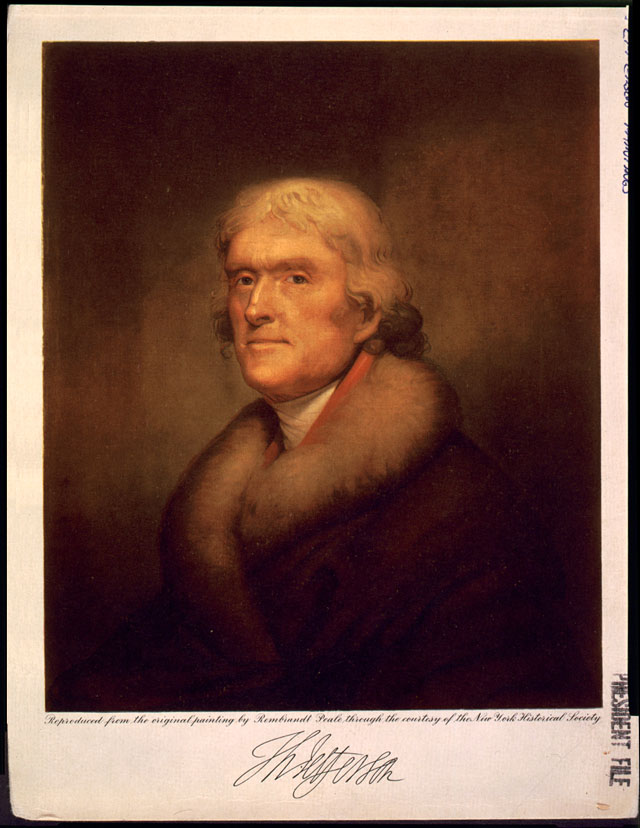
Jefferson (Library of Congress)

That evidence was scarcely so conclusive or definitive.

The testing in 1998 identified the third president as one of more than two dozen Jefferson men who may have been the father of Hemings’ youngest child, Eston.

One of more than two dozen Jefferson men.

Misrepresentations and mischaracterizations of the DNA evidence persist, as suggested by a commentary posted yesterday at the online site of U.S. News and World Report.

The commentary, written by Jamie Elizabeth Stiehm, asserted:

“After his beloved wife Martha died, Jefferson took as his mistress … a beautiful girl named Sally Hemings, decades years [sic] younger than he. At his stately Monticello in Virginia, his mountaintop, he was literally master of all he saw. That meant his two white daughters, horses, gardens, fields, a library of books, fine clothes, and the best of wines he chose during his Paris days.

“Never forget the 100 slaves Jefferson owned to make the wheels of wealthy planter life go round. Among them were the Hemings children born to Sally Hemings — his own, but never recognized as such by Jefferson, even informally. They were the only four slaves he later set free, however, probably by a pact he kept with Sally Hemings. (And the DNA evidence is all in.)”

The “DNA evidence is all in”?

Not so.

As a recently published scholarly study about the controversy notes, the DNA tests “were never designed to prove, and in fact could not have proven, that Thomas Jefferson was the father of any of Sally Hemings’ children.

“The tests merely establish a strong probability that Sally Hemings’ youngest son, Eston, was fathered by one of the more than two dozen Jefferson men in Virginia at the time, seven of whom there is documentary evidence to believe may well have been at Monticello when Eston was conceived.”

One of more than two dozen Jefferson men.

Thomas Jefferson was 64 and ailing at the time Eston Hemings was conceived; Jefferson’s advanced age and infirmities make him an improbable paternity candidate.

The scholarly study, titled The Jefferson-Hemings Controversy: Report of the Scholars Commission, also says:

“The problem [in misinterpreting the DNA evidence] lies not only with a news media prone to over simplifying and sensationalizing complex stories.  Numerous prominent scholars have contributed to the misunderstanding by characterizing the DNA study as ‘confirming’ or ‘clinching’ the case for Thomas Jefferson’s paternity.”

Stiehm’s unsourced and uncritical commentary adds to the confusion.

She stumbles on another point, too, in stating that Hemings’ children “were the only four slaves [Thomas Jefferson] later set free.”

That’s wrong.

Robert Turner, a University of Virginia professor who edited The Jefferson-Hemings Controversy, says that “Thomas Jefferson legally freed (manumitted) seven slaves that we know of.”

They included  Sally Hemings’ brothers, Robert and James, as well as  Burwell Colbert, a son of Sally’s sister, Bett; Sally’s brother, John, and Joseph Fossett, a son of Sally’s sister, Mary.

Jefferson also freed Sally’s youngest children, Madison and Eston, Turner notes.

The reference in The Jefferson-Hemings Controversy to the news media’s “over simplifying and sensationalizing complex stories” deserves additional comment.

Complexity-avoidance often characterizes news coverage, as I note in my latest book, Getting It Wrong.

“All too often,” I write, “the news media seem complexity-adverse and exceedingly eager to simplify and synthesize.

“This tendency is explained in part by the tyranny of deadlines and the limitations of on-air time and newsprint space. Even so, few important events can be explained without recognizing and acknowledging their context and intricacies.”

That certainly holds for the Jefferson-Hemings controversy. News reports and commentary about the matter almost invariably embrace the simplistic but wholly unproven narrative that Jefferson took a slave as a years-long mistress.

WJC

Recent and related:

Finally: Some attention for book disputing Jefferson-slave mistress liaison

In Debunking, Media myths on October 16, 2011 at 11:22 am

C-Span 3 aired today the news conference launch of a thoroughly researched but largely ignored book disputing the narrative that Thomas Jefferson had children by a slave-mistress.

The C-Span program represented a rare occasion in which prominent U.S. news media have given attention to the book, The Jefferson-Hemings Controversy: Report of the Scholars Commission, which was released September 1 at the National Press Club in Washington.

The C-Span program showed the 90-minute news conference in full, and featured the editor of the volume, Robert Turner, a history professor at the University of Virginia.

Turner headed a commission of Jefferson scholars, which was organized in 2000 by the Thomas Jefferson Heritage Society to explore claims about Jefferson and his slave, Sally Hemings.

Turner at the news conference reviewed a welter of evidence, circumstantial and otherwise, that points away from Jefferson’s paternity.

“You look at all the pieces,” Turner said, “and they don’t point to a romantic or a sexual relationship” between Jefferson and Hemings.

The book points out that little is known about Hemings and that she “appears to have been a very minor figure in Thomas Jefferson’s life.” The third U.S. president referred to her in just four of the tens of thousands of letters he wrote.

Mainstream U.S. news media have assiduously ignored the book and its exculpatory detail about Jefferson.

When of late they have mentioned the matter, they’ve essentially bowed to the orthodoxy that Jefferson and Hemings were sexual partners.

The Washington Post, for example, referred in an article late last week to “the discovery of descendants of Thomas Jefferson and his slave Sally Hemings” — without saying just who those descendants were, or how “the discovery” was made.

As The Jefferson-Hemings Controversy points out, the evidence is neither conclusive nor compelling that Jefferson fathered any of Hemings’ children.

The book notes that DNA testing conducted in 1998 was widely misreported as identifying Jefferson as having fathered children by Hemings. The DNA test results were reported in Nature in November 1998 beneath the erroneous headline, “Jefferson fathered slave’s last child.”

Nature’s error, Turner said, “caused a lot of confusion among the American people, very sadly.”

As the book points out, the DNA tests “were never designed to prove, and in fact could not have proven, that Thomas Jefferson was the father of any of Sally Hemings’ children.

“The tests merely establish a strong probability that Sally Hemings’ youngest son, Eston, was fathered by one of the more than two dozen Jefferson men in Virginia at the time, seven of whom there is documentary evidence to believe may well have been at Monticello when Eston was conceived.”

One of more than two dozen Jefferson men.

Thomas Jefferson at the time was 64 and ailing, hardly making him a leading paternity candidate. (Turner observed at the news conference that “most men in that era didn’t see 40.”)

A more likely candidate, Turner said, is Jefferson’s younger brother, Randolph, who was known to have socialized with the slaves at Thomas Jefferson’s home, Monticello.

So — will the Post correct or clarify its unsubstantiated and probably erroneous reference to “descendants” of Jefferson and Hemings?

That it will is probably as likely as the Post’s deciding to review The Jefferson-Hemings Controversy.

WJC

Recent and related:

Accepting the 2010 SPJ award for Research about Journalism

In Debunking, Media myths on September 25, 2011 at 7:22 am

I was in New Orleans last night to accept the Society of Professional Journalists’  Sigma Delta Chi award for Research about Journalism, for my media-mythbusting book, Getting It Wrong.

The occasion was a fine, smoothly run ceremony at a hotel near the city’s French Quarter.

Getting It Wrong, which was published last year by the University of California Press, addresses and debunks 10 prominent media-driven myths — those dubious tales about the news media that masquerade as factual.

Here’s a rundown about the respective myths dismantled in Getting It Wrong:

  1. Remington-Hearst: William Randolph Hearst’s famous vow “to furnish the war” with Spain is almost certainly apocryphal.
  2. War of Worlds: The notion that the War of Worlds radio dramatization in 1938 caused nationwide panic and mass hysteria is highly exaggerated.
  3. Murrow-McCarthy: Edward R. Murrow’s famous See It Now program in March 1954 did not end Senator Joseph McCarthy’s communists-in-government witch-hunt; Murrow in fact was very late to take on McCarthy.
  4. Bay of Pigs: The New York Times did not suppress its reporting in the run-up to the ill-fated Bay of Pigs invasion in April 1961.
  5. Cronkite-Johnson: The Walter Cronkite special report on Vietnam in February 1968 did not prompt an immediate reassessment or revision of U.S. war policy. Nor did it prompt President Lyndon Johnson to declare, “If I’ve lost Cronkite, I’ve lost Middle America.”
  6. Bra-burning: Humor columnist Art Buchwald helped spread the mistaken notion that feminist demonstrators dramatically burned their bras at a Miss America protest in September 1968.
  7. Watergate: The Washington Post’s intrepid reporters, Carl Bernstein and Bob Woodward, did not bring down Richard Nixon’s corrupt presidency. That they did is a trope that knows few bounds.
  8. Crack babies: The much-feared “bio-underclass” of children born to women who smoked crack cocaine during their pregnancies never materialized.
  9. Jessica Lynch: The Washington Post’s erroneous reporting about Jessica Lynch early in the Iraq War gave rise to several myths about her capture and rescue.
  10. Hurricane Katrina: News coverage of Katrina’s aftermath in New Orleans in early September 2005 was marred by wild exaggerations about extreme, Mad Max-like violence.

The “Research about Journalism” award recognizes “an investigative study about some aspect of journalism,” according to SPJ, and has to be “based on original research; either published or unpublished and … completed during the 2010 calendar year. … Judges will consider value to the profession, significance of the subject matter, thoroughness of the research, and soundness of the conclusion.”

WJC

Recent and related:

As if it were toxic: Media ignore exculpatory Jefferson-paternity study

In Debunking, Media myths on September 17, 2011 at 5:49 am

More than two weeks have passed since publication of a hefty scholarly study disputing that Thomas Jefferson sired children by one of his slaves, and America’s mainstream news media have shunned the work as if it were toxic.

The work, after all, does pose an acute threat to the dominant narrative that Jefferson had an intimate relationship with slave Sally Hemings.

But rather than engage and scrutinize the study — the collective work of a dozen Jefferson scholars that’s titled The Jefferson-Hemings Controversy: Report of the Scholars Commission and was released September 1 — the mainstream media have resolutely ignored it.

When they have had opportunities recently to address the Jefferson-Hemings tale, news outlets have turned blithely to what amounts to defamation of the third president.

The day before the scholars commission study was released, for example, the Atlanta Journal-Constitution observed:

“The descendants of slavery-era unions were often consigned to a shadowy middle-ground, as the black descendants of Thomas Jefferson and Sally Hemings will attest.”

The Washington Post flatly asserted recently that Jefferson “fathered children with his slave Sally Hemings.”

And the Huffington Post the other day published a commentary that declared:

“It wasn’t until the late ’90s when new biographies of the founding fathers — like American Sphinx by Joseph Ellis, which revealed that Thomas Jefferson had a sexual relationship with his slave Sally Hemings that bore him six children — suddenly brought them to life in full color, foibles and all.”

There is, quite simply, no persuasive or compelling evidence — from Ellis or anyone else — that Jefferson fathered any of Hemings’ children, let alone six.

Indeed, the weight of available evidence favors the exculpatory interpretation offered by the new book, which states:

“Trying to prove a negative is usually difficult. But we have found most of the arguments used to point suspicion toward Thomas Jefferson to be unpersuasive and often factually erroneous. Not a single member of our group, after an investigation lasting roughly one year, finds the case against Thomas Jefferson to be highly compelling, and the overwhelming majority of us believe that it is very unlikely that he fathered any children by Sally Hemings.”

The scholars reported that had Jefferson carried on such a sexual relationship, it is “very difficult to believe that he would have selected as his companion the teenaged maid to his young daughters. … We … think it highly unlikely that Thomas Jefferson would have placed at risk the love and respect of his young children in this manner.”

The scholars’ work also notes that the DNA testing conducted in 1998 was widely misinterpreted as identifying Jefferson the father of Hemings’ children. (Ellis in American Sphinx incorrectly wrote that the testing “demonstrated a match between Jefferson” and the youngest son of Hemings.)

The DNA tests, the study points out, “were never designed to prove, and in fact could not have proven, that Thomas Jefferson was the father of any of Sally Hemings’ children.

“The tests merely establish a strong probability that Sally Hemings’ youngest son, Eston, was fathered by one of the more than two dozen Jefferson men in Virginia at the time, seven of whom there is documentary evidence to believe may well have been at Monticello when Eston was conceived.”

What’s more, the book says there’s no “clear evidence that Sally Hemings or any of her children ever alleged that Thomas Jefferson was her lover or their father, save for the statement attributed to an aging and clearly bitter Madison Hemings [another son] nearly five decades after Thomas Jefferson’s death.

“Surely, if they believed the famous President to be their father, they would have found it to their benefit to make this fact known to others before 1873.”

The Jefferson-Hemings Controversy is rich material and certainly worthy of thorough and frank consideration by the news media.

Instead they demur, fearful perhaps of what scrutiny of the evidence will reveal.

WJC

Recent and related:

Recalling the 1960s ‘bra-burning days of women’s lib’

In Bra-burning, Debunking, Media myths on September 6, 2011 at 4:33 am

Ah, yes: “the 60s bra-burning days of women’s lib.”

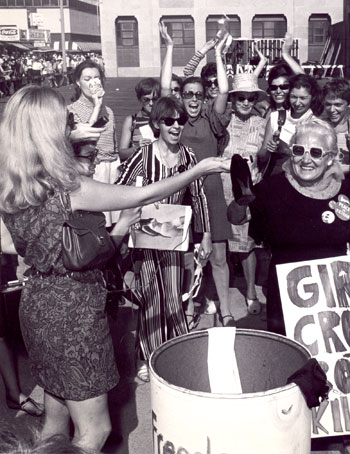
Those “bra-burning days” can be traced to the boardwalk at Atlantic City, NJ, 43 years ago, when about 100 women’s liberation demonstrators protested the Miss America pageant at the city’s Convention Center.

At the 'Freedom Trash Can,' 1968

A centerpiece of the protest was what the demonstrators called the “freedom trash can,” into which they consigned such “instruments of torture” as brassieres, girdles, high-heeled shoes, false eyelashes, copies of  Playboy and Cosmopolitan magazines.

The protesters have long insisted that, contrary to legend, bras and other items were not set afire that long ago September day.

The protest’s principal organizer, Robin Morgan, has asserted:

“There were no bras burned” at Atlantic City. “That’s a media myth.”

But in my latest book, Getting It Wrong, I offer evidence that bras were set afire, briefly, during the protest at Atlantic City. It was perhaps more akin to bra-smoldering.

The evidence is from separate witness accounts — one of them published in the local newspaper, the Press of Atlantic City, on September 8, 1968, the day after the protest.

That account appeared beneath the byline of a veteran reporter named John L. Boucher and carried the headline:

Bra burners blitz Boardwalk.”

The article’s key passage stated:

“As the bras, girdles, falsies, curlers, and copies of popular women’s magazines burned in the ‘Freedom Trash Can,’ the demonstration reached the pinnacle of ridicule when the participants paraded a small lamb wearing a gold banner worded ‘Miss America.’”

Boucher’s account, as I note in Getting It Wrong, “did not elaborate about the fire and the articles burning in the Freedom Trash Can, nor did it suggest the fire was all that important. Rather, the article conveyed a sense of astonishment that an event such as the women’s liberation protest could take place near the venue of the pageant.”

Boucher’s contemporaneous account was buttressed by the recollections of Jon Katz, a prolific writer who in 1968 was a young reporter for the Atlantic City Press.

He was on the boardwalk the day of the protest, gathering material for a sidebar article about reactions to the demonstration.

Katz’s article did not mention the burning bras. But in correspondence with me, Katz stated:

“I quite clearly remember the ‘Freedom Trash Can,’ and also remember some protestors putting their bras into it along with other articles of clothing, and some Pageant brochures, and setting the can on fire. I am quite certain of this.”

He added: “I recall and remember noting at the time that the fire was small, and quickly was extinguished, and didn’t pose a credible threat to the Boardwalk. I noted this as a reporter in case a fire did erupt ….”

Boucher’s long-overlooked article and Katz’s more recent recollections represent strong evidence that bras and other items were burned at the 1968 protest.

As I write in Getting It Wrong,  “This evidence cannot be taken lightly, dismissed or ignored.

“But it must be said as well,” I add, “that the witness accounts of Boucher and Katz lend no support to the far more vivid and popular imagery that many bras went up in flames in flamboyant protest that September day.”

Still, the notion that bra burnings were numerous during the late 1960s and 1970s became well-ingrained in American popular culture — as the recent reference in the Australian newspaper to “the 60s bra-burning days of women’s lib” suggests.

The phrase “bra-burning,” as I note in Getting It Wrong, became a sneering, off-hand way “of ridiculing feminists and mocking their sometimes-militant efforts to confront gender-based discrimination in the home and the work place.”

Bra-burning was hardly a common element of women’s liberation protests of the late 1960s and 1970s. Evidence is scant at best of feminist protesters during those years setting fire to bras and tossing the flaming undergarments into spectacular bonfires.

WJC

Recent and related:

Challenge the dominant narrative? Who, us?

In Debunking, Media myths on September 4, 2011 at 9:01 am

No surprise here.

The mainstream news media, as expected, have ignored the publication of an impressively researched and authoritative book challenging the narrative that Thomas Jefferson had children by one of his slaves, Sally Hemings.

The 400-page work, The Jefferson-Hemings Controversy: Report of the Scholars Commission, was released September 1 at a news conference at the National Press Club in Washington.

A search of the LexisNexis database reveals no major U.S. news organization has since reported on the book’s appearance or, more important, on its content.

That Jefferson sired children with Hemings has long been accepted and reported as fact by mainstream news media, even though DNA testing often cited to support the claim was misreported when released in Nature magazine in 1998.

News reports then often characterized the DNA tests as having verified Jefferson’s parentage of at least one of Hemings’ children.

The Philadelphia Inquirer, for example, declared:

“DNA evidence has confirmed that Thomas Jefferson, the revered third president of the United States, fathered at least one child by his slave-mistress, Sally Hemings.”

And the New York Times asserted:

“DNA tests on the descendants of Thomas Jefferson’s family and of Jefferson’s young slave, Sally Hemings, offer compelling evidence that the nation’s third President fathered at least one of her children, according to an article in the scientific journal Nature.”

That evidence, the Times declared, “is likely to send historians scurrying to re-evaluate Jefferson, particularly his role in the anti-slavery movement.”

But in fact the DNA tests identified Jefferson as one of about two dozen Jefferson males who could have fathered Hemings’ last child, Eston.

The new book  — which places between hard covers the report and essays issued 10 years ago by a commission of scholars that investigated the Jefferson-Hemings matter — declares that “much of the public has been misled about the significance of the DNA tests … first reported in the journal Nature in November 1998.

“While the tests were professionally done by distinguished experts, they were never designed to prove, and in fact could not have proven, that Thomas Jefferson was the father of any of Sally Hemings’ children.

“The tests merely establish a strong probability that Sally Hemings’ youngest son, Eston, was fathered by one of the more than two dozen Jefferson men in Virginia at the time ….”

Thomas Jefferson: Library of Congress

The new book says circumstantial evidence points more powerfully to Jefferson’s younger brother, Randolph (or his sons), in the question of Eston Hemings’ paternity.

Randolph Jefferson, the book says, was known to have socialized with the slaves at Monticello, Thomas Jefferson’s home near Charlottesville, VA.

Randolph Jefferson was a dozen years younger than the president, and the available record offers no evidence that Thomas Jefferson “enjoyed socializing at night with Monticello slaves,” the book says.

Eston Hemings’ was conceived around August 1807, when Thomas Jefferson was 64 and in declining health — factors that further diminish the likelihood of his paternity.

Jefferson’s age and ailments always have represented crucial exculpatory evidence, in my view. That and the fact that Hemings had no children after Jefferson retired to Monticello from public life.

What’s more, the book says “Sally Hemings appears to have been a very minor figure in Thomas Jefferson’s life,” noting that Jefferson referred to her “in but four of his tens of thousands of letters.”

Of particular interest to Media Myth Alert is why the mainstream news media would ignore compelling evidence that exonerates Jefferson, or at least seriously complicates the paternity case against him.

Why wouldn’t the news media find appealing an opportunity to challenge the dominant narrative about Jefferson and his purported slave-mistress?

A number of reasons offer themselves.

One is that the new book essentially is a compilation of reports released in April 2001. In the new book’s acknowledgements, editor Robert F. Turner apologizes to members of the scholars commission “for the long delay in finally getting this volume in print.”

But the volume’s delayed publication doesn’t make the case against Jefferson’s paternity any less powerful or less compelling.

It is a complex case, and complexity seldom appeals to the news media. Simplistic tales are far more engaging, alluring, and easy to report.

As I point out in my latest book, Getting It Wrong (which does not discuss the Jefferson-Hemings controversy), media-driven myths “tend to minimize or negate complexity in historical events and offer simplistic and misleading interpretations instead.”

As does the dominant narrative of the Jefferson-Hemings matter.

That Thomas Jefferson sired offspring by a slave-mistress is an intriguing and perversely delicious story. But it is hardly settled history. It’s more likely a misreading of history — a misreading that the well-written and thoroughly researched new book, to its credit, seeks to correct.

WJC

Recent and related: