W. Joseph Campbell

Archive for June, 2015|Monthly archive page

‘SF Examiner’ marks 150th anniversary with dose of media myth

In Anniversaries, Debunking, Error, Media myths, Newspapers, Spanish-American War, Yellow Journalism on June 11, 2015 at 3:35 pm

The San Francisco Examiner marked its 150th anniversary today with a dash of media myth about its most famous owner, William Randolph Hearst, and the Spanish-American War of 1898.
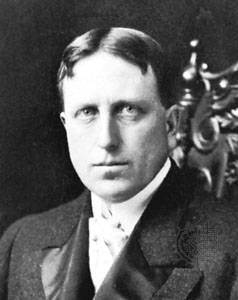
Media baron Hearst

Hearst: Started with the Examiner

The newspaper, which has survived near-death encounters in its turbulent past, asserted the following in an online overview of its history:

“Led by William Randolph Hearst and Joseph Pulitzer, newspapers were largely responsible for creating the Spanish-American War through the birth of yellow journalism.”

But how that worked, how the newspapers created or fomented that war, was left unsaid, as was the nature of the contribution of “yellow journalism.”

For that matter, “yellow journalism” was left undefined.

But the short answer is that newspapers — and yellow journalism — were not “responsible,” largely or otherwise, for the war in which the United States crushed Spanish military forces in Cuba, Puerto Rico, and the Philippines, an outcome that signaled America’s emergence as a global power.

As I discussed in my 2001 book Yellow Journalism: Puncturing the Myths, Defining the Legacies, the New York newspapers of Hearst and Pulitzer — the leading exemplars of the yellow press — exerted very modest agenda-setting influence in the run-up to the war.SFExaminer loho_Twitter

I noted:

“There is little evidence that the press beyond New York City, especially in small-town and rural America, was influenced by the content of the yellow journals, including their demands for war after the destruction of the Maine,” an American warship that blew up while on a friendly visit to Havana in mid-February 1898.

The destruction of the Maine — in a harbor under Spanish control — was a trigger for the war.

But if newspapers had been responsible for the war, then researchers should be able to find unambiguous references to such influence in the personal papers and the reminiscences of policymakers of the time.

“But neither the diary entries of cabinet officers [in the administration of President William McKinley] nor the contemporaneous private exchanges among American diplomats indicate that the yellow newspapers exerted any influence at all,” I wrote Yellow Journalism.

So what, then, were the proximate causes of war in 1898?

Fundamentally, the war was the consequence of a three-sided diplomatic impasse: Cuban insurgents, who in 1895 had launched a rebellion against Spanish colonial rule, would accept nothing short of independence from Madrid. Spain, for domestic and economic reasons, was adamant not to grant Cuban independence — and sent as many as 200,000 troops to the island in an attempt to put down the rebellion. And the United States had become deeply frustrated with Spain’s inability to bring an end to a conflict on an island 90 miles from U.S. shores.

Not only did Spain send thousands of troops to Cuba, it sought to deprive the rebels of the aid and support of non-combattants by herding  women, children, and old men into reconcentration centers. The Cuban non-combattants suffered grievously; tens of thousands of them died from starvation and illness in the reconcentration centers.

By 1898, a humanitarian disaster had taken hold in Cuba.

The diplomatic standoff, and the effects of Spain’s reconcentration policy, were the real reasons for the war.

Not Hearst. Not Pulitzer. Not “yellow journalism.”

As for “yellow journalism”: The term was coined in 1897 and it came to represent a flamboyant genre defined by these features:

  • the frequent use of multicolumn headlines that sometimes stretched across the front page.
  • a variety of topics reported on the front page, including news of politics, war, international diplomacy, sports, and society.
  • the generous and imaginative use of illustrations, including photographs and other graphic representations such as locator maps.
  • bold and experimental layouts, including those in which one report and illustration would dominate the front page. Such layouts sometimes were enhanced by the use of color.
  • a tendency to rely on anonymous sources, particularly in dispatches of leading reporters.
  • a penchant for self-promotion, to call frequent attention to the newspaper’s accomplishments. This tendency was notably evident in crusades against monopolies and municipal corruption.

It was, as I noted in Yellow Journalism, a genre that scarcely could be “called predictable, boring, or uninspired — complaints of the sort that are frequently raised about U.S. newspapers of the early twenty-first century.”

WJC

More from Media Myth Alert:

Nat Geo’s cartoonish treatment of Hearst v. Pulitzer

In 1897, Debunking, Error, Journalism education, Newspapers, Reviews, Spanish-American War on June 9, 2015 at 9:31 am

National Geographic’s docudrama last night about the rivalry between William Randolph Hearst and Joseph Pulitzer was, predictably, long on stereotype, highly selective, and misleading in its superficial treatment of its protagonists.

The show, one of eight installments in a not-so-acclaimed series called “American Genius,” was cartoonish in depicting Hearst as a callow and strutting rich kid, extravagant with money, and eager to imitate the techniques of the older and, at least according to National Geographic’s program, more virtuous Joseph Pulitzer.

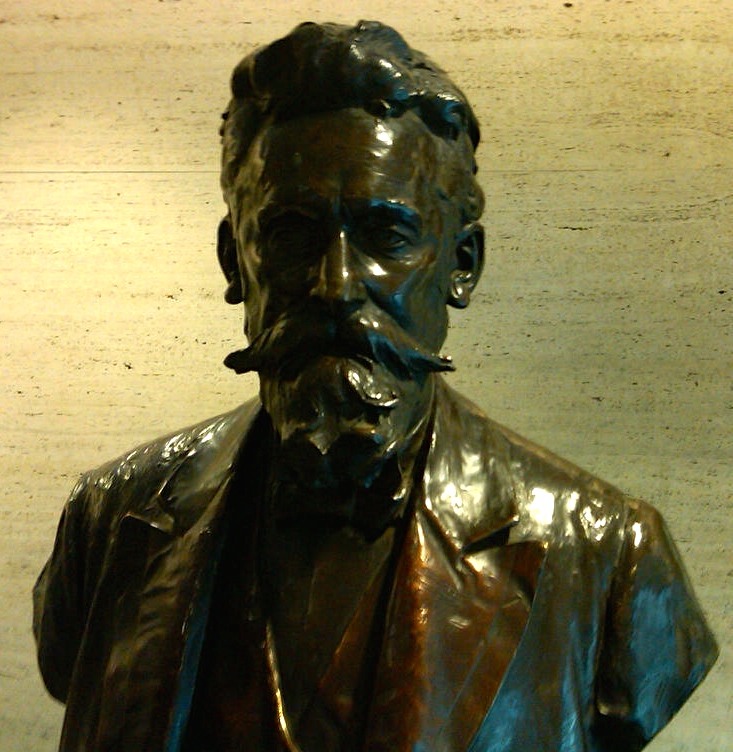
Pulitzer bust

Pulitzer: Mean-spirited ways ignored

Hearst, the son of a millionaire miner turned U.S. senator, was 32 when he came to New York from California in 1895, a time when the city’s journalism had gone stagnant. Its leading publishers and editors were aging, infirm, or absentee. Or in Pulitzer’s case, all of the above.

Hearst promptly shook up New York’s journalism establishment, and earned its enmity in doing so.

But National Geographic offered little discussion about the seismic character of Hearst’s entry into New York, or how success in New York was crucial to his goal of building a lasting media empire.

Significantly, the docudrama failed to mention a key component in the supposed Pulitzer-Hearst rivalry: Pulitzer was almost entirely absent from New York journalism after 1891 — years before Hearst came to Gotham to acquire and run the New York Journal. The rivalry was not directly between the owners, but between their newspapers.

Likewise, the program made no mention at all about how Pulitzer tried to run his New York World remotely, through a steady stream of telegrams and letters sent to his editors and business managers from Maine, Georgia, Europe, or wherever the peripatetic Pulitzer sought comfort as his health worsened and his eyesight failed.

Similarly, there was no mention that Pulitzer was a harsh and mean-spirited taskmaster who often treated his senior staff like so many incompetents. He drove away talent as much as Hearst recruited it from the World. Or as National Geographic put it, stole from the World.

Perhaps most important of the program’s flaws was its silence about the activist concept that inspired and animated Hearst’s journalism in the mid- and late-1890s.

Contrary to the program’s frequent claims, Hearst was not so much an imitator of Pulitzer as the adapter of a theory of participatory journalism advanced by William T. Stead in Britain in the mid-1880s. “Government by journalism,” Stead called it, arguing that newspapers had a central role in guiding civic life, given their presumed capacity to frame and shape public opinion.

Hearst clearly borrowed from Stead’s “government by journalism” in pursuing a model his newspaper called the “journalism of action.” It was a breathtaking vision of participatory journalism that went well beyond the stunts (such as Nellie Bly’s race round the world in 1888) organized by Pulitzer’s newspaper.

As I wrote in my 2006 book, The Year That Defined American Journalism: 1897 and the Clash of Paradigms, the “journalism of action” envisioned that newspapers should and could go beyond merely gathering, publishing, and commenting on the news. Instead, I noted, the “journalism of action” asserted that newspapers had an obligation “to inject themselves, conspicuously and vigorously, in righting the wrongs of public life, and in filling the void of government inaction and incompetence.”

evangelina_oct10_trim

‘Jailbreaking journalism,’ 1897

There was no more dramatic or celebrated manifestation of the “journalism of action” than the case of “jailbreaking journalism” in 1897.

That was when Karl Decker, a reporter Hearst dispatched to Cuba, helped to organize the escape of Evangelina Cisneros, a 19-year-old political prisoner jailed in Havana for nearly 15 months, during the Cuban rebellion against Spanish colonial rule.

With the quiet help of U.S. diplomatic personnel in Cuba, and with the critical support of a clandestine smuggling network operating in Havana, Decker succeeded in early October 1897 in breaking Cisneros out of jail. She was hidden for nearly three days at the home of a Cuban-American banker, then smuggled aboard a passenger steamer bound for New York City.

There, Hearst organized a rapturous welcome for Cisneros, who knew few words of English and seemed overwhelmed by the reception.

The National Geographic show had the Cisneros character speaking fairly fluent accented English. And it characterized the jailbreak superficially, as simply “a way [for Hearst] to get his readers interested in the rebels’ cause against Spain.” It was that, but much more: the rescue, the Journal declared, was “epochal,”  a “supreme achievement” of participatory journalism.

It proved to be the zenith of the “journalism of action,” a flamboyant if now little-remembered paradigm of newsgathering and newsmaking.

Interestingly, the small stable of experts National Geographic recruited for its show did not include the leading authorities on Hearst — biographers David Nasaw, author of The Chief, and Kenneth Whyte, who wrote The Uncrowned KingBoth books are outstanding.

Had it tapped such experts, the program might have sidestepped such inaccurate claims as Hearst’s having “had more money than God.” Hearst was wealthy, but his widowed mother imposed restraints on his spending, as Nasaw describes in some detail in The Chief.

Hearst’s resources were not unlimited, National Geographic’s claims notwithstanding.

In fact, representatives of the World and the Journal met to explore jointly raising prices, to rebuild revenues depleted by coverage of the Spanish-American War in 1898.

They were effectively blocked from doing so because Adolph Ochs, publisher of the New York Times, had lowered the price of his newspaper to one cent from three cents. No way would the World and the Journal leave the one-cent market to Ochs, who came to New York in 1896. So the World and the Journal kept their cover price at a penny, which meant long-term strains on resources and revenues.

About that, of course, the docudrama made no mention.

WJC

More from Media Myth Alert:

Who chased Nixon from office? Not Woodward, Bernstein

In Debunking, Error, Media myths, Newspapers, Reviews, Washington Post, Watergate myth on June 2, 2015 at 2:16 pm

The National Journal offered an intriguing discussion yesterday about what it called “the background briefing racket,” in which government officials meet with reporters to “spew their clever lines of lies and spin, and declare it all ‘on background'” — meaning they aren’t linked by name to what they said.

It is a racket that allows officials to evade accountability.

But what most interested Media Myth Alert was this passage in the article, written by veteran Washington journalist Ron Fournier:

Did he know he was 'Deep Throat'?

The ambitious Mark Felt

“When reporters call the shots, anonymous sources are vital to uncovering government secrets and wrongdoing (Bob Woodward and Carl Bernstein used Mark Felt and other whistleblowers to chase Richard Nixon out of office).”

Woodward and Bernstein chased Nixon out of office?

Not quite.

Woodward and Bernstein were the Washington Post’s lead reporters on Watergate scandal of 1972-74, but their work hardly can be said to have forced Nixon to resign the presidency.

As Woodward, himself, has said:

To say that the press brought down Nixon, that’s horseshit.”

And as I pointed out in my media-mythbusting book, Getting It Wrong, rolling up a scandal of the complexity and dimension of Watergate “required the collective if not always the coordinated forces of special prosecutors, federal judges, both houses of Congress, the Supreme Court, as well as the Justice Department and the FBI.

“Even then, Nixon likely would have served out his term if not for the audiotape recordings he secretly made of most conversations in the Oval Office of the White House. Only when compelled by the Supreme Court did Nixon surrender those recordings,” which captured him approving a plan to deflect the FBI’s investigation into the signal crime of Watergate — the foiled burglary in mid-June 1974 at the headquarters of the Democratic National Committee.

The Post did not disclose the existence of the White House tapes. Nor did the Post reveal the White House coverup of the crimes of Watergate.

So to assert, even in an off-handed way, that Woodward and Bernstein were pivotal or central to chasing Nixon from the White House is to misread history and indulge in one of American journalism’s most tenacious media myths.

A couple of other points about the parenthetical phrase, “Bob Woodward and Carl Bernstein used Mark Felt and other whistleblowers to chase Richard Nixon out of office.”

Bernstein never met Mark Felt during Watergate scandal, nor for many years afterward. Felt was the secret source and senior FBI official known as “Deep Throat,” with whom Woodward periodically conferred in 1972 and 1973, sometimes in a parking garage in the Rosslyn section of Arlington, Virginia.

But not until 2008, late in Felt’s life, was Bernstein introduced to him.

Also, Felt was no whistleblower, not in a high-minded, altruistic sense. As Christopher Hitchens pointed out almost 10 years ago in a review of Woodward’s book about Felt, Watergate represented “the single most successful use of the news media by an anonymous unelected official with an agenda of his own.” Meaning Felt’s own kind of “background briefing racket.”

Max Holland’s book, Leak: Why Mark Felt Became Deep Throat, argues persuasively that Felt was no principled whistleblower.

He was driven by the internal struggle at the FBI to replace J. Edgar Hoover, who died in May 1972. Felt in leaking to Woodward sought to undercut the acting director, L. Patrick Gray III, and thereby enhance Felt’s chances of being named to the bureau’s top position.

Self-advancement was his principal motive. He failed, and retired in 1973.

It deserves mentioning that Felt was no hero, no noble figure.

As I note in Getting It Wrong, Felt authorized burglaries as part of the FBI’s investigations into leftists associated with the radical Weather Underground. He was convicted in 1980 of felony charges related to the break-ins, but was pardoned the following year by President Ronald Reagan.

WJC

More from Media Myth Alert: