W. Joseph Campbell

Archive for the ‘Cinematic treatments’ Category

Hat-tipping ‘On Language’

In Cinematic treatments, Debunking, Media myths, New York Times, Washington Post, Watergate myth on February 26, 2011 at 7:36 am

The New York Times yesterday announced it was ending “On Language,” a quirky and popular column that has appeared 32 years in its Sunday magazine.

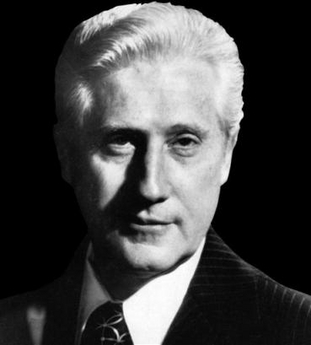
For 30 years, it was the venue for the sometimes-obscure, sometimes-brilliant work of William Safire, a Pulitzer Prize-winning columnist who died in 2009.

Of the column’s passing, the incumbent writer of “On Language” stated that time had come  “to bid adieu, after some 1,500 dispatches from the frontiers of language.”

That vague and unsatisfactory explanation notwithstanding, the end of “On Language” offers an occasion to revisit, and offer a tip of the chapeau to, Safire’s laudable effort to call attention to a prominent media myth — that famous, often-invoked but totally made-up line of Watergate, “follow the money.”

Safire, 2006

In an “On Language” column titled “Follow the Proferring Duck” and published August 3, 1997, Safire wrote:

“Who first said ‘Follow the money’? Everybody knows the answer: ‘Deep Throat,’ the anonymous source quoted by Bob Woodward and Carl Bernstein in their book ‘All the President’s Men.’ Those three words from a mysterious Administration official whose identity is unknown even today impelled the young journalists to money laundered in Mexico and ultimately to payments to burglars and a Nixon White House slush fund.

“But wait,” Safire added, “thanks to Daniel Schorr, the National Public Radio commentator … we now have a new and disconcerting take on the origin of the famous phrase.”

Safire explained that Schorr had searched All the President’s Men for the phrase, and had failed to find it.

“Nor was it in any of the Watergate reporting in the Washington Post,” Safire wrote. The line first appeared in the cinematic version of All the President’s Men. It was spoken by the actor Hal Holbrook, who played the stealthy “Deep Throat” character.

“The screenplay was written by William Goldman,” Safire noted. “When Schorr called him, the famed screenwriter at first insisted that the line came from the book; when proved mistaken about that, he said: ‘I can’t believe I made it up. I was in constant contact with Woodward while writing the screenplay. I guess he made it up.’

“Schorr then called Woodward, who could not find the phrase in his exhaustive notes of Watergate interviews. The reporter told Schorr he could no longer rely on his memory as to whether Deep Throat had said the line and was inclined to believe that Goldman had invented it.”

Safire added:

“If the line was indeed a fiction, as it seems to be, what does that portend for its nonfictional source? Schorr only poses the question, but the irony is this:

“When recently asked on ‘Meet the Press’ what the lasting legacy of Watergate was after a quarter-century, Ben Bradlee of the Washington Post (brilliantly portrayed in the movie by Jason Robards Jr.) replied with the words of William Goldman: ‘Follow the money.'”

Indeed, the transcript of the program shows Bradlee did say that.

(In 2005, W. Mark Felt came forward to say was Watergate’s “Deep Throat.” Not long afterward, Goldman took credit for having written “follow the money” into the screenplay.)

If anything, “follow the money” has become more popular — and invoked more often — in the years since Safire wrote the column.

As I’ve noted at Media Myth Alert, “follow the money” is pithy, punchy, and easily remembered; like many other media myths, it is readily applicable.

And as I write in my latest book, Getting It Wrong:

“Turns of phrase that sound too neat and tidy often are too perfect to be true.” William Randolph Hearst’s pithy vow to “furnish the war” with Spain is a particularly telling example.

“Follow the money” lives on for other reasons, too. After all, it supposedly represented vital guidance in rolling up the Watergate scandal.

Its purported decisiveness certainly helps explain why the line crossed so smoothly from the silver screen to the vernacular.

But Watergate, of course, was more than a matter of identifying, pursuing, and explaining a money trail. In the end, Richard Nixon’s attempts to obstruct justice by covering up the break-in at headquarters Democratic national committee headquarters in 1972 was what brought down his presidency.

Safire, by the way, had been a speechwriter for Nixon during his presidency. And Safire used an “On Language” column in 1984 to challenge another hardy media myth — that Nixon ran for president in 1968 claiming to have a “secret plan” to end the war in Vietnam.

WJC

Recent and related:

Scoring political points with ‘follow the money,’ that made-up line

In Cinematic treatments, Debunking, Media myths, Washington Post, Watergate myth on February 20, 2011 at 8:06 am

Media myths have many uses, none of them necessarily praiseworthy.

Media myths can offer simplified and misleading versions of important historical events. They can be invoked as presumptive evidence of the power of the news media.

And they can be used to score points against political opponents.

That latter application was evident the other day in a commentary at Huffington Post that invoked the most famous made-up line of Watergate, “follow the money.”

Pope (Sierra Club)

The HuffPo commentary — written by Carl Pope, chairman of the Sierra Club environmental group — declared:

“But if, as Watergate’s ‘Deep Throat’ advised Woodward and Bernstein, we ‘follow the money,’ it’s clear that the real strategic objective of the far right is an American society ruled domestically by a predatory oligarchy and projected globally as a militaristic empire.”

While the claim is exaggerated nonsense, Media Myth Alert is most interested in Pope’s blithe, off-handed use of “follow the money” as if it were genuine, as if it had been vital guidance offered by a stealthy Watergate source. As if it lends Pope’s argument some sort of higher moral authority.

Felt

Deep Throat” — who as it turned out was the second-ranking official at the FBI, W. Mark Felt — spoke periodically with Bob Woodward (but never Carl Bernstein) as the two reporters investigated the emergent Watergate scandal for the Washington Post.

But “follow the money” was advice never given by Felt in periodic meetings with Woodward, which sometimes took place in a parking garage in the Rosslyn section of Arlington, Virginia, across the Potomac River from Washington.

And as I’ve noted at Media Myth Alert, no Post article or editorial related to Watergate invoked “follow the money” until June 1981 – nearly seven years after the scandal forced Richard Nixon to resign the presidency. (The Post article in 1981 simply mentioned that “follow the money” had been used in a fifth grade play.)

“Follow the money” was the creation of screenwriter William Goldman. He has taken credit for writing it into the script of All the President’s Men, the cinematic version of Woodward and Bernstein’s book about their Watergate reporting.

The book came out in 1974, just as Watergate was reaching a climax. The movie was released in 1976, as the wounds of the scandal were just beginning to heal. The book and, especially, the movie served to promote what I call the heroic-journalist interpretation of Watergate — the endlessly appealing notion that Woodward and Bernstein’s reporting brought down Nixon.

Since 1976, untold millions of people — now including Carl Pope — have invoked the line, oblivious to its derivation.

“Follow the money” was spoken by the actor Hal Holbrook, who was the “Deep Throat” character in All the President’s Men.

And Holbrook, who turned 85 last week, played the part exquisitely well.

In a memorable scene depicting a late-night meeting in the parking garage, in which Holbrook tells the Woodward character, played by Robert Redford:

“I have to do this my way. You tell me what you know, and I’ll confirm. I’ll keep you in the right direction, if I can, but that’s all.

“Just follow the money.”

The line was delivered with authority, certainty, and insistence — and it sounded for all the world as if it were advice crucial to understanding and unraveling Watergate.

In that way, it represents a simplified version about how the scandal was uncovered, about how the thread of Watergate corruption led to the Oval Office and Nixon.

Watergate, though, was far more complex than identifying and pursuing a money trail.

As I point out in my latest book, Getting It Wrong, rolling up a scandal of Watergate’s dimensions required more than simply following the money.

I note in Getting It Wrong:

“To roll up a scandal of such dimension required the collective if not always the coordinated forces of special prosecutors, federal judges, both houses of Congress, the Supreme Court, as well as the Justice Department and the FBI.”

Against the tableau of prosecutors, courts, federal investigations, and bipartisan congressional panels, I write, “the contributions of Woodward and Bernstein were modest, and certainly not decisive,” in the outcome of Watergate.

In the end, Nixon’s efforts to obstruct justice by covering up the break-in at headquarters Democratic national committee headquarters in 1972 was what forced his resignation in 1974.

It’s important to note, too, that “Deep Throat” in real life was no hero. As I point out in Getting It Wrong, Felt was convicted in 1980 on felony charges related to break-ins he had authorized as part of FBI investigations into leftists associated with the radical Weather Underground.

Felt was pardoned by President Ronald Reagan.

WJC

Recent and related:

A history lesson not to miss? No, but it is entertaining

In Anniversaries, Cinematic treatments, Debunking, Media myths, Reviews, Washington Post, Watergate myth on February 18, 2011 at 9:14 am

The Blu-ray edition of the most-watched movie about Watergate, All the President’s Men, is out, and its release has been received with favorable-to-glowing reviews.

One writeup, posted the other day at HamptonRoads.com went so far as to declare: “This history lesson shouldn’t be missed — especially if you’re an aspiring journalist.”

Well, that’s disputable.

All the President’s Men is entertaining and has help up impressively well in the 35 years since its release. The movie purports to recount tell the ingenuity and persistence of Washington Post reporters Bob Woodward and Carl Bernstein in investigating the scandal that ultimately brought down Richard Nixon’s corrupt presidency.

Trouble is, All the President’s Men — which is based on Woodward and Bernstein’s 1974 book of the same title — offers up an entirely misleading view of history.

It unabashedly advances what I call “the heroic-journalist interpretation of Watergate” — the endlessly appealing notion that it Woodward and Bernstein’s dogged work that exposed the crimes of Watergate and forced Nixon to resign.

And that’s a trope that knows few bounds.

The heroic-journalist interpretation of Watergate, as I write in my latest book, Getting It Wrong, serves “to abridge and misunderstand the scandal and to indulge in a particularly beguiling media-driven myth. The heroic-journalist interpretation minimizes the far more decisive forces that unraveled the scandal” and brought about  Nixon’s resignation in August 1974.

Watergate also led to the conviction and imprisonment of nearly 20 men associated with his presidency or his 1972 reelection campaign.

To roll up a scandal of such dimension, I write in Getting It Wrong, “required the collective if not always the coordinated forces of special prosecutors, federal judges, both houses of Congress, the Supreme Court, as well as the Justice Department and the FBI.

“Even then,” I add, “Nixon likely would have served out his term if not for the audiotape recordings he secretly made of most conversations in the Oval Office of the White House.”

Only when ordered by an 8-0 decision of the U.S. Supreme Court did Nixon surrender the audiotape recordings, which revealed his efforts to obstruct justice in the early days of the federal investigation into Watergate.

The cinematic version of All the President’s Men glosses over, ignores, or even denigrates the contributions of federal investigative agencies. It makes little or no mention of special Watergate prosecutors or of the bipartisan Senate select committee on Watergate or of the pivotal Supreme Court decision.

Not only that, but as I write in Getting It Wrong, All the President’s Men the movie suggests that the reporting of Woodward and Bernstein “was more hazardous than it was, that by digging into Watergate, Woodward and Bernstein exposed themselves to not insignificant risk and peril.”

As Woodward said in 1997, in an online chat at washingtonpost.com, “there is no evidence that anyone involved in the Nixon operation was going to threaten us.”

Because the cinematic version of All the President’s Men inaccurately places Woodward and Bernstein at the center of Watergate’s unraveling, because it minimizes the far more decisive efforts of subpoena-wielding investigative agencies, the movie really can’t be called a “history lesson” not to be missed.

It elevates and solidifies the heroic-journalist myth of Watergate. That makes for good entertainment — and for very deceptive history.

WJC

Recent and related:

‘Follow the money’ and the ‘new blue bloods’ in Parliament

In Cinematic treatments, Debunking, Media myths, Washington Post, Watergate myth on February 12, 2011 at 10:17 am

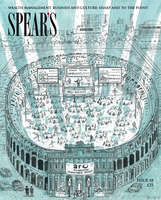
Spear’s is a glossy magazine published quarterly in London for the super rich. At its online site, Spear’s describes itself as “the essential resource for high net worths.”

In one of its recent articles, “The New Blue Bloods,” Spear’s discussed the number of entrepreneurs who sit in the British Parliament. The article opened by invoking the famous made-up line of Watergate:

“Deep Throat’s parking-lot exhortation to Bob Woodward to ‘follow the money’ has long established itself as shorthand for the pursuit of corruption in politics, but in the modern Parliament of the United Kingdom it has come to mean something altogether different.

“The otherwise-indecisive election of May 2010 saw one trend emerge strongly: a surprising number of those new members now sitting on the Government benches are successful entrepreneurs, and it is following the money they have made that has brought them into politics.”

I thought the 2010 election was decisive, that it turned out a Labor government and brought to power a Tory-led coalition.

Anyway. What most interests Media Myth Alert is Spear’s using that famous made-up line, “follow the money.”

The article, however inelegantly written, demonstrates anew the striking versatility of that contrived phrase as well as its impressive international resonance and its too-good-not-to-be-true quality.

“Follow the money” was never spoken by the Watergate source “Deep Throat” in his periodic meetings — sometimes in a parking garage in suburban Virginia — with Bob Woodward of the Washington Post.

The screenwriter William Goldman has taken credit for writing the line into the script of All the President’s Men, the cinematic version of Woodward and Carl Bernstein’s book about their Watergate reporting.

The movie came out in April 1976, less than two years after the Watergate scandal reached a climax with the resignation of President Richard Nixon.

The actor Hal Holbrook gave a stellar performance in All the President’s Men as the shadowy, conflicted, chain-smoking “Deep Throat” source.

“Follow the money” was uttered in a memorable scene of a late-night meeting in the parking garage, in which Holbrook tells the Woodward character, played by Robert Redford:

“I have to do this my way. You tell me what you know, and I’ll confirm. I’ll keep you in the right direction, if I can, but that’s all.

“Just follow the money.”

Holbrook’s lines were delivered with such authority that it’s not difficult to understand how “follow the money” has crossed from the screen to the vernacular, how the phrase has been embraced not only as plausible but as guidance that was genuine and essential.

But as I’ve noted, Watergate was more than a matter of pursuing and understanding a money trail. Rolling up a scandal of Watergate’s dimensions required more than simply following the money.

In the end, it was Nixon’s efforts to obstruct justice by covering up the break-in at headquarters Democratic national committee headquarters in 1972 that brought down his presidency.

As I note in my latest book, Getting It Wrong, the cinema can be a powerful agent in propelling and solidifying media-driven myths. Indeed, All the President’s Men, in its mediacentric focus on the supposed exploits of Woodward and Bernstein, helped inculcate the notion that the reporters’ investigative work was decisive in bringing down Nixon.

I point out in Getting It Wrong that “the cinematic treatment of All the President’s Men placed Woodward and Bernstein at the center of Watergate’s unraveling while denigrating the efforts of investigative agencies such as the FBI.

“The effect was to solidify and elevate the heroic-journalist myth, giving it dramatic power, and sustaining it in the collective memory.”

I further write that the movie “offers an unmistakable assertion of the power and centrality of the press in Nixon’s fall. All the President’s Men allows no other interpretation: It was the work Woodward and Bernstein that set in motion far-reaching effects that brought about the first-ever resignation of a U.S. president.

“And it is a message that has endured. More than thirty-five years later, what remains most vivid, memorable, and accessible about Watergate is the cinematic version of All the President’s Men.”

And a related and intriguing effect has been the tenacity of “follow the money” and the unwitting inclination to treat that pithy, well-delivered line as if it had been advice of decisive importance.

WJC

Recent and related:

‘Follow the money’: Why the made-up Watergate line endures

In Cinematic treatments, Debunking, Furnish the war, Media myths, Washington Post, Watergate myth on February 8, 2011 at 10:32 am

Watergate’s most famous made-up line — “follow the money” — is impressively versatile and doggedly persistent, some 35 years after it was written into a screenplay.

Mark Felt, 'Deep Throat' source

It’s a phrase that has resonance internationally. It’s made its way onto the sports pages and into publications on topics as diverse as secondary education and systems analysis.

And yesterday, the CBS business news site BNET invoked the passage in a post discussing a recent report of the Financial Crisis Inquiry Commission.

The reference to “follow the money” appeared at the end of BNET, as if it were an attempt at a witty ending:

“As Deep Throat said about the Watergate investigation, ‘follow the money.'”

But “follow the money” is really more clichéd than witty.

More important, it was a line not spoken by the stealthy “Deep Throat” source (see photo, above) of the Washington Post during its investigation of the Watergate scandal. The passage never appeared in the newspaper’s Watergate-related coverage.

No, it wasn’t the “Deep Throat” newspaper source who uttered “follow the money.” It was the actor Hal Holbrook, who played “Deep Throat” in the motion picture, All the President’s Men. The movie was based on Bob Woodward and Carl Bernstein’s book about their Watergate reporting for the Post.

Screenwriter William Goldman has taken credit for writing “follow the  money” into the script of All the President’s Men, which came out in 1976, less than two years after Watergate reached a climax with the resignation of President Richard Nixon.

Since 1976, millions of people have repeated the line, oblivious to its derivation and unaware of its falsity.

So why does this made-up line persist? Why is “follow the money” so appealing and versatile?

Like many media myths, “follow the money” is pithy, accessible, and easy-to-remember.

As I write in my latest book, Getting It Wrong, “Turns of phrase that sound too neat and tidy often are too perfect to be true.” William Randolph Hearst’s pithy vow to “furnish the war” with Spain is a particularly telling example.

There are, of course, other explanations for the persistent popularity of “follow the money.” It is, after all, a supposedly famous piece of advice — advice presumably crucial in unraveling Watergate.

The line suggests that rolling up the scandal was accomplished by identifying, pursuing, and reporting on an illicit money trail. Its purported centrality to understanding the Watergate scandal is an important reason why “follow the money” crossed smoothly from the silver screen to the vernacular and lives on.

But the Watergate scandal was more than a matter of a money trail. In the end, Nixon’s attempts to obstruct justice by covering up the break-in at headquarters Democratic national committee headquarters in 1972 brought down his presidency.

Moreover, “follow the money” is adaptable advice. It can be applied in many contexts. As Frances Miller wrote last year in the American Journal of Law and Medicine:

“Follow the money is a versatile phrase; the term can be used as an exhortation, designate a pathway, or denote a lifestyle choice. When it comes to health care, following the money is at least part of the sine qua non for anyone seeking to understand how this complex sector of the U.S. economy has arrived at its present sorry state.”

Similarly, “follow the money” has offered pertinent lessons in systems thinking, a broad-based approach to organizational assessment.

The journal Quality Progress invoked “Deep Throat” and “follow the money” in observing in 2004:

“What Deep Throat did, in effect, was lead Woodward, his colleague Carl Bernstein and the rest of us Watergate observers through an experiential workshop in systems thinking. The general instruction he gave the reporters to unravel the plot was, ‘Follow the money.’

“He assured them the money would connect the dots for them and eventually reveal the conspiracy’s entire ‘circulatory’ system. Identifying resources is one way to sketch in the outlines of some systems.”

That assessment was offered in the year before W. Mark Felt, formerly the second-ranking official at the FBI, identified himself as having been the “Deep Throat” of the Washington Post.

WJC

Recent and related:

‘Follow the money’: As if it were genuine

In Cinematic treatments, Debunking, Media myths, Washington Post, Watergate myth on February 4, 2011 at 8:00 am

I followed a hyperlink the other day to the Winter 2010 number of Rethinking Schools magazine to find that Watergate’s most famous made-up line prominently presented as if it were advice vital to unraveling the scandal.

Nixon resigns, 1974

The opening paragraphs of an article in Rethinking Schools, titled “The Ultimate $uperpower,” read this way:

“In 1972, two young Washington Post reporters were investigating a low-level burglary at the Watergate Hotel and stumbled upon a host of unexplained coincidences and connections that reached to the White House.

“One of the reporters, Bob Woodward, went to a high-level government source and complained: ‘The story is dry. All we’ve got are pieces. We can’t seem to figure out what the puzzle is supposed to look like.’

“To which the infamous Deep Throat replied: ‘Follow the money. Always follow the money.’

“For nearly 40 years, ‘follow the money’ has been an axiom in both journalism and politics—although, as Shakespeare might complain, one ‘more honour’d in the breach than the observance.'”

It may be an axiomatic line — it’s certainly invoked frequently enough — but it wasn’t used in the Washington Post investigation of the Watergate scandal.

Nor, it should be noted, did the Post bring down Richard Nixon’s corrupt presidency.

As I note in my latest book, Getting It Wrong, the contributions of Woodward and Bernstein’s investigative reporting, I write, “were modest, and certainly not decisive” to the outcome of Watergate.

The line “follow the money” was created, for dramatic effect, for the movie version of Woodward and Bernstein’s book about their Watergate reporting, All the President’s Men.

It wasn’t the “Deep Throat” source who uttered the line. It was his cinematic character, played in All the President’s Men by the actor Hal Holbrook.

In a scene showing a late-night meeting in a parking garage, Holbrook tells the Woodward character, played by Robert Redford:

“I have to do this my way. You tell me what you know, and I’ll confirm. I’ll keep you in the right direction, if I can, but that’s all. Just follow the money.”

As an article in the Post last summer pointed out that “the film’s most iconic piece of dialogue — ‘Follow the money’ — was never spoken in real life.”

Indeed, as I’ve noted previously at Media Myth Alert, no Post article or editorial related to Watergate used “follow the money” until June 1981 – nearly seven years after Richard Nixon resigned the presidency and well after the successor who pardoned him, Gerald Ford, had lost reelection. (The article in June 1981 merely noted that the line was used in a fifth grade play.)

“Follow the money” was the creation of screenwriter William Goldman. He has taken credit for working it into the script of All the President’s Men, which came out in 1976.

Since then, millions of people — among them, the author of the Rethinking Schools article — have unwittingly repeated the line, oblivious to its falsity, believing it had been guidance vital in rolling up Watergate.

But what harm is there in that? It’s just a movie, after all. A movie made a long time ago.

The phony but often-quoted line is suggestive of the exaggerations that infuse the cinematic version of All the President’s Men — a version that offers up “a neat, tidy, and vastly simplified account” of the scandal, as I write in Getting It Wrong.

The simplified version of Watergate enables viewers “to sidestep the scandal’s complexity while engaging in an entertaining storyline,” I further note.

Follow the money” also lends the inaccurate suggestion that unraveling Watergate was a matter of identifying, pursuing, and reporting about an illicit money trail. It was more than that.

What ultimately brought down Nixon was indisputable evidence of his order to cover up the signal crime of Watergate, the 1972 break-in at the headquarters of the Democratic National Committee. Nixon’s guilty role in the coverup was captured by audiotape recordings he secretly made of his conversation in the Oval Office of the White House.

Moreover, the movie version of All the President’s Men celebrated and helped firm up what I call the heroic-journalist myth of Watergate. The film’s inescapable but erroneous conclusion is that Woodward and Bernstein were central to unraveling the scandal and to forcing the resignation of a dishonest president.

WJC

Recent and related:

Turning to that fake Watergate line, ‘follow the money’

In Cinematic treatments, Cronkite Moment, Debunking, Media myths, Murrow-McCarthy myth, Washington Post, Watergate myth on January 11, 2011 at 8:56 am

The irresistible but entirely made-up line from the Watergate scandal–the supposed advice to the Washington Post by the anonymous source “Deep Throat” to “follow the money”–made an appearance the other day in Spokane Spokesman-Review.

The newspaper invoked the passage in a commentary about priorities of Washington’s state legislature which yesterday opened its 2011 session.

During the session, the commentary said,  “important state policy will seem to adhere to Deep Throat’s admonition on Watergate: It will follow the money.”

Follow the money.

It’s a wonderfully evocative and appealing line. But it never figured in the Watergate coverage of the Washington Post–a topic of a chapter in my latest book, Getting It Wrong.

As I’ve noted at Media Myth Alert, electronic archives containing issues of the Post show that the phrase “follow the money” never made it into print during the period of the Watergate scandal–June 1, 1972, to October 1, 1974.

Indeed, no Post article or editorial invoked “follow the money” in a Watergate-related context until June 1981–long after Richard Nixon had resigned the presidency, long after the successor who pardoned him, Gerald Ford, had lost reelection. (And the article in June 1981 merely noted the line’s use in a fifth grade play.)

“Follow the money” was, however, spoken in the movie All the President’s Men, by the character who played the anonymous and mysterious source called “Deep Throat.” The film, which dramatized the Watergate reporting of Post reporters Bob Woodward and Carl Bernstein, was based on their non-fiction book by the same title.

The actor Hal Hollbrook played “Deep Throat,” and invoked the phrase rather insistently in All the President’s Men.

In a scene showing a late-night meeting in a parking garage, Holbrook tells the Woodward character, played by Robert Redford:

“I have to do this my way. You tell me what you know, and I’ll confirm. I’ll keep you in the right direction, if I can, but that’s all. Just follow the money.”

The line’s probable author was William Goldman, the screenwriter of All the President’s Men. He told a New York Times columnist in 2005 that he had invented “follow the money” for the movie.

So why bother with all this? What difference does it make if “follow the money” is a made-up line?

For starters, misattributing “follow the money” bolsters a misleading and simplistic interpretation of the sprawling scandal that was Watergate–a scandal that sent nearly 20 of Nixon’s men to jail.

And that interpretation is what I call the heroic-journalist myth of Watergate–that it was the dogged investigative reporting of Woodward and Bernstein that brought down Nixon’s corrupt presidency.

I write in Getting It Wrong that to consider Watergate “through the lens of the heroic-journalist is to abridge and misunderstand the scandal and to indulge in a particularly beguiling media-driven myth.

“The heroic-journalist interpretation,” I add, “minimizes the far more decisive forces that unraveled the scandal and forced Nixon from office.”

And those forces included subpoena-wielding agencies and entities such as the FBI, federal grand juries, special Watergate prosecutors, bipartisan congressional panels, and ultimately the U.S. Supreme Court.

Their contributions to unraveling the Watergate scandal are minimized, and even denigrated, in the cinematic treatment of  All the President’s Men, which came out in 1976 and effectively promoted, and solidified, the heroic-journalist myth.

I point out in Getting It Wrong how media myths like the heroic-journalist meme “tend to minimize or negate complexity in historical events and offer simplistic and misleading interpretations instead. Edward Murrow no more took down Joseph McCarthy than Walter Cronkite swayed a president’s views about the war in Vietnam. Yet those and other media myths endure, because in part they are reductive: They offer unambiguous, easily remembered explanations about complex historic events.”

Speaking of reductive: I’ve meant to share this fine observation from the Financial Times commentary over the weekend that called Woodward and Bernstein’s Watergate coverage the “defining moment” in investigative reporting. The commentary was topic of a couple of recent posts at Media Myth Alert.

The essay, which was titled “The new power of the press,” noted:

“Any journalist not too full of himself to admit it reali[z]es, sooner or later, that the trade demands a facility for simplification that squeezes the most complex events, trends and characters into a limited form with limited, stereotypical narratives.”

So it is with “follow the money”: To invoke the passage is to reach for simplification, to seek an ostensibly telling phrase that can be applied widely, even to the often-dry business of a state legislature.

WJC

Recent and related:

H/T to Kenton Bird for correcting the publication city
of the Spokesman-Review (January 14, 2011).

The elusive ‘defining moment’ in investigative journalism

In Cinematic treatments, Debunking, Media myths, New York Times, Newspapers, Washington Post, Watergate myth on January 9, 2011 at 8:59 am

The Financial Times of London has asserted that the Watergate reporting of the Washington Post stands as the “defining moment” in investigative reporting–a claim I challenged yesterday.

Not the Post's doing

The notion that the Post and its reporters Bob Woodward and Carl Bernstein brought down Richard Nixon’s corrupt presidency in the Watergate scandal is a hardy meme–and is one of 10 prominent media-driven myths I debunk in my latest book, Getting It Wrong.

The heroic-journalist trope has been driven principally the cinematic version of Woodward and Bernstein’s book about their Watergate reporting, All the President’s Men. The movie’s inescapable message was that the work of reporters brought about Nixon’s resignation in 1974.

But even principals at the Post over the years have dismissed the heroic-journalist interpretation of Watergate.

So if not Watergate, what then was the “defining moment” in investigative reporting?

And how’s “defining moment” to be defined, anyway? The essay in the Financial Times didn’t say.

I argue that the “defining moment” in investigative reporting would have to be that collection of reports recognized years afterward as a landmark in journalism, for having exposed corruption or misconduct. The reports would have been so significant as to have changed government policy and/or altered practices among journalists.

Not many media investigations have had such profound and lasting effect. As Jack Shafer of slate.com has correctly noted:

“Too many journalists who wave the investigative banner merely act as the conduit for other people’s probing.” That is, they often feed off government-led investigations. Woodward and Bernstein did so, to an extent.

A review of the Pulitzer Prizes awarded for investigative reporting over the past 25 years turns up impressive and intriguing candidates. But most winners of the Pulitzer for investigative journalism are local and decidedly narrow in focus and impact; none of them meets my definition of “defining moment.”

The Post won the 2008 Pulitzer for public service for its outstanding reports about abuses at the Walter Reed Army hospital. The first installment of the Post series described the venerable institution as “a holding ground for physically and psychologically damaged outpatients.”

It was a shameful scandal that led to much soul-searching, some reforms, and a few broken careers in Army medicine. The series projected a faint whiff of controversy, too, because conditions at Walter Reed had been the subject of somewhat similar reporting two years earlier by salon.com.

The Boston Globe in 2003 won the public service Pulitzer for its reports about sexual abuse among Roman Catholic priests–a series that seems to have stood up well over time and perhaps qualifies as landmark in investigative reporting.

But is it widely recognized and remembered as such? I don’t think so.

A few media historians have identified the so-called “Arizona Project” in the 1970s as landmark investigative journalism.

The Arizona Project brought together reporters and editors from 23 newspapers, in response to a call by the Investigative Reporters and Editors organization to conduct a collaborative inquiry into the bombing death of Don Bolles, an investigative reporter for the Arizona Republic.

The project produced 40 articles about organized crime in Arizona.

David Sloan and Lisa Mullikin Parcell wrote in their book, American Journalism: History, Principles, Practices that the Arizona Project “was a defining moment in the history of investigative reporting–a rare instance when normally competitive journalists set aside their egos, stepped outside their news organizations, and cooperated on a dramatic and startling story.”

But in all, the Arizona Project produced mixed results.

It didn’t lead to a succession of similar joint ventures by journalists. Prominent news organizations such as the Post and the New York Times declined to participate. And critics said the undertaking smacked of a kind of arrogant vigilantism by journalists.

The Financial Times in its essay published Friday mentioned in addition to the Watergate reporting by the Post a few other works of outstanding investigative journalism.

It said the journalistic “exposures such as The Sunday Times on the effects of Thalidomide in the 1970s, The Guardian on bribery scandals in British Aerospace in 2003 and The New Yorker’s revelations about abuses in Iraq’s Abu Ghraib prison in 2004″ have prominent places on “a long roll of honor” in investigative journalism.

Intriguing cases, all. But are they recognized as landmarks? Maybe.

Tarbell (Library of Congress)

How about the muckraking period early in the 20th century–notably Ida Tarbell’s two-year exposé of Standard Oil, published in McClure’s magazine from 1904 to 1906? That work certainly is recognized as memorable, as a landmark, even.

But its effects tend to have been overstated. Tarbell’s work, detailed and searching though it was, did not bring about the breakup of Standard Oil, as is often claimed.

The breakup came years after Tarbell’s series, when the U.S. Supreme Court ruled in 1911 that Standard Oil had violated antitrust laws.

In the end, we have a few candidates but no overwhelming favorite for the “defining moment” in investigative journalism. And perhaps that’s not so surprising.

Like most works of journalism, investigative reporting tends to be time-specific and of transient importance–and short-lived in its effects.

WJC

Recent and related:

The ‘defining moment’ in investigative journalism? Wasn’t Watergate

In Cinematic treatments, Debunking, Media myths, Newspapers, Watergate myth, Yellow Journalism on January 8, 2011 at 9:03 am

The “defining moment” in investigative journalism? Well, that had to be the Watergate reporting of the Washington Post in the early 1970s.

So says Britain’s serious-minded Financial Times in a commentary published yesterday.

The newspaper, however, offered no persuasive evidence for the Post-Watergate claim beyond asserting:

“Investigative reporting has been one of the strongest developments of postwar journalism, illuminating government deceit, corporate fraud and criminal activity. The reporting of Bob Woodward and Carl Bernstein for The Washington Post in the early 1970s on the illegal efforts of Nixon’s White House to destabilise the Democratic party remains its defining moment.”

Was it, really, the “defining moment”? The Post certainly practiced some solid journalism in reporting the unfolding Watergate scandal; its coverage after all won the Pulitzer Prize for public service in 1973.

But the defining moment of investigative reporting?

I argue “no, not at all,” in my latest book, Getting It Wrong, which addresses and debunks 10 prominent media-driven myths–among them the heroic-journalist interpretation of Watergate.

The heroic-journalist meme has it that Woodward and Bernstein’s dogged reporting about the Watergate scandal brought down Richard Nixon’s corrupt presidency. (Nixon resigned in 1974, in the face of certain impeachment and conviction for his role in seeking to coverup the Watergate scandal.)

“The heroic-journalist has become the most familiar storyline of Watergate,” I write in Getting It Wrong. That interpretation, I add, is “ready short-hand for understanding” Watergate, “a proxy for grasping the scandal’s essence while avoiding its forbidding complexity. How the Post and its reporters uncovered Watergate is deeply ingrained in American journalism as one of the field’s most important and self-reverential stories.”

But that doesn’t make it the “defining moment” in investigative reporting.

The reporting by the Post certainly did not bring down Nixon’s presidency. To embrace that interpretation is, I write, “to indulge in a particularly beguiling media-driven myth.

“The heroic-journalist interpretation minimizes the far more decisive forces that unraveled the scandal and forced Nixon from office”–including the collective efforts of such subpoena-wielding agencies and entities as the FBI, federal grand juries, special prosecutors, bipartisan congressional panels, and ultimately the U.S. Supreme Court.

Not even the Post embraces the heroic-journalist interpretation of Watergate.

For example, the newspaper’s publisher during the Watergate period, Katharine Graham, insisted the Post did topple Nixon. In 1997, at a Newseum program marking the 25th anniversary of the break-in at Democratic headquarters–the Watergate’s seminal crime–Graham declared:

“Sometimes people accuse us of bringing down a president, which of course we didn’t do,” she said. “The processes that caused [Nixon’s] resignation were constitutional.”

And in 2005, Michael Getler, then the newspaper’s ombudsman, declared in his column:

“Ultimately, it was not The Post, but the FBI, a Congress acting in bipartisan fashion and the courts that brought down the Nixon administration.”

I note in Getting It Wrong that Woodward and Bernstein “did not uncover defining and decisive elements of the Watergate scandal—the cover-up and the payment of hush money to the Watergate burglars.”

Those aspects of the scandal, Woodward was quoted as saying in 1973, were “held too close. Too few people knew. We couldn’t get that high.”

Nor did they disclose the secret audiotaping system that Nixon had installed at the White House; the recordings of his private conversations about Watergate proved decisive in the scandal’s outcome.

If not Watergate, then what was the “defining moment” in investigative reporting–the genre’s most decisive and lasting contribution?

I’ll take up that question tomorrow at Media Myth Alert.

WJC

Recent and related:

LOC honor stirs references to Watergate myth

In Cinematic treatments, Debunking, Media myths, Newspapers, Washington Post, Watergate myth on December 29, 2010 at 11:31 am

All the President’s Men, the movie that helped solidify the heroic-journalist myth of Watergate, was among 25 American motion pictures chosen for the 2010 National Film Registry, the Library of Congress announced yesterday.

I have no serious quarrel with the LOC’s selection. All the President’s Men is an entertaining and imaginative film, adapted from Bob Woodward and Carl Bernstein’s book by the same title about their Watergate reporting for the Washington Post.

The cinematic version of All the President’s Men came out in 1976, just as the wounds of Watergate were beginning to heal, and has aged quite well.

But as I discuss in my latest book, Getting It Wrong, All the President’s Men “offers an unmistakable assertion of the power and centrality of the press” in the fall of Richard Nixon’s corrupt presidency. The movie promotes the misleading yet beguiling heroic-journalist interpretation of Watergate.

I note in Getting It Wrong that All the President’s Men “allows no other interpretation: It was the work Woodward and Bernstein that set in motion far-reaching effects that brought about the first-ever resignation of a U.S. president.”

And that message that “has endured,” I write. “More than thirty-five years later, what remains most vivid, memorable, and accessible about Watergate is the cinematic version of All the President’s Men.”

Nonetheless, as I discuss in Getting It Wrong, the Watergate reporting of Woodward and Bernstein was at best marginal to the outcome of the scandal, in which 19 men associated with Nixon’s presidency or his 1972 reelection campaign went to jail.

Nixon resigned in 1974, to avoid certain impeachment and conviction for his role in Watergate.

Rolling up a scandal of such dimension, I write in Getting It Wrong, “required the collective if not always the coordinated forces of special prosecutors, federal judges, both houses of Congress, the Supreme Court, as well as the Justice Department and the FBI.”

But the cinematic version of All the President’s Men portrays none of that collective effort. In fact, the movie downplays, even denigrates, the contributions of investigative agencies such as the FBI.

The LOC’s announcement inevitably stirred references in mainstream media and the blogosphere to the heroic-journalist interpretation of Watergate.

The New York Post, for example, said in referring to the movie’s recognition that the work of Woodward and Bernstein “led to the resignation of President Nixon.”

And in a lengthy and glowing post at Houston’s CultureMap blog, a film critic described Woodward and Bernstein as “fearless and relentless seekers of truth who helped to bring down the most corrupt President in U.S. history.”

He also wrote that All the President’s Men stood as “first among equals” among the movies selected for the National Film Registry and added that Woodward and Bernstein “set new standards for American journalism, and inspired thousands of idealists — along with more than a few amoral glory-hounds — to follow in their paths.”

Just what were those “new standards” was left unsaid.

And the work of Woodward and Bernstein may have “inspired thousands of idealists” to enter American journalism, but there’s only anecdotal support for such claims.

And scholarly research has shown that Woodward, Bernstein, and All the President’s Men did not cause enrollments to climb at journalism and mass communication programs at U.S. college and universities.

One such study was financed by the Freedom Forum media foundation and conducted by researchers Lee B. Becker and Joseph D. Graf. They reported in 1995 that “growth in journalism education result[ed] not from specific events as Watergate … but rather to a larger extent from the appeal of the field to women, who ha[d] been attending universities in record numbers. The growth also in part reflect[ed] the applied nature of the field and its link to specific job skills.”

Becker and Graf added:

“There is no evidence … that Watergate had any effect on enrollments.”

A final note about All the President’s Men and the National Film Registry: As the MovieNation blog at the Boston Globe pointed out, “It has to be the only film on the list that includes a scene set in the Library of Congress.”

That scene depicts Woodward and Bernstein at a table in the Library’s spectacular Main Reading Room, sorting through records of materials checked out by the Nixon White House. As they thumb through stacks of cards, the camera pulls away, slowly and upward, toward the Reading Room’s gold-inlaid dome. The effect is to suggest the lonely earnestness of the reporters’ work.

WJC

Recent and related: