W. Joseph Campbell

Archive for the ‘Debunking’ Category

Embedded myths of journalism history

In Cronkite Moment, Debunking, Media myths, Washington Post, Watergate myth on March 15, 2010 at 11:44 am

Popular media myths were in circulation over the weekend at the conference of journalism historians—signaling anew how embedded myths are in American media history and how difficult they can be to uproot.

One presentation at the conference in New York City discussed Walter Cronkite’s standing in collective American memory and in media history. The presentation inevitably invoked the notion that the Cronkite’s on-air commentary in 1968 dissuaded Lyndon Johnson from seeking reelection to the presidency.

Supposedly, Johnson watched Cronkite’s special report on CBS about Vietnam. Cronkite ended the program with by saying the U.S. war effort was “mired in stalemate” and that negotiations eventually might be considered as a way out of the conflict.

Upon hearing Cronkite’s downbeat editorial assessment, Johnson switched off the television and turned to an aide or aides, muttering something to the effect of:

“If I’ve lost Cronkite, I’ve lost Middle America.”

The program’s effect supposedly was so singularly powerful that it also turned public opinion against the war and came to be called the “Cronkite Moment.”

As I’ve noted several times at MediaMythAlert, and as I write in Getting It Wrong, my  forthcoming book about media-driven myths, Johnson did not watch Cronkite’s special report about Vietnam when it aired February 27, 1968.
Johnson in Texas, February 27, 1968

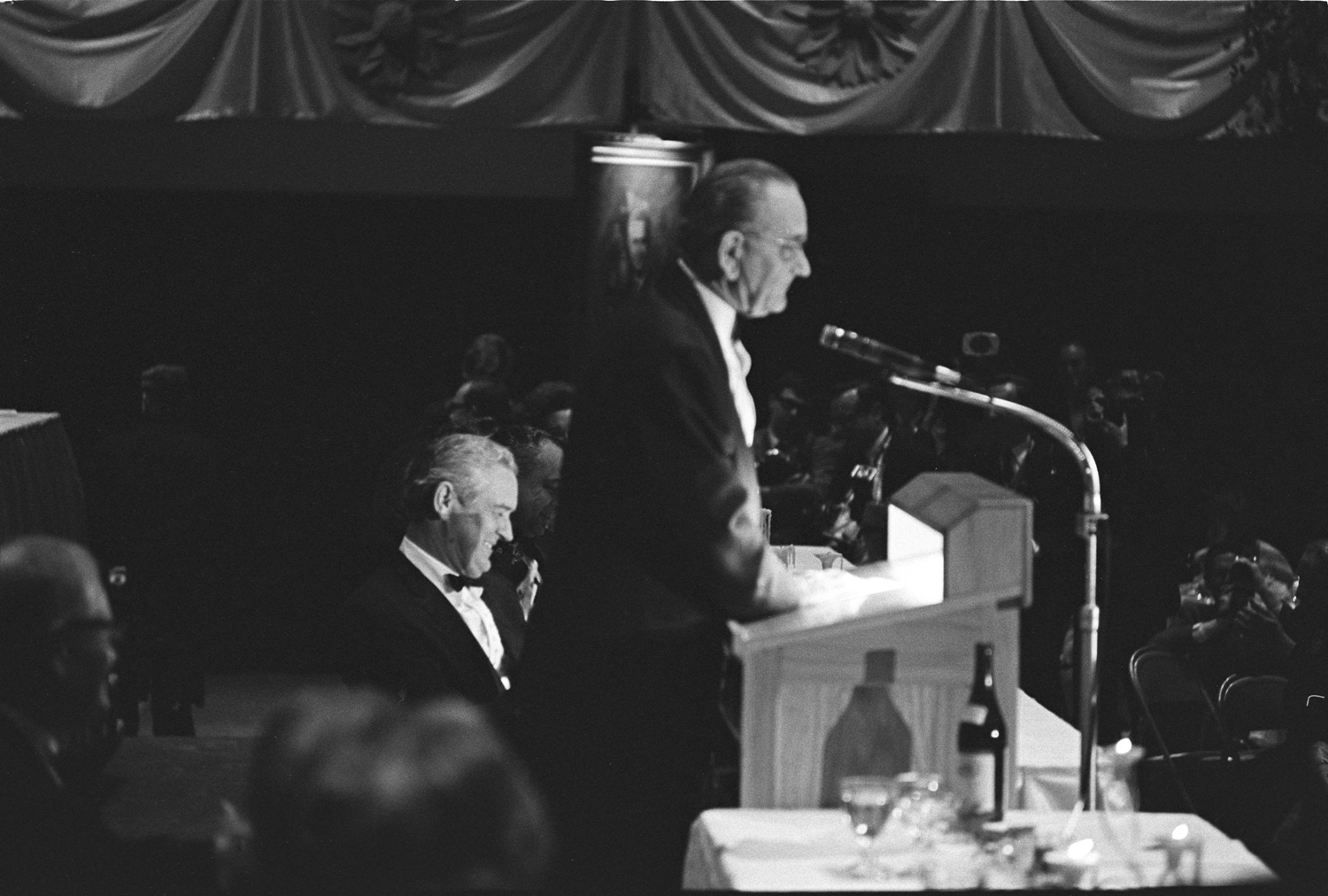
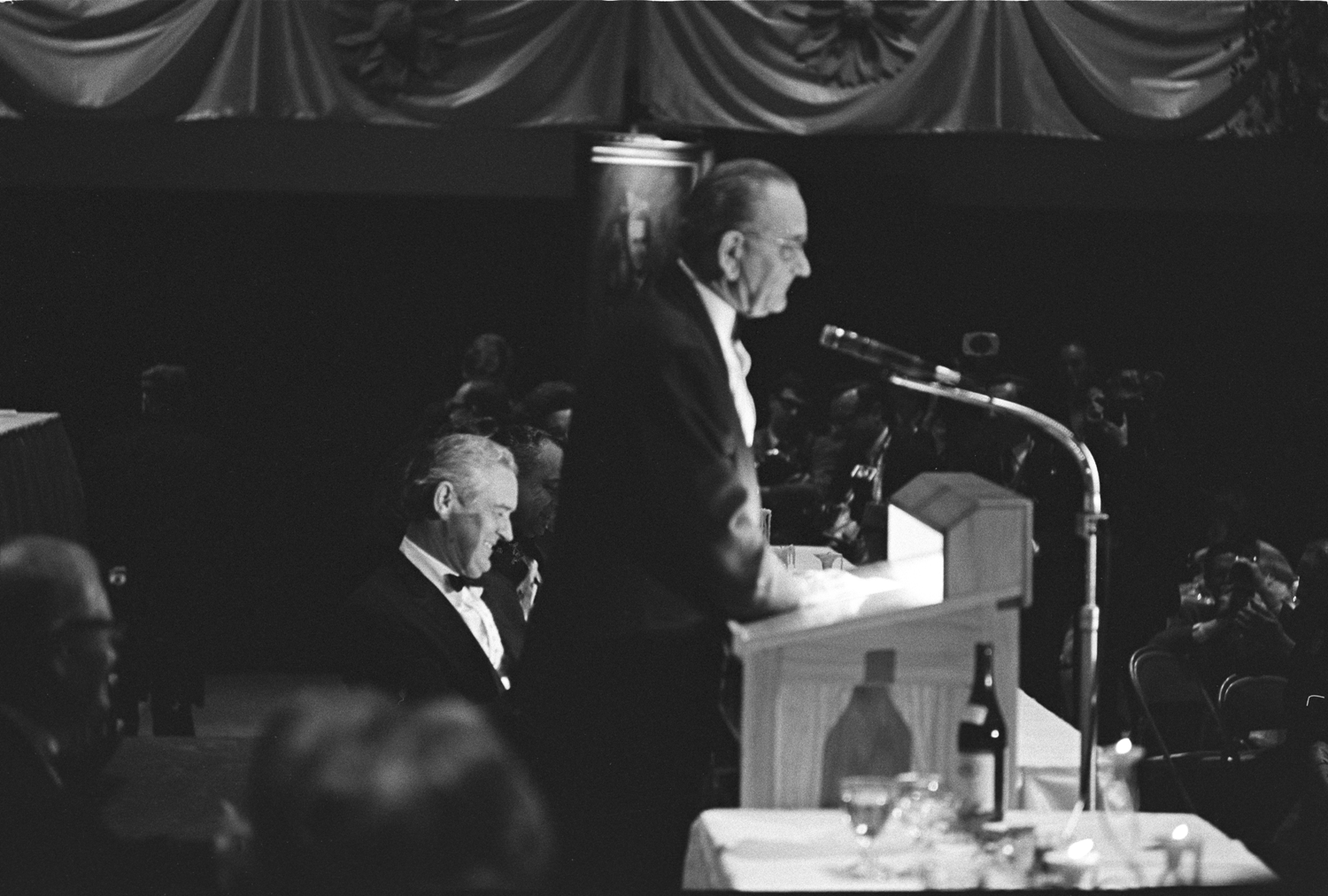
Johnson at the time was not in front of a television set but on the campus of the University of Texas at Austin, at a party marking the 51st birthday of one of his political allies, Governor John Connally.

Nor is there evidence that Johnson later saw the Cronkite program on videotape.

Not only that, but as I discuss in Getting It Wrong, there is scant evidence to suggest that the “Cronkite Moment” had much influence at all on public opinion about the war.

Indeed, polling data “clearly show that American sentiment had begun shifting months before the Cronkite program,” I write in the book, which will be out this summer.

Also heard during conference presentations was what I call the heroic-journalist myth of Watergate–the notion that the reporting of two young reporters for the Washington Post brought down Richard Nixon’s corrupt presidency.

This is a trope that even Post officials have dismissed over the years.

In 2005, for example, the newspaper’s then-ombudsman, Michael Getler, wrote:

“Ultimately, it was not The Post, but the FBI, a Congress acting in bipartisan fashion and the courts that brought down the Nixon administration. They saw Watergate and the attempt to cover it up as a vast abuse of power and attempted corruption of U.S. institutions.”

The heroic-journalist myth is addressed, and debunked, in Getting It Wrong, which says that interpreting Watergate “through the lens of the heroic-journalist is to abridge and misunderstand the scandal and to indulge in a particularly beguiling media-driven myth.”

The conference in New York was Saturday, and was sponsored by the History Division of AEJMC and the American Journalism Historians Association. AEJMC is the acronym for the Association for Education in Journalism and Mass Communication.
WJC

Gleanings from the conference

In Debunking, Jessica Lynch, Media myths, Washington Post on March 14, 2010 at 6:41 pm

My paper about the media myths surrounding the case of Jessica Lynch, the Army private whom the Washington Post lifted from obscurity early in the Iraq War, stirred a fair amount of comment and questions at yesterday’s conference of journalism historians in New York.

That’s hardly surprising given that the paper—which is drawn from a chapter in Getting It Wrong,  my forthcoming book about media-driven myths—challenges the dominant narrative about the Lynch case that the Pentagon supposedly made up the account of her supposed heroics on the battlefield.

Her heroics were reported on the Post‘s front page April 3, 2003.

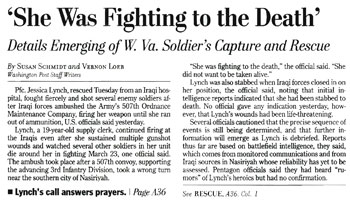
The newspaper said Lynch, then 19, had “fought fiercely” in the ambush of her unit, the 507th Maintenance Company, in Nasiriyah in southeastern Iraq. The Post article cited unnamed “U.S. officials” in reporting that Lynch had “shot several enemy soldiers after Iraqi forces ambushed” her unit, “firing her weapon until she ran out of ammunition.”

One official was quoted anonymously as saying: “‘She was fighting to the death. She did not want to be taken alive.’” Lynch was taken prisoner and nine days later rescued from an Iraqi hospital by a U.S. Special Operations team.

The Post’s story about Lynch’s derring-do was electrifying–and picked up by news organizations around the world.

It soon proved to be almost entirely in error.

Lynch hadn’t “fought fiercely.” She had never fired her weapon.

She suffered shattering injuries in the crash of a Humvee as she and others in the 507th fled the ambush.

Soon enough, though, the dominant narrative about the Lynch saga took shape: The Pentagon had concocted the hero-warrior story in order to boost support back home.

But as I noted during my presentation yesterday, Vernon Loeb, one of the Post reporters who shared a byline on the “Fighting to the Death” story said late in 2003 that the Pentagon was not the source for that report.

I also noted that the Pentagon hardly would have been desperate to boost morale back home: Just before Lynch’s rescue, support for the Iraq War was topping 70 percent, according to opinion polls in the United States.

One of the questions raised at the conference yesterday was: If the military wasn’t the source, then who gave the Post the story?

It’s a fair question, and I noted that Loeb and other reporters on the story have never disclosed their sources, beyond citing the otherwise unidentified “U.S. officials.” I also pointed out that they had reported the hero-warrior story about Lynch from Washington, and that no journalists were with Lynch and her unit during the ambush in Iraq.

Not surprisingly, the crucial element of mistaken identity in the Lynch saga stirred little comment from yesterday’s audience.

The hoopla stirred by the Post‘s story about Lynch had the effect of obscuring the recognition of a real hero of the ambush. He was Sergeant Donald Walters, a cook in the 507th who did fight to the death at Nasiriyah.

As his unit tried to flee the ambush, Walters stayed behind, laying down covering fire. When his ammunition ran out, Walters was captured and, shortly afterward, executed.

But when they became known, Walters’ actions on the battlefield attracted scant interest among the American news media.

The daylong conference was sponsored by the History Division of AEJMC and the American Journalism Historians Association. AEJMC is the acronym for the Association for Education in Journalism and Mass Communication.

WJC

‘Mythmaking in Iraq,’ at a conference in New York

In Debunking, Jessica Lynch, Media myths, Washington Post on March 12, 2010 at 8:47 am

I’ll be in New York tomorrow to present a paper that’s drawn on my forthcoming book, Getting It Wrong.

The venue will be the annual, daylong Joint Journalism Historians Conference; my paper is titled, “‘She Was Fighting to the Death’: Mythmaking in Iraq.”

The paper deconstructs the media-driven myth surrounding the case of Jessica Lynch, the Army private whom the Washington Post lifted from obscurity in early April 2003, in an electrifying account of her supposed heroics at Nasiriyah in the first days of the Iraq War.

The Post’s hero-warrior tale about Lynch, then 19, carried the headline:

“’She was fighting to the death.’”

The Post‘s story was picked up around the world, in a classic case of intermedia agenda-setting (wherein large news organizations set a news agenda for other, smaller outlets).

But the account proved badly in error: Lynch never fired a shot in the fighting at Nasiriyah.

Washington Post's story about Lynch, April 2003

Given that the Post’s hero-warrior narrative proved untrue, it’s scarcely surprising that other suspicions arose about the Lynch saga–namely that Pentagon officials planted the “fighting to the death” report and that the rescue of Lynch by a U.S. special forces team was contrived to boost flagging morale back home.

As I’ll note in my presentation, the Pentagon did little to promote the hero-warrior story about Lynch. Indeed, the Post‘s story was not based on Pentagon sources.

I’ll also point out that U.S. public support for the war was quite high at the time the Lynch case began unfolding.

A national CNN/USA Today/Gallup poll taken of 1,012 American adults in late March  2003—a few days before publication of the Post‘s erroneous report about Lynch—found that 85.5 percent of respondents thought the war effort was going “very well” or “moderately well” for U.S. forces.

The hoopla over Lynch had another, lasting effect: That of obscuring the recognition of an Army sergeant named Donald Walters who did fight to the death at Nasiriyah.

Walters was captured when his ammunition ran out, and executed.

Sgt. Donald Walters

Walters’ heroics were mistakenly attributed to Lynch, apparently because of faulty translation of Iraqi battlefield reports.

But when they became known, Walters’ heroics attracted little more than passing attention in the American news media.

Walters’ mother, Arlene, told me a few years ago that she called the editors of newsweeklies that had placed Lynch’s image on their covers. But “there was never any story about Don,” she said. “I called all these magazines. … They didn’t really care.”

I’ll bet most attendees at tomorrow’s conference never have heard of Sergeant Donald Walters.

The conference is sponsored by the History Division of AEJMC and the American Journalism Historians Association. AEJMC is the Association for Education in Journalism and Mass Communication.
WJC

On laptops in the classroom, and technology-driven myths

In Debunking, Media myths, Washington Post on March 9, 2010 at 10:17 am

The front page of today’s Washington Post offers an interesting look at banning laptops in college classrooms.

The Post reporter spoke with me in researching the story, as I generally do not allow laptop use in my classes, a policy that dates at least five years. Typically, I mention my preference on the first day of class and thereafter rarely receive pushback from students.

And laptops in the classroom have never been mentioned in student evaluations of my teaching.

The Post article notes that wireless Internet connections in the classroom tend to “tempt students away from note-typing to e-mail, blogs, YouTube videos, sports scores, even online gaming–all the diversions of a home computer beamed into the classroom to compete with the professor for the student’s attention.”

True enough: Laptops can be a serious distraction, which is a principal reason I prefer not to see them open in the classroom.

But another factor, one the Post article doesn’t mention, is that of classroom etiquette.

It’s undeniably discourteous to be IM’ing or texting or sending email, especially in discussion-based classes.  It’s rude: Rude to the instructor, and rude to fellow students to be so dismissive of their contributions.

Laptops in classroom also can contribute, on occasion, to the frenzied circulation of technology-driven myths.

The Post article recalled an episode last week in the classroom of Professor Peter W. Tague at Georgetown Law School.

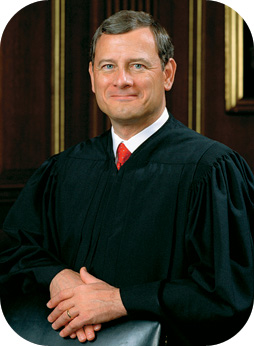
As part of an exercise on the importance of challenging sources who seem authoritative, Tague told the class that the Supreme Court chief justice, John G. Roberts Jr., was retiring.

Roberts

Students, the Post article noted, “promptly spread the news into the blogosphere. Later in class, Tague revealed that the tip was false, part of a lesson” on ascertaining source credibility. By then, however, the Roberts story had spread from students’ laptops to sources throughout the Internet.

The bogus report was posted at RadarOnline, which said Roberts (who is 55) was “seriously considering stepping down.” The DrudgeReport linked to the Radar post and, from there, it went viral–as recounted in delicious detail by the blog Above the Law.

The Radar report soon was knocked down–demonstrating anew how the Internet can rapidly disseminate media-driven rumors, and thoroughly debunk them as well.

The episode certainly confirmed the importance of Tague’s lesson about verifying the credibility of sources. It’s a lesson useful for journalists, too.

As I write in my forthcoming book about media-driven myths, Getting It Wrong, the flawed and exaggerated reporting that characterized the aftermath of Hurricane Katrina in 2005 was driven, in part, by reliance on official sources.

“Usually,” I write in Getting It Wrong, “the imprimatur of officialdom translates to adequate sourcing for journalists.” But in Katrina’s aftermath, the New Orleans mayor, Ray Nagin and the city’s police commissioner, Eddie Compass, “became the very public sources of alarming but false and exaggerated reports about their city and its inhabitants. And they offered their erroneous reports seemingly in all confidence, without equivocation or qualification.”

Nagin and Compass offered some of the most shocking reports about death and depravity in the disaster’s aftermath. Nagin, for example, estimated that the hurricane’s death toll in New Orleans would reach 10,000. And Compass went on the Oprah Winfrey show to tell of “little babies getting raped” at the Superdome, where thousands of evacuees had gathered.

None of it was true.

Journalists covering disaster must rely on public officials for critical details about casualties and relief efforts. But in doing so they can’t afford to shed the skepticism they’re encouraged to develop about the officials and personalities they cover.

WJC

Recalling, and doubting, television’s ‘finest half hour’

In Debunking, Media myths, Murrow-McCarthy myth on March 8, 2010 at 12:18 am

It’ll be 56 years tomorrow since Edward R. Murrow, the “patron saint” of broadcast journalism, took to the small screen to confront Joseph R. McCarthy and decisively end the senator’s witch-hunt for communists in government.

Or so the story goes.

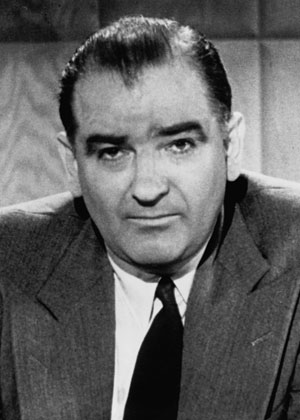
McCarthy in 1954 (Library of Congress)

The occasion was Murrow’s 30-minute See It Now program that aired March 9, 1954, on CBS.

It was a hallowed moment in American journalism, one that supposedly defined the power of television and reaffirmed the courage of Murrow. Among other accolades, the See It Now show on McCarthy has been called television’s “finest half-hour.”

But as I write in my forthcoming book, Getting It Wrong, the notion that Murrow brought down McCarthy is a tenacious though delicious media-driven myth.

Murrow “was very late in confronting McCarthy,” I write in Getting It Wrong and “did so only after other journalists had challenged the senator and his tactics for months, even years.”

I note in the book–which addresses and debunks nine other media-driven myths–that Eric Sevareid, Murrow’s friend and CBS colleague, chafed at the misleading interpretation, pointing out in an interview in 1978 that Murrow’s program “came very late in the day.”

Sevareid was correct.

“Long before the See It Now program, several prominent journalists—including the Washington-based syndicated columnist Drew Pearson—had become persistent and searching critics of McCarthy, his record, and his tactics,” I note in Getting It Wrong.

Pearson wrote the widely read “Washington Merry-Go-Round” column and was the most assertive and persistent of McCarthy’s media critics. He challenged McCarthy’s claims as early as 1950–days after the senator began raising charges that scores of communists and fellow travelers had infiltrated the U.S. State Department.

McCarthy became so angered by Pearson’s searching columns that he threatened the columnist with physical harm–and followed through in December 1950, in a bizarre encounter in the cloakroom of the Sulgrave Club in Washington.

There, McCarthy slapped Pearson, or tried to knee the columnist in the groin. Accounts vary. (Then-Vice President Richard Nixon reportedly broke up the encounter.)

All that came long before Murrow confronted McCarthy on See It Now in 1954.

It’s sometimes argued that Murrow’s most effective contribution was “in mobilizing public opinion against Senator Joe McCarthy.” Such a claim was raised the other day in a post at the online site of the New American magazine.

But in fact, McCarthy’s favorability ratings had been falling for three months before the Murrow program: Factors other than Murrow’s reporting had turned public opinion against McCarthy.

Gallup Poll data show that McCarthy’s appeal crested in December 1953, when 53 percent of Americans said they had a favorable view of him. McCarthy’s favorable rating fell to 40 percent by early January 1954, and to 39 percent in February 1954.

As I write in Getting It Wrong, “it wasn’t as if Americans in early 1954 were hoping for someone to step up and expose McCarthy, or waiting for a white knight like Murrow to tell them about the toxic threat the senator posed.”

Thanks to the work of Pearson and other journalists, they already knew.

WJC

If not for the Post’s digging …

In Debunking, Media myths, Washington Post, Watergate myth on March 7, 2010 at 1:26 pm

Then the Watergate scandal might never have come to light.

Right.

That, in any case, is a variation on the heroic-journalist meme of Watergate, which holds that the work of Bob Woodward and Carl Bernstein, two young reporters for the Washington Post, brought down Richard Nixon and his corrupt presidency.

It’s a claim too sweeping for many to embrace. As I write in my forthcoming book, Getting It Wrong, the heroic-journalist interpretation of Watergate is a media-driven myth–one that even officials at the Post tend to dismiss.

The variation on the heroic-journalist meme holds that the Post‘s persistent reporting during the summer and early fall of 1972–in the early weeks and months of the scandal–helped keep Watergate from fading completely from public view.

The variation theme was invoked yesterday in a column in the New Britain Herald in Connecticut.

The writer says about Watergate and Nixon’s eventual resignation:

“Sure, a federal judge and the members of Congress had something to do with it — Lowell Weicker made his name nationally at the [Senate] Watergate hearings. But without Woodward and Bernstein digging and writing in the Washington Post, it could all have been pushed under the rug.”

Alas, the writer offers no evidence for his speculative conclusion.

Even so, it’s not an uncommon interpretation.

Howard Simons, the Post‘s managing editor during the Watergate period, once said:

“For months we were out there alone on this story. What scared me was that the normal herd instincts of Washington journalism didn’t seem to be operating. … It was months of loneliness.”

Such characterizations are not entirely accurate, however. As I write in Getting It Wrong:

“The Post may well have led other newspapers on the Watergate story—principally was because Watergate at first was a local story, based in Washington, D.C. But rival news organizations such as Los Angeles Times and New York Times did not ignore Watergate as the scandal slowly took dimension during the summer and fall of 1972,” while Nixon’s reelection campaign gathered momentum.

In his classic essay on journalism and Watergate, Edward Jay Epstein noted that the Post and other newspapers were joined during the summer of 1972 by the General Accounting Office, the investigative arm of Congress, and Common Cause, a foundation that seeks accountability in government office, in calling attention to the scandal.

Nixon’s Democratic challenger for the presidency, George McGovern, often invoked Watergate in campaign appearances during the summer and fall of 1972. At one point, McGovern charged that Nixon was “at least indirectly responsible” for the Watergate scandal, which stemmed from a break-in at the headquarters of the Democratic National Committee.

McGovern also termed the break-in “the kind of thing you expect under a person like Hitler.”

So in its reporting on the emergent scandal, the Post in fact was one of several institutions seeking to delineate the reach and contours of Watergate.

Woodward and Bernstein were very much not alone in their digging. And the number of entities and institutions that were digging, even in the early days of the scandal, guaranteed that Watergate could not be “pushed under the rug.”

WJC

<!–[if !mso]> Edward Jay Epstein noted in his classic essay disputing the heroic-journalist myth of Watergate that the Post and other newspapers were joined during the summer of 1972 by the General Accounting Office, the investigative arm of Congress,[i] and Common Cause, a foundation that seeks accountability in government office, in calling attention to the scandal. Within a few days of the Watergate break-in, moreover, the Democratic National Committee filed a civil lawsuit against the Committee for the Reelection of the President, which ultimately compelled statements under oath. And Nixon’s Democratic challenger for the presidency, George McGovern, repeatedly invoked Watergate in his campaign appearances in the summer and fall of 1972. At one point, McGovern charged that Nixon was “at least indirectly responsible” for the Watergate burglary. McGovern also termed the break-in “the kind of thing you expect under a person like Hitler.”[ii] In its reporting on the emergent scandal in the summer and fall of 1972, the Post in fact was one of several institutions seeking to delineate the reach and contours of Watergate.[iii] The Post, that is, was very much not alone.


[i] See Bernard Gwertzman, “G.A.O. Report Asks Justice Inquiry Into G.O.P. Funds,” New York Times (27 August 1972): 1.

[ii] See James M. Naughton, “McGovern Bars Briefings By Kissinger as Unhelpful,” New York Times (16 August 1972): 1, 20.

[iii] Edward Jay Epstein, Between Fact and Fiction: The Problem of Journalism (New York: VintageBooks, 1975), 26. See also, Martin Schram, “Watergate in media legend,” Journal of Commerce (19 June 1997): 6A. Schram wrote: “Even in the early days [of the Watergate scandal], the Post was not always the Lone Ranger we now remember.

Yet again: Watergate and the Washington Post

In Debunking, Media myths, Newspapers, Washington Post, Watergate myth on March 4, 2010 at 7:00 am

Bob Woodward, he of the Washington Post and Watergate fame, is to give a talk today in Hartford, Connectict about “evolution of the media, politics, health care and the economy,” according to the city’s newspaper, the Courant.

In an article about the visit, the Courant (where I once worked) indulged in one of American journalism’s most persistent and delicious myths, declaring that Woodward’s “reporting of the Watergate scandal brought down a president and reshaped the journalism industry.”

Of course, the Courant article–which is mostly a Q-and-A with Woodward–leaves it at that. It never explains how the Post‘s reporting on Watergate accomplished either feat–bringing down Richard Nixon’s corrupt presidency let alone reshaping the journalism industry.

As I write in Getting It Wrong, my forthcoming book about media-driven myths, the Post‘s reporting on Watergate had only a marginal effect on the outcome of the Watergate scandal.

Indeed, Nixon likely would have completed his term if not for the secret recordings of many of his conversations in the Oval Office, conversations that captured his guilty role in authorizing a coverup of the Watergate scandal.

It was the Senate Select Committee on Watergate–not Woodward and his reporting partner Carl Bernstein–that uncovered and disclosed the existence of the White House tapes, the evidence most crucial in the scandal.

The special federal prosecutors on Watergate (one of whom Nixon ordered fired) pressed for the release of the tapes. And the U.S. Supreme Court unanimously ordered Nixon to turn over the recordings subpoenaed by the special prosecutor.

When Nixon complied, his presidency was all but over.

He resigned August 9, 1974.

As Stanley I. Kutler, a leading historian of Watergate, has written:

“The fact is, an incredible array of powerful actors all converged on Nixon at once—the FBI, prosecutors, congressional investigators, the judicial system.”

Amid this tableau of subpoena-wielding authorities, the contributions of Woodward and Bernstein were modest, and certainly not decisive, I write in Getting It Wrong, adding:

“Principals at the Post have acknowledged as much. Katharine Graham, the newspaper’s doughty publisher [during the Watergate period], often insisted the Post did not topple Nixon.

“‘Sometimes people accuse us of bringing down a president, which of course we didn’t do,’ Graham said in 1997, at a program marking the scandal’s twenty-fifth anniversary.

“’The processes that caused [Nixon’s] resignation were constitutional,’” she said.

Indeed.

WJC

Blithely invoking the Murrow-McCarthy myth

In Debunking, Media myths, Murrow-McCarthy myth, Watergate myth on March 3, 2010 at 11:15 am

It’s fairly remarkable how blithely and routinely media myths can be invoked.

A reminder of that appeared in a column posted today in the Times-News, a newspaper in Twin Falls, Idaho. The column, which ruminated about the use of middle initials, opened this way:

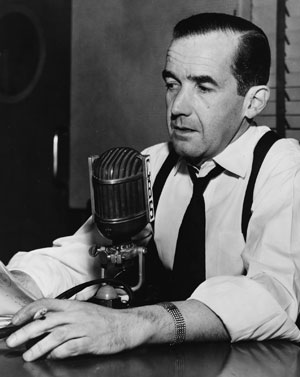
Murrow in 1954 (Library of Congress)

“When I was a young journalist, the most revered person in my profession was Edward R. Murrow, the CBS News reporter who brought down Sen. Joseph McCarthy.”

Brought down McCarthy.

It’s a story as famous and revered in American journalism as the notion that intrepid young reporters for the Washington Post brought down the corrupt presidency of Richard Nixon.

Both tales are exaggerated.

And both are media-driven myths that are examined in my forthcoming book, Getting It Wrong.

Murrow was a leading and ultimately a legendary figure in American broadcasting who in the 1950s  stood up to McCarthy, the Red-baiting junior senator from Wisconsin, when, supposedly, no one else would, or dared. In so doing, the story goes, Murrow brought an abrupt end to senator’s witchhunt for communists in the U.S. government.

The vehicle for Murrow’s brave exposé was his 30-minute television program, See It Now, which aired on CBS.

As I write in Getting It Wrong:

“Long before the See It Now program, several prominent journalists—including the Washington-based syndicated columnist Drew Pearson—had become persistent and searching critics of McCarthy, his record, and his tactics.”

Pearson, who wrote the widely published “Washington Merry-Go-Round” column, was the most assertive and, ultimately, acerbic of McCarthy’s media critics. He challenged McCarthy’s claims as early as 1950, soon after the senator began charging that communists had infiltrated the U.S. State Department.

McCarthy became so angered by Pearson’s searching columns that he threatened the columnist with physical harm–and followed through in December 1950 in the cloakroom of the exclusive Sulgrave Club on DuPont Circle in Washington. There, he slapped or tried to knee Pearson in the groin.

All that came long before Murrow confronted McCarthy on See It Now in 1954.

By 1954, I note in Getting It Wrong, “it wasn’t as if Americans … were hoping for someone to step up and expose McCarthy, or waiting for a white knight like Murrow to tell them about the toxic threat the senator posed.”

Pearson and others had been doing so for years.

WJC

Shoe leather, Watergate, and All the President’s Men

In Cinematic treatments, Debunking, Media myths, Washington Post, Watergate myth on February 28, 2010 at 2:36 pm

The heroic-journalist tale of Watergate–that two intrepid young reporters for the Washington Post brought down Richard Nixon’s corrupt presidency–is one of the most appealing and self-reverential stories in American media history.

It’s also a media-driven myth, one of 10 addressed in my forthcoming book, Getting It Wrong.

As I note in Getting It Wrong, an important factor for the tenacity of the heroic-journalist myth lies in its cinematic treatment. The media-centric storyline of Watergate was cemented by the film All the President’s Men, which came out to much acclaim in April 1976, 20 months after Nixon’s resignation.

An item posted the other day at the Politics Daily site fondly recalled All the President’s Men, saying the movie “about a bygone era” harkens to the “glory days of newspapers.”

The writer also indulged in the heroic-journalist myth, saying that the Post reporters “who brought down a sitting president” did so “with nothing more than shoe leather, determination, guts and a passion for the truth.”

It’s a wonderful story of journalists triumphant. But it’s exaggerated.

Even writers and officials at the Post have tried over the years to make clear that the newspaper and its reporters did not bring down Richard Nixon.

Howard Kurtz, the newspaper’s media writer, wrote in 2005, for example:

“Despite the mythology, The Post didn’t force Richard Nixon from office—there were also two special prosecutors, a determined judge, bipartisan House and Senate committees, the belated honesty of [former White House lawyer] John Dean and those infamous White House tapes.”

As I note in Getting It Wrong, “Nixon likely would have served out his term if not for the audiotape recordings he secretly made of most conversations in the Oval Office of the White House.

“Only when compelled by the Supreme Court [in 1974] did Nixon surrender those recordings, which captured him plotting the cover-up and authorizing payments of thousands of dollars in hush money.”

He resigned the presidency about two weeks later.

The cinematic version of All the President’s Men, however, placed Post reporters Bob Woodward and Carl Bernstein at the center of the unraveling of Watergate, while downplaying or dismissing the efforts of investigative agencies such as the FBI.

“The effect,” I write, “was to solidify and elevate the heroic-journalist myth, giving it dramatic power, and sustaining it in the collective memory.”

The movie helped make the heroic-journalist interpretation of Watergate vivid, memorable, accessible, and central.

After all, no other Watergate-related movie has retained such an appeal, or has likely been seen by as many people as All the President’s Men.

WJC

Recalling the mythical ‘Cronkite Moment’

In Cronkite Moment, Debunking, Media myths on February 26, 2010 at 6:09 am

Tomorrow is the anniversary of the so-called “Cronkite Moment,” which is widely believed to have been an exceptionally powerful and decisive moment in American journalism.

The “Cronkite Moment” occurred February 27, 1968, when CBS News Anchor Walter Cronkite declared on air that the U.S. war effort in Vietnam was mired in stalemate and suggested negotiations as a way to extricate the country from the conflict.

At the White House that night, President Lyndon Johnson supposedly watched the Cronkite program, a special report about Vietnam in the aftermath of the surprise Tet offensive. Upon hearing Cronkite’s pessimistic assessment, Johnson is said to have snapped off the television set and muttered to an aide, or aides:

“If I’ve lost Cronkite, I’ve lost Middle America.”

Or words to that effect.

With Cronkite having turned against the war, the Johnson White House supposedly reeled. And at the end of March 1968, the president announced he would not seek reelection.

It is one of the great stories American journalism tells about itself, a moment when the power of television was trained on foreign policy to make a difference in an unpopular and faraway war.

More accurately, though, it’s one of American journalism’s most enduring and appealing media-driven myths.

As I’ve noted on a number of occasions at Media Myth Alert, and as I write in Getting It Wrong, my forthcoming book on media-driven myths,  Johnson did not watch the Cronkite program on Vietnam when it aired that night 42 years ago.

The president that night was in Austin, Texas, at the 51st birthday party of a political ally, Governor John Connally.

About the time Cronkite intoned his downbeat, “mired in stalemate” assessment, Johnson was offering light-hearted banter about Connally’s age, saying:

Johnson in Texas, February 27, 1968

“Today you are 51, John. That is the magic number that every man of politics prays for—a simple majority. Throughout the years we have worked long and hard—and I might say late—trying to maintain it, too.”

Earlier in the day, Johnson had delivered a rousing speech in Dallas, in which he characterized the U.S. war effort in Churchillian terms.

“There will be blood, sweat and tears shed,” he said, adding:  “I do not believe that America will ever buckle” in pursuit of its objectives in Vietnam.

Even if the president had seen the Cronkite program, it is difficult to imagine how his opinion could have swung so abruptly, from a vigorous defense of the war effort to resignation and despair.

Casting further doubt on the “Cronkite Moment” is uncertainty about what, exactly, Johnson supposedly said in reaction to Cronkite’s editorial comments about the war.

The most common version has him saying: “If I’ve lost Cronkite, I’ve lost Middle America.”

But another version is: “I’ve lost Cronkite, I’ve lost the country.”

Yet another version has it this way: “If I’ve lost Cronkite, I’ve lost the American people.”

Still another version is: “If I’ve lost Cronkite, I’ve lost the war.”

And another goes: “If we lose Cronkite, we lose America.”

And, unaccountably: “If I’ve lost Cronkite, I’ve lost the middle west.”

Version variability of  such magnitude signals implausibility.

So why, 42 years on, does it matter whether the “Cronkite Moment” is a myth?

As I write in Getting It Wrong, “Seldom, if ever, do the news media exert truly decisive influences in decisions to go to war or to seek negotiated peace.

“Such decisions typically are driven by forces and factors well beyond the news media’s ability to shape, alter, or significantly influence.”

And so it was with the “Cronkite Moment.”

WJC