W. Joseph Campbell

Archive for the ‘Jessica Lynch’ Category

False narrative about Jessica Lynch and Pentagon surfaces anew

In Debunking, Jessica Lynch, Media myths, Washington Post on May 6, 2011 at 7:11 am

As the Obama Administration has made a hash of how terror leader Osama bin Laden was taken down, news outlets have blithely and misleadingly invoked false narrative about Jessica Lynch as a point of comparison.

Origin of the hero-warrior tale

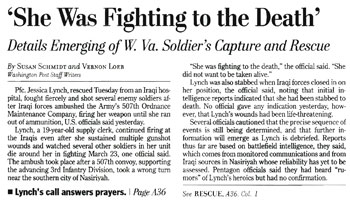
The false narrative has it that the Pentagon concocted a tale about Lynch’s battlefield heroics in Iraq in 2003, fed it somehow to the Washington Post which spread the electrifying but bogus story around the world (see left).

In reality, the Pentagon treated the Lynch hero-warrior tale as if it were radioactive. The Post’s sensational story about Lynch, which was published April 3, 2003, indicated as much, referring to “Pentagon officials” as saying “they had heard ‘rumors’ of Lynch’s heroics but had had no confirmation.”

One of the Post reporters whose byline appeared on that story has stated unequivocally the Pentagon was not the newspaper’s source for the account of Lynch’s supposed derring-do.

“Our sources for that story were not Pentagon sources,” the reporter, Vernon Loeb, said in an interview on National Public Radio in late 2003.

Loeb, who then was the Post’s defense correspondent and now is the newspaper’s top editor for local news, also said in the NPR interview:

“I just didn’t see the Pentagon trying to create a hero where there was none. I mean …they never showed any interest in doing that, to me.”

Despite Loeb’s exculpatory statements, the false narrative that the Pentagon concocted the story about Lynch lives on — and has been repeated this week by the likes of filmmaker Michael Moore.

“The government, especially the Pentagon,” Moore has been quoted as saying, “has a poor track record of telling the truth, starting with Jessica Lynch.”

Moore has been on Twitter this week, making similarly unsubstantiated claims about the Pentagon.

The Guardian in  London also has offered unsupported claims about the Pentagon’s role in the Lynch hero-warrior tale.

The newspaper yesterday noted that “the White House has been busy messing up the aftermath [of bin Laden’s killing] with a display of PR ineptness that is remarkable.”

Notable among the administration’s flubs and mixed messages about bin Laden was the account, since repudiated, that the mastermind of the terrorist attacks of September 11, 2001, hid behind one of his wives before he was fatally shot by the U.S. commando team.

The Guardian article also declared:

“Whether it’s Islamists hoping Bin Laden is not dead or conservatives wondering if the facts are being manipulated in the way Pentagon officials did over Private Jessica Lynch during the Iraq war, this is precisely the opposite of what the Oval Office wanted.”

The Associated Press wire service has turned to the false narrative as well, asserting in a dispatch yesterday: “Initial military accounts of Jessica Lynch’s resistance to her captors were part of an effort to rally public support for the war, and were factually wrong.”

As I note in Getting It Wrong, making up the hero-warrior story to boost support for the conflict would have been nonsense: At the time, Americans in overwhelming numbers said they backed the war in Iraq.

It’s quite remarkable indeed how the singular role of the Post in reporting and spreading the bogus story about Lynch has receded so thoroughly in favor of the false narrative that blames the Pentagon for having made it all up.

Timothy Egan, writing at the New York Times’ “Opinionator” blog, revisited the Lynch case yesterday without once mentioning the Washington Post.

The Pentagon, after all, is a convenient foil and as I note in my latest book, Getting It Wrong, the bogus tale about Lynch corresponds well to the curdled popular view about the war in Iraq.

The Post, moreover, has never adequately explained how it got the Lynch story so thoroughly wrong.
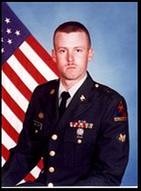
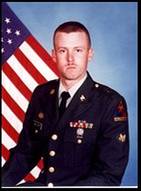
Sgt. Walters

Nor has the Post ever had much to say about the American soldier who probably did perform the heroics that were misattributed to Lynch. His name was Donald Walters, a cook-sergeant in Lynch’s unit, which came under attack in Nasiriyah, in southern Iraq, on March 23, 2003.

Walters put down covering fire that allowed his comrades to attempt to flee.

Walters is believed to have fought until he was out of ammunition. He was overwhelmed, taken prisoner, and executed soon afterward.

A measure of the Post’s indifference about Walters can be found in searching a database of articles that the newspaper has published since 2003.  In that time, the Post has carried just two articles that even mention Donald Walters.

WJC

Recent and related:

False parallels: bin Laden slaying and bogus tale about Jessica Lynch

In Debunking, Jessica Lynch, Media myths, Washington Post on May 5, 2011 at 8:00 am

Lynch: No hero-warrior

The discrepancies and shifting details about the takedown of terror mastermind Osama bin Laden have reminded some commentators of the case of Jessica Lynch and the bogus tale of her battlefield heroics in the Iraq War.

Among those invoking such parallels was Ben Smith who, at a Politico blog the other day, examined the erroneous report that bin Laden used his wife as a human shield before being fatally shot during the U.S. commando raid on his lair in Pakistan.

“Every American war has been defined, in no small part, by mythmaking,” Smith wrote. “It was at its most egregious in the cases of Jessica Lynch and Pat Tillman, when the military establishment seemed, more or less, to have fed the press lies.”

The Guardian newspaper in London also brought up the Lynch case, in an article posted yesterday that carried the headline, “US military’s history of backtracking on initial reports.”

The Guardian said of Lynch: “Despite being badly wounded when her company came under attack near the town of Nasiriyah in March [2003], the soldier kept her finger on the trigger of her gun until her ammunition ran out. … The only problem with the official account is that it was untrue.”

But parallels between the Lynch and bin Laden cases are inexact and misleading. The heroics attributed to Jessica Lynch weren’t “lies” spread by the U.S. military; the account of her battlefield derring-do was no “official account,” either.

Far from it.

As I discuss in my media-mythbusting book, Getting It Wrong, the tale about Lynch was thrust into the public domain prominently and exclusively by the Washington Post.

The Post published an electrifying story on April 3, 2003, that declared that Lynch had been “‘fighting to the death'” when she was overpowered by Iraqi attackers  and taken prisoner.

The Post reported that Lynch, a supply clerk in the 507th Maintenance Unit, “continued firing at the Iraqis even after she sustained multiple gunshot wounds and watched several other soldiers in her unit die around her in fighting” at Nasiriyah.

The newspaper also said Lynch was “stabbed when Iraqi forces closed in on her position.”

But the Post’s dramatic hero-warrior tale was utterly wrong: Lynch never fired a shot in the fighting at Nasiriyah: Her rifle jammed.

She was neither shot nor stabbed; she suffered severe injuries in the crash of her Humvee as it sped away from the ambush.

As for sources, the Post vaguely cited “U.S. officials” who otherwise went unidentified. (And as I’ve said at Media Myth Alert, the Post has an obligation to the public to set the record straight by disclosing the identity of those sources.)

We do know that the Post’s sources were not Pentagon officials.

We know this from Vernon Loeb, one of the Post reporters who shared a byline on the “‘fighting to the death'” tale about Lynch.

As I discuss in Getting It Wrong, Loeb went on National Public Radio’s Fresh Air program in December 2003 and made clear that the Post’s sources weren’t Pentagon officials.

Loeb said: “They wouldn’t say anything about Jessica Lynch.”

He dismissed the interviewer’s suggestion that the Post’s “fighting to the death” report was the Pentagon’s result of clever and cynical manipulation.

“I just didn’t see the Pentagon trying to create a hero where there was none,” Loeb said. “I mean …they never showed any interest in doing that, to me.”

He also said: “Our sources for that story were not Pentagon sources.”

Moreover, the then Defense Department spokeswoman, Victoria Clarke, was quoted by the Associated Press news agency as saying in June 2003: “We were downplaying [the Lynch hero-warrior story]. We weren’t hyping it.”

The exaggerated tale about Lynch wasn’t a story that the Pentagon concocted, pushed, or embraced. It wasn’t an “official account” by any means.

It was solely the product of the Post’s over-eager journalism, an episode in flawed reporting for which the newspaper has never fully accounted.

Indeed, the Post has tried to dodge responsibility for its erroneous tale about Lynch.

In a follow-up story about Lynch published in June 2003, the Post had the temerity to fault the U.S. military and the administration of President George Bush for failing to correct the error for which the Post was responsible.

“Neither the Pentagon nor the White House publicly dispelled the more romanticized initial version of her capture,” the Post said, “helping to foster the myth surrounding Lynch and fuel accusations that the Bush administration stage-managed parts of Lynch’s story.”

It was, I write in Getting It Wrong, “an astounding assertion: The Post, alone, was responsible for propagating the ‘romanticized initial version’ that created the hero-warrior myth. To claim the Pentagon and the White House should have done more to dispel that report was, in short, exceedingly brazen.”

In his 2005 book, Misunderstimated, Bill Sammon, now a Fox News executive in Washington, D.C., said the Post’s attempt at blame-shifting represented “a new low, even for the shameless American press.”

He added:

“One of the most influential newspapers in the nation was now holding the Bush Administration responsible for correcting the paper’s own gross journalistic misdeeds. Instead of just coming clean and admitting its initial story was utterly bogus, the Post called it ‘romanticized,’ as if someone other than its own reporters had done the romanticizing.”

Appalling.

WJC

Recent and related:

A cautionary note on early coverage of dramatic events

In Debunking, Hurricane Katrina, Jessica Lynch, Media myths, Washington Post on May 3, 2011 at 8:17 am

Amid yesterday’s jubilation about the slaying of terror leader Osama bin Laden, the media critic at slate.com, Jack Shafer, posted a timely and telling reminder that initial news reports of major events seldom are reliable.

This is especially so, I would add, in covering disasters: The early accounts almost always are erroneous.

Got it wrong in New Orleans

The coverage of Hurricane Katrina’s aftermath, which I discuss in my latest book, Getting It Wrong, is instructive: News reports about the surreal violence that the storm supposedly unleashed on New Orleans in late summer 2005 were highly exaggerated and wildly inaccurate.

“Katrina’s aftermath was no high, heroic moment in American journalism,” I write, adding, “On crucial details, journalists erred badly, and got it wrong. ”

In his column about the coverage of the killing of bin Laden, Shafer noted that “the fog of breaking news almost always cloaks the truth, especially when the deadline news event is a super-top-secret military operation conducted by commandos halfway around the world and the sources of the sexiest information go unnamed.”

He pointed out the wide variance in the early reports about bin Laden’s violent end, noting such discrepancies as these:

  • ABC News: “He was shot in the head and then shot again to make sure he was dead.”
  • The Atlantic: “One of the dead was Osama bin Laden, done in by a double tap—boom, boom—to the left side of his face.”
  • The London Sun: “Elite troops opened fire when the 9/11 terror chief refused to surrender, hitting him in the head and chest. …”
  • MSNBC.com: “[H]e was shot in the left eye.”

Shafer added: “At some point, after reporters have time to independently report the events behind the raid, we’ll have a verified picture of who did what when instead of the official versions we’re reading and viewing today. Until then, it’s caveat emptor for news consumers.”

Journalists would do well to offer such reminders more frequently than they do.

Cautionary notes ought to be routine, as should specific reference to the challenges of reporting military operations from afar.

Such distance-reporting, after all, can give rise to errors that are both memorable and acutely embarrassingly. The Jessica Lynch case, which unfolded during the early days of the Iraq War in 2003 and which is discussed in Getting It Wrong, is memorable in that regard.

The Washington Post, drawing on sources it has never identified (but should), offered the world a sensational report about the battlefield heroics of Lynch, then a 19-year-old Army supply clerk who never expected to see combat.

Elements of her units fell under ambush in Nasiriyah, in southern Iraq on March 23, 2003.

According to the Post’s front-page article — which was mostly reported by journalists based in Washington — Lynch “continued firing at the Iraqis even after she sustained multiple gunshot wounds and watched several other soldiers in her unit die around her in fighting” at Nasiriyah.

The newspaper also said Lynch was “stabbed when Iraqi forces closed in on her position.”

The Post’s sensational report about Lynch was picked up by news outlets around the country and the world. But it was wrong, utterly wrong.

Lynch never fired a shot at Nasiriyah. Her rifle jammed during the ambush. She suffered shattering injuries when a rocket-propelled grenade struck her Humvee, causing the vehicle to crash.

But she was neither shot nor stabbed.

Lynch was taken prisoner and treated at an Iraqi hospital where she lingered near death before being rescued on April 1, 2003, by a U.S. special operations team.

The Post report offers another reminder about covering combat — the passage of time is no guarantee of accuracy in reporting. The sensational account about Lynch appeared on the Post’s front page of April 3, 2003, 11 days after the ambush at Nasiriyah.

WJC

Many thanks to Instapundit
Glenn Reynolds for linking to this post

Recent and related:

CounterPunch embraces bogus Lynch narrative

In Debunking, Jessica Lynch, Media myths, Washington Post on April 30, 2011 at 7:46 am

Private Lynch, before Iraq

The Pentagon concocted a tale about the battlefield heroics of Jessica Lynch, a waiflike Army private then 19-years-old, and fed it to the news media in order to boost popular support for the Iraq War.

Voilá,  the dominant popular narrative about Lynch, the conflict’s single most famous soldier.

CounterPunch, a muckraking newsletter, embraced that bogus narrative yesterday in a lengthy essay posted online about the supposed effects of careerism in the U.S. military.

In invoking the Lynch case, CounterPunch asserted:

“The conflicts in Iraq and Afghanistan … have severely tested and frequently compromised the U.S. officer corps’ traditional values of duty, honor and country. This is obvious in the selective careerist- and agenda-ridden assertions to portray a false picture of events to the American public about the Iraq and Afghanistan wars.”

Several examples followed, including this claim about Lynch: “Americans were told Army Spc. Jessica Lynch fired her M16 rifle until she ran out of bullets and was captured. It was a lie.”

In fact, that statement offers “a false picture of events”: The Pentagon did not put out the story about Lynch’s supposed derring-do in the ambush of her unit at Nasiriyah, in southern Iraq, in the first days of the conflict.

As I point out in my media-mythbusting book, Getting It Wrong, which came out last year, the Pentagon was not the source of the false narrative about Lynch.

It was the Washington Post that thrust the hero-warrior tale about Lynch into the public domain.

The Post did so April 3, 2003, in a sensational front-page article that appeared beneath the headline:

“‘She was fighting to the death.'”

The Post’s report said that Lynch, a supply clerk in the 507th Maintenance Unit, “continued firing at the Iraqis even after she sustained multiple gunshot wounds and watched several other soldiers in her unit die around her in fighting” at Nasiriyah.

The newspaper also said Lynch was “stabbed when Iraqi forces closed in on her position.”

The Post cited as sources “U.S. officials” whom it otherwise has never identified. As it should, to help dismantle the false narrative.

The Post’s sensational report about Lynch was picked up by news outlets around the country and the world.

For example, a columnist for the Hartford Courant newspaper in Connecticut suggested that Lynch was destined to join the likes of Audie Murphy and Alvin York in the gallery of improbable American war heroes. Lynch, the columnist noted, “does share qualities and background with her illustrious predecessors. Like them, she is from rural America, daughter of a truck driver, raised in a West Virginia tinroofed house surrounded by fields and woods.”

But the hero-warrior story about Lynch was thoroughly wrong.

Lynch never fired a shot at Nasiriyah. Her rifle jammed during the ambush. She suffered shattering injuries when a rocket-propelled grenade struck her Humvee, causing the vehicle to crash.

But she was neither shot nor stabbed.

Lynch was taken prisoner and treated at an Iraqi hospital where she lingered near death until rescued April 1, 2003, by a U.S. special operations team.

Meanwhile, the real hero of Nasiriyah, an Army cook-sergeant named Donald Walters, has received nothing that was remotely comparable to the attention given the false story about Lynch and her purported derring-do.

Walters is believed to have fought to his last bullet at Nasiriyah before being take prisoner by Iraqi irregulars. Soon afterward, he was executed.

It’s quite probable that Walters’ heroism was misattributed to Lynch.

And how do we know the Pentagon was not the source for the Washington Post’s bogus Lynch story?

We know from Vernon Loeb, who shared a byline with Susan Schmidt on the “‘Fighting to the Death'” article.

Loeb, now the Post’s top editor for local news, said in December 2003 on NPR’s  Fresh Air show program that he “could never get anybody from the Pentagon to talk about” the Lynch case.

“They wouldn’t say anything about Jessica Lynch,” he said.

“I just didn’t see the Pentagon trying to create a hero where there was none,” he added. “I mean …they never showed any interest in doing that, to me.”

Loeb also said:

“Our sources for that story were not Pentagon sources.”

He described them as “some really good intelligence sources” in Washington, D.C. , and added:

“We wrote a story that turned out to be wrong because intelligence information we were given was wrong. That happens quite often.”

Loeb on another occasion was quoted by the New York Times as saying:

“Far from promoting stories about Lynch, the military didn’t like the story.”

Despite Loeb’s insistent exculpatory remarks, the false narrative that the Pentagon made up the story about Lynch lives on, in large measure because it corresponds so well to the view that the war in Iraq was a thoroughly botched and dodgy affair.

WJC

Many thanks to Little Miss Attila
for linking to this post

Recent and related:

Time for WaPo to disclose sources on bogus Lynch story

In Anniversaries, Debunking, Jessica Lynch, Media myths, Washington Post on April 3, 2011 at 7:16 am

It may border on sacrilege to ask journalists to divulge confidential sources.

Private Lynch

In the still-murky case of Private Jessica Lynch, it’s an appropriate and relevant request.

Eight years ago today, the Washington Post published an electrifying, front-page report that thrust Lynch into international fame which has never fully receded.

Based on comments by “U.S. officials” it otherwise did not identify, the Post said Lynch, a 19-year-old supply clerk in the Army’s 507th Maintenance Company, had fought fiercely in the ambush of her unit at Nasiriyah, in southern Iraq.

Lynch, the Post reported, “continued firing at the Iraqis even after she sustained multiple gunshot wounds and watched several other soldiers in her unit die around her in fighting.”

The newspaper quoted “one official” as saying:

“‘She was fighting to the death She did not want to be taken alive.'”

As I note in my media-mythbusting book, Getting It Wrong, the Post’s hero-warrior tale was an immediate sensation, a story picked up by news outlets around the world.  For example, the Daily Telegraph of Sydney, Australia, reported Lynch’s purported heroics on its front page, saying she had “staged a one-woman fight to the death,” and was “certain to become a national icon.”

But the hero-warrior tale about Lynch was  utterly false.

She never fired a shot at Nasiriyah; her rifle jammed during the attack. She suffered shattering injuries when a rocket-propelled grenade struck her Humvee, causing the vehicle to crash. But she wasn’t shot.

Lynch was taken prisoner and treated at an Iraqi hospital, from where she was rescued April 1, 2003, by a U.S. special operations team.

Meanwhile, the real hero of Nasiriyah, an Army cook-sergeant named Donald Walters, received nothing remotely approaching the attention given the false story about Lynch’s purported derring-do. Walters is believed to have fought to his last bullet at Nasiriyah. He was captured and executed by Iraqi irregulars.

The Post showed no interest in Walters’ heroism, or in explaining how his deeds were misattributed to Lynch.

And as I note in Getting It Wrong, the Post never has disclosed the identity of the source or sources behind its bogus “fighting to the death” story about Lynch.

So why does sourcing of the Post’s erroneous report still matter, eight years on?

It matters because, as months passed and American public opinion turned against the war in Iraq, the singular role of the Post in the mythical hero-warrior narrative about Lynch faded in favor of a false narrative that the Pentagon had made it all up.

The military concocted the hero-warrior tale and fed it to the Post in a crude attempt to bolster U.S. support for the Iraq War. So the false narrative goes.

The Post itself has been complicit in suggesting that machinations by the Pentagon were behind the bogus story. But it’s clear that the Post alone placed the “fighting to the death” story into the public domain.

And as I discuss in Getting It Wrong, the Pentagon wasn’t the source for the hero-warrior tale.

Vernon Loeb, who shared a byline on the “fighting to the death” story, said in December 2003 on NPR’s  Fresh Air show program that he “could never get anybody from the Pentagon to talk about” the Lynch case.

“They wouldn’t say anything about Jessica Lynch,” Loeb said.

“I just didn’t see the Pentagon trying to create a hero where there was none,” he added. “I mean …they never showed any interest in doing that, to me.”

Loeb declared:

“Our sources for that story were not Pentagon sources.”

Loeb described them as “some really good intelligence sources” in Washington, D.C. , and added:

“We wrote a story that turned out to be wrong because intelligence information we were given was wrong. That happens quite often.”

Loeb on another occasion was quoted by the New York Times as saying: “Far from promoting stories about Lynch, the military didn’t like the story.”

Despite Loeb’s exculpatory remarks, the erroneous view the Pentagon concocted the story about Lynch’s heroics lives on, in large measure because it corresponds so well to the view that the Iraq War was a thoroughly botched affair.

Like many media-driven myths, the false narrative about the Pentagon offers a simplistic, easy-to-understand account of an event — a war — that was complex, controversial, and faraway.

By identifying its sources for the erroneous “fighting to the death” report about Lynch, the Post will correct a false narrative.

Its sources on the “fighting to the death” story don’t deserve the cloak of anonymity, given how they so badly misled the newspaper. Journalist-source confidentiality isn’t intended as a vehicle to cover up error and permit the diffusion of false accusation.

So who were those “really good intelligence sources”? The Post has an obligation to say.

Especially since it has been the newspaper’s policy to press sources to be quoted by name. On the record.

WJC

Many thanks to Instapundit
Glenn Reynolds for linking to this post

Recent and related:

Myth and error: Recalling the rescue of Private Lynch

In Anniversaries, Debunking, Jessica Lynch, Media myths, Newspapers, Washington Post on April 1, 2011 at 12:49 pm

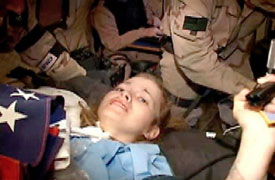
Today marks the eighth anniversary of the swiftly executed rescue of Private Jessica Lynch from a hospital in Iraq, an event long since steeped in myth and distortion. The prevailing dominant narrative has it that the rescue was contrived — much like the rationale for the war in Iraq.

Lynch rescued

But the dominant narrative is in error.

Lynch’s rescue, the first of a U.S. soldier held captive behind enemy lines since World War II, was the highly effective work of a team of Army Rangers and Navy Seals which extricated Lynch within minutes, and without injury.

But less than two days later, the Lynch case became swept up in myth and error that persist eight years on.

On April 3, 2003, the Washington Post published its famously botched story about Lynch, saying the young woman had fought fiercely against Iraqis attackers before being wounded, overwhelmed, and taken prisoner in an ambush at Nasiriyah on March 23, 2003.

The Post report, which appeared beneath the headline, “‘She Was Fighting to the Death’,” was an instant sensation, picked up by news organizations around the world. The Times of London, for example, said that Lynch’s battlefield derring-do surely had won her “a place in history as a gritty, all-American hero…”

Sgt. Walters

The tale of Lynch’s heroics turned out to be utterly false, a case of apparent mistaken identity. Although the Post never adequately addressed how it got the story so thoroughly wrong, the battlefield heroics it attributed to Lynch most likely were the deeds of a cook-sergeant in Lynch’s unit, Donald Walters.

As I write in Getting It Wrong, my media-mythbusting book that came out last year,  Walters during the ambush at Nasiriyah “either stayed behind, or was left behind, to lay down covering fire as his fellow soldiers tried to make their escape. Walters fought his attackers in a fashion that the Post attributed to Lynch.”

Richard S. Lowry, in a fine account of the battle at Nasiriyah, wrote of Walters:

“He probably ‘fought to his last bullet.’ He was captured alive and taken to an Iraqi stronghold and later murdered.”

Walters, the father of three children, was executed by Iraqi irregulars.

Lynch, as it turned out, had never fired a shot in the attack. She was badly injured in the crash of a Humvee in trying to escape the Iraqi ambush.

As the Post’s erroneous report about Lynch’s purported heroics unraveled in the spring of 2003, suspicions arose that her rescue had been drama contrived.

“Such suspicions,” I write in Getting It Wrong, “reached full expression in May 2003, in a documentary broadcast on the British Broadcasting Corporation …. Relying almost entirely on the accounts of Iraqi medical personnel at the hospital, the BBC concluded that the rescue of Lynch was ‘one of the most stunning pieces of news management ever conceived,’ a shameless bit of stagecraft done for propaganda purposes.”

The BBC version of the rescue, though vigorously disputed by the Pentagon, soon congealed into the dominant popular narrative about the Lynch case. “After all,” I note in Getting It Wrong, “the notion of a theatrical but counterfeit rescue operation fit well with the curdled popular view about the war in Iraq.”

But an investigation by the Defense Department’s inspector general — an inquiry requested by three Democratic members of Congress, including Rahm Emanuel — reported in 2007 that the BBC’s allegations had not been substantiated, that no evidence had been uncovered to support the notion the rescue “was a staged media event.”

In testimony to Congress in April 2007, Thomas F. Gimble, the Defense Department’s acting inspector general, said the rescue operation was found to have been “a valid mission” to recover a prisoner of war “under combat conditions.”

More than thirty witnesses were interviewed in the inspector general’s inquiry, including members of the Special Operations rescue team, Gimble said in written testimony.

Few if any of those witnesses had been interviewed by news organizations, he noted. In undertaking the Lynch rescue, Gimble said, the extrication team “fully expected to meet stiff resistance” and had come under enemy fire from the hospital building and areas nearby.

Gimble’s report, I note in Getting It  Wrong , represented “an unequivocal rebuke to the BBC’s account. Even so, by the time Gimble testified, four years had passed and the BBC’s version had become an unshakeable, widely accepted element of the Lynch saga.”

Gimble’s report, I add, “did not fit what had become the dominant narrative about the rescue. It made little news.”

WJC

Recent and related:

Recalling the hero of Nasiriyah: It wasn’t Jessica Lynch

In Anniversaries, Debunking, Jessica Lynch, Media myths, Washington Post on March 22, 2011 at 8:05 am

Tomorrow marks the anniversary of the deadly ambush at Nasiriyah in southern Iraq, an engagement so poorly reported by the Washington Post that it catapulted Jessica Lynch to undeserved international fame – and obscured the heroism of an Army sergeant who was captured, then killed.

The Post published an electrifying, front-page account of Lynch’s supposed heroics in the battle of March 23, 2003. The report appeared beneath the headline, “‘She was fighting to the death,'” and said Lynch had fought fiercely before being overwhelmed and captured by Iraqi attackers.

But the Post hero-warrior tale about Lynch was erroneous.

Botched.

Because of the apparent mistranslation of battlefield radio intercepts, the deeds the Post misattributed to Lynch, then a 19-year-old Army private, most likely were those of a 33-year-old cook-sergeant named Donald Walters.

Like Lynch, Walters was assigned to the Army’s 507th Maintenance Company, elements of which came under attack at Nasiriyah in March 2003, during the first days of the Iraq War.

Walters (right), a veteran of the Gulf War in 1991, either was left behind or stayed behind as his fellow soldiers tried to escape.

Perhaps the most detailed account of the ambush at Nasiriyah appears in Richard Lowry’s masterful work, Marines in the Garden of Eden.

In the book, Lowry wrote:

“We will never really know the details of Walters’ horrible ordeal. We do know that he risked his life to save his comrades and was separated from the rest of the convoy, deep in enemy territory. We know that he fought until he could no longer resist.”

Walters is believed to have fired 201 M-16 rounds at his attackers.

He was captured and executed by Iraqi irregulars.

His killers, so far as is known, have never been caught.

But how did Walters’ heroism come to confounded with the actions of Lynch — who later said she never fired a shot during the ambush? (Lynch cowered in the back seat of a Humvee as it tried to escape the Iraqi attack.)

As I write in Getting It Wrong, my media-mythbusting book:

“The probable sources of confusion were Iraqi radio communications that the U.S. forces intercepted. These communications reportedly included references to a blond American soldier’s fierce resistance in the fighting at Nasiriyah.

“In translating the intercepted reports to English, the pronoun ‘he’ was mistaken for ‘she.’ As Lynch was the only blonde woman in the 507th, the battlefield heroics were initially attributed to her, not Walters.”

And drawing on information sources it has never revealed, the Post published its erroneous account of Lynch’s derring-do.

I further note in Getting It Wrong that a brigade commander named Colonel Heidi Brown offered the explanation about the mistranslation, in an interview broadcast in 2004 on National Public Radio’s All Things Considered program.

Brown said on the program: “What I was told was that it was just a faulty translation, but it made for everyone … to make a huge assumption that it was Jessica Lynch, when, in fact it probably — but you know, no one knows for sure. It probably was Sergeant Walters.”

I also note in Getting It Wrong that Walters’ actions, “when they became known, attracted little more than passing interest from the American news media — certainly nothing akin to the intensity of the Lynch coverage after the Post’s ‘fighting to the death’ story appeared.”

The Post article about Lynch’s supposed heroism, which appeared April 3, 2003, set off an avalanche of similar news coverage in news outlets across the United States and around the world. It was an irresistible, cinematic tale — a waiflike teenager pouring lead into attacking Iraqis, much like a female Rambo.

The Post never fully explained how it got the story so badly wrong, and offered but scant interest in the real hero at Nasiriyah.

A database search of Post articles published since April 2003 revealed just three stories in which Walters’ name was mentioned. None of those articles discussed in any detail his bravery at Nasiriyah.

The Army eventually acknowledged that Walters’ conduct “likely prevented his unit from suffering additional casualties and loss of life” and posthumously awarded him the Silver Star — the military’s third-highest decoration for valor.

WJC

Recent and related:

But how was it that Lynch came to be confused with Walters, who was slim, ruddy, and 33-years-old? The probable sources of confusion were Iraqi radio communications that the U.S. forces intercepted. These communications reportedly included references to a blond American soldier’s fierce resistance in the fighting at Nasiriyah. In translating the intercepted reports to English, the pronoun “he” was mistaken for “she.” As Lynch was the only blonde woman in the 507th, the battlefield heroics were initially attributed to her, not Walters.[i] A brigade commander, Colonel Heidi Brown, offered that explanation in an interview broadcast in 2004 on National Public Radio’s All Things Considered program. “What I was told,” Brown said, “was that it was just a faulty translation, but it made for everyone … to make a huge assumption that it was Jessica Lynch, when, in fact it probably—but you know, no one knows for sure. It probably was Sergeant Walters


[i] Lowry, Marines in the Garden of Eden, 134. Lowry wrote that Walters “was left in a situation that could have easily turned into the Iraqi radio report.”

On the thin contributions of media rabble-rousers

In Debunking, Jessica Lynch, Media myths, Yellow Journalism on January 26, 2011 at 6:39 am

The departure of the bombastic Keith Olbermann from MSNBC’s primetime lineup is no an occasion for mourning.

But it’s to be regretted.

A little.

So suggested Bret Stephens yesterday in hisWall Street Journal column about Olbermann, who abruptly left his “Countdown” show at the end of last week.

Stephens pointed out:

“The ‘Countdown’ host did away with the old-fashioned liberal snigger and replaced it with a full-frontal snarl. Put simply, Mr. Olbermann had a genuine faith in populism, something liberals more often preach than practice.”

Stephens also offered this intriguing observation:

“America does better when its political debates descend, as they so often do on (or between) MSNBC and Fox News, into honest brawls.”

He may be right, although I wish he had elaborated on that point.

The observation about “honest brawls” reminded me of the insults and brickbats that American newspaper editors of the 1890s routinely exchanged in print. These were vigorous, lusty,  often vicious exchanges — and there really was little memorable or lasting about them. Save, perhaps, for an epithet or two.

Like that of “yellow journalism.”

Wardman, father to a sneer

As I discussed in my 2001 book, Yellow Journalism: Puncturing the Myths Defining the Legacies, the epithet emerged in late January 1897, during the failed campaign of Ervin Wardman, a New York newspaper editor, to drive a stake into the heart of the upstart journalism of William Randolph Hearst and, to a lesser extent, of Joseph Pulitzer.

Yellow journalism” took hold and spread quickly in 1897; it lives on today, as a vague but handy smear especially favored by letter-writers to newspapers.

Trouble is, the sneer “yellow journalism” is so ill-defined and flabby that it has become synonymous with journalistic sins of all kinds — exaggeration, sensationalism, hype, plagiarism, what have you.

And the trouble with media rabble-rousers like Olbermann is that their commentary often lacks wit and nuance, and tends to be superficial. It’s not deft, typically, and it’s unheard of for them to invoke media-driven myths–those dubious stories about the news media that masquerade as factual.

I address and debunk 10 prominent media-driven myths in my latest book, Getting It Wrong.

On his way out, in announcing his abrupt departure, Olbermann indulged in media myth. He described as “exaggerated” the rescue of Army private Jessica Lynch in Iraq in 2003. Hyped, maybe a bit. But the Lynch rescue, conducted by a U.S. special operations force under combat conditions, was not exaggerated.

As I note in Getting It Wrong, the Defense Department’s inspector general reported in 2007 that the rescue of Lynch from an Iraqi hospital was “a valid mission” to recover a prisoner of war.

There was no evidence to suggest that the rescue “was a staged media event” even though it was videotaped, as such missions often are.

Olbermann had on other occasions invoked the media myth surrounding Edward R. Murrow, whom he sought to emulate by borrowing the legendary broadcaster’s sign-off, “Good night, and good luck.”

In November, Olbermann referred to Murrow as “a paragon of straight reporting” while claiming the American press “stood idly by” as Senator Joseph R. McCarthy pursued his communists-in-government witch-hunt.

On March 9, 1954, during a 30-minute CBS television show called See It Now, “Murrow slayed the dragon,” Olbermann declared.

As I point out in Getting It Wrong, neither Murrow nor his producer, Fred Friendly, embraced the dragon-slaying interpretation. (Friendly wrote in his memoir, Due to Circumstances Beyond Our Control: “To say that the Murrow broadcast of March 9, 1954, was the decisive blow against Senator McCarthy’s power is as inaccurate as it is to say that Joseph R. McCarthy … single-handedly gave birth to McCarthyism.”)

And it’s quite clear that the American press did not stand “idly by” as the scourge of McCarthyism emerged.

As I point out in Getting It Wrong:

“Long before the See It Now program, several prominent journalists—including the Washington-based syndicated columnist Drew Pearson—had become persistent and searching critics of McCarthy, his record, and his tactics.”

By the time Murrow took on McCarthy in March 1954, Americans weren’t waiting for a white knight to tell them about the toxic threat the senator posed.

Thanks to the work of Pearson and other journalists, they already knew.

WJC

Recent and related:

Indulging in myth on the way out

In Debunking, Jessica Lynch, Media myths, Washington Post on January 22, 2011 at 9:04 am

The insufferable Keith Olbermann bid sudden farewell last night, indulging in media myth as he left his primetime “Countdown” show on MSNBC.

Olbermann, who quit or was pushed out midway through a four-year contract,  said in an on-air valedictory that his program had “established its position as anti-establishment with the stagecraft of Mission Accomplished to the exaggerated rescue of Jessica Lynch in Iraq to the death of Pat Tillman to Hurricane Katrina to the nexus of politics and terror to the first special comment.”

The reference to the “exaggerated rescue of Jessica Lynch”  caught the attention of Media Myth Alert, given that Olbermann clearly suggested the mission was needlessly hyped.

That claim is an element of the multidimensional media myth that has come to define the Lynch case, which I examine in my mythbusting book, Getting It Wrong.

Lynch was a 19-year-old Army private captured after an ambush in Nasiriyah in the first days of the Iraq War in 2003. She was badly injured and lingered near death at an Iraqi hospital, from where she rescued April 1, 2003, in a swift and well-coordinated raid by a U.S. special operations team.

The rescue of Jessica Lynch

Lynch was the first captured American soldier rescued from behind enemy lines since World War II.

In mid-May 2003, the British Broadcasting Corporation aired a report claiming the Lynch rescue was “one of the most stunning pieces of news management ever conceived,” a shameless bit of stagecraft done for propaganda purposes.

The BBC report interviewed an Iraqi doctor who said the rescue raid “was like a Hollywood film. They cried, ‘go, go, go,’ with guns and blanks without bullets and the sound of explosion.”

The Pentagon dismissed the BBC’s “news management” claims as “void of all facts and absolutely ridiculous.” Experts scoffed at the claim that Special Operations units would conduct a mission with blanks in their weapons, as the BBC had reported.

At the request of three Democratic members of Congress, including then-Congressman Rahm Emanuel, the Defense Department inspector general investigated the BBC’s allegations.

As I note in Getting It Wrong, Thomas F. Gimble, the acting inspector general, reported to Congress in April 2007 that the BBC’s allegations had not been substantiated, that no evidence had been uncovered to support the notion the rescue “was a staged media event.”

Rather, Gimble said, the rescue operation was found to have been “a valid mission” to recover a prisoner of war “under combat conditions.”

Gimble said in written testimony that more than 30 witnesses were interviewed in the inspector general’s inquiry, including members of the Special Operations rescue team. Few if any of those witnesses had been interviewed the BBC or other news organizations, he said.

The inspector general’s report was, I note in Getting It Wrong, “an unequivocal rebuke to the BBC’s account.

“Even so, by the time Gimble testified, four years had passed and the BBC’s version had become an unshakeable, widely accepted element of the Lynch saga,” as suggested in Olbermann’s farewell remarks last night.

The BBC claim that the rescue mission was counterfeit corresponded to a broader view that the Pentagon was up to no good in the Lynch case, that it had planted an erroneous report about her supposed battlefield heroics in order to boost popular support for the war.

The erroneous report appeared in the Washington Post on April 3, 2003, two days after the rescue.

In a front-page account published beneath the headline, “‘She was fighting to the death,'” the Post anonymously cited “U.S. officials” in saying Lynch had “fought fiercely” in the ambush of her unit in Nasiriyah, that she had “shot several enemy soldiers,” and that she had continued firing her weapon “until she ran out of ammunition.”

As it turned out, the hero-warrior tale — written by Susan Schmidt and Vernon Loeb — untrue. Lynch did not fire her weapon in the ambush. Nor was she shot and stabbed, as the Post had reported.

But as months passed and American public opinion turned against the war, the role of the Post in propelling Lynch into unwarranted international fame receded in favor of the false narrative that the Pentagon had made it all up. The Post itself has been complicit at times in suggesting machinations by the Pentagon.

However, as I point out in Getting It Wrong, the Pentagon was not the source for the hero-warrior tale. Loeb, one of the reporters who wrote the botched story, said on an NPR program in mid-December 2003 that he “could never get anybody from the Pentagon to talk about” the Lynch case.

“They wouldn’t say anything about Jessica Lynch,” Loeb said on the Fresh Air show.

“I just didn’t see the Pentagon trying to create a hero where there was none,” he added. “I mean …they never showed any interest in doing that, to me.”

Loeb declared:

“Our sources for that story were not Pentagon sources.”

Loeb described them as “some really good intelligence sources” in Washington, D.C. , and added:

“We wrote a story that turned out to be wrong because intelligence information we were given was wrong. That happens quite often.”

Despite Loeb’s exculpatory remarks, the erroneous view the Pentagon made up the story about Lynch’s derring-do lives on, in large measure because it fits well with the notion the Iraq War was a botched affair. And like many media myths, the false narrative offers a simplistic, easy-to-understand account of an event that was both complex and faraway.

WJC

Recent and related:

WaPo journo on Jessica Lynch story rejoins paper

In Debunking, Jessica Lynch, Media myths, Newspapers, Washington Post on January 6, 2011 at 8:50 am

Vernon Loeb, one of the Washington Post reporters who in 2003 wrote the botched story about Jessica Lynch’s purported battlefield heroics in Iraq, is returning to the newspaper as its local editor.

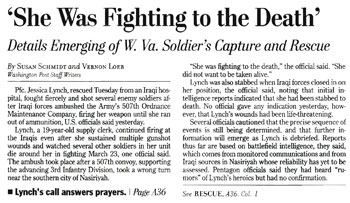
Washington Post, April 3, 2003

The electrifying but erroneous story about Lynch, then a 19-year-old Army private, turned her into the single most recognizable soldier of the Iraq War.

In a front-page report published April 3, 2003, the Post anonymously cited “U.S. officials” in saying that Lynch “fought fiercely” in the ambush of her unit in southern Iraq, that she had “shot several enemy soldiers,” and that she had fired her weapon “until she ran out of ammunition.”

But the hero-warrior narrative–published beneath the bylines of Loeb and Susan Schmidt–was untrue.

Lynch did not fire her weapon in the ambush. Nor was she shot and stabbed, as the Post reported.

I examine the Lynch case in my latest book, Getting It Wrong, noting how the Post account of her supposed derring-do “became a classic illustration of intermedia agenda-setting: News organizations around the world followed the Post’s lead by prominently reporting the supposed heroics of young Jessica Lynch and contemplating their significance.”

Not surprisingly, the Post in announcing yesterday that Loeb was returning neither mentioned nor hinted at his role in reporting the Lynch story. The Post memo did describe Loeb as “a tremendously talented, high-energy journalist, whose enthusiasm for what we do is infectious.

“In his new job, he will drive our coverage of the region, ensuring we are serving our readers, both print and digital, the smartest, freshest and most authoritative news and features on the issues that matter most to them. It’s a good match: this is a highly competitive market, and Vernon is an intensely competitive editor.”

The memo also said Loeb has run marathons and is an ardent fan of the Philadelphia Phillies baseball team. (The DCist blog noted that Loeb’s Twitter account has been silent for several months.)

Loeb returns to the Post on February 1, following a stint as deputy managing editor for news at the Philadelphia Inquirer. He had left the Post in 2004 to become an investigations editor at the Los Angeles Times.

I once tried to speak with Loeb about the Lynch case. I called him at the Inquirer in 2008, while I was researching Getting It Wrong; he abruptly hung up on me.

I wanted to ask Loeb about the sources behind the Lynch story. I also wanted to ask him about the interview he gave to the NPR Fresh Air show in late 2003, during which he said the Pentagon was not the source for the Post story.

In the years since, the dominant narrative has become that the Pentagon concocted the story about Lynch’s heroics and fed it to the Post in order to boost American support for the war.

But in the interview on Fresh Air, Loeb said he “could never get anybody from the Pentagon to talk about” the Lynch case.

“They wouldn’t say anything about Jessica Lynch,” Loeb said on the show.

“I just didn’t see the Pentagon trying to create a hero where there was none,” he added. “I mean …they never showed any interest in doing that, to me.”

Moreover, he declared:

“Our sources for that story were not Pentagon sources.”

Loeb described them as “some really good intelligence sources” in Washington, D.C.

And he added:

“We wrote a story that turned out to be wrong because intelligence information we were given was wrong. That happens quite often.”

And yet, the false narrative about the Pentagon’s having made up the story about Lynch’s heroics endures, and has become dominant. It fits well with a curdled popular view about the war in Iraq.

I’ve called before at Media Myth Alert for the Post to knock down the false narrative about the Lynch case and disclose the identify of its sources on that story.

If they weren’t “Pentagon sources,” then who were the “U.S. officials” who supplied the erroneous account about Lynch? Why should they be continue to be protected with anonymity, given that they clearly provided inaccurate information?

Loeb should say, especially since his new job at the Post will include “ensuring [that] we are serving our readers” in an “authoritative” way.

WJC

Recent and related: