W. Joseph Campbell

Posts Tagged ‘1897’

‘Yellow journalism’ turns 114

In 1897, Anniversaries, Debunking, Media myths, Newspapers, Spanish-American War, Yellow Journalism on January 30, 2011 at 8:21 am

It is a little-recognized, never-celebrated anniversary in American journalism, granted.

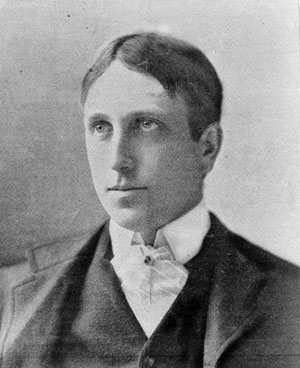
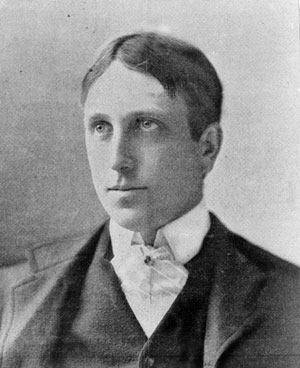
Wardman of the Press

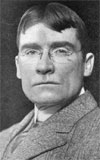
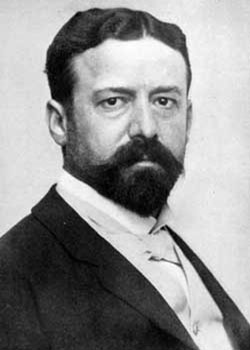
But tomorrow marks 114 years since the term “yellow journalism” first appeared in print, in the old New York Press, edited by the austere Ervin Wardman (left).

The phrase “the Yellow Journalism” appeared in a small headline on the editorial page of the Press on January 31, 1897. The phrase also appeared that day in the newspaper’s editorial page gossip column, “On the Tip of the Tongue.”

Yellow journalism” quickly caught on, as a sneer to denigrate what then was called the “new journalism” of the New York Journal of William Randolph Hearst and the New York World of Joseph Pulitzer. By the end of March 1897, references to “yellow journalism” had appeared in newspapers in Providence, Richmond, and San Francisco.

In the decades since then, “yellow journalism” has become a widely popular if nebulous term — derisive shorthand for vaguely denouncing sensationalism and journalistic misconduct of all kinds, real and imagined.

“It is,” as I noted in my 2001 book Yellow Journalism: Puncturing the Myths, Defining the Legacies, “an evocative term that has been diffused internationally, in contexts as diverse as Greece and Nigeria, as Israel and India.”

Precisely how Wardman and the Press landed on the phrase “yellow journalism” isn’t clear.

The newspaper’s own, brief discussion of the term’s derivation was unhelpful and unrevealing: “We called them Yellow because they are Yellow,” it said in 1898 about the Journal and the World.

In the 1890s, the color yellow sometimes was associated with decadent  literature, which may have been an inspiration to the Harvard-educated Wardman, a figure now largely lost to New York newspaper history.

Wardman was tall and stern-looking. He once was described as showing his “Calvinistic ancestry in every line of his face.” He did little to conceal his contempt for Hearst and Hearst’s journalism.

His disdain was readily apparent in the columns of the Press, of which Wardman became editor in chief in 1896 at the age of 31. (The Press is long defunct; it is not to be confused with the contemporary alternative weekly of the same title.)

Wardman’s Press took to taunting Hearst, Hearst’s mother, and Hearst’s support for Democratic candidate William Jennings Bryan in the 1896 presidential election. The New York Journal was virtually alone among New York newspapers in supporting Bryan’s “free silver” candidacy.

The Press disparaged Hearst, then 34, as a mama’s boy, as “Billy” and “little Willie.” It referred to the Journal as “our silverite, or silver-wrong, contemporary.”

The Press also experimented with pithy blasts on the editorial page to denounce “new journalism.”

“The ‘new journalism,’” the Press said in early January 1897 “continues to think up a varied assortment of new lies.”

Later in the month, the Press asked in a single-line editorial comment:

“Why not call it nude journalism?”

It clearly was a play on “new journalism” and meant to suggest the absence of “even the veneer of decency.”

Before long, Wardman and the Press seized upon the phrase “yellow-kid journalism,” which evoked the Hearst-Pulitzer rivalry over a popular cartoon character known as the “Yellow Kid.”

Both the Journal and the World at the time were publishing versions of the kid.

Yellow kid poster (Library of Congress)

At the end of January 1897, the phrase “yellow-kid journalism” was modified  to “the Yellow Journalism,” and the sneer was born.

After landing on that evocative pejorative, Wardman turned to it often, invoking the term in brief editorial comments and asides such as: “The Yellow Journalism is now so overripe that the little insects which light upon it quickly turn yellow, too.”

The diffusion of “yellow journalism” was sealed when the Journal embraced the term in mid-May 1898, during the Spanish-American War. With typical immodesty, the newspaper declared:

“… the sun in heaven is yellow—the sun which is to this earth what the Journal is to American journalism.”

WJC

From an essay originally posted at Media Myth Alert January 31, 2010

Many thanks to Jim Romenesko for linking to this post

Recent and related:

NYTimes practices ‘yellow journalism’? How so?

In 1897, Debunking, Media myths, New York Times, Year studies, Yellow Journalism on January 14, 2011 at 8:03 am

The “Best of the Web” roundup yesterday accused the New York Times of practicing “yellow journalism” for suggesting that conservative activists and politicians bore collective responsibility for last weekend’s murderous rampage in Arizona.

Best of the Web,” an online compilation prepared by the Wall Street Journal, assailed the Times for having “seized upon a horrific crime to demonize its political opponents,” for having “instigated” an uproar “with its yellow journalism.”

The Times certainly deserves criticism for hasty and politically charged commentary about the violence in Arizona that killed six people and left Congresswoman Gabrielle Giffords severely wounded.

But to accuse the Times of “yellow journalism“?

Well, that’s absurd.

For starters, the “Best of the Web” item didn’t explain what it meant by “yellow journalism.”

The term is convenient but imprecise; it’s often invoked (though not entirely accurately) as a shorthand for the sensational treatment of the news.

More broadly, as I noted in my 2001 book Yellow Journalism: Puncturing the Myths, Defining the Legacies, “yellow journalism” is an amorphous epithet that has been applied to all sorts of journalistic misconduct. It’s a term favored by letter-writers to newspapers who denounce bias, distortion, and other presumed misdeeds in journalism.

“Yellow journalism” also finds expression in international contexts, often emerging, for example, as a complaint about press performance in India.
Wardman: Coined 'yellow journalism'

This impressively dexterous term emerged in early 1897. That was when a New York newspaper editor named Ervin Wardman coined “yellow journalism” to disparage the flamboyant newspapers of William Randolph Hearst and Joseph Pulitzer.

Hearst claimed to practice “new journalism” but came to embrace Wardman’s term. In so doing, Hearst’s flagship New York Journal was typically immodest, likening itself to the sun–“the sun which is to this earth what the Journal is American journalism.”

Yellow journalism” became a recognizable, even bold genre in the late 19th and early 20th centuries.

As I wrote in Yellow Journalism, the genre in its most developed and intense form was characterized by these features:

  • the frequent use of multicolumn headlines that sometimes stretched across the front page.
  • a variety of topics reported on the front page, including news of politics, war, international diplomacy, sports, and society.
  • the generous and imaginative use of illustrations, including photographs and other graphic representations such as locator maps.
  • bold and experimental layouts, including those in which one report and illustration would dominate the front page. Such layouts sometimes were enhanced by the use of color.
  • a tendency to rely on anonymous sources, particularly in dispatches of leading reporters.
  • a penchant for self-promotion, to call attention eagerly to the paper’s accomplishments. This tendency was notably evident in crusades against monopolies and municipal corruption.

And as I noted in Yellow Journalism, the genre as practiced more than a century ago “certainly could not be called predictable, boring, or uninspired”—complaints of the sort that often are raised about contemporary American newspapers.

Interestingly, the New York Times established itself as the antithesis of yellow journalism of the late 1890s. It often condemned the excesses of the genre, especially those of Hearst’s Journal.

Under the ownership of Adolph Ochs, who acquired the newspaper in 1896, the Times nominally sought to position itself as a staid, impartial, fact-based model of journalism that eschewed extravagance and flamboyance in presenting the news.

And as I wrote in my 2006 book–a year-study titled The Year That Defined American Journalism: 1897 and the Clash of Paradigms–the Times under Ochs lacked the resources of Hearst’s Journal and seldom competed in expensive and far-flung newsgathering ventures. (Hearst spent lavishly to gather the news; in 1897, he paid Richard Harding Davis the contemporary equivalent of $50,000 to report from Cuba for a month on the uprising against Spanish colonial rule.)

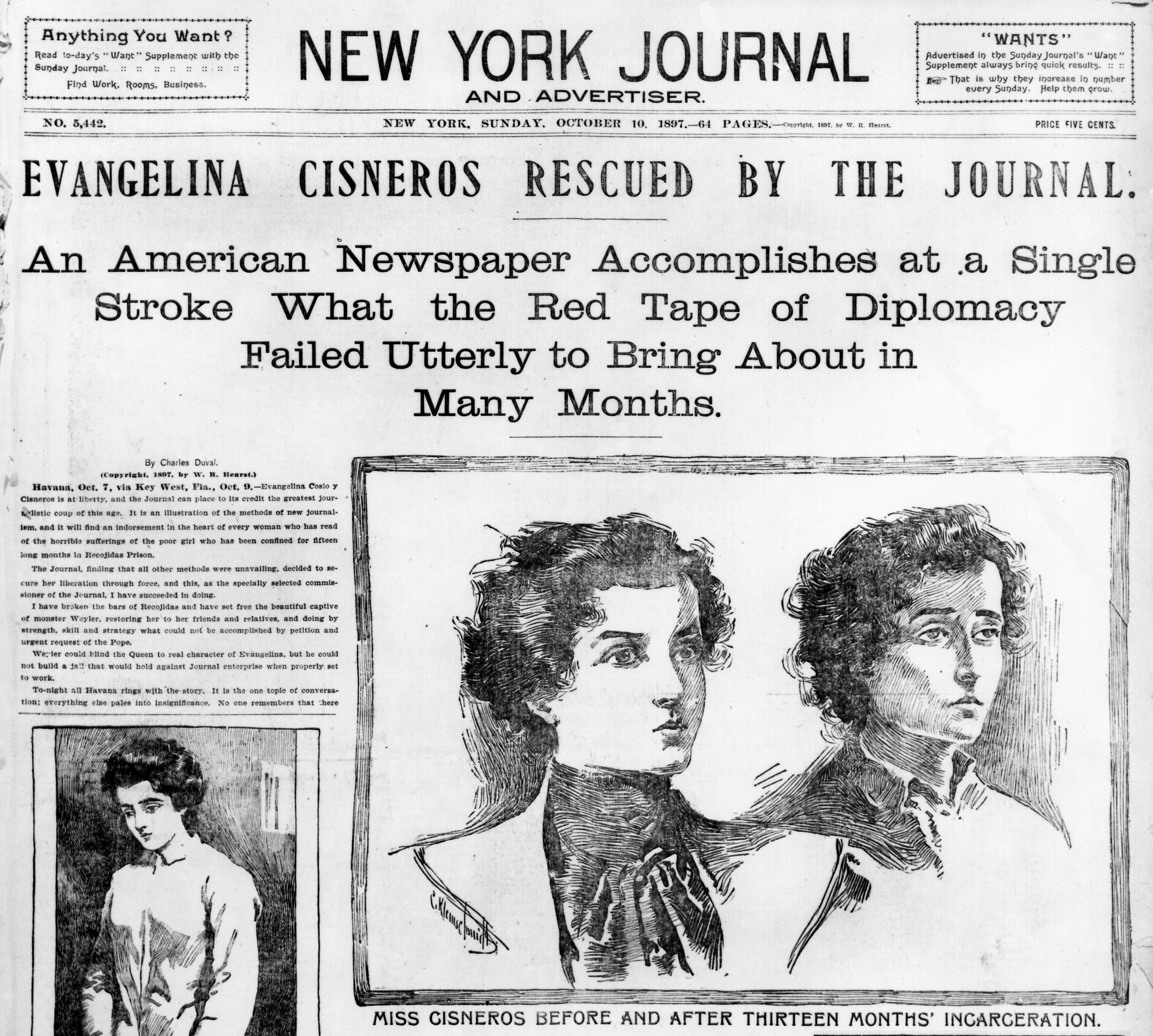
The Times instead sought to position itself as the sober, moral counterweight to the Journal, and periodically challenged the wisdom and ethics of that newspaper’s forays into activist journalismsuch as the case of jailbreaking journalism in 1897. That was when a reporter for the Journal organized the escape of a 19-year-old Cuban political prisoner named Evangelina Cisneros.

“Yellow journalism” has a long, varied, but not distinguished pedigree. It is to be sure a handy and supple pejorative.

But when invoked in criticism, definitional vagueness doesn’t cut it. “Yellow journalism” ought to be used with precision.

WJC

Recent and related:

Many thanks to Jim Romenesko for linking to the post.

n its most developed and intense form, yellow journalism was characterized by:

· the frequent use of multicolumn headlines that sometimes stretched across the front page.

· a variety of topics reported on the front page, including news of politics, war, international diplomacy, sports, and society.

· the generous and imaginative use of illustrations, including photographs and other graphic representations such as locator maps.

· bold and experimental layouts, including those in which one report and illustration would dominate the front page.[i] Such layouts sometimes were enhanced by the use of color.

· a tendency to rely on anonymous sources, particularly in dispatches of leading reporters (such as James Creelman, who wrote for the Journal and the World).

· a penchant for self-promotion, to call attention eagerly to the paper’s accomplishments. This tendency was notably evident in crusades against monopolies and municipal corruption.

As defined above and as practiced a century ago, yellow journalism certainly could not be called predictable, boring, or uninspired—complaints of the sort that were not infrequently raised about U.S. newspapers at the turn of the twenty-first century


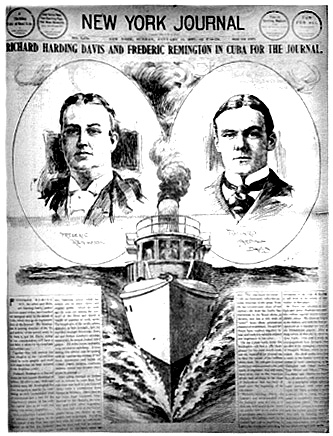
[i]. See, among many other examples, “Remington and Davis Tell of Spanish Cruelty,” New York Journal (2 February 1897): 1. The front page was almost entirely devoted to a sketch by Frederic Remington to illustrate a dispatch by Richard Harding Davis about a Cuban rebel’s execution by Spanish firing squad.
The ‘anniversary’ of a media myth: ‘I’ll furnish the war’

In 1897, Anniversaries, Debunking, Furnish the war, Media myths, Newspapers, Spanish-American War, Yellow Journalism on January 13, 2011 at 7:31 am

Remington, Davis in Cuba for Hearst

Had it occurred, the legendary but improbable exchange of telegrams between William Randolph Hearst and the artist Frederic Remington–in which Hearst supposedly vowed to “furnish the war” with Spain–would have taken place in mid-January 1897.

The uncertainty as to exactly when the purported exchange occurred is one of many signals the tale is apocryphal, a media-driven myth.

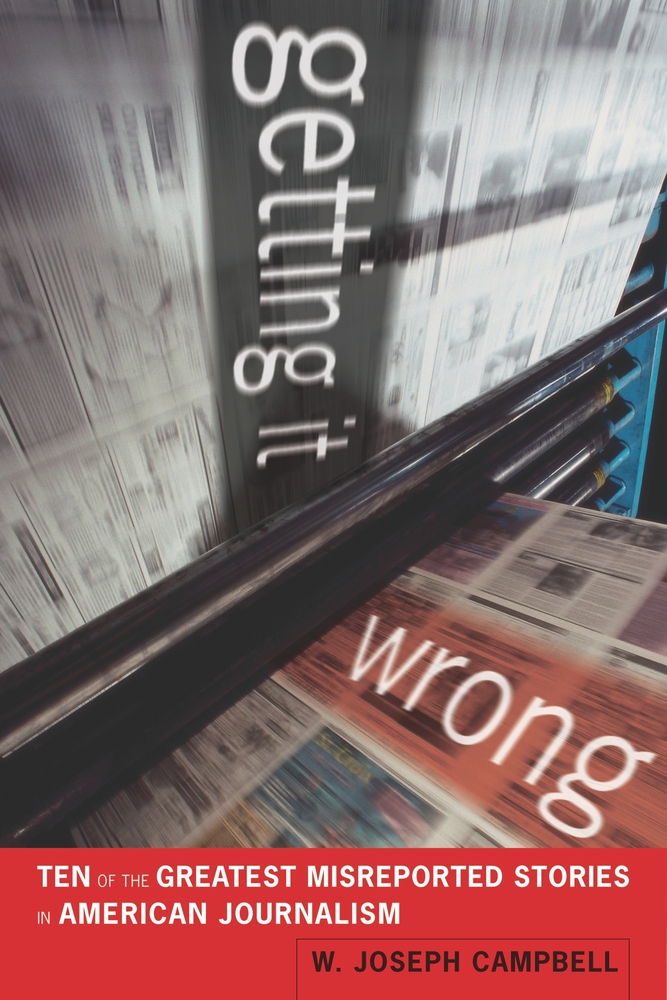
As I discuss in my media-mythbusting book, Getting It Wrong, the Remington-Hearst anecdote is “perhaps the hardiest myth in American journalism.”

It lives on in part because it is a pithy and delicious tale. It corresponds well to the image of Hearst the war-monger, the unscrupulous newspaper published who fomented the Spanish-American War in 1898.

As I point out in the first chapter of Getting It Wrong, the Remington-Hearst tale is often retold “despite a nearly complete absence of supporting documentation. It lives on even though telegrams supposedly exchanged by Remington and Hearst have never turned up. It lives on even though Hearst denied ever sending such a message.”

Moreover, I write:

The anecdote “lives on despite an irreconcilable internal inconsistency: It would have been absurd for Hearst to vow to ‘furnish the war’ because war—specifically, the Cuban rebellion against Spain’s colonial rule—was the very reason Hearst sent Remington to Cuba in the first place.”

The sole original source for the “furnish the war” quotation was On the Great Highway, a slim volume of reminiscences that came out in 1901. The author was James Creelman, a portly, cigar-chomping journalist prone to pomposity and exaggeration.

Creelman did not explain in On the Great Highway how or where he learned about the purported Remingt0n-Hearst exchange. Creelman–who was in Madrid at the time Remington was in Cuba–recounted the anecdote a not as a rebuke but as a compliment to Hearst and the activist “yellow journalism” he had pioneered in New York City.

Nor did Creelman say exactly when the presumed exchange took place, writing only that it was “some time before the destruction of the battleship Maine in the harbor of Havana” in mid-February 1898. The only time Remington was in Cuba before the explosion that destroyed the Maine was in January 1897.

Creelman: Sole source

Remington, an accomplished artist of the American West, went to Cuba in 1897 to draw sketches of scenes of the uprising against Spanish rule. He traveled with Richard Harding Davis, who then was burnishing a reputation as one of American journalism’s leading correspondents.

Hearst recruited Remington and Davis for a month, and the plan was for them to reach a force of Cuban rebels under the command of Máximo Gómez.

But Remington and Davis never reached the rebels. What’s more, they proved to be an oddly matched team. In Matanzas on January 15, 1897, they parted ways. Remington returned to Havana and the next day boarded a steamship bound for New York.

Legend has it that before leaving Havana, Remington sent Hearst a telegram that supposedly said:

“Everything is quiet. There will be no war. I wish to return.”

Hearst purportedly cabled Remington in reply:

“Please remain. You furnish the pictures, and I’ll furnish the war.”

Had it occurred, the exchange would have taken place late on January 15, 1897, or early on January 16, 1897.

Remington disregarded Hearst’s purported instructions to “remain” in Cuba. The artist was one of seven passengers aboard the Seneca when it sailed from Havana on January 16, 1897. The steamer reached New York four days later and soon afterward, Hearst’s New York Journal began publishing Remington’s sketches drawn in Cuba.

“The work was given prominent display,” I note in Getting It Wrong. Headlines in the Journal hailed Remington as a “gifted artist”–hardly the sort of accolade Hearst would have extended to someone in his employ who had brazenly disregarded instructions to remain on the scene.

That’s further reason for doubting that Hearst ever sent a telegram vowing to “furnish the war.”

And yet another reason is that Spanish censors, who controlled all incoming and outgoing cable traffic in Havana, surely would have intercepted Hearst’s inflammatory message, had it been sent. It’s highly improbable that cables such as those attributed to Hearst and Remington would have flowed readily between New York and Havana.

Additionally, the correspondence of Davis gives lie to the anecdote.

Davis wrote frequently to his family, especially to his mother, Rebecca Harding Davis. His letters make clear that  Remington did not leave because they found “everything is quiet” in Cuba.

In fact, Davis wrote on the day he and Remington parted ways:

“There is war here and no mistake.”

His correspondence offered detailed descriptions of what he called the grim process “of extermination and ruin” in Cuba.

More important, Davis’ letters make clear that Remington left for home not on the pretext that “everything is quiet,” but because Davis wanted him to go.

“I am as relieved at getting old Remington to go as though I had won $5000,” Davis wrote to his mother on January 15, 1897. “He was a splendid fellow but a perfect kid and had to be humored and petted all the time.”

Davis added that he “was very glad” Remington left “for he kept me back all the time and I can do twice as much in half the time.”

I note in Getting It Wrong that the Remington-Hearst tale was “Creelman’s singular contribution to American journalism.” The anecdote has proven to have timeless appeal, in part because it promotes what I call “the improbable notion the media are powerful and dangerous forces, so powerful they can even bring on a war.”

WJC

Recent and related:

Blaming assassination on overheated commentary: No new tactic

In 1897, Debunking, Media myths, New York Sun, Spanish-American War, Yellow Journalism on January 10, 2011 at 7:56 am

The extreme attempts to politicize the weekend shootings in Arizona were dismaying and wrong-headed, but not without parallel.

Efforts to link the attack on Democratic Congresswoman Gabrielle Giffords to overheated political rhetoric and, more explicitly, to Republican Sarah Palin and the conservative Tea Party movement were evocative of a campaign more than a century ago to blame the assassination of President William McKinley on the yellow press of William Randolph Hearst.

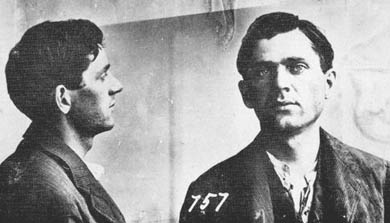
Czolgosz, assassin

McKinley was fatally shot in September 1901 by an anarchist named Leon Czolgosz, who, according to Hearst’s finest biographer, was unable to read English.

Even so, Hearst’s foes–notably, the New York Sun–sought to tie the assassination to ill-advised comments about McKinley that had appeared in Hearst’s newspapers months earlier.

One especially ill-considered comment helped fuel the allegations: That was a quatrain written by columnist Ambrose Bierce 20 months before McKinley was shot on September 6, 1901, while greeting well-wishers in Buffalo.

Bierce’s column of February 4, 1900, closed with a reference to the assassination a few days earlier of the Kentucky governor, William Goebel. Bierce, a prickly and acerbic commentator, wrote:

The bullet that pierced Goebel’s breast
Can not be found in all the West.
Good reason: it is speeding here [to Washington]
To stretch McKinley on his bier.

As I pointed out in my 2005 work, The Spanish-American War: American Wars and the Media in Primary Documents, “The quatrain attracted little notice or comment until Czolgosz shot the president in 1901.”

Bierce later wrote, ‘The verses, variously garbled but mostly made into an editorial, or a news dispatch with a Washington date-line but usually no date, were published all over the country as evidence of Mr. Hearst’s [supposed] complicity in the crime.”

The Sun led the assault on Hearst and his flagship newspaper, the New York Journal.

Beneath the headline, “A Menace to Our Civilization,” the Sun on September 12, 1901, accused the Journal of having provoked “an atrocious Anarchistic assault on the President” and declared that yellow journalism had “graduated into a serious and studied propaganda of social revolution.”

Never, the Sun declared, “was an instrument of disorder and sedition used so effectually and none ever had so great opportunities for its malign propaganda.”

Advertisers in the Journal, said the Sun, were “feeding a monster which is using the strength they are giving nutrition to in an effort to strike down the civilization upon which they depend.”

It was of course absurd to claim that Czolgosz’s mind had been poisoned by the contents of the Hearst press. Few other New York City newspapers were inclined to pick up the cudgel, even though not many admired Hearst’s activist-oriented journalism.

And as media scholar Brian Thornton noted in a fine journal article in 2000, “most of the attack against Hearst” in the aftermath of the McKinley shooting was sustained by letters to the editor of the Sun, not by the newspaper’s editorials.

The Sun, it should be noted, had long campaigned against Hearst, having urged in early 1897 a readership boycott of the yellow press, an effort that drew attention but ultimately collapsed.

Hearst

Still, the uproar in 1901 stunned Hearst. David Nasaw, Hearst’s leading biographer, wrote that perhaps for “the first time in his life, Hearst was forced onto the defensive.”

In response, Hearst renamed the Journal the Journal and American, to assert the newspaper’s patriotism. Eventually, he dropped the “Journal” from the nameplate altogether.

Hearst could take a measure of comfort in the insightful and level-headed commentary of journals such as The Bookman, which dismissed the criticism as preposterous.

“As a matter of fact,” The Bookman said in its December 1901 number, “it cannot be shown that any President ever lost his life because his assassins were influenced by the reading of newspaper denunciation.”

The Bookman also noted:

“Indeed, the most severe attacks on President McKinley’s policy were not attacks for which the so-called ‘yellow journals’ were responsible, but they were attacks uttered by such sincere and high-minded men as Senator [George] Hoar and ex-Secretary [Carl] Schurz–both of them Republicans–and by newspapers of great ability, such as the Evening Post” of New York.

The Bookman added:

“It is unthinkable that a press censorship should ever be established in our country; for in its practical operation it would mean that the opposition would have to abstain from all newspaper criticism of the party in power.”

There are in The Bookman commentary echoes of well-reasoned and insightful commentary written in the aftermath of the rampage in Arizona that left six people (a federal judge among them) dead and Giffords clinging to life.

Notably, media critic Jack Shafer pointed out in a column posted yesterday at slate.com that only “the tiniest handful of people—most of whom are already behind bars, in psychiatric institutions, or on psycho-meds—can be driven to kill by political whispers or shouts.

“Asking us to forever hold our tongues lest we awake their deeper demons,” Shafer wrote, “infantilizes and neuters us and makes politicians no safer.”

He’s absolutely right.

And to seize on political shootings to score political points is as appalling as it is unworthy.

WJC

Recent and related:

Gotham’s exceptional New Year’s Eve: 1897

In 1897, New York Sun, Newspapers, Year studies, Yellow Journalism on December 31, 2010 at 7:05 am

W.R. Hearst

Publisher William Randolph Hearst was at the peak of his most innovative period 113 years ago, when he organized a New Year’s Eve bash for Gotham in 1897.

The year then closing had been a stunning one for Hearst and his flagship newspaper, the New York Journal.

He had introduced in 1897 a hearty brand of activist journalism: The “journalism of action,” the Journal called it. And it meant that newspapers had an obligation to inject themselves routinely and conspicuously into public life, to address the ills that government would not or could not confront.

Rivals scoffed and sneered; “yellow journalism” they called it.

But the stunning character of Hearst’s “journalism of action” had been demonstrated in October 1897 with the rescue of Evangelina Cisneros, a 19-year-old political prisoner jailed by Spanish authorities in Havana for months without charges.

The Cisneros rescue, as I wrote in my 2006 book–a year study titled The Year That Defined American Journalism: 1897 and the Clash of Paradigms–was the “greatest escape narrative” in U.S. media history, “an episode unique in American journalism.”

In late summer 1897, as Cuba’s guerrilla war against Spanish colonial rule ground on, Hearst sent a reporter named Karl Decker to Cuba, ostensibly as the Journal correspondent in Havana.

Rescuing Evangelina

But Decker was under orders to organize the rescue of Evangelina Cisneros. With the quiet help of U.S. diplomatic personnel in Cuba, and the vital support of a clandestine smuggling network in Havana, Decker succeeded in breaking her out of jail and getting her aboard a steamer to New York.

The “greatest journalistic coup of this age,” the Journal crowed, never reluctant to indulge in self-promotion. The “journalism of action” never seemed more robust, or more proud of itself, I noted in The Year That Defined American Journalism.

Rivaling the Cisneros jailbreak as the crowning achievement of the “journalism of action” was the 1897 New Year’s Eve bash that Hearst threw for New York City.

It was an exceptional occasion, marking as it did the consolidation of the boroughs of New York and the birth of the modern mega-city.

As I wrote in The Year That Defined American Journalism, New York officials “had planned no special event to celebrate the political consolidation of the five boroughs… William Strong, the city’s outgoing mayor and a foe of consolidation, suggested that a mock funeral would be more appropriate than a celebration. Hearst would have none of that.”

Hearst stepped forward to organize what the Journal called a “great carnival,” a celebration replete with “volcanoes of fireworks and floods of pulse-quickening music,” all centered around City Hall Park, near what then was Newspaper Row.

Weather conditions were awful that night in lower Manhattan. Drizzling rain turned to ice and snow during the waning hours of 1897. The weather was so poor that the Journal announced in the afternoon that festivities would be postponed. An hour or two later, it reversed itself and the celebration was back on.

Perhaps 100,000 merry-makers braved the inclement conditions to watch the parade of floats that snaked its way down Broadway to City Hall.

As midnight struck in New York, the mayor of San Francisco (as Hearst had arranged), pressed a button sending an electric current across country to lower Manhattan. The electric charge sent a small white object climbing the flagpole at City Hall.

Reaching the top of the staff, the object unfurled and revealed itself to be the flag of New York City. And with that, one news account said, “bedlam broke loose.”

Fireworks burst over lower Manhattan, sending up what one reporter called “showers of blazing stars,” and a National Guard battery began firing a salute of 100 guns.

Just as the Journal had promised, the celebration was the “luminous starting point from which the history of the expanded New York will be dated.”

Even such bitter rivals as the New York Sun complimented the Journal for having organized and underwritten the celebration, which cost at least the contemporary equivalent of $500,000.

“It was such a display of fireworks and enthusiasm as perhaps had never been seen before in the State of New York, certainly not in the vicinity of New York city,” the Sun declared, adding:

“The show that the New York Journal provided was all that that paper claimed it would be.”

It was an exceptional New Year’s Eve in Gotham–and, as I wrote in The Year That Defined American Journalism, it also was “a tremendous opportunity for the Journal to indulge in a celebration of its activist ethos.”

WJC

Recent and related:

Virginia’s descendants: ‘Ambassadors of Christmas spirit’

In 1897, Debunking, New York Sun, Newspapers, Year studies on December 26, 2010 at 9:11 am

The New York Times carried a fine article Christmas Day about how descendants of Virginia O’Hanlon “have quietly become ambassadors of the Christmas spirit,” offering ties to the girl who long ago inspired American journalism’s best-known editorial.

Young Virginia O'Hanlon (Courtesy Jim Temple)

Virginia’s letter to the old New York Sun in 1897 gave rise to the essay, “Is There A Santa Claus?” No other editorial has been as often recalled or reprinted as that tribute to childhood and the Christmas spirit.

Her letter implored: “Please tell me the truth; is there a Santa Claus?”

The editorial written in reply declares in its most memorable and familiar passage:

“Yes, Virginia, there is a Santa Claus. He exists as certainly as love and generosity and devotion exist, and you know that they abound and give to your life its highest beauty and joy.”

The Times article yesterday wasn’t much overstating matters in observing that Virginia, who died in 1971, “has become as much a symbol of Christmas as Ebenezer Scrooge or Rudolph the Red-Nosed Reindeer.”

The heart of the article described how Virginia’s descendants “have quietly become ambassadors of the Christmas spirit, crossing the country to appear at events honoring her, and reading the letter and the response to children in schools and to their own children at home. … Come December, their names and faces turn up in newspapers and on television programs around the world, as well as in the company newsletters of their various workplaces.”

I became acquainted with the hospitality of some of Virginia’s descendants while researching my 2006 book, The Year That Defined American Journalism: 1897 and the Clash of Paradigms, and know first-hand how helpful and accommodating they can be.

They are by no means pushy or mercenary in keeping alive the memory of Virginia O’Hanlon.

Jim Temple, Virginia’s only grandson, is perhaps the family’s point person in responding to requests for information.

In 2005, Temple welcomed me to his home in upstate New York where he and I reviewed the contents of a large cardboard box in which he kept newspaper clippings, photographs, and other totems about Virginia.

He was generous with his time, recollections, and artifacts.

My visit allowed me to unravel a small but persistent mystery about “Is There A Santa Claus?” That was why a Christmastime editorial had been published in late summer.

The essay (which the Sun in 1906 revealed had been written by a veteran and childless journalist named Francis P. Church) appeared on September 21, 1897, in the third of three columns of editorials.

In Temple’s box of memorabilia was clipping of a Connecticut newspaper article that had been published in December 1959. The article–a key to resolving the question of the editorial’s odd timing–described Virginia O’Hanlon’s talk to a high school audience in Fall River, Connecticut.

She was quoted as having said:

“After writing to the Sun, I looked every day for the simple answer I expected. When it didn’t appear, I got disappointed and forgot about it.”

As I noted in The Year That Defined American Journalism, Virginia’s letter, after arriving at the Sun, probably was overlooked or misplaced for an extended period. “That there was such a gap seems certain, given both O’Hanlon’s recollections about having waited for a reply and the accounts that say Church wrote the famous editorial in ‘a short time,'” I pointed out.

What reconciles the two accounts—O’Hanlon’s extended wait and Church’s quickly written response—is that the Sun had misplaced the little girl’s letter.

That means Virginia wrote her letter to the Sun well before September 1897.

The 1959 newspaper article also quoted Virginia as saying:

“My birthday was in July and, as a child, I just existed from July to December, wondering what Santa Claus would bring me. I think I was a brat.”

Thus, as I wrote in The Year That Defined American Journalism, the most plausible explanation for the editorial’s odd timing “lies in the excited speculation of a little girl who, after celebrating her birthday in mid-summer, began to wonder about the gifts she would receive at Christmas.”

The “excited speculation” gave rise to Virginia’s letter to the Sun.

WJC

Recent and related:

What became of Virginia O’Hanlon?

In 1897, New York Sun, New York Times, Newspapers, Year studies on December 25, 2010 at 8:13 am

Virginia

Virginia O’Hanlon was 8-years-old when she gained a measure of fame that would last her lifetime.

Shortly after her birthday in July 1897, young Virginia wrote to the New York Sun, posing the timeless question: “Is there a Santa Claus?

It took several weeks, but her innocent letter gave rise to the most famous editorial in American journalism. The Sun answered Virginia’s query on September 21, 1897, in an essay destined to become a classic.

The essay was assigned an inconspicuous place in the Sun, appearing in the third of three columns of editorials beneath the headline, “Is There A Santa Claus?

Its most memorable passage sought to reassure Virginia–and, as it turned out, generations of youngsters since then.

“Yes, Virginia,” it declared, “there is a Santa Claus. He exists as certainly as love and generosity and devotion exist, and you know that they abound and give to your life its highest beauty and joy. Alas! how dreary would be the world if there were no Santa Claus. It would be as dreary as if there were no Virginias.”

The editorial closed with further reassurance:

“No Santa Claus! Thank God! he lives, and he lives forever. A thousand years from now, Virginia, nay, ten times ten thousand years from now, he will continue to make glad the heart of childhood.”

As I note in my 2006 book, a year-study titled The Year That Defined American Journalism: 1897 and the Clash of Paradigms, Virginia O’Hanlon as an adult embraced the recognition and modest fame that came with her part in inspiring “Is There A Santa Claus?” (She once said in jest that she was “anonymous from January to November.”)

The editorial, she told an interviewer in 1959, when she was 67, “gave me a special place in life I didn’t deserve. It also made me try to live up to the philosophy of the editorial and to try to make glad the heart of childhood.”

She occasionally read the editorial at Christmas programs, as she did in 1933 and 1937 at Hunter College, her alma mater. Virginia earned a bachelor’s degree there in 1910 and a master’s degree two years later at Columbia University.

She was a teacher in the New York City schools, and became a principal at a school for handicapped children after earning a doctorate from Fordham University in 1935.

At her retirement in 1959, the New York Times observed that Virginia was “one of those rare persons whose given name alone has instant meaning for millions.”

In December 1960, Virginia went on the Perry Como Show and said she had lived “a wonderfully full life.” She told Como in a brief interview that her letter to the Sun had been “answered for me thousands of times.”

She was married for a time to Edward Douglas by whom she had a daughter, Laura Temple. For two years in the 1930s, Temple worked in the advertising office of the Sun.

“They all knew who I was,” she was quoted years as saying about the Sun staff. “And we all had the same feeling about the editorial that my mother had—that it was a classic.”

Virginia O’Hanlon Douglas was 81 when she died at a nursing home in upstate New York.

Her death in May 1971 was reported on the front page of the New York Times beneath the headline:

Virginia O’Hanlon, Santa’s friend, dies.”

Virginia's gravesite (Photo by George Vollmuth, 2009)

She was buried in North Chatham, New York.

At the approach of Christmas in recent years, the North Chatham Historical Society has conducted a reading at Virginia’s gravesite of the letter that brought her fame and of the editorial that it inspired.

WJC

Recent and related:

At Christmas: The remarkable trajectory of an 1897 editorial

In 1897, Debunking, Media myths, New York Sun, Newspapers on December 24, 2010 at 7:52 am

WJC and pal: Merry Christmas

Christmas Eve is a fine occasion to consider how an obscure essay published more than 120 years ago in a combative New York City newspaper became the most memorable editorial in American journalism.

The editorial is the timeless tribute to childhood and the Christmas spirit, “Is There A Santa Claus?

Its trajectory from obscurity is remarkable.

The essay appeared in the New York Sun, in response to a letter from 8-year-old Virginia O’Hanlon, who implored:

“Please tell me the truth; is there a Santa Claus?”

The Sun in reply was reassuring.

“Yes, Virginia,” the editorial declared, “there is a Santa Claus. He exists as certainly as love and generosity and devotion exist, and you know that they abound and give to your life its highest beauty and joy. Alas! how dreary would be the world if there were no Santa Claus. It would be as dreary as if there were no Virginias.”

The editorial was published not at Christmas but in September 1897, in the third of three columns of editorials in the Sun–a newspaper that relished the rough and tumble of late 19th century American journalism.

As I noted in my 2006 book, The Year That Defined American Journalism: 1897 and the Clash of Paradigms, the Sun in its editorials in the late 19th century “was more inclined to vituperation and personal attack than to evoke the eloquence and lyricism” that distinguished “Is There A Santa Claus?”

Indeed, the trade journal Fourth Estate observed in 1897 that the Sun was never happy unless it was on the attack. Given such tendencies, I wrote, “the delicate charm of ‘Is There A Santa Claus?’ was decidedly out of place” in the columns of the Sun.

Moreover, the Sun was slow–reluctant, even–to embrace the editorial, usually rebuffing readers’ requests to reprint “Is There A Santa Claus?”

After its initial appearance on September 21, 1897, the essay was not published again in the Sun until December 1902.  The newspaper did so then with a trace of annoyance, declaring:

“Since its original publication, the Sun has refrained from reprinting the article on Santa Claus which appeared several years ago, but this year requests for its reproduction have been so numerous that we yield.

“Scrap books,” the Sun added in a gratuitous swipe, “seem to be wearing out.”

Over the years, though, readers persisted in their requests, asking the Sun every year at Christmastime to reprint “Is There A Santa Claus?”

And as I wrote in The Year That Defined American Journalism, the newspaper ultimately gave in, “tacitly acknowledging that editors are not always as perceptive as their readers in identifying journalism of significance and lasting value.”

In 1924, the newspaper’s then-owner, Frank Munsey, ordered “Is There A Santa Claus?” to appear as the lead editorial on Christmas Eve. In the years that followed, until the newspaper folded in 1950, “Is There A Santa Claus?” was the lead editorial in the Sun on December 23 or 24.

It remains a favorite, 113 years on.

Reasons for the editorial’s enduring popularity are several. Among them are:

  • The editorial is a cheering, reaffirming story, one without villains or sinister elements.
  • It represents a connection to distant time: It is reassuring, somehow, to know that what was appealing in 1897 remains appealing today.
  • It offers a reminder to adults about Christmases past, and the time when they, too, were believers.
  • It has been a way for generations of parents to address the skepticism of their children about Santa Claus. They can point to the editorial and its timeless answer to an inevitable question–and not have to fib much about Santa’s existence.

Interestingly, the essay was written by a veteran and childless journalist named Francis P. Church whose authorship wasn’t widely known until soon after his death in April 1906.

The Sun revealed that Church had written the editorial in what was an eloquent, posthumous tribute.

“At this time,” the newspaper said, “with the sense of personal loss strong upon us, we know of no better or briefer way to make the friends of the Sun feel that they too have lost a friend than to violate custom by indicating him as the author of the beautiful … editorial article affirming the existence of Santa Claus, in reply to the question of a little girl.”

WJC

Recent and related:

Recalling Mark Twain and the ‘calamity of calamities’

In 1897, Debunking, Media myths, Reviews, Year studies, Yellow Journalism on December 21, 2010 at 10:18 am

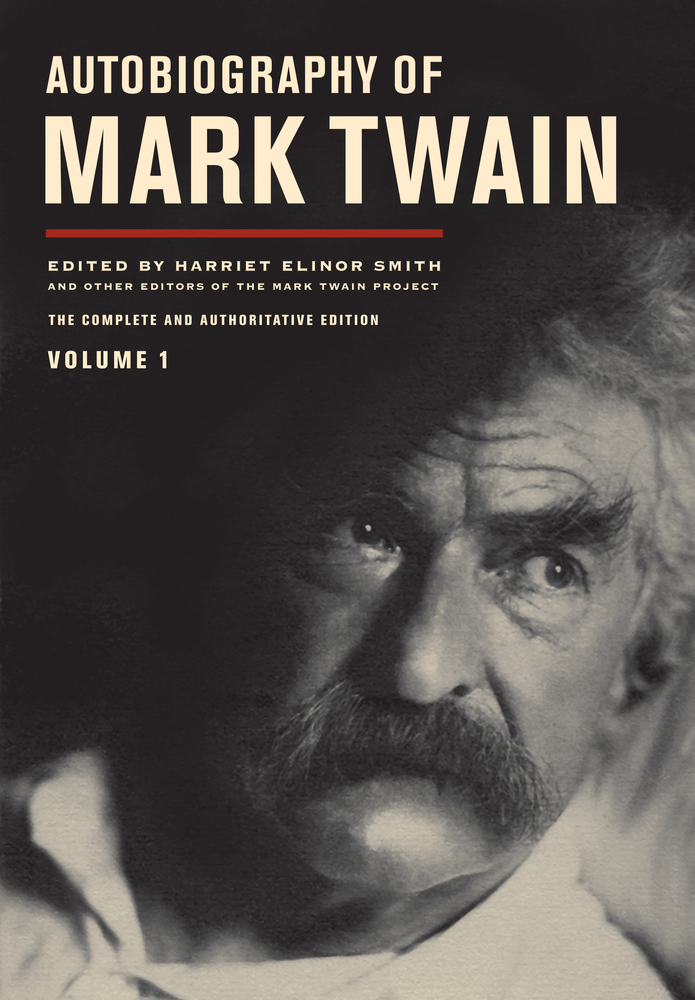
The first volume of Autobiography of Mark Twain–published 100 years after his death–has been a best-seller for the University of California Press, the publisher that brought out my latest book, Getting It Wrong.

The Twain volume has received largely favorable reviews, although the New York Times did say, in a critique the other day by the insufferable Garrison Keillor, that “there’s precious little frankness and freedom here and plenty of proof that Mark Twain, in the hands of academics, can be just as tedious as anybody else when he is under the burden of his own reputation.”

A more generous review, posted online yesterday by the North County Times in California, caught my eye–mostly for its reference to Twain (Samuel Clemens) and yellow journalism. The review quoted this passage from Twain’s autobiography:

“I was converted to a no-party independence by the wisdom of a rabid Republican. This was a man who was afterward a United States Senator, and upon whose character rests no blemish that I know of, except that he was the father of the William R. Hearst of to-day, and therefore grandfather of Yellow Journalism–that calamity of calamities.”

The reference was to George Hearst, an adventurer-miner who struck it rich in the silver fields of the 19th century American West. After securing his fortune, George Hearst became a U.S. senator from California, serving from 1886-1891.

Twain’s reference to “a rabid Republican” is puzzling, though, because George Hearst was a committed Democrat, as was his son, William Randolph Hearst.

More interesting was Twain’s characterization of yellow journalism as “that calamity of calamities.”

It’s an amusing line, but it ignores the generosity young Hearst extended to Twain in 1897, when the writer was down on his luck in London.

Hearst by then was running the provocative and activist-oriented New York Journal — the newspaper that helped give rise in 1897 to the sneer, “yellow journalism.”

The Journal preferred the term “journalism of action” and asserted that a newspaper had an obligation to inject itself routinely and conspicuously into civic life, to address the ills that government wouldn’t or couldn’t.

As I wrote in my 2006 year-study, The Year That Defined American Journalism: 1897 and the Clash of Paradigms, Hearst arranged for Twain, then 51, to report for the Journal on Queen Elizabeth’s Diamond Jubilee in June 1897.

Lining up Twain to cover the Jubilee was emblematic of Hearst’s willingness to spend money lavishly to recruit big-name talent, if only for spot assignments.

In Twain, though, Hearst must have been disappointed.

As I wrote in The Year That Defined American Journalism:

“Twain’s reporting about Victoria’s jubilee seemed half-hearted and hardly inspired. The spectacle was easily the most regal international story of 1897, and came at a time when the British empire at or near its height. But Twain found the celebration overwhelming—’a spectacle for the kodak [camera], not the pen,’” as he wrote in a dispatch published June 23, 1897.

Twain’s dispatch to the Journal included this odd observation:

“I was not dreaming of so stunning a show. All the nations seemed to be filing by. They all seemed to be represented. It was a sort of allegorical suggestion of the Last Day, and some who live to see that day will probably recall this one if they are not too much disturbed in mind at the time.”

Twain’s association with the Journal in 1897 did give rise to one of his most memorable lines–and allowed the newspaper to puncture rumors about the writer’s health.

In early June 1897, the New York Herald reported that Twain was “grievously ill and possibly dying. Worse still, we are told that his brilliant intellect is shattered and that he is sorely in need of money.”

The Journal promptly exposed the Herald report as erroneous, and published Twain famous, if often-misquoted, denial:

“The report of my death was an exaggeration,” Twain said.

He lived until 1910.

WJC

Recent and related:

‘Yes, Virginia,’ on CBS: No classic

In 1897, Anniversaries, Debunking, Media myths, New York Sun, Newspapers, Year studies on December 18, 2010 at 7:44 am

I wrote a year ago about the charmless CBS animated Christmas special, Yes, Virginia, a show based on Virginia O’Hanlon’s famous letter to the New York Sun in 1897 that prompted American journalism’s best-known editorial.

The show aired again last night; watching it was headache-inducing.

It utterly lacks the serendipity, anticipation, disappointment, and surprise that characterized the real back story to Virginia’s 1897 letter.

Her appeal to the Sun — “Please tell me the truth; is there a Santa Claus?”–gave rise to an editorial published beneath the headline, “Is There A Santa Claus?”

The editorial’s most memorable and most-quoted passage declared:

“Yes, Virginia, there is a Santa Claus. He exists as certainly as love and generosity and devotion exist, and you know that they abound and give to your life its highest beauty and joy. Alas! how dreary would be the world if there were no Santa Claus. It would be as dreary as if there were no Virginias.”

As I noted last year at Media Myth Alert, CBS took great liberties with the back story in offering up a tedious half-hour show that was neither accurate nor entertaining. It’s a distortion of a charming story.

Francis P. Church

The animated Virginia is waddling, round-headed, and unaccountably obsessed with the existence of Santa Claus. Francis P. Church, the retiring journalist who wrote the famous editorial, is depicted–no, misrepresented–as scowling, dismissive, and hard-hearted.

Neither character is convincing. Neither is realistic.

The animated Church is identified as the editor of the Sun, which is shown as a tabloid newspaper. Church was not the editor; he was an editorial writer. And the Sun was no tabloid.

The CBS show also had Virginia writing her letter, and the Sun publishing its reply, in December, as Christmas approached.

In fact, the letter was written in the summer of 1897, and the Sun published the editorial on September 21, 1897 — obscurely, in the third of three columns on editorials on an inside page (and not in big, sensation-stirring headlines across the front page, as the CBS show had it).

As I discuss in my 2006 book–a year-study titled The Year That Defined American Journalism: 1897 and the Clash of Paradigms–Virginia O’Hanlon said that she addressed her letter to the Sun’s question-and-answer column, and waited impatiently for the newspaper to publish a response.

She recalled that the Sun did not promptly take up her inquiry. Far from being obsessed, little Virginia stopped thinking about it after a while.

“After writing to the Sun,” she told an audience in Connecticut many years later, “I looked every day for the simple answer I expected. When it didn’t appear, I got disappointed and forgot about it.”

At the Sun, Virginia’s letter probably was overlooked, or misplaced, for an extended period.

That there was such a gap seems certain, given O’Hanlon’s recollections about waiting and waiting for a reply, and the accounts that say Church wrote the editorial in “a short time” or “hastily, in the course of the day’s work.”

Virginia O'Hanlon

What reconciles the two accounts—O’Hanlon’s prolonged wait and Church’s quickly written response—is that the Sun for a time had misplaced the letter that inspired a classic editorial, one that would recall the newspaper long after it folded in 1950.

The real back story to Virginia’s letter is far richer than the cheerless, vapid fare that CBS offered up.

Unlike the 1897 editorial, the wretched animated show is destined to be no classic.

WJC

Recent and related: