W. Joseph Campbell

Posts Tagged ‘1968’

Bra-burning ‘never happened’?

In Anniversaries, Bra-burning, Debunking, Media myths, Photographs on March 8, 2011 at 8:40 am

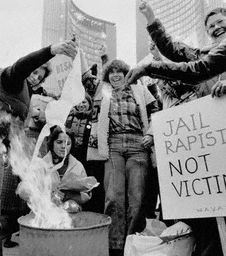
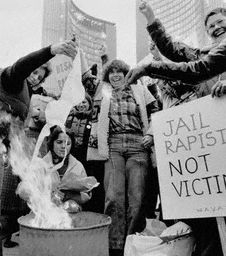
Toronto, 32 years ago today (Bettmann/Corbis)

“Bra-burning has long been associated with the feminist movement, but it never happened.”

So asserted an article published the other day in the Sacramento Bee.

It’s a not-infrequent claim, that feminist bra-burning was a media invention, a media myth.

But there were at least a couple of occasions when feminist protesters set fire to bras.

One of the occasions came 32 years ago today, when members of Women Against Violence Against Women demonstrated outside city hall in Toronto. Near the close of the demonstration, a protester named Pat Murphy dropped a white bra into the hungry flames of a burn barrel (see photo).

The demonstration in Toronto on March 8, 1979, coincided with International Women’s Day and was aimed at denouncing a report on rape prepared by the Ontario Provincial Police.

The police report said that of 337 rapes investigated, 140 were “unprovoked.” The report also said “promiscuity” was a factor in many rapes.

The Women Against Violence Against Women group scorned the report as outrageous and “dazzling in its illogic.” Protesters carried signs saying: “Take a Rapist to Lunch — Charcoal Broiled” and “Hookers Who Wink Go to the Clink! Men Who Rape Escape.”

The Globe and Mail newspaper reported that the protesters lighted “a fire in a garbage can, to the obvious annoyance of about a dozen watchful constables, [and] shouted: ‘Burn the rapists, burn the city, burn the OPP,’” acronym for Ontario Provincial Police.

The newspaper’s account did not mention the bra-burning which, one participant recently told me, “wasn’t a focal point” of the protest.

But it did happen.

Another participant recently recalled that “weighing in on the stereotype of ‘feminist bra-burners’ was actually an effective way [for protesters] to say: Women will control our own bodies, thank you!

“The bra burning,” she said, “was a way to entice the media as well as [offer] a critique of the police report.”

A little more than 10 years before the demonstration in Toronto, about 100 women gathered on the boardwalk at Atlantic City, New Jersey, to protest the 1968 Miss America pageant. The demonstration was organized by a small group called New York Radical Women and has been recognized as an early manifestation of the women’s liberation movement.

In Getting It Wrong, my mythbusting book that came out last year, I offer evidence that denials to the contrary, bras were briefly set afire at Atlantic City.

The evidence is from two witness accounts — one of which was published in the Press of Atlantic City on September 8, 1968, the day after the protest.

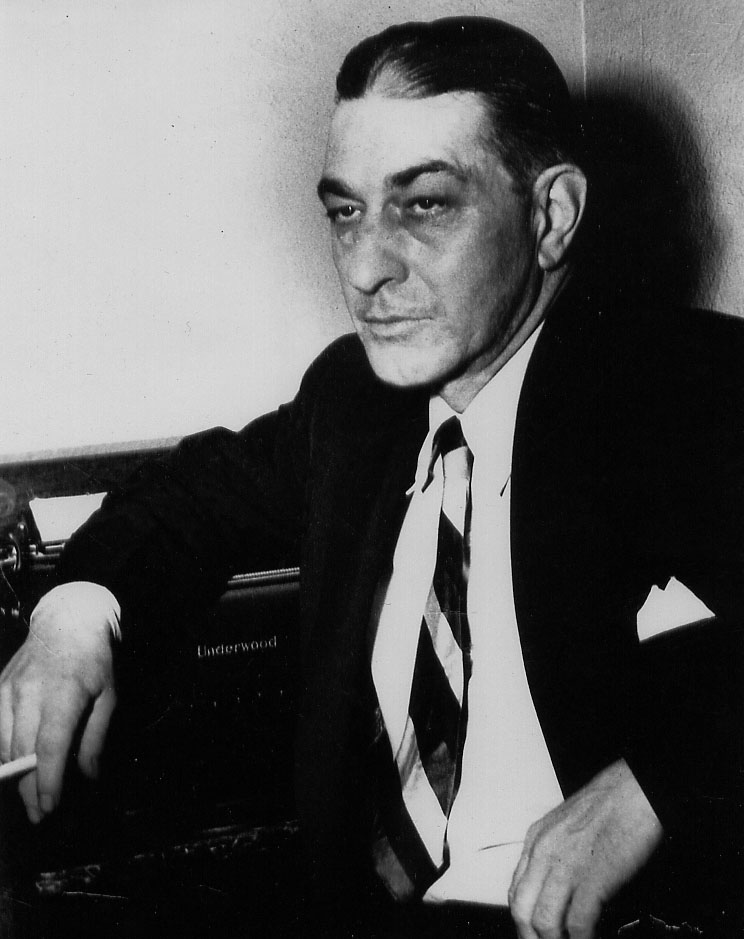
Boucher (1949 photo)

That account appeared beneath the byline of a veteran reporter named John L. Boucher and carried the headline:

“Bra-burners blitz boardwalk.”

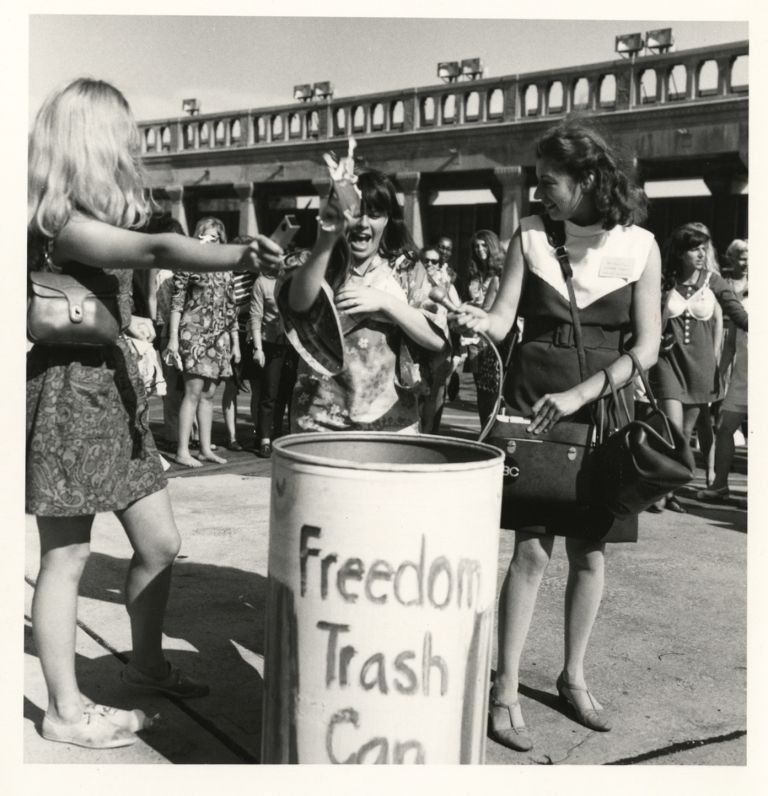
Boucher’s article referred to the burn barrel that demonstrators had dubbed the “Freedom Trash Can” and stated:

“As the bras, girdles, falsies, curlers, and copies of popular women’s magazines burned in the ‘Freedom Trash Can,’ the demonstration reached the pinnacle of ridicule when the participants paraded a small lamb wearing a gold banner worded ‘Miss America.’”

That account was buttressed by recollections of the writer Jon Katz, who in 1968 was a young reporter for the Atlantic City Press. Katz was on the Atlantic City boardwalk the day of the protest, gathering material for a sidebar article about reactions to the demonstration.

Katz’s sidebar didn’t mention the fire in the “Freedom Trash Can.”

But in correspondence with me, Katz stated:

“I quite clearly remember the ‘Freedom Trash Can,’ and also remember some protestors putting their bras into it along with other articles of clothing, and some Pageant brochures, and setting the can on fire.

“I am quite certain of this.”

WJC

Recent and related:

Enticing the media: More on bra-burning in Toronto, 1979

In Bra-burning, Debunking, Media myths, Photographs on March 4, 2011 at 7:00 am

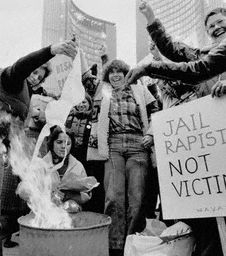
Toronto, 1979 (Bettman/Corbis)

Another participant at the 1979 bra-burning protest in Toronto has offered recollections of the event, at which the group Women Against Violence Against Women protested a controversial police report about the causes of rape.

The participant, Amy Gottlieb, said in an email forwarded to me that the photograph (left) “definitely is not doctored.”

(I had had my suspicions given that it looked almost too good to be true — which can be a marker of an unethically edited photograph and a media-driven myth.)

Gottlieb referred to Pat Murphy, who is shown in the photograph dangling the bra above the hungry flames, and wrote:

“Pat was threatening to burn a bra because the movement was media savvy and felt that weighing in on the stereotype of ‘feminist bra-burners’ was actually an effective way to say: Women will control our own bodies, thank you!

“The bra burning was a way to entice the media as well as [offer] a critique of the police report.”

I spoke recently with Vicki Trerise, who is shown at the far right in the photograph; she, too, said the demonstrators were media-savvy and “knew that if they burned a bra, someone would take their picture.”

Interestingly, the leading Toronto newspapers at the time didn’t mention the bra-burning in reports about the demonstration, which took place near Toronto city hall on March 8, 1979.

The Globe and Mail, in a fairly detailed account published the following day, characterized the demonstration as “boisterous” and reported:

“The women carried signs saying: ‘Take a Rapist to Lunch — Charcoal Broiled’ and ‘Hookers Who Wink Go to the Clink! Men Who Rape Escape.’

“The women, after lighting a fire in a garbage can, to the obvious annoyance of about a dozen watchful constables, shouted: ‘Burn the rapists, burn the city, burn the OPP,” acronym for the Ontario Provincial Police, which had issued the disputed report about rape.

The Globe and Mail also reported: “The women charged that the OPP report was nothing less than state approval of rape and that no serious study of rape had even been done by the Government.

“The women then sang a surprisingly obscene song describing male domination of women and marched off, chanting anti-male slogans ….”

Before the demonstrators moved on, the Globe and Mail reported, a “few chuckles from male onlookers provoked a slight shoving match, including one reporter by a large lady in lavender brandishing a cat-o-nine tails.”

The issue of the Toronto Star of March 9, 1979, carried a brief report about the Women Against Violence Against Women demonstration, noting the protesters’ anger at the police report, which had identified hitchhiking, alcohol consumption, and drug use as causes of many rapes.

“The women lit sparklers and set a garbage can on fire as they booed the report’s findings,” reported the Star, which did not mention the bra-burning.

Lighted sparklers held aloft are clearly visible in the bra-burning photograph. Rights to the photograph are held by the Bettmann/Corbis archive, which says it does not know the identity of the photographer.

It is sometimes claimed said that no bras were ever burned at a feminist protest in the 1960s or 1970s. The photograph of the demonstration in Toronto proves otherwise.

Moreover, I offer evidence in my latest book, Getting It Wrong, that bras were burned, briefly, at the famous women’s liberation protest against the 1968 Miss America pageant in Atlantic City, New Jersey.

“This evidence,” I write in Getting It Wrong, “cannot be taken lightly, dismissed or ignored,” and suggests “that the myth of mass or demonstrative bra-burning needs to be modified.”

The bra-burning in Toronto in 1979 further calls for revision of the notion that feminist bra-burning was a media myth.

WJC

Recent and related:

‘Those bra-burning times’: And just when were they?

In Bra-burning, Debunking, Media myths on March 1, 2011 at 8:44 am

Atlantic City, 1968

Bra-burning” is a euphonic term that emerged in the late 1960s to dismiss the women’s liberation movement as trivial, shallow, and even a bit primitive.

The epithet is still used to insult feminist advocacy.

Bra-burning” also lives on as a cliché — “convenient shorthand,” as I write in my mythbusting book, Getting It Wrong, “for describing the upheaval” of the 1960s and 1970s.

The term sometimes is invoked quite casually, as in “the era of bra-burning,” the “hysteria of bra-burning,” and “the bra-burning days of the turbulent 1960s.”

A commentary the other day in the Detroit Free Press offered up “those bra-burning times” in characterizing the 1970s.

The commentary’s author, the Free Press business and autos editor, recalled that in the 1970s, her mother had given her a book titled Women Who Dared to be Different.

“It certainly was a book for those bra-burning times,” she wrote, “and it told the stories of women who pioneered in professions once reserved for men.”

Of particular interest to Media Myth Alert is the casual reference to “those bra-burning times.”

“Bra-burning” may be an enduring turn of phrase. But the act of “bra-burning” neither defined nor figured prominently in feminist protests of the 1970s. Or of the 1960s.

There was hardly any bra-burning back in the day. Or at any time since.

I offer in Getting It Wrong evidence that bras were set afire, briefly, at the famous women’s liberation protest in 1968 against the Miss America pageant at Atlantic City, New Jersey.

The evidence comes from two witness accounts — one of them published in the local newspaper, the Press of Atlantic City, on September 8, 1968, the day after the protest.

That account appeared beneath the byline of a veteran reporter named John L. Boucher and carried the headline:

“Bra-burners blitz boardwalk.”

Boucher’s article referred to the burn barrel that demonstrators had dubbed the “Freedom Trash Can” and stated:

“As the bras, girdles, falsies, curlers, and copies of popular women’s magazines burned in the ‘Freedom Trash Can,’ the demonstration reached the pinnacle of ridicule when the participants paraded a small lamb wearing a gold banner worded ‘Miss America.’”

Boucher’s account, as I note in Getting It Wrong, “did not elaborate about the fire and the articles burning in the Freedom Trash Can, nor did it suggest the fire was all that important. Rather, the article conveyed a sense of astonishment that an event such as the women’s liberation protest could take place near the venue of the pageant.”

That account was buttressed by the recollections of Jon Katz, a prolific writer who in 1968 was a young reporter for the Atlantic City Press.

He was on the boardwalk the day of the protest, gathering material for a sidebar article about reactions to the demonstration.

Katz’s article did not mention the burning bras. But in correspondence with me, Katz has stated:

“I quite clearly remember the ‘Freedom Trash Can,’ and also remember some protestors putting their bras into it along with other articles of clothing, and some Pageant brochures, and setting the can on fire. I am quite certain of this.”

He added: “I recall and remember noting at the time that the fire was small, and quickly was extinguished, and didn’t pose a credible threat to the Boardwalk. I noted this as a reporter in case a fire did erupt ….”

Boucher’s long-overlooked article and Katz’s more recent recollections represent strong evidence that “bras and other items were set afire, if briefly, at the 1968 Miss America protest in Atlantic City,” I write in Getting It Wrong. “This evidence cannot be taken lightly, dismissed or ignored.

“But it must be said as well,” I add, “that the witness accounts of Boucher and Katz lend no support to the far more vivid and popular imagery that many bras went up in flames in flamboyant protest that September day.”

Bra-burning did figure, flamboyantly, at a women’s protest in Toronto in March 1979.

But as I discussed in a recent post at Media Myth Alert, bra-burning wasn’t that demonstration’s focal point. Setting fire to a bra was a way for the media-savvy protesters to call attention to their grievances — specifically, a controversial police report about rape.

Otherwise, the evidence is scant at best of feminist protesters in the 1960s and 1970s setting fire to bras and tossing the flaming undergarments into spectacular bonfires.

WJC

Recent and related:

Meaning what, ‘all the bra-burning’?

In Bra-burning, Debunking, Media myths, Photographs on February 21, 2011 at 8:11 am

Toronto, 1979 (Bettmann/Corbis)

Bra-burning used to commonplace in America, suggested a columnist in yesterday’s Boston Globe.

The column, which deplored the sexualization of American young women, contained this passage:

“American women stood up for their rights 50 years ago. The sexual revolution, too often blamed for what’s wrong with America today, wasn’t only about sexual liberation. It was about equality. We are more than our bodies is what all the bra-burning meant.”

What a minute: “…all the bra-burning”?

Meaning what? There was hardly any bra-burning in America. Ever.

Bra-burning wasn’t, and hasn’t been, a tactic of feminist protests, save for an episode — discussed in my latest book, Getting It Wrong — of what might best be called “bra-smoldering” at Atlantic City, New Jersey, in September 1968.

Getting It Wrong offers evidence that bras were burned, briefly, at a women’s liberation protest of the 1968 Miss America pageant at Atlantic City — but it was no demonstrative display, nothing, I write, akin to the “vivid and popular imagery that many bras went up in flames in flamboyant protest that September day.”

Bra-burning did figure, flamboyantly, at a women’s protest in Toronto in March 1979 (see photo, above).

But as I discussed in a recent post at Media Myth Alert, bra-burning wasn’t a focal point of that demonstration; rather, setting fire to a bra served as a way for media-savvy protesters to call attention to their grievances — specifically, a police report about rape.

Getting It Wrong discusses two other bra-burning episodes.

One was a failed attempted to set fire to a bra at Ohio State in 1999, to protest a cartoon in the student newspaper that poked fun at the university’s women’s studies program.

The other was a bizarre and gratuitous gesture on the Tyra Banks television show in 2008.

“Banks took members of her studio audience into the chill of a winter’s afternoon in New York for a made-for-television stunt about what women could do with ill-fitting brassieres,” I write in Getting It Wrong, adding:

“Banks wore an unzipped gray sweatshirt that revealed a powder-blue sports bra. Most of the other women were clad above the waist only in brassieres. They clutched other bras as they stood before a burn barrel from which flames leapt hungrily. On Banks’ word, the women tossed the bras in their hands into the fire.”

The Boston Globe columnist’s blithe and imprecise reference to bra-burning in a way evokes the role of columnists in the diffusion of the term.

As I write in Getting It Wrong, two columnists had a lot to do with the entry of “bra-burning” into the vernacular.

One was Harriet Van Horne, who wrote, sneeringly, in the New York Post two days after the demonstration at Atlantic City in 1968 that the protesters had screamed in “delight [as] they consigned to the flames such shackling, demeaning items as girdles, bras, high-heeled slippers, hair curlers and false eyelashes.”

Van Horne wasn’t at the protest. Even so, her highly imaginative characterization was taken up a few days later by Art Buchwald, then the leading humor columnist in American journalism.

Buchwald wrote with tongue in check how he had been “flabbergasted to read that about 100 women had picketed the Miss America pageant in Atlantic City against ‘ludicrous beauty standards that had enslaved the American woman.’”

He added: “The final and most tragic part of the protest took place when several of the women publicly burned their brassieres.”

As I point out in Getting It Wrong, Buchwald’s nationally syndicated column about the Atlantic City protest helped introduce the erroneous notion of flamboyant bra-burning to a national audience.

WJC

Recent and related:

Bra-burning in Toronto: Confirmed

In Bay of Pigs, Bra-burning, Debunking, Media myths, Photographs on February 19, 2011 at 12:12 am

It happened, and the photo’s no hoax.

The bra-burning episode pictured at left took place near Toronto city hall on March 8, 1979.

One of the participants, speaking by phone from Vancouver, confirmed the incident, saying, “The photo is authentic. Absolutely. It happened.”

The participant was Vicki Trerise, who is shown at the far right in the photograph, a larger version of which is accessible here.

I had not seen the photograph until February 6; it was posted that day with an article at the London Guardian online site.

I had had doubts about its authenticity.

Given periodic claims that no bras ever were burned at a feminist protest, the image, I suspected, may have been unethically altered.

Not only that, but the photograph seemed almost too good to be true, what with the white bra dangling above lapping flames of the burn barrel.

Trerise, though, assured me the photograph was legitimate. And her confirmation effectively represents a challenge to claims that feminist bra-burning is a media myth.

It happened in Toronto. The photograph shows a moment of demonstrative bra-burning, even though it “wasn’t a focal point” of the protest, Trerise said.

The bra-burning took place near the end of the demonstration, during which the group Women Against Violence Against Women protested what it termed was an illogical report prepared by the Ontario Provincial Police about rape.

Trerise said the demonstrators were media-savvy and “knew that if they burned a bra, someone would take their picture.”

By 1979, “bra-burning” had become part of the vernacular in North America, a dismissive term often invoked “to denigrate women’s liberation and feminist advocacy as trivial and even a bit primitive,” as I note in my latest book, Getting It Wrong.

“Invoking ‘bra-burning,'” I write, “was a convenient means of brushing aside the issues and challenges raised by women’s liberation and discrediting the fledgling movement as shallow and without serious grievance.”

The term emerged in the aftermath of a women’s liberation demonstration outside the Miss America pageant in September 1968 at Atlantic City, New Jersey.

Protest leaders have long insisted that nothing was burned at Atlantic City. However, I present evidence in Getting It Wrong that bras were set afire, briefly, during the demonstration on that long ago September day.

But I acknowledge that the evidence of bra-burning at Atlantic City doesn’t correspond to the “widely held image of angry feminists demonstratively setting fire to their bras and tossing the flaming undergarments into a spectacular bonfire.”

The demonstrators in Toronto in 1979 hardly looked angry; but they were flamboyant.

Trerise said the bra-burning that day “was a bit of a reverse spoof,” a parody of media claims that burning bras was commonplace at feminist protests in the late 1960s and 1970s. “It was like a joke,” she said, and “it wasn’t planned.”

She also said the demonstrators “all had been involved in street activism for many years.”

Dangling the bra above the burn barrel was Pat Murphy, who died in 2003. In the center of the photograph with her right arm upraised was Adrienne Potts.

Murphy and Potts were two members of the so-called “Brunswick Four” — lesbians arrested in 1974, following an episode at a tavern in Toronto where they sang a parody of “I Enjoy Being a Girl.” For “girl,” they had substituted “dyke.”

WJC

Many thanks to FiveFeetofFury for linking to this post

Recent and related:

Is this bra-burning photo authentic?

In Bra-burning, Media myths, Newspapers, Photographs on February 15, 2011 at 8:21 am

Bra-burning in Toronto, 1979 (Bettmann/Corbis)

It is claimed from time to time that burning bras figured in no feminist protest of the late 1960s and 1970s. Bra-burning, it is sometimes said, was little more than a media-concocted myth.

But this photograph, taken near Toronto city hall in March 1979, suggests otherwise. (A larger version of the image is available here.)

Update: The photo is genuine.

The occasion was International Women’s Day and the demonstrators were protesting the contents of a controversial Ontario Provincial Police report about rape.

But why would protesters incensed about a police report burn bras? The connection seems elusive.

And that’s one reason why I wonder about the photo’s authenticity, whether it was improperly edited. I’m not saying it’s a hoax or a ruse; I’m saying I have reservations.

I’ve conducted a good deal of research about feminist bra-burning; my latest book, Getting It Wrong, offers evidence that — assertions to the contrary notwithstanding — bras were burned, briefly, at the famous women’s liberation protest in September 1968 against the Miss America pageant at Atlantic City.

That evidence “cannot be taken lightly, dismissed or ignored,” I write in Getting It Wrong, which debunks 10 prominent media-driven myths — those dubious stories about the news media that masquerade as factual.

I also acknowledge that the evidence of bra-burning at Atlantic City doesn’t corroborate the “widely held image of angry feminists demonstratively setting fire to their bras and tossing the flaming undergarments into a spectacular bonfire.”

I saw the image of bra-burning in Toronto for the first time last week, accompanying an article posted February 6 at the online site of the London Guardian. The image was credited to the Bettmann/Corbis photo archive.

The archive’s online record says the bra-burning photograph was taken in Toronto on March 8, 1979. Information about the photographer and place of publication are not available, however.

Corbis notes that it licenses photographs for sale; it doesn’t vouch for their authenticity.

The image of the Toronto protest certainly seems to pose a further challenge to claims that feminist bra-burning is a media myth. While the demonstrators in the photograph hardly look angry, their protest certainly seems flamboyant, what with flames leaping hungrily from the burn barrel.

The photograph suggests a vivid moment of demonstrative bra-burning.

But, then, maybe those flames are lapping a bit too hungrily at the dangling white bra.

Why hasn’t that bra yet caught fire?

And wouldn’t it have been more logical and emphatic to drop a copy of the controversial police report into the flaming burn barrel?

Interestingly, the leading Toronto newspapers of the time did not mention the bra-burning episode in their reports about the protest.

The Toronto Star of March 9, 1979, said that the demonstrators were outraged by the provincial police report, which had identified hitchhiking, alcohol consumption, and drug use as factors in many rapes.

“The [protesting] women lit sparklers and set a garbage can on fire as they booed the report’s findings,” the report in the Star said, identifying the demonstrators as members of Women Against Violence Against Women.

Lighted sparklers held aloft can be seen in the photograph; the placard shown in the image bears the acronym of Women Against Violence Against Women.

The report in Toronto’s Globe and Mail newspaper was more detailed — but likewise made no mention of the burning bra.

The Globe and Mail said the protest was “boisterous” and aimed at the police report, which the demonstrators dismissed as “‘dazzling in its illogic.'”

The newspaper also reported:

“The women carried signs saying: ‘Take a Rapist to Lunch — Charcoal Broiled’ and ‘Hookers Who Wink Go to the Clink! Men Who Rape Escape.’

“The women, after lighting a fire in a garbage can, to the obvious annoyance of about a dozen watchful constables, shouted: ‘Burn the rapists, burn the city, burn the OPP,” the acronym for Ontario Provincial Police.

The newspaper added: “The women charged that the OPP report was nothing less than state approval of rape and that no serious study of rape had even been done by the Government.

“The women then sang a surprisingly obscene song describing male domination of women and marched off, chanting anti-male slogans ….”

I spoke by phone the other day with Susan G. Cole, who was a member of Women Against Violence Against Women and who said she was at the protest in March 1979.

But Cole said she does not recall the bra-burning.

I shared with her a link to image posted at the Guardian site; Cole said she is not in the photograph but added that she recognized as prominent activists the women shown in the image. “We were so bright and energetic in those days,” Cole said, a bit wistfully.

Women Against Violence Against Women, Cole also said, was theatrical and very creative in its protests, adding that she is “not surprised that these guys were burning bras.”

She suggested that the Toronto demonstrators may have thought that if bras had not been flamboyantly set afire at Atlantic City in 1968, then “let’s do it now.”

I’ve tried without success to reach two of the women in the photograph. One is a lawyer in British Columbia, the other an activist in Toronto.

In the final analysis, if the image is authentic, then it represents impressive evidence of demonstrative bra-burning at a feminist protest in the 1970s. If it’s not, then it’s a well-done photo hoax, a composite that deserves unmasking.

WJC

Many thanks to FiveFeetofFury for linking to this post

Recent and related:

‘Burn our briefs’ call in UK evokes myth of ‘bra burning’

In Bra-burning, Debunking, Media myths on January 27, 2011 at 7:02 pm

An obscure British back-bencher grabbed attention this week by suggesting it’s time for men to consider “burning their briefs,” to direct attention to what he calls “flagrant discrimination — against men.”

Back-bencher Raab, and wife

The comments by Dominic Raab, a Conservative member of Parliament, stirred inevitable reference to purported “bra burning” by feminist protestors a generation ago.

London’s Daily Telegraph made that connection the other day in paraphrasing Raab as saying British men “should follow the example of feminists who once burned their bras as he critici[z]ed … ‘flagrant discrimination’ against men.”

The Telegraph‘s headline was inspired. It read:

“Burn your Y-fronts for justice.”

Raab raised the “briefs-burning” suggestion wryly, in a commentary posted Monday. He wrote:

“From the cradle to the grave, men are getting a raw deal. Men work longer hours, die earlier, but retire later than women. … One reason women are left ‘holding the baby’ is anti-male discrimination in rights of maternity/paternity leave.”

He also declared:

“Feminists are now amongst the most obnoxious bigots.”

And he added:

“Maybe it’s time men started burning their briefs, to put an end once and for all to what Emmeline Pankhurst used to call ‘the double standard of sex morals.’” Pankhurst was a prominent women’s rights advocate in Britain in the late 19th and early 20th centuries.

Of especial interest to Media Myth Alert is the allusion that lurks in “burning their briefs” to purported feminist bra-burning of the late 1960s and 1970s.

As I discuss in my latest book, Getting It Wrong, “bra-burning” is a nuanced myth that can be traced to September 7, 1968, and the women’s liberation protest on the boardwalk of Atlantic City, N.J.

About 100 women gathered there to demonstrate against the Miss America pageant at the Atlantic City convention center.

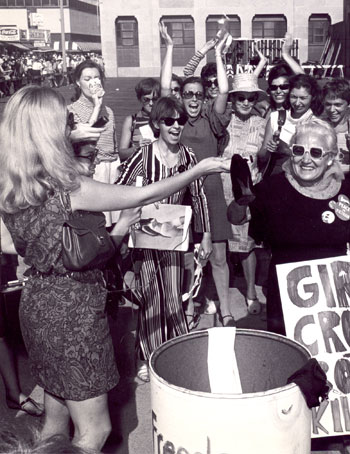
At the Freedom Trash Can

A centerpiece of their demonstration was the so-called Freedom Trash Can which protesters dropped “instruments of torture” — such as brassieres, girdles, high-heeled shoes, and copies of as Playboy and Cosmopolitan magazines.

The organizers of the protest have long insisted that nothing had been set ablaze at Atlantic City. The lead organizer, Robin Morgan, has asserted:

“There were no bras burned. That’s a media myth.”

Indeed, demonstrative bra-burning was not an element of feminist protests of the 1960s and 1970s; that it was is a hardy media-driven myth.

But as I report in Getting It Wrong, there is evidence that bras were briefly though not flamboyantly set afire during the Miss America protest in 1968.

In researching Getting It Wrong, I found a long-overlooked article published in the local newspaper, the Press of Atlantic City, the day after the protest. The Press account stated, matter-of-factly:

“As the bras, girdles, falsies, curlers, and copies of popular women’s magazines burned in the ‘Freedom Trash Can,’ the demonstration reached the pinnacle of ridicule when the participants paraded a small lamb wearing a gold banner worded ‘Miss America.’”

Jon Katz, then a young reporter for the Press, also was at the protest that September day. Katz, who write a sidebar article about reactions to the women’s liberation demonstration, said in interviews with me that he recalled that bras and other items had been set afire during the protest.

“I quite clearly remember the ‘Freedom Trash Can,’ and also remember some protestors putting their bras into it along with other articles of clothing, and some Pageant brochures, and setting the can on fire. I am quite certain of this,” Katz stated.

He added:

“I recall and remember noting at the time that the fire was small, and quickly was extinguished, and didn’t pose a credible threat to the Boardwalk. I noted this as a reporter in case a fire did erupt …. It is my recollection that this burning was planned, and that a number of demonstrators brought bras and other articles of clothing to burn, including, I believe some underwear.”

The contemporaneous newspaper report and the recollections of Katz represent, as I point out in Getting It Wrong, “fresh dimension to the bra-burning legend. … There is now evidence that bras and other items were set afire, if briefly, at the 1968 Miss America protest in Atlantic City. This evidence cannot be taken lightly, dismissed or ignored.”

But at the same time, I write, the accounts “offer no evidence to corroborate” popular imagery of feminists setting fire to their bras in flamboyant spectacle.

Demonstrative bra-burning is a myth — as dubious as thinking that many people will act on the back-bencher’s ironic suggestion that men ought to burn their briefs.

WJC

Recent and related:

‘Doctrinaire feminist in the bra-burning mold’?

In Bra-burning, Debunking, Media myths, Newspapers on January 21, 2011 at 10:15 am

The latest number of the Nation includes lengthy essay about Elizabeth Hardwick, a writer, critic, intellectual, and co-founder of the New York Review of Books who died in 2007.

At the 'Freedom Trash Can'

The essay caught the attention of Media Myth Alert because of a passage that declared Hardwick “was never a doctrinaire feminist in the bra-burning mold…”

But what is “a doctrinaire feminist in the bra-burning mold,” anyway? The Nation essay doesn’t say.

In fact, there was no such “mold.” Bra-burning was a misnomer, inaccurately though relentlessly attached to feminists and the “women’s liberation” movement of the late 1960s and 1970s.

What I call the “nuanced myth” of bra-burning is explored in my latest book, Getting It Wrong, which addresses and debunks 10 prominent media-driven myths–those dubious stories about the news media that masquerade as factual.

As I point out in Getting It Wrong, the popular notion of demonstrative bra-burnings — that feminists in the late 1960s and 1970s set bras afire in flamboyant public protests — “is fanciful and highly exaggerated.”

Ritual, frequent, flamboyant bra-burnings — there were none in those days.

At most, women’s liberation demonstrators at Atlantic City in early September 1968 (see photo above), briefly set bras and other items afire, an episode that may best be described as “bra-smoldering.”

The Atlantic City protest was the genesis of the media-driven myth of flamboyant bra-burning, though.

The demonstrators, who numbered 100 or so, gathered on the boardwalk to protest the Miss America pageant, which was taking place at the Atlantic City convention center.

They denounced the pageant as a “degrading Mindless-Boob-Girlie symbol” that placed “women on a pedestal/auction block to compete for male approval” and promoted a “Madonna Whore image of womanhood.” The demonstrators carried placards bearing such aggressive slogans as:

“Up Against the Wall, Miss America,” “Miss America Sells It,” “Miss America Is a Big Falsie.”

I note in Getting It Wrong that a centerpiece of the protest that day was a burn barrel that the demonstrators called the “Freedom Trash Can.” Into the barrel they consigned “instruments of torture,” such as brassieres, girdles, high-heeled shoes, false eyelashes, copies of magazines such as Playboy and Cosmopolitan.

“In the days before the protest,” I write, “the organizers of the protest had let it be known— or at least had hinted openly — that brassieres and other items would be set afire in the Freedom Trash Can. At least a few news reports in advance of the protest referred to plans for a ‘bra-burning’ at the Atlantic City boardwalk.”

But once in Atlantic City, the protesters supposedly modified their plans, in favor of what their leader, Robin Morgan, termed a “symbolic bra-burning.”

After all, a week before the protest fire had destroyed or damaged fourteen stores in a half-block section of the boardwalk.

“In the years since,” I write in Getting It Wrong, “Morgan and other participants have insisted that bras were not set afire at Atlantic City that day.”

However, in researching Getting It Wrong, I found a long-overlooked article published the day after the 1968 protest in the local Atlantic City newspaper, the Press. The article, written by a veteran reporter named John L. Boucher, stated matter-of-factly:

Boucher, 1949 photo

“As the bras, girdles, falsies, curlers, and copies of popular women’s magazines burned in the ‘Freedom Trash Can,’ the demonstration reached the pinnacle of ridicule when the participants paraded a small lamb wearing a gold banner worded ‘Miss America.’”

I note that Boucher’s report “did not elaborate about the fire and the articles burning in the Freedom Trash Can, nor did it suggest the fire was all that important. … Nonetheless, the passage stands as a contemporaneous account that there was fire in the Freedom Trash Can that day.”

Another reporter for the Press of Atlantic City, Jon Katz, also was at the women’s liberation protest that long ago September day. In interviews with me, Katz said he recalled that bras and other items were set afire during the demonstration and burned briefly.

“I quite clearly remember the ‘Freedom Trash Can,’ and also remember some protestors putting their bras into it along with other articles of clothing, and some Pageant brochures, and setting the can on fire. I am quite certain of this,” Katz stated.

He added:

“I recall and remember noting at the time that the fire was small, and quickly was extinguished, and didn’t pose a credible threat to the Boardwalk. I noted this as a reporter in case a fire did erupt …. It is my recollection that this burning was planned, and that a number of demonstrators brought bras and other articles of clothing to burn, including, I believe some underwear.”

So what’s the upshot?

The Boucher article and Katz’s recollections, I write, “offer fresh dimension to the bra-burning legend. … There is now evidence that bras and other items were set afire, if briefly, at the 1968 Miss America protest in Atlantic City. This evidence cannot be taken lightly, dismissed or ignored.”

But I also note that the witness accounts “offer no evidence to corroborate a widely held image of angry feminists demonstratively setting fire to their bras and tossing the flaming undergarments into a spectacular bonfire.”

I note in Getting It Wrong, that the epithet bra-burning “has long been an off-hand way of ridiculing feminists and mocking their sometimes-militant efforts to confront gender-based discrimination in the home and the work place. Characterizations such as ‘bra-burning feminists,’ ‘the bra-burning women’s movement,’ ‘loud-mouthed, bra-burning, men-hating feminists,’ and ‘a 1960s bra-burning feminist’ have had currency for years.”

Add now to that dubious roster “doctrinaire feminist in the bra-burning mold.”

WJC

Recent and related:

Have a look: New trailer for ‘Getting It Wrong’

In Anniversaries, Debunking, Hurricane Katrina, Media myths, Media myths and radio, Newspapers, War of the Worlds, Washington Post, Watergate myth on January 18, 2011 at 7:08 am

Check out the new trailer for my latest book, Getting It Wrong, which addresses and debunks 10 prominent media-driven myths–those dubious stories about the news media that masquerade as factual.

As I say in narrating the trailer, media-driven myths can be thought of as the “junk food of journalism“–delicious and appealing, perhaps, but not very nutritious.

The trailer, recently completed by research assistant Jeremiah N. Patterson, reviews the media myths related to the Watergate scandal, the purported Cronkite Moment, and the aftermath of Hurricane Katrina.

A trailer prepared last year by Mariah Howell shortly before publication of Getting It Wrong remains accessible at YouTube.

Another YouTube video–prepared by Patterson in the fall to mark the anniversary of the famous War of the Worlds radio broadcast that supposedly was so realistic that it panicked America–also is accessible online. The video discusses Halloween’s greatest media myth.

WJC

Recent and related:

Cronkite’s view on Vietnam ‘changed course of history’ But how?

In Cronkite Moment, Debunking, Media myths, New York Times, Newspapers on January 17, 2011 at 7:16 am

Few media-driven myths are more enticing, delicious, or retold as often as the so-called “Cronkite Moment,” when the views of CBS anchorman Walter Cronkite supposedly altered American policy in the Vietnam War.

The presumptive “Cronkite Moment“–one of 10 media-driven myths I address and debunk in my latest book, Getting It Wrong–took place February 27, 1968, when Cronkite declared on air that U.S. military was “mired in stalemate” in Vietnam.

At the White House, President Lyndon Johnson supposedly watched the Cronkite report and, upon hearing the “mired in stalemate” analysis, snapped off the television set and told an aide or aides:

“If I’ve lost Cronkite, I’ve lost Middle America.”

Or something to that effect. Versions vary markedly.

The words of the anchorman supposedly represented an epiphany for the president.

A slimmed-down version of the “Cronkite Moment” appeared in yesterday’s Los Angeles Times, in a commentary about a supposed surfeit of opinion in contemporary America.

“Opinion inflation has invaded every aspect of our lives,” wrote the commentary’s author, Stephen Randall, the deputy editor of Playboy.

“There was a time,” he added, vaguely, “when thoughtful people tried to be balanced. The old-style political columnists were famous for saying nothing.”

Randall further declared:

“Walter Cronkite voiced so few opinions that when he uttered one—about the Vietnam War—it changed the course of history.”

My opinion? Such ruminations are glib, superficial and, in reference to Cronkite, the stuff of media myth.

The author doesn’t explain how Cronkite’s views on Vietnam “changed the course of history” (an exaggerated claim sometimes made about the Watergate reporting of Bob Woodward). But Randall’s clearly alluding to the mythical “Cronkite Moment” of February 1968.

As I discuss in Getting It Wrong, “serious flaws are associated with the presumptive ‘Cronkite moment.'”

Notable among them is that President Johnson did not see Cronkite’s Vietnam program when it aired.

Johnson at the time wasn’t at the White House and he wasn’t in front of a television set.

Johnson was on the campus of the University of Texas at Austin, attending the 51st birthday party of a longtime political ally, Governor John Connally.

As Cronkite was intoning his “mired in stalemate” assessment, Johnson was offering light-hearted banter about Connally’s age.

“Today you are 51, John,” the president said. “That is the magic number that every man of politics prays for—a simple majority.”

Cronkite

It was hardly the best presidential joke ever told. But it clearly demonstrated that Johnson was not bemoaning the loss of Cronkite’s support.

Indeed, it is difficult to fathom how Johnson could have been moved by a program he did not see.

Not only that, but Cronkite’s “mired in stalemate” assessment was by late February 1968 neither striking nor original.

As I note in Getting It Wrong, “stalemate” had been invoked  for months to describe the war in Vietnam.

Notably, the New York Times published a front-page analysis on August 7, 1967, that declared “the war is not going well. Victory is not close at hand.”

The Times report was published on its front page beneath the headline:

Vietnam: The Signs of Stalemate.

And that wasn’t the only occasion in 1967 when the Times turned to “stalemate” to characterize the war.

A review of database articles and editorials published in the Times reveals that “stalemate” was invoked not infrequently in the months before the supposedly revealing “Cronkite Moment.”

For example, in a news analysis published July 4, 1967, the Times said of the war effort:

“Many officers believe that despite the commitment of 466,000 United States troops now in South Vietnam … the military situation there has developed into a virtual stalemate.”

And in an editorial published October 29, 1967, the Times said:

“Instead of denying a stalemate in Vietnam, Washington should be boasting that it has imposed a stalemate, for that is the prerequisite–on both sides–to a negotiated settlement. That settlement, if it is to be achieved, will have to be pursued with the same ingenuity and determination that have been applied to fighting the war.”

So Cronkite in his report about Vietnam on February 27, 1968, essentially reiterated an assessment that had been offered several times by the Times.

And embracing the view of the Times “changed the course of history”?

Hardly.

U.S. troops were in Vietnam for five years after the “Cronkite Moment.”

WJC

Recent and related: