W. Joseph Campbell

Posts Tagged ‘Cronkite Moment’

Cronkite, secret antiwar collaborator? Seems a stretch

In Cronkite Moment, Debunking, Media myths on May 14, 2010 at 3:44 pm

Yahoo’s online news site has turned up FBI documents claiming that Walter Cronkite, the venerable CBS News anchorman often if mistakenly called America’s “most trusted” public figure, offered advice and suggestions in late 1969 to foes of the Vietnam War.

Redacted FBI document on Cronkite (Yahoo News)

The Yahoo report, posted this afternoon, says the documents indicate that Cronkite offered “advice on how to raise the public profile of protests and even pledging CBS News resources to help pull off events, according to FBI documents” obtained through the Freedom of Information Act.

Cronkite died 10 months ago.

He made clear his mild opposition to the war on February 27, 1968, in a famous editorial comment at the close of a special report on Vietnam.  Cronkite on that occasion declared:

To say that we are closer to victory today is to believe, in the face of the evidence, the optimists who have been wrong in the past. To suggest we are on the edge of defeat is to yield to unreasonable pessimism. To say that we are mired in stalemate seems the only realistic, yet unsatisfactory, conclusion.

Cronkite also suggested that negotiations eventually might prove to be America’s way out of the conflict.

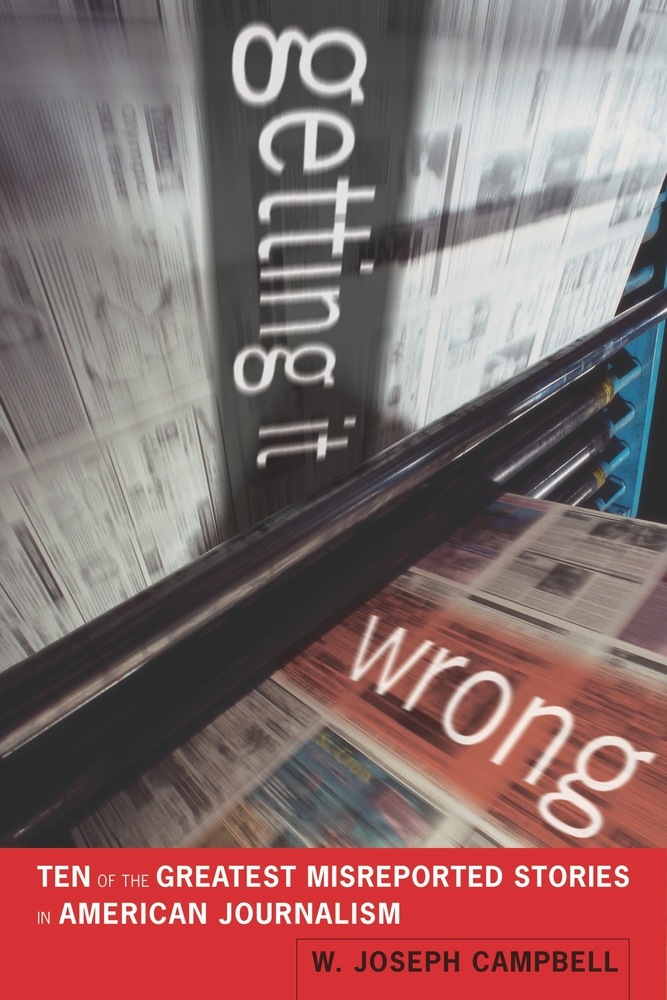
The program that night became grist for a prominent media-driven myth, one of 10 that I discuss, and debunk, in my forthcoming book, Getting It Wrong.

Legend has it that at the White House, President Lyndon Johnson watched the Cronkite show and, upon hearing the anchorman’s dire assessment about Vietnam, snapped off the television set and exclaimed, “If I’ve lost Cronkite, I’ve lost Middle America.”

Or words to that effect. Versions vary.

But as I point out in Getting It Wrong, Johnson wasn’t at the White House that night. And he wasn’t in front of a television set to watch Cronkite’s special report.

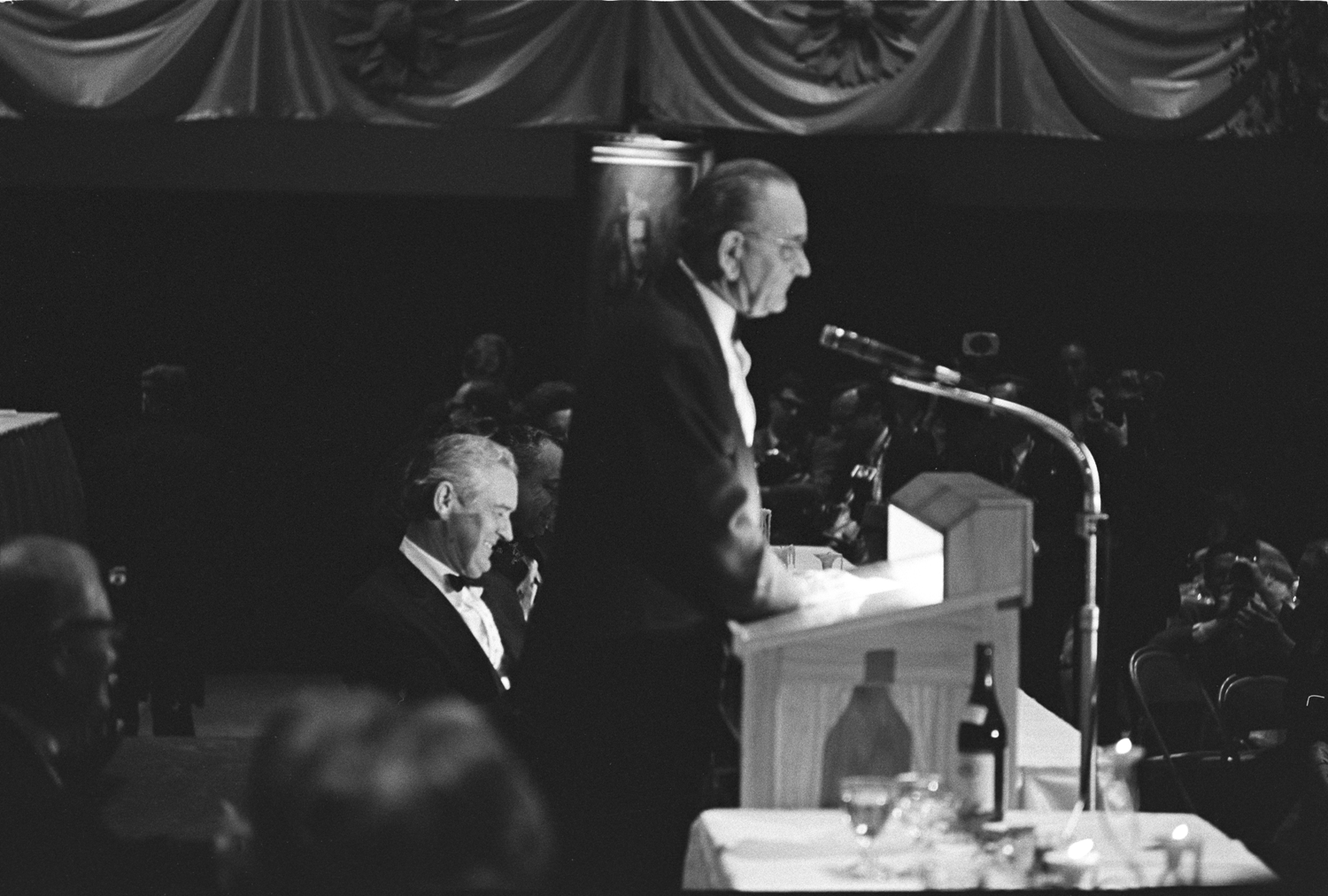
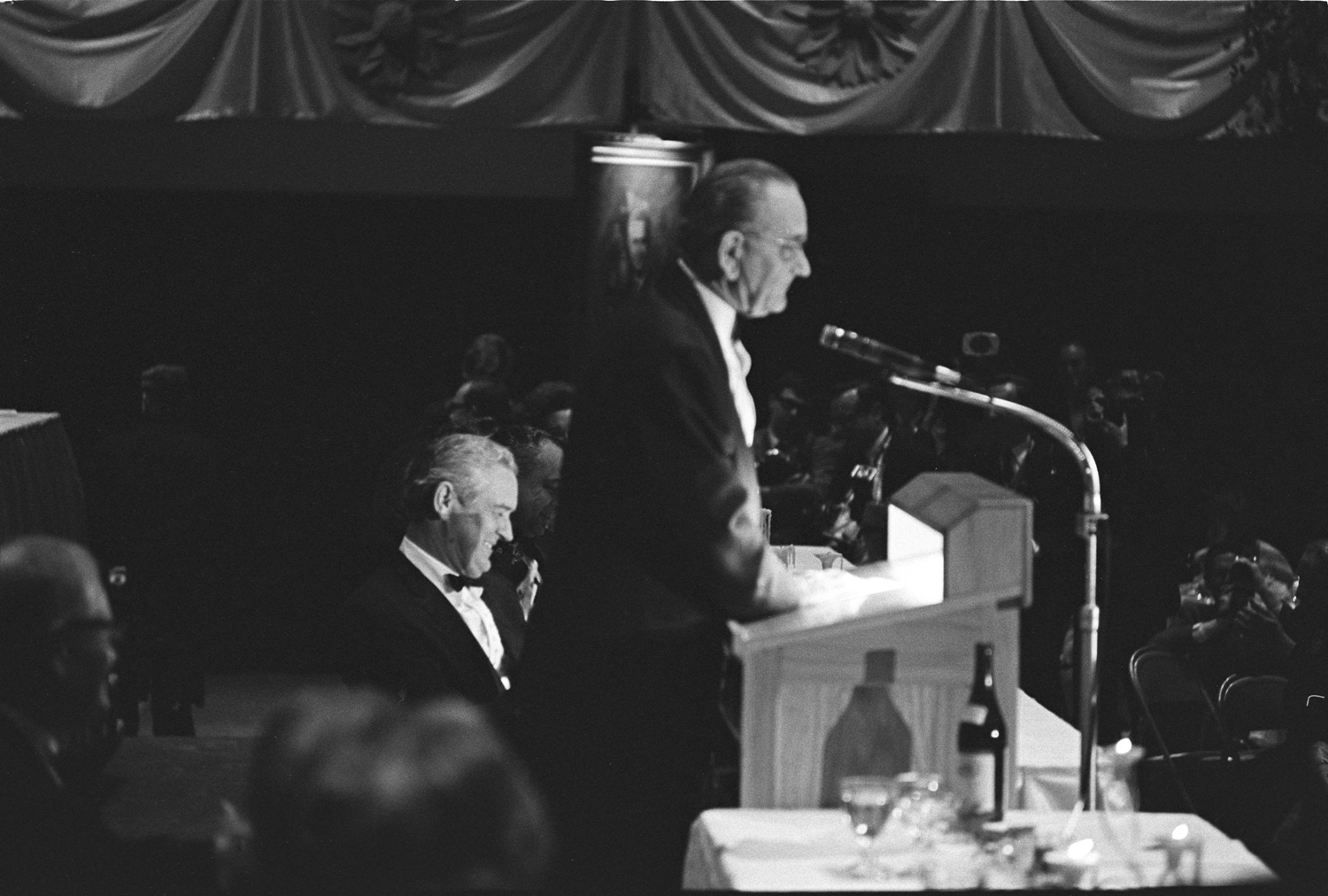
The president was in Austin, Texas, offering light-hearted banter at the 51st birthday party of a longtime political ally, Governor John Connally.

Today’s Yahoo report, while certainly provocative, seem to stretch credulity in important respects.

Cronkite, the Yahoo report says, “encouraged students at Rollins College in Winter Park, Fla., to invite Maine Sen. Edmund Muskie to address a protest they were planning near Cape Kennedy (now known as Cape Canaveral). Cronkite told the group’s leader that Muskie would be nearby for a fundraiser on the day of the protest, and said that ‘CBS would rent [a] helicopter to take Muskie to and from site of rally,’ according to the [FBI] documents.”

That Cronkite would even contemplate going so far as to arrange for the network to pay for a helicopter to take Muskie to the rally seems improbable.

The Yahoo report further quotes the FBI documents as saying the leader of an antiwar group in Florida said he spent 45 minutes on the telephone with Cronkite, discussing activities related to antiwar demonstrations in November 1969.

That Cronkite would spent that much time on the phone, offering advice to an activist, also seems unlikely.

And a comment posted today at the popular Romenesko online media news site offers an important reminder:

“Many Yahoo readers may be unaware that [FBI] files were full of nonsense and falsehoods by people seeking to curry favor, damage enemies, collect money and who otherwise had no interest in the truth of matters.”

The Cronkite-as-secret-collaborator story is delicious in what it suggests. Given Cronkite’s public views about the war, it’s perhaps faintly plausible.

But by no means can it be considered authoritative.

WJC

Johnson was ‘panicked’ by Cronkite show on Vietnam?

In Cronkite Moment, Debunking, Media myths on May 11, 2010 at 1:28 pm

The flexibility and wide applicability of prominent media-driven myths is little short of astonishing sometimes.

Cronkite in Vietnam, 1968

Take, for example, the column in today’s Jerusalem Post, which invoked the often-told anecdote about the supposed effects of Walter Cronkite’s special report in 1968 about the Vietnam War.

As I discuss in Getting It Wrong, my forthcoming book about media-driven myths, it is widely believed that President Lyndon Johnson essentially threw up his hands in dismay upon hearing Cronkite’s pessimistic assessment about the war.

Cronkite, the CBS News anchorman, said the U.S. military was “mired in stalemate” in Vietnam and suggested that negotiations might be a way out.

Johnson supposedly realized the war effort was now hopeless, telling an aide or aides, “If I’ve lost Cronkite, I’ve lost Middle America.”

Or something along those lines. Versions of what the president supposedly said vary markedly.

Today’s Jerusalem Post column offered another variation, saying that Johnson “panicked when he lost Walter Cronkite over Vietnam….”

Panicked?

What? How so?

As I discuss in Getting It Wrong, Johnson didn’t even see the Cronkite report when it aired late in the evening of February 27, 1968.

Johnson then was in Austin, Texas, at the 51st birthday party of Governor John Connally, one of his long-time political allies.

About the time Cronkite was intoning his downbeat assessment on Vietnam, Johnson was offering light-hearted remarks about Connally’s age, saying:

“Today you are 51, John. That is the magic number that every man of politics prays for—a simple majority. Throughout the years we have worked long and hard—and I might say late—trying to maintain it, too.”

No panic there.

Nor was there any in the days that followed.

I note in Getting It Wrong that even if Johnson saw the Cronkite program on videotape, the anchorman’s assessment represented no epiphany for the president.

About three weeks after the Cronkite program, I write, “Johnson gave a rousing, lectern-pounding speech in which he urged a ‘total national effort’ to win the war in Vietnam.”

So no panic there, either.

And on the day of the Cronkite program, Johnson offered a forceful defense of his war policy, vowing in a midday speech in Dallas there would be “no retreat from the responsibilities of the hour of the day.”

Johnson declared: “We are living in a dangerous world and we must understand it. We must be prepared to stand up when we need to. There must be no failing our fighting sons” in Vietnam.

“It seems inconceivable,” I write in Getting It Wrong, “that Johnson’s views [on Vietnam] would have pivoted so swiftly and dramatically, upon hearing the opinion of a television news anchor, even one as esteemed as Cronkite.”

It’s quite improbable.

So, no, Johnson wasn’t “panicked” by Cronkite’s assessment on Vietnam.

Not at all.

WJC

<!–[if !mso]> <!– st1\:*{behavior:url(#ieooui) } –> Johnson’s speech, the newspaper said, was “perhaps his strongest public call yet for unity in pushing the Vietnam war.”[i]


[i] Sell, “No Viet Retreat,” Los Angeles Times, 1.

Cronkite ‘dissed’ Johnson? Think again

In Cronkite Moment, Debunking, Media myths on April 30, 2010 at 3:40 pm

When the Daily Show’s Jon Stewart weighed on the Apple-Gizmodo dust-up over the lost prototype of a next generation iPhone, it was akin to Walter Cronkite’s taking to the air to criticize the U.S. war effort in Vietnam in 1968.

Or so says an item posted yesterday at the  tech-news blog DVICE.

Stewart the other night called out Apple over the police search at the home of the Gizmodo editor who had blogged about the iPhone prototype, which an Apple employee reportedly had lost at a bar.

In a segment about the Gizmodo controversy, Stewart in mock lament asked of Apple: “Are you becoming the Man?”

He also said in skewering Apple: “I mean, if you want to break down someone’s door, why don’t you start with AT&T, for god’s sake? They make your amazing phone unusable as a phone.”

In reaching–overreaching–for significance, DVICE said of Stewart’s segment:

“Is that a paradigm we feel shifting? It reminds us of when President Lyndon Johnson got dissed by Walter Cronkite in a scathing report on the futility of the Vietnam War, with Johnson saying, ‘If I’ve lost Cronkite, I’ve lost Middle America.'”

Interesting analogy.

Trouble is, there’s no documented evidence of Johnson ever having said anything of the sort.

The Cronkite-Johnson anecdote is one of 10 media-driven myths that I address, and debunk, in my forthcoming book, Getting It Wrong.

The anecdote–often called the “Cronkite moment“–centers around the special report on Vietnam that aired February 27, 1968, on CBS. At the end of the program, Cronkite declared the U.S. military effort in Vietnam was “mired in stalemate” and suggested a negotiated settlement would be the only way out.

Legend has it that Johnson watched the program at the White House and, upon hearing Cronkite’s editorial comment, snapped off the television and said to an aide or aides:

“If I’ve lost Cronkite, I’ve lost Middle America.”

Or words to that effect. Versions vary.

But as I note in Getting It Wrong, Johnson wasn’t in Washington when the Vietnam special was shown. He was in Austin, Texas, at the 51st birthday party of Governor John Connally–and did not see the Cronkite program.

As such, I write:

Johnson in Austin, February 27, 1968

“Johnson did not have—could not have had—the abrupt yet resigned reaction that so often has been attributed to him.”

Moreover, I add, “Johnson’s supposedly downbeat, self-pitying reaction to Cronkite’s on-air assessment clashes sharply with the president’s aggressive characterization about the war. Hours before the Cronkite program, Johnson delivered a little-recalled but rousing speech on Vietnam, a speech cast in Churchillian terms. It seems inconceivable that Johnson’s views would have pivoted so swiftly and dramatically, upon hearing the opinion of a television news anchor, even one as esteemed as Cronkite.”

I further write in Getting It Wrong that even if the president had “later heard—or heard about—Cronkite’s assessment, it was no epiphany for Johnson. Not long after the program, Johnson gave a rousing, lectern-pounding speech in which he urged a ‘total national effort’ to win the war in Vietnam.”

So Johnson “got dissed” by Cronkite? One might say that, but Johnson didn’t care. Or even know about it. Not immediately.

And more important, Cronkite’s comments made no significant difference to Johnson and his Vietnam policy.

WJC

Halberstam the ‘unimpeachable’? Try myth-promoter

In Bay of Pigs, Cronkite Moment, Debunking, Furnish the war, Media myths, New York Times, Spanish-American War on April 24, 2010 at 9:02 am

A book review in the New York Times the other day referred to David Halberstam, the legendary author and journalist, as an “unimpeachable” source.

Halberstam, who died in an automobile accident three years ago, certainly built an outsize reputation. But unimpeachable?

I’d say no way.

Halberstam, in his hefty and still-popular 1979 study of the news media, The Powers That Be, encouraged the rise of two prominent media-driven myths and endorsed a third.

As I note in Getting It Wrong, my forthcoming book about media-driven myths, Halberstam’s Powers That Be was an important source, perhaps the original source, for the so-called “Cronkite Moment” of February 27, 1968.

That was when CBS anchorman Walter Cronkite asserted in a special report that the U.S. war effort in Vietnam was “mired in stalemate.”

In Halberstam’s telling, Cronkite’s report represented “the first time in American history a war had been declared over by an anchorman.”

Halberstam wrote that President Lyndon Johnson was in Washington and watched the Cronkite special that night. Upon hearing Cronkite’s dire assessment about Vietnam, the president said that if he had lost Cronkite, he had lost Mr. Average Citizen.

Interestingly, Halberstam did not place Johnson’s purported lament inside quotation marks. He paraphrased the remarks and said Johnson had directed  them to presidential press secretary George Christian.

But as I write in Getting It Wrong, Johnson was not in Washington that night. He did not see the Cronkite program when it aired. Thus, he could not have had the abrupt, dramatic, yet resigned reaction that Halberstam, and others, have attributed to him.

Johnson that night was in Austin, Texas, at the 51st birthday party of a political ally, Governor John Connally.

About the time Johnson supposedly made the comment about losing Cronkite, he was offering light-hearted banter about Connally’s age, saying:

“That is the magic number that every man of politics prays for—a simple majority. Throughout the years we have worked long and hard—and I might say late—trying to maintain it, too.”

The “Cronkite Moment,” I write in Getting It Wrong, “is a media-driven myth. It did not have the effects that Halberstam and many others have attributed to it.”

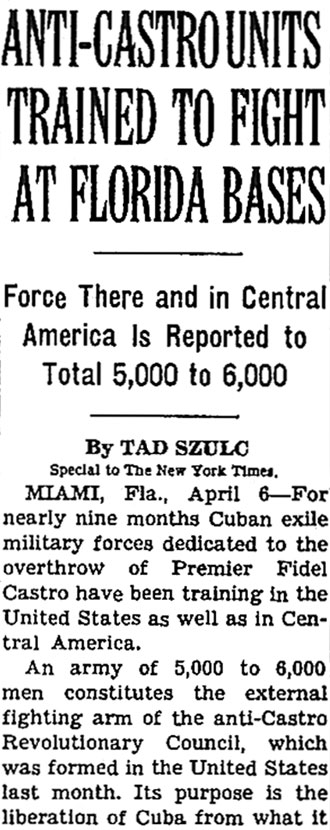
Halberstam’s Powers That Be also offered a graphic, if exaggerated, account that President John Kennedy supposedly called James Reston of the New York Times in April 1961 and urged him not to publish a report about the pending Bay of Pigs invasion.

Kennedy “argued strongly and passionately,” Halberstam wrote, that the Times by reporting the story would damage his policy. Halberstam also wrote that in his call to Reston, Kennedy said the Times risked having blood on its hands were the article published and the invasion failed.

Such a conversation never happened, according to Reston and others quoted in Harrison Salisbury’s insider’s account of the Times, Without Fear or Favor.

Indeed, there is no evidence that Kennedy called anyone at the Times in advance of the report–which was written by Tad Szulc and published April 7, 1961, on the Times front page (see right).

As I note in Getting It Wrong:

“The Kennedy Library in Boston says that the White House telephone logs reveal no calls were placed to Reston” or other Times executives on April 6, 1961, the day the story was prepared for publication.

“Moreover,” I note, “Kennedy had almost no chance to speak with those executives during the interval from when Szulc’s story arrived at the Times building in midtown Manhattan and when it was set in type. … During that time, Kennedy was otherwise preoccupied. He spent the last half of the afternoon of April 6, 1961, playing host to Harold Macmillan, the British prime minister, on a lengthy cruise down the Potomac River to Mount Vernon.”

In addition, Halberstam’s Powers That Be invoked one of the most enduring media myths–the anecdote about William Randolph Hearst’s purported vow to “furnish the war” with Spain at the end of the 19th century.

That anecdote is revisited, and dismantled, in the first chapter of Getting It Wrong.

The Powers That Be was a popular success, reaching the second spot on the New York Times best-selling list in May 1979. But the book wasn’t without persuasive critics.

Among them was David Culbert, an historian at Louisiana State University who years ago raised questions about the “Cronkite Moment,” noting that Johnson was in Texas when the program aired.

In a devastating review published in the American Historical Review, Culbert called The Powers That Be overlong and declared:

“The absence of a developed thesis, lack of proper documentation, and numerous errors of fact for events before the 1960s suggest that historians will have to use this book with caution. There is much here that might be true and, if true, valuable, but there is also no certainty that sloppy research does not undermine the very parts that seem most interesting.”

WJC

One paragraph, three myths

In Cronkite Moment, Debunking, Media myths, Murrow-McCarthy myth, New York Times, Washington Post, Watergate myth on April 21, 2010 at 11:45 am

A column posted today at a Canadian online news site achieved the feat of working three media-driven myths into a single paragraph.

Here’s what the columnist wrote, in a paean to the power and influence that traditional news media once wielded, supposedly:

“A Walter Cronkite could, however belatedly, expose the pointlessness of Vietnam. Famously, Edward R. Murrow deflated McCarthy. A pair of scruffy reporters could bring down a Nixon.”

Three sentences, three myths–a trifecta that is very rare.

All three media-driven myths are addressed, and debunked, in my book, Getting It Wrong, to be published in summer by the University of California Press.

The reference to Cronkite is to the CBS anchorman’s report of February 27, 1968, in which he said the U.S. military was “mired in stalemate” in Vietnam. As I write in Getting It Wrong, such a characterization was scarcely original or exceptional at the time. It was no exposé.

Indeed, nearly seven months before Cronkite’s pronouncement, the New York Times had suggested in a front-page report that the war was stalemated.

Victory in Vietnam, the Times report said, “is not close at hand. It may be beyond reach.”

That Murrow “deflated” Senator Joseph R. McCarthy is another media myth, stemming from Murrow’s See It Now television program of March 9, 1954.

Murrow in fact was quite belated in confronting McCarthy and the senator’s communists-in-government witch hunt.

The half-hour See It Now program on McCarthy came many months–even years–after other journalists had pointedly challenged the senator and his bullying tactics. Eric Sevareid, a friend and CBS colleague of Murrow, pointedly noted that Murrow’s program “came very late in the day.”

In an interview in 1978, Sevareid said: “The youngsters read back and they think only one person in broadcasting and the press stood up to McCarthy and this has made a lot of people feel very upset, including me, because that program came awfully late.”

And by the time Murrow’s report aired, McCarthy’s favorable ratings had been in decline for three months, as also I note in Getting It Wrong.

The Canadian columnist’s reference to “a pair of scruffy reporters” who supposedly brought down Richard Nixon is, of course, to Carl Bernstein and Bob Woodward, who covered the Watergate scandal for the Washington Post.

As I’ve noted in previous posts at MediaMythAlert, the notion that the reporters brought down Nixon and his corrupt presidency is a myth that even the Post has tried to dismiss.

Howard Kurtz, the newspaper’s media reporter, wrote in 2005, for example:

“Despite the mythology, The Post didn’t force Richard Nixon from office—there were also two special prosecutors, a determined judge, bipartisan House and Senate committees, the belated honesty of [former White House lawyer] John Dean and those infamous White House tapes.”

Kurtz’s observations parallel those of Stanley I. Kutler, a leading historian of the  Watergate scandal, who has written:

“The fact is, an incredible array of powerful actors all converged on Nixon at once—the FBI, prosecutors, congressional investigators, the judicial system.”

The three myths are stories well-known and even cherished in American journalism. They almost always are cited as examples of media power and influence, of journalists at their courageous best.

But as I write in Getting It Wrong:

“To identify these tales as media myths is to confront the reality that the news media are not the powerful agents they, and many others, assume them to be.”

WJC

Now at Political Bookworm, where ‘must-read books are discovered’

In Cronkite Moment, Debunking, Furnish the war, Media myths, Washington Post, Watergate myth on April 9, 2010 at 7:35 am

I guestpost today at the Political Bookworm, a Washington Post-sponsored site that describes itself as a blog where “tomorrow’s must-read political books are discovered today.”

In my post, I discuss three of the media-driven myths examined in my forthcoming book, Getting It Wrong, which the University of California Press will publish in the summer.

Political Bookworm is edited by Steven Levingston, the Post‘s nonfiction editor. The blog notes that it “discusses new books long before they hit the shelves.”

And here’s the text of my guest post:

The most famous anecdote in American journalism may be William Randolph Hearst’s purported vow, telegraphed to the artist Frederic Remington in Cuba, to “furnish the war” with Spain at the end of the 19th century.

Or it may be Edward R. Murrow’s television program on CBS in 1954, which supposedly brought an end to Sen. Joseph R. McCarthy’s communists-in-government witch-hunt.

Or it may be the interpretation of Watergate that says The Washington Post’s investigative reporting brought down Richard Nixon’s corrupt presidency.

All three are well-known stories about the exercise of media power, for good or bad. All three anecdotes are often retold.

All three are media-driven myths.

Media myths often confer on the news media far more power and influence than they merit or possess. Media myths also tend to minimize the complexity of historical events in favor of simplistic and misleading interpretations.

That’s an important reason why Hearst’s vow has lived on for more than 100 years: It is succinct, savory, and easily remembered. It conforms to the popular image of Hearst as war-monger.

Hearst, though, denied making such a statement. The telegram containing his purported pledge has never turned up. And it would have been absurd for Hearst to vow to “furnish the war” because war — Cuba’s rebellion against Spain’s colonial rule — was the reason he sent Remington to Cuba. (The Cuban rebellion gave rise in 1898 to the Spanish-American War.)

The “furnish the war” anecdote can be traced to 1901 and a memoir by another journalist, James Creelman, who did not say when or how he learned story about Hearst’s vow.

The Murrow-McCarthy myth stems from Murrow’s See It Now program on March 9, 1954. See It Now that night dissected McCarthy’s crude investigative techniques and taste for the half-truth — none of which was unknown to American audiences at the time

Years before the program aired, several prominent journalists — including the Washington-based syndicated columnist Drew Pearson — had become searching critics of McCarthy and his tactics.

Interestingly, the myth took hold despite Murrow’s protests. In the weeks following the See It Now program, Murrow said he recognized that at best he had reinforced what others had long said about the red-baiting senator.

Similarly, principals at The Washington Post over the years have disputed the notion their newspaper toppled Nixon, who resigned in 1974. Among them was Katharine Graham, the Post’s publisher during the Watergate period. “Sometimes people accuse us of bringing down a president, which of course we didn’t do,” she said in 1997. “The processes that caused [Nixon’s] resignation were constitutional.”

She was right, but the complexities of Watergate — the deceit and criminality that characterized the Nixon White House and the multiple lines of investigation that slowly unwound the scandal — are not readily recalled these days.

What does stand out is a media-centric interpretation, that the dogged reporting of Washington Post journalists Bob Woodward and Carl Bernstein brought Nixon down. It’s a familiar storyline, a proxy for grasping Watergate’s essence while sidestepping its complexities.

That storyline was solidified by the 1976 motion picture, “All the President’s Men,” the screen adaptation of Bernstein and Woodward’s book of the same title. The film casts the reporters as central to unraveling the scandal.

Debunking these and other media myths matters for a variety of reasons. Media myths can and do feed stereotypes. They distort our understanding of the news media and of history. And there is inherent value in setting the record straight.

In that sense, myth-busting is aligned with a central objective of newsgathering — that of getting it right.

WJC

Now in Italian: The Cronkite Moment

In Cronkite Moment, Debunking, Media myths on March 25, 2010 at 6:08 pm

The Italian online site InviatoSpeciale indulges today in the legendary though dubious “Cronkite Moment” of February 1968.

That was when CBS News anchorman Walter Cronkite delivered a downbeat editorial assessment about the Vietnam War, saying the U.S. military effort there was “mired in stalemate.”

Thanks to the Babelfish online translation site, here is what InviatoSpeciale had to  say about that mythical occasion:

“The most followed anchorman of the American country explained to the people that war was mistaken and soon after the president, Lyndon Johnson, commented, ‘If I have lost Walter Cronkite, I have lost the moderate America’ and withdrew from the race for the White House.”

Even if roughly translated, that’s a pretty fair summary of the “Cronkite Moment,” a media-driven myth that I address and debunk in my forthcoming book, Getting It Wrong.

The “Cronkite Moment,” which derives its appeal and tenacity as an example of news media’s making a swift and profound difference in the conduct of American foreign policy.

But there are many reasons to doubt that the Cronkite program had much of an effect on Johnson at all.

As I note in Getting It Wrong, the president did not see the program when it aired February 27, 1968 .

Johnson then wasn’t in front of a television. He was in Austin, Texas, at the 51st birthday party of a political ally, Governor John Connally.

Even if he later saw a videotaped recording of the Cronkite program, “Johnson gave no indication of having taken the anchorman’s message to heart,” I write in Getting It Wrong, adding:

“Just three days after the program aired, Johnson vowed in remarks at a testimonial dinner in Texas that the United States would ‘not cut and run’ from Vietnam. ‘We’re not going to be Quislings,’ the president said, invoking the surname of a Norwegian politician who helped the Nazis take over his country. ‘And we’re not going to be appeasers….’”

As for Johnson’s decision against seeking reelection in 1968, the Cronkite program was of little or no consequence.

Critical to Johnson’s decision–which he announced at the end of March 1968, a month after the Cronkite program–was the advice and counsel of advisers, and the implications of Senator Eugene McCarthy’s insurgent bid for the Democratic nomination for president.

The potency of McCarthy’s antiwar campaign was demonstrated in the Democratic primary election in New Hampshire on March 12, 1968. McCarthy won 42 percent of the vote, a far greater portion than expected. Johnson won 49 percent.

Not only that, there’s evidence that Johnson never intended to seek reelection in 1968.

The appearance in Italian of the “Cronkite Moment” is a bit amusing. It’s also indicative of how deeply embedded the myth has become.

Moreover, it’s suggestive of how difficult it will be to uproot it completely.

WJC

Embedded myths of journalism history

In Cronkite Moment, Debunking, Media myths, Washington Post, Watergate myth on March 15, 2010 at 11:44 am

Popular media myths were in circulation over the weekend at the conference of journalism historians—signaling anew how embedded myths are in American media history and how difficult they can be to uproot.

One presentation at the conference in New York City discussed Walter Cronkite’s standing in collective American memory and in media history. The presentation inevitably invoked the notion that the Cronkite’s on-air commentary in 1968 dissuaded Lyndon Johnson from seeking reelection to the presidency.

Supposedly, Johnson watched Cronkite’s special report on CBS about Vietnam. Cronkite ended the program with by saying the U.S. war effort was “mired in stalemate” and that negotiations eventually might be considered as a way out of the conflict.

Upon hearing Cronkite’s downbeat editorial assessment, Johnson switched off the television and turned to an aide or aides, muttering something to the effect of:

“If I’ve lost Cronkite, I’ve lost Middle America.”

The program’s effect supposedly was so singularly powerful that it also turned public opinion against the war and came to be called the “Cronkite Moment.”

As I’ve noted several times at MediaMythAlert, and as I write in Getting It Wrong, my  forthcoming book about media-driven myths, Johnson did not watch Cronkite’s special report about Vietnam when it aired February 27, 1968.

Johnson in Texas, February 27, 1968

Johnson at the time was not in front of a television set but on the campus of the University of Texas at Austin, at a party marking the 51st birthday of one of his political allies, Governor John Connally.

Nor is there evidence that Johnson later saw the Cronkite program on videotape.

Not only that, but as I discuss in Getting It Wrong, there is scant evidence to suggest that the “Cronkite Moment” had much influence at all on public opinion about the war.

Indeed, polling data “clearly show that American sentiment had begun shifting months before the Cronkite program,” I write in the book, which will be out this summer.

Also heard during conference presentations was what I call the heroic-journalist myth of Watergate–the notion that the reporting of two young reporters for the Washington Post brought down Richard Nixon’s corrupt presidency.

This is a trope that even Post officials have dismissed over the years.

In 2005, for example, the newspaper’s then-ombudsman, Michael Getler, wrote:

“Ultimately, it was not The Post, but the FBI, a Congress acting in bipartisan fashion and the courts that brought down the Nixon administration. They saw Watergate and the attempt to cover it up as a vast abuse of power and attempted corruption of U.S. institutions.”

The heroic-journalist myth is addressed, and debunked, in Getting It Wrong, which says that interpreting Watergate “through the lens of the heroic-journalist is to abridge and misunderstand the scandal and to indulge in a particularly beguiling media-driven myth.”

The conference in New York was Saturday, and was sponsored by the History Division of AEJMC and the American Journalism Historians Association. AEJMC is the acronym for the Association for Education in Journalism and Mass Communication.

WJC

Recalling the mythical ‘Cronkite Moment’

In Cronkite Moment, Debunking, Media myths on February 26, 2010 at 6:09 am

Tomorrow is the anniversary of the so-called “Cronkite Moment,” which is widely believed to have been an exceptionally powerful and decisive moment in American journalism.

The “Cronkite Moment” occurred February 27, 1968, when CBS News Anchor Walter Cronkite declared on air that the U.S. war effort in Vietnam was mired in stalemate and suggested negotiations as a way to extricate the country from the conflict.

At the White House that night, President Lyndon Johnson supposedly watched the Cronkite program, a special report about Vietnam in the aftermath of the surprise Tet offensive. Upon hearing Cronkite’s pessimistic assessment, Johnson is said to have snapped off the television set and muttered to an aide, or aides:

“If I’ve lost Cronkite, I’ve lost Middle America.”

Or words to that effect.

With Cronkite having turned against the war, the Johnson White House supposedly reeled. And at the end of March 1968, the president announced he would not seek reelection.

It is one of the great stories American journalism tells about itself, a moment when the power of television was trained on foreign policy to make a difference in an unpopular and faraway war.

More accurately, though, it’s one of American journalism’s most enduring and appealing media-driven myths.

As I’ve noted on a number of occasions at Media Myth Alert, and as I write in Getting It Wrong, my forthcoming book on media-driven myths,  Johnson did not watch the Cronkite program on Vietnam when it aired that night 42 years ago.

The president that night was in Austin, Texas, at the 51st birthday party of a political ally, Governor John Connally.

About the time Cronkite intoned his downbeat, “mired in stalemate” assessment, Johnson was offering light-hearted banter about Connally’s age, saying:

Johnson in Texas, February 27, 1968

“Today you are 51, John. That is the magic number that every man of politics prays for—a simple majority. Throughout the years we have worked long and hard—and I might say late—trying to maintain it, too.”

Earlier in the day, Johnson had delivered a rousing speech in Dallas, in which he characterized the U.S. war effort in Churchillian terms.

“There will be blood, sweat and tears shed,” he said, adding:  “I do not believe that America will ever buckle” in pursuit of its objectives in Vietnam.

Even if the president had seen the Cronkite program, it is difficult to imagine how his opinion could have swung so abruptly, from a vigorous defense of the war effort to resignation and despair.

Casting further doubt on the “Cronkite Moment” is uncertainty about what, exactly, Johnson supposedly said in reaction to Cronkite’s editorial comments about the war.

The most common version has him saying: “If I’ve lost Cronkite, I’ve lost Middle America.”

But another version is: “I’ve lost Cronkite, I’ve lost the country.”

Yet another version has it this way: “If I’ve lost Cronkite, I’ve lost the American people.”

Still another version is: “If I’ve lost Cronkite, I’ve lost the war.”

And another goes: “If we lose Cronkite, we lose America.”

And, unaccountably: “If I’ve lost Cronkite, I’ve lost the middle west.”

Version variability of  such magnitude signals implausibility.

So why, 42 years on, does it matter whether the “Cronkite Moment” is a myth?

As I write in Getting It Wrong, “Seldom, if ever, do the news media exert truly decisive influences in decisions to go to war or to seek negotiated peace.

“Such decisions typically are driven by forces and factors well beyond the news media’s ability to shape, alter, or significantly influence.”

And so it was with the “Cronkite Moment.”

WJC

Why not the ‘McGee Moment’?

In Debunking, Media myths on February 14, 2010 at 11:41 pm

I recently reviewed Journalism’s Roving Eye, a hefty, impressively researched study by John Maxwell Hamilton of the history of American foreign correspondence.

In my review, written for the quarterly Journalism: Theory, Practice & Criticism, I note:

“Hamilton ranges widely and confidently over the colorful history of American foreign correspondence. …  Journalism’s Roving Eye is engaging, and highly readable.”

But I also note the book “projects a surprising sense of conventionality in recounting memorable moments in U.S. foreign correspondence.” As an example, I cite the anecdote — one of the favorites in all of American journalism — about Walter Cronkite’s on-air editorializing February 27, 1968.

That anecdote has become so wrapped in legend that it is has come to be known as the “Cronkite Moment.”

On that occasion, Cronkite, the CBS News anchorman, said the U.S. military effort in Vietnam had become “mired in stalemate” and suggested that time was approaching for negotiations to end the conflict.

President Lyndon Johnson supposedly watched the program at the White House. Upon hearing Cronkite’s dire assessment, the president abruptly switched off the television and supposedly told an aide or aides:

“If I’ve lost Cronkite, I’ve lost Middle America.”

Or words to that effect.

Hamilton cites that anecdote and quotes David Halberstam’s line from The Power That Be, that the Cronkite’s editorializing “was the first time that a war had been declared over by an anchorman.”

But, of course, that wasn’t the case.

The last U.S. combat troops did not leave Vietnam until 1973, more than five years after the “Cronkite Moment.”

What’s more, as I write in Getting It Wrong, my forthcoming book about media-driven myths, “Johnson did not have—could not have had—the abrupt yet resigned reaction that so often has been attributed to him.

“That’s because Johnson did not see the program when it was aired.”

The president was in Austin, Texas, at the time of the Cronkite program, attending the 51st birthday party of Governor John Connally.

Moreover, I write in Getting It Wrong, “Johnson’s supposedly downbeat, self-pitying reaction to Cronkite’s on-air assessment clashes sharply with the president’s aggressive characterization about the war. Hours before the Cronkite program, Johnson delivered [in Dallas] a little-recalled but rousing speech on Vietnam, a speech cast in Churchillian terms.”

In late winter 1968, Cronkite’s “mired in stalemate” assessment was neither stunning nor particularly cutting-edge. About seven months earlier, I note in the book, “the New York Times had suggested the war in Vietnam was stalemated.”

Cronkite’s assessment was far less assertive than the observations offered less than two weeks later by Frank McGee of the rival NBC network.

“The war,” McGee said on an NBC News program that aired March 10, 1968, “is being lost by the [Johnson] administration’s definition.”

There was no equivocating about being “mired in stalemate.” No nuanced suggestions about maybe opening negotiations.

Lost.

It’s faintly curious that McGee’s pointed and emphatic editorial comment is not more often remembered.

But of course no one ever talks about the “McGee Moment.”

WJC