The first volume of Autobiography of Mark Twain–published 100 years after his death–has been a best-seller for the University of California Press, the publisher that brought out my latest book, Getting It Wrong.
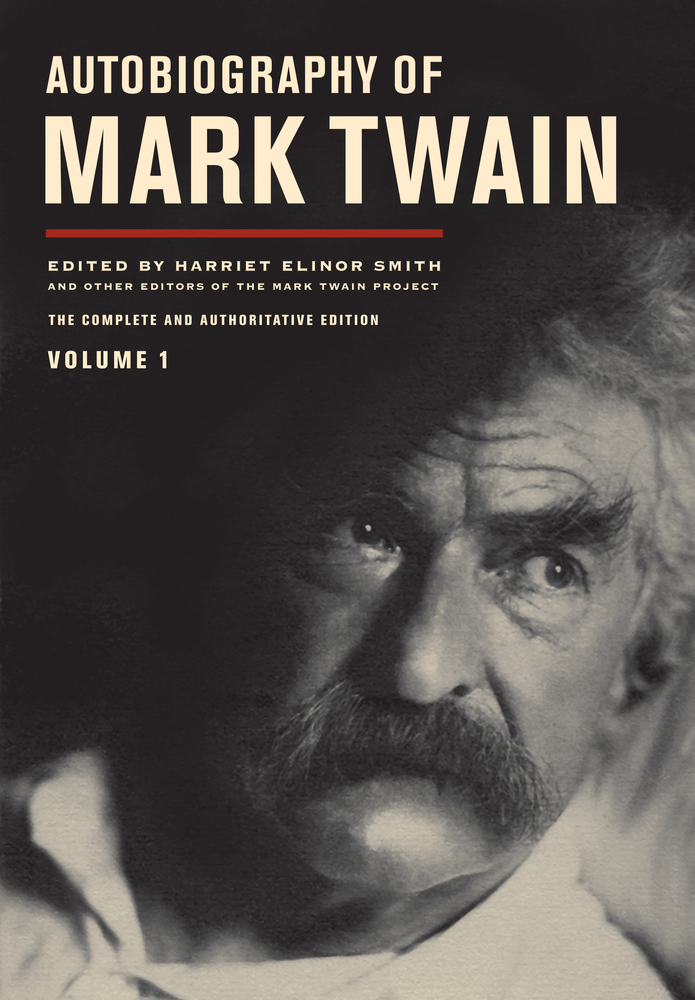 The Twain volume has received largely favorable reviews, although the New York Times did say, in a critique the other day by the insufferable Garrison Keillor, that “there’s precious little frankness and freedom here and plenty of proof that Mark Twain, in the hands of academics, can be just as tedious as anybody else when he is under the burden of his own reputation.”
A more generous review, posted online yesterday by the North County Times in California, caught my eye–mostly for its reference to Twain (Samuel Clemens) and yellow journalism. The review quoted this passage from Twain’s autobiography:
“I was converted to a no-party independence by the wisdom of a rabid Republican. This was a man who was afterward a United States Senator, and upon whose character rests no blemish that I know of, except that he was the father of the William R. Hearst of to-day, and therefore grandfather of Yellow Journalism–that calamity of calamities.”
The reference was to George Hearst, an adventurer-miner who struck it rich in the silver fields of the 19th century American West. After securing his fortune, George Hearst became a U.S. senator from California, serving from 1886-1891.
Twain’s reference to “a rabid Republican” is puzzling, though, because George Hearst was a committed Democrat, as was his son, William Randolph Hearst.
More interesting was Twain’s characterization of yellow journalism as “that calamity of calamities.”
It’s an amusing line, but it ignores the generosity young Hearst extended to Twain in 1897, when the writer was down on his luck in London.
Hearst by then was running the provocative and activist-oriented New York Journal — the newspaper that helped give rise in 1897 to the sneer, “yellow journalism.”
The Journal preferred the term “journalism of action” and asserted that a newspaper had an obligation to inject itself routinely and conspicuously into civic life, to address the ills that government wouldn’t or couldn’t.
As I wrote in my 2006 year-study, The Year That Defined American Journalism: 1897 and the Clash of Paradigms, Hearst arranged for Twain, then 51, to report for the Journal on Queen Elizabeth’s Diamond Jubilee in June 1897.
Lining up Twain to cover the Jubilee was emblematic of Hearst’s willingness to spend money lavishly to recruit big-name talent, if only for spot assignments.
In Twain, though, Hearst must have been disappointed.
As I wrote in The Year That Defined American Journalism:
“Twain’s reporting about Victoria’s jubilee seemed half-hearted and hardly inspired. The spectacle was easily the most regal international story of 1897, and came at a time when the British empire at or near its height. But Twain found the celebration overwhelming—’a spectacle for the kodak [camera], not the pen,’” as he wrote in a dispatch published June 23, 1897.
Twain’s dispatch to the Journal included this odd observation:
“I was not dreaming of so stunning a show. All the nations seemed to be filing by. They all seemed to be represented. It was a sort of allegorical suggestion of the Last Day, and some who live to see that day will probably recall this one if they are not too much disturbed in mind at the time.”
Twain’s association with the Journal in 1897 did give rise to one of his most memorable lines–and allowed the newspaper to puncture rumors about the writer’s health.
In early June 1897, the New York Herald reported that Twain was “grievously ill and possibly dying. Worse still, we are told that his brilliant intellect is shattered and that he is sorely in need of money.”
The Journal promptly exposed the Herald report as erroneous, and published Twain famous, if often-misquoted, denial:
“The report of my death was an exaggeration,” Twain said.
He lived until 1910.
Recent and related:
- ‘A debunker’s work is never done’
- ‘Yes, Virginia,’ on CBS: No classic
- As inevitable as ‘Yes, Virginia,’ at the holidays
- In myth, a truism: Hearst’s vow ‘will forever live on’
- ‘War Lovers’: A myth-indulging disappointment
- ‘Good narrative trumps good history’
- On the high plateau of media distrust
- Mythbusting at the Smithsonian
- Getting It Wrong goes on Q-and-A

 Media Myth Alert