W. Joseph Campbell

Posts Tagged ‘Nixon’

Joe McGinniss, ‘Deep Throat,’ and anonymous sources

In Debunking, Washington Post, Watergate myth on October 11, 2011 at 1:02 am

Joe McGinniss, author of a scathing biography about Sarah Palin, yesterday defended using anonymous sources in the book, asserting in a commentary in USA Today that “without Deep Throat, there wouldn’t have been any Watergate hearings, and Richard Nixon would never have resigned.”
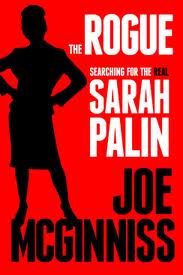
'The Rogue,' by McGinniss

Deep Throat” was the anonymous, high-level source who conferred periodically in 1972 and 1973 with Bob Woodward of the Washington Post as the Watergate scandal unfolded.

As memorable as “Deep Throat” may be, his contributions to Watergate’s outcome were hardly as sweeping or decisive as McGinniss claimed.

As Woodward and his reporting colleague Carl Bernstein wrote in the book about their Watergate reporting, All the President’s Men, the principal role of “Deep Throat” was to “confirm information that had been obtained elsewhere and to add some perspective.”

Not only that, but “Deep Throat” and his conversations with Woodward were scarcely pivotal in the U.S. Senate’s decision to empanel a select committee and convene hearings in 1973 about the Watergate scandal.

In The Whole Truth, his memoir about the hearings, Sam Ervin Jr., the Democratic senator who chaired the select committee, saluted a lengthy roster of people who contributed to unwinding Watergate.

The roster included several journalists and news publications. But Ervin made no mention of Woodward’s shadowy “Deep Throat” source, who had been introduced in some detail in 1974, with publication of All the President’s Men.

“One shudders to think,” Ervin wrote in his memoir, “that the Watergate conspirators might have been effectively concealed … had it not been for the courage and penetrating understanding of [U.S. District] Judge [John] Sirica, the thoroughness of the investigative reporting of Carl Bernstein, Bob Woodward, Seymour Hersh, Clark Mollenhoff, and other representatives of a free press, the devotion to their First Amendment responsibilities of the Washington Post, The New York Times, Time magazine, Newsweek, and other publications, the labors of the Senate Select Committee, and the dedication and diligence of Special Prosecutors Archibald Cox and Leon Jaworski and their associates.”

No mention of “Deep Throat,” though.

The shadowy source was self-revealed in 2005 to have been W. Mark Felt Jr., formerly second in command at the FBI. Felt left the agency in 1973 — many months before Watergate reached its denouement in August 1974 with the resignation of Nixon.

All the President’s Men, and the like-titled 1976 movie version, touched off a years-long guessing about the identity of “Deep Throat” — speculation that surely inflated his importance in popular understanding about how Watergate was rolled up.

As I write in my latest book, Getting It Wrong, the speculation about “Deep Throat” brought “periodic and powerful reminders about the Post and its Watergate coverage, serving to keep Woodward and Bernstein in the public eye far longer than they otherwise would have been.

“They and the mysterious ‘Deep Throat’ source became central figures” in what the Philadelphia Inquirer once called “the parlor game that would not die.”

It’s important to keep in mind, too, that Felt hardly was a heroic figure, even though “Deep Throat” is portrayed that way in the cinematic version of All the President’s Men.

Felt in his senior position at the FBI authorized illegal burglaries in the early 1970s as part of the agency’s investigations into leftists linked to the radical Weather Underground.

Felt was convicted in 1980 on felony charges related to the break-ins, but was pardoned by President Ronald Reagan.

WJC

Many thanks to Instapundit
Glenn Reynolds for linking to this post

Recent and related:

NYTimes errs, claims Woodward, Bernstein ‘unraveled’ Watergate

In Debunking, Media myths, Washington Post, Watergate myth on October 10, 2011 at 1:55 am

The New York Times inaccurately declared over the weekend that Bob Woodward and Carl Bernstein, in their reporting for the Washington Post, “unraveled the Watergate affair.”

The Times’ erroneous assertion was made in an obituary published Saturday about a minor figure in the Watergate scandal, Kenneth H. Dahlberg, who died last week. Watergate led to the resignation in 1974 of President Richard M. Nixon.

The obituary noted that Dahlberg was an “unwitting link between the Nixon re-election campaign and the five men … charged with breaking into the Democratic National Committee headquarters at the Watergate complex in Washington,” the scandal’s signal crime.

Dahlberg, the Times added, “had been a fund-raiser for Nixon’s re-election campaign, and his name was on a $25,000 cashier’s check that had been deposited in the bank account of one of the burglars, Bernard L. Barker. The money was to help cover the burglars’ expenses, and Mr. Barker had withdrawn that amount in $100 bills. He was carrying more than $5,000” when arrested at the DNC headquarters June 17, 1972.

The Times then asserted:

“Bob Woodward, a young reporter for The Washington Post who with Carl Bernstein unraveled the Watergate affair, has called the Dahlberg check the ‘connective tissue’ that turned what they thought was a story about a common crime into one of historic dimensions.”

That may be, but the Dahlberg connection was only a small, early step in unwinding the scandal. Interestingly, Dahlberg receives one, passing mention in Stanley I. Kutler’s exhaustive, single-volume work, The Wars of Watergate.

What’s more, Woodward and Bernstein scarcely can be credited with having “unraveled” Watergate — and the Times offered no evidence to support its exaggerated claim.

Rather, the Times effectively sidled up to the beguiling “heroic-journalist myth,”  which, as I write in my latest book,  Getting It Wrong, has become “the most familiar storyline of Watergate.”

What unraveled Nixon’s presidency wasn’t the reporting of Woodward and Bernstein for the Post but the incontrovertible evidence of his culpability in the crimes of Watergate — evidence captured on audiotapes that he secretly made of his conversations at the White House.

The decisive evidence — known as the “Smoking Gun” tape — revealed that Nixon at a meeting with his top aide, H.R. Haldemann, on June 23, 1972, sought to deflect or derail the FBI investigation into the Watergate burglary.

Woodward and Bernstein didn’t reveal the contents of that tape, which Watergate prosecutors had subpoenaed and which Nixon had refused to surrender until 1974, after the U.S. Supreme Court ordered him to do so.

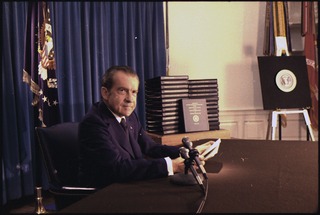
Nixon with tape transcripts, 1974

Nor did Woodward and Bernstein disclose the existence of Nixon’s secret audiotaping system, which proved so crucial to Watergate’s outcome.

The taping system was revealed in July 1973, during hearings of the U.S. Senate Select Committee on Watergate.

In All the President’s Men, their book about their Watergate reporting, Woodward and Bernstein said they had received a tip about the taping system a few days before its existence was made public.

According to All the President’s Men, Ben Bradlee, then the Post‘s executive editor, suggested not expending much energy pursuing the tip. And Woodward and Bernstein didn’t.

What really “unraveled” Watergate, I write in Getting It Wrong, “was the collective if not always the coordinated forces of special prosecutors, federal judges, both houses of Congress, the Supreme Court, as well as the Justice Department and the FBI.

Even then, despite all that scrutiny and pressure, Nixon, I argue, “likely would have served out his term if not for the audiotape recordings he secretly made of most conversations in the Oval Office of the White House.”

WJC

Many thanks to Jack Shafer for linking
to this post

Recent and related:

Made-up Watergate line, ‘follow the money,’ crosses into the news

In Cinematic treatments, Debunking, Washington Post, Watergate myth on October 6, 2011 at 4:38 am

Kenneth H. Dahlberg, a minor Watergate figure, died the other day and Minnesota Public Radio recalled his role in the scandal by turning to the famous made-up line, “follow the money” — advice supposedly given to Washington Post reporters working the story.

The public radio station’s “News Cut” feature noted yesterday that “Dahlberg was the Midwest finance chairman for the Committee to Re-elect the President during President Richard M. Nixon’s 1972 campaign.

“A mysterious check, which later would be determined to be from the CEO of Archer Daniels Midland, was given to Dahlberg, who converted it to a cashier’s check. It was money from the campaign, destined for the Watergate burglars.”

The Minnesota Public Radio report added that when the stealthy, high-level “Deep Throat” source told Post reporters Bob Woodward and Carl Bernstein “to ‘follow the money,’ that was the money. And when Woodward called Dahlberg to confirm he handled the check, Dahlberg didn’t lie. … It ended up a critical part of the movie All The President’s Men.”

That last bit is true. Woodward’s telephone interview with Dahlberg became a memorable scene in the 1976 movie.

Otherwise, though, there’s a fair amount of wayward information in the “News Cut” report.

For starters, “Deep Throat” never met with Bernstein during Watergate.

More important, “Deep Throat” (self-revealed in 2005 to have been former FBI official W. Mark Felt) never advised Woodward to “follow the money.”

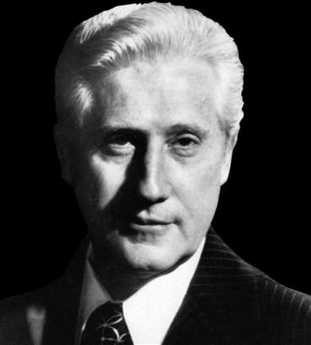
Felt: Never said it

That line appears nowhere in All the President’s Men, Woodward and Bernstein’s 1974 book about their Watergate reporting — reporting that did not, as I discuss in my latest work, Getting It Wrong, take down Nixon’s corrupt presidency.

Moreover, “follow the money” appeared in no Watergate-related article or editorial in the Washington Post  before 1981 — or long after Nixon resigned the presidency in disgrace.

Rather, “follow the money” was written into the screenplay of the cinematic version of All the President’s Men; the line was memorably uttered not by Felt, the real-life “Deep Throat,” but by Hal Holbrook, the actor who played him in the movie.

As I’ve noted at Media Myth Alert, Holbrook turned in an outstanding performance as a tormented and conflicted “Deep Throat.”

And he delivered his “follow the money” line with such steely assurance that it did seem to offer a way through the labyrinth that was the Watergate scandal.

But even if Woodward had been counseled to “follow the money,” such advice certainly would neither have unraveled Watergate nor led him to Nixon.

What forced Nixon from office in 1974 was not the grubby misuse of campaign funds but, rather, his active role in seeking to obstruct justice by covering up the signal crime of the Watergate scandal, the break-in at the headquarters of the Democratic National Committee in June 1972.

Rolling up the scandal of Watergate’s complexity and dimension was scarcely as straightforward as pursuing misused campaign contributions.

As I write in Getting It Wrong, unraveling Watergate required “the collective if not always the coordinated forces of special prosecutors, federal judges, both houses of Congress, the Supreme Court, as well as the Justice Department and the FBI.

“Even then,” I note “Nixon likely would have served out his term if not for the audiotape recordings he secretly made of most conversations in the Oval Office of the White House.

“Only when compelled by the Supreme Court did Nixon surrender those recordings, which captured him plotting the cover-up” and cost him the presidency.

WJC

Recent and related:

Carl Bernstein, at it again

In Debunking, Washington Post, Watergate myth on October 1, 2011 at 11:25 am

Carl Bernstein, he of Watergate fame, was in London the other day, waxing indignant about the phone-hacking scandal that shook Rupert Murdoch’s media operations in Britain over the summer and forced the closure of the raunchy News of the World tabloid.

Mentions reporters' ethical lapses

As he has in the past, Bernstein conveniently avoided reference to his own suspect conduct as a Washington Post reporter covering Watergate, the scandal that brought down Richard Nixon’s corrupt presidency in 1974.

Bernstein, who comes across as something of a sanctimonious windbag, sounded aghast in London, telling a panel convened by the Guardian newspaper that he was stunned by the notion of “criminals working for a newspaper, being a substitute for reporters” at the News of the World.

“Gathering news through criminal acts — it’s absolutely stunning,” Bernstein declared.

Bernstein, though, is an odd, curious choice to criticize such conduct, given his own ethical lapses in reporting Watergate.

It’s not often recalled these days, but Bernstein and his Washington Post colleague, Bob Woodward, sought out federal grand jurors in December 1972, inviting them to break their oaths of secrecy and discuss Watergate-related testimony that they had heard.

The reporters were that desperate for leads in what was a slowly unfolding scandal.

The private entreaties to grand jurors nearly landed Bernstein and Woodward in jail for contempt.

As recounted in All the President’s Men, Bernstein and Woodward’s book about their Watergate reporting, none of the grand jurors was cooperative and the overtures soon were made known to John J. Sirica, chief judge of U.S. District Court in the District of Columbia.

The judge was livid.

According to All the President’s Men, Edward Bennett Williams, the Post’s  lawyer and well-known Washington insider, went to lengths to persuade Sirica — known as “Maximum John” for the severe sentences he often imposed — not to punish Bernstein and Woodward.

“John Sirica is some kind of pissed at you fellas,” Williams was quoted as saying in the book. “We had to do a lot of convincing to keep your asses out of jail.”

The reporters wrote in All the President’s Men, which came out in 1974 just as Watergate was nearing its climax, that in seeking out grand jurors, they “had chosen expediency over principle and, caught in the act, their role had been covered up.” That is, they managed to dodge media scrutiny of their misconduct.

All the President’s Men also described how Bernstein sought, and obtained, information from private telephone records of Bernard Barker, one of the men who in June 1972 broke into headquarters of the Democratic National Committee, the signal crime of Watergate.

Seeking Barker’s records was another case of choosing “expediency over principle” — not to mention a bit of phone-hacking, 1970s style.

WJC

Recent and related:

A ‘certain American paper brought down a certain president’

In Debunking, Media myths, Newspapers, Washington Post, Watergate myth on September 29, 2011 at 4:14 am

It’s impressive how strictly American media myths can win such eager embrace in international contexts.

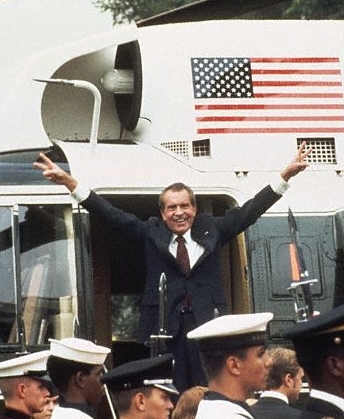
A certain American president leaves office

The heroic-journalist myth of Watergate is a telling example.

India’s leading English-language newspaper, the Hindu, invoked that myth the other day in a commentary that declared:

“More than 30 years ago, a certain American newspaper brought down a certain president by courageously exposing his wrongdoings entirely on the strength of information supplied by an anonymous source. It was not until some quarter of a century later that the real identity of Washington Post’s source for its expose of the Watergate scandal was revealed.”

Alright, let’s unbundle that myth-freighted paragraph:

  • Richard Nixon’s corrupt presidency was not brought down by the Washington Post, or by any other American newspaper — a topic I discuss in my media mythbusting book, Getting It Wrong.
  • Nixon’s fall in 1974 had nothing to do with “information supplied by an anonymous source” — a reference to the Post’s stealthy, high-level contact code-named “Deep Throat.” In 2005, a former senior FBI official named W. Mark Felt announced that he had been the Post’s Deep Throat.”

I note in Getting It Wrong that the heroic-journalist interpretation of Watergate — “the endlessly appealing notion that the dogged reporting of two young, hungry, and tireless Washington Post journalists, Bob Woodward and Carl Bernstein, brought down Nixon and his corrupt presidency” — has become the dominant narrative of the greatest scandal in American political history.

“But to explain Watergate through the lens of the heroic-journalist is,” I write, “to abridge and misunderstand the scandal and to indulge in a particularly beguiling media-driven myth.”

I point out that the heroic-journalist trope “minimizes the far more decisive forces that unraveled the scandal and forced Nixon from office.”

Those forces, I write, included “the collective if not always the coordinated forces of special prosecutors, federal judges, both houses of Congress, the Supreme Court, as well as the Justice Department and the FBI.”

But even then, Nixon likely would have served out his second term as president if not for the audiotape recordings he secretly made of most conversations in the Oval Office of the White House.

Only when compelled by the Supreme Court in July 1974 did Nixon surrender the recordings that captured him plotting to cover up his administration’s ties to the burglary at the headquarters of the Democratic National Committee in Washington.

I note that the heroic-journalist interpretation “has become the dominant popular narrative of the Watergate scandal for several reasons,” including:

Woodward and Bernstein’s book about their reporting of the unfolding Watergate scandal; the popular cinematic version of their book, All the President’s Men, and the years-long guessing game about the identity of “Deep Throat,” with whom Woodward (but never Bernstein) met periodically in 1972 and 1973, while investigating Watergate.

The role of “Deep Throat,” the reporters wrote in All the President’s Men, was to “confirm information that had been obtained elsewhere and to add some perspective.”

Those factors, I write, “combined to place Woodward and Bernstein at the center of Watergate in popular consciousness” while projecting and reinforcing the erroneous notion that the scandal’s outcome pivoted on disclosures reported by the news media.

WJC

Recent and related:

The ‘stories that brought down a president’: Sure, they did

In Debunking, Media myths, Washington Post, Watergate myth on September 26, 2011 at 3:31 am

The Guardian, one of London’s top newspapers, bought into Watergate’s dominant myth yesterday in a flattering article about Carl Bernstein, who teamed with Bob Woodward to report the scandal for the Washington Post.

Referring to the resignation of President Richard Nixon in 1974 at the height of Watergate, the Guardian asserted that Bernstein and Woodward produced “a string of stories that brought down a president.”

That claim may be the dominant narrative of Watergate. But it’s simplistic, a media-centric misreading of history.

As I discuss in my latest book, Getting It Wrong, the heroic-journalist interpretation of Watergate — the notion that Bernstein and Woodward’s dogged reporting forced Nixon from office in disgrace — “minimizes the far more decisive forces that unraveled the scandal and forced Nixon from office.”

Bernstein: Didn't bring down Nixon

Those forces included special Watergate prosecutors, federal judges, bipartisan panels of both houses of Congress, the U.S. Supreme Court, as well as the Justice Department and the FBI.

To explain Watergate through the lens of the heroic-journalist interpretation, I write in Getting It Wrong, is to short-change and “misunderstand the scandal and to indulge in a particularly beguiling media-driven myth.”

The myth, though, is endlessly appealing – as the Guardian article suggested.

Interestingly, though, not even the Washington Post embraces the heroic-journalist trope.

For example, Michael Getler, then the newspaper’s ombudsman wrote in 2005:

“Ultimately, it was not The Post, but the FBI, a Congress acting in bipartisan fashion and the courts that brought down the Nixon administration. They saw Watergate and the attempt to cover it up as a vast abuse of power and attempted corruption of U.S. institutions.”

And Ben Bradlee, the Post’s executive editor during and after Watergate, said on the Meet the Press interview show in 1997:

[I]t must be remembered that Nixon got Nixon. The Post didn’t get Nixon.”

Even Woodward has dismissed the heroic-journalist interpretation, stating in an interview with American Journalism Review:

To say the press brought down Nixon, that’s horse shit.”

What brought down Nixon’s presidency was evidence of his guilty role in the crimes of Watergate — evidence captured on audiotapes that he secretly made of his conversations at the White House.

The decisive evidence — known as the “Smoking Gun” tape — revealed that Nixon at a meeting with his top aide, H.R. Haldemann, on June 23, 1972, sought to deflect or derail the FBI investigation into the Watergate burglary.

Bernstein and Woodward didn’t reveal the contents of that tape, which Watergate prosecutors had subpoenaed and which Nixon refused to surrender until ordered by the U.S. Supreme Court to comply.

Nor did Bernstein and Woodward reveal the existence of Nixon’s taping system, which proved so crucial to Watergate’s outcome.

In All the President’s Men, their book about their Watergate reporting, Bernstein and Woodward said they had received a tip about the taping system a few days before its existence was made public in July 1973.

But according to the book, Bradlee, the executive editor, suggested not expending much energy pursuing the tip. And they didn’t.

WJC

Recent and related:

Talking media myths on ‘Community Voices’

In Debunking, Media myths, Media myths and radio, Newspapers, Washington Post, Watergate myth on September 3, 2011 at 3:14 pm

The exaggerated tales of Watergate, Hurricane Katrina, and crack babies were the principal media myths I discussed the other day in an interview on KPCW Radio in Utah.

The interview focused on those chapters of my latest book, Getting It Wrong, and was conducted by Larry Warren and Linda Gorton on their  “Community Voices” show.

I noted early in the interview that the “animating force” in American journalism is to get the story right and that Getting It Wrong “is associated with that ethos of truth-telling, of seeking to get the story right.”

The interviewers quickly turned to Watergate, asking whether the reporting of Bob Woodward and Carl Bernstein for the Washington Post was what indeed drove President Richard Nixon to resign in 1974.

“That is the dominant narrative of Watergate,” I pointed out, adding that’s also a very simplistic explanation for rolling up what was a complex scandal.

“To unravel the complexity and the intricacy of Watergate,” I said, “took all kinds of forces, most of them subpoena-wielding — federal prosecutors, the FBI, bipartisan panels of both houses of Congress, ultimately Supreme Court, which forced Richard Nixon to surrender the evidence which clearly showed that he had conspired with top aides to try to cover up the investigation into the Watergate break-in, the signal crime of the scandal.

“Against that backdrop, the contributions of Woodward and Bernstein fade into relative insignificance,” I said.

Another reason that Watergate’s dominant narrative focuses so squarely on Woodward, Bernstein, and the Washington Post is, I said, the cinematic version of the reporters’ book, All the President’s Men.

It surely is the most-watched movie ever made about Watergate, and “it really does focus,” I noted, “on the work of Woodward and Bernstein to the exclusion” of the forces and factors that were truly decisive in bringing down Nixon’s corrupt presidency.

“I think we know,” Warren interjected, “that you’re not going to be invited to Mr. Woodward’s for dinner anytime soon.”

“You know,” I replied, Woodward “has said something to the effect of, ‘to say the press brought down Richard Nixon is total nonsense.’ He used earthier terms to make that point.”

The reference to Woodward’s comment in an interview in 2004 with American Journalism Review in which he asserted:

To say the press brought down Nixon, that’s horse shit.”

I also discussed the notion that news coverage of Hurricane Katrina was superlative, that it supposedly “demonstrated the value and importance of traditional news media, both print and broadcast, at a time of disaster. And Hurricane Katrina was no small storm. It was no [Hurricane] Irene, that’s for sure.”

But I added:

“The coverage of Hurricane Katrina was no high heroic moment in American journalism because, on many important elements of that story, the news media got it badly wrong.”

The hurricane’s death toll was “wildly exaggerated,” I noted, adding that the “apocalyptic reports that the news media put out in the days after Hurricane Katrina’s landfall proved to be largely untrue.

“There were no snipers firing at medical personnel, no snipers firing at [rescue] helicopters. No bodies stacked up like cordwood, no children with their throats slashed. No roving gangs preying on tourists. No sharks plying the flood waters of New Orleans.

“All these reports were out there,” I said, but in the end “none of them was verified or substantiated.”

The erroneous and exaggerated reports of violence in post-Katrina New Orleans in some cases had the effect of delaying the arrival and delivery of aid to the storm-stricken city, I noted.

The social disaster that the news media anticipated in the purported — and widely misreported — “crack baby” epidemic never took place, I pointed out.

More than one news commentator, I said, described as a “bio-underclass” the generation that would come of age after having been exposed to crack cocaine in the womb. These children supposedly would be so mentally and physically deformed as to be forever dependent on the state.

“The news media were spectacularly wrong about the crack baby epidemic,” I said, noting that news reports in the late 1980s and early 1990s “pushed very hard on preliminary evidence suggesting there was a powerful linkage between taking crack during pregnancy and subsequent deformities in children.”

To their discredit, I added, the news media never went back in a sustained and systematic way to undertake to dismantle the crack-baby myth — “even after consensus had taken hold among scientists and biomedical researchers that [prenatal] exposure to crack was not this destructive force that preliminary research had suggested.”

WJC

Recent and related:

The Zhou misinterpretation

In Debunking, Media myths on August 31, 2011 at 11:17 am

It’s been debunked, but even so the tale lives on about Chinese premier Zhou Enlai’s  taking a long and sage view of history in saying in 1972 that it was “too early” to assess the implications of the French revolution, which began in 1789.

A commentary today at Time magazine’s “Global Spin” blog effectively testifies to the enduring appeal of Zhou misinterpretation.

The  commentary considered the wider implications of the fall of Moammar Khadafy’s regime in Libya and, in closing, invoked the conventional version of Zhou’s remark, stating:

“[T]o borrow from Chinese leader Zhou Enlai’s 1972 answer when asked about the historical significance of the French Revolution, when it comes to Libya’s grander significance, it may simply be ‘too early to tell.'”

Zhou’s comment — made during a discussion in China with President Richard M. Nixon — was about political upheaval in France in 1968, not the French Revolution, according to Charles W. (Chas) Freeman Jr., a former U.S. diplomat who was Nixon’s interpreter on the trip and who was present at the conversation.

First to debunk the Zhou misinterpretation was London’s Financial Times, which quoted Freeman’s remarks at a panel discussion in June in Washington, D.C.

In a subsequent interview with me, Freeman said it was “absolutely clear” from the context of the conversation that Zhou’s “too early to say” comment was in reference to the turmoil of 1968.

Freeman described Zhou’s remark as “a classic of the genre of a constantly repeated misunderstanding that has taken on a life of its own.”

He’s quite right about that. It long ago took on life of its own.

Further evidence of that is offered in a superficial commentary by McClatchy newspapers about the effects of the terrorist attacks of September 11, 2001.

The commentary asserted that the United States is “in some ways a very different country.

“How different?

“First, a story: It’s said that when President Richard Nixon made his groundbreaking visit to Communist China in 1972, he asked Premier Zhou Enlai what he thought about the French Revolution.

“It’s unclear if Zhou thought Nixon was asking about the political upheaval of 1789 or the Paris student demonstrations just four years earlier. In any case he replied: ‘Too soon to tell.'”

Well, no: It’s not unclear what Zhou meant, as Freeman’s recollections demonstrate.

The Zhou misinterpretation, moreover, was inspiration for a clever and amusing observation the other day, in a blog post by Gideon Rachman of the Financial Times.

Rachman’s post considered the legacy at the International Monetary Fund of Dominique Straus-Khan, the agency’s former director-general known as “DSK.”

He resigned in May after being arrested in New York on felony sex charges. Those charges recently were dropped.

“Sometimes,” Rachman noted, “an early exit is good for your legacy.”

He added:

“So, DSK’s legacy? As Zhou Enlai never said about the French Revolution: too early to tell.”

“As Zhou Enlai never said.”

Wonderful.

WJC

Recent and related:

Woodward, Bernstein toppled Nixon? Think again

In Media myths, Washington Post, Watergate myth on August 27, 2011 at 9:58 am

'Nixon got Nixon'

The passing of time is making the heroic-journalist narrative of Watergate even more heroic.

A commentary yesterday at Huffington Post suggests as much, in extolling — and overstating — the accomplishments of Bob Woodward and Carl Bernstein, the Washington Post reporters who covered the scandal.

The commentary, which considers the state of investigative reporting, says Woodward and Bernstein “plugged away for two years at the Watergate story through thick and thin and false leads. They were determined to nail then President Richard Nixon for authori[z]ing a break in at the Democratic Party HQ during his re-election campaign and then organi[z]ing a cover up. They did, with his resignation in August 1974.”

Woah. A lot of overstatement there.

First, there’s no evidence that Nixon authorized or even knew in advance about the burglary in June 1972 at the headquarters of the Democratic National Committee, the signal crime of Watergate.

Nixon, however, certainly did seek to block the FBI’s investigation of the breakin — and for that obstruction of justice, he was compelled to resign the presidency in disgrace.

But more important is that Woodward and Bernstein didn’t “nail” Nixon on Watergate. As I discuss in my latest book, Getting It Wrong, their investigative reporting for the Post certainly didn’t bring down Nixon’s corrupt presidency.

The heroic-journalist interpretation of Watergate, I write in Getting It Wrong, is to “misunderstand the scandal and to indulge in a particularly beguiling media-driven myth.

“The heroic-journalist interpretation,” I add, “minimizes the far more decisive forces that unraveled the scandal and forced Nixon from office.” Those forces included bipartisan panels of both houses of Congress, special federal Watergate prosecutors, federal judges, the Justice Department, the FBI, and the U.S. Supreme Court.

If inelegantly, even Woodward has concurred, declaring in an interview in 2004:

To say the press brought down Nixon, that’s horse shit.”

What toppled Nixon, what brought down his presidency, was clear evidence of his culpability in the crimes of Watergate — evidence captured on audiotapes that he secretly made of his conversations at the White House.

The decisive evidence — known as the “Smoking Gun” tape — revealed that Nixon at a meeting with his top aide, H.R. Haldemann, on June 23, 1972, sought to deflect or derail the FBI investigation into the Watergate burglary.

Woodward and Bernstein didn’t reveal the contents of that tape, which Watergate prosecutors had subpoenaed and which Nixon had refused to surrender until ordered to do so by the U.S. Supreme Court.

Nor did Woodward and Bernstein disclose the existence of Nixon’s secret taping system. That was revealed in July 1973, during hearings of the Senate Select Committee on Watergate.

In All the President’s Men, their book about their reporting, Woodward and Bernstein said they had received a tip about the taping system a few days before its existence was made public.

According to All the President’s Men, Ben Bradlee, then the Post‘s executive editor, suggested not expending much energy pursuing the tip. And they didn’t.

Interestingly, Bradlee also insisted the Post did not nail Nixon.

Speaking on a Meet the Press interview program at the 25th anniversary of the Watergate break-in, Bradlee declared:

[I]t must be remembered that Nixon got Nixon. The Post didn’t get Nixon.”

WJC

Recent and related:

Misreporting Watergate

In Debunking, Media myths, Washington Post, Watergate myth on August 20, 2011 at 5:15 am

That new historical marker at the parking garage where Bob Woodward of the Washington Post occasionally met his stealthy “Deep Throat” source has stirred some cheery buzz among journalists — and some breathtaking exaggeration about the consequences of Woodward’ reporting on the Watergate scandal.

Credit: Odestreet.com

The marker titled “Watergate Investigation” went up late last week outside the garage in the Rosslyn section of Arlington, Virginia.

As I’ve noted at Media Myth Alert, the marker errs in stating that information Deep Throat” (who in 2005 was self-revealed to have been W. Mark Felt) provided Woodward “exposed the Nixon administration’s obstruction of the FBI’s Watergate investigation.”

For some news outlets commenting about the marker, it has been occasion to assert hyperbolic claims that the Post’s reporting on Watergate brought down Richard Nixon’s scandal-riddled presidency.

For example, the widely followed all-news radio station in Washington, WTOP,  said yesterday in its report about the marker:

“Mark ‘Deep Throat’ Felt, passed state secrets to Washington Post reporter Bob Woodward for a string of stories that would eventually take down a president — what would come to be known as the Watergate scandal.”

Quite simply not true.

Felt, formerly a top official at the FBI, offered Woodward mostly incremental details about Watergate as the scandal unfolded in 1972 and 1973. And as Woodward noted in the book, All the President’s Men, the role of “Deep Throat” was “only to confirm information that had been obtained elsewhere, and to add some perspective.”

It was hardly the stuff of “state secrets.”

More important, the reporting of Woodward and his Post colleague Carl Bernstein assuredly did not “take down” Nixon’s presidency.

Embracing that interpretation of Watergate, I write my media-mythbusting book, Getting It Wrong, “is to abridge and misunderstand the scandal and to indulge in a particularly beguiling media-driven myth.”

It’s an interpretation that not even officials at the Post have endorsed.

For example, Kathryn Graham, the newspaper’s publisher during and after Watergate, said in 1997, at a Newseum program marking the scandal’s 25th anniversary:

“Sometimes people accuse us of bringing down a president, which of course we didn’t do. The processes that caused [Nixon’s] resignation were constitutional.”

And Woodward, in earthier terms, has concurred, telling American Journalism Review in 2004:

To say that the press brought down Nixon, that’s horseshit.

The popular Washington entertainment blog, DCist, offered an even stranger interpretation of “Deep Throat” and his meetings with Woodward in the garage.

DCist, in a brief report about the marker, said yesterday the garage was where  “the informant, the FBI’s Mark ‘Deep Throat’ Felt, fessed up to what would eventually become the Watergate scandal that brought down President Richard Nixon.”

Huh? The “Deep Throat” source “fessed up to what would eventually become the Watergate scandal”?

“Fessed up”?

Such wording suggests that Felt/”Deep Throat” was a culprit or a suspect in the Watergate scandal.

Which he wasn’t.

Felt in fact wasn’t even around the FBI when the scandal reached its climax with Nixon’s resignation in August 1974.

He had been passed over for the FBI directorship and left the agency in 1973. Felt last conferred with Woodward at the Arlington garage in November that year.

But that’s not to say Felt was beyond reproach.

He really wasn’t such a hero.

In his senior position at the FBI, Felt had authorized illegal burglaries in the early 1970s as part of the agency’s investigations into leftists associated with the radical Weather Underground.

Felt was convicted in 1980 on felony charges related to those break-ins, but pardoned by President Ronald Reagan.

So if it not Felt’s tips to Woodward, what then brought down Nixon?

As I point out in Getting It Wrong, rolling up a scandal of Watergate’s complexity and dimension demanded “the collective if not always the coordinated forces of special prosecutors, federal judges, both houses of Congress, the Supreme Court, as well as the Justice Department and the FBI.

“Even then,” I write, “Nixon likely would have served out his term if not for the audiotape recordings he secretly made of most conversations in the Oval Office of the White House.”

Only when compelled by the Supreme Court did Nixon surrender the recordings that captured him plotting to cover up the break-in in June 1972, the signal crime of Watergate.

WJC

Recent and related: