W. Joseph Campbell

Posts Tagged ‘Year studies’

Saturday at Newseum: Telling the back story to ‘Yes, Virginia’

In 1897, Media myths, New York Sun, Newspapers, Year studies on December 10, 2010 at 4:44 pm

I’ll be discussing American journalism’s best-known, most-reprinted editorial at a program tomorrow afternoon at the Newseum, the $450 million museum of news on Pennsylvania Avenue in Washington.

The editorial is, of course, the timeless tribute to childhood and the Christmas spirit that ran 113 years ago in the old New York Sun beneath the headline, “Is There A Santa Claus?”

I’ll be speaking about the back story to the classic editorial at 3:30 p.m. in the Newseum’s Knight studio, near the close of what is billed as “‘Yes, Virginia,’ Family Day.” The essay often is referred to as “Yes, Virginia,” owing to its most famous passage–“Yes, Virginia, there is a Santa Claus.”

As I note in my 2006 book, The Year That Defined American Journalism: 1897 and the Clash of Paradigms, the editorial was rather obscure and inconspicuous in its first appearance.  “Is There A Santa Claus?” was published in the third of three columns of tightly packed commentaries on topics that ranged from the ambiguities in Connecticut’s election law to the features of the chainless bicycle anticipated in 1898.

The editorial’s timing was odd and incongruous, too. “Is There A Santa Claus?” first appeared in the Sun on September 21, 1897–more than three months before Christmas.

As I write in The Year That Defined American Journalism, the best explanation for the puzzling timing “lies in the excited speculation of a little girl who, after celebrating her birthday in mid-summer, began to wonder about the gifts she would receive at Christmas.”

The little girl was Virginia O’Hanlon who, in her excited speculation, wrote to the Sun, saying:

“Some of my little friends say there is no Santa Claus. … Please tell me the truth; is there a Santa Claus?”

Virginia O'Hanlon

As she recalled years later, the letter was sent soon after her 8th birthday in July 1897. But the editorial reply in the Sun didn’t appear until more than two months had passed.

“After writing to the Sun,” she told an audience in 1959, “I looked every day for the simple answer I expected. When it didn’t appear, I got disappointed and forgot about it.”

Apparently, the Sun had misplaced or overlooked her letter. It eventually turned up on the desk of Edward P. Mitchell, the editorial page editor, who asked Francis P. Church to craft a reply.

Years later, Mitchell wrote that Church, a retiring, taciturn journalist, “bristled and pooh-poohed” at the request but finally “took the letter and turned with an air of resignation to his desk” to write.

It took Church less than a day to draft the editorial that would ensure him enduring posthumous fame. (His authorship wasn’t disclosed by the Sun until shortly after his death in 1906.)

“Virginia,” Church wrote in the editorial, “your little friends are wrong. They have been affected by the skepticism of a skeptical age. They do not believe except they see. They think that nothing can be which is not comprehensible by their little minds.”

After ruminating about the dimensions of human imagination, Church opened a new paragraph and wrote the editorial’s most memorable passages:

“Yes, Virginia, there is a Santa Claus. He exists as certainly as love and generosity and devotion exist, and you know that they abound and give to your life its highest beauty and joy. Alas! how dreary would be the world if there were no Santa Claus. It would be as dreary as if there were no Virginias.”

It sometimes is claimed that “Is There A Santa Claus?” was an instant sensation. In fact, it attracted no immediate attention. As I write in The Year That Defined American Journalism:

“Although it was published at a time when newspaper editors routinely commented on—and often disparaged—the work and content of their rivals, the oddly timed editorial prompted no comment from the Sun’s rivals in New York City.”

But “readers noted it and found it memorable,” I add. “In untold numbers over the years, readers asked the Sun to reprint the essay.” While it took years, the newspaper grudgingly acquiesced.

From 1924 until the newspaper’s last Christmas before folding in 1950, “Is There A Santa Claus?” was the lead editorial in the Sun on December 23 or 24.

“Ultimately,” I note, “the newspaper gave in—tacitly acknowledging that editors are not always as perceptive as their readers in identifying journalism of significance and lasting value.”

WJC

Recent and related:

Sales of ‘Getting It Wrong’ brisk at NPC’s Book Fair

In Debunking, Media myths, Murrow-McCarthy myth, Year studies on November 10, 2010 at 5:43 pm

The National  Press Club’s Book Fair last night was quite a success.

Getting It Wrong was among some 90 titles chosen for the book fair, and sales of the book were gratifyingly brisk. I didn’t keep count, but easily two dozen copies were sold during the three-hour event. Or more.

A volunteer at the checkout counter stopped by as the program was winding down to ask about the book. She said she had seen a lot of people buying it. And she decided to buy a copy, too.

The venue was the Press Club’s ballroom and it was jammed with book-buyers. I thought the crowd was larger than that of four years ago, when I was chosen to attend the book fair to sell copies of The Year The Defined American Journalism: 1897 and the Clash of Paradigms.

I shared a display table this year with Gayle Haggard, the charming author of Why I Stayed, who traveled from Colorado for the book fair. We were across an aisle from Captain Chesley (“Sully”) Sullenberger, who safely landed a stricken USAirways jet on the Hudson River early last year.

Sullenberger was quite the draw, and he left about an hour early, after selling the available copies of his book,  Highest Duty.

I received only one, mild challenge about Getting It Wrong. A small lady who must be in her 70s, thumbed through the book and announced that she disagreed with my take on Edward R. Murrow’s famous television report about Senator Joseph R. McCarthy and his witch-hunting ways.

Murrow “broke the bubble” on the McCarthy scourge, she told me as she returned the book to the stack on the table. I was tempted to point out that Murrow was very late in confronting McCarthy, doing so only after a number of other journalists had taken on the senator. I was tempted as well to note that Murrow and his producer, Fred Friendly, both dismissed the view that Murrow’s 1954 program was decisive in McCarthy’s fall.

But I let it pass.

Another visitor to the table asked whether Getting It Wrong has much attracted from criticism from journalists who find it dismaying that the book busts some of American journalism’s best-known stories.

Some people have resisted giving up on these stories, I replied. But more often the reaction has been one of some surprise that these tales were myths. Others have said they had rather suspected these tales were too good to be true, I added.

During the pre-event reception for authors and guests, I spoke for a while with James Swanson, author of Manhunt: The 12 Day Chase for Lincoln’s Killer and more recently of Bloody Crimes: The Chase for Jefferson Davis and the Death Pageant for Lincoln’s Corpse. Swanson said his next project is a fiction-thriller series. I also chatted with Maurine Beasley, a journalism historian at the University of Maryland who is one of my favorite scholars. Her latest book is Eleanor Roosevelt: Transformative First Lady.

I’m in Florence, Alabama, today, to deliver the first Parker-Qualls Lecture in Communications at the University of North Alabama. It’s a program that I’m very honored to inaugurate.

I also will speak with several classes at UNA on media theory, journalism ethics, and political communication.

WJC

Recent and related:

The sporting version of the ‘Cronkite Moment’

In Cronkite Moment, Debunking, Media myths, New York Times, Year studies on November 9, 2010 at 8:01 am

The mythical “Cronkite Moment” is a hardy and impressively flexible tale.

As a presumptive lesson about journalism’s capacity to tell truths to power, the “Cronkite Moment” turns up in the media in all sorts of ways.

He of the 'Cronkite Moment'

It appears even on the sports pages.

The “Cronkite Moment“–in which the downbeat assessment of CBS New anchorman Walter Cronkite supposedly forced President Lyndon Johnson to understand the futility of his Vietnam War policy–turned up yesterday in a column posted at cbssports.com.

In discussing the firing of Wade Phillips as head coach of the Dallas Cowboys football team, columnist Ray Ratto wrote:

“Cronkite one night came out against the war, right there on the evening news (when there were just three networks and the evening news meant something), and Johnson knew at that moment that he was finished. ‘If I’ve lost Cronkite,’ Johnson is alleged to have said, ‘I’ve lost Middle America.””

Flexibility may make the anecdote appealing and long-lived. But it doesn’t mean it’s true.

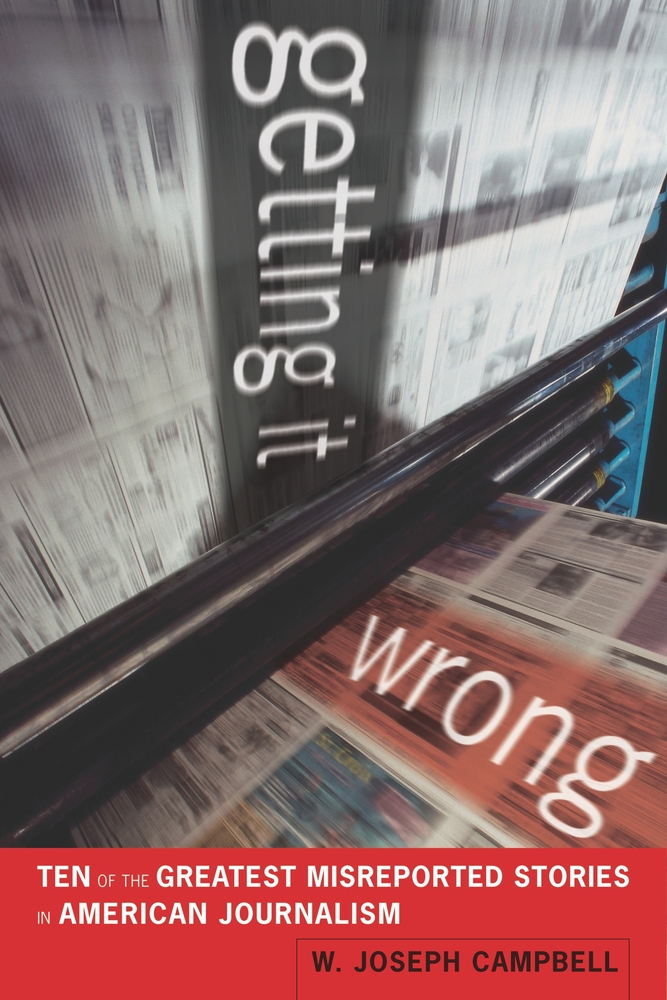
As I discuss in my latest book, Getting It Wrong, the “Cronkite Moment” is  a media-driven myth, a tall tale about the news media masquerading as factual.

Let’s unpack what Ratto wrote:

  • Cronkite didn’t really come “out against the war”: He described the U.S. military effort in Vietnam as “mired in stalemate,” which hardly was a striking or novel interpretation at time his assessment was offered in early 1968.
  • Cronkite didn’t present his “mired in stalemate” commentary on the evening news: It came at the end of an hour-long special report about Vietnam that aired February 27, 1968.
  • Johnson did not know “at that moment that he was finished.” Johnson, as I discuss in Getting It Wrong, didn’t even see the Cronkite program when it aired. The president at the time was in Austin, Texas, making light-hearted comments at the 51st birthday party of Governor John Connally, a longtime political ally.

At about the time Cronkite was uttering his “mired in stalemate” comment, Johnson wasn’t in front of a television set. He didn’t exclaim, “If I’ve lost Cronkite, I’ve lost Middle America”–or words to that effect. He said:

“Today you are 51, John. That is the magic number that every man of politics prays for—a simple majority. Throughout the years we have worked long and hard—and I might say late—trying to maintain it, too.”

There was no woe-is-me about having “lost Cronkite.” There was no epiphany for the president that his war policy was a shambles.

Only a light-hearted comment about Connally’s turning 51.

The power of the “Cronkite Moment,” I write in Getting It Wrong, lies “in the sudden, unexpected, and decisive effect it supposedly had on the president.” Had Johnson seen the program later, on videotape, it would not have carried the sudden, unexpected punch that the “Cronkite Moment” is presumed to have had.

Indeed, I write, “Such an effect would have been absent, or greatly diminished, had Johnson had seen the program on videotape at some later date.”

As I say, Cronkite’s “mired in stalemate” view was neither notable nor extraordinary in early 1968. Mark Kurlansky wrote in his fine year-study about 1968 that Cronkite’s view was “hardly a radical position” for the time.

Indeed, nearly seven months before Cronkite’s program, a report in the  New York Times had cited “disinterested observers” in reporting that the war in Vietnam “is not going well.” Victory, the Times reported, “is not close at hand. It may be beyond reach.”

This analysis was published on the Times’ front page in August 1967, beneath the headline:

“Vietnam: The Signs of Stalemate.”

WJC

Recent and related:

‘Getting It Wrong’ among 90 titles at NPC Book Fair

In 1897, Cronkite Moment, Debunking, Hurricane Katrina, Media myths, Murrow-McCarthy myth, Newspapers, Washington Post, Watergate myth, Year studies on November 8, 2010 at 11:55 am

I will be among more than 90 authors signing and selling their recent books tomorrow evening at the annual National Press Club Book Fair and Authors’ Night.

My latest book, Getting It Wrong, will be among the titles at the Press Club event.

The book fair this year brings together a variety of authors, including one of my favorite journalism historians, Maurine Beasley of the University of Maryland; Jack Fuller, author of What Is Happening To News, and Chesley (“Sully”) Sullenberger, the pilot who safely landed a stricken passenger airliner on the Hudson River in January 2009.

The Book Fair is a fine occasion. I attended the event in 2006 and had a great time. My book at that event was The Year That Defined American Journalism: 1897 and the Clash of Paradigms.

Getting It Wrong, which came out during the summer, addresses and debunks 10 prominent media-driven myths. These are stories about and/or by the news media that widely believed and often retold but which, under scrutiny, dissolve as apocryphal or wildly exaggerated.

I liken them to the “junk food” of journalism–delicious and appealing, perhaps, but not terribly healthy or nutritious.

The myths debunked in Getting It Wrong include some of the most cherished stories American journalism tells about itself, including:

“Because it takes on some of the most treasured stories in American journalism,” I write in the introduction to Getting It Wrong, the book “is a work with a provocative edge. It could not be otherwise.”

I further write that Getting It Wrong “aligns itself with a central objective of newsgathering—that of seeking to get it right, of setting straight the record by offering searching reappraisals of some of the best-known stories journalism tells about itself.

“Given that truth-seeking is such a widely shared and animating value in American journalism,” I add, “it is a bit odd that so little effort has been made over the years to revisit, scrutinize, and verify these stories. But then, journalism seldom is seriously introspective, or very mindful of its history. It usually proceeds with little more than a nod to its past.”

I point out that media myths take hold for a variety of reasons: Because they delicious stories that are almost too good not to be true; because they are reductive in offering simplistic interpretations of complex historical events, and because they are self-flattering in that they place journalists at the decisive center of important developments.

The Book Fair opens at 5:30 p.m. Admission is free for members, and $5 for non-members.

WJC

Recent and related:

1897 flashback: Committing ‘jailbreaking journalism’

In 1897, Anniversaries, Newspapers, Spanish-American War, Yellow Journalism on October 4, 2010 at 7:08 am

William Randolph Hearst‘s New York Journal pulled off one of the greatest coups in participatory journalism 113 years ago this week, in what a rival newspaper called the case of “jail-breaking journalism.”

Decker

The episode centered around Karl Decker, a Journal reporter whom Hearst had sent to Cuba, and Evangelina Cisneros, a political prisoner jailed in Havana on suspicion of conspiring to kill a senior Spanish military officer.

Cisneros, who was 19, claimed the officer had made her the target of his unwelcome sexual advances.

She had been jailed more than a year, without trial, when Hearst’s Journal described her plight in a front-page article in August 1897.

The report claimed, incorrectly, that Cisneros already had been tried by a martial tribunal and was “in imminent danger” of being sentenced to 20 years’ imprisonment at Spain’s penal colony on Ceuta, off the north Africa coast.

As I wrote in my 2006 book, The Year That Defined American Journalism: 1897 and the Clash of Paradigms, the error mattered little to the Journal: “Far more important was that the prolonged imprisonment of Cisneros represented a brutish and unambiguous example of Spain’s cruel treatment of Cuban women—a topic of not infrequent attention in U.S. newspapers.”

In 1897, Spain still ruled Cuba, however tenuously. It had failed to put down an island-wide rebellion that began in 1895, despite having sent nearly 200,000 troops to Cuba. The Cuban rebellion was to give rise in 1898 to the Spanish-American War.

Following its disclosure about Cisneros’ jailing, the Journal organized a petition drive among American women, calling on the queen regent of Spain to release Cisneros. The newspaper claimed to have collected signatures from more than 10,000 women, but Spanish authorities were unmoved.

So in late summer 1897, Hearst sent Decker to Cuba, ostensibly as the Journal‘s correspondent in Havana. In reality, Decker was under orders to secure the release of Cisneros.

Evangelina Cisneros

With the quiet help of U.S. diplomatic personnel in Cuba–and with the crucial support of a clandestine smuggling network in Havana–Decker succeeded. In the early hours of October 7, 1897, Decker and two accomplices broke the bars of Cisneros’ cell and spirited her out of jail.

She was hidden for nearly three days at the home of one of the accomplices, Carlos F. Carbonell, an affluent, American-educated Cuban banker whom Cisneros later married.

Then, dressed as a boy, the diminutive Cisneros was smuggled aboard the Seneca, a passenger steamer bound for New York City, where Hearst organized a thunderous welcome for her.

Nearly 75,000 people turned out at New York’s Madison Square to welcome Cisneros and Decker, who had separately returned to the United States aboard a Spanish-flagged passenger vessel.

Cisneros “was rapturously received” in New York, I wrote in The Year That Defined American Journalism, “not because she was a daring and clever prison escapee, but because she was a frail and wily embodiment of the Cuban struggle for political independence from Spain.”

Some U.S. newspapers scoffed at the Journal‘s coup. “Jail-breaking journalism,” said the Chicago Times-Herald. But many other newspapers and trade journals cheered the exploit.

The Fourth Estate, for example, congratulated Decker and the Journal on an “international triumph” and saluted them for having “smashed journalistic records.”

For the Journal–which never was shy about self-promotion–the Cisneros jailbreak and rescue were “epochal,” the apogee of its brand of activist-oriented yellow journalism.

Interestingly, the Cisneros jailbreak fell quickly from the front pages of American newspapers–including those of the Journal. And the case was rarely mentioned in the American press, or by American political figures, as war loomed with Spain in the spring of 1898.

But “jail-breaking journalism” merits being recalled this week, as an episode unique in American journalism.

WJC

Recent and related:

<!–[if !mso]> the Journal, the Cisneros jailbreak and rescue was “epochal,”
/* Style Definitions */
table.MsoNormalTable
{mso-style-name:”Table Normal”;
mso-tstyle-rowband-size:0;
mso-tstyle-colband-size:0;
mso-style-noshow:yes;
mso-style-parent:””;
mso-padding-alt:0in 5.4pt 0in 5.4pt;
mso-para-margin:0in;
mso-para-margin-bottom:.0001pt;
mso-pagination:widow-orphan;
font-size:10.0pt;
font-family:”Times New Roman”;
mso-ansi-language:#0400;
mso-fareast-language:#0400;
mso-bidi-language:#0400;}
the Journal, the Cisneros jailbreak and rescue was “epochal,” the Journal, the Cisneros jailbreak and rescue was “epochal,”[i] a “supreme achievement of the journalism of action.”


[i]. Duval [Decker], “Evangelina Cisneros Rescued by the Journal,” New York Journal (10 October 1897).

New ‘Nueva York’ exhibition and the Spanish-American War

In 1897, Media myths, Spanish-American War, Yellow Journalism on September 18, 2010 at 7:56 am

The Nueva York (1613-1945) exhibition that opened yesterday at El Museo del Barrio in New York City looks to be terrific.

It was jointly developed by Museo de Barrio and the New-York Historical Society, and is billed as “the first museum exhibition to explore … New York’s long and deep involvement with Spain and Latin America.

Descriptive material posted online about Nueva York describes the show’s thematic presentation across five galleries.

The descriptive material also  contains a passage of particular interest to Media Myth Alert.

It says the Spanish-American War–which was fought over Cuba in 1898–“was a conflict sold to the American public by New York newspaper publishers including Joseph Pulitzer and William Randolph Hearst,” the city’s leading practitioners of yellow journalism.

That’s a media-centric interpretation of a much-misunderstood war.

New York Evening Journal, April 1898

It’s a misleading characterization, too.

As I discussed in my 2001 book, Yellow Journalism: Puncturing the Myths, Defining the Legacies, such claims tend to rest on unsupported assumptions about the effects of newspaper content on readers in New York City and beyond, and on policymakers in Washington.

Critics who blame the yellow press for bringing on the war–or for selling the American public on the conflict–fail to explain precisely how the often-exaggerated content of the New York yellow journals was transformed into policy and military action.

As I state in Yellow Journalism:

“The yellow press is not to blame for the Spanish-American-War.

“It did not force—it could not have forced—the United States into hostilities with Spain over Cuba in 1898. The conflict was, rather, the result of a convergence of forces far beyond the control or direct influence of even the most aggressive of the yellow newspapers, William Randolph Hearst’s New York Journal.”

The Spanish-American War was the upshot of a prolonged, three-sided diplomatic impasse: Cubans who in 1895 launched what became an island-wide rebellion against Spanish rule would settle for nothing short of political independence. Spain, for reasons of political stability at home, could not agree to grant Cuba its independence. And the United States could tolerate no longer the disruptions caused by turmoil in Cuba.

Spain sent nearly 200,000 soldiers to the island in a mostly failed attempt to restore order. By early 1898, the Cuban rebellion had become a stalemate.

A particularly disastrous element of Spain’s strategy was to seek to deprive Cuban rebels of support in the hinterland by a policy called “reconcentration,” under which Cuban non-combatants–old men, women, and children–were forced into garrison towns. There, by the tens of thousands, the Cubans fell victim to disease and starvation.

A humanitarian disaster had taken hold in Cuba by early 1898, and the harsh effects of Spain’s “reconcentration” policy were often described in U.S. newspapers, yellow and otherwise.

In many ways, the U.S. entry in April 1898 into the rebellion on Cuba was a humanitarian crusade to end to abuses caused by Spain’s “reconcentration” policy. (A leading historian of the Spanish-American War, David F. Trask, has written that Americans in 1898 “went to war convinced that they had embarked upon an entirely selfless mission for humanity.”)

It was the human rights disaster on Cuba, not the press of New York City, that “sold” Americans on going war with Spain. Newspapers–including the yellow journals of Hearst and Pulitzer–were marginal in that equation.

WJC

Related:

Mythical ‘Cronkite Moment’ invoked in ‘USA Today’

In Cronkite Moment, Debunking, Media myths, Year studies on August 21, 2010 at 10:08 am

In his column this week, Al Neuharth, founder of USA Today, invokes the dubious “Cronkite Moment” of 1968 and suggests an outspoken television journalist today could help end the U.S. military presence in Afghanistan.

Neuharth’s column refers to Walter Cronkite’s special report on Vietnam, which aired February 27, 1968. Near the end of the report, the CBS anchorman declared the U.S. war effort was “mired in stalemate.” Cronkite suggested that negotiations might represent a “rational” way out of Vietnam.

Neuharth then invokes the mythical component of the “Cronkite Moment,” writing that President Lyndon Johnson, upon hearing “the CBS shocker,” declared:

“If I’ve lost Cronkite, I’ve lost Middle America.”

As I write in Getting It Wrong, my new book debunking the “Cronkite Moment” and nine other prominent media-driven myths, Johnson did not see the Cronkite program when it aired. Nor is there evidence he watched the program later, on videotape.

Johnson on the night of the program was in Austin, Texas, at the 51st birthday party of Governor John Connally. About the time Cronkite was intoning his “mired in stalemate” assessment, Johnson was offering light-hearted remarks about Connally’s age.

Johnson at Connally's party

“Today you are 51, John,” the president said. “That is the magic number that every man of politics prays for—a simple majority. Throughout the years we have worked long and hard—and I might say late—trying to maintain it, too.”

Even if Johnson later saw the Cronkite program, he “gave no indication of having taken the anchorman’s message to heart,” I write in Getting It Wrong.

It represented no epiphany for him.

Indeed, in the days and weeks immediately following Cronkite’s program, Johnson’s rhetoric on the war remained hawkish. On March 18, 1968, for example, Johnson delivered a rousing speech in Minneapolis, in which he urged “a total national effort” to win the war in Vietnam.

He also declared in that speech:

“We love nothing more than peace, but we hate nothing worse than surrender and cowardice.”

Moreover, it’s clear that by early 1968, Cronkite’s “mired in stalemate” assessment about the war was unremarkable. Mark Kurlansky said as much in his well-received year-study about 1968.

Nearly seven months before Cronkite’s report on Vietnam, the New York Times published a front-page news analysis that said victory in southeast Asia “is not close at hand. It may be beyond reach.”

The Times analysis was published in August 1967 and carried the headline, “Vietnam: The Signs of Stalemate.”

And as I’ve noted at Media Myth Alert, former NBC newsman Frank McGee offered an analysis about Vietnam in March 1968 that was more forceful and direct Cronkite’s “mired in stalemate” characterization.

“The war,” McGee said on an NBC News program March 10, 1968, “is being lost by the [Johnson] administration’s definition.”

“Being lost,” McGee said: No hedging there.

But almost no one remembers Frank McGee’s blunt assessment.

I note in Getting It Wrong that the purported “Cronkite Moment” has become for many American journalists “an ideal, a standard that suggests both courage and influence in wartime reporting. It is an objective that contemporary practitioners at times seem desperate to recapture or recreate.”

Neuharth’s column makes  just that point, stating:

“The TV man—or woman—who suggests a ‘rational’ way out of Afghanistan could become today’s Cronkite.”

Not likely, not in today’s diverse and splintered media landscape in which audiences for network television have been in sustained decline.

In any case, it’s interesting to note that until late in his life, Cronkite disputed the notion that his 1968 report on Vietnam had much of an effect.

In his 1997 memoir, for example, Cronkite characterized his “mired in stalemate” assessment in decidedly modest terms, stating that it represented for Johnson “just one more straw in the increasing burden of Vietnam.”

He reiterated the “just one more straw” analogy in interviews promoting the book.

But by 2007, two years before his death, Cronkite had embraced the purported power of the “Cronkite Moment,” saying in an interview with the Gazette of Martha’s Vineyard:

“There are a lot of journalists out there today who if they chose to take that strong stand and course [in opposing the Iraq War] would probably enjoy a similar result.”

WJC

Related:

Country turned against Vietnam before ‘Cronkite Moment’

In Cronkite Moment, Debunking, Media myths, Year studies on August 12, 2010 at 6:33 am

Politico posted an item yesterday asserting that President Barack Obama “has lost the most trusted man in the Hispanic media”–the Univision anchorman, Jorge Ramos.

Ramos and Obama, in chummier times

Ramos, Politico said, “has been called the Walter Cronkite of Spanish-language media, an unparalleled nationwide voice for Hispanics. And just like the famed CBS newsman’s commentary helped turn the country against the Vietnam War, Ramos may be on the leading edge of a movement within the Hispanic media to challenge the president on immigration—a shift that some observers believe is contributing to Obama’s eroding poll numbers among Latino voters.”

There’s no doubt Obama’s poll numbers are sliding. But the Cronkite analogy is in error. And misleading.

Cronkite’s commentary–an on-air assessment in February 1968 that the U.S. military effort was “mired in stalemate”–did little to “turn the country against the Vietnam War.”

That’s because public opinion had been souring on Vietnam for months before Cronkite’s commentary aired on February 27, 1968.

As I write in Getting It Wrong, my new book debunking prominent media-driven myths, the Gallup Organization reported in October 1967 that a plurality of Americans (47 percent to 44 percent) said deploying U.S. troops to Vietnam had been a mistake.

A roughly similar response was reported in early February 1968, three weeks before Cronkite’s offered his “mired in stalemate” assessment.

Anecdotally, journalists also detected a softening in support for the war.

I point out in Getting It Wrong that Don Oberdorfer, then a national correspondent for the Knight newspapers, wrote in December 1967 “that the ‘summer and fall of 1967 [had] been a time of switching, when millions of American voters—along with many religious leaders, editorial writers and elected officials—appeared to be changing their views about the war.'”

More recently, Greg Mitchell, then editor of the trade journal Editor & Publisher, noted in 2005: “Those who claim that [the Cronkite program] created a seismic shift on the war overlook the fact that there was much opposition to the conflict already.”

By late February 1968, then, “Cronkite’s ‘mired in stalemate’ assessment was neither notable nor extraordinary,” I note in Getting It Wrong. I cite Mark Kurlansky’s year-study of the 1968 which said that Cronkite’s view was “hardly a radical position” for the time.

Indeed, just four days before Cronkite’s assessment, the Wall Street Journal declared in an editorial that the U.S. war effort in Vietnam “may be doomed” and that “everyone had better be prepared for the bitter taste of defeat beyond America’s power to prevent.”

So reservations and pessimism were abundant and growing by the time of Cronkite’s commentary (which nowadays is often referred to as the “Cronkite Moment”).

As Jack Gould, the New York Times’ television critic, noted in a column soon after the purported “Cronkite Moment,” the anchorman’s assessment about America’s predicament in Vietnam “did not contain striking revelations.”

WJC

Related:

‘Lyndon Johnson went berserk’? Not because of Cronkite

In Cronkite Moment, Debunking, Media myths, Year studies on July 21, 2010 at 1:13 pm

President Lyndon Johnson supposedly “went berserk” when he heard Walter Cronkite’s on-air assessment in 1968 that the U.S. war effort in Vietnam was “mired in stalemate.”

So claims Tom Hayden, the 1960s antiwar activist in a commentary posted yesterday at the online site of the Nation magazine.

Johnson, unberserk

Hayden’s commentary invoked what often is called the “Cronkite Moment” in saying:

“Cronkite went to Vietnam in April 1968 to survey the state of that war, just as [MSNBC’s Rachel] Maddow spent time in Afghanistan investigating the current reality. When Cronkite pronounced Vietnam as ‘mired in stalemate,’ it is said that Lyndon Johnson went berserk.”

It’s a striking way of describing the mythical “Cronkite Moment”: I’ve never before read that Johnson supposedly “went berserk” in response to Cronkite’s characterization.

In any case, Hayden’s descriptions of Cronkite’s program and Johnson’s reaction are in error.

The trip to which Hayden refers took place not in April 1968 but in February that year. Cronkite went to Vietnam then to gather material for a special report that aired on CBS on February 27, 1968.

Johnson, however, did not see the Cronkite program when it aired.

As I discuss in Getting It Wrong, my new book debunking the “Cronkite Moment” and nine other media-driven myths, Johnson was in Austin, Texas, at the time Cronkite intoned his “mired in stalemate” assessment.

Johnson wasn’t going “berserk” on that occasion. Rather, he was offering light-hearted remarks at the birthday party for Texas Governor John Connally, a longtime political ally.

“Today you are 51, John,” the president said. “That is the magic number that every man of politics prays for—a simple majority. Throughout the years we have worked long and hard—and I might say late—trying to maintain it, too.”

Even if Johnson later saw the Cronkite program on videotape, he “gave no indication of having taken the anchorman’s message to heart,” I write in Getting It Wrong. The show represented no epiphany for the president, no occasion for going “berserk.”

Not long after Cronkite’s program, Johnson delivered a rousing speech in Minneapolis, in which he urged “a total national effort” to win the war in Vietnam. That speech was given March 18, 1968, and in it, the president declared:

“We love nothing more than peace, but we hate nothing worse than surrender and cowardice.”

He criticized war critics as wanting the United States to “tuck our tail and violate our commitments.”

Johnson’s aggressive remarks are quite difficult to square with his supposedly downcast, self-pitying reaction to Cronkite’s assessment about Vietnam.

Moreover, Cronkite’s “mired in stalemate” assessment about Vietnam was an unremarkable characterization by early 1968. Mark Kurlansky said as much in his well-received year-study about 1968.

Indeed, nearly seven months before the “Cronkite Moment,” the New York Times published on its front page a news analysis that said victory in Vietnam “is not close at hand. It may be beyond reach.”

The Times analysis was published in August 1967 beneath the headline “Vietnam: The Signs of Stalemate.”

I’ve noted at Media Myth Alert that former NBC newsman Frank McGee in March 1968 offered an analysis about Vietnam that was more direct and punchier than Cronkite’s “mired in stalemate” characterization.

“The war,” McGee said on an NBC News program that aired March 10, 1968, “is being lost by the [Johnson] administration’s definition.”

No hedging there about the war effort being “mired in stalemate.”

Lost.

Related:

The expanding claims for the ‘Cronkite Moment’

In Cronkite Moment, Debunking, Media myths, Year studies on July 16, 2010 at 12:23 pm

Prominent media-driven myths tend to “ascribe power, significance, and sometimes great courage to the news media and their practitioners,” I write in my new book, Getting It Wrong.

That’s an important reason why media myths are so appealing to journalists, and so tenacious. They serve to identify a time when the news media were decisive forces in American life, told truth to power, and prompted change for the better.

As I write in Getting It Wrong, “media myths invite indulgence in the ‘golden age fallacy,’ the flawed but enticing belief that there really was a time when journalism and its practitioners were respected and inspiring.”

Few media myths illustrate the yearnings inherent in the golden age fallacy as well as the so-called “Cronkite Moment” of February 1968, when CBS newsman Walter Cronkite took to the air and declared the U.S. military was “mired in stalemate” in Vietnam.

Cronkite’s assessment supposedly prompted a reappraisal of U.S. policy in Vietnam, swung public opinion against the war, and helped Lyndon Johnson decide against seeking reelection to the presidency.

To that roster of presumed effects, the blog Firedoglake would add revelations that “our leaders had lied and our policy might fail” in Vietnam.

A writer at the blog made those claims yesterday, in a post asserting that the U.S. news media news media “are not providing enough in-depth coverage to foster an informed debate about war policy” in Afghanistan. During the Vietnam War, he wrote, the “news media didn’t focus deeply enough on the possibility that our leaders had lied and our policy might fail until Walter Cronkite said so on CBS.”

In reality, the prospects of failure in Vietnam had been discussed in the news media long before Cronkite’s program (which did not accuse U.S. military and political leaders of having lied about the war).

As I point out in Getting It Wrong, Cronkite’s “mired in stalemate” assessment was neither notable nor extraordinary in early 1968.

“Leading American journalists and news organizations had … weighed in with pessimistic assessments about the war long before Cronkite’s special report on Vietnam,” I note, adding that Mark Kurlansky, in his year-study about the events of 1968m wrote that Cronkite’s view was “hardly a radical position” for the time.

Moreover, the Wall Street Journal said in an editorial four days before the Cronkite program that the U.S. war effort in Vietnam “may be doomed” and that “everyone had better be prepared for the bitter taste of defeat beyond America’s power to prevent.”

And nearly seven months before Cronkite’s “mired in stalemate” assessment, New York Times correspondent R.W. Apple Jr. had cited “disinterested observers” in reporting that the war in Vietnam “is not going well.”

Victory, Apple wrote, “is not close at hand. It may be beyond reach.”

Apple’s downbeat analysis was published on the Times’ front page in August 1967, beneath the headline:

“Vietnam: The Signs of Stalemate.”

Several months before that, in late March 1967, the nationally syndicated columnists Rowland Evans and Robert Novak ruminated about “the frustrations of … a seemingly endless war [in Vietnam] that will not yield to the political mastery of Lyndon Johnson. Never before in his career as a political leader … has Mr. Johnson been so immobilized.”

So Cronkite’s editorial comments about Vietnam offered no startling insight, no fresh analysis.

As Jack Gould, the New York Times’ television critic, noted in his column at the time, Cronkite’s assessment about America’s predicament in Vietnam “did not contain striking revelations.” It served instead, Gould wrote, “to underscore afresh the limitless difficulties lying ahead and the mounting problems attending United States involvement.”

A reminder, it was: Not a revelation.

WJC

Related: