W. Joseph Campbell

Archive for the ‘1897’ Category

Twain’s famous 1897 quote: The back story

In 1897, Anniversaries, Debunking, Media myths on June 1, 2010 at 5:26 am

Tomorrow is the anniversary of Mark Twain’s famous and often-distorted observation, “The report of my death was an exaggeration.”

As I described in my 2006 book, The Year That Defined American Journalism, Twain’s comment was prompted by an article published June 1, 1897, in the New York Herald.
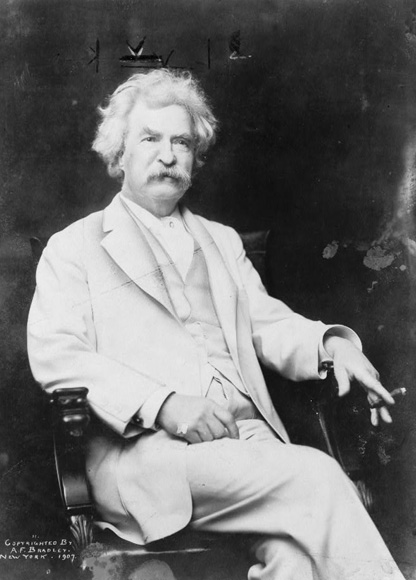
Mark Twain, 1907

The Herald, which at the time was one of the best newspapers in America, reported Twain to be “grievously ill and possibly dying. Worse still, we are told that his brilliant intellect is shattered and that he is sorely in need of money.”

Twain then was in London, about to cover Queen Victoria’s Diamond Jubilee for William Randolph Hearst’s New York Journal. That association allowed the Journal to promptly puncture the Herald‘s story.

In an article published June 2, 1897, beneath the headline, “Mark Twain Amused,” the Journal skewered the Herald‘s account as false and offered Twain’s denial: “The report of my death was an exaggeration.”

Twain’s line is often and erroneously quoted as “the news of my death has been greatly exaggerated” and sometimes the Journal is said to have been the source for the erroneous report, not its swift and thorough debunking.

Twain told the Journal that the likely source of the Herald‘s mistake was the serious illness a few weeks before of a cousin, J.R. Clemens, who had been in London.

Ever eager to indulge in self-promotion, the Journal enthusiastically embraced its brief association with Twain. Still, it could not have been terribly pleased with what the humorist filed about the Diamond Jubilee.

As I wrote in The Year That Defined American Journalism, “Twain’s reporting about Victoria’s jubilee seemed half-hearted and hardly inspired. The spectacle was easily the most regal international story of 1897, and came at a time when the British empire was at or near its height. But Twain found the celebration overwhelming,” calling it “a spectacle for the kodak [camera], not the pen.”

Twain’s dispatch to the Journal included this strange observation:

“I was not dreaming of so stunning a show. All the nations seemed to be filing by. They all seemed to be represented. It was a sort of allegorical suggestion of the Last Day, and some who live to see that day will probably recall this one if they are not too much disturbed in the mind at the time.”

WJC

Related:

<!–[if !mso]> Twain’s reporting about Victoria’s jubilee seemed half-hearted and hardly inspired. The spectacle was easily the most regal international story of 1897, and came at a time when the British empire at or near its height. But Twain found the celebration overwhelming—“a spectacle for the kodak [camera], not the pen.”[i] His dispatch included this strange observation: “I was not dreaming of so stunning a show. All the nations seemed to be filing by. They all seemed to be represented. It was a sort of allegorical suggestion of the Last Day, and some who live to see that day will probably recall this one if they are not too much disturbed in mind at the time.”


[i]. Mark Twain, “The Great Jubilee As Described by the Journal’s Special Writers: Mark Twain’s Pen Picture of the Great Pageant in Honor of Victoria’s Sixtieth Anniversary,” New York Journal (23 June 1897): 1.

‘Good narrative trumps good history’

In 1897, Cinematic treatments, Furnish the war, Media myths, Reviews, Yellow Journalism on May 28, 2010 at 1:53 pm

The Shotgun Blog today quotes an excerpt from my recent review of Evan Thomas’ disappointing new book, The War Lovers, and offers this telling observation:

“A good narrative trumps good history about nine times out of ten.”

The Shotgun Blog excerpt carries the headline, “You Furnish the Myth, We’ll Furnish the History,” and includes this passage from my review of War Lovers:

“Thomas embraced the media-driven myth of William Randolph Hearst’s purported vow to furnish the war with Spain–a vow supposedly contained in a telegram to the artist Frederic Remington, on assignment in Cuba” in 1897.

The Remingt0n-Hearst anecdote almost certainly is apocryphal, as I discuss in my 2001 book, Yellow Journalism: Puncturing the Myths, Defining the Legacies.

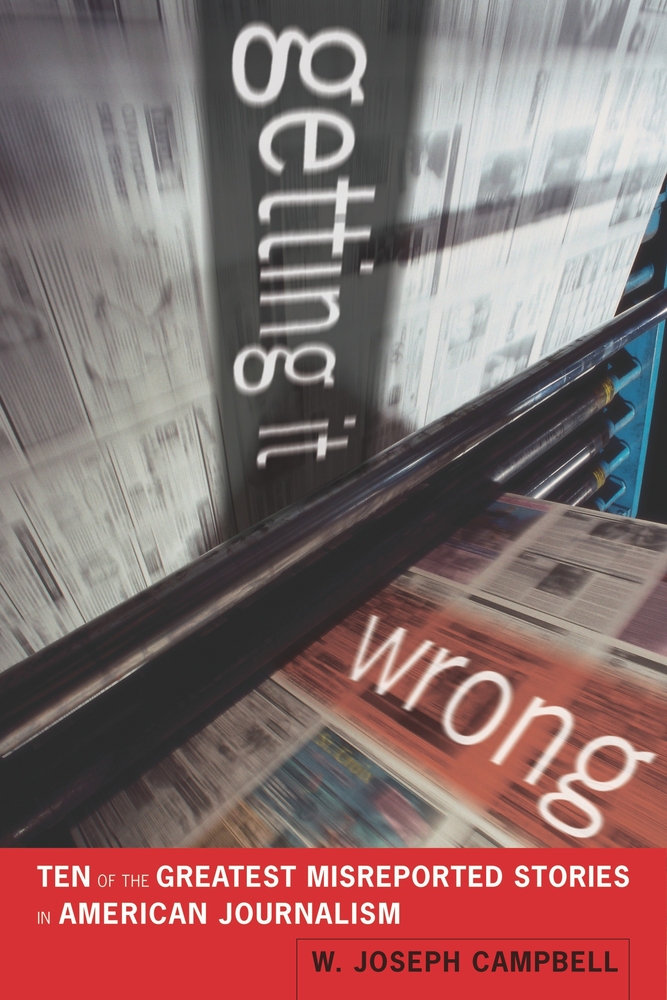
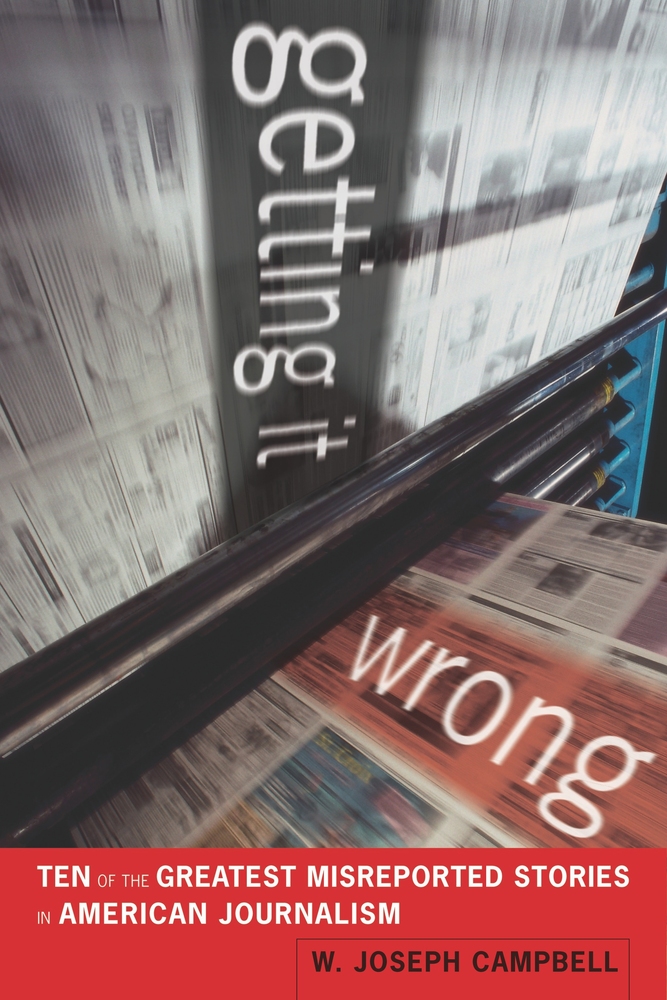
I revisit the anecdote in the first chapter of my soon-to-be-published book, Getting It Wrong, which debunks 10 prominent media-driven myths—false, dubious, or improbable stories about the news media that masquerade as factual.

The Shotgun Blog’s observation about good narrative routinely trumping good history is worthy of rumination, as it does often seem to be the case. It is a topic that I address in Getting It Wrong.

A reason narratives like the Remington-Hearst anecdote triumph is that they are succinct, savory, and easily remembered–as are many media-driven myths.

The Remington-Hearst anecdote is almost too good to be false, a narrative so delicious that it deserves to be true.

The anecdote lives on “despite a nearly complete absence of supporting documentation,” I note in Getting It Wrong, adding:

“It lives on even though telegrams supposedly exchanged by Remington and Hearst have never turned up. It lives on even though Hearst denied ever sending such a message.

“It lives on despite an irreconcilable internal inconsistency: It would have been absurd for Hearst to vow to ‘furnish the war’ because war—specifically, the Cuban rebellion against Spain’s colonial rule—was the very reason Hearst sent Remington to Cuba in the first place.

“Anyone reading U.S. newspapers in early 1897 would have been well aware that Cuba was a theater of a nasty war. By then, the Cuban rebellion had reached island-wide proportion and not a single province had been pacified by Spain’s armed forces.”

What pressed the “furnish the war” anecdote unequivocally into the public consciousness–what sealed the narrative’s triumph over history, if you will–was Citizen Kane, the 1941 motion picture based loosely on Hearst’s life and times.

Kane was not a commercial success, in part because of Hearst’s attempts to block its release, but the film is consistently ranked by critics among the finest ever made, as I note in Getting It Wrong.

A scene early in the film shows Charles Foster Kane, the newspaper tycoon who invites comparisons to Hearst, at his desk, tie untied, quarreling with his former guardian. They are interrupted by Kane’s business manager, “Mr. Bernstein,” who reports that a cable a just arrived from a correspondent in Cuba.

Bernstein reads the contents and Kane, who is played superbly by Orson Welles, dictates a reply that paraphrases Hearst’s purported vow.

Orson Welles

“You provide the prose poems,” Kane says, “and I’ll provide the war.”

Bernstein congratulates Kane on a splendid and witty reply.

Saying he rather likes it himself, Kane instructs Bernstein to send it at once.

WJC

Related:

In myth, a truism: Hearst’s vow ‘will forever live on’

In 1897, Debunking, Furnish the war, Media myths, Spanish-American War, Yellow Journalism on May 17, 2010 at 8:34 am

William Randolph Hearst’s purported vow to “furnish the war” with Spain “has achieved unique status as an adaptable, hardy, all-purpose anecdote,” I write in my forthcoming book about media-driven myths, Getting It Wrong.

The anecdote, I point out, “has been invoked to illustrate the media’s willingness to compromise impartiality, promote political agendas, and indulge in sensationalism. It has been used, more broadly, to suggest the media’s capacity to inject malign influence into international affairs.”

It is for such reasons the Hearstian anecdote endures, despite having been thoroughly debunked. The tale is revisited, and debunked anew, in the first chapter of Getting It Wrong.

But it may well be that Hearst’s purported vow “will forever live on in journalism history,” as a columnist for the Times of Northwest Indiana newspaper wrote in a commentary published yesterday.

Far from challenging or disputing the tale, the columnist embraced it, repeating as if factual the supposed exchange between Hearst and the artist Frederic Remington, in which Hearst reputedly asserted:

“You furnish the pictures, and I’ll furnish the war.”

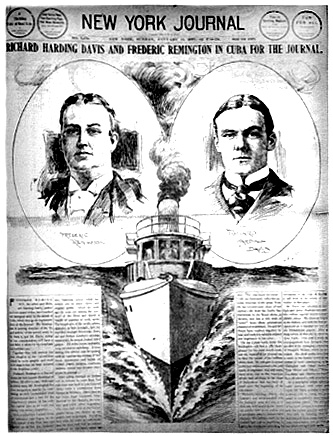
Remington was in Cuba in January 1897, on assignment for Hearst’s New York Journal to draw sketches of the rebellion against Spanish colonial rule. If the exchange did take place, it would have been then, in early 1897.

As I write in Getting It Wrong,  the anecdote lives on despite a nearly complete absence of supporting documentation. It lives on even though the telegram that supposedly contained Hearst’s vow has never turned up. It lives on even though Hearst denied ever sending such a message.

And it lives on despite an irreconcilable internal inconsistency: It would have been absurd for Hearst to vow to “furnish the war” because war—specifically, the Cuban rebellion—was the reason he sent Remington to Cuba in the first place. (The rebellion gave rise in 1898 to the Spanish-American War.)

The sole source for the anecdote was a self-important journalist named James Creelman. He was neither in Cuba nor in New York at the time the exchange would have occurred. Creelman then was in Europe, as a correspondent for Hearst’s Journal.

That means Creelman learned about the tale second-hand.

Or made it up.

The durability of media myths such as the “furnish the war” anecdote is discussed in Getting It Wrong. I acknowledge that “some myths addressed [in the book] may prove resistant to debunking. They may still be widely believed despite the contrary evidence marshaled against them.”

I note that the “most resilient myths may be those that can be distilled to a catchy, pithy phrase.”

Quotations such as “You furnish the pictures, and I’ll furnish the war” are indeed neat, tidy, catchy, and delicious. They are easy to remember, fun to repeat, and too good not to be true.

Almost certainly, they will live on.

WJC

Check out new trailer for ‘Getting It Wrong’

In 1897, Debunking, Furnish the war, Media myths, Spanish-American War, War of the Worlds, Yellow Journalism on May 8, 2010 at 3:45 pm

Here’s the book trailer for Getting It Wrong, my forthcoming book that addresses, and debunks, 10 prominent media-driven myths.

Getting It Wrong will be published this summer by University of California Press.

WJC

Advance copies arrive

In 1897, Furnish the war, Media myths, Spanish-American War on May 7, 2010 at 4:11 pm

I received two advance copies of Getting It Wrong this afternoon. My wife says they look great, so that’s got to be the final word on that matter.

They do look very good.

I had a feeling the advances were being delivered when the UPS truck rolled up in front of the house.

Getting It Wrong–which addresses and debunks 10 prominent media-driven myths–is being published by University of California Press. Reed Malcolm, the acquisition editor with whom I worked, enclosed a generous note, saying copies of the book are en route to warehouses on the East and West coasts.

Getting It Wrong should be on sale next month.

The book‘s opening chapter,  which revisits William Randolph Hearst’s purported vow to “furnish the war” with Spain in the late 19th century, is available here.

Getting It Wrong has already attracted a measure of attention. I guest-blogged about the book at the Washington Post‘s “Political Bookworm” site and the newspaper’s “Outlook” section carried a short writeup about last month about three myths the book debunks.

WJC

‘War Lovers’: A myth-indulging disappointment

In 1897, Furnish the war, Media myths, Spanish-American War, Yellow Journalism on May 2, 2010 at 3:37 pm

I had a chance today to thumb through The War Lovers, the widely reviewed new book by Evan Thomas about the run-up to Spanish-American War.

But I didn’t buy it. It’s a myth-indulging disappointment.

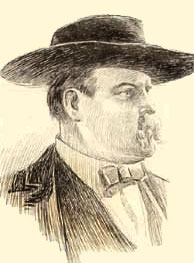
Remington in Cuba

In sections of the book about the yellow press period at the end of the 19th century, Thomas ignored–or was unaware of–recent scholarship that has cast serious doubt on anecdotes he included.

Notably, Thomas embraced the media-driven myth of William Randolph Hearst’s purported vow to “furnish the war” with Spain–a vow supposedly contained in a telegram to the artist Frederic Remington, on assignment in Cuba.

It is perhaps American journalism’s best-known tale. But as I wrote in my 2001 book, Yellow Journalism: Puncturing the Myths, Defining the Legacies, the anecdote almost certainly is apocryphal.

It lives on despite a nearly complete absence of supporting documentation. It lives on even though the telegram Hearst’s reputedly sent has never turned up. It lives on even though Hearst denied ever sending such a message.

And it lives on despite an obvious and irreconcilable internal inconsistency: It would have been absurd for Hearst to have vowed to “furnish the war” because war—specifically, the Cuban rebellion against Spain’s colonial rule—was the reason Hearst sent Remington to Cuba in the first place.

Remington was there in early 1897, at a time when anyone reading U.S. newspapers would have been quite aware that Cuba for two years had been a theater of a very nasty war. By 1897, Spain had sent nearly 200,000 soldiers to Cuba in a failed attempt to put down the rebellion, which in 1898 gave rise to the Spanish-American War.

Thomas–whose biography at Amazon.com says he “is one of the most respected historians and journalists writing today”–overlooked almost all of that.

He cited as his authority James Creelman, the pompous, hyperbolic reporter for Hearst’s New York Journal who recounted the anecdote, without documentation, in his 1901 memoir, On the Great Highway.

Creelman presented the “furnish the war” anecdote in an admiring way, saying it demonstrated how Hearst’s “yellow journalism” had an eye toward the future and was good at anticipating events. But over the years, the vow has taken on the more sinister overtones, of the sort that Thomas invoked in his book.

The anecdote’s evolution over the past 110 years is discussed in Chapter One of Getting It Wrong, my forthcoming book on media-driven myths.

Creelman, by the way, wasn’t with Remington in Cuba in early 1897. He wasn’t in New York with Hearst, either. Creelman was in Europe, as the Journal‘s special correspondent on the continent. So he would not have had first-hand knowledge about the “furnish the war” telegram, had Hearst sent it to Remington in Cuba.

Thomas indulged in another myth of yellow journalism, one that centers around what I call the greatest escape narrative in American media history.

In what also is known as the case of “jail-breaking journalism,” Hearst’s Journal organized the escape in 1897 of a 19-year-old Cuban political prisoner named Evangelina Cisneros.

By then, she had been held in a Havana jail, without trial, for 15 months on suspicion of conspiring to kill a senior Spanish military officer. Cisneros claimed the officer had made her the target of unwelcome sexual advances.

As I described in my 2006 book, a year-study titled The Year That Defined American Journalism: 1897 and the Clash of Paradigms,  Hearst sent a reporter named Karl Decker to Cuba, ostensibly as the Journal correspondent in Havana.

In reality, Decker was under orders to organize the rescue of Cisneros.

With the quiet help of U.S. diplomatic personnel in Cuba, and with the vital support of a clandestine smuggling network in Havana, Decker succeeded: He and two accomplices broke Cisneros out of jail in early October 1897. She was smuggled aboard a passenger steamer to New York City, where Hearst organized a delirious reception for her.

Thomas claimed that Decker, in articles the Journal published about jailbreak, “neglected to inform readers that he had bribed the guards, who arranged the theater of the escape as a way to save face.”

Decker

Such claims have circulated since 1897, mostly as a way to denigrate the Journal and its brazen accomplishment. Decker did say he tried, but failed, to bribe the jailer.

As is noted in The Year That Defined American Journalism, the evidentiary record to support the claim that bribes were paid is very, very thin.

“No one has identified to whom bribes were paid, how much, by what method, and how the purported payoffs secured the enduring silence of the authorities,” I wrote, adding:

“The allegations or suspicions of bribery rest more on assertion—and newspaper rivals’ contempt for the Journal—than on specific, persuasive documentation.”

It’s a good story, though. Like many media-driven myths, the Decker-bribery tale is delicious and enticing.

But it withers under scrutiny.

WJC

Advance pub for ‘Getting It Wrong’

In 1897, Cronkite Moment, Debunking, Media myths, War of the Worlds, Washington Post on April 28, 2010 at 3:47 pm

The online site of the School of Communication here at American University posts today a Q-and-A with me about Getting It Wrong, my forthcoming book that debunks 10 prominent media-driven myths.

Topics addressed include the Remington-Hearst/furnish the war anecdote; the War of the Worlds/mass hysteria myth, and the “Cronkite moment“/”I’ve lost Middle America” meme.

And while the topic is not considered in Getting It Wrong, I also mention the “pharm parties” myth, in which young people are said to take pills of any kind from their parents’ medicine cabinets. They supposedly show up at a party and dump the purloined pills into a large, common bowl. Then they are purported to take turns scooping out and swallowing handfuls of the medications, not knowing what they’re taking, in the supposed pursuit of a drug-induced high.

Jack Shafer, media critic for slate.com, has done fine work in knocking down the “pharm party” meme.

Here are excerpts from the Q-and-A:

Q: “Myth busting” can upset people who have accepted, or even benefited from, the myth. Have you gotten any negative feedback?

A:  Not really. Not so far. I do know that some people wonder “who cares?” about some of the myths debunked in Getting It Wrong. The Hearst—”furnish the war” myth, after all, is more than 100 years old. But I emphasize in the book that media-driven myths are neither innocuous nor trivial. They can, and do, promote stereotypes. They can deflect attention or blame away from the makers of flawed policies. They can, and often do, offer an exaggerated sense of the power and influence of the news media. Plus, debunking myths is a pursuit that’s aligned with a fundamental objective of mainstream American journalism—that of getting it right.

Q: What’s next?

A: I’d like to think there’s a sequel to Getting It Wrong. The universe of media-driven myths isn’t confined to 10, after all. There are more to confront. Also, in fall 2010, I’ll be teaching a “wild card” course in the University’s General Education program titled “Media Myth and Power.” The course will consider several of the myths debunked in Getting It Wrong.

A tip of the chapeau to Michael Wargo of the School of Communication for putting together the Q-and-A, which follows the writeup about the book that appeared April 11 in the “Outlook” section of the Washington Post.

WJC

‘Getting It Wrong’ at Kensington’s ‘Day of the Book’

In 1897, Debunking, Media myths, Year studies on April 25, 2010 at 8:19 am

I participated today in the “Day of the Book” festival in the antique row section of  Kensington, MD.

The event represented first book-event exposure for Getting It Wrong, my forthcoming book that addresses, and debunks, 10 prominent media-driven myths.

Getting It Wrong will be published this summer by University of California Press. Chapter One may be read here.

Also on display at the “Day of the Book” was my year study, The Year That Defined American Journalism: 1897 and the Clash of Paradigms, which was published in 2006. The book tells the story of a decisive year in American journalism.

Book signing in Kensington (AMR photo)

Principal organizer of the “Day of the Book” was Kensington Row Bookshop and at least 80 authors and poets had registered for the event.

The threat of rain kept some of them away. But nasty weather was a no-show and a fine time was had.

I enjoyed meeting several other local authors, including Bernadette LeDoux-Brodsky,  a Parisienne who used to teach French at Georgetown University; Bob Gregg, a retired dean and professor at American University, and Ben Farmer, a young author who graduated a few years ago from Kenyon College.

Bernadette said the ambiance in Kensington evoked for her the cafe scene of streets in Paris–sans les apéritifs, of course. She sold copies of her Ici et Ailleurs: Parisienne dans le Maryland. Bob sold several of his novels, among them The Scarecrow in the Vineyard. And the gregarious Ben Farmer seemed to make a lot of friends as well several sales of his new novel, Evangeline.

For me, the event was mostly a chance to gauge interest in Getting It Wrong. And more men than women stopped by to chat about the book and/or take a flyer.

There also was some mild interest in The Year That Defined American Journalism (see book-signing photo, above).

The dog in the picture? That’s Lil, our bichon frise. She was at the book fair, too, and proved to be quite the magnet.

WJC

About the innovative social media deck, and ‘yellow blogging’

In 1897, Newspapers, Yellow Journalism on April 20, 2010 at 10:22 am

Kudos to my nephew, Rob Campbell, and the innovative social media deck he’s helped launch at the Cleveland Indians’ ballpark, Progressive Field.

The Tribe Social Deck, believed to be the first of its kind in a major professional sports venue, is described as “a press box for bloggers/social media types.”

The Deck was launched last week at the team’s home opener.

As far as is known, Rob has been quoted as saying, “the Tribe Social Deck is a one-of-a-kind endeavor.  Other professional sports teams have offered individual bloggers press credentials on occasion but to our knowledge there has never been a section exclusively catering to the internet and social media community.”

Rob heads up social media efforts for the Indians and posts frequently to the team’s Twitter site, Tribetalk.

In other developments in social media, a writer for the BetaNews blog has proposed “yellow blogging” as a latter day “reincarnation” of yellow journalism, which flared in the U.S. press more than 100 years ago.

By “yellow blogging,” he means those “gossip and rumor blogsites [that] ruthlessly compete for pageviews.”

Cool term, “yellow blogging.”  I like it.

But as heir to yellow journalism, as it was practiced in urban America at the end of the 19th century and early 20th century–unh-uh.

As I wrote in my 2001 book, Yellow Journalism: Puncturing the Myths, Defining the Legacies, “yellow journalism” has become a shorthand term–a cliché, really–for exaggerated, sensationalized, rumor-driven treatment of the news.

But that’s far from what “yellow journalism” was.

Hearst caricature, 1896

Newspapers of a century or so ago that can be classified as “yellow journals” (such as those of William Randolph Hearst and Joseph Pulitzer)  “were, at a minimum, typographically bold in their use of headlines and illustrations,” I wrote in Yellow Journalism, adding:

“They certainly looked different from their gray, conservative counterparts, and their use of design elements was more conspicuous and imaginative. They were, moreover, inclined to campaign against powerful interests and municipal abuses, ostensibly on behalf of ‘the people.’ And they usually were not shy about doing so.”

More specifically, yellow journalism–a term that emerged in 1897–was defined by these features and characteristics:

  • the frequent use of multicolumn headlines that sometimes stretched across the front page.
  • a variety of topics reported on the front page, including news of politics, war, international diplomacy, sports, and society.
  • the generous and imaginative use of illustrations, including photographs and other graphic representations such as locator maps.
  • bold and experimental layouts, including those in which one report and illustration would dominate the front page. Such layouts sometimes were enhanced by the use of color.
  • a tendency to rely on anonymous sources, particularly in dispatches of leading reporters.
  • a penchant for self-promotion, to call attention frequently to the newspaper’s accomplishments.

So the yellow press back then was certainly anything but boring, predictable, or uninspired—complaints of the sort that frequently are raised about contemporary American newspapers.

The yellow journals were hardly wretched scandal sheets, indulging in gossip and rumor.

WJC

Today’s Boston Marathon: Recalling the 1897 inaugural run

In 1897, Anniversaries, Year studies, Yellow Journalism on April 19, 2010 at 7:17 pm

An ESPN columnist said it well today:

“The Boston Marathon turned 114 years old on Monday, but it never gets old.”

Indeed. The Boston Marathon is perhaps the most famous and prestigious race of its kind in the United States.

The first running of the storied marathon was in 1897, the year that defined American journalism.  The race was one of the year’s landmark moments.

As I wrote in a book by that title, the inaugural Boston Marathon was run April 19, 1897, having been “inspired by the revival of the marathon race at the first modern Olympic games in 1896.”

The course, I noted in The Year That Defined American Journalism, began in Ashland, Massachusetts, and was 24.5 miles long–about 1.5 miles shorter than that of a contemporary marathon race.

Fifteen men were in the field in 1897.

Some  of them, said the Boston Post, in revealing a delicious sense for detail, “looked as if they could spare a few pounds.”

Winner of the 1897 Boston Marathon

Along the course that spring day, “the runners answered the cheers of spectators with bows and waves.”

The winner of the inaugural run was John J. McDermott of the Pastime Athletic Club in New York. He finished the course in 2 hours, 55 minutes, and 10 seconds, which the Boston Globe said exceeded the record time of the 1896 Olympics.

McDermott supposedly dropped nine pounds during the race, suffered severe leg cramps, and was forced to cut through a funeral procession as the marathon neared the finish line, where some 3,000 spectators awaited.

“This probably will be my last long race,” McDermott said afterward. “I hate to quit now, because I will be called a quitter and a coward, but look at my feet.

“Do you blame me for wanting to stop it? I only walked about a quarter of a mile in the whole distance and it was 20 miles before I lagged a step.”

But, he added, “I think I shall be all right tomorrow.”

McDermott entered the 1898 edition of Boston Marathon, and finished fourth.

WJC

<!–[if !mso]>

The winner was John J. McDermott of the Pastime Athletic Club in New York, who finished the course in 2 hours, 55 minutes, and 10 seconds, which the Boston Globe said exceeded the record time of the 1896 Olympics.[i] McDermott dropped nine pounds, suffered severe leg cramps, and was forced to cut through a funeral procession on the last leg of the race. Some 3,000 spectators awaited at the finish line.[ii] “This probably will be my last long race,” McDermott said afterward. “I hate to quit now, because I will be called a quitter and a coward, but look at my feet. Do you blame me for wanting to stop it? I only walked about a quarter of a mile in the whole distance and it was 20 miles before I lagged a step. I think I shall be all right tomorrow.”


[i]. “Record Time,” Boston Globe (20 April 1897): 1.

[ii]. The crowd estimate appeared in “Beat the Greeks,” Boston Post (20 April 1897): 8.