W. Joseph Campbell

Archive for the ‘Anniversaries’ Category

Wha?? A casino at Gettysburg?? Absurd and insulting

In Anniversaries, Washington Post on July 3, 2010 at 11:44 am

Today is the 147th anniversary of the conclusion of the Civil War battle at Gettysburg, a fitting time to comment about the absurd and insulting proposal to build a casino just south of the national military park.
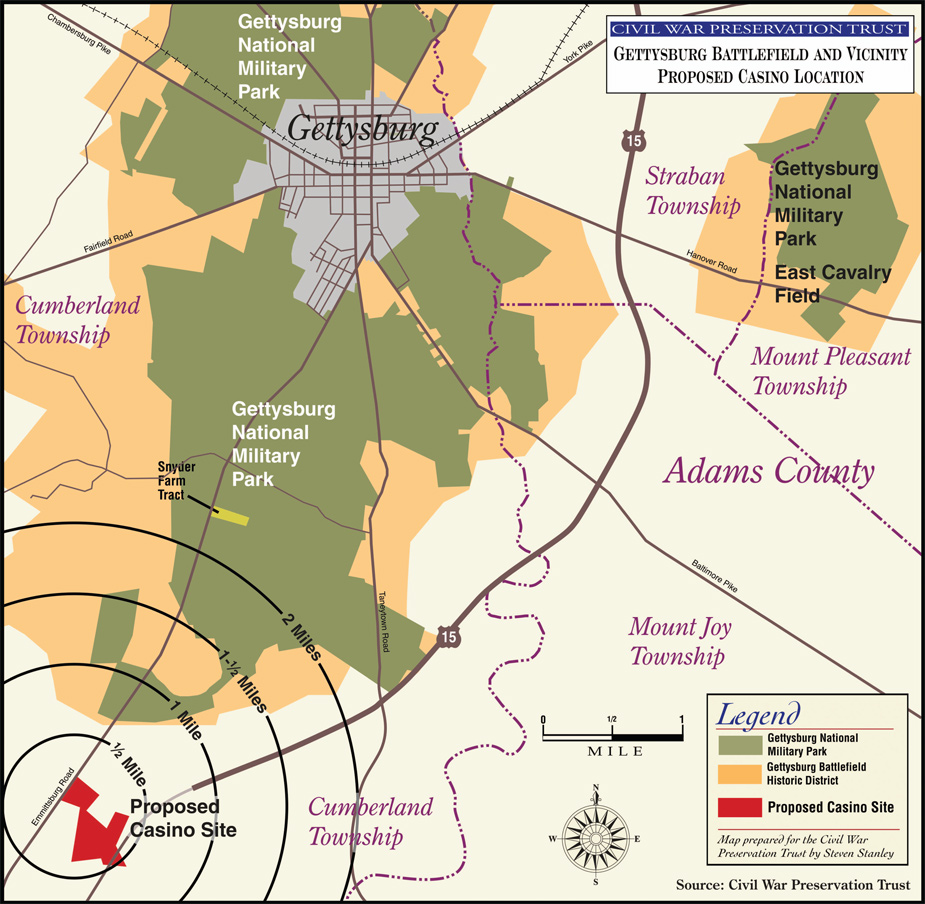
There is no media-driven myth to address here. Instead, it’s the troubling prospect of planting a $75 million  commercial establishment, featuring 600 slot machines and 50 gaming tables, near the battlefield where 158,000 Union and Confederate troops clashed during the first three days of July 1863.

More than 50,000 men were killed and wounded in what was the war’s bloodiest battle.

The casino’s sponsors  offer the hoary if not chimeric arguments that gaming would bring “hundreds of new jobs to southern Adams County” and “generate tax revenues to support local municipal projects without raising property taxes.”

Such arguments, even if accurate, are readily trumped by the singular importance of Gettysburg to U.S. history.

More than 270 historians have expressed their opposition to the casino, asserting in a letter to the Pennsylvania gaming authority that while the state offers many prospective gaming sites, there is  only one Gettysburg.

According to the Washington Post, historians who have signed the letter opposing the casino include James McPherson, Edwin C. Bearss, and Garry Wills. “A coalition of six historical organizations, jointly representing more than 35,000 historians and researchers, has also joined in the effort,” the Post‘s “A House Divided” blog has reported.

Among those organizations is the Civil War Preservation Trust, which has pointed out:

“A casino conflicts with the heritage-based economy of Gettysburg, with its meaning in American history today, and with its future relevance.”

McPherson, who wrote Battle Cry of Freedom, the superb single-volume history of the Civil War, is notably prominent, and assertive, in opposing among the casino. He has said of the proposed gaming site, which lies beyond the boundaries of Gettysburg National Military Park:

“This ground is as hallowed as any other part of the Gettysburg battlefield, and the idea of a casino near the fields and woods where men from the North and the South gave the last full measure of devotion is simply outrageous.”

As the “House Divided” blog has noted, “This is round two of an attempt to locate a casino near Gettysburg. In 2006, after a deluge of public criticism of another proposed casino also near the battlefield, the Pennsylvania Gaming Control Board turned that applicant down.

“The principle investor involved in the latest bid for a casino license, Gettysburg native and business owner David LeVan, was also involved in the first attempt.”

LeVan’s group, Mason-Dixon Resort & Casino, says at its online site that the casino would “be isolated from Gettysburg.”

But that hardly would be the case. Rather than isolated, the casino would be at the battlefield’s southern periphery.

The Philadelphia Inquirer has reported that the state’s gaming control board may reach a decision on the casino proposal by year’s end.

The renewed casino fight at Gettysburg represents another chapter in the long, never-ending, and not always successful effort to protect Civil War battlegrounds.

I wrote about this broad struggle more than 20 years ago for the Hartford Courant newspaper. My notes from that time include an interview with the then-superintendent of the Gettysburg National Military Park, John R. Earnst.

I spoke with Earnst about the commercial establishments that by then had encroached on the northern reaches of the Gettysburg battlefield.

“I think that we can say without fear of contradiction that when [visitors] come here and find the kind of development that’s occurred, they’re surprised,” Earnst said in the interview in 1988, adding:

“I’m not saying many of them react negatively to that. But they are surprised. They were expecting to find a town that is historic in appearance, that has buildings that relate back to the Civil War. What they find adjacent to the park is something different.”

A casino at the southern edge of the battlefield surely would qualify as “something different.” More than that, it would be crass, insensitive, and egregiously out of place.

WJC

Related:


Twain’s famous 1897 quote: The back story

In 1897, Anniversaries, Debunking, Media myths on June 1, 2010 at 5:26 am

Tomorrow is the anniversary of Mark Twain’s famous and often-distorted observation, “The report of my death was an exaggeration.”

As I described in my 2006 book, The Year That Defined American Journalism, Twain’s comment was prompted by an article published June 1, 1897, in the New York Herald.

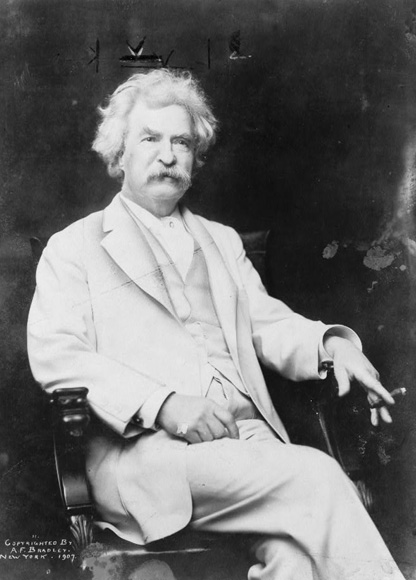
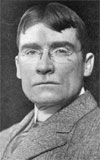
Mark Twain, 1907

The Herald, which at the time was one of the best newspapers in America, reported Twain to be “grievously ill and possibly dying. Worse still, we are told that his brilliant intellect is shattered and that he is sorely in need of money.”

Twain then was in London, about to cover Queen Victoria’s Diamond Jubilee for William Randolph Hearst’s New York Journal. That association allowed the Journal to promptly puncture the Herald‘s story.

In an article published June 2, 1897, beneath the headline, “Mark Twain Amused,” the Journal skewered the Herald‘s account as false and offered Twain’s denial: “The report of my death was an exaggeration.”

Twain’s line is often and erroneously quoted as “the news of my death has been greatly exaggerated” and sometimes the Journal is said to have been the source for the erroneous report, not its swift and thorough debunking.

Twain told the Journal that the likely source of the Herald‘s mistake was the serious illness a few weeks before of a cousin, J.R. Clemens, who had been in London.

Ever eager to indulge in self-promotion, the Journal enthusiastically embraced its brief association with Twain. Still, it could not have been terribly pleased with what the humorist filed about the Diamond Jubilee.

As I wrote in The Year That Defined American Journalism, “Twain’s reporting about Victoria’s jubilee seemed half-hearted and hardly inspired. The spectacle was easily the most regal international story of 1897, and came at a time when the British empire was at or near its height. But Twain found the celebration overwhelming,” calling it “a spectacle for the kodak [camera], not the pen.”

Twain’s dispatch to the Journal included this strange observation:

“I was not dreaming of so stunning a show. All the nations seemed to be filing by. They all seemed to be represented. It was a sort of allegorical suggestion of the Last Day, and some who live to see that day will probably recall this one if they are not too much disturbed in the mind at the time.”

WJC

Related:

<!–[if !mso]> Twain’s reporting about Victoria’s jubilee seemed half-hearted and hardly inspired. The spectacle was easily the most regal international story of 1897, and came at a time when the British empire at or near its height. But Twain found the celebration overwhelming—“a spectacle for the kodak [camera], not the pen.”[i] His dispatch included this strange observation: “I was not dreaming of so stunning a show. All the nations seemed to be filing by. They all seemed to be represented. It was a sort of allegorical suggestion of the Last Day, and some who live to see that day will probably recall this one if they are not too much disturbed in mind at the time.”


[i]. Mark Twain, “The Great Jubilee As Described by the Journal’s Special Writers: Mark Twain’s Pen Picture of the Great Pageant in Honor of Victoria’s Sixtieth Anniversary,” New York Journal (23 June 1897): 1.

‘Deep Throat’ outed self, five years ago today

In Anniversaries, Debunking, Media myths, Washington Post, Watergate myth on May 31, 2010 at 3:39 pm

It’s been five years since W. Mark Felt outed himself as the shadowy “Deep Throat” source of the Watergate scandal, the former No. 2 official at the FBI who in places like parking garages periodically passed information to Bob Woodward of the Washington Post.

Remarkably, Felt’s identity as the elusive “Deep Throat” had remained a secret (and was the subject of often-intense speculation) for more than 30 years, until Vanity Fair published an article on May 31, 2005, disclosing Felt’s “Deep Throat” role.

Felt was then 91 and in declining health. He died in 2008.

As I write in Getting It Wrong, my forthcoming book about media-driven myths, the prolonged guessing game about the identity of “Deep Throat” helped solidify the notion that the Washington Post was central to uncovering Watergate scandal. (Stanley I. Kutler, the leading historian of Watergate, once wrote that the “endless, pointless game of trying to identify Deep Throat” was a distraction from the lessons of Watergate.)

Getting It Wrong includes a chapter addressing and debunking what I call the heroic-journalist myth of Watergate–that the reporting of Woodward and his Post colleague, Carl Bernstein, brought down Richard Nixon’s corrupt presidency.

I write that the “guessing game about the identity of the ‘Deep Throat’ source provided periodic and powerful reminders about the Post and its Watergate coverage, serving to keep Woodward and Bernstein in the public eye far longer than they otherwise would have been.”

I also note:

“They and the mysterious ‘Deep Throat’ source became central figures” in what the Philadelphia Inquirer described as “the parlor game that would not die. … With each passing year, as ‘Deep Throat’s’ cloak of anonymity remained securely in place, his perceived role in Watergate gained gravitas.”

“And so,” I write, “… did the roles of Woodward and Bernstein.”

Although many people were named in the guessing game about “Deep Throat,” Felt always ranked high on the roster of likely candidates. As I note in Getting It Wrong, speculation about who was “Deep Throat” began in June 1974, with a front-page article in the Wall Street Journal, and continued periodically for the next 31 years.

The Journal article appeared soon after publication of All the President’s Men, Woodward and Bernstein’s best-selling book about Watergate in which they introduced the furtive source they called “Deep Throat.” The Journal article described Felt as the top suspect.

But Felt repeatedly denied having been “Deep Throat.” He was quoted as saying in the Journal article in 1974:

“I’m just not that kind of person.”

He told the Hartford Courant newspaper in 1999 that he “would have been more effective” had he indeed been Woodward’s secretive source, adding:

“Deep Throat didn’t exactly bring the White House crashing down, did he?”

On the day Felt was confirmed to have been “Deep Throat,” his family issued a statement calling him “a great American hero who went well above and beyond the call of duty at much risk to himself to save his country from a horrible injustice. We all sincerely hope the country will see him this way as well.”

But Felt hardly was such a noble character.

In his senior position at the FBI, Felt had authorized illegal burglaries as part of FBI investigations into leftists associated with the radical Weather Underground in the early 1970s.

Felt was convicted in 1980 on felony charges related to the break-ins but pardoned by President Ronald Reagan.

WJC

Related:


Remembering ‘journalism hero’ Murrow, 45 years on

In Anniversaries, Debunking, Media myths, Murrow-McCarthy myth on April 27, 2010 at 9:46 am

The Poughkeepsie Journal notes the 45th anniversary today of the  death of legendary broadcast journalist Edward R. Murrow.

Murrow died April 27, 1965, at his farm near Pawling, N.Y., about 20 miles from Poughkeepsie. Murrow, a chainsmoker, fell victim to lung cancer. He had just turned 57.

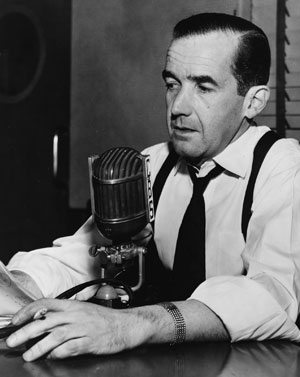
Chainsmoking Ed Murrow

Inevitably, the Poughkeepsie Journal tribute–which carried the headline, “Journalism hero Edward R. Murrow lives on”–recalled Murrow’s famous See It Now documentary program in March 1954. That was when he took on the red-baiting Republican senator from Wisconsin, Joseph R. McCarthy.

The newspaper’s article said Murrow’s program on McCarthy “is credited for exposing the senator’s tactics by using clips of his own words, and helped lead to the senator’s downfall.”

The program’s mythical dimensions are addressed in my forthcoming book, Getting It Wrong, in which I note:

See It Now that night was powerful television. More accurately, it was a hearty serving of advocacy journalism. … Murrow and his See It Now team assembled a series of film clips that was decidedly unflattering to McCarthy.”

I also write:

“McCarthy’s oddball appearance and mannerisms—his hulking, menacing presence, his nutty laugh, his five o’clock shadow, his careless grooming that allowed strands of thinning, greasy hair to creep down his forehead—were among the most revealing and most unforgettable moments of the program.”

But did the show expose McCarthy’s tactics?

Not at all.

McCarthy had burst upon the national scene four years earlier, claiming in a series of speeches that scores of communists, communist sympathizers, or persons of risk were embedded in the U.S. State Department.

His charges were almost immediately challenged by Drew Pearson, a nationally syndicated muckraking columnist based in Washington, D.C.

“The Senator from Wisconsin has been a healthy watchdog of some government activities, but the alleged communists which he claims are sheltered in the State Department just aren’t,” Pearson wrote in February 1950, more than four years before Murrow’s program on McCarthy.

So did the See It Now show “helped lead to the senator’s downfall,” as the Poughkeepsie Journal claims?

Not so much.

By the time Murrow took to the air to confront McCarthy, the senator’s favorability ratings had already hit the skids.

As I write in Getting It Wrong, “it wasn’t as if Americans in early 1954 were hoping for someone to step up and expose McCarthy, or waiting for a white knight like Murrow to tell them about the toxic threat the senator posed.”

Thanks to Pearson, and other journalists, they knew.

WJC

Today’s Boston Marathon: Recalling the 1897 inaugural run

In 1897, Anniversaries, Year studies, Yellow Journalism on April 19, 2010 at 7:17 pm

An ESPN columnist said it well today:

“The Boston Marathon turned 114 years old on Monday, but it never gets old.”

Indeed. The Boston Marathon is perhaps the most famous and prestigious race of its kind in the United States.

The first running of the storied marathon was in 1897, the year that defined American journalism.  The race was one of the year’s landmark moments.

As I wrote in a book by that title, the inaugural Boston Marathon was run April 19, 1897, having been “inspired by the revival of the marathon race at the first modern Olympic games in 1896.”

The course, I noted in The Year That Defined American Journalism, began in Ashland, Massachusetts, and was 24.5 miles long–about 1.5 miles shorter than that of a contemporary marathon race.

Fifteen men were in the field in 1897.

Some  of them, said the Boston Post, in revealing a delicious sense for detail, “looked as if they could spare a few pounds.”

Winner of the 1897 Boston Marathon

Along the course that spring day, “the runners answered the cheers of spectators with bows and waves.”

The winner of the inaugural run was John J. McDermott of the Pastime Athletic Club in New York. He finished the course in 2 hours, 55 minutes, and 10 seconds, which the Boston Globe said exceeded the record time of the 1896 Olympics.

McDermott supposedly dropped nine pounds during the race, suffered severe leg cramps, and was forced to cut through a funeral procession as the marathon neared the finish line, where some 3,000 spectators awaited.

“This probably will be my last long race,” McDermott said afterward. “I hate to quit now, because I will be called a quitter and a coward, but look at my feet.

“Do you blame me for wanting to stop it? I only walked about a quarter of a mile in the whole distance and it was 20 miles before I lagged a step.”

But, he added, “I think I shall be all right tomorrow.”

McDermott entered the 1898 edition of Boston Marathon, and finished fourth.

WJC

<!–[if !mso]>

The winner was John J. McDermott of the Pastime Athletic Club in New York, who finished the course in 2 hours, 55 minutes, and 10 seconds, which the Boston Globe said exceeded the record time of the 1896 Olympics.[i] McDermott dropped nine pounds, suffered severe leg cramps, and was forced to cut through a funeral procession on the last leg of the race. Some 3,000 spectators awaited at the finish line.[ii] “This probably will be my last long race,” McDermott said afterward. “I hate to quit now, because I will be called a quitter and a coward, but look at my feet. Do you blame me for wanting to stop it? I only walked about a quarter of a mile in the whole distance and it was 20 miles before I lagged a step. I think I shall be all right tomorrow.”


[i]. “Record Time,” Boston Globe (20 April 1897): 1.

[ii]. The crowd estimate appeared in “Beat the Greeks,” Boston Post (20 April 1897): 8.

Remembering the Maine — and a myth of yellow journalism

In Anniversaries, Debunking, Media myths, New York Times, Spanish-American War on April 6, 2010 at 5:33 pm

American yellow journalism of the late 19th century, led by the newspapers of William Randolph Hearst, has been often blamed for bringing on the Spanish-American War, which began 112 years ago this month.

Wreckage of the Maine (Library of Congress)

Wreckage of the Maine

It is an enduring media-driven myth, a misleading, media-centric interpretation that refuses to die, despite considerable evidence to the contrary.

The media myth of the Spanish-American War was invoked in a commentary posted today at the conservative online news site, Human Events.

The commentary–which contemplated parallels in the recent sinking of a South Korean Navy vessel and the destruction in Havana harbor in 1898 of the USS Maine– declared:

“While the cause of the explosion [that destroyed the Maine] remained a mystery, newspapers fighting for readership jumped on the incident as a means to increase sales. Exploiting and distorting the news—an industry art form that came to be called ‘yellow journalism’—reporters slanted the news to sensationalize it. As the Navy continued its investigation [into the causes of the battleship’s loss], the newspapers worked the American public’s emotions into a frenzy.”

There is, quite simply,  little evidence to support such a claim. (And coining the term “yellow journalism” predated the Maine‘s destruction by more than a year.)

Rather than stirring emotions “into a frenzy” in late winter 1898,  the American press was “notably becalmed and restrained,” as I wrote in my 2001 book, Yellow Journalism: Puncturing the Myths, Defining the Legacies.

I cited the trade journal Fourth Estate, which observed that the “frightful news from Havana, telling of the destruction of the . . . Maine, was treated here as a terrible calamity. The natural suspicion that Spanish methods of warfare had destroyed the ship moved men to cry for war, but the press as a whole published and reiterated the message from the [Maine’s] Captain, to ‘suspend judgment.’”

The trade journal also noted:

“Some of our papers, overheated with natural anger, have clamored for war, but the great majority have shown to the world that the press of the United States is in accord with the Government and is anxious for war only when it must be.” (Emphasis added.)

The Fourth Estate‘s reference to “some” papers clamoring for war no doubt was a reference to Hearst’s New York Journal and its racy sister publication, the Evening Journal. Hearst’s papers, as well as those of Joseph Pulitzer, were often speculative and over-the-top in their reporting.

But these newspapers, the leading exemplars of yellow journalism, hardly set an agenda for the American press in the aftermath of the Maine‘s destruction.

As I wrote in Yellow Journalism, scholarly “studies of the heartland press in 1898 signal the limited influence of the Hearst and Pulitzer newspapers—and note that few local newspapers immediately and vigorously advocated war” because of the loss of the Maine in a harbor under Spanish control.

The staid New York Times, which in the late 19th century began emerging as the antithesis to yellow journalism, also noted the generally calm reaction in the United States after the Maine‘s destruction.

The Times stated in late February 1898:

“No Latin race, we imagine, would have kept its head as well as the American people have kept theirs during the disturbing events of the past two weeks. In Spain or France or Italy there would have been tumultuous assemblages, much outcry in the streets, and incitements to riots.

“Outside of the reckless newspapers there has been no raving here.”

So it scarcely can be said that newspapers “worked the American public’s emotions into a frenzy” that led to the Spanish-American War. There is  little to support the notion that a journalistic war cry arose in the wake of the Maine’s destruction.

WJC

Remembering big: Another April anniversary

In Anniversaries, Debunking, Jessica Lynch, Media myths, Washington Post, Watergate myth on April 4, 2010 at 5:56 pm

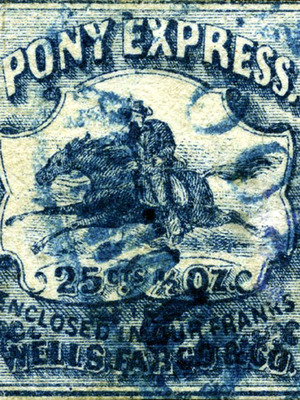
April 3 not only was the seventh anniversary of the Washington Post‘s botched report about the mythical battlefield heroics of Jessica Lynch. The date also marked the 150th anniversary of the first run of the legendary Pony Express–a short-lived institution that is impressively steeped in myth.

As Christopher Corbett wrote in an engaging commentary published Friday in the Wall Street Journal:

“We remember the Pony Express as one of the most enduring and endearing of American stories, a tale of the frontier, a story of bold entrepreneurs, daring young horsemen, true riders of the purple sage and all that.

“In truth, the venture hemorrhaged money from day one, was doomed by technology (another particularly American story), lasted a mere 78 weeks, ruined its backers and then disappeared into what historian Bernard DeVoto called ‘the border land of fable.'”

Corbett noted: “It was all over in 18 months. The service was shut down in the flash of a telegrapher’s key when the transcontinental telegraph was completed in October 1861.”

But for years afterward, “the West was aswarm with old men who claimed to be ‘the last of the Pony Express riders,'” Corbett wrote.

The tall tales and exaggerations that grew up around the Pony Express were in large part promoted by the cinema and the entertainment industry–factors akin to those that contribute to the rise and tenacity of media-driven myths, which are stories about and/or by the news media that are widely believed and often retold but which, on close inspection, prove to be apocryphal or wildly exaggerated.

The filmmaker John Ford incorporated the Pony Express into the 1948 Western, Fort Apache, where, Corbett noted, “the brave rider thunders into the fort to bring news of Custer’s Last Stand, which, alas, took place some 15 years after the Pony stopped running.”

It’s faintly reminiscent of the classic cinematic treatment of the Watergate scandal: Easily the best-known Watergate movie is All the President’s Men, a screen adaptation of the best-selling book by the same title.

The cinematic version of All the President‘s characterized the book’s authors, Carl Bernstein and Bob Woodward of the Washington Post, as central and essential to the scandal’s unraveling.

The upshot of that misrepresentation, I write in  Getting It Wrong, my forthcoming book about media-driven myths, has been “to solidify and elevate the heroic-journalist myth” of Watergate, to give it dramatic power, and sustain it in the collective memory.

I further note in Getting It Wrong that the film offers an unmistakable and unambiguous statement about “the power and centrality of the press in Nixon’s fall. All the President’s Men allows no other interpretation: It was the work Woodward and Bernstein that set in motion far-reaching effects that brought about the first-ever resignation of a U.S. president,” Richard Nixon.

What’s more, the heroic-journalist interpretation of Watergate minimizes or ignores the more decisive contributions in Nixon’s fall by agencies and organizations besides the Washington Post.

In his fine commentary, Corbett noted “the person who immortalized the Pony was William Frederick Cody, or Buffalo Bill. (He also claimed he had been a rider. Not true.)

“The [Pony Express] fast-mail service may have lasted only a year and a half, but it thrived for four decades in Cody’s Wild West show, seen by millions in the U.S. and Europe. To add drama to his re-enactment, Buffalo Bill might throw in a war party of savage Indians chasing a heroic rider who always managed to escape.

“It would become one of the most enduring images of the Pony Express, but it was not true; the actual riders rarely tangled with Indians,” Corbett wrote, adding:

“Why would a Paiute want a two-week-old copy of Horace Greeley’s New York Tribune?”

Corbett noted in closing:

“If the Pony Express continues to thrill and baffle us, consider the words of an old horseman in western Nebraska who advised me when I expressed some concerns about the pedigree of this yarn. ‘We don’t lie out here,’ he explained kindly. ‘We just remember big.'”

“Remember big.” A great line. And it’s certainly applicable in understanding why media-driven myths can be so tenacious and enduring.

WJC

Seven years after ‘fighting to the death’: Who was the Post’s source?

In Anniversaries, Debunking, Jessica Lynch, Media myths, Washington Post on April 2, 2010 at 10:49 am

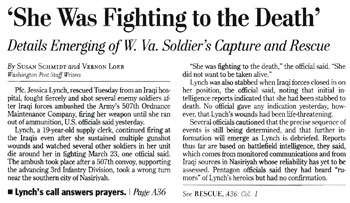
It will be seven years tomorrow since the Washington Post published its erroneous front-page report about Jessica Lynch, the Army private whom the newspaper had said “fought fiercely” in an early engagement of the Iraq War.

“‘She Was Fighting to the Death,'” the Post‘s headline said of Lynch, then a 19-year-0ld supply clerk in the Army’s 507th Maintenance Company.

The Post cited “U.S. officials” who otherwise were unidentified as saying Lynch had “continued firing at the Iraqis even after she sustained multiple gunshot wounds and watched several other soldiers in her unit die around her in fighting” at Nasiriyah on March 23, 2003.

The Post further cited the unnamed sources in reporting that Lynch had “shot several enemy soldiers after Iraqi forces ambushed” the 507th and kept “firing her weapon until she ran out of ammunition.”

None of it was true, however.

Lynch never fired a shot at Nasiriyah; her rifle jammed during the attack. She suffered shattering injuries when a rocket-propelled grenade struck her Humvee, causing the vehicle to crash. But she wasn’t shot.

Lynch was taken prisoner and treated at an Iraqi hospital, from where she was rescued April 1, 2003, by a U.S. special operations team.

As I write in Getting It Wrong, my forthcoming book about media-driven myths, “The Post’s erroneous hero-warrior tale thrust Lynch into an international spotlight that has never fully receded.”

The Post, though, has never disclosed identity of the source or sources for its bogus “fighting to the death” report, which was published April, 3, 2003.

Over the years, speculation has been that the U.S. military leaked the hero-warrior tale about Lynch. But one of the reporters on the story, Vernon Loeb, has said the Pentagon wasn’t the source.

“I could never get anybody from the Pentagon to talk about those reports at all,” Loeb said on an NPR program in late 2003. “I got indications that they had, in fact, received those intelligence reports, but the Pentagon was completely unwilling to comment on those reports at all. They wouldn’t say anything about Jessica Lynch.”

He added that “we wrote a story that turned out to be wrong because intelligence information we were given was wrong.”

So who were the Post‘s sources? Who supplied the erroneous details about Lynch?

When I reached him by phone in 2008 to talk about the Lynch case, Loeb hung up on me.

The author Jon Krakauer claimed in a book published last year that a former White House operative named Jim Wilkinson “arranged to give the Washington Post exclusive access to classified intelligence that was the basis for the now-discredited ‘She Was Fighting to the Death’ story that ran on the front page of that newspaper.”

Krakauer, writing in Where Men Win Glory: The Odyssey of Pat Tillman, called Wilkinson a “master propagandist” and said he “deserves top billing for creating the myth of Jessica Lynch.”

Krakauer’s book identified no specific sources for its claims about Wilkinson, who at the time of Lynch’s capture and rescue was director of strategic communications for General Tommy Franks, then the commander of U.S. forces in Iraq.

I recently spoke by phone with Wilkinson, now a managing partner for the Brunswick Group in San Francisco. He vigorously disputed Krakauer’s account as “factually incorrect” and insisted that “not one shred of evidence” links him to leaking the erroneous report to the Post.

Wilkinson also said:

“Tommy Franks would have killed me” had he been the Post’s source for the erroneous report about Lynch.

Wilkinson’s denial has the ring of authenticity, especially so his point about Tommy Franks. The tenor of Franks’ memoir, American Soldier, makes it clear that Wilkinson’s subordinate and advisory role would have ended abruptly had he crossed the general.

So seven years on, the Post‘s bogus report about Jessica Lynch reverberates still.

WJC

KTA marks its centenary

In Anniversaries on March 10, 2010 at 10:46 am

Kappa Tau Alpha, the national honor society recognizing high academic excellence in journalism and mass communication, marks its 100th anniversary today in ceremonies at its birthplace, the University of Missouri.

Hearty congratulations to KTA and to its indefatigable executive director, Keith Sanders.

KTA is the country’s seventh-oldest honor society and has chapters on more than 90 college campuses, including American University. I’m the AU chapter adviser as well as the honor society’s national vice president.

KTA’s principal objectives are to promote scholarship and high academic achievement. Each year, its chapters welcome to membership those journalism and mass communication students who rank in the top 10 percent of their respective classes. (The AU chapter typically inducts a smaller percentage.)

KTA also recognizes each year the top research-based book-length study  in journalism and mass communication, with its Frank Luther Mott/Kappa Tau Alpha Research Award.

The centenary will be marked at the campus in Columbia, Missouri, with a lecture by KTA’s national president, Jane B. Singer. She will discuss “Journalism Ethics and Structural Change.”

It’s a memorable week of anniversaries. Not only does KTA mark its 100th, but yesterday was the 56th anniversary of Edward R. Murrow’s famous See It Now television program on Senator Joseph R. McCarthy.

Murrow’s program aired on CBS on March 9, 1954, and a media myth has come to embrace the show: Supposedly, Murrow’s dissection of the red-baiting McCarthy was so courageous and devastating that it abruptly ended the senator’s witch-hunt for communists in the U.S. government.

But as I write in my forthcoming book, Getting It Wrong, the notion that Murrow brought down McCarthy is a durable and powerful media-driven myth.

Murrow “was very late in confronting McCarthy,” I write in Getting It Wrong and “did so only after other journalists had challenged the senator and his tactics for months, even years.” Among them was Drew Pearson, a muckraking columnist who scrutinized McCarthy’s exaggerated claims and allegations as early as 1950–four years before the famous Murrow program.

Indeed, the legendary status associated with Murrow’s program has had the effect of obscuring and diminishing the contributions of journalists, such as Pearson, who were far quicker to discern the toxic threat that McCarthy posed.

WJC

Yellow journalism: A sneer is born

In 1897, Anniversaries, Spanish-American War, Yellow Journalism on January 31, 2010 at 9:30 am

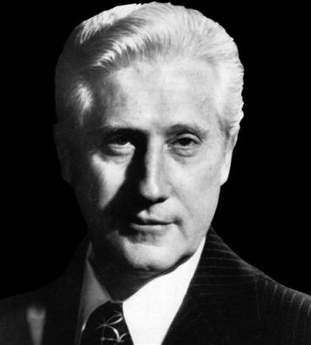
Erwin Wardman, New York Press

It’s a little-recognized, never-celebrated anniversary in American journalism, granted.

But today marks the 113th year since the term “yellow journalism” first appeared in print, in the New York Press, edited by the austere Ervin Wardman.

The phrase “the Yellow Journalism” appeared in a small headline on the Press’ editorial page on January 31, 1897. The phrase also appeared that day in the Press’ editorial page gossip column, “On the Tip of the Tongue.”

“Yellow journalism” caught on quickly, as a way to denigrate what then was called the “new journalism” of William Randolph Hearst’s New York Journal and of Joseph Pulitzer‘s New York World.  By the end of March 1897, references to “yellow journalism” had appeared in newspapers in Providence, Richmond, and San Francisco.

In the decades since then, “yellow journalism” has become a widely popular sneer, a derisive shorthand for denouncing sensationalism and journalistic misconduct of all kinds, real and imagined. “It is,” as I noted in my 2001 book Yellow Journalism: Puncturing the Myths, Defining the Legacies, “an evocative term that has been diffused internationally, in contexts as diverse as Greece and Nigeria, as Israel and India.”

Precisely how Wardman and the Press landed on the phrase “yellow journalism” is not clear.

The newspaper’s own, brief discussion of the origins was vague and unrevealing: “We called them Yellow because they are Yellow,” it said in 1898 about the Journal and the World.

In the 1890s, the color yellow sometimes was associated with depraved literature, which may have been an inspiration to the Harvard-educated Wardman, a figure largely lost to New York newspaper history.

Wardman was tall and stern-looking. He once was described as showing his “Calvinistic ancestry in every line of his face.” He did little to conceal his disdain for Hearst and Hearst’s journalism.

His contempt was readily apparent in the columns of the Press, of which Wardman became editor in chief in 1896 at the age of 31. (The Press is long defunct; it is not to be confused with the contemporary alternative weekly by the same name.)

Wardman’s Press took to taunting Hearst, Hearst’s mother, and Hearst’s support for Democratic candidate William Jennings Bryan in the 1896 presidential election. Hearst’s Journal was virtually alone among New York newspapers in supporting Bryan’s “free silver” candidacy.

The Press disparaged Hearst, then 34, as a mama’s boy, as “Billy” and “little Willie.” It referred to the Journal as “our silverite, or silver-wrong, contemporary.”

The Press also experimented with pithy if stilted turns of phrase to denounce “new journalism.”

“The ‘new journalism,’” the Press said in early January 1897 “continues to think up a varied assortment of new lies.”

Later in the month, the Press asked in a single-line editorial comment:

“Why not call it nude journalism?”

It clearly was a play on “new journalism” and meant to suggest the absence of “even the veneer of decency.”

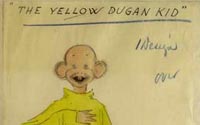
Before long, Wardman and the Press seized upon the phrase “yellow-kid journalism,” which evoked the Hearst-Pulitzer rivalry over a popular cartoon character known as the “Yellow Kid.” Both the Journal and the World at the time were publishing versions of the kid.

The Yellow Kid (Library of Congress)

At the end of January 1897, the phrase “yellow-kid journalism” was modified  to “the Yellow Journalism,” and the sneer was born.

After landing on that sneering pejorative, Wardman turned to it often, invoking the term in brief editorial comments and asides such as: “The Yellow Journalism is now so overripe that the little insects which light upon it quickly turn yellow, too.”

The diffusion of “yellow journalism” was sealed when Hearst’s Journal embraced the term in mid-May 1898, during the Spanish-American War. With typical immodesty, it declared:

“… the sun in heaven is yellow—the sun which is to this earth what the Journal is to American journalism.”

WJC