W. Joseph Campbell

Archive for the ‘Cronkite Moment’ Category

Now at Political Bookworm, where ‘must-read books are discovered’

In Cronkite Moment, Debunking, Furnish the war, Media myths, Washington Post, Watergate myth on April 9, 2010 at 7:35 am

I guestpost today at the Political Bookworm, a Washington Post-sponsored site that describes itself as a blog where “tomorrow’s must-read political books are discovered today.”

In my post, I discuss three of the media-driven myths examined in my forthcoming book, Getting It Wrong, which the University of California Press will publish in the summer.

Political Bookworm is edited by Steven Levingston, the Post‘s nonfiction editor. The blog notes that it “discusses new books long before they hit the shelves.”

And here’s the text of my guest post:

The most famous anecdote in American journalism may be William Randolph Hearst’s purported vow, telegraphed to the artist Frederic Remington in Cuba, to “furnish the war” with Spain at the end of the 19th century.

Or it may be Edward R. Murrow’s television program on CBS in 1954, which supposedly brought an end to Sen. Joseph R. McCarthy’s communists-in-government witch-hunt.

Or it may be the interpretation of Watergate that says The Washington Post’s investigative reporting brought down Richard Nixon’s corrupt presidency.

All three are well-known stories about the exercise of media power, for good or bad. All three anecdotes are often retold.

All three are media-driven myths.

Media myths often confer on the news media far more power and influence than they merit or possess. Media myths also tend to minimize the complexity of historical events in favor of simplistic and misleading interpretations.

That’s an important reason why Hearst’s vow has lived on for more than 100 years: It is succinct, savory, and easily remembered. It conforms to the popular image of Hearst as war-monger.

Hearst, though, denied making such a statement. The telegram containing his purported pledge has never turned up. And it would have been absurd for Hearst to vow to “furnish the war” because war — Cuba’s rebellion against Spain’s colonial rule — was the reason he sent Remington to Cuba. (The Cuban rebellion gave rise in 1898 to the Spanish-American War.)

The “furnish the war” anecdote can be traced to 1901 and a memoir by another journalist, James Creelman, who did not say when or how he learned story about Hearst’s vow.

The Murrow-McCarthy myth stems from Murrow’s See It Now program on March 9, 1954. See It Now that night dissected McCarthy’s crude investigative techniques and taste for the half-truth — none of which was unknown to American audiences at the time

Years before the program aired, several prominent journalists — including the Washington-based syndicated columnist Drew Pearson — had become searching critics of McCarthy and his tactics.

Interestingly, the myth took hold despite Murrow’s protests. In the weeks following the See It Now program, Murrow said he recognized that at best he had reinforced what others had long said about the red-baiting senator.

Similarly, principals at The Washington Post over the years have disputed the notion their newspaper toppled Nixon, who resigned in 1974. Among them was Katharine Graham, the Post’s publisher during the Watergate period. “Sometimes people accuse us of bringing down a president, which of course we didn’t do,” she said in 1997. “The processes that caused [Nixon’s] resignation were constitutional.”

She was right, but the complexities of Watergate — the deceit and criminality that characterized the Nixon White House and the multiple lines of investigation that slowly unwound the scandal — are not readily recalled these days.

What does stand out is a media-centric interpretation, that the dogged reporting of Washington Post journalists Bob Woodward and Carl Bernstein brought Nixon down. It’s a familiar storyline, a proxy for grasping Watergate’s essence while sidestepping its complexities.

That storyline was solidified by the 1976 motion picture, “All the President’s Men,” the screen adaptation of Bernstein and Woodward’s book of the same title. The film casts the reporters as central to unraveling the scandal.

Debunking these and other media myths matters for a variety of reasons. Media myths can and do feed stereotypes. They distort our understanding of the news media and of history. And there is inherent value in setting the record straight.

In that sense, myth-busting is aligned with a central objective of newsgathering — that of getting it right.

WJC

Now in Italian: The Cronkite Moment

In Cronkite Moment, Debunking, Media myths on March 25, 2010 at 6:08 pm

The Italian online site InviatoSpeciale indulges today in the legendary though dubious “Cronkite Moment” of February 1968.

That was when CBS News anchorman Walter Cronkite delivered a downbeat editorial assessment about the Vietnam War, saying the U.S. military effort there was “mired in stalemate.”

Thanks to the Babelfish online translation site, here is what InviatoSpeciale had to  say about that mythical occasion:

“The most followed anchorman of the American country explained to the people that war was mistaken and soon after the president, Lyndon Johnson, commented, ‘If I have lost Walter Cronkite, I have lost the moderate America’ and withdrew from the race for the White House.”

Even if roughly translated, that’s a pretty fair summary of the “Cronkite Moment,” a media-driven myth that I address and debunk in my forthcoming book, Getting It Wrong.

The “Cronkite Moment,” which derives its appeal and tenacity as an example of news media’s making a swift and profound difference in the conduct of American foreign policy.

But there are many reasons to doubt that the Cronkite program had much of an effect on Johnson at all.

As I note in Getting It Wrong, the president did not see the program when it aired February 27, 1968 .

Johnson then wasn’t in front of a television. He was in Austin, Texas, at the 51st birthday party of a political ally, Governor John Connally.

Even if he later saw a videotaped recording of the Cronkite program, “Johnson gave no indication of having taken the anchorman’s message to heart,” I write in Getting It Wrong, adding:

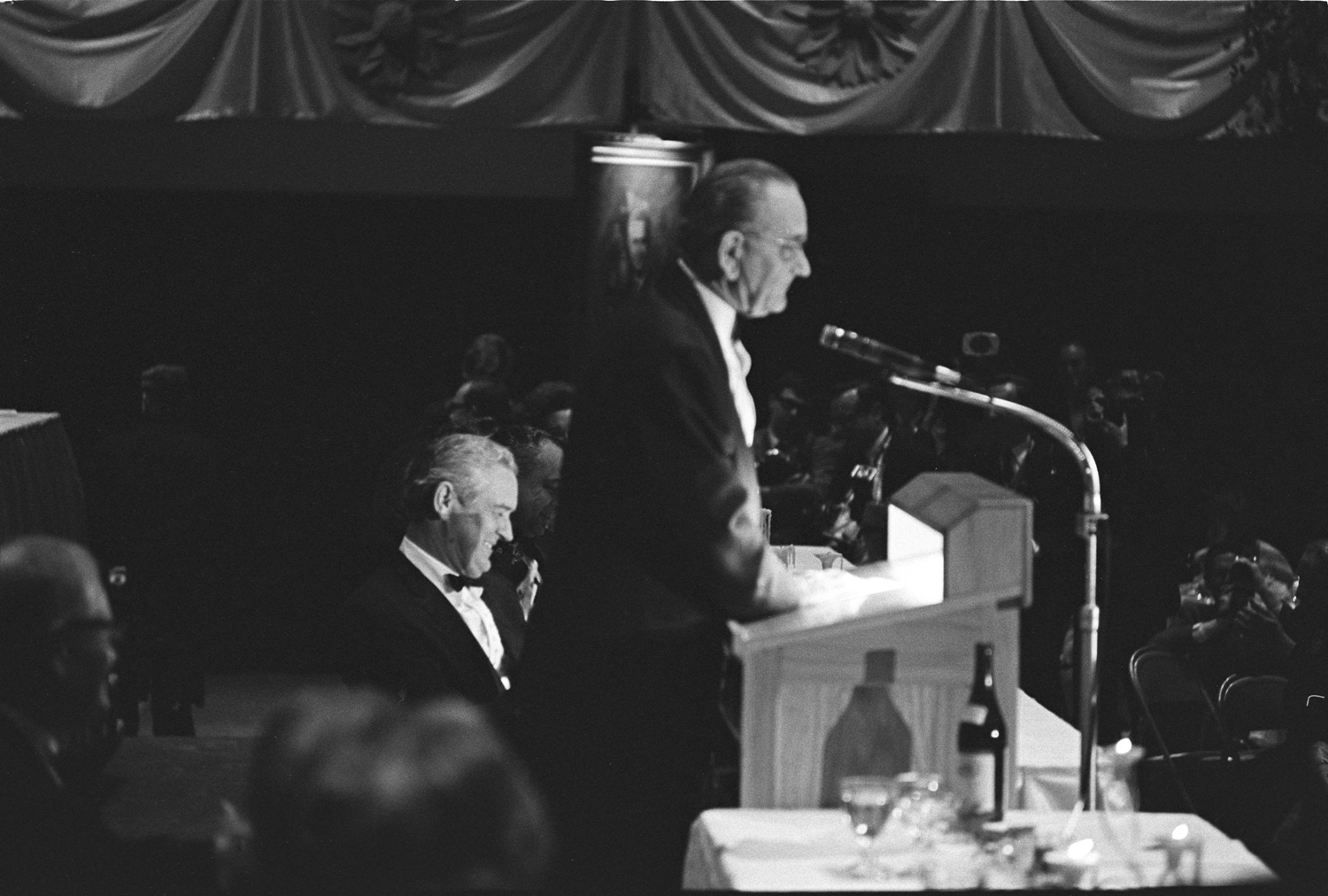
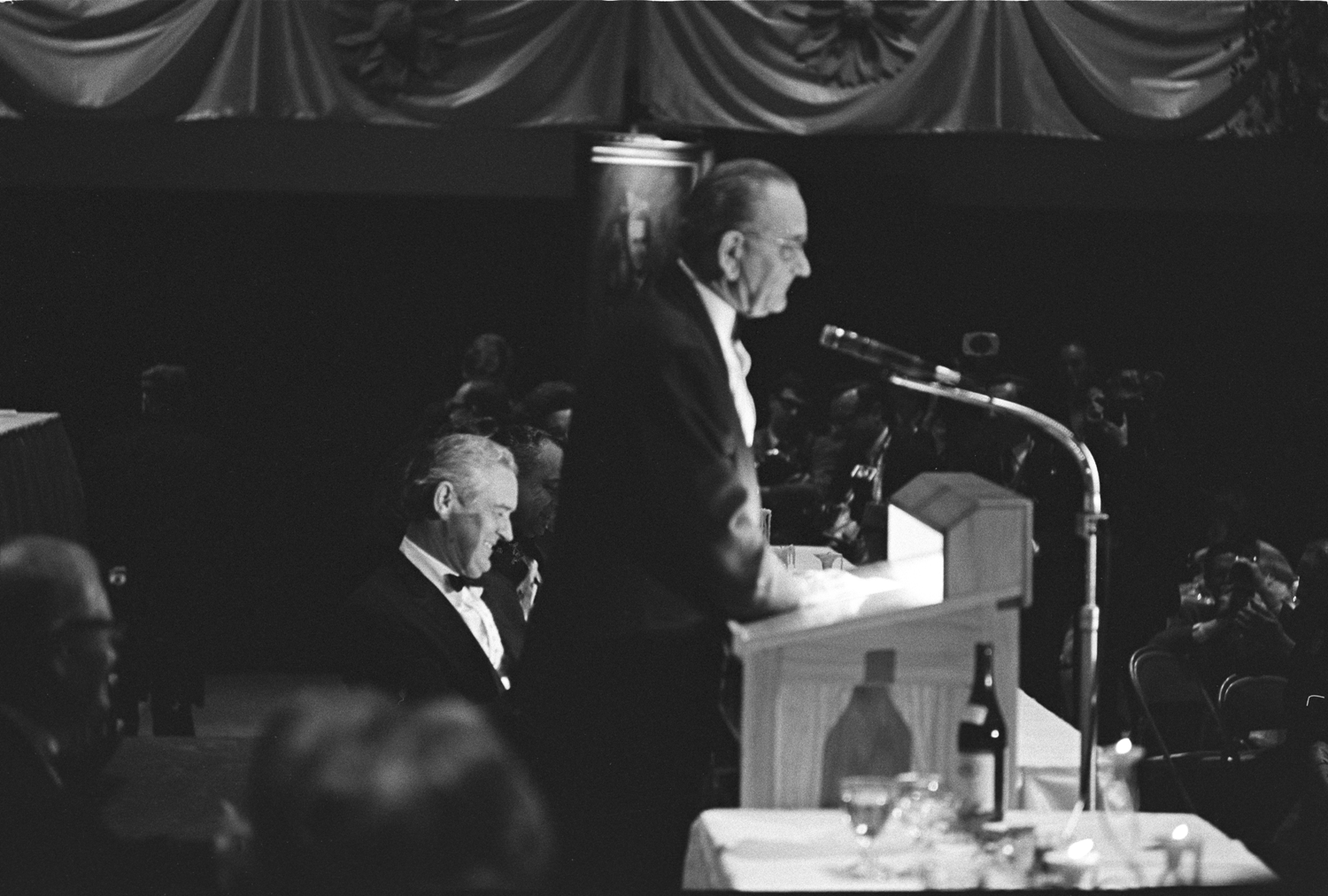
“Just three days after the program aired, Johnson vowed in remarks at a testimonial dinner in Texas that the United States would ‘not cut and run’ from Vietnam. ‘We’re not going to be Quislings,’ the president said, invoking the surname of a Norwegian politician who helped the Nazis take over his country. ‘And we’re not going to be appeasers….’”

As for Johnson’s decision against seeking reelection in 1968, the Cronkite program was of little or no consequence.

Critical to Johnson’s decision–which he announced at the end of March 1968, a month after the Cronkite program–was the advice and counsel of advisers, and the implications of Senator Eugene McCarthy’s insurgent bid for the Democratic nomination for president.

The potency of McCarthy’s antiwar campaign was demonstrated in the Democratic primary election in New Hampshire on March 12, 1968. McCarthy won 42 percent of the vote, a far greater portion than expected. Johnson won 49 percent.

Not only that, there’s evidence that Johnson never intended to seek reelection in 1968.

The appearance in Italian of the “Cronkite Moment” is a bit amusing. It’s also indicative of how deeply embedded the myth has become.

Moreover, it’s suggestive of how difficult it will be to uproot it completely.

WJC

Embedded myths of journalism history

In Cronkite Moment, Debunking, Media myths, Washington Post, Watergate myth on March 15, 2010 at 11:44 am

Popular media myths were in circulation over the weekend at the conference of journalism historians—signaling anew how embedded myths are in American media history and how difficult they can be to uproot.

One presentation at the conference in New York City discussed Walter Cronkite’s standing in collective American memory and in media history. The presentation inevitably invoked the notion that the Cronkite’s on-air commentary in 1968 dissuaded Lyndon Johnson from seeking reelection to the presidency.

Supposedly, Johnson watched Cronkite’s special report on CBS about Vietnam. Cronkite ended the program with by saying the U.S. war effort was “mired in stalemate” and that negotiations eventually might be considered as a way out of the conflict.

Upon hearing Cronkite’s downbeat editorial assessment, Johnson switched off the television and turned to an aide or aides, muttering something to the effect of:

“If I’ve lost Cronkite, I’ve lost Middle America.”

The program’s effect supposedly was so singularly powerful that it also turned public opinion against the war and came to be called the “Cronkite Moment.”

As I’ve noted several times at MediaMythAlert, and as I write in Getting It Wrong, my  forthcoming book about media-driven myths, Johnson did not watch Cronkite’s special report about Vietnam when it aired February 27, 1968.

Johnson in Texas, February 27, 1968

Johnson at the time was not in front of a television set but on the campus of the University of Texas at Austin, at a party marking the 51st birthday of one of his political allies, Governor John Connally.

Nor is there evidence that Johnson later saw the Cronkite program on videotape.

Not only that, but as I discuss in Getting It Wrong, there is scant evidence to suggest that the “Cronkite Moment” had much influence at all on public opinion about the war.

Indeed, polling data “clearly show that American sentiment had begun shifting months before the Cronkite program,” I write in the book, which will be out this summer.

Also heard during conference presentations was what I call the heroic-journalist myth of Watergate–the notion that the reporting of two young reporters for the Washington Post brought down Richard Nixon’s corrupt presidency.

This is a trope that even Post officials have dismissed over the years.

In 2005, for example, the newspaper’s then-ombudsman, Michael Getler, wrote:

“Ultimately, it was not The Post, but the FBI, a Congress acting in bipartisan fashion and the courts that brought down the Nixon administration. They saw Watergate and the attempt to cover it up as a vast abuse of power and attempted corruption of U.S. institutions.”

The heroic-journalist myth is addressed, and debunked, in Getting It Wrong, which says that interpreting Watergate “through the lens of the heroic-journalist is to abridge and misunderstand the scandal and to indulge in a particularly beguiling media-driven myth.”

The conference in New York was Saturday, and was sponsored by the History Division of AEJMC and the American Journalism Historians Association. AEJMC is the acronym for the Association for Education in Journalism and Mass Communication.

WJC

Recalling the mythical ‘Cronkite Moment’

In Cronkite Moment, Debunking, Media myths on February 26, 2010 at 6:09 am

Tomorrow is the anniversary of the so-called “Cronkite Moment,” which is widely believed to have been an exceptionally powerful and decisive moment in American journalism.

The “Cronkite Moment” occurred February 27, 1968, when CBS News Anchor Walter Cronkite declared on air that the U.S. war effort in Vietnam was mired in stalemate and suggested negotiations as a way to extricate the country from the conflict.

At the White House that night, President Lyndon Johnson supposedly watched the Cronkite program, a special report about Vietnam in the aftermath of the surprise Tet offensive. Upon hearing Cronkite’s pessimistic assessment, Johnson is said to have snapped off the television set and muttered to an aide, or aides:

“If I’ve lost Cronkite, I’ve lost Middle America.”

Or words to that effect.

With Cronkite having turned against the war, the Johnson White House supposedly reeled. And at the end of March 1968, the president announced he would not seek reelection.

It is one of the great stories American journalism tells about itself, a moment when the power of television was trained on foreign policy to make a difference in an unpopular and faraway war.

More accurately, though, it’s one of American journalism’s most enduring and appealing media-driven myths.

As I’ve noted on a number of occasions at Media Myth Alert, and as I write in Getting It Wrong, my forthcoming book on media-driven myths,  Johnson did not watch the Cronkite program on Vietnam when it aired that night 42 years ago.

The president that night was in Austin, Texas, at the 51st birthday party of a political ally, Governor John Connally.

About the time Cronkite intoned his downbeat, “mired in stalemate” assessment, Johnson was offering light-hearted banter about Connally’s age, saying:

Johnson in Texas, February 27, 1968

“Today you are 51, John. That is the magic number that every man of politics prays for—a simple majority. Throughout the years we have worked long and hard—and I might say late—trying to maintain it, too.”

Earlier in the day, Johnson had delivered a rousing speech in Dallas, in which he characterized the U.S. war effort in Churchillian terms.

“There will be blood, sweat and tears shed,” he said, adding:  “I do not believe that America will ever buckle” in pursuit of its objectives in Vietnam.

Even if the president had seen the Cronkite program, it is difficult to imagine how his opinion could have swung so abruptly, from a vigorous defense of the war effort to resignation and despair.

Casting further doubt on the “Cronkite Moment” is uncertainty about what, exactly, Johnson supposedly said in reaction to Cronkite’s editorial comments about the war.

The most common version has him saying: “If I’ve lost Cronkite, I’ve lost Middle America.”

But another version is: “I’ve lost Cronkite, I’ve lost the country.”

Yet another version has it this way: “If I’ve lost Cronkite, I’ve lost the American people.”

Still another version is: “If I’ve lost Cronkite, I’ve lost the war.”

And another goes: “If we lose Cronkite, we lose America.”

And, unaccountably: “If I’ve lost Cronkite, I’ve lost the middle west.”

Version variability of  such magnitude signals implausibility.

So why, 42 years on, does it matter whether the “Cronkite Moment” is a myth?

As I write in Getting It Wrong, “Seldom, if ever, do the news media exert truly decisive influences in decisions to go to war or to seek negotiated peace.

“Such decisions typically are driven by forces and factors well beyond the news media’s ability to shape, alter, or significantly influence.”

And so it was with the “Cronkite Moment.”

WJC

Catching up: Great movie misquotations

In Cinematic treatments, Cronkite Moment, Debunking on February 8, 2010 at 12:16 pm

Heavy snows that have shut down much of metropolitan Washington, D.C., including American University today, have allowed the opportunity to work away at a stack of back issues of newspapers.

So only belatedly have I caught up with the “movie misquotations” item published January 15 in the “On Language” column of the Sunday New York Times magazine.

The column's headline

It’s an entertaining and revealing column that notes that “many of the most frequently cited motion-picture lines turn out to be misquotations.”

One well-known line, usually attributed to the Clint Eastwood character in Dirty Harry, is: “Do you feel lucky, punk?”

What the Eastwood character said was:

“You’ve got to ask yourself one question: ‘Do I feel lucky?’ Well, do ya, punk?”

The column points out that another frequent misquotation is Robert Duvall’s napalm line in Apocalypse Now, which often is cited as:

“I love the smell of napalm in the morning. It smells like victory.”

The Duvall character’s remark was much more detailed and complex:

“I love the smell of napalm in the morning. You know, one time we had a hill bombed for 12 hours. When it was all over, I walked up. We didn’t find one of ’em, not one stinkin’ . . . body. The smell, you know that gasoline smell, the whole hill. Smelled like victory.”

The column’s author, Fred R. Shapiro editor of Yale Book of Quotations, identifies several factors for the emergence of movie misquotations, including:

  • a tendency toward compression, as the Apocalypse Now example suggests.
  • a impulse to improve upon the original passage “by offering a better rhythm or cadence.”
  • an inclination for greater euphony. The famous Mae West line–“Why don’t you come up and see me sometime?”–really was: “Why don’t you come up sometime and see me?” In another movie, she said: “Why don’t you come up sometime?”
  • an effort “to keep up with colloquial speech.” The line commonly recalled as “Badges? We don’t need no stinking badges!,” was uttered in The Treasure of the Sierra Madre as: “I don’t have to show you any stinking badges!”

Shapiro’s column is evocative of the phenomenon of “version variability,” which I note in Getting It Wrong, my forthcoming book about media-driven myths.

“Version variability” is the the imprecision that alters or distorts an anecdote in its retelling, leading to differing versions of what was said or done. It can be a marker of media-driven myths.

The so-called “Cronkite Moment” of February 27, 1968, when CBS News anchorman Walter Cronkite went on air to say the U.S. war effort in Vietnam was “mired in stalemate,” offers a striking example of “version variability.”

President Lyndon Johnson supposedly was at the White House and watched the Cronkite report that night. Upon hearing the anchorman’s dire assessment, Johnson turned to an aide or aides and said:

“If I’ve lost Cronkite, I’ve lost Middle America.”

Another version quotes Johnson as saying: “I’ve lost Cronkite, I’ve lost the country.”

Yet another version has it this way: “If I’ve lost Cronkite, I’ve lost the American people.”

And: “If I’ve lost Cronkite, I’ve lost the war.”

And: “If we lose Cronkite, we lose America.”

Version variability of  such magnitude is a strong signal of implausibility.

As I note in Getting It Wrong, Johnson wasn’t at the White House when the Cronkite program on Vietnam aired. The president was in Austin, Texas, at a party marking the 51st birthday of his longtime political ally, John Connally.

WJC

Another twist to the ‘Cronkite Moment’

In Cronkite Moment, Debunking, Media myths on January 21, 2010 at 11:47 pm

The “Cronkite Moment” — that legendary occasion in February 1968 when a CBS News special report by Walter Cronkite supposedly altered the course of the Vietnam War — is one impressively dogged, tenacious media myth.

Cronkite in Vietnam

As I noted in a recent post, the “Cronkite Moment” knows few bounds. It supposedly “turned the tide of American public opinion” against the U.S. war effort in Vietnam and “influenced Lyndon Johnson not to seek reelection” to the presidency.

And just the other day, the TVWeek online site claimed:

“President Lyndon Johnson once famously said about his support of the Vietnam War that once he had lost Walter Cronkite he had lost America. Johnson was referring to a report Cronkite once did where he said the war could not be won.”

Where to start?

First, there is no evidence Johnson ever saw Cronkite’s special report about Vietnam, which aired February 27, 1968. At the close of the program, Cronkite claimed the U.S. military was “mired in stalemate” in Vietnam.

As I write in my forthcoming book, Getting It Wrong, Johnson at the time was not in front of a television set but on the campus of the University of Texas at Austin, attending a party marking the 51st birthday of Governor John Connally.

There is no evidence Johnson later saw the Cronkite program on videotape.

Second, Cronkite did not say in that special report that “the war could not be won.” What the anchorman did say was that the time might be approaching when the United States might seek a negotiated settlement to the war.

As I note in Getting It Wrong, “a close reading of the transcript of Cronkite’s closing remarks reveals how hedged and cautious they really were.”

Cronkite in those remarks held open the possibility that the U.S. military efforts might still force the North Vietnamese to the bargaining table, and suggested the U.S. forces be given a few months more to press the fight in Vietnam.

In addition, the TVWeek item represents a minor addition to the varied accounts of what Johnson supposedly said in response to Cronkite’s closing assessment.

The most common version has Johnson saying: “If I’ve lost Cronkite, I’ve lost Middle America.”

Another version quotes him this way: “I’ve lost Cronkite, I’ve lost the country.”

And another has it this way: “If I’ve lost Cronkite, I’ve lost the American people.”

And: “If I’ve lost Cronkite, I’ve lost the war.”

And “If we lose Cronkite, we lose America.”

The TVWeek item indirectly quotes Johnson as saying that “once he had lost Walter Cronkite he had lost America.”

Version variability of  such magnitude is a strong signal of implausibility.

And of a media-driven myth.

WJC

That awesome ‘Cronkite Moment’

In Cronkite Moment, Debunking, Media myths on January 13, 2010 at 11:44 am

The power of the so-called “Cronkite Moment” knows few bounds.

A column in a Florida newspaper the other day claims that the “Cronkite Moment” was “seminal” because “many say” it “marked the end of the media’s reputation for credibility.”

The occasion was February 27, 1968, when CBS News anchorman Walter Cronkite pronounced that the U.S. war effort in Vietnam had become mired in stalemate. Cronkite suggested that negotiations with the communist North Vietnamese should be considered, as a way to end the conflict.

Cronkite’s analysis was supposedly so powerful and insightful that President Lyndon Johnson purportedly told an aide or aides:

“If I’ve lost Cronkite, I’ve lost Middle America.” Or words to that effect.

Johnson in 1968

The column in the Hernando Today newspaper, a publication of the Tampa Tribune, doesn’t invoke Johnson’s purported remarks — which, as MediaMythAlert has noted several times, Johnson almost certainly did not say.

The column does, though, say that Cronkite’s remarks “turned the tide of American public opinion and influenced Lyndon Johnson not to seek reelection.”

Nope. Not so.

As I discuss in my forthcoming book, Getting It Wrong,  “there is scant evidence that the Cronkite program had much influence at all on American popular opinion about the war.” As I further write in the book, which is to be published in the summer by University of California Press:

“Polling data clearly show that American sentiment had begun shifting months before the Cronkite program.”

Indeed, those data indicate that Americans’ views about the war had begun to shift months before the Cronkite program.

Journalists at the time also detected a softening in support of the war.

In December 1967, for example, Don Oberdorfer, then a national correspondent for the Knight newspapers, noted that “summer and fall of 1967 [had] been a time of switching, when millions of American voters—along with many religious leaders, editorial writers and elected officials—appeared to be changing their views about the war.”

As for Johnson’s decision not to seek reelection, the Cronkite program had little or no effect.

Critical to Johnson’s decision, which he announced at the end of March 1968, was the advice and counsel of his advisers, and the implications of Senator Eugene McCarthy’s insurgent bid for the Democratic nomination for president.

The surprising potency of McCarthy’s antiwar campaign was demonstrated in the Democratic primary election in New Hampshire on March 12, 1968. McCarthy won 42 percent of the vote, a far greater portion than expected. Johnson won 49 percent.

Not only that, there is evidence that Johnson never intended to seek reelection in 1968.

In any event, Cronkite  used to scoff at the notion that his report of February 27, 1968, had a powerful influence on Johnson. Rather, he would say, the effect was like that of “a very small straw.”

Near the end of his life, however, Cronkite (who died in July 2009) came to embrace the supposed power of the broadcast.

“To be honest,” he told Esquire magazine in 2006: “I was rather amazed that my reporting from Vietnam had such an effect on history.”

But it didn’t, though. Not really.

WJC

The ‘Cronkite Moment’: That famous, dubious turn of phrase

In Cronkite Moment, Debunking, Media myths on January 8, 2010 at 6:57 pm

I blogged not long ago about what may be the most famous words in American journalism, offering a couple of media myths as examples.

One was the enduring anecdote about William Randolph Hearst’s supposed vow to “furnish the war” with Spain. That one’s been retold many, many since it first appeared in print in 1901.

It is arguably American journalism’s most tenacious myth. Those words attributed to Hearst surely are some of the most famous in journalism. Even though it’s quite unlikely he ever made such a vow.

Another example I cited was the so-called “Cronkite Moment,” the occasion in 1968 when the views of CBS News anchorman Walter Cronkite were supposedly so powerful and persuasive they swiftly altered U.S. policy in Vietnam.

That anecdote centers around Cronkite’s special program on the Vietnam War, a show that aired February 27, 1968. Near the end of the program, Cronkite declared the U.S. war effort was “mired in stalemate” and suggested negotiations with the communist North Vietnamese to end the conflict.

At the White House, President Lyndon Johnson supposedly watched the Cronkite program and snapped off the television set when he heard the anchorman’s dire assessment, telling an aide, “If I’ve lost Cronkite, I’ve lost Middle America.” Or something to that effect.

The point is that Cronkite was such a trusted figure that his views could sway the opinions of countless thousands of Americans. With Cronkite gone wobbly on Vietnam, the Johnson White House supposedly reeled. At the end of March 1968, Johnson announced he would not seek reelection.

The “Cronkite Moment” made yet another appearance the other day in a blog of the San Diego Union-Tribune.

The blog comment, posted by an editorial writer for the newspaper, stated:

“One of the standard views of why America turned on the Vietnam War focuses on CBS anchorman Walter Cronkite’s increasingly obvious pessimism about President Lyndon Johnson’s statements about and management of the war. LBJ reportedly told an aide, ‘That’s it. If I’ve lost Cronkite, I’ve lost middle America.'”

As I’ve noted several time at Media Myth Alert, and as I write in my forthcoming book, Getting It Wrong, Johnson did not see the Cronkite program on Vietnam when it aired. The president that night was in Austin, Texas, at the 51st birthday of a political ally, Governor John Connally.

When Cronkite was intoning his downbeat assessment of the war, Johnson was offering light-hearted banter about Connally’s age, saying:

“Today you are 51, John. That is the magic number that every man of politics prays for—a simple majority. Throughout the years we have worked long and hard—and I might say late—trying to maintain it, too.”

Earlier that day, Johnson delivered a rousing speech in Dallas, invoking Churchillian language at one point.

“There will be blood, sweat and tears shed,” he said, adding:  “I do not believe that America will ever buckle” in pursuit of its objectives in Vietnam.

Even if the president had seen the Cronkite program, it is exceedingly difficult to imagine how his mood could swing so abruptly, from vigorously defending the war effort to throwing up his hands in despair.

But if the “Cronkite Moment” is to be believed, that’s what happened: A swift, dramatic and decisive change of heart that occurred within hours of the hawkish speech in Dallas.

Not likely.

Even so, the frequency with which the quote attributed to Johnson is invoked certainly has made it among the most famous, if most dubious, turns of phrase in American journalism.

As I also write in Getting It Wrong, “Seldom, if ever, do the news media exert truly decisive influences in decisions to go to war or to seek negotiated peace. Such decisions typically are driven by forces and factors well beyond the news media’s ability to shape, alter, or significantly influence.

“So it was in Vietnam, where the war ground on for years after the ‘Cronkite moment.’”

WJC

A media myth tamed — or at least controlled

In Cronkite Moment, Debunking, Furnish the war, Media myths on January 3, 2010 at 4:58 pm

Many media-driven myths seem to defy debunking.

The tale of William Randolph Hearst’s supposed vow to “furnish the war” with Spain is a telling example. So is the notion that Walter Cronkite’s downbeat report in 1968 about the U.S. military effort in Vietnam forced President Lyndon Johnson to rethink American war policy.

Both media myths live on and on.

As I write in my forthcoming book Getting It Wrong, these “and other media myths endure, because in part they are reductive: They offer unambiguous, easily remembered explanations about complex historic events. Similarly, media myths invite indulgence in the ‘golden age fallacy,’ the flawed but enticing belief that there really was a time when journalism and its practitioners were respected and inspiring.”

While many media myths are indeed tenacious, the efforts of the Annenberg Public Policy Center over the past 10 years suggest that some myths can be curbed or contained, if not defeated entirely.

The Phildelphia-based Annenberg Center has worked to debunk the notion that suicides rise during the year-end holidays.

Such a connection may seem logical, given the stresses of the holiday season. But the data point otherwise: Suicides most often peak in the United States during the spring and fall, according to the Centers for Disease Control and Prevention.

(See the CDCP’sl 2009 data sheet on suicides here.)

The Annenberg Center tracks newspaper reports for mentions of a holiday season-suicide link. Its analysis of reporting during the 2008–09 holiday season found that 37.5 percent of 64 newspaper articles asserted such a linkage. A majority, 62.5 percent, disputed or challenged the presumed holiday season-suicide connection.

The difference over 10 years is quite dramatic. In 1999–2000, the first year of the Annenberg Center’s study on the topic, 77 percent of 101 newspapers articles asserted a holiday season-suicide link.

The pattern has been a bit erratic in the intervening years, Annenberg Center data show.

In 2006–07, for example, just 9 percent of 32 articles asserted a holiday season-suicide link. The following season, however, 51 percent of 43 articles claimed there was such a connection.

Data for the 2009–2010 season are still being compiled. But a quick check of the LexisNexis database suggests that newspaper articles published in late 2009 more often challenged than claimed a holiday season-suicide link.

A notable example was an article in USA Today in late November which noted:

“You could blame George Bailey” for the myth. “In the 1946 holiday film It’s a Wonderful Life, that fictional character contemplated suicide on Christmas Eve, possibly giving birth to the idea that suicides climb during the winter holidays.”

The Washington Times suggested a similar explanation in an article published two days before Christmas.

Like many media-driven myths, the dubious holiday season-suicide link is neither harmless nor trivial.

The Annenberg Center says:

“Perpetuating the myth not only misinforms readers but it also misses an opportunity to educate the public about the most likely sources of suicide risk, including major depression and substance abuse.”

Still, the Center’s data offer a measure of encouragement that media-driven myths are not entirely beyond taming.

WJC

‘If I’ve lost Cronkite,’ an encore appearance in 2009

In Cronkite Moment, Debunking, Media myths on December 31, 2009 at 11:53 am

President Lyndon Johnson’s purported reaction to Walter Cronkite’s 1968 CBS News special on Vietnam — “If I’ve lost Cronkite, I’ve lost Middle America” — makes a year-end appearance in the Newark Star-Ledger‘s television column.

The column offers a “look back at some of the notable people from the world of television who died” in 2009. Among them is Cronkite, the retired CBS News anchor who died in July.

The column says Cronkite represented the “gold standard of TV anchormen” and “was so respected and powerful in his ’60s and ’70s heyday that Lyndon Johnson reportedly said (after Cronkite delivered an editorial against our presence in Vietnam), ‘If I’ve lost Cronkite, I’ve lost Middle America.'”

No, not likely.

As is discussed in Getting It Wrong, my forthcoming book about media-driven myths, Johnson did not even see the Cronkite program on Vietnam when it aired February 27, 1968. (Near the end of that 30-minute report, Cronkite said the U.S. military effort in Vietnam was “mired in stalemate” and suggested that negotiations might be considered to settle the conflict.)

At the time, Johnson was in Austin, Texas, at the 51st birthday party of Governor John Connally, where he engaged in light-hearted banter with his longtime political ally.

Johnson at Connally's birthday party, 1968

“Today you are 51, John,” the president told Connally. “That is the magic number that every man of politics prays for—a simple majority. Throughout the years we have worked long and hard—and I might say late—trying to maintain it, too.”

Even if Johnson later heard—or heard about— Cronkite’s downbeat assessment, it represented no epiphany for the president.

Indeed, not long after the program, Johnson gave a rousing, lectern-pounding speech in Minneapolis, in which he urged a “total national effort” to win the war in Vietnam.

That speech was delivered March 18, 1968, and in it, the president declared:

“We love nothing more than peace, but we hate nothing worse than surrender and cowardice.”

He disparaged critics of the war as being inclined to “tuck our tail and violate our commitments.”

Those remarks are difficult to square with the president’s supposedly downbeat and self-pitying reaction to Cronkite’s assessment about Vietnam.

So even in the weeks immediately following the Cronkite program, Johnson remained outwardly hawkish on the war in Vietnam. The Cronkite program was neither decisive nor pivotal to his thinking on Vietnam.

Happy New Year.

WJC