W. Joseph Campbell

Archive for the ‘Media myths’ Category

Accepting the Dicken-Garcia Award for Distinguished Scholarship in Journalism History

In Debunking, Furnish the war, Media myths on November 12, 2011 at 7:49 am

I was honored yesterday to receive the Hazel Dicken-Garcia Award for Distinguished Scholarship in Journalism History, an honor given by the organizers of the annual Symposium on 19th Century Press, the Civil War, and Free Expression, a conference convened in Chattanooga.

The award recognizes my work in journalism history, including the books Getting It Wrong, The Year That Defined American Journalism, and Yellow Journalism: Puncturing the Myths, Defining the Legacies.

The award’s namesake, Hazel Dicken-Garcia, is a retired journalism historian at the University of Minnesota who wrote Journalistic Standards in Nineteenth Century America and is regarded as one of the field’s leading lights.

In accepting the award, which is administered by David B. Sachsman of the University of Tennessee-Chattanooga, I spoke about the importance of myth-busting in media history. I told the conference-goers that “the health and integrity of the field, at least in part, rides on historians’ fulfilling an obligation to bust myths, to seek to set straight the historical record to the extent that’s possible.

“After all,” I added, “to bust myths is to wage war against simplistic and reductive explanations — and to recognize and insist upon the complexity of the historical record.”

I also spoke about my research into media-driven myths, those prominent, well-known stories about and/or by the news media that are widely believed and often retold but which, under scrutiny, prove to be apocryphal or wildly exaggerated.

I noted that media  myths can be thought of as the junk food of journalism – tasty and alluring, perhaps, but not terribly nutritious, and not terribly healthy.

“Media myths,” I said, “are inescapably media-centric; as such, they tend to distort our understanding of the history, roles, and functions of journalism in American society; media myths typically confer on the news media far more power and influence than they necessarily wield.”

Media myths, I added, “often spring from the timeless appeal to distill and simplify, the appeal of condensed, readily digestible historical accounts that are easily grasped, and a delight to retell.”

As examples, I discussed the famous tale about William Randolph Hearst’s purported vow at the end of the 19th century to “furnish the war” with Spain and a Civil War-era quotation attributed to Chicago newspaper editor Wilbur F. Storey, who supposedly told a correspondent to  “telegraph fully all news; and when there is no news, send rumors.”

Both tales, I noted, are based on very thin documentation. Both have serious evidentiary problems.

Hearst’s purported vow was supposedly made in an exchange of telegrams with the artist Frederic Remington, on assignment for Hearst’s New York Journal in early 1897 to draw sketches of the Cuban rebellion against Spanish colonial rule.

I noted in my talk how it would have made no sense for Hearst to have vowed to “furnish the war” when war — the Cuban rebellion — was the very reason he sent Remington to Cuba.
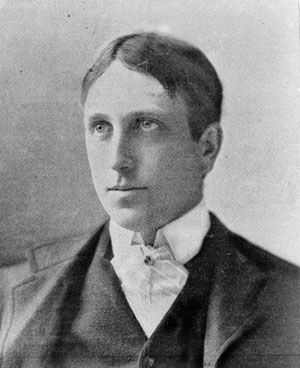
Hearst

Not only that, but the telegrams supposedly exchanged by Hearst and Remington have never turned up; Hearst denied ever making such a vow, and Remington apparently never publicly discussed the matter.

“It’s almost certain that no such telegrams were ever sent,” I said.

The “send rumors” anecdote from the Civil War era is likewise improbable — although undeniably appealing and relevant even today.

“The quotation not only suggests journalism’s inclination to compromise ethics in the gathering of news,” I said, but “it speaks also to the profession’s unending appetite for rumor, gossip, and hearsay.”

The anecdote revolves around instructions supposedly sent in 1864 by Wilbur F. Storey, editor of the Chicago Times, to a correspondent near Nashville, Franc B. Wilkie.

The lone source for Storey’s supposed instructions Wilkie’s memoir,  Personal Reminiscence, which was published in 1891. That was 27 years after the instructions supposedly were sent.

Not only that, but by 1891, Storey had been dead seven years.

I noted that among the reasons for doubting that Storey ever sent such instructions is that they would have been superfluous. It would have made no sense for Storey to have told Wilkie to “send rumors” because the Chicago Times — like many newspapers during the Civil War — routinely printed rumors about battles, about troop movements, and about political developments — and identified them as rumor.

It would have been an unnecessary message, to advise a seasoned correspondent like Wilkie to “send rumors.”

“Simply put,”  I said, “Wilkie would have required no reminder from Storey to ‘telegraph fully all news; and when there is no news, send rumors.'”

I closed my remarks by saying that debunking media myths is  reminder “to be wary about conclusiveness.”

History, I said, “is neither static nor infallible. … There’s plenty of room for skepticism, plenty of room for testing assumptions — for applying tests of evidence and logic to well-known tales and dominant narratives.”

WJC

Recent and related:

Jon Krakauer rolls back claims about WaPo ‘source’ in Jessica Lynch case

In Debunking, Jessica Lynch, Media myths, Washington Post on November 11, 2011 at 12:05 am

Author Jon Krakauer has quietly retreated from claims in a 2009 book that a former White House official, Jim Wilkinson, was the source for the Washington Post’s botched report about Jessica Lynch and her supposed battlefield heroics early in the Iraq War.

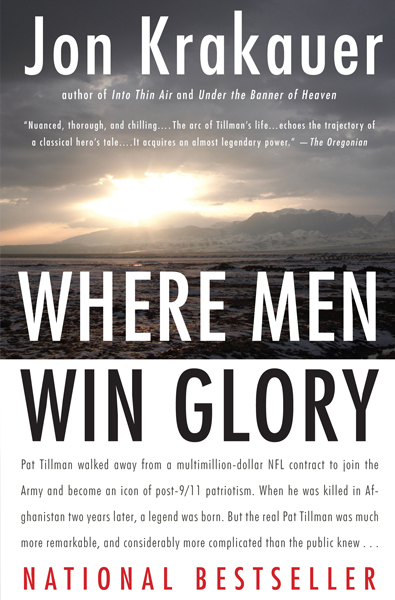
The unattributed assertions about Wilkinson — who was said to have “duped reporters and editors at the Washington Post” — were included in Krakauer’s Where Men Win Glory: The Odyssey of Pat Tillman.

The claims were removed in a recent printing of the book’s paperback edition, which now contains a footnote, saying:

“Earlier editions of this book stated that it was Jim Wilkinson ‘who arranged to give the Washington Post exclusive access’ to this leaked intelligence [about Jessica Lynch]. This is incorrect. Wilkinson had nothing to do with the leak.”

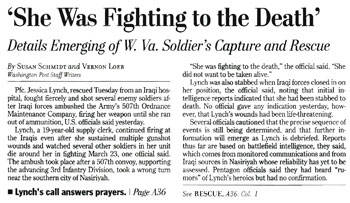
The Post has never identified the sources for its report, published on its front page April 3, 2003, that said Lynch had fought fiercely in the ambush of the 507th Maintenance Company at Nasiriyah in southern Iraq on March 23, 2003.

The Post’s account cited “U.S. officials” in saying that Lynch, a 19-year-old supply clerk, had kept “firing at the Iraqis even after she sustained multiple gunshot wounds and watched several other soldiers in her unit die around her in fighting” at Nasiriyah.

The Post’s electrifying report about the waif-like Army private was picked up by news organizations around the world.

But none of it was true.

As I discuss in my latest book, Getting It Wrong, Lynch never fired a shot at Nasiriyah; her rifle jammed during the attack. She suffered shattering injuries when a rocket-propelled grenade struck her Humvee, causing the vehicle to crash. But Lynch was not shot.

She was taken prisoner and treated at an Iraqi hospital, from where she was rescued April 1, 2003, by a U.S. special operations team.

In the years since, the Post has never adequately explained how it so thoroughly erred on the hero-warrior story about Lynch; nor has it disclosed the identities of the “U.S. officials” who led the newspaper awry.

The Post’s silence about its sources has contributed to the rise to a false narrative that the Pentagon concocted the hero-warrior tale in a cynical effort to bolster public support for the war.

Vernon Loeb, one of the reporters who shared the byline on the botched Lynch story, has said that the Pentagon was not the source for the report.

“I could never get anybody from the Pentagon to talk about those reports at all,” Loeb said on an NPR program in mid-December 2003, adding:

“They wouldn’t say anything about Jessica Lynch.”

Even so, the false narrative about Lynch and the Pentagon persists and has deflected attention from the Army sergeant who apparently did fight to the death at Nasiriyah. He was Donald Walters, who laid down covering fire as elements of the 507th tried to flee the ambush.

Walters was captured when his ammunition ran out and was executed by his captors soon afterward.

At the time of the battle at Nasiriyah, Wilkinson was director of strategic communications for General Tommy Franks, the commander of U.S. forces in Iraq. Among his prior positions, Wilkinson was deputy director of communications at the White House.

Wilkinson, who had vigorously denied the claims about him in Where Men Win Glory, said he met with Krakauer nearly a year ago in Colorado to discuss corrections.

At that meeting, Wilkinson said, the author told him that his source recanted claims about Wilkinson.

Wilkinson told Media Myth Alert that he was grateful to Krakauer for correcting the record, adding that he feels “100 times better” that the book’s extensive and unflattering assertions about him have been removed. “I greatly appreciate his willingness to meet with me and then issue a corrected version of the book that clears my name,” Wilkinson said.

The unflattering assertions were dropped in June, in what was the 17th printing of the Anchor Books soft-cover edition of Where Men Win Glory. Anchor, an imprint of Random House, issued no announcement about the revisions.

In earlier editions of Where Men Win Glory, Krakauer called Wilkinson a “master propagandist” and identified him as “the guy who deserved top billing for creating the myth of Jessica Lynch.”

Wilkinson, Krakauer also wrote, “duped reporters and editors at the Washington Post … and other media outlets into running wildly hyperbolic stories about Lynch.”

It remains unclear how Krakauer erred so badly in accusing Wilkinson. The author did not reply to an email sent to him yesterday and attempts this week to reach him through his publisher were unavailing.

“Unfortunately, he’s not talking questions at this time,” Russell Perreault, a spokesman for Random House, said by email. “He’s working on a new project.”

Krakauer’s most recent work, Three Cups of Deceit, seeks to puncture the humanitarian reputation of Greg Mortensen, whose charitable organization builds schools in Afghanistan and Pakistan.

“The image of Mortensen that has been created for public consumption,” Krakauer wrote in Three Cups of Deceit, “is an artifact born of fantasy, audacity, and an apparently insatiable hunger for esteem. Mortensen has lied about the noble deeds he has done, the risks he has taken, the people he has met, the number of schools he has built.”

WJC

Many thanks to Instapundit
Glenn Reynolds for linking to this post.

Recent and related:

The ‘War of the Worlds’ radio show produced a ‘Paul Revere effect’

In Anniversaries, Debunking, Media myths, Media myths and radio on October 31, 2011 at 5:15 pm

I call it the “Paul Revere” effect, and it helps explain the many reports of fright associated with the radio dramatization 73 years ago of The War of the Worlds, a clever program that told of a lethal Martian invasion of Earth.

The radio show aired October 30, 1938, and supposedly stirred panic and hysteria across the United States — a delicious narrative that I debunk in my latest book, Getting It Wrong, as a media-driven myth.

I also discuss in Getting It Wrong the seldom-examined “Paul Revere effect” associated with The War of the Worlds program, which was the work of Orson Welles and his “Mercury Theatre on the Air” troupe.

This effect occurred when well-intentioned people who had little more than an incomplete understanding of The War of the Worlds broadcast decided individually and on their own to warn others about what they thought was a sudden and terrible threat.

These self-motivated Paul Reveres, I write in Getting It Wrong, “burst into churches, theaters, taverns, and other public places, shouting that the country was being invaded or bombed, or that the end of the world was near.”

I note that it must “have been a cruel and unnerving way of receiving word of a supposedly calamitous event — to be abruptly disturbed in familiar settings by a vague reports offered by people who themselves clearly were terror-stricken.”

The unsuspecting recipients of these invariably garbled, second- and third-hand accounts of calamity had no immediate way of verifying the wrenching news they had heard. Unlike the audiences of Welles’ dramatization, they could not spin the radio dial to find out whether other networks were reporting an invasion from Mars.

Scrutiny of contemporaneous newspaper accounts reveals numerous cases of this false-alarm contagion. This meant that people who had not heard not a word of The War of the Worlds show were themselves fearstricken, if only briefly.

In New York, for example, some apartment houses “were hurriedly emptied by frantic listeners to the program and by those who heard second- and third-hand accounts multiplying the supposed peril,” the Newark Star-Eagle reported.

“Many of the panic-stricken did not hear the original broadcast but got their misinformation from others,” the newspaper said.

A Methodist church service in Indianapolis was disrupted that night “when an hysterical woman member of the congregation entered shortly after worship had begun,” the Indianapolis Star reported.

The woman rushed to the pulpit, telling the pastor, “Something so terrible has happened that I must interfere.”

She told worshippers that “New York has been destroyed” and added: “I believe the end of the world has come. I heard it over the radio.”

The pastor offered a short prayer and excused anyone who wanted to return home. Several members of the choir “doffed robes and went from the church, followed by a portion of the congregation,” the Star reported. But the service continued.

Soon, several members of the congregation returned, explaining sheepishly that the alarm had been caused by nothing more than a misunderstood radio show.

As I note in Getting It Wrong, it is impossible to estimate the cumulative effect of the false-alarm contagion that night. But the second- and third-hand accounts, spread Paul Revere-like, stirred some measure of evanescent apprehension among untold thousands of people who had not listened to the program.

It is tempting to suggest, I write, “that what radio-induced fear there was that night was mostly spread by credulous people who heard muddled and fragmentary accounts about the program and set about to alert others,” on their own.

WJC

Recent and related:

Why the ‘panic broadcast’ myth lives on

In Debunking, Media myths, Media myths and radio, War of the Worlds on October 29, 2011 at 9:55 am

It’s a delicious media myth that The War of the Worlds radio dramatization 73 years ago set off nationwide panic and mass hysteria — a media myth that lives on for an impressive variety of reasons.

Welles and 'War of the Worlds'

What has been called the “panic broadcast” aired on CBS radio on Sunday evening, October 30, 1938. The War of the Worlds dramatization starred and was directed by Orson Welles, a 23-year-old prodigy. He was supported by actors of his “Mercury Theatre on the Air” troupe.

As I discuss in my media mythbusting book, Getting It Wrong, the dramatization supposedly was so alarming and realistic in its accounts of invading Martians wielding deadly heat rays, that listeners by the tens of thousands — or perhaps the hundreds of thousands — were convulsed in panic.

That, at least, is how American newspapers reported the reaction to the broadcast.

“A wave of mass hysteria seized thousands of radio listeners throughout the nation,” the New York Times said on its front page of October 31, 1938.

“For an hour,” the Washington Post declared, “hysterical pandemonium gripped the Nation’s Capital and the Nation itself.”

But the panic and hysteria so commonly associated with The War of the Worlds show was hyped. Exaggerated. It did not on anything approaching nationwide scale, as I discuss in Getting It Wrong.

Sure, some listeners may have been frightened or disturbed by what they heard. But that’s hardly synonymous with being panicked or pitched into mass hysteria.

Most listeners of the show, overwhelmingly, were not frightened. They recognized it for what it was, a clever and imaginative radio play on the eve of Halloween.

Nonetheless, the “panic broadcast” occupies an extraordinary place in American media history; it lives on as the radio show that caused fright and terror beyond measure.

A prominent reason is that the tale of panic and hysteria is almost too good, too delicious not to be true.

In that way, the “panic broadcast” is like many media myths — a savory, intriguing tale that never loses appeal. The War of the Worlds radio myth, of course, is especially popular this time of year.

Moreover, the “panic broadcast” myth endures because it evokes the latent power of media content:  Media messages have the potential to produce effects that are unpredictable, wide-ranging, and even dangerous.

The myth also lives on because it offers implicit reassurance for contemporary media audiences: It reminds and reassures them of their comparative sophistication. Back then, back in the 1930s, media audiences were pretty gullible, as the panicked reactions to The War of the Worlds suggest. But that’s not so much the case today, this line of thinking goes (which overlooks such recent stunts as the Colorado balloon boy and the TV report of the breakup of Belgium).

Another powerful explanation for the tenacity of The War of the Worlds myth is found in its link to the legend and bad-boy image of Orson Welles, who gained lasting fame and acclaim with his 1941 cinematic masterpiece, Citizen Kane.

The “panic broadcast” helped confirm the talent and reputation of Welles, who did his most memorable work before he was 30.

Interestingly, Welles appeared at what he called “a terrifying mass press interview” the day after the “panic broadcast” to say he regretted “any misapprehension which our broadcast last night created among some listeners.”

Welles, who was unshaven and acted a bit contrite, insisted it was unfathomable anyone really could have mistaken The War of the Worlds radio dramatization for an alien invasion.

Welles told reporters that he was “extremely surprised to learn that a story which has become familiar to children through the medium of comic strips and many succeeding novels and adventure stories should have had such an immediate and profound effect upon radio listeners.”

Years later, however, Welles was only too eager to endorse the notion that the broadcast had stirred wide panic. He gleefully told an interviewer:

“Houses were emptying, churches were filling up; from Nashville to Minneapolis, there was wailing in the street and the rending of garments.”

WJC

Recent and related:

Historian dismisses as ‘self-promotion’ the heroic-journalist interpretation of Watergate

In Debunking, Media myths, Washington Post, Watergate myth on October 25, 2011 at 5:44 am

Kutler

Stanley I. Kutler, the preeminent historian of the Watergate scandal, was on campus yesterday to speak to a government class, and he told me after his talk that the heroic-journalist interpretation of Watergate is grounded in reportorial “self-promotion.”

The heroic-journalist narrative has it that Richard Nixon’s corrupt presidency was brought down through the reporting of Bob Woodward and Carl Bernstein for the Washington Post.

It’s a myth, as I discuss in my latest book, Getting It Wrong. But it long ago became the dominant narrative of how Watergate was rolled up — a simplistic narrative that Kutler effectively dismantled during his appearance at American University.

In response to a question I posed afterward, Kutler said “self-promotion” by Woodward and Bernstein — notably their book about their Watergate reporting — explains the tenacity of what I call the heroic-journalist narrative.

Kutler, an emeritus professor at the University of Wisconsin, is the author, among other works, of The Wars of Watergate, a thorough and definitive treatment of the scandal that unfolded from 1972-74.

His talk at American was organized around the question, “Who really unraveled Watergate?”

In the final analysis, Kutler said, Nixon “was primarily responsible” for bringing down Nixon.

If not for the evidence of Nixon’s complicity — captured on audiotapes that he secretly recorded of conversations at the Oval Office of the White House — Nixon would have survived the scandal, Kutler said.

“Absent the tapes, Nixon walks,” he said. “You had to have that kind of corroborative evidence to nail the president of the United States.”

The tapes, which Nixon surrendered when compelled by the U.S. Supreme Court, captured the president participating in June 1972 in a clumsy attempt to cover up the signal crime of Watergate, the break-in a few days before at the headquarters of the Democratic National Committee.

Kutler devoted little time in his talk to the contributions of Woodward and Bernstein, whose book about their reporting, All the President’s Men, was an immediate best-seller when it came out in June 1974, less than two months before Nixon resigned.

Kutler said the book “is a potboiler in many, many ways” and offered “a layman’s brief for understanding Watergate.”

The book, he added, is “important in that way.”

Kutler praised the work of Earl Silbert, the U.S. attorney in Washington whose office investigated the unfolding scandal in 1972-73, until a special Watergate prosecutor was named. The criminal cases against Nixon’s closest aides were “made by these guys,” Kutler said of Silbert and his investigators.

The Senate select committee on Watergate, he added, “did incredible work” in investigating the scandal — notably in extracting testimony that revealed Nixon’s secret tape-recordings. “The whole story changes,” Kutler said, with the disclosure in July 1973 of the tapes’ existence.

Kutler also lauded the contributions of federal Judge John J. Sirica, of the Watergate special prosecutors, and of the House Judiciary Committee, which approved four articles of impeachment against Nixon before his resignation in August 1974.

“Everybody has a role to play” in unraveling Watergate, Kutler said. “But let’s face it: Richard Nixon was primarily responsible” for bringing down Nixon. “The tapes damn him.”

Kutler has been at the forefront of efforts to win release of transcripts of grand jury testimony that Nixon gave in June 1975.

He won a judge’s order to unseal the testimony, which is to be made available November 10 at the online site of the Nixon Presidential Library and Museum.

“We just don’t know what’s in there,” Kutler said of the grand jury testimony, adding, however, that he expects it to contain “no spectacular fireworks.”

Kutler said that Nixon in going before the grand jury was “not going to lie. … He knew how to give non-answers.”

WJC

Recent and related:

Ignore new Jefferson-paternity study, see accuracy suffer

In Debunking, Media myths on October 20, 2011 at 9:53 am

The mainstream news media have largely shunned a significant new book that disputes the notion Thomas Jefferson had a long, loving relationship with a slave, Sally Hemings.

The drawbacks of ignoring the book, The Jefferson-Hemings Controversy: A Report of the Scholars Commission, are suggested by a Politico item posted yesterday.

Politico asserted:

“Most historians have concluded that, as a widower, Jefferson may have had as many as six children with Hemings, maintaining a 38-year relationship with her until his death in 1826.”

“Most historians”?

That’s a stretch, as The Jefferson-Hemings Controversy suggests.

It’s a collaborative work of 13 scholars, 12 of whom are either historians of Jefferson and his times or experts on politics and government. The outlier, as it were, is a biochemist, an expert on DNA testing.

The members of the scholars commission — empaneled by the Thomas Jefferson Heritage Society, which seeks to protect the reputation of the third president — describe in the book their collective credentials, writing:

“Most of us have studied Thomas Jefferson and his era for at least two decades, and we have held teaching or research appointments at Harvard, Yale, Stanford, Brown, Virginia, North Carolina, Kentucky, Indiana, Bowdoin, and many other respected institutions of higher learning.”

They also state that “after a careful review of all of the evidence, the commission agrees unanimously that the allegation [against Jefferson] is by no means proven. … With the exception of one member … our individual conclusions range from serious skepticism about the charge to a conviction that it is almost certainly false.”

But it’s “by no means proven.”

And yet media reports, such as that in Politico, typically treat the purported Jefferson-Hemings relationship as if it were settled history.

An important reason for the misinterpretation stems from DNA test results reported in 1998. The tests were widely misreported as identifying Jefferson as the father of Hemings’ youngest son, Eston.

The results were published in the journal Nature, which placed this erroneous headline above the article:

“Jefferson fathered slave’s last child.”

The Nature headline and its misreported findings had significant agenda-setting power.

The scholars commission, which was chaired by Robert Turner of the University of Virginia, note in the book that “much of the public has been misled about the significance of the DNA tests … reported in the journal Nature in November 1998.

“While the tests were professionally done by distinguished experts, they were never designed to prove, and in fact could not have proven, that Thomas Jefferson was the father of any of Sally Hemings’ children.”

The Jefferson-Hemings Controversy addresses the DNA evidence in some detail, noting that the tests “did no more than establish that Eston Hemings’ father was almost certainly a Jefferson.”

A Jefferson.

More than two dozen Jefferson men, including Thomas, could have been the father.

By then, though, Thomas Jefferson was 64-years-old — scarcely a leading paternity candidate.

The Jefferson-Hemings Controversy offers an intriguing hypothesis about why the DNA tests of 1998 were so widely misunderstood.

“Most Americans,” the book points out, “learned about DNA testing during the period leading up to and during the 1995 murder trial of O.J. Simpson, and they read in USA Today and other major papers than DNA ‘genetic fingerprints’ are ‘99.9 accurate’ or even ‘99.99 percent accurate.’

“When the Jefferson-Hemings story broke [nearly] four years later, it was not surprising that many people assumed scientists had matched Thomas Jefferson’s DNA with that of Sally Hemings’ children, and conclusively established Jefferson’s paternity by this remarkable new technology.

“But that is clearly not the case.”

WJC

Recent and related:

‘DNA evidence is all in’ on Jefferson? Got that wrong

In Debunking, Media myths on October 19, 2011 at 12:02 pm

Nearly 13 years have passed since the release of DNA testing evidence that was widely misreported as evidence that Thomas Jefferson had fathered children by a purported slave-mistress, Sally Hemings.

Jefferson (Library of Congress)

That evidence was scarcely so conclusive or definitive.

The testing in 1998 identified the third president as one of more than two dozen Jefferson men who may have been the father of Hemings’ youngest child, Eston.

One of more than two dozen Jefferson men.

Misrepresentations and mischaracterizations of the DNA evidence persist, as suggested by a commentary posted yesterday at the online site of U.S. News and World Report.

The commentary, written by Jamie Elizabeth Stiehm, asserted:

“After his beloved wife Martha died, Jefferson took as his mistress … a beautiful girl named Sally Hemings, decades years [sic] younger than he. At his stately Monticello in Virginia, his mountaintop, he was literally master of all he saw. That meant his two white daughters, horses, gardens, fields, a library of books, fine clothes, and the best of wines he chose during his Paris days.

“Never forget the 100 slaves Jefferson owned to make the wheels of wealthy planter life go round. Among them were the Hemings children born to Sally Hemings — his own, but never recognized as such by Jefferson, even informally. They were the only four slaves he later set free, however, probably by a pact he kept with Sally Hemings. (And the DNA evidence is all in.)”

The “DNA evidence is all in”?

Not so.

As a recently published scholarly study about the controversy notes, the DNA tests “were never designed to prove, and in fact could not have proven, that Thomas Jefferson was the father of any of Sally Hemings’ children.

“The tests merely establish a strong probability that Sally Hemings’ youngest son, Eston, was fathered by one of the more than two dozen Jefferson men in Virginia at the time, seven of whom there is documentary evidence to believe may well have been at Monticello when Eston was conceived.”

One of more than two dozen Jefferson men.

Thomas Jefferson was 64 and ailing at the time Eston Hemings was conceived; Jefferson’s advanced age and infirmities make him an improbable paternity candidate.

The scholarly study, titled The Jefferson-Hemings Controversy: Report of the Scholars Commission, also says:

“The problem [in misinterpreting the DNA evidence] lies not only with a news media prone to over simplifying and sensationalizing complex stories.  Numerous prominent scholars have contributed to the misunderstanding by characterizing the DNA study as ‘confirming’ or ‘clinching’ the case for Thomas Jefferson’s paternity.”

Stiehm’s unsourced and uncritical commentary adds to the confusion.

She stumbles on another point, too, in stating that Hemings’ children “were the only four slaves [Thomas Jefferson] later set free.”

That’s wrong.

Robert Turner, a University of Virginia professor who edited The Jefferson-Hemings Controversy, says that “Thomas Jefferson legally freed (manumitted) seven slaves that we know of.”

They included  Sally Hemings’ brothers, Robert and James, as well as  Burwell Colbert, a son of Sally’s sister, Bett; Sally’s brother, John, and Joseph Fossett, a son of Sally’s sister, Mary.

Jefferson also freed Sally’s youngest children, Madison and Eston, Turner notes.

The reference in The Jefferson-Hemings Controversy to the news media’s “over simplifying and sensationalizing complex stories” deserves additional comment.

Complexity-avoidance often characterizes news coverage, as I note in my latest book, Getting It Wrong.

“All too often,” I write, “the news media seem complexity-adverse and exceedingly eager to simplify and synthesize.

“This tendency is explained in part by the tyranny of deadlines and the limitations of on-air time and newsprint space. Even so, few important events can be explained without recognizing and acknowledging their context and intricacies.”

That certainly holds for the Jefferson-Hemings controversy. News reports and commentary about the matter almost invariably embrace the simplistic but wholly unproven narrative that Jefferson took a slave as a years-long mistress.

WJC

Recent and related:

Finally: Some attention for book disputing Jefferson-slave mistress liaison

In Debunking, Media myths on October 16, 2011 at 11:22 am

C-Span 3 aired today the news conference launch of a thoroughly researched but largely ignored book disputing the narrative that Thomas Jefferson had children by a slave-mistress.

The C-Span program represented a rare occasion in which prominent U.S. news media have given attention to the book, The Jefferson-Hemings Controversy: Report of the Scholars Commission, which was released September 1 at the National Press Club in Washington.

The C-Span program showed the 90-minute news conference in full, and featured the editor of the volume, Robert Turner, a history professor at the University of Virginia.

Turner headed a commission of Jefferson scholars, which was organized in 2000 by the Thomas Jefferson Heritage Society to explore claims about Jefferson and his slave, Sally Hemings.

Turner at the news conference reviewed a welter of evidence, circumstantial and otherwise, that points away from Jefferson’s paternity.

“You look at all the pieces,” Turner said, “and they don’t point to a romantic or a sexual relationship” between Jefferson and Hemings.

The book points out that little is known about Hemings and that she “appears to have been a very minor figure in Thomas Jefferson’s life.” The third U.S. president referred to her in just four of the tens of thousands of letters he wrote.

Mainstream U.S. news media have assiduously ignored the book and its exculpatory detail about Jefferson.

When of late they have mentioned the matter, they’ve essentially bowed to the orthodoxy that Jefferson and Hemings were sexual partners.

The Washington Post, for example, referred in an article late last week to “the discovery of descendants of Thomas Jefferson and his slave Sally Hemings” — without saying just who those descendants were, or how “the discovery” was made.

As The Jefferson-Hemings Controversy points out, the evidence is neither conclusive nor compelling that Jefferson fathered any of Hemings’ children.

The book notes that DNA testing conducted in 1998 was widely misreported as identifying Jefferson as having fathered children by Hemings. The DNA test results were reported in Nature in November 1998 beneath the erroneous headline, “Jefferson fathered slave’s last child.”

Nature’s error, Turner said, “caused a lot of confusion among the American people, very sadly.”

As the book points out, the DNA tests “were never designed to prove, and in fact could not have proven, that Thomas Jefferson was the father of any of Sally Hemings’ children.

“The tests merely establish a strong probability that Sally Hemings’ youngest son, Eston, was fathered by one of the more than two dozen Jefferson men in Virginia at the time, seven of whom there is documentary evidence to believe may well have been at Monticello when Eston was conceived.”

One of more than two dozen Jefferson men.

Thomas Jefferson at the time was 64 and ailing, hardly making him a leading paternity candidate. (Turner observed at the news conference that “most men in that era didn’t see 40.”)

A more likely candidate, Turner said, is Jefferson’s younger brother, Randolph, who was known to have socialized with the slaves at Thomas Jefferson’s home, Monticello.

So — will the Post correct or clarify its unsubstantiated and probably erroneous reference to “descendants” of Jefferson and Hemings?

That it will is probably as likely as the Post’s deciding to review The Jefferson-Hemings Controversy.

WJC

Recent and related:

‘New Yorker’ misinterprets Zhou’s ‘too early’ remark

In Debunking, Media myths on October 14, 2011 at 12:28 am

The New Yorker magazine ruminates in its latest number about the amorphous and bizarre Occupy Wall Street protests and in doing so invokes the mythical quotation about Chinese premier Zhou Enlai and the French Revolution.

About the protest movement, the New Yorker asked:

“[W]hat’s the meaning of it all? So far, the best answer is the one that Zhou Enlai, the Great Helmsman’s great henchman, supposedly gave when President Nixon supposedly asked him to assess the impact of the French Revolution: it’s too early to tell.”

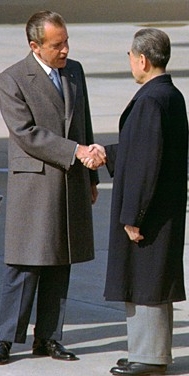
Except that Zhou wasn’t referring to the French Revolution, which began in 1789. Rather, he was alluding to the civil unrest and protests that had seized France in 1968.

We know this from Nixon’s interpreter, a former U.S. diplomat named Charles W. (Chas) Freeman Jr., who was present at the meeting in Beijing in 1972 when Zhou made the remark.

First to call attention the Zhou misinterpretation was London’s Financial Times, which quoted Freeman’s remarks at a panel discussion four months ago in Washington, D.C.

Freeman told me in a subsequent interview that it was “absolutely clear” from the context of the conversation that Zhou’s “too early” comment was in reference to the turmoil of 1968.

Freeman said Zhou’s remark probably was made over lunch or dinner, during a discussion about revolutions that had succeeded and failed. They included, Freeman added, the Prague Spring of 1968 and the Hungarian uprising of 1956, both of which the Soviet Union had crushed.

Freeman characterized Zhou’s remark as “a classic of the genre of a constantly repeated misunderstanding that has taken on a life of its own.”

He’s quite right about that.

Nixon meets Zhou, 1972

The misinterpretation of Zhou’s remark long ago took on life of its own, offering as it did apparent confirmation about the sagaciousness of China’s leaders and their willingness or inclination to take an exceptionally long view of history.

But the misinterpreted version, Freeman noted, “conveniently bolstered a stereotype … about Chinese statesmen as far-sighted individuals who think in longer terms than their Western counterparts.”

The misconstrued comment, he added, fit nicely with “what people wanted to hear and believe.”

And so it told hold.

As the New Yorker essay suggests, the conventional interpretation — the erroneous version — retains broad appeal, despite Freeman’s well-publicized corrective.

Which does makes you wonder about the New Yorker’s vaunted fact-checkers, though.

WJC

Recent and related:

‘Deep Throat’ didn’t say ‘follow the money’; nor was he vital in Watergate

In Debunking, Media myths, Washington Post, Watergate myth on October 13, 2011 at 12:55 am

It is quite impressive how Watergate’s most famous made-up line — “follow the money” — is so often cited by so many news outlets.

Felt: Not so vital

Canada’s Calgary Herald was the latest to indulge in the myth that “follow the money” was guidance offered by the high-level anonymous source code-named “Deep Throat.” The advice supposedly was offered to Bob Woodward, a Washington Post reporter covering Watergate.

The Herald invoked the made-up line in an article the other day about U.S. charitable organizations making donations to Canadian environmental groups.

“Most of us don’t think much about where organizational funding comes from when we witness well-orchestrated protests against, say, fish farming,” the Herald article said, adding:

“But, as the Watergate-era Deep Throat source once counselled, follow the money.”

“Deep Throat” — who was self-revealed in 2005 to have been W. Mark Felt Jr., formerly the second-ranking official at the FBI — never spoke the line.

It was written into the screenplay of All the President’s Men, the cinematic version of the book by the same title that Woodward and Post colleague Carl Bernstein wrote about their Watergate reporting.

Follow the money” was uttered by Hal Holbrook, the actor who turned in an outstanding performance playing “Deep Throat” in the movie. He delivered the line with such assurance that it really did seem to offer a way through the labyrinth of the Watergate scandal.

Woodward

But even if Woodward had been advised to “follow the money,” the guidance neither would have unraveled Watergate nor led him to Nixon.

What forced Nixon’s resignation in August 1974 was not the misuse of campaign funds but, rather, his attempt to obstruct justice by covering up the signal crime of the Watergate scandal, the break-in at the headquarters of the Democratic National Committee in June 1972.

Although the movie version of All the President’s Men portrays “Deep Throat” as crucial to Watergate’s outcome, his contributions weren’t so vital in real life, as the scandal slowly unfolded.

That assessment was offered the other day by Barry Sussman, who was the Watergate editor for the Washington Post. In an online essay at Huffington Post, Sussman wrote that “Deep Throat/Mark Felt was more myth than reality as a useful Watergate source.”

Sussman’s essay linked to a commentary he wrote in 2005, after the identity of “Deep Throat” was revealed — more than 30 years after Woodward and Bernstein had written about him in All the President’s Men, an immediate best-seller when it appeared in 1974.

“Deep Throat was nice to have around, but that’s about it,” Sussman wrote. “His role as a key Watergate source for the Post is a myth, created by a movie and sustained by hype for almost 30 years.”

That’s very intriguing, especially from someone as close to the Post’s Watergate reporting as Sussman was.

He’s now editor of the Nieman Watchdog Project of the Nieman Foundation for Journalism at Harvard University.

He closed his 2005 commentary by asserting:

“Watergate for many years has been hailed as a victory for the American system, and for the press. It wasn’t. It was a very narrow miss. Woodward and Bernstein did fine work in helping lay out the scandal as it took place. But they have been riding the myth and hype of Deep Throat/Mark Felt for a very long time.”

It deserves emphasizing that Watergate’s dominant narrative notwithstanding, the reporting by Woodward and Bernstein did not, as I discuss in my latest book, Getting It Wrong, take down Nixon’s corrupt presidency.

Unraveling Watergate, as I point out in Getting It Wrong, required “the collective if not always the coordinated forces of special prosecutors, federal judges, both houses of Congress, the Supreme Court, as well as the Justice Department and the FBI.

“Even then,” I add, “Nixon likely would have served out his term if not for the audiotape recordings he secretly made of most conversations in the Oval Office of the White House.

“Only when compelled by the Supreme Court did Nixon surrender those recordings,” which captured him obstructing justice.

Sussman’s right: Watergate was a very narrow miss.

WJC

Recent and related: