W. Joseph Campbell

Archive for the ‘Media myths’ Category

Bra-burning and home luxuries lost: Whoa

In Bra-burning, Debunking, Media myths, New York Times on May 23, 2010 at 11:40 am

If I read this article correctly, bra-burning contributed to a decline in the late 20th century of a taste for small luxuries around the home.

Media-driven myths have been mistakenly credited with bringing on wars and bringing down presidents. But bringing about a decline in household luxuries?

This is a first.

The article recalls with praise Mrs. Beeton’s Book of Household Management, which came out in 1861 and offered hundreds of pointers on cooking, supervising servants, and choosing decor.

Says the article, which appeared the other day in the Seattle Times and elsewhere:

“The dang thing had 2,751 entries—from how to cut a side of lamb, to just when to put away the white summer curtains—spelled out across more than 1,680 pages. And back in 1861, millions of copies were sold. Millions.

“Then,” the article says, “came the bra-burning latter half of the 20th century, and along with it permanent-press sheets, the paper napkin, and Hamburger Helper served up on melamine plates.

“We say, Whoa. We might have ditched too much. Lost all hints of luxury in the household department.”

I say, Whoa.

What did bra-burning supposedly have to do with lost “hints of luxury” at home? The article doesn’t say. Nor does it say explain how bra-burning helped to define the “latter half of the 20th century.”

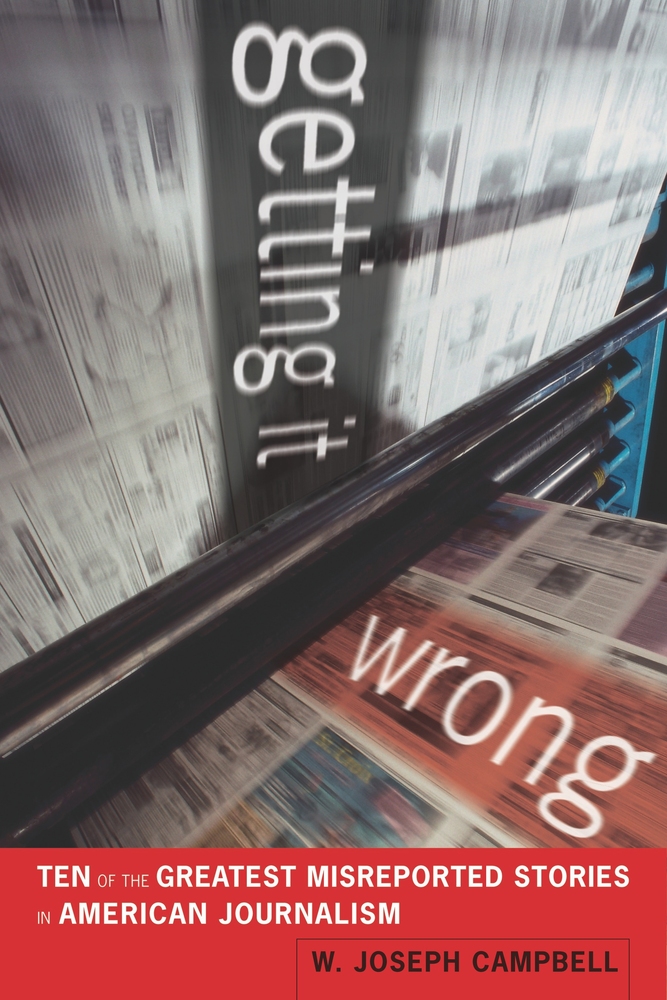
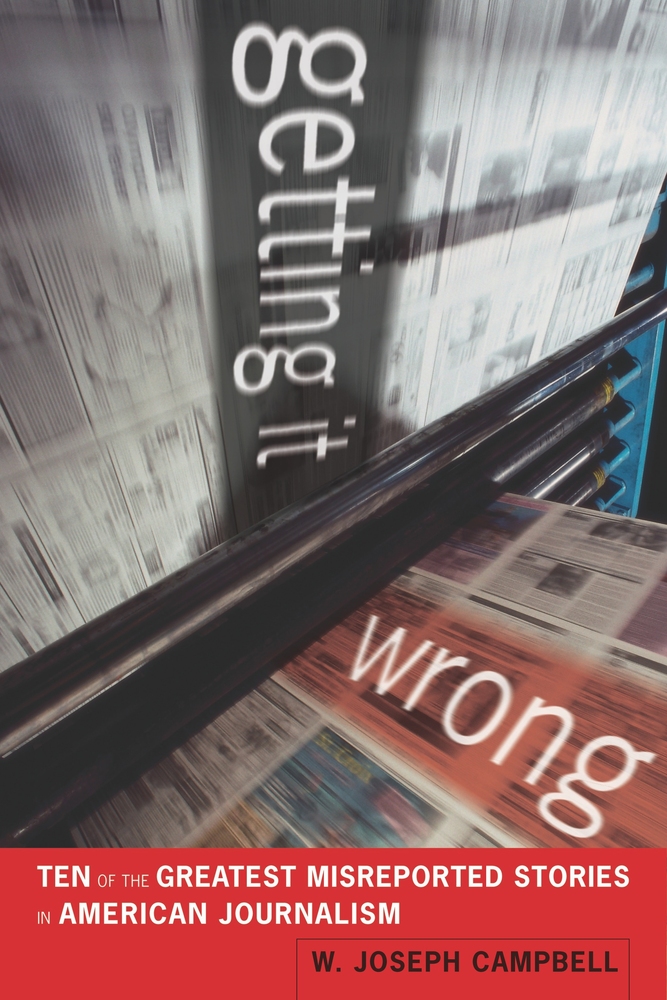
Bra-burning in fact was a dramatically overstated phenomenon, as I discuss in a chapter in Getting It Wrong, my forthcoming book about media-driven myths–well-known and often-told stories about the news media that are dubious, apocryphal, or wildly exaggerated.

As I write in Getting It Wrong, the notion of bra-burning took hold in the days after the Miss America pageant at Atlantic City, N.J., on September 7, 1968, and was promoted, probably unwittingly, by two syndicated columnists.

On that September afternoon, “about 100 women from New York City, New Jersey, Boston, Washington, D.C., and elsewhere arrived by bus at the Atlantic City boardwalk,” I write, adding:

“They were, according to the New York Times, ‘mostly middle-aged careerists and housewives’ and they set up a picket line … across from the Convention Center. They were there, as one participant declared, ‘to protest the degrading image of women perpetuated by the Miss America pageant,’ which took place that night inside the Convention Center.”

A highlight of their protest came when the demonstrators tossed into a barrel what they termed “instruments of torture,” including brassieres, girdles, high-heeled shoes, and magazines such as Playboy and Cosmopolitan.

The protesters dubbed the barrel the Freedom Trash Can.

The organizers of the daylong protest, who included the activist and former child actor Robin Morgan, have long insisted that bras and other contents of the Freedom Trash Can were not set afire during the protest.

But the notion that bra-burning was a dramatic element of the demonstration at Atlantic City was encouraged by syndicated columnists, including Harriett Van Horne.

Soon after the protest, Van Horne wrote that the demonstrators surely were frustrated– “scarred by consorting with the wrong men. Men who do not understand the way to a woman’s heart, i.e., to make her feel utterly feminine, desirable and almost too delicate for this hard world. … No wonder she goes to Atlantic City and burns her bra.”

Van Horne was not at the protest, however. Nor was Art Buchwald, then American journalism’s leading humorist, who nonetheless played on the bra-burning trope in a column published in the Washington Post and other newspapers.

With tongue firmly in cheek, Buchwald wrote that he had been “flabbergasted to read that about 100 women had picketed the Miss America pageant in Atlantic City against ‘ludicrous beauty standards that had enslaved the American woman.’”

He added: “The final and most tragic part of the protest took place when several of the women publicly burned their brassieres.”

As I note in Getting It Wrong, Buchwald’s slyly humorous “characterization of the protest at Atlantic City introduced the notion of flamboyant bra-burning to a national audience, conjuring as it did a powerful mental image of angry women setting fire to bras and twirling them, defiantly, for all … to see.”

But the dramatic burning of bras as a form of feminist protest wasn’t a defining feature of the second half of the 20th century. More than anything, it was an effect of a humor columnist’s satiric riff.
WJC

At HuffPo books

In Cronkite Moment, Debunking, Media myths, Washington Post, Watergate myth on May 22, 2010 at 8:27 am

Check out my guest post at the Huffington Post books page about Getting It Wrong, my forthcoming book about media-driven myths.

I discuss the book, which will be published soon by University of California Press, and address reasons that help explain the tenacity and enduring appeal of media-driven myths.

I write:

“They are, first of all, deliciously good stories–too good, almost, to be disbelieved.

“They also are appealingly reductive, in that they minimize complexity of historical events and offer simplistic and misleading interpretations instead. The Washington Post no more brought down [President Richard] Nixon than Walter Cronkite swayed [President Lyndon] Johnson’s views about the war in Vietnam. Yet those and other media myths endure because they present unambiguous, easy-to-remember explanations for complex historic events.

“Some media-driven myths can be self-flattering, offering up heroes in a profession more accustomed to scorn and criticism than applause.

“More important, though, is that media-driven myths often emerge from an eagerness to find influence and significance in what journalists do. These myths affirm the centrality of the news media in public life and ratify the notion the media are powerful, even decisive actors.

“To identify these tales as media-driven myths is to confront the reality that the news media are not the powerful agents they, and so many others, assume them to be.”

That’s often the case: Because the media are everywhere, it is easy, as Robert J. Samuelson once wrote, to confound their presence with power.

And as the sociologist Herbert J. Gans has observed:

“If news audiences had to respond to all the news to which they are exposed, they would not have time to live their own lives. In fact, people screen out many things, including the news, that could interfere with their own lives.”

WJC

‘A debunker’s work is never done’

In Bay of Pigs, Bra-burning, Cronkite Moment, Debunking, Furnish the war, Media myths, Murrow-McCarthy myth, New York Times, Reviews, War of the Worlds, Washington Post, Watergate myth, Yellow Journalism on May 21, 2010 at 6:14 pm

So notes the inestimable media critic Jack Shafer in his review of my forthcoming book, Getting It Wrong, posted today at slate.com.

And what a generous, engaging, and insightful review it is.

Under the headline “The Master of Debunk,” Shafer notes that “the only way to debunk an enshrined falsehood is with maximum reportorial firepower.

“Toting big guns and an itchy trigger-finger is American University professor W. Joseph Campbell, whose new book Getting It Wrong: Ten of the Greatest Misreported Stories in American Journalism flattens established myths that you were brought up to believe were true.”

Shafer’s review specifically discusses a variety of media-driven myths, including William Randolph Hearst’s purported vow to “furnish the war” with Spain; the so-called “Cronkite moment” that supposedly altered President Lyndon Johnson’s Vietnam policy; the Bay of Pigs suppression myth that erroneously says President John F. Kennedy persuaded the New York Times to spike a story about the pending U.S.-backed invasion of Cuba, and the heroic-journalist myth of Watergate.

Shafer rightly points out that “a debunker’s work is never done” and to that end notes my recent post at Media Myth Alert about Evan Thomas’ new book, The War Lovers. The book embraces myths of the yellow press period in American journalism, including the Hearst vow.

Shafer thoughtfully considers the tenacity of media-driven myths, writing:

“Some myths endure because the stories are so compelling, like the Hearst tale and the alleged mayhem caused by Orson Welles’ [War of the Worlds] broadcast. Others survive because our prejudices nourish them (“crack babies,” bra burners) or because pure repetition has drummed them into our heads, smothering the truth in the process.

“The best tonic for the brain fever caused by media myths is an open mind and a free inquiry,” he writes.

Shafer wraps up the review by invoking this observation, by Jonathan Rauch:

“It is the error we punish, not the errant.”

Shafers adds:

“Of course when you do such a good job punishing the error, as Campbell does, you don’t need to bother with the errant.”

WJC

Related:

Blumenthal and his spat-upon claim: More myth?

In Debunking, Media myths, New York Times on May 19, 2010 at 4:43 pm

The New York Times articles this week about the Richard Blumenthal, the Connecticut attorney general who falsely stated he served in Vietnam, mentioned but didn’t explore Blumenthal’s reference to having been spat upon by antiwar protestors.

The Times report Tuesday quoted Jean Risley, chairwoman of the Connecticut Vietnam Veterans Memorial Inc., as saying Blumenthal, a Democrat running for the U.S. Senate, once described indignities he and other veterans faced upon returning from Vietnam.

“It was a sad moment,” the Times quoted Risley as saying. “He said, ‘When we came back, we were spat on; we couldn’t wear our uniforms.’ It looked like he was sad to me when he said it.”

In a follow-up report today, the Times indirectly quoted former Congressman Christopher H. Shays as saying that at a recent event in Bridgeport, Connecticut, Blumenthal “brought up the subject of his military service and lamented that when ‘we returned from Vietnam’ Americans had spit on soldiers.”

The separate reports of Blumenthal’s recollections about veterans having been spat upon should prompt additional questions about the Senate candidate’s truthfulness–questions that go beyond his false claim of having served in Vietnam during the war. (Blumenthal, the Times has reported, secured “at least five military deferments from 1965 to 1970 and took repeated steps that enabled him to avoid going to war, according to records” the newspaper reviewed.)

Doubts have been raised over the years about accounts of soldiers being spat upon as they returned from Vietnam. Jerry Lembcke notably challenged such claims in his 1998 study, The Spitting Image: Myth, Memory, and the Legacy of Vietnam.

Lembcke noted “that stories of veterans being abused by anti-war activists only surfaced years after the abuses were alleged to have happened.”

He also wrote that his “search through news stories and polls … revealed no basis for the widespread belief that the alleged spitting incidents actually occurred.”

Lembcke, a Vietnam veteran who became an opponent of the war, returned to the topic in 2005, writing in a commentary in the Boston Globe:

“Stories about spat-upon Vietnam veterans are like mercury: Smash one and six more appear. It’s hard to say where they come from. For a book I wrote in 1998 I looked back to the time when the spit was supposedly flying, the late 1960s and early 1970s. I found nothing. No news reports or even claims that someone was being spat on.”

He also noted:

“GIs [returning from Vietnam] landed at military airbases, not civilian airports, and protesters could not have gotten onto the bases and anywhere near deplaning troops. There may have been exceptions, of course, but in those cases how would protesters have known in advance that a plane was being diverted to a civilian site?”

Now, I haven’t studied the spat-upon claims to be in a position to embrace Lembcke’s findings, independently. It is a touchy and disputed topic. But I am impressed with the earnest quality of Lembcke’s research.

Moreover, I incorporate in Getting It Wrong, my forthcoming book about media-driven myths, a telling observation in Lembcke’s book about the tenacity of myths.

It appears as a chapter-opening quotation in the discussion in Getting It Wrong about the heroic-journalist myth of Watergate:

“Unlike a society with a strong oral tradition, American today remembers its history through visual imagery.”

True enough: The cinema can be a powerful force in pressing media-driven myths into the collective memory.

I also was impressed with Lembcke’s point that myths “help people come to terms with difficult periods of their past. They provide explanations for why things happened. Often, the explanations offered by myths help reconcile disparities between a group’s self-image and the historical record of a group’s behavior.”

Or, as might be paraphrased in the matter of Blumenthal’s dissembling, myths can help reconcile disparities between an individual’s self-image and the record of his behavior.

WJC

In myth, a truism: Hearst’s vow ‘will forever live on’

In 1897, Debunking, Furnish the war, Media myths, Spanish-American War, Yellow Journalism on May 17, 2010 at 8:34 am

William Randolph Hearst’s purported vow to “furnish the war” with Spain “has achieved unique status as an adaptable, hardy, all-purpose anecdote,” I write in my forthcoming book about media-driven myths, Getting It Wrong.

The anecdote, I point out, “has been invoked to illustrate the media’s willingness to compromise impartiality, promote political agendas, and indulge in sensationalism. It has been used, more broadly, to suggest the media’s capacity to inject malign influence into international affairs.”

It is for such reasons the Hearstian anecdote endures, despite having been thoroughly debunked. The tale is revisited, and debunked anew, in the first chapter of Getting It Wrong.

But it may well be that Hearst’s purported vow “will forever live on in journalism history,” as a columnist for the Times of Northwest Indiana newspaper wrote in a commentary published yesterday.

Far from challenging or disputing the tale, the columnist embraced it, repeating as if factual the supposed exchange between Hearst and the artist Frederic Remington, in which Hearst reputedly asserted:

“You furnish the pictures, and I’ll furnish the war.”

Remington was in Cuba in January 1897, on assignment for Hearst’s New York Journal to draw sketches of the rebellion against Spanish colonial rule. If the exchange did take place, it would have been then, in early 1897.

As I write in Getting It Wrong,  the anecdote lives on despite a nearly complete absence of supporting documentation. It lives on even though the telegram that supposedly contained Hearst’s vow has never turned up. It lives on even though Hearst denied ever sending such a message.

And it lives on despite an irreconcilable internal inconsistency: It would have been absurd for Hearst to vow to “furnish the war” because war—specifically, the Cuban rebellion—was the reason he sent Remington to Cuba in the first place. (The rebellion gave rise in 1898 to the Spanish-American War.)

The sole source for the anecdote was a self-important journalist named James Creelman. He was neither in Cuba nor in New York at the time the exchange would have occurred. Creelman then was in Europe, as a correspondent for Hearst’s Journal.

That means Creelman learned about the tale second-hand.

Or made it up.

The durability of media myths such as the “furnish the war” anecdote is discussed in Getting It Wrong. I acknowledge that “some myths addressed [in the book] may prove resistant to debunking. They may still be widely believed despite the contrary evidence marshaled against them.”

I note that the “most resilient myths may be those that can be distilled to a catchy, pithy phrase.”

Quotations such as “You furnish the pictures, and I’ll furnish the war” are indeed neat, tidy, catchy, and delicious. They are easy to remember, fun to repeat, and too good not to be true.

Almost certainly, they will live on.

WJC

Woodward’s reporting ‘changed course of American history’?

In Debunking, Media myths, Washington Post, Watergate myth on May 16, 2010 at 12:10 pm

Bob Woodward’s “investigative reporting of Watergate changed the course of American history.”

So asserted a column in yesterday’s St. Petersburg Times.

Woodward (Library of Congress)

The author didn’t elaborate, or offer supporting evidence for such an exuberant claim. Presumably, he meant that reporting by Woodward and his Washington Post colleague, Carl Bernstein, brought down Richard Nixon’s corrupt presidency in the Watergate scandal of the early 1970s.

That, of course, is among the most appealing and enduring of the many media-driven myths–stories about and or by the news media that are widely believed and often retold but which, under scrutiny, prove apocryphal or wildly exaggerated.

I address, and debunk, 10 prominent media-driven myths in my forthcoming book, Getting It Wrong. Among them is what I call the heroic-journalist myth of Watergate–a trope that knows few bounds.

As I note in Getting It Wrong, even Washington Post officials over the years have scoffed at such claims.

Notable among them was Katherine Graham, the publisher during the Watergate period.

“Sometimes people accuse us of bringing down a president, which of course we didn’t do,” Graham said in 1997, at a program marking the scandal’s twenty-fifth anniversary. “The processes that caused [Nixon’s] resignation were constitutional,” she insisted.

Indeed, I write in Getting It Wrong, “Nixon’s fall was the consequence of his criminal conduct, which was exposed in the convergence of many forces, newspaper reporting being among the least decisive.”

Still, the heroic-journalist myth endures.

An important reason why Woodward and Bernstein are given so much credit is the need for heroes in a business that is much derided and little trusted. As I note in Getting It Wrong, which will be out next month, “media myths can be self-flattering, offering heroes like Woodward and Bernstein to a profession more accustomed to criticism than applause.”

I further write:

“Similarly, media myths invite indulgence in the ‘golden age fallacy,’ the flawed but enticing belief that there really was a time when journalism and its practitioners were respected and inspiring—the time, say, of Murrow or Cronkite, or Woodward and Bernstein.”

Such misplaced nostalgia has helped embed these myths firmly and decisively in media history.

WJC

Myth resurfaces in Cronkite-collaborator report

In Cronkite Moment, Debunking, Media myths, Year studies on May 15, 2010 at 10:28 am

The Yahoo News report yesterday that venerable CBS anchorman Walter Cronkite may have quietly collaborated with antiwar activists in the late 1960s stirred a modest flurry of commentary in the blogosphere.

Cronkite in Vietnam, 1968

Few mainstream media outlets appear to have touched the story, which I find to be something of a stretch. An exception was Rupert Murdoch’s  New York Post, which carried a brief article, essentially a rewrite of the Yahoo report.

That report cited newly released FBI documents in saying that in late 1969, “Cronkite encouraged students at Rollins College in Winter Park, Fla., to invite Maine Sen. Edmund Muskie to address a protest [against the war] they were planning near Cape Kennedy (now known as Cape Canaveral). Cronkite told the group’s leader that Muskie would be nearby for a fundraiser on the day of the protest, and said that ‘CBS would rent [a] helicopter to take Muskie to and from site of rally.'”

Inevitably, the report recalled Cronkite’s famous on-air editorial comment delivered February 27, 1968, at the end of a special report on Vietnam. On that occasion, Cronkite declared the U.S. war effort in Vietnam was “mired in stalemate.”

A post yesterday at mediaite.com noted Cronkite’s 1968 commentary, saying it “is often credited with turning the tide of public opinion against the war.”

Cronkite’s commentary that night has become the stuff of legend. But it was scarcely so powerful or decisive as to much move public opinion.

As I discuss in Getting It Wrong, my forthcoming book about media-driven myths, public opinion had begun turning against the Vietnam War months before the Cronkite program.

In October 1967, a Gallup survey reported that the percentage of respondents saying that U.S. military presence in Vietnam was a mistake had reached a plurality—47 percent. That was 4½ months before Cronkite delivered his on-air commentary. (In August-September 1965, just 24 percent of Gallup poll respondents said sending troops to Vietnam was a mistake.)

In a Gallup poll completed in early February 1968, three weeks before the Cronkite program, the proportion saying the war was a mistake stood at 46 percent; 42 percent said it had not been a mistake.

Gallup asked the question again in a poll completed the day the Cronkite program aired, finding that 49 percent of the respondents said U.S. military intervention in Vietnam had been a mistake; 42 percent said it had not.

By late February 1968, Cronkite’s “mired in stalemate” assessment was, I write in Getting It Wrong, “neither notable nor extraordinary.”

I also note that Mark Kurlansky, author of a year-study about 1968, declared Cronkite’s view “hardly a radical position” for the time.

Cronkite’s remarks that night were fairly mild–certainly less emphatic than comments offered about two weeks later by Frank McGee of the rival NBC network.

“The war,” McGee declared on an NBC News program March 10, 1968, “is being lost by the administration’s definition.”

As I’ve noted previously, it is a bit surprising that McGee’s pointed editorial comments are not more often remembered.

WJC

Cronkite, secret antiwar collaborator? Seems a stretch

In Cronkite Moment, Debunking, Media myths on May 14, 2010 at 3:44 pm

Yahoo’s online news site has turned up FBI documents claiming that Walter Cronkite, the venerable CBS News anchorman often if mistakenly called America’s “most trusted” public figure, offered advice and suggestions in late 1969 to foes of the Vietnam War.

Redacted FBI document on Cronkite (Yahoo News)

The Yahoo report, posted this afternoon, says the documents indicate that Cronkite offered “advice on how to raise the public profile of protests and even pledging CBS News resources to help pull off events, according to FBI documents” obtained through the Freedom of Information Act.

Cronkite died 10 months ago.

He made clear his mild opposition to the war on February 27, 1968, in a famous editorial comment at the close of a special report on Vietnam.  Cronkite on that occasion declared:

To say that we are closer to victory today is to believe, in the face of the evidence, the optimists who have been wrong in the past. To suggest we are on the edge of defeat is to yield to unreasonable pessimism. To say that we are mired in stalemate seems the only realistic, yet unsatisfactory, conclusion.

Cronkite also suggested that negotiations eventually might prove to be America’s way out of the conflict.

The program that night became grist for a prominent media-driven myth, one of 10 that I discuss, and debunk, in my forthcoming book, Getting It Wrong.

Legend has it that at the White House, President Lyndon Johnson watched the Cronkite show and, upon hearing the anchorman’s dire assessment about Vietnam, snapped off the television set and exclaimed, “If I’ve lost Cronkite, I’ve lost Middle America.”

Or words to that effect. Versions vary.

But as I point out in Getting It Wrong, Johnson wasn’t at the White House that night. And he wasn’t in front of a television set to watch Cronkite’s special report.

The president was in Austin, Texas, offering light-hearted banter at the 51st birthday party of a longtime political ally, Governor John Connally.

Today’s Yahoo report, while certainly provocative, seem to stretch credulity in important respects.

Cronkite, the Yahoo report says, “encouraged students at Rollins College in Winter Park, Fla., to invite Maine Sen. Edmund Muskie to address a protest they were planning near Cape Kennedy (now known as Cape Canaveral). Cronkite told the group’s leader that Muskie would be nearby for a fundraiser on the day of the protest, and said that ‘CBS would rent [a] helicopter to take Muskie to and from site of rally,’ according to the [FBI] documents.”

That Cronkite would even contemplate going so far as to arrange for the network to pay for a helicopter to take Muskie to the rally seems improbable.

The Yahoo report further quotes the FBI documents as saying the leader of an antiwar group in Florida said he spent 45 minutes on the telephone with Cronkite, discussing activities related to antiwar demonstrations in November 1969.

That Cronkite would spent that much time on the phone, offering advice to an activist, also seems unlikely.

And a comment posted today at the popular Romenesko online media news site offers an important reminder:

“Many Yahoo readers may be unaware that [FBI] files were full of nonsense and falsehoods by people seeking to curry favor, damage enemies, collect money and who otherwise had no interest in the truth of matters.”

The Cronkite-as-secret-collaborator story is delicious in what it suggests. Given Cronkite’s public views about the war, it’s perhaps faintly plausible.

But by no means can it be considered authoritative.

WJC

CJR reviews ‘Getting It Wrong’

In Debunking, Media myths, Reviews on May 12, 2010 at 3:34 pm

The May/June number of Columbia Journalism Review contains a fine and insightful review of Getting It Wrong, my forthcoming book that addresses, and debunks, 10 prominent media-driven myths.

James Boylan, the reviewer, writes, perceptively:

“As W. Joseph Campbell shows, there are many ways to misreport. Sometimes it means getting the story wrong in the first place, sometimes misremembering the story, sometimes inflating it later for self-aggrandizement. The author’s ten case studies include examples of each.”

Boylan, who is founding editor of CJR, further writes:

“In each of these cases, the author debunks what is essentially historical hearsay. The value of these studies is less in the answers, which are telegraphed early on, than in the detailed and illuminating research Campbell has applied to each.”

WJC

Johnson was ‘panicked’ by Cronkite show on Vietnam?

In Cronkite Moment, Debunking, Media myths on May 11, 2010 at 1:28 pm

The flexibility and wide applicability of prominent media-driven myths is little short of astonishing sometimes.

Cronkite in Vietnam, 1968

Take, for example, the column in today’s Jerusalem Post, which invoked the often-told anecdote about the supposed effects of Walter Cronkite’s special report in 1968 about the Vietnam War.

As I discuss in Getting It Wrong, my forthcoming book about media-driven myths, it is widely believed that President Lyndon Johnson essentially threw up his hands in dismay upon hearing Cronkite’s pessimistic assessment about the war.

Cronkite, the CBS News anchorman, said the U.S. military was “mired in stalemate” in Vietnam and suggested that negotiations might be a way out.

Johnson supposedly realized the war effort was now hopeless, telling an aide or aides, “If I’ve lost Cronkite, I’ve lost Middle America.”

Or something along those lines. Versions of what the president supposedly said vary markedly.

Today’s Jerusalem Post column offered another variation, saying that Johnson “panicked when he lost Walter Cronkite over Vietnam….”

Panicked?

What? How so?

As I discuss in Getting It Wrong, Johnson didn’t even see the Cronkite report when it aired late in the evening of February 27, 1968.

Johnson then was in Austin, Texas, at the 51st birthday party of Governor John Connally, one of his long-time political allies.

About the time Cronkite was intoning his downbeat assessment on Vietnam, Johnson was offering light-hearted remarks about Connally’s age, saying:

“Today you are 51, John. That is the magic number that every man of politics prays for—a simple majority. Throughout the years we have worked long and hard—and I might say late—trying to maintain it, too.”

No panic there.

Nor was there any in the days that followed.

I note in Getting It Wrong that even if Johnson saw the Cronkite program on videotape, the anchorman’s assessment represented no epiphany for the president.

About three weeks after the Cronkite program, I write, “Johnson gave a rousing, lectern-pounding speech in which he urged a ‘total national effort’ to win the war in Vietnam.”

So no panic there, either.

And on the day of the Cronkite program, Johnson offered a forceful defense of his war policy, vowing in a midday speech in Dallas there would be “no retreat from the responsibilities of the hour of the day.”

Johnson declared: “We are living in a dangerous world and we must understand it. We must be prepared to stand up when we need to. There must be no failing our fighting sons” in Vietnam.

“It seems inconceivable,” I write in Getting It Wrong, “that Johnson’s views [on Vietnam] would have pivoted so swiftly and dramatically, upon hearing the opinion of a television news anchor, even one as esteemed as Cronkite.”

It’s quite improbable.

So, no, Johnson wasn’t “panicked” by Cronkite’s assessment on Vietnam.

Not at all.

WJC

<!–[if !mso]> <!– st1\:*{behavior:url(#ieooui) } –> Johnson’s speech, the newspaper said, was “perhaps his strongest public call yet for unity in pushing the Vietnam war.”[i]


[i] Sell, “No Viet Retreat,” Los Angeles Times, 1.