W. Joseph Campbell

Archive for the ‘Media myths’ Category

Now in Italian: The Cronkite Moment

In Cronkite Moment, Debunking, Media myths on March 25, 2010 at 6:08 pm

The Italian online site InviatoSpeciale indulges today in the legendary though dubious “Cronkite Moment” of February 1968.

That was when CBS News anchorman Walter Cronkite delivered a downbeat editorial assessment about the Vietnam War, saying the U.S. military effort there was “mired in stalemate.”

Thanks to the Babelfish online translation site, here is what InviatoSpeciale had to  say about that mythical occasion:

“The most followed anchorman of the American country explained to the people that war was mistaken and soon after the president, Lyndon Johnson, commented, ‘If I have lost Walter Cronkite, I have lost the moderate America’ and withdrew from the race for the White House.”

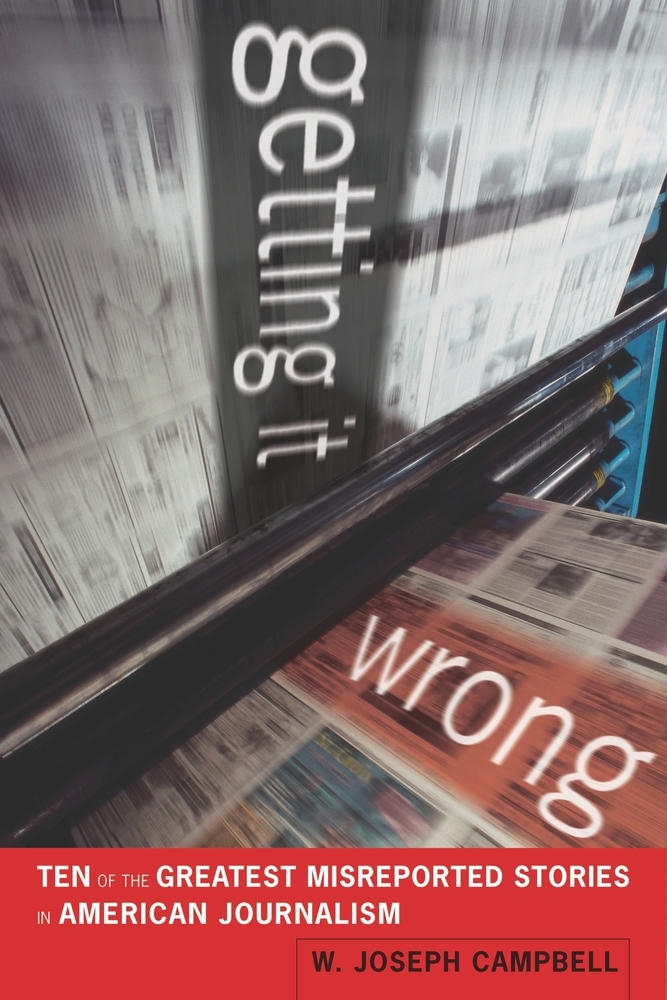
Even if roughly translated, that’s a pretty fair summary of the “Cronkite Moment,” a media-driven myth that I address and debunk in my forthcoming book, Getting It Wrong.

The “Cronkite Moment,” which derives its appeal and tenacity as an example of news media’s making a swift and profound difference in the conduct of American foreign policy.

But there are many reasons to doubt that the Cronkite program had much of an effect on Johnson at all.

As I note in Getting It Wrong, the president did not see the program when it aired February 27, 1968 .

Johnson then wasn’t in front of a television. He was in Austin, Texas, at the 51st birthday party of a political ally, Governor John Connally.

Even if he later saw a videotaped recording of the Cronkite program, “Johnson gave no indication of having taken the anchorman’s message to heart,” I write in Getting It Wrong, adding:

“Just three days after the program aired, Johnson vowed in remarks at a testimonial dinner in Texas that the United States would ‘not cut and run’ from Vietnam. ‘We’re not going to be Quislings,’ the president said, invoking the surname of a Norwegian politician who helped the Nazis take over his country. ‘And we’re not going to be appeasers….’”

As for Johnson’s decision against seeking reelection in 1968, the Cronkite program was of little or no consequence.

Critical to Johnson’s decision–which he announced at the end of March 1968, a month after the Cronkite program–was the advice and counsel of advisers, and the implications of Senator Eugene McCarthy’s insurgent bid for the Democratic nomination for president.

The potency of McCarthy’s antiwar campaign was demonstrated in the Democratic primary election in New Hampshire on March 12, 1968. McCarthy won 42 percent of the vote, a far greater portion than expected. Johnson won 49 percent.

Not only that, there’s evidence that Johnson never intended to seek reelection in 1968.

The appearance in Italian of the “Cronkite Moment” is a bit amusing. It’s also indicative of how deeply embedded the myth has become.

Moreover, it’s suggestive of how difficult it will be to uproot it completely.

WJC

‘Pharm patries’ and the howler-correction of the month

In Debunking, Media myths, Newspapers on March 21, 2010 at 8:36 pm

The once-great Chicago Tribune offered up the howler-correction of the month the other day, saying this about a story it published nearly four months ago:

“In a Nov. 22 article about teenagers who abuse prescription drugs, a reference to ‘pharm parties‘ being a craze among teens did not sufficiently support that assertion.”

Huh?

That, no doubt, was the reaction of many people who read and puzzled over that correction: It befuddled more than it clarified.

Here’s what the Tribune said about “pharm parties” back in the fall:

“‘Pharm parties’ are a disturbing craze in which teens steal prescription medicine from home, take the pills to a gathering, and dump the load into a bowl. The partygoers then pop the pills and wait for a reaction.”

The “pharm party” meme is a media-driven myth, one of remarkable tenacity. The myth’s most energetic debunker, Jack Shafer of slate.com, has traced the meme to 1966, when, he says, “pharm parties” were known as “fruit salad parties.”

“There are at least two basic problems with the pharm-party scenario reported in the press,” Shafer has written.

“To begin with, if you were a young drug fiend and stole potent drugs, why would you deposit them in a communal bowl if there was a good chance that when your turn came to draw a drug at random, you might get an antihistamine? And second, I’ve yet to read a story in which a journalist actually attends such a gathering, interviews a participant, or cites a police report alleging such behavior.”

More recently, Shafer deliciously excoriated the San Francisco Chronicle for its front-page report a week ago about “pharm parties,” which declared–on the basis of few if any statistics–that  “the phenomenon is getting worse.”

The headline over Shafer’s column described the Chronicle account as “the worst ‘pharm party’ story ever.”

He pointed out:

“To my knowledge, no journalist has ever witnessed such random consumption of drugs by young people in a party setting, yet the story continues to get major play as if these affairs are common.”

So why has the “pharm party” myth demonstrated such tenacty? Why does it seem to defy the most thorough of debunkings?

An important factor, no doubt, is stereotyping–a ready willingness to believe that teens readily indulge in mindlessly dangerous conduct.

To that end, a graduate student of mine recently called attention to passage in 1988 film Heathers in which the protagonist, J.D., says:

“Your society nods its head at any horror the American teenager can think to bring upon itself.”

Like many media-driven myths–including those addressed and debunked in my forthcoming book Getting It Wrong–the “pharm party” meme is a delicious tale. Like the dubious story about William Randolph Hearst’s vowing to “furnish the war” with Spain, it’s just too good not to be true.

Or retold.

(Hearst’s famous vow has achieved status as an all-purpose anecdote, one useful in illustrating any number of media sins and shortcomings. It has been invoked to illustrate the media’s willingness to compromise impartiality, promote political agendas, and indulge in sensationalism. It has been used, more broadly, to suggest the media’s capacity to inject malign influence into international affairs.)

So what to do about these nasty and persistent media myths?

I believe that pounding away at them–directing attention to them whenever they arise– is the only effective way to address them and thus begin to alter the narrative.

The Tribune‘s correction suggests that Shafer’s debunking is having an effect.

The Annenberg Public Policy Center, moreover, has demonstrated that some myths can be curbed or contained. Over the past 10 years, Phildelphia-based Annenberg Center has endeavored to debunk the notion that suicides rise during the year-end holidays.

They don’t.

The Annenberg Center hasn’t buried this media myth. But to its credit, it has begun to tame it.

WJC

Recalling the overlooked heroism of Sgt. Walters

In Debunking, Jessica Lynch, Media myths, Washington Post on March 19, 2010 at 2:05 pm

Oregon Public Broadcasting aired a segment today recalling the death seven years ago in Iraq of Sergeant Donald Walters, whose battlefield heroics were mistakenly attributed to Private Jessica Lynch.

“In later accounts,” the OPB report noted, “Don emerged as a hero who’d stayed behind to cover for his escaping comrades, before his capture and brutal death” at the hands of Iraqi irregulars, the Fedayeen.

The OPB report represents one of the few occasions when U.S. news media have called attention to Walters, a 33-year-old cook in the Army’s 507th Maintenance Company who either was left behind or stayed behind as his unit tried to escape an ambush in Nasiriyah in March 2003, during the first days of the Iraq War.

Walters laid down covering fire as his comrades fled. When his ammunition ran out, Walters was captured and soon after executed.

Owing apparently to a mistaken translation of Iraqi battlefield reports, Walters’ heroics initially were attributed to Lynch, then a 19-year-old supply clerk in the 507th.

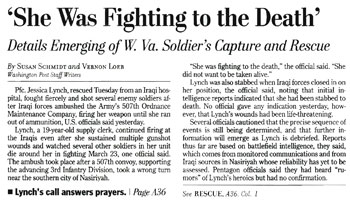
The Washington Post sent the erroneous account about Lynch into worldwide circulation on April 3, 2003, in a sensational report on its front page. The Post said Lynch had “fought fiercely” in Nasiriyah and had “shot several enemy soldiers after Iraqi forces ambushed” elements of the 507th, “firing her weapon until she ran out of ammunition.”

The Post cited “U.S. officials” who otherwise were unidentified as saying that Lynch had “continued firing at the Iraqis even after she sustained multiple gunshot wounds and watched several other soldiers in her unit die around her in fighting March 23.” One official was quoted anonymously as saying:

“‘She was fighting to the death. She did not want to be taken alive.’”

As I write in Getting It Wrong, my forthcoming book about media-driven myths, “the Post never fully acknowledged or explained its extraordinary error about Jessica Lynch.”

I also note: “The Post’s erroneous hero-warrior tale thrust Lynch into an international spotlight that has never fully receded.”

Indeed, the hoopla over her supposed derring-do in battle obscured the actions of Walters, whose conduct Nasiriyah probably saved lives of fellow soldiers. Walters posthumously was awarded the Silver Star, the U.S. military’s third-highest decoration for valor.

Walters’ parents live in Salem, Oregon. In the OPB report, Walters’ mother, Arlene, points to an imponderable about her son in his last hours. “Our big question,” she said, “is did he choose to stay or was he left out there” in Nasiriyah in the rush to escape the ambush.

Perhaps the best account of the ambush at Nasiriyah appears in Richard Lowry’s masterful book, Marines in the Garden of Eden.

Lowry wrote:

“We will never really know the details of Walters’ horrible ordeal. We do know that he risked his life to save his comrades and was separated from the rest of the convoy, deep in enemy territory. We know that he fought until he could no longer resist.”

As I note in Getting It Wrong:

“Walters’ actions, when they became known, attracted little more than passing interest from the American news media—certainly nothing akin to the intensity of the Lynch coverage after the Post’s ‘fighting to the death’ story appeared.”

WJC

The spoof in Georgia: Evocative of the ‘War of the Worlds’?

In Media myths, War of the Worlds on March 16, 2010 at 10:17 am

A mock newscast reporting that Russia was invading the former Soviet republic of Georgia stirred frightened reactions that have been likened to the panic and hysteria supposedly caused by Orson Welles’ famous War of the Worlds radio dramatization in 1938.

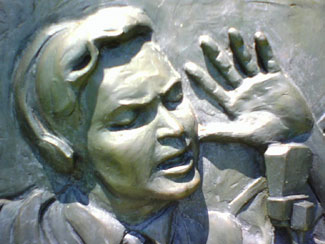
Welles

The televised spoof in Georgia “was evidently intended as political satire, but the depiction was sufficiently realistic—and memories of the brief war between Russia and Georgia in August 2008 still sufficiently vivid—that viewers headed for the doors before they could absorb the point,” the New York Times said over the weekend.

The anchorman on privately owned Imedi television was shown fumbling papers during the videotaped fake newscast Saturday night,  “as if juggling the chaos of a breaking news story,” the Times reported.

The anchor said fighting had broken out on the streets of Tbilisi, the capital, and that “Russian bombers were airborne and heading for Georgia, that troops were skirmishing to the west and that a tank battalion was reported to be on the move,” according to the Times.

The program was identified as fictitious before the broadcast, the Times said, adding that “viewers who tuned in later would have had to rely on [visual] clues. The fighting in the video was taking place in the summer, for example, not in March.”

The report stirred frenzied reactions, not unlike the War of the Worlds radio broadcast in 1938, in which listeners who tuned in late were prone to believing the dramatization was a real-time Martian invasion.

As it became clear the televised spoof had disturbed and frightened its viewers, Imedi placed a disclaimer on the screen, alerting viewers that the program was a simulation.

The panic lasted about 15 minutes, the Times reported.

Afterward, a knot of demonstrators gathered outside the television station to protest the fake newscast.

A Georgia news outlet in a report posted online today quoted Imedi’s general director, a former political associate of the country’s president, as saying the spoof was intended to underscore the external threats that Georgia face.

Russian forces invaded Georgia in August 2008 and seemed for a time poised to topple the elected government of President Mikheil Saakashvili.

The long-ago War of the Worlds program, which aired over CBS radio on Halloween eve, supposedly was so realistic in its accounts of invading Martians wielding deadly heat rays that newspapers said Americans by the tens of thousands—even the hundreds of thousands—were convulsed in panic.

But as I write in Getting It Wrong, my forthcoming book about media-driven myths, “the panic and mass hysteria so readily associated with The War of The Worlds program did not occur on anything approaching nationwide dimension.

“While many Americans were frightened by the program, most listeners, overwhelmingly, were not.”

But the reaction in Georgia may not have been overstated, given the undeniable threat posed by Russia.

Even so, the TV satire appears to have been as misguided as it was crude and unprofessional. An inexcusably thoughtless use of the airwaves.

WJC

Embedded myths of journalism history

In Cronkite Moment, Debunking, Media myths, Washington Post, Watergate myth on March 15, 2010 at 11:44 am

Popular media myths were in circulation over the weekend at the conference of journalism historians—signaling anew how embedded myths are in American media history and how difficult they can be to uproot.

One presentation at the conference in New York City discussed Walter Cronkite’s standing in collective American memory and in media history. The presentation inevitably invoked the notion that the Cronkite’s on-air commentary in 1968 dissuaded Lyndon Johnson from seeking reelection to the presidency.

Supposedly, Johnson watched Cronkite’s special report on CBS about Vietnam. Cronkite ended the program with by saying the U.S. war effort was “mired in stalemate” and that negotiations eventually might be considered as a way out of the conflict.

Upon hearing Cronkite’s downbeat editorial assessment, Johnson switched off the television and turned to an aide or aides, muttering something to the effect of:

“If I’ve lost Cronkite, I’ve lost Middle America.”

The program’s effect supposedly was so singularly powerful that it also turned public opinion against the war and came to be called the “Cronkite Moment.”

As I’ve noted several times at MediaMythAlert, and as I write in Getting It Wrong, my  forthcoming book about media-driven myths, Johnson did not watch Cronkite’s special report about Vietnam when it aired February 27, 1968.

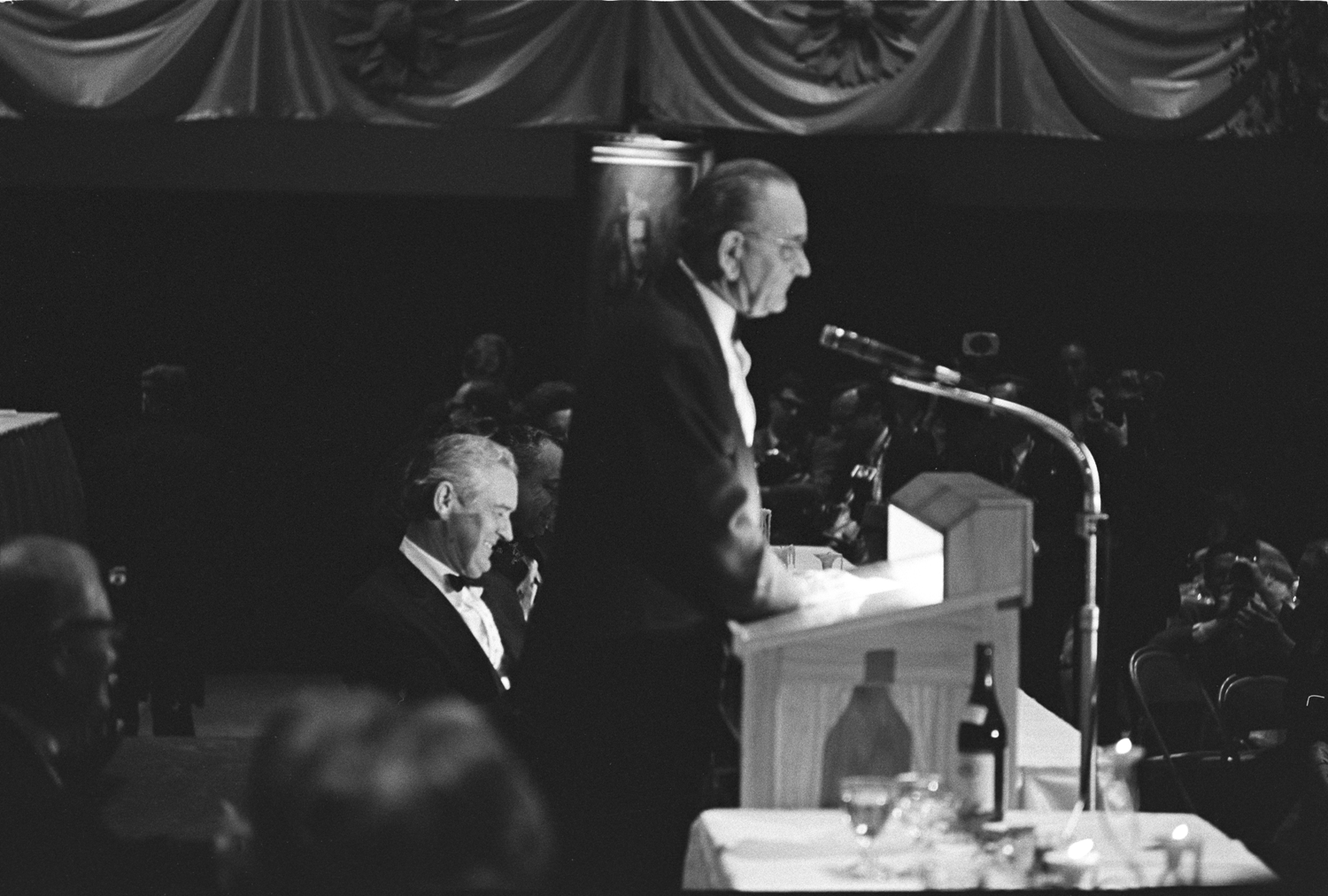
Johnson in Texas, February 27, 1968

Johnson at the time was not in front of a television set but on the campus of the University of Texas at Austin, at a party marking the 51st birthday of one of his political allies, Governor John Connally.

Nor is there evidence that Johnson later saw the Cronkite program on videotape.

Not only that, but as I discuss in Getting It Wrong, there is scant evidence to suggest that the “Cronkite Moment” had much influence at all on public opinion about the war.

Indeed, polling data “clearly show that American sentiment had begun shifting months before the Cronkite program,” I write in the book, which will be out this summer.

Also heard during conference presentations was what I call the heroic-journalist myth of Watergate–the notion that the reporting of two young reporters for the Washington Post brought down Richard Nixon’s corrupt presidency.

This is a trope that even Post officials have dismissed over the years.

In 2005, for example, the newspaper’s then-ombudsman, Michael Getler, wrote:

“Ultimately, it was not The Post, but the FBI, a Congress acting in bipartisan fashion and the courts that brought down the Nixon administration. They saw Watergate and the attempt to cover it up as a vast abuse of power and attempted corruption of U.S. institutions.”

The heroic-journalist myth is addressed, and debunked, in Getting It Wrong, which says that interpreting Watergate “through the lens of the heroic-journalist is to abridge and misunderstand the scandal and to indulge in a particularly beguiling media-driven myth.”

The conference in New York was Saturday, and was sponsored by the History Division of AEJMC and the American Journalism Historians Association. AEJMC is the acronym for the Association for Education in Journalism and Mass Communication.

WJC

Gleanings from the conference

In Debunking, Jessica Lynch, Media myths, Washington Post on March 14, 2010 at 6:41 pm

My paper about the media myths surrounding the case of Jessica Lynch, the Army private whom the Washington Post lifted from obscurity early in the Iraq War, stirred a fair amount of comment and questions at yesterday’s conference of journalism historians in New York.

That’s hardly surprising given that the paper—which is drawn from a chapter in Getting It Wrong,  my forthcoming book about media-driven myths—challenges the dominant narrative about the Lynch case that the Pentagon supposedly made up the account of her supposed heroics on the battlefield.

Her heroics were reported on the Post‘s front page April 3, 2003.

The newspaper said Lynch, then 19, had “fought fiercely” in the ambush of her unit, the 507th Maintenance Company, in Nasiriyah in southeastern Iraq. The Post article cited unnamed “U.S. officials” in reporting that Lynch had “shot several enemy soldiers after Iraqi forces ambushed” her unit, “firing her weapon until she ran out of ammunition.”

One official was quoted anonymously as saying: “‘She was fighting to the death. She did not want to be taken alive.’” Lynch was taken prisoner and nine days later rescued from an Iraqi hospital by a U.S. Special Operations team.

The Post’s story about Lynch’s derring-do was electrifying–and picked up by news organizations around the world.

It soon proved to be almost entirely in error.

Lynch hadn’t “fought fiercely.” She had never fired her weapon.

She suffered shattering injuries in the crash of a Humvee as she and others in the 507th fled the ambush.

Soon enough, though, the dominant narrative about the Lynch saga took shape: The Pentagon had concocted the hero-warrior story in order to boost support back home.

But as I noted during my presentation yesterday, Vernon Loeb, one of the Post reporters who shared a byline on the “Fighting to the Death” story said late in 2003 that the Pentagon was not the source for that report.

I also noted that the Pentagon hardly would have been desperate to boost morale back home: Just before Lynch’s rescue, support for the Iraq War was topping 70 percent, according to opinion polls in the United States.

One of the questions raised at the conference yesterday was: If the military wasn’t the source, then who gave the Post the story?

It’s a fair question, and I noted that Loeb and other reporters on the story have never disclosed their sources, beyond citing the otherwise unidentified “U.S. officials.” I also pointed out that they had reported the hero-warrior story about Lynch from Washington, and that no journalists were with Lynch and her unit during the ambush in Iraq.

Not surprisingly, the crucial element of mistaken identity in the Lynch saga stirred little comment from yesterday’s audience.

The hoopla stirred by the Post‘s story about Lynch had the effect of obscuring the recognition of a real hero of the ambush. He was Sergeant Donald Walters, a cook in the 507th who did fight to the death at Nasiriyah.

As his unit tried to flee the ambush, Walters stayed behind, laying down covering fire. When his ammunition ran out, Walters was captured and, shortly afterward, executed.

But when they became known, Walters’ actions on the battlefield attracted scant interest among the American news media.

The daylong conference was sponsored by the History Division of AEJMC and the American Journalism Historians Association. AEJMC is the acronym for the Association for Education in Journalism and Mass Communication.

WJC

‘Mythmaking in Iraq,’ at a conference in New York

In Debunking, Jessica Lynch, Media myths, Washington Post on March 12, 2010 at 8:47 am

I’ll be in New York tomorrow to present a paper that’s drawn on my forthcoming book, Getting It Wrong.

The venue will be the annual, daylong Joint Journalism Historians Conference; my paper is titled, “‘She Was Fighting to the Death’: Mythmaking in Iraq.”

The paper deconstructs the media-driven myth surrounding the case of Jessica Lynch, the Army private whom the Washington Post lifted from obscurity in early April 2003, in an electrifying account of her supposed heroics at Nasiriyah in the first days of the Iraq War.

The Post’s hero-warrior tale about Lynch, then 19, carried the headline:

“’She was fighting to the death.’”

The Post‘s story was picked up around the world, in a classic case of intermedia agenda-setting (wherein large news organizations set a news agenda for other, smaller outlets).

But the account proved badly in error: Lynch never fired a shot in the fighting at Nasiriyah.

Washington Post's story about Lynch, April 2003

Given that the Post’s hero-warrior narrative proved untrue, it’s scarcely surprising that other suspicions arose about the Lynch saga–namely that Pentagon officials planted the “fighting to the death” report and that the rescue of Lynch by a U.S. special forces team was contrived to boost flagging morale back home.

As I’ll note in my presentation, the Pentagon did little to promote the hero-warrior story about Lynch. Indeed, the Post‘s story was not based on Pentagon sources.

I’ll also point out that U.S. public support for the war was quite high at the time the Lynch case began unfolding.

A national CNN/USA Today/Gallup poll taken of 1,012 American adults in late March  2003—a few days before publication of the Post‘s erroneous report about Lynch—found that 85.5 percent of respondents thought the war effort was going “very well” or “moderately well” for U.S. forces.

The hoopla over Lynch had another, lasting effect: That of obscuring the recognition of an Army sergeant named Donald Walters who did fight to the death at Nasiriyah.

Walters was captured when his ammunition ran out, and executed.

Sgt. Donald Walters

Walters’ heroics were mistakenly attributed to Lynch, apparently because of faulty translation of Iraqi battlefield reports.

But when they became known, Walters’ heroics attracted little more than passing attention in the American news media.

Walters’ mother, Arlene, told me a few years ago that she called the editors of newsweeklies that had placed Lynch’s image on their covers. But “there was never any story about Don,” she said. “I called all these magazines. … They didn’t really care.”

I’ll bet most attendees at tomorrow’s conference never have heard of Sergeant Donald Walters.

The conference is sponsored by the History Division of AEJMC and the American Journalism Historians Association. AEJMC is the Association for Education in Journalism and Mass Communication.

WJC

On laptops in the classroom, and technology-driven myths

In Debunking, Media myths, Washington Post on March 9, 2010 at 10:17 am

The front page of today’s Washington Post offers an interesting look at banning laptops in college classrooms.

The Post reporter spoke with me in researching the story, as I generally do not allow laptop use in my classes, a policy that dates at least five years. Typically, I mention my preference on the first day of class and thereafter rarely receive pushback from students.

And laptops in the classroom have never been mentioned in student evaluations of my teaching.

The Post article notes that wireless Internet connections in the classroom tend to “tempt students away from note-typing to e-mail, blogs, YouTube videos, sports scores, even online gaming–all the diversions of a home computer beamed into the classroom to compete with the professor for the student’s attention.”

True enough: Laptops can be a serious distraction, which is a principal reason I prefer not to see them open in the classroom.

But another factor, one the Post article doesn’t mention, is that of classroom etiquette.

It’s undeniably discourteous to be IM’ing or texting or sending email, especially in discussion-based classes.  It’s rude: Rude to the instructor, and rude to fellow students to be so dismissive of their contributions.

Laptops in classroom also can contribute, on occasion, to the frenzied circulation of technology-driven myths.

The Post article recalled an episode last week in the classroom of Professor Peter W. Tague at Georgetown Law School.

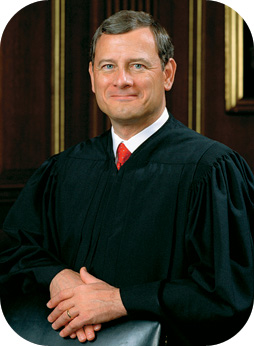
As part of an exercise on the importance of challenging sources who seem authoritative, Tague told the class that the Supreme Court chief justice, John G. Roberts Jr., was retiring.

Roberts

Students, the Post article noted, “promptly spread the news into the blogosphere. Later in class, Tague revealed that the tip was false, part of a lesson” on ascertaining source credibility. By then, however, the Roberts story had spread from students’ laptops to sources throughout the Internet.

The bogus report was posted at RadarOnline, which said Roberts (who is 55) was “seriously considering stepping down.” The DrudgeReport linked to the Radar post and, from there, it went viral–as recounted in delicious detail by the blog Above the Law.

The Radar report soon was knocked down–demonstrating anew how the Internet can rapidly disseminate media-driven rumors, and thoroughly debunk them as well.

The episode certainly confirmed the importance of Tague’s lesson about verifying the credibility of sources. It’s a lesson useful for journalists, too.

As I write in my forthcoming book about media-driven myths, Getting It Wrong, the flawed and exaggerated reporting that characterized the aftermath of Hurricane Katrina in 2005 was driven, in part, by reliance on official sources.

“Usually,” I write in Getting It Wrong, “the imprimatur of officialdom translates to adequate sourcing for journalists.” But in Katrina’s aftermath, the New Orleans mayor, Ray Nagin and the city’s police commissioner, Eddie Compass, “became the very public sources of alarming but false and exaggerated reports about their city and its inhabitants. And they offered their erroneous reports seemingly in all confidence, without equivocation or qualification.”

Nagin and Compass offered some of the most shocking reports about death and depravity in the disaster’s aftermath. Nagin, for example, estimated that the hurricane’s death toll in New Orleans would reach 10,000. And Compass went on the Oprah Winfrey show to tell of “little babies getting raped” at the Superdome, where thousands of evacuees had gathered.

None of it was true.

Journalists covering disaster must rely on public officials for critical details about casualties and relief efforts. But in doing so they can’t afford to shed the skepticism they’re encouraged to develop about the officials and personalities they cover.

WJC

Recalling, and doubting, television’s ‘finest half hour’

In Debunking, Media myths, Murrow-McCarthy myth on March 8, 2010 at 12:18 am

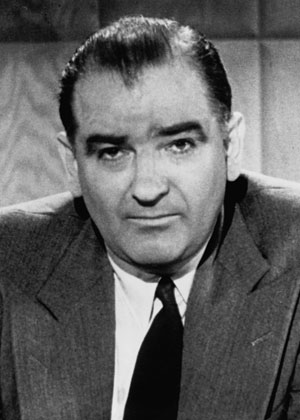
It’ll be 56 years tomorrow since Edward R. Murrow, the “patron saint” of broadcast journalism, took to the small screen to confront Joseph R. McCarthy and decisively end the senator’s witch-hunt for communists in government.

Or so the story goes.

McCarthy in 1954 (Library of Congress)

The occasion was Murrow’s 30-minute See It Now program that aired March 9, 1954, on CBS.

It was a hallowed moment in American journalism, one that supposedly defined the power of television and reaffirmed the courage of Murrow. Among other accolades, the See It Now show on McCarthy has been called television’s “finest half-hour.”

But as I write in my forthcoming book, Getting It Wrong, the notion that Murrow brought down McCarthy is a tenacious though delicious media-driven myth.

Murrow “was very late in confronting McCarthy,” I write in Getting It Wrong and “did so only after other journalists had challenged the senator and his tactics for months, even years.”

I note in the book–which addresses and debunks nine other media-driven myths–that Eric Sevareid, Murrow’s friend and CBS colleague, chafed at the misleading interpretation, pointing out in an interview in 1978 that Murrow’s program “came very late in the day.”

Sevareid was correct.

“Long before the See It Now program, several prominent journalists—including the Washington-based syndicated columnist Drew Pearson—had become persistent and searching critics of McCarthy, his record, and his tactics,” I note in Getting It Wrong.

Pearson wrote the widely read “Washington Merry-Go-Round” column and was the most assertive and persistent of McCarthy’s media critics. He challenged McCarthy’s claims as early as 1950–days after the senator began raising charges that scores of communists and fellow travelers had infiltrated the U.S. State Department.

McCarthy became so angered by Pearson’s searching columns that he threatened the columnist with physical harm–and followed through in December 1950, in a bizarre encounter in the cloakroom of the Sulgrave Club in Washington.

There, McCarthy slapped Pearson, or tried to knee the columnist in the groin. Accounts vary. (Then-Vice President Richard Nixon reportedly broke up the encounter.)

All that came long before Murrow confronted McCarthy on See It Now in 1954.

It’s sometimes argued that Murrow’s most effective contribution was “in mobilizing public opinion against Senator Joe McCarthy.” Such a claim was raised the other day in a post at the online site of the New American magazine.

But in fact, McCarthy’s favorability ratings had been falling for three months before the Murrow program: Factors other than Murrow’s reporting had turned public opinion against McCarthy.

Gallup Poll data show that McCarthy’s appeal crested in December 1953, when 53 percent of Americans said they had a favorable view of him. McCarthy’s favorable rating fell to 40 percent by early January 1954, and to 39 percent in February 1954.

As I write in Getting It Wrong, “it wasn’t as if Americans in early 1954 were hoping for someone to step up and expose McCarthy, or waiting for a white knight like Murrow to tell them about the toxic threat the senator posed.”

Thanks to the work of Pearson and other journalists, they already knew.

WJC

If not for the Post’s digging …

In Debunking, Media myths, Washington Post, Watergate myth on March 7, 2010 at 1:26 pm

Then the Watergate scandal might never have come to light.

Right.

That, in any case, is a variation on the heroic-journalist meme of Watergate, which holds that the work of Bob Woodward and Carl Bernstein, two young reporters for the Washington Post, brought down Richard Nixon and his corrupt presidency.

It’s a claim too sweeping for many to embrace. As I write in my forthcoming book, Getting It Wrong, the heroic-journalist interpretation of Watergate is a media-driven myth–one that even officials at the Post tend to dismiss.

The variation on the heroic-journalist meme holds that the Post‘s persistent reporting during the summer and early fall of 1972–in the early weeks and months of the scandal–helped keep Watergate from fading completely from public view.

The variation theme was invoked yesterday in a column in the New Britain Herald in Connecticut.

The writer says about Watergate and Nixon’s eventual resignation:

“Sure, a federal judge and the members of Congress had something to do with it — Lowell Weicker made his name nationally at the [Senate] Watergate hearings. But without Woodward and Bernstein digging and writing in the Washington Post, it could all have been pushed under the rug.”

Alas, the writer offers no evidence for his speculative conclusion.

Even so, it’s not an uncommon interpretation.

Howard Simons, the Post‘s managing editor during the Watergate period, once said:

“For months we were out there alone on this story. What scared me was that the normal herd instincts of Washington journalism didn’t seem to be operating. … It was months of loneliness.”

Such characterizations are not entirely accurate, however. As I write in Getting It Wrong:

“The Post may well have led other newspapers on the Watergate story—principally was because Watergate at first was a local story, based in Washington, D.C. But rival news organizations such as Los Angeles Times and New York Times did not ignore Watergate as the scandal slowly took dimension during the summer and fall of 1972,” while Nixon’s reelection campaign gathered momentum.

In his classic essay on journalism and Watergate, Edward Jay Epstein noted that the Post and other newspapers were joined during the summer of 1972 by the General Accounting Office, the investigative arm of Congress, and Common Cause, a foundation that seeks accountability in government office, in calling attention to the scandal.

Nixon’s Democratic challenger for the presidency, George McGovern, often invoked Watergate in campaign appearances during the summer and fall of 1972. At one point, McGovern charged that Nixon was “at least indirectly responsible” for the Watergate scandal, which stemmed from a break-in at the headquarters of the Democratic National Committee.

McGovern also termed the break-in “the kind of thing you expect under a person like Hitler.”

So in its reporting on the emergent scandal, the Post in fact was one of several institutions seeking to delineate the reach and contours of Watergate.

Woodward and Bernstein were very much not alone in their digging. And the number of entities and institutions that were digging, even in the early days of the scandal, guaranteed that Watergate could not be “pushed under the rug.”

WJC

<!–[if !mso]> Edward Jay Epstein noted in his classic essay disputing the heroic-journalist myth of Watergate that the Post and other newspapers were joined during the summer of 1972 by the General Accounting Office, the investigative arm of Congress,[i] and Common Cause, a foundation that seeks accountability in government office, in calling attention to the scandal. Within a few days of the Watergate break-in, moreover, the Democratic National Committee filed a civil lawsuit against the Committee for the Reelection of the President, which ultimately compelled statements under oath. And Nixon’s Democratic challenger for the presidency, George McGovern, repeatedly invoked Watergate in his campaign appearances in the summer and fall of 1972. At one point, McGovern charged that Nixon was “at least indirectly responsible” for the Watergate burglary. McGovern also termed the break-in “the kind of thing you expect under a person like Hitler.”[ii] In its reporting on the emergent scandal in the summer and fall of 1972, the Post in fact was one of several institutions seeking to delineate the reach and contours of Watergate.[iii] The Post, that is, was very much not alone.


[i] See Bernard Gwertzman, “G.A.O. Report Asks Justice Inquiry Into G.O.P. Funds,” New York Times (27 August 1972): 1.

[ii] See James M. Naughton, “McGovern Bars Briefings By Kissinger as Unhelpful,” New York Times (16 August 1972): 1, 20.

[iii] Edward Jay Epstein, Between Fact and Fiction: The Problem of Journalism (New York: VintageBooks, 1975), 26. See also, Martin Schram, “Watergate in media legend,” Journal of Commerce (19 June 1997): 6A. Schram wrote: “Even in the early days [of the Watergate scandal], the Post was not always the Lone Ranger we now remember.