W. Joseph Campbell

Posts Tagged ‘1968’

On bra-burning, Erica Jong is wrong

In Bra-burning, Debunking, Media myths, Photographs on March 28, 2012 at 4:25 pm

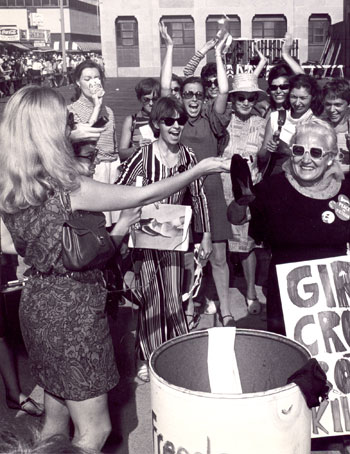
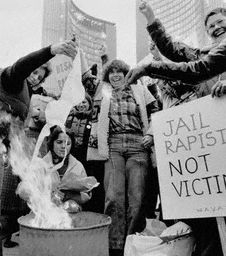
Bra-burning in Toronto, 1979 (Bettmann/Corbis)

The writer Erica Jong asserts in a rambling commentary posted yesterday at the Daily Beast that bra-burning “never actually occurred.”

The mischaracterization of bra-burning was an element of Jong’s defense of feminism and the sexual revolution of the 1960s and 1970s.

Jong wrote in the commentary:

“The fact that the so-called mainstream press reduced our valid struggles to sex, drugs, rock and roll, and bra burning (which, btw, never actually occurred) was their attempt to further disempower us. And they surely prevailed.”

It’s not an infrequent claim, that feminist bra-burning was a media trope, a media myth. That it “never actually occurred.”

But there were at least a couple of documented occasions when feminist protesters set fire to bras.

One occasion came 33 years ago this month, when members of Women Against Violence Against Women demonstrated outside Toronto City Hall. As the demonstration neared its end, a protester named Pat Murphy dropped a white bra into the hungry flames of a burn barrel (see photo, above).

The demonstration in Toronto on March 8, 1979, coincided with International Women’s Day and was aimed at denouncing a report on rape prepared by the Ontario Provincial Police.

The police report said “promiscuity” was a factor in many rapes.

The Women Against Violence Against Women group assailed the report as outrageous and “dazzling in its illogic.” Protesters carried signs saying: “Take a Rapist to Lunch — Charcoal Broiled” and “Hookers Who Wink Go to the Clink! Men Who Rape Escape.”

The Globe and Mail newspaper reported that the protesters lighted “a fire in a garbage can, to the obvious annoyance of about a dozen watchful constables, [and] shouted: ‘Burn the rapists, burn the city, burn the OPP,’” acronym for Ontario Provincial Police.

The newspaper’s account did not specifically mention bra-burning which, one participant has told me, “wasn’t a focal point” of the protest.

But bra-burning did happen there.

Another participant has recalled that “weighing in on the stereotype of ‘feminist bra-burners’ was actually an effective way [for protesters] to say: Women will control our own bodies, thank you!

“The bra burning,” she said, “was a way to entice the media as well as [offer] a critique of the police report.”

A little more than 10 years before the demonstration in Toronto, some 100 women gathered on the boardwalk at Atlantic City, New Jersey, to protest the 1968 Miss America pageant. The demonstration was organized by a small group called New York Radical Women and was an early manifestation of the women’s liberation movement.

In Getting It Wrong, my mythbusting book that came out in 2010, I offer evidence that bras were set afire, briefly, during the demonstration at Atlantic City.

The evidence is from two witness accounts, one of which was published in the local newspaper, the Press of Atlantic City, on September 8, 1968, the day after the protest.

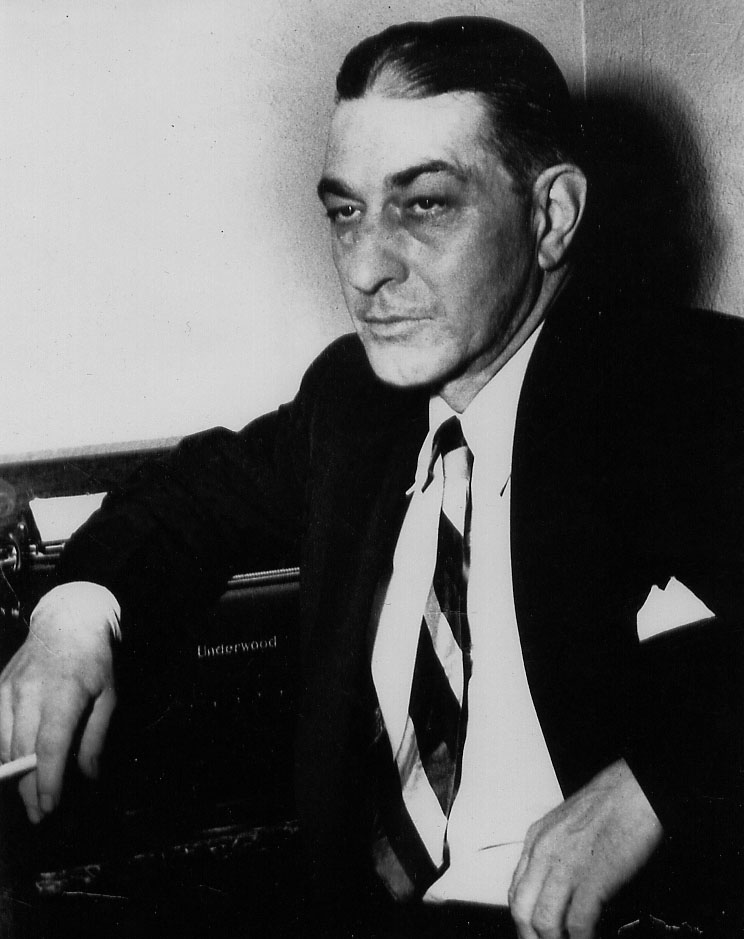
Boucher (1949 photo)

That account appeared beneath the byline of a veteran reporter named John L. Boucher and carried the headline:

“Bra-burners blitz boardwalk.”

Boucher’s article referred to the burn barrel that demonstrators dubbed the “Freedom Trash Can” and stated:

“As the bras, girdles, falsies, curlers, and copies of popular women’s magazines burned in the ‘Freedom Trash Can,’ the demonstration reached the pinnacle of ridicule when the participants paraded a small lamb wearing a gold banner worded ‘Miss America.’”

That published account was buttressed by recollections of the writer Jon Katz, who in 1968 was a young reporter for the Atlantic City newspaper. Katz was on the Atlantic City boardwalk the day of the protest, gathering material for a sidebar article about reactions to the demonstration.

Katz’s sidebar didn’t mention the fire in the “Freedom Trash Can.”

But in correspondence with me, Katz stated:

“I quite clearly remember the ‘Freedom Trash Can,’ and also remember some protestors putting their bras into it along with other articles of clothing, and some Pageant brochures, and setting the can on fire.

“I am quite certain of this.”

WJC

Many thanks to Instapundit
Glenn Reynolds for linking to this post.

Recent and related:

The ‘seismic cultural shifts’ of the 1960s: Protests, assassination — and bra-burning?

In Bra-burning, Debunking, Media myths, Washington Post on March 25, 2012 at 9:59 am

Feminist “bra-burning” of the late 1960s was more media myth than sustained reality.

But a commentary in today’s Washington Post places “bra-burning” among the “[s]eismic cultural shifts” of the late 1960s.

A column that promoted a media trope

Yes, “bra burning.”

This bizarre and baseless claim appears in a commentary that ruminates about the Mad Men television series.

The opening paragraph says:

“On ‘Mad Men,’ the AMC television show that returns for its fifth season Sunday night, booze, cigarettes, unprotected sex, cholesterol-rich foods and negligent parenting play starring roles in a surprisingly accurate and yet idealized picture of a New York ad agency in the mid-1960s. Seismic cultural shifts — Vietnam War protests, bra-burning and the assassination of Martin Luther King Jr. — are just over the horizon.”

The show, the Post’s commentary avers, “gives us a window into the mind-sets of our parents and grandparents.”

Oh, sure it does.

But even frivolous ruminations can bring opportunities for myth-busting, and bra-burning was hardly a “seismic” event of the late 1960s.

It hardly signaled “cultural shift.”

In fact, feminist “bra-burning” was mostly a non-event.

I call it a “nuanced myth” in my latest book, Getting It Wrong, which debunks 10 prominent media-driven myths.

The derivation of the nuanced myth can be traced to September 7, 1968, and the women’s liberation protest against the Miss America pageant at Atlantic City, N.J. The protest was organized by a small group called New York Radical Women.

The demonstrators included about 100 women who traveled to the Atlantic City boardwalk to denounce the pageant as a “degrading Mindless-Boob-Girlie symbol” that placed “women on a pedestal/auction block to compete for male approval” and promoted a “Madonna Whore image of womanhood.”

The harsh rhetoric notwithstanding, the daylong protest on the boardwalk wasn’t very raucous. A centerpiece was what the demonstrators called the “Freedom Trash Can,” into which they tossed “instruments of torture” such as brassieres, girdles, high-heeled shoes, and copies of Playboy and Cosmopolitan.”

One demonstrator held a girdle over the Freedom Trash Can, according to the New York Times, and chanted:

“No more girdles, no more pain. No more trying to hold the fat in vain.”

The protest’s organizers had let it be known in advance of the demonstration that they planned to set fire to bras and other items at Atlantic City. But once there, plans supposedly were abandoned in favor of what of was called a “symbolic bra-burning.”

And through the years, the demonstration’s organizers have been adamant that no bras were burned during the protest.

Nonetheless, newspaper columnists writing in the demonstration’s aftermath offered highly imaginative accounts of “bra-burning” at Atlantic City.

Notably, Harriet Van Horne wrote in the New York Post that a highlight of the demonstration “was a bonfire in a Freedom Trash Can.”

Van Horne, who was not at the Atlantic City protest, also wrote:

“With screams of delight they consigned to the flames such shackling, demeaning items as girdles, bras, high-heeled slippers, hair curlers and false eyelashes.”

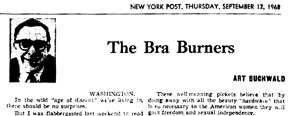
Nationally syndicated humor columnist Art Buchwald also picked up on the bra-burning meme, writing with tongue in cheek that he was “flabbergasted to read that about 100 women had picketed the Miss America pageant in Atlantic City against ‘ludicrous beauty standards’ that had enslaved the American woman.’”

Buchwald also wrote: “The final and most tragic part of the protest took place when several of the women publicly burned their brassieres.”

And a media myth took hold.

What nuances the myth are witness accounts, discussed in Getting It Wrong, that bras were set afire, if briefly, during the protest.

Boucher, 1949 photo

One witness account appeared in the Press of Atlantic City the day after the protest. The newspaper’s first-hand report, written by a veteran reporter named John L. Boucher, included this passage:

“As the bras, girdles, falsies, curlers, and copies of popular women’s magazines burned in the ‘Freedom Trash Can,’ the demonstration reached the pinnacle of ridicule when the participants paraded a small lamb wearing a gold banner worded ‘Miss America.’”

Also covering the demonstration was Jon Katz, then a young reporter for the Atlantic City Press. In my research into bra-burning, Katz told me:

“I quite clearly remember the ‘Freedom Trash Can,’ and also remember some protestors putting their bras into it along with other articles of clothing, and some Pageant brochures, and setting the can on fire. I am quite certain of this.”

As I point out in Getting It Wrong, these accounts that bras were burned in the “Freedom Trash Can” cannot be “taken lightly, dismissed or ignored.”

At the same time,  I write, the witness accounts “offer no evidence to corroborate a widely held image of angry feminists demonstratively setting fire to their bras and tossing the flaming undergarments into a spectacular bonfire.”

There was no mass bra-burning at Atlantic City, no feminists twirling flaming bras over the heads. Fire at most was a modest and fleeting aspect of the protest on that long ago September day.

It was, to be sure, no seismic event.

WJC

Recent and related:

How’s that? ‘Bra-burning’ influenced mid-1960s fashion?

In Bra-burning, Debunking, Media myths on March 22, 2012 at 4:50 am

The notion that “bra-burning” was a widespread element of feminist protest is a media myth that’s probably too engrained, and euphonic, ever to be thoroughly debunked.

Fashion statement? (Press of Atlantic City)

It’s a notion that’s given rise to much hyperbole since the late 1960s. An Associated Press report yesterday added to the overstatement reflex with this astounding and wrong-headed passage about “bra-burning“:

“Culturally, beatniks were becoming mods, rock ‘n’ roll was taking hold, and the move from stockings to pantyhose — and eventual bra-burning — all influenced mid-’60s fashion.”

The AP report was about how the Mad Men television series has reflected “the evolution of fashion” during the 1960s.

But it wasn’t such froth that caught the attention of Media Myth Alert: It was the absurd claim that “bra burning … influenced mid-1960s fashion.”

Left unsaid by the AP report was how — how “bra-burning,” even if it were a frequent manifestation (which it wasn’t), could have  influenced fashion of that time.

The AP claim was especially puzzling because the “bra burning” meme did not even emerge until the late 1960s, when it came to be associated with the Miss America protest at Atlantic City on September 7, 1968.

A centerpiece of the 1968 protest was the “Freedom Trash Can,” into which demonstrators deposited so-called “instruments of torture” — including brassieres, girdles, high-heeled shoes, false eyelashes, and copies of magazines such as Playboy and Cosmopolitan.

Organizers of the demonstration have long insisted that no bras were set afire that day — that there was only a “symbolic bra burning” at Atlantic City.

But “bra-burning” is a nuanced media myth — as I describe in my latest book, Getting It Wrong.

I discuss in the book two previously overlooked witness accounts that bras were burned, briefly, during the protest at Atlantic City, which often is credited with marking the rise of the feminist movement of the late 20th century.

One of the witness accounts was published the day after the protest in the Press of Atlantic City, beneath the headline:

Bra-burners Blitz Boardwalk.”

The newspaper report, written by a veteran reporter named John L. Boucher, included this passage:

“As the bras, girdles, falsies, curlers, and copies of popular women’s magazines burned in the ‘Freedom Trash Can,’ the demonstration reached the pinnacle of ridicule when the participants paraded a small lamb wearing a gold banner worded ‘Miss America.’”

The other witness account discussed in Getting It Wrong was that of Jon Katz, a writer who covered the 1968 protest as a young reporter for the Atlantic City newspaper.

“I recall and remember noting at the time that the fire was small, and quickly was extinguished, and didn’t pose a credible threat to the Boardwalk. I noted this as a reporter in case a fire did erupt,” Katz told me, adding:

“It is my recollection that this burning was planned, and that a number of demonstrators brought bras and other articles of clothing to burn, including, I believe some underwear.”

These witness accounts offer fresh dimension to the legend of bra-burning: They represent evidence that bras and other items were set afire, if briefly, at the 1968 protest in Atlantic City.

“This evidence,” I write in Getting It Wrong, “cannot be taken lightly, dismissed or ignored.”

I also point out, though, that neither witness account lends  “support to the far more vivid and popular imagery that many bras went up in flames in flamboyant protest that September day. [The] accounts offer no evidence to corroborate a widely held image of angry feminists demonstratively setting fire to their bras and tossing the flaming undergarments into a spectacular bonfire.”

The reference in the AP report to “bra burning” as a fashion-molder is not only wrong; it suggest the insidious nature of media myths — how they can be invoked so readily and casually, without reference to any supporting evidence or detail.

They’re often treated as if they’re common knowledge, widely accepted.

And “bra-burning” is a media myth with a sting. The term often has been employed casually, as derogatory epithet, to ridicule feminists and dismiss their objectives as trivial and insignificant. As such, “bra-burning” underscores the potential of media myths to feed and promote stereotypes.

Not to mention misleading impressions of fashion history of the 1960s.

WJC

Recent and related:

Wasn’t so special: Revisiting the ‘Cronkite Moment,’ 44 years on

In Anniversaries, Cronkite Moment, Debunking, Media myths on February 27, 2012 at 12:59 am

A legendary moment in network news came 44 years ago tonight, when CBS News anchorman Walter Cronkite pronounced at the close of special report that the U.S. military was “mired in stalemate” in Vietnam and said negotiations might offer a way out.

Johnson: Not in front of a TV

Cronkite’s report aired February 27, 1968, and examined the Tet offensive that communist forces had launched across South Vietnam four weeks earlier.

At the White House that night, President Lyndon B. Johnson supposedly watched the Cronkite report. Upon hearing the popular anchorman’s downbeat assessment, Johnson realized his war policy was a shambles. The report was, the story goes, an epiphany for the president.

Johnson snapped off the television set and said to an aide or aides:

“If I’ve lost Cronkite, I’ve lost Middle America.”

Or something to that effect.

The report was so singularly and unexpectedly decisive that it has come to be celebrated as the “Cronkite Moment,” a totem of courage and insight, a revered model for broadcast journalism.

Except the “Cronkite Moment” wasn’t so special. Cronkite’s assessment about the war wasn’t novel or particularly insightful.

It was, if anything, a rehash of what other news organizations had been saying for weeks and months. “Stalemate” was much in the news back then.

The New York Times, for example, wrote “stalemate” into the headline over a news analysis about the war that was published on its front page in August 1967 — nearly seven months before Cronkite’s televised report. The Times headline read:

Vietnam: The Signs of Stalemate.”

The Times analysis, which was filed from the South Vietnamese capital, Saigon, noted:

“‘Stalemate’ is a fighting word in Washington. President Johnson rejects it as a description of the situation in Vietnam. But it is the word used by almost all Americans here, except the top officials, to characterize what is happening” in the war.

So “stalemate” had been often invoked, and much-debated, by the time Cronkite turned to the word.

Even more damaging to the purported exceptionality of the “Cronkite Moment” was that Johnson did not see the Cronkite report when it aired.

As such, the president could not have had the abrupt, visceral reaction that endows the purported “Cronkite Moment” with special power and resonance.

As I discuss in my latest book, Getting It Wrong, Johnson wasn’t at the White House on February 27, 1968; he wasn’t in front of a television set, either, when Cronkite intoned his “mired in stalemate” assessment.

The president was in Austin, Texas, attending the 51st birthday party of a political ally, Governor John Connally. About the time Cronkite made his on-air editorial comment, Johnson was making light of Connally’s age, saying:

“Today you are 51, John. That is the magic number that every man of politics prays for— a simple majority.”

As I also discuss in Getting It Wrong, there is no persuasive evidence that Johnson later saw Cronkite’s report on videotape.

Even if he had, it would have made no difference to his thinking about Vietnam.

Not long after the Cronkite report, Johnson delivered a rousing speech in Minneapolis, urging “a total national effort” to win the war in Vietnam. The speech was given March 18, 1968, and in it, the president declared:

“We love nothing more than peace, but we hate nothing worse than surrender and cowardice.”

Johnson, who died in 1973, did not mention the purported “Cronkite Moment” in his memoir, The Vantage Point.

For his part, Cronkite often described the program in modest terms, likening its effect on U.S. policy to a straw on a camel’s back. He turned to that analogy in writing his memoir, for example.

But in the years immediately before his death in 2009, Cronkite began to interpret the program in a somewhat grander light. He came to embrace the presumptive power of the “Cronkite Moment.”

In an interview with Esquire in 2006, for example, he said:

“To be honest, I was rather amazed that my reporting from Vietnam had such an effect on history.”

Interestingly, Cronkite also said he had never discussed the program and his famous editorial comment with Johnson.

According to a report in the Austin American-Statesman, Cronkite said in a teleconference call with a journalism class at Southwest Texas State University in 1997 that Johnson “never brought it up and I certainly never did.”

WJC

Many thanks to Instapundit
Glenn Reynolds for linking to this post.

Recent and related:

Just what we need: Barbra Streisand, media critic

In Cronkite Moment, Debunking, Media myths, Murrow-McCarthy myth on February 5, 2012 at 9:25 am

Celebrities and movie stars rarely make thoughtful, searching media critics, as Barbra Streisand demonstrated in a tedious and predictable essay the other day at Huffington Post.

The actress indulged a bit in the golden age fallacy, recalling broadcast journalists Edward R. Murrow and Walter Cronkite as exemplary newsmen whose talents these days are sorely missed.

“Americans,” Streisand wrote, “are busy, working hard to support and provide for their families. They don’t have time to parcel out fact from fiction. They depend on the Fourth Estate to guide them and to hold individuals running for office, especially the highest office in our country, accountable.”

The claim that Americans “depend on the Fourth Estate to guide them” is surely overstated, given evidence that many Americans go newsless and ignore media content altogether.

Streisand went on, extolling media icons of the past:

Murrow

“Journalists like Walter Cronkite and Edward R. Murrow knew it was their duty to know the facts and disseminate them to the public. That responsibility in today’s media world seems to be diminishing.”

Murrow, who came to fame on CBS radio in the 1940s and on CBS television in 1950s, was no white knight, though. He hardly was above the political fray.

As I note in my media mythbusting book, Getting It Wrong, Murrow privately donated time and expertise in acquainting Adlai Stevenson, the 1956 Democratic presidential candidate, with television.

I cite A.M. Sperber, one of Murrow’s leading biographers, who wrote that Murrow agreed “to help the Democrats” in offering Stevenson tips on “the finer points of speaking to the camera.”

Sperber, who characterized Murrow’s move “a radical departure from his usual practice,” said Stevenson “barely endured” the tutoring.

What’s more, Murrow is the subject of one of American journalism’s more savory and tenacious myths — that he stood up to the red-baiting senator, Joseph R. McCarthy, when no other journalist would, or dared.

Which is nonsense.

As I discuss in Getting It Wrong, Murrow was quite late in confronting McCarthy, doing so long after a number of journalists – including the muckraking columnist Drew Pearson– had become persistent and searching critics of the senator, his record, and his tactics.

Cronkite, the famous CBS News anchorman from 1963 to 1981, likewise is the subject of a durable media-driven myth — that his editorializing about the war in Vietnam in February 1968 forced President Lyndon B. Johnson to realize the folly of his policy.

Legend has it that Johnson was watching at the White House when Cronkite pronounced the U.S. military “mired in stalemate” in Vietnam. Cronkite also suggested the negotiations might offer a way out of the morass.

Upon hearing Cronkite’s downbeat assessment, Johnson supposedly leaned over and snapped off the television set, telling an aide or aides, “If I’ve lost Cronkite, I’ve lost Middle America.”

Or something to that effect. Versions vary, markedly.

But as I discuss in Getting It Wrong, Johnson did not see the program in which Cronkite made his editorial comment.

Johnson in Austin: Didn't see Cronkite show

Johnson at the time was in Austin, Texas, attending the 51st birthday party of Governor John Connally, a longtime political ally. About the time Cronkite was intoning “mired in stalemate,” Johnson was joking about Connally’s age, saying:

“Today you are 51, John. That is the magic number that every man of politics prays for—a simple majority.”

It’s illogical to argue that Johnson could have been much moved by a television report he hadn’t seen.

Granted, Cronkite’s editorial comment about Vietnam — tepid though it was — represented something of a departure for the avuncular anchorman. He usually tried to play it straight, because he had to.

As media critic Jack Shafer pointed out shortly after Cronkite’s death in 2009, the anchorman’s impartiality was partly a function of the federal “Fairness Doctrine,” which sought to encourage balanced reporting on the air.

Shafer wrote that “between 1949 and 1987 — which come pretty close to bookending Cronkite’s TV career — news broadcasters were governed by the federal ‘Fairness Doctrine.’ The doctrine required broadcast station licensees to address controversial issues of public importance but also to allow contrasting points of view to be included in the discussion.

“One way around the Fairness Doctrine was to tamp down controversy,” which he notes, the three U.S. television networks of the time “often did.”

So, no: Murrow and Cronkite weren’t exactly paragons of play-it-straight journalism. Pining for them while deploring today’s freewheeling media landscape is neither very sophisticated nor very useful.

Nor even fair to the historical record.

WJC

Recent and related:

‘Getting It Wrong’ goes on ‘One Hour of Hope’

In Anniversaries, Cinematic treatments, Cronkite Moment, Debunking, Jessica Lynch, Media myths, Washington Post, Watergate myth on January 10, 2012 at 12:15 pm

I recently was on “One Hour of Hope,” a satirically named radio show in Gainesville, Florida, to speak about several of the media-driven myths debunked in my latest book, Getting It Wrong.

Among them are the heroic-journalist trope of Watergate, the so-called “Cronkite Moment” of 1968, and the battlefield derring-do misattributed to Jessica Lynch early in the Iraq War.

The host of “One Hour of Hope,” Doug Clifford, noted at the outset of the interview that 2012 marks the 40th anniversary of the Watergate scandal’s signal crime, the breakin in June 1972 at the headquarters of the Democratic National Committee.

I am sure the anniversary will give rise  to a resurgence of the heroic-journalist interpretation of Watergate, which holds that the dogged investigative reporting of Washington Post reporters Bob Woodward and Carl Bernstein uncovered the scandal and brought about President Richard M. Nixon’s resignation in August 1974.

That media myth has become the dominant narrative of Watergate, I noted during the radio interview, which aired on WSKY-FM.

The persistence of that misreading narrative, I said, can be traced to All the President’s Men, Woodward and Bernstein’s 1974 book about their Watergate reporting, and especially to the 1976 movie by the same title.

The movie, by focusing on the exploits of Woodward and Bernstein, projects the notion that the reporters, with help from a the stealthy, high-level source code-named “Deep Throat,” unearthed the evidence that forced Nixon to quit.

That, I said, is a very simplistic interpretation, “a serious misreading of history” that ignores the far more powerful forces and factors that combined to uncover evidence of Nixon’s culpability.

Those forces, I noted, were typically subpoena-wielding and included committees of both houses of Congress, the Justice Department, the FBI, and a federal judge in Washington named John Sirica.

(Interestingly, the Washington Post, in its obituary of Sirica, said the judge’s “persistence in searching for the facts while presiding over the Watergate cases led to President Nixon’s resignation.”)

The myth of the “Cronkite Moment” represents another serious misreading of history, I said.

Clifford summarized the purported “Cronkite Moment,” that President Lyndon Johnson, in reaction to the CBS News anchor Walter Cronkite’s pessimistic assessment of the Vietnam War, said, “If I’ve lost Cronkite, I’ve lost America.”

I noted that versions of what the president said vary markedly and also include:

  • “If I’ve lost Cronkite, I’ve lost Middle America.”
  • “If I’ve lost Cronkite, I’ve lost the country.”
  • “If I’ve lost Cronkite, I’ve lost the war.”

(Version variability of such magnitude, I write in Getting It Wrong, is a revealing marker of a media-driven myth.)

I noted in the interview that there’s no evidence Johnson saw Cronkite’s television report about Vietnam when it aired February 27, 1968. At the time, the president was attending a birthday party for Governor John Connally on the campus of the University of Texas at Austin.

Nor is there any credible evidence that Cronkite’s reporting about Vietnam influenced  Johnson’s decision, announced in late March 1968, not to seek reelection.

Clifford asked about reporting of the Jessica Lynch case, and I said the bogus tale of her battlefield heroics was largely due to “sloppy reporting by the Washington Post.”

I described the newspaper’s electrifying report, published April 3, 2003, that cited otherwise unidentified “U.S. officials” in saying Lynch had fought fiercely in the ambush of Army unit in Iraq, that she had kept firing at Iraqi attackers even as she suffered gunshot and stab wounds.

But none of that proved true. Lynch fired not a shot in the attack. She was wounded not in the firefight with the Iraqis but in the crash of her Humvee as it tried to flee the ambush.

I also noted in the interview how a “false narrative that the military made up the story” has come to define the Lynch tale.

One of the reporters on the Post’s botched story, I pointed out, has said that the Pentagon wasn’t the newspaper’s source, and also has said that far “from promoting stories about Lynch, the military didn’t like the story.”

The false narrative, I added, has had the additional effect of obscuring recognition of the heroics of Donald Walters, a cook-sergeant who apparently performed the heroics deeds wrongly attributed to Lynch.

Walters laid down covering fire as Lynch and others in their unit sought to escape. He was captured when he ran out of ammunition, and soon afterward executed.

Clifford said his show’s title, “One Hour of Hope,” is a satiric gesture; his once-weekly, 60-minute program leans left while much of the rest of the station’s talk-show content is conservative in political orientation.

WJC

Recent and related:

The debunking of the year, 2011

In Media myths, Debunking on December 29, 2011 at 5:15 am

Freeman (Middle East Policy Council)

The nod for the most notable debunking of 2011 goes to retired U.S. diplomat Charles W. (Chas) Freeman Jr. for puncturing the popular tale about Zhou Enlai’s remark in 1972 that it was “too early to say” what the effects would be of the French Revolution.

Freeman told a panel in Washington, D.C., in June that the Chinese premier was referring to the turmoil in France in 1968, not the years of revolutionary upheaval that began in 1789.

His remarks debunking the Zhou misinterpretation were first published by London’s Financial Times.

Zhou’s “too early” comment was made during President Richard M. Nixon’s historic visit to China in February 1972. Freeman, then 28-years-old, was the president’s interpreter on the trip and heard Zhou’s remark.

Freeman said during the panel discussion in June that the misinterpretation “was too delightful to set straight” at the time.

In a subsequent interview with me, Freeman said it was “absolutely clear” from the context of the conversation that Zhou’s comment was a reference to the turmoil of 1968.

Freeman described Zhou’s remark as “a classic of the genre of a constantly repeated misunderstanding that has taken on a life of its own.”

(In an oral history interview in 1995, Freeman said Zhou possessed  “enormous grace and charm.”)

The conventional interpretation of Zhou’s “too early” comment lives on because it suggests that Chinese leaders are inclined to a long and patient view of history.

“I cannot explain the confusion about Zhou’s comment except in terms of the extent to which it conveniently bolstered a stereotype (as usual with all stereotypes, partly perceptive) about Chinese statesmen as far-sighted individuals who think in longer terms than their Western counterparts,” Freeman said, adding:

“It was what people wanted to hear and believe, so it took” hold.

Indeed, it did. The misinterpretation persists — and even has been invoked when it’s acknowledged as apocryphal.

The puncturing of the Zhou misinterpretation rates as the “debunking of the year” not only because of its significance but because of its relevance to busting media myths, those delicious but dubious tales that masquerade as factual and offer distorted views of historical events.

In designating Freeman’s disclosure as the “debunking of the year,” I’m reminded of high-minded observations offered in 1998 by Max Frankel, formerly the executive editor of the New York Times.

In observations that go to the heart of the importance of busting media myths, Frankel wrote:

“What’s wrong with a little mendacity — so goes the theory — to give a tale velocity? It is unforgivably wrong to give fanciful stories the luster of fact, or to use facts to let fictions parade as truths.”

Puncturing the Zhou misinterpretation seems in keeping with that objective. The debunking, moreover, offers us a more accurate, more telling, and more realistic view of history and historical figures.

Media Myth Alert‘s first “debunking of the year” went in 2009 to the Spanish researchers who challenged the authenticity of Robert Capa’s iconic “Falling Soldier” image, taken in September 1936 during the Spanish Civil War.

Capa’s photograph purports to show a charging loyalist militiaman at the instant he is fatally death.

No “debunking of the year” was designated in 2010, the year of publication of my latest book, Getting It Wrong, which punctures 10 prominent media-driven myths.

WJC

Many thanks to Instapundit
Glenn Reynolds for linking to this post.

Recent and related:

Apocryphal, but still quotable

In Debunking, Media myths, Quotes on December 24, 2011 at 7:24 am

Apocryphal, but still quotable.

That’s the takeaway from a commentary posted yesterday at the online site of the Nation. The commentary invoked Zhou Enlai’s misinterpreted comment about the upshot of the French Revolution.

Zhou supposedly said in 1972 that it was “too early to say” what the effects would be. But Zhou was speaking about the political turmoil in France in 1968, not the years-long upheaval that began in 1789.

The Nation’s commentary, “The Soviet Union’s Afterlife,” tried to have it both ways with Zhou’s remark; the opening paragraph asserted:

“Asked to evaluate the French Revolution nearly 200 years later, the Chinese Premier Zhou Enlai was famously reported to have replied, ‘Too early to say.’ Though apocryphal, the long perspective attributed to Zhou is better informed than the certitudes of American commentators about the causes and consequences of the end of the Soviet Union only twenty years ago.”

If it’s apocryphal, then why invoke it? To do is to distort and confuse and even mislead.

The temptation to invoke telling quotes of dubious derivation can be too powerful to avoid. As I point out in my latest book, Getting It Wrong, “Turns of phrase that sound too neat and tidy often are too perfect to be true.”

Craig Silverman, author of Regret The Error and a columnist for Columbia Journalism Review, has likened dubious quotes to “little gems that supposedly tell a story in just a few words. They lodge themselves in our culture and consciousness.”

So it is with Zhou’s remark, which was made during President Richard Nixon’s historic trip to China in February 1972.

The conventional interpretation — which the Nation commentary invoked — is that the comment stands as evidence of the sage and far-sighted ways of Chinese leaders.

But we know from a retired U.S. diplomat, Charles W. (Chas) Freeman, that Zhou in his talks with Nixon in 1972 was taking a decidedly shorter and more immediate view of turmoil in France.

Freeman was Nixon’s interpreter during the trip and was present when Zhou made the “too early” comment.

Freeman has said that Zhou’s remark came during a discussion about revolutions that had succeeded and failed. The revolutions cited, Freeman said, included the Prague Spring of 1968 and the Hungarian uprising of 1956, both of which the Soviet Union crushed.

Freeman said it was clear from the context that in saying it was “too early to say,” Zhou was speaking about the events in France in May 1968.

How Zhou’s “too early” remark came to be so badly misinterpreted, Freeman was unable to say.

“I cannot explain the confusion about Zhou’s comment except in terms of the extent to which it conveniently bolstered a stereotype (as usual with all stereotypes, partly perceptive) about Chinese statesmen as far-sighted individuals who think in longer terms than their Western counterparts,” he said, adding:

“It was what people wanted to hear and believe, so it took” hold.

First to report Freeman’s debunking was Richard McGregor, a journalist and China expert writing for London’s Financial Times.

As I’ve pointed out, the appeal and tenacity of Zhou’s misinterpreted remark is reminiscent of William Randolph Hearst’s purported vow to “furnish the war” with Spain at the end of the 19th century.

Hearst’s reputed vow  supposedly was made in an exchange of telegrams with the artist Frederic Remington, who was on assignment in Cuba for Hearst’s New York Journal.

As I point out in Getting It Wrong, it “would have been absurd for Hearst to vow to ‘furnish the war’ because war — specifically, the Cuban rebellion against Spain’s colonial rule — was the very reason Hearst sent Remington to Cuba in the first place.”

“Like many media-driven myths,” I further note, the purported Hearstian vow “is succinct, savory, and easily remembered.

“It is almost too good not to be true.”

WJC

Many thanks to Instapundit
Glenn Reynolds for linking to this post.

Recent and related:

A thumbsucker commentary and the Zhou misinterpretation

In Cronkite Moment, Debunking, Furnish the war on December 2, 2011 at 12:49 am

A thumbsucker is what some American journalists call a self-indulgent article or commentary that tends to go on and on, usually about an obscure or time-worn topic.

At its online site yesterday, Britain’s Guardian newspaper posted a thumbsucker that ruminated about the close of historical periods, offering observations such as this:

“Bloodied soldiers didn’t stand around on the battlefield at Bosworth and immediately reflect that, though it had been a hard-fought day, at least the later Middle Ages had now ended.”

Obscure, perhaps, but not altogether uninteresting.

But what caught the eye of Media Myth Alert was the reference to the conventional but erroneous version of Zhou Enlai’s famous and often-quoted comment in 1972, that it was “too early” to assess the implications of the French Revolution.

That version is frequently offered as evidence of China’s sage, patient, and far-sighted ways. That’s rather how the Guardian thumbsucker-commentary referred to it, saying:

“If, as Zhou Enlai said, it is too soon to have a view of the French Revolution, then it is probably too soon to say if the [governing] coalition [in Britain] is a failed government.”

But Zhou was not referring to the French Revolution that began in 1789.

He was speaking about the political turmoil in France of 1968.

We know this from a retired U.S. diplomat, Charles W.  (Chas) Freeman Jr., who was present when Zhou made the comment during President Richard Nixon’s visit to China in 1972.

Freeman, who was Nixon’s interpreter during the historic, weeklong trip, offered the revised interpretation almost six months ago at a panel discussion in Washington.  The discussion’s moderator was Richard McGregor, a journalist and China expert who wrote about Freeman’s comments for the Financial Times of London.

In a subsequent interview with me, Freeman elaborated on his recollection about Zhou’s comment, saying it probably was made over lunch or dinner, during a conversation about revolutions that had succeeded and failed. The discussion, Freeman said, touched on the Prague Spring of 1968 and the Hungarian uprising of 1956, both of which the Soviet Union crushed.

Freeman said it was “absolutely clear” from the context of the discussion that Zhou was speaking about 1968.

Just how Zhou’s remark came to be so dramatically misinterpreted, Freeman was unable to say.

“I cannot explain the confusion about Zhou’s comment except in terms of the extent to which it conveniently bolstered a stereotype (as usual with all stereotypes, partly perceptive) about Chinese statesmen as far-sighted individuals who think in longer terms than their Western counterparts,” Freeman said. “It was what people wanted to hear and believe, so it took” hold.

Stereotyping is but one hazard of dubious quotes like Zhou’s.

Dubious and misinterpreted quotes tend to are falsehoods masquerading as the truth — as suggested by the delicious but apocryphal tale about William Randolph Hearst and his purported vow to “furnish the war” with Spain at the end of the 19th century.

Dubious quotes also dishonor their purported authors — as in the comment often attributed to President Lyndon B. Johnson. Upon hearing newsman Walter Cronkite’s downbeat assessment about the war in Vietnam, Johnson supposedly said:

“If I’ve lost Cronkite, I’ve lost Middle America.”

Or something to that effect.

But as I note in my latest book, Getting It Wrong, there’s no persuasive evidence that Johnson ever made such a comment.

Besides, he didn’t see Cronkite’s report about Vietnam when it aired in late February 1968.

So it’s very difficult to believe the president could have been much moved by a show he didn’t see.

Or that he would have uttered such a comment, if he had seen the program.

WJC

Recent and related:

What ‘lesson’ from Cronkite?

In Cronkite Moment, Debunking, Media myths on November 18, 2011 at 2:20 am

The presumptive “Cronkite Moment” of 1968 has gained significance far beyond what little influence it exerted at the time.

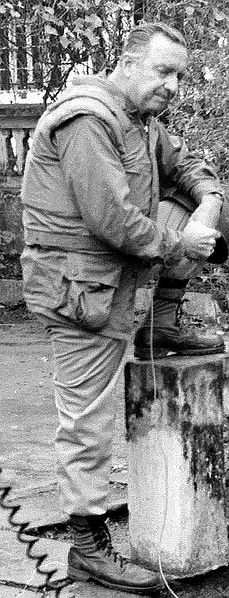
Cronkite in Vietnam

The “Cronkite Moment” came February 27, 1968, when CBS News anchorman Walter Cronkite declared in a special report that the U.S. military was “mired in stalemate” in Vietnam and said negotiations might eventually offer a way out.

As I point out in my latest book, Getting It Wrong, the program has “become the stuff of legend — certainly among the most unforgettable moments in American journalism.”

The gauzy legend was embraced yesterday in a commentary at the “Philly Post,” a blog of Philadelphia Magazine.

The commentary argued that journalists should emphasize truth-seeking rather than impartiality in their reporting, and invoked the “Cronkite Moment” to support that claim.

“In one of his most famous newscasts,  the ‘most trusted man in America’  threw objectivity out the window” and offered the “mired in stalemate” assessment about Vietnam, the commentary said, adding:

“In calling it like he saw it, Cronkite was not being impartial, but that doesn’t mean he was being biased. He was stating the conclusion he was led to by the evidence; and Americans — at least those sensible enough to listen— respected him for it. Among the many lessons modern journalists can learn from Cronkite, this is perhaps the most important.”

So that was Cronkite’s “most important” lesson?

A thin lesson it was, then.

As I note in Getting It Wrong, Cronkite’s “mired in stalemate” assessment  “was neither notable nor extraordinary” in early 1968.

That’s because “stalemate” had been in use by U.S. news media months before the so-called “Cronkite Moment.”

In August 1967, for example, the New York Times said in a news analysis that the war in Vietnam “is not going well.”

U.S. victory, the Times said, “is not close at hand. It may be beyond reach.”

The Times’ analysis was published on the front page, beneath the headline:

Vietnam: The Signs of Stalemate.”

Also in August 1967, the syndicated columnist James J. Kilpatrick wrote:

“So long as the present ground rules obtain in Vietnam, this war will drag along its indecisive way. … [T]he condition is stalemate.”

And a few weeks before Cronkite’s on-air commentary, the Times declared in an editorial:

“Politically as well as militarily, stalemate increasingly appears as the unavoidable outcome of the Vietnam struggle.”

The real lesson of the “Cronkite Moment” was how the vaunted anchorman trailed the emerging media consensus about the war, turning to “stalemate” only after the characterization had been tested and invoked often, by other news organizations.

Cronkite also trailed public opinion as it turned against the war.

A Gallup poll in October 1967 reported, for the first time, that a plurality of Americans — 47 percent — felt sending troops to fight in Vietnam had been a mistake.

A little more than two years earlier, only 24 percent of respondents said they thought sending American forces to Vietnam had been a mistake.

So in his assessment about Vietnam, Cronkite was neither brave nor cutting edge.

Nor legendary at all.

WJC

Recent and related: