W. Joseph Campbell

Posts Tagged ‘Cronkite Moment’

‘Getting It Wrong’ goes on ‘PJM Political’

In Cronkite Moment, Debunking, Furnish the war, Hurricane Katrina, Media myths on October 10, 2010 at 10:24 am

I had a fine interview recently with Silicon Valley blogger Ed Driscoll for the Pajamas Media radio show, PJM Political.

The interview aired yesterday on Sirus-XM radio’s POTUS channel.

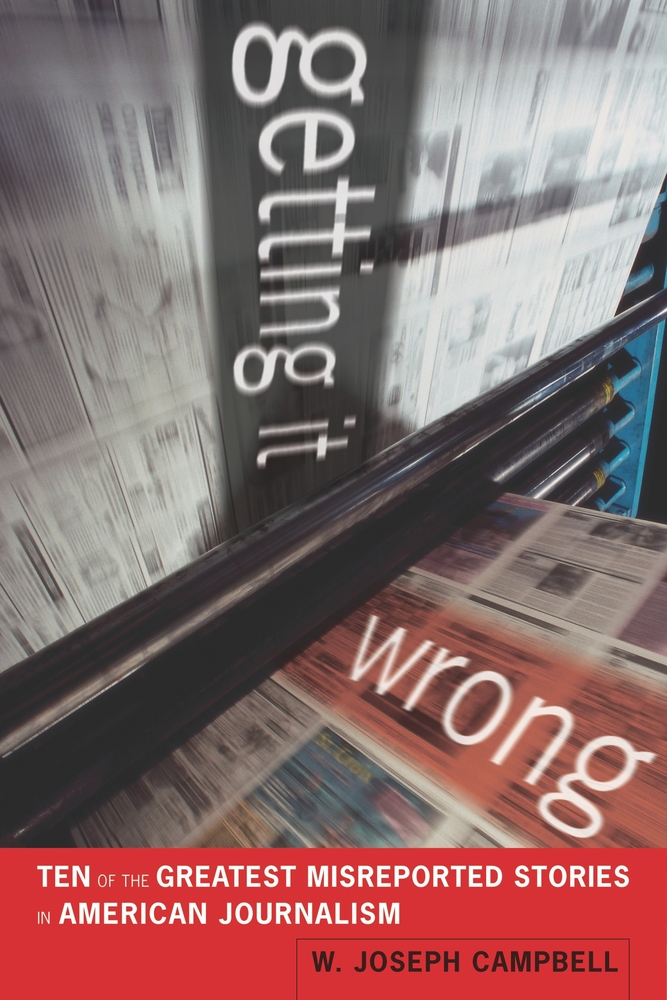
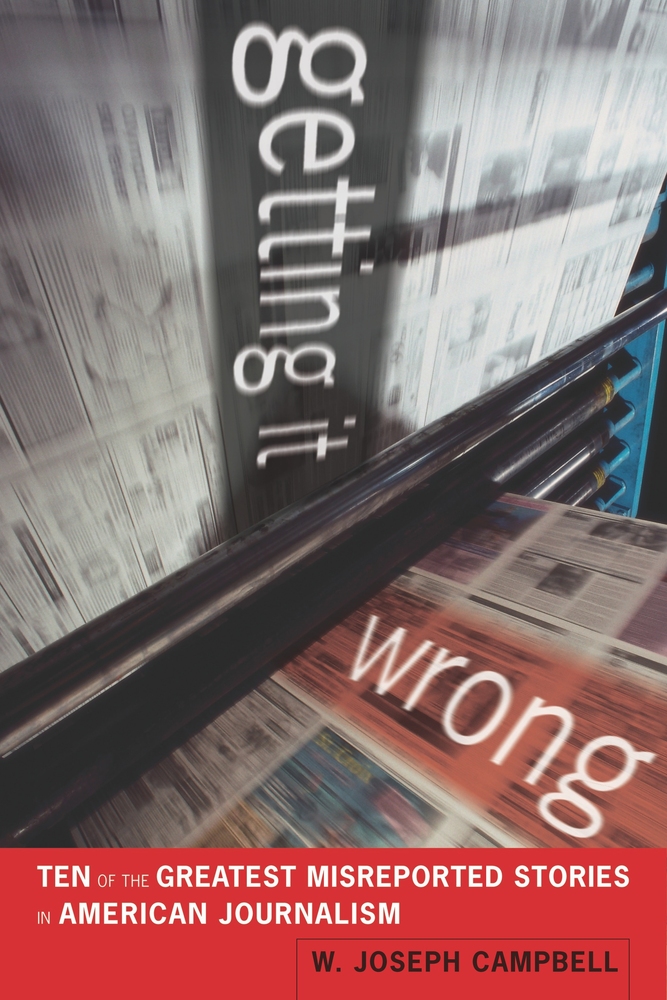
Topic: My new book, Getting It Wrong, which debunks 10 prominent media-driven myths, those dubious and improbable tales about the news media that masquerade as factual.

Driscoll, who conducts a thoughtful and well-prepared interview, led me through a discussion of several myths addressed in Getting It Wrong, including the Cronkite Moment” of 1968.

That was when, supposedly, the on-air analysis of CBS anchorman Walter Cronkite prompted President Lyndon Johnson to change his thinking about the Vietnam War and led him to decide against seeking reelection.

“That’s simply not true,” I pointed out. “Lyndon Johnson didn’t even see the [Cronkite] program when it aired in February 1968. And his decision not to seek reelection was driven by other forces and factors. Cronkite really was irrelevant to that equation, to that decision.

“But yet it lives on, as an example of media power, the media telling truth to power. And it’s a misleading interpretation, it’s a misreading of history.”

Driscoll said that the chapters of Getting It Wrong “have a sort of curious” set of bookends, in that they begin with a discussion of William Randolph Hearst’s famous vow to “furnish the war” with Spain and end with a look at the exaggerated, over-the-top coverage of Hurricane Katrina’s aftermath.

“Was this sort of book-ending intentional?” Driscoll asked.

It was an insightful question–and the first time an interviewer had asked about the book’s conceptual component.

I noted that the “original framework of the book had it organized more thematically, by ‘media and war’ and ‘media and government,'” and so on.

That framework was discarded, I said, “for a more chronological approach. So the bookends were driven more by chronology than anything else.”

We discussed how Orson Welles‘ cinematic masterpiece, Citizen Kane, helped cement the “furnish the war” myth in the public’s consciousness. Kane includes a scene that paraphrases Hearst’s purported vow.

The “furnish-the-war” anecdote about Hearst is dubious in many respects, I said, adding:

“Yet it lives on as an example of Hearst as the war-monger, as an example of the media–at its most malignant, in an extreme–can bring about a war that the country otherwise wouldn’t have fought.”

I mentioned how media-driven myths can be thought of as the “junk food of journalism,” which prompted Driscoll to ask:

What’s wrong with the American people being fed a little junk food? What’s wrong with being fed a few media myths?

There are several reasons, I replied.

Notably, “these myths tend to misrepresent the role of the news media in American society. They tend to grant the news media far more power and far more influence than they really do exert in American life.”

I added:

“Most people believe the media are powerful agents and powerful entities and often refer to some of the myths that I address, and debunk, in Getting It Wrong. They refer to them in support of this mistaken notion.”

In wrapping up the interview, Driscoll referred to Media Myth Alert as “a nifty blog.”

It was a generous plug that was much appreciated.

WJC

Recent and related:

Encore: Sighting the mythical ‘Cronkite Moment’

In Cronkite Moment, Debunking, Media myths, New York Times on September 23, 2010 at 5:43 am

Cronkite in Vietnam

Sighting the “Cronkite Moment” is fairly easy game.

After all, few media-driven myths are invoked as routinely or as matter-of-factly as the legendary occasion when CBS anchorman Walter Cronkite altered U.S. policy with his downbeat, on-air assessment of the war in Vietnam.

The “Cronkite Moment” stems from a special report that aired February 27, 1968. At the end of the half-hour show, Cronkite intoned that the U.S. war effort was “mired in stalemate” and suggested that negotiations might eventually offer a way out for American forces.

The myth–which is debunked in my new book, Getting It Wrong–lies in the purported reaction to Cronkite’s assessment.

At the White House, President Lyndon Johnson supposedly watched the program and, upon hearing the anchorman’s closing remarks, reached over and snapped off the television set, declaring:

“If I’ve lost Cronkite, I’ve lost Middle America.”

Or words to that effect: Versions vary as to what the president purportedly said.

“If I’ve lost Cronkite, I’ve lost Middle America” was the version invoked the other day in a commentary posted at the Daily Caller online site, in a recent sighting of the myth.

The commentary–which discussed former Secretary of State Colin Powell’s recent criticism of President Barack Obama–opened by invoking the “Cronkite Moment,” stating:

“‘If I’ve lost Walter Cronkite, I’ve lost Middle America,’ said President Lyndon B. Johnson at the time of the Communist Tet Offensive in Vietnam in 1968. Walter Cronkite was then the CBS News anchor man, often described as ‘the most trusted man in America.’ Just a few weeks after he said that, LBJ withdrew from his party’s nomination contest.”
But as I note in Getting It Wrong, Johnson did not see the Cronkite program when it aired. Nor was the president at the White House.

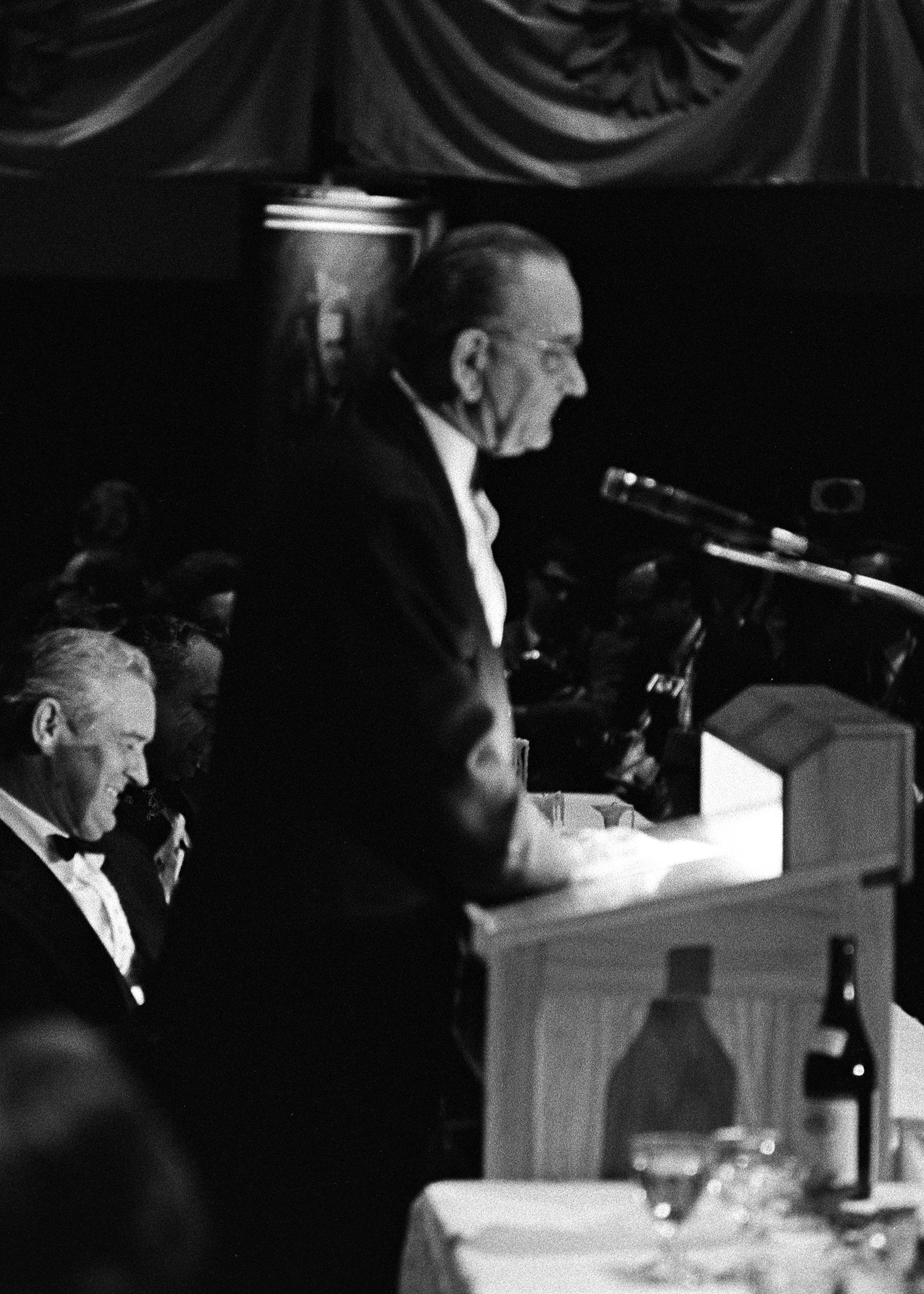
He was in Austin, Texas, on the campus of the University of Texas, attending the 51st birthday party of a longtime political ally, Governor John Connally.

About the time Cronkite offered his “mired in stalemate” assessment, Johnson was joking about Connally’s age, saying:

“Today you are 51, John. That is the magic number that every man of politics prays for—a simple majority.”

It wasn’t the most humorous joke ever told by a president. But Johnson clearly wasn’t throwing his hands up in despair about his failed war policy.

He wasn’t lamenting “If I’ve lost Cronkite….”

There is, moreover, no evidence that Johnson later saw the Cronkite program on videotape.

“The power of the ‘Cronkite moment,'” I write in Getting It Wrong, “resides in the sudden, unexpected, and decisive effect it supposedly had on the president:  Such an effect would have been absent, or greatly diminished, had Johnson seen the program on videotape at some later date.”

But even if Johnson later heard—or heard about— Cronkite’s assessment, it represented no epiphany for him.

Not long after the program, Johnson gave a rousing, lectern-pounding speech in which he urged a “total national effort” to win the war in Vietnam. So in the days and even weeks immediately after the Cronkite program, Johnson remained publicly hawkish on the war.

What’s more, Cronkite’s assessment about the U.S. predicament in Vietnam was scarcely original or exceptional in early 1968.

Jack Gould, the New York Times’ television critic, noted in a review of the Cronkite’s program that the anchorman’s assessment “did not contain striking revelations” but served instead “to underscore afresh the limitless difficulties lying ahead and the mounting problems attending United States involvement.”

It’s revealing to note that nearly seven months before the “Cronkite Moment,” the New York Times published on its front page as analysis that said victory in Vietnam “is not close at hand. It may be beyond reach.” The Times analysis was published in August 1967 beneath the headline:

Vietnam: The Signs of Stalemate.”

As for Johnson’s announcing he would not seek reelection, Cronkite’s program was a non-factor in that decision.

Johnson’s announcement came at the end of March 1968, a month after Cronkite’s program–and a couple of weeks after the president’s poor showing as a write-in candidate in the Democratic primary in New Hampshire.

What’s more, there’s strong evidence that Johnson never intended to seek reelection, that he had privately decided in 1967, or even not sooner, against another campaign for the presidency.

<!–[if !mso]> The power of the “Cronkite moment” resides in the sudden, unexpected, and decisive effect it supposedly had on the president:[i] Such an effect would have been absent, or greatly diminished, had Johnson had seen the program on videotape at some later date


[i] See, for example, Jeffrey Lord, who wrote at the American Spectator’s online site: “The effect was almost immediate. In the White House, the President of the United States looked grimly at his television and in a remark that would become famous said, ‘If I’ve lost Cronkite, I’ve lost middle America.’” Lord, “The Limbaugh-Hannity Administration,” American Spectator (3 February 2009), posted at: http://spectator.org/archives/2009/02/03/the-limbaugh-hannity-administr.

‘Exquisitely researched and lively’

In Cronkite Moment, Debunking, Hurricane Katrina, Media myths, Reviews on September 16, 2010 at 9:40 am

That’s the Denver Post‘s take on Getting It Wrong, my new book on media-driven myths which the newspaper recently reviewed.

The Post offers a discerning summary of the book, noting that it “takes a critical look at 10 stories that were either total fabrications or blown way out of proportion and yet became part of our popular culture.”

It also says Getting It Wrong offers “an exquisitely researched and lively look at an industry that too often shines the light on itself more than it does on events and public figures.”

And it notes, quite correctly:

“Much of the ‘wrong’ coverage through the years comes from the media’s self-congratulatory preening.”

The review points out that the sternest criticism in Getting It Wrong is reserved “for coverage, mainly by television, of the chaotic aftermath of Hurricane Katrina in New Orleans in 2005.

“Hyperactive reporters told tales of snipers roaming the streets, ‘hundreds’ of bodies stacked up in the Super Dome and babies being raped and murdered, none of which could be verified.

The upshot of the exaggerated coverage of the storm’s aftermath, the review notes, “was that rescue operations were hindered by fear, and prejudices of a watching public against poor people and minorities were confirmed.”

The review was written by Dick Kreck, a former reporter and columnist for the Post who has written three books. Kreck is an engaging storyteller and the go-to source for details about the lusty history of Denver journalism. (Full disclosure: Kreck spoke at a program at the Denver Post during last month’s convention of the Association for Education in Journalism and Mass Convention. I helped organize the program.)

Kreck opens the review of Getting It Wrong by declaring:

“Memo to media: Get over yourself. You’re not that important.”

He later cites a passage in Getting It Wrong quoting Robert Samuelson, a columnist who writes on economic issues for the Washington Post:

“Because the media are everywhere—and inspire much resentment—their influence is routinely exaggerated. The mistake is confusing visibility with power and the media are often complicit in the confusion. We [in the news media] embrace the mythology, because it flatters our self-importance.”

Getting It Wrong indeed offers a brief for modest media effects.

To bust media myths, I write in the book, “is to confront the reality that the news media are not the powerful agents they, and many others, assume them to be.

“It is exceedingly rare for any news report to trigger a powerful, immediate and decisive reaction akin to President Lyndon Johnson’s purported response to [Walter] Cronkite’s televised assessment about Vietnam: ‘If I’ve lost Cronkite ….’

“Researchers long ago dismissed the notion the news media can create such profound and immediate effects, as if absorbing media messages were akin to receiving potent drugs via a hypodermic needle,” I note, adding:

“Media power tends to be modest, nuanced, diffused, and situational.” And typically trumped by other, more powerful forces and factors.

WJC

Related:

New book on Tet invokes mythical ‘Cronkite Moment’

In Cronkite Moment, Debunking, Media myths on September 15, 2010 at 7:06 am

Cronkite in Vietnam, 1968

A provocative new book on the 1968 Tet offensive, titled This Time We Win, devotes a chapter to “The Walter Cronkite Moment,” that mythical occasion when the CBS anchorman’s on-air assessment that the war in Vietnam was “mired in stalemate” supposedly had decisive effect on the U.S. president.

The “Cronkite Moment” also is a chapter in my latest book, Getting It Wrong, which debunks 10 prominent media-driven myths–those dubious and improbable tales about the news media that masquerade as factual.

I note in Getting It Wrong that the “Cronkite Moment,” under scrutiny, “dissolves as illusory—a chimera, a media-driven myth.”

This Time We Win is the work of James S. Robbins, an editorial writer on defense issues for the Washington Times. Robbins doesn’t exactly embrace the “Cronkite Moment,” but offers it instead with qualification, writing:

“It is said that after watching Cronkite’s documentary President [Lyndon] Johnson said to his aides, ‘If I’ve lost Cronkite, I’ve lost Middle America.’ Five weeks later Johnson decided not to run for reelection based on this belief. So the legend goes. This is the Holy Grail for a reporter, that a documentary, newscast, article, picture, or other product shapes history on a grand scale.”

Robbins further writes:

“But did Johnson lose Middle America? Did sensationalistic or misleading press coverage turn the country against the President and against the war?”

His answer: “In a word, no.”

He’s quite right about that.

But Robbins might well have asked a more direct, searching, and relevant question:

“Was there really a ‘Cronkite Moment’ at all?”

The answer is, in a word, no. The anecdote’s pivotal, defining, and most delicious element is in error.

Cronkite certainly did take to the air on February 27, 1968, in a special report about Vietnam, where U.S. forces and South Vietnamese allies had repelled a broad offensive that the North Vietnamese and the Viet Cong launched a month before, at the Tet lunar new year.

Cronkite closed his report that night with an editorial comment that said the U.S. war effort was “mired in stalemate.” He suggested that a negotiated settlement might eventually be the way out.

Central to the anecdote’s power and enduring appeal is that Johnson, at the White House, was watching the program and, upon hearing Cronkite’s assessment, snapped off the television set and muttered to an aide or aides:

“If I’ve lost Cronkite, I’ve lost Middle America.”

It supposedly was an epiphany for the president, a burst of clarity and insight about an unwinnable war.

But as I write in Getting It Wrong, “Scrutiny of the evidence associated with the program reveals that Johnson did not have—could not have had—the abrupt yet resigned reaction that so often has been attributed to him.”

Johnson was not at the White House that night.

He wasn’t in front of a television set, either.

Johnson then was in Austin, Texas, at the 51st birthday party of Governor John Connally, one of his political allies.

About the time Cronkite declared the war “mired in stalemate,” Johnson was offering light-hearted banter, saying: “Today you are 51, John. That is the magic number that every man of politics prays for—a simple majority.”

Johnson’s memoir, The Vantage Point, is silent about the Cronkite program, offering no clue about whether the president ever saw it on videotape or, if he did, what he thought of it.

And as I note in Getting It Wrong, “The power of the ‘Cronkite moment’ resides in the sudden, unexpected, and decisive effect it supposedly had on the president.

“Such an effect would have been absent, or greatly diminished, had Johnson seen the program on videotape at some later date.”

Moreover, in the days and weeks immediately following Cronkite’s pessimistic assessment, Johnson remained outwardly hawkish about the war.

On March 18, 1968, for example, he delivered a rousing speech in Minneapolis in which he urged “a total national effort” to win the war in Vietnam. The president also declared:

“We love nothing more than peace, but we hate nothing worse than surrender and cowardice.”

He criticized critics as wanting the United States to “tuck our tail and violate our commitments” to South Vietnamese allies.

Johnson’s aggressive remarks are difficult to square with his supposedly downcast, self-pitying reaction to Cronkite’s assessment about Vietnam.

That the “Cronkite Moment” turns out to be a media myth is not so surprising, I write in Getting It Wrong.

“Seldom, if ever, do the news media exert truly decisive influences in decisions to go to war or to seek negotiated peace,” I note. “Such decisions typically are driven by forces and factors well beyond the news media’s ability to shape, alter, or significantly influence.”

So it was in Vietnam.

WJC

Related:

‘Cronkite Moment’ makes ‘Best of the Web’

In Cronkite Moment, Debunking, Media myths on September 11, 2010 at 8:41 am

The lead item yesterday of the Wall Street Journal‘s online “Best of the Web” roundup invoked the legendary “Cronkite Moment,” one of American journalism’s hardiest and best-known media-driven myths.

Cronkite in Vietnam, 1968

Only “Best of the Web” presented the anecdote as if it were factual, stating:

“‘If I’ve lost Cronkite,’ Lyndon B. Johnson is said to have lamented in 1968, ‘I’ve lost Middle America.'”

The passage set up an observation about President Barack Obama’s declining popularity:

“Obama has been losing Middle America, slowly but steadily, almost since the day he took office, in large part because he has taken his cues from a community of notions whose attitude toward Middle America ranges from indulgent condescension to outright hostility.”

Obama’s fallen popularity is of but passing and academic interest to Media Myth Alert. Far more intriguing is this latest affirmation of the casual yet confident use of the “Cronkite Moment.”

Its appearance in “Best of the Web” was the latest in a spate of recent sitings of the “Cronkite Moment.”

In the past few weeks, Al Neuharth, founder of USA Today; Cal Thomas, a conservative syndicated columnist, and  David Zurawik, veteran television writer for the Baltimore Sun, all have invoked the anecdote in commentaries as if it were true.

Such frequent use signals not only the irresistible allure of the “Cronkite Moment,” it suggests the anecdote’s appeal across the political spectrum. Neuharth, for example, typically writes from the left; Thomas and “Best of the Web” offer analyses from the right.

I examine the “Cronkite Moment” in my new book, Getting It Wrong, which addresses and debunks 10 prominent media-driven myths–apocryphal or improbable tales about the news media that masquerade as factual.

The “Cronkite Moment” refers to the special report about the Vietnam War that was presented by CBS anchorman Walter Cronkite and aired February 27, 1968.

Near the end of his report, Cronkite asserted that the U.S. war effort was “mired in stalemate” and suggested negotiations might offer a “rational” way out of Vietnam.

Supposedly, President Lyndon Johnson watched the Cronkite program at the White House and, upon hearing the anchorman’s assessment, experienced the flash of insight that his war policy had hit the rocks.

“If I’ve lost Cronkite,” Johnson reputedly said, “I’ve lost Middle America.”

As I point out in Getting It Wrong, accounts vary markedly as to what Johnson supposedly said in reacting to Cronkite’s commentary.

Some accounts have the president saying: “I’ve lost Cronkite, I’ve lost the country.”

Or: “If I’ve lost Cronkite, I’ve lost the American people.”

Or: “If I’ve lost Cronkite, I’ve lost the war.”

Or: “If we lose Cronkite, we lose America.”

Most common is: “If I lost Cronkite, I’ve lost Middle America,” the version used by “Best of the Web.”

But version variability of such magnitude, I write in Getting It Wrong, signals implausibility.

It’s a marker of a media-driven myth.

Moreover, Johnson was not at the White House the night Cronkite’s special report aired. Nor was the president in front of a television set.

He was on the campus of the University of Texas at Austin, attending the 51st birthday party of Governor John Connally, a long-time political ally.

As I note in Getting It Wrong, at about the time Cronkite offered his “mired in stalemate” editorial comment, Johnson was engaging in mildly humorous banter about Connally’s age.

“Today you are 51, John,” he said. “That is the magic number that every man of politics prays for—a simple majority. Throughout the years we have worked long and hard—and I might say late—trying to maintain it, too.”

Even if Johnson saw the Cronkite program later, on videotape, the president “gave no indication of having taken the anchorman’s message to heart,” I write in Getting It Wrong, noting:

“Just three days after the [Cronkite] program aired, Johnson vowed in remarks at a testimonial dinner in Texas that the United States would ‘not cut and run’ from Vietnam. ‘We’re not going to be Quislings,’ the president said, invoking the surname of a Norwegian politician who helped the Nazis take over his country. ‘And we’re not going to be appeasers….’”

So even if he later heard, or heard about, Cronkite’s assessment about Vietnam, it represented no epiphany for Johnson, no stunning revelation about policy gone awry.

Interestingly, the legend of the “Cronkite Moment” began to take hold and gain circulation several years after Johnson’s death in 1973. It was in 1968 neither an instant sensation nor a stunning assessment. “Mired in stalemate” was hardly a novel interpretation at the time.

Indeed, the New York Times had used “stalemate” in a front-page assessment of the war effort in early August 1967, nearly seven months before the “Cronkite Moment.”

WJC

Related:

Loving the ‘Cronkite Moment,’ and indulging in a media myth

In Cronkite Moment, Debunking, Media myths on September 10, 2010 at 10:52 am

The mythical “Cronkite Moment” of 1968–when CBS anchorman Walter Cronkite offered a supposedly withering assessment of the war in Vietnam–is cherished in American journalism.

Johnson and the 'Cronkite Moment'

The occasion supposedly was so exceptional and so memorably potent that it merits special reverence: The “Cronkite Moment.”

It’s not surprising that reverential bows are frequently made to the “Cronkite Moment.”

Such was the case just yesterday. Separate commentaries–one at a TV blog sponsored by the Baltimore Sun and the other in a column at MarketWatch–invoked the moment when Cronkite’s telling insight supposedly altered U.S. war policy.

But as I discuss in my new book, Getting It Wrong, the “Cronkite Moment” is an anecdote of two components–one part true, the other part false.

It’s true that Cronkite took to the air on February 27, 1968, in a special report about the war in Vietnam, where U.S. forces and South Vietnamese allies had just repelled a broad and surprising offensive by the North Vietnamese and the Viet Cong.

Cronkite closed his report that night by declaring the U.S. war effort was “mired in stalemate” and suggested a negotiated settlement might eventually be the way out.

At the White House, President Lyndon Johnson is said to have watched the Cronkite show and, upon hearing the anchorman’s closing “mired in stalemate” comment, snapped off the television set and muttered to an aide or aides:

“If I’ve lost Cronkite, I’ve lost Middle America.”

That’s the not-true component.

As I point out in Getting It Wrong, Johnson wasn’t at the White House that night. He wasn’t in front of a television set, either.

Johnson was in Austin, Texas, offering light-hearted comments at the 51st birthday party of Governor John Connally, one of his political allies.

About the time Cronkite was intoning “mired in stalemate,” Johnson was saying in jest: “Today you are 51, John. That is the magic number that every man of politics prays for—a simple majority.”

Johnson’s memoir, The Vantage Point, is silent about the Cronkite program, offering no clue about whether the president ever saw it or, if he did, what he thought of it. Indeed, there is no evidence that Johnson later saw the Cronkite program on videotape.

And as I note in Getting It Wrong, “The power of the ‘Cronkite moment’ resides in the sudden, unexpected, and decisive effect it supposedly had on the president.

“Such an effect would have been absent, or greatly diminished, had Johnson had seen the program on videotape at some later date.”

For many reasons, then, the “Cronkite Moment” is a dubious anecdote, a media-driven myth.

But that hasn’t much diminished its appeal.

As is the case with many media-driven myths, the “Cronkite Moment” is too delicious, too seemingly perfect to resist. It finds application in a striking variety of ways.

Take, for example, yesterday’s post at the Baltimore Sun-sponsored blog, “Z on TV.”

The writer, David Zurawik, invoked the “Cronkite Moment” in discussing the Fox News announcement that it would not to cover the Quran-burning spectacle proposed by the once-obscure Rev. Terry Jones in Gainesville, Florida. And Zurawik wondered whether the Fox decision was a reason Jones said yesterday he was canceling the planned Quran-burning.

“I am only half kidding,” Zurawik wrote, “when I reference Lyndon Johnson’s lament in 1968 after he watched CBS anchorman Walter Cronkite criticize the American war effort in Vietnam: ‘That’s it. If I’ve lost Cronkite, I’ve lost Middle America.’

“I wonder if Pastor Jones was thinking, ‘Without Fox News there to cover it, what’s the point?’ Or, ‘If I lost Fox News …'”

The column posted yesterday MarketWatch.com also signaled the hardy versatility of the “Cronkite Moment.”

The author, Andrew Leckey, discussed Chinese sensitivity to criticism in the U.S. news media. And he referred to a question once  posed to him “by the Chinese host on a special talk show” that focused on Cronkite.

The question, Leckey wrote, was why was there no journalist of Cronkite’s stature in the United States who was able to draw to an end the war in Iraq as Cronkite did in Vietnam?

Leckey didn’t say how he replied.

The best and accurate answer would have been that Cronkite did not bring about an end to the war in Vietnam. The last U.S. combat troops left Vietnam in 1973–nearly five years after the purported “Cronkite Moment.”

As I note in Getting It Wrong, the “Cronkite Moment,” under scrutiny “dissolves as illusory—a chimera, a media-driven myth.

“That it does is not so surprising. Seldom, if ever, do the news media exert truly decisive influences in decisions to go to war or to seek negotiated peace.”

WJC

Related:

Reported, but unconfirmed: The columnist and the ‘Cronkite Moment’

In Cronkite Moment, Debunking, Media myths on September 2, 2010 at 9:40 am

Sometimes, media-driven myths are just too juicy and delicious to shun, even if the narrator is unsure about their veracity.

Such was the case with Cal Thomas’ syndicated column this week, which invokes the purported “Cronkite Moment” of 1968. That was when CBS anchorman Walter Cronkite’s on-air assessment about the Vietnam War supposedly led President Lyndon Johnson to realize the war effort was hopeless.

Johnson at the hour of the 'Cronkite Moment'

Thomas wrote in his column:

“President Obama may have experienced his Walter Cronkite moment over the economy.

“Responding to Cronkite’s reporting from Vietnam four decades ago that the only way to end the war was by negotiating with the North Vietnamese, President Lyndon Johnson was reported (though never confirmed) to have said, ‘If I’ve lost Cronkite, I’ve lost Middle America.’

“Now President Obama appears to have ‘lost’ New York Times liberal economic columnist Paul Krugman. …”

Whether Obama has indeed “lost” the columnist Krugman is unimportant here.

What is relevant, and striking, is Thomas’ sly use of a well-known but dubious anecdote, one introduced by the ambiguous phrase, “reported (though never confirmed).” Such a preface leaves one to wonder: Why invoke the anecdote at all?

And there is ample good reason to avoid the anecdote of the “Cronkite Moment,” one of 10 prominent media myths addressed, and debunked, in my new book, Getting It Wrong.

For starters, President Johnson did not see Cronkite’s assessment about Vietnam, which aired the night of February 27, 1968.

As I point out in Getting It Wrong, Johnson at the time was in Austin, Texas, attending the 51st birthday party of a longtime political ally, Governor John Connally (see photo, above).

About the time Cronkite was wrapping up his report, asserting that the U.S. military was “mired in stalemate” in Vietnam, Johnson was offering light-hearted remarks about Connally’s age, saying:

“Today you are 51, John. That is the magic number that every man of politics prays for—a simple majority.”

Johnson said nothing about having “lost Cronkite.”

Moreover, there is no evidence Johnson watched Cronkite’s program on videotape.

As I write in Getting It Wrong:

“The power of the ‘Cronkite moment’ resides in the sudden, unexpected, and decisive effect it supposedly had on the president.

“Such an effect would have been absent, or greatly diminished, had Johnson had seen the program on videotape at some later date.”

It is interesting to note that Johnson struck a vigorously hawkish tone about Vietnam earlier in the day, telling an audience in Dallas:

“I do not believe that America will ever buckle” in pursuit of its objectives in Vietnam. “I believe that every American will answer now for his future and for his children’s future. I believe he will say, ‘I did not buckle when the going got tough.’”

The president also declared:

“Thousands of our courageous sons and millions of brave South Vietnamese have answered aggression’s onslaught and they have answered it with one strong and one united voice. ‘No retreat,’ they have said. Free men will never bow to force and abandon their future to tyranny. That must be our answer, too, here at home. Our answer here at home, in every home, must be: No retreat from the responsibilities of the hour of the day.”

I note in Getting It Wrong that the bravado of the president’s “no retreat” speech in Dallas is “hardly consistent with the crestfallen and resigned tenor of Johnson’s supposed reaction to the Cronkite program later that day.

“It is difficult indeed to imagine how the president’s mood could swing so abruptly, from vigorously defending the war to throwing up his hands in despair. But if the anecdote of the ‘Cronkite moment’ is to be believed, such a dramatic change in attitude is exactly what happened, within just hours of the hawkish speech in Dallas.”

The “Cronkite Moment” is a particularly delicious media myth, I’ll grant that. But as a framing device, as a way to set up a column or commentary, it’s  often not effective.

WJC

Related:

Mythical ‘Cronkite Moment’ invoked in ‘USA Today’

In Cronkite Moment, Debunking, Media myths, Year studies on August 21, 2010 at 10:08 am

In his column this week, Al Neuharth, founder of USA Today, invokes the dubious “Cronkite Moment” of 1968 and suggests an outspoken television journalist today could help end the U.S. military presence in Afghanistan.

Neuharth’s column refers to Walter Cronkite’s special report on Vietnam, which aired February 27, 1968. Near the end of the report, the CBS anchorman declared the U.S. war effort was “mired in stalemate.” Cronkite suggested that negotiations might represent a “rational” way out of Vietnam.

Neuharth then invokes the mythical component of the “Cronkite Moment,” writing that President Lyndon Johnson, upon hearing “the CBS shocker,” declared:

“If I’ve lost Cronkite, I’ve lost Middle America.”

As I write in Getting It Wrong, my new book debunking the “Cronkite Moment” and nine other prominent media-driven myths, Johnson did not see the Cronkite program when it aired. Nor is there evidence he watched the program later, on videotape.

Johnson on the night of the program was in Austin, Texas, at the 51st birthday party of Governor John Connally. About the time Cronkite was intoning his “mired in stalemate” assessment, Johnson was offering light-hearted remarks about Connally’s age.

Johnson at Connally's party

“Today you are 51, John,” the president said. “That is the magic number that every man of politics prays for—a simple majority. Throughout the years we have worked long and hard—and I might say late—trying to maintain it, too.”

Even if Johnson later saw the Cronkite program, he “gave no indication of having taken the anchorman’s message to heart,” I write in Getting It Wrong.

It represented no epiphany for him.

Indeed, in the days and weeks immediately following Cronkite’s program, Johnson’s rhetoric on the war remained hawkish. On March 18, 1968, for example, Johnson delivered a rousing speech in Minneapolis, in which he urged “a total national effort” to win the war in Vietnam.

He also declared in that speech:

“We love nothing more than peace, but we hate nothing worse than surrender and cowardice.”

Moreover, it’s clear that by early 1968, Cronkite’s “mired in stalemate” assessment about the war was unremarkable. Mark Kurlansky said as much in his well-received year-study about 1968.

Nearly seven months before Cronkite’s report on Vietnam, the New York Times published a front-page news analysis that said victory in southeast Asia “is not close at hand. It may be beyond reach.”

The Times analysis was published in August 1967 and carried the headline, “Vietnam: The Signs of Stalemate.”

And as I’ve noted at Media Myth Alert, former NBC newsman Frank McGee offered an analysis about Vietnam in March 1968 that was more forceful and direct Cronkite’s “mired in stalemate” characterization.

“The war,” McGee said on an NBC News program March 10, 1968, “is being lost by the [Johnson] administration’s definition.”

“Being lost,” McGee said: No hedging there.

But almost no one remembers Frank McGee’s blunt assessment.

I note in Getting It Wrong that the purported “Cronkite Moment” has become for many American journalists “an ideal, a standard that suggests both courage and influence in wartime reporting. It is an objective that contemporary practitioners at times seem desperate to recapture or recreate.”

Neuharth’s column makes  just that point, stating:

“The TV man—or woman—who suggests a ‘rational’ way out of Afghanistan could become today’s Cronkite.”

Not likely, not in today’s diverse and splintered media landscape in which audiences for network television have been in sustained decline.

In any case, it’s interesting to note that until late in his life, Cronkite disputed the notion that his 1968 report on Vietnam had much of an effect.

In his 1997 memoir, for example, Cronkite characterized his “mired in stalemate” assessment in decidedly modest terms, stating that it represented for Johnson “just one more straw in the increasing burden of Vietnam.”

He reiterated the “just one more straw” analogy in interviews promoting the book.

But by 2007, two years before his death, Cronkite had embraced the purported power of the “Cronkite Moment,” saying in an interview with the Gazette of Martha’s Vineyard:

“There are a lot of journalists out there today who if they chose to take that strong stand and course [in opposing the Iraq War] would probably enjoy a similar result.”

WJC

Related:

Country turned against Vietnam before ‘Cronkite Moment’

In Cronkite Moment, Debunking, Media myths, Year studies on August 12, 2010 at 6:33 am

Politico posted an item yesterday asserting that President Barack Obama “has lost the most trusted man in the Hispanic media”–the Univision anchorman, Jorge Ramos.

Ramos and Obama, in chummier times

Ramos, Politico said, “has been called the Walter Cronkite of Spanish-language media, an unparalleled nationwide voice for Hispanics. And just like the famed CBS newsman’s commentary helped turn the country against the Vietnam War, Ramos may be on the leading edge of a movement within the Hispanic media to challenge the president on immigration—a shift that some observers believe is contributing to Obama’s eroding poll numbers among Latino voters.”

There’s no doubt Obama’s poll numbers are sliding. But the Cronkite analogy is in error. And misleading.

Cronkite’s commentary–an on-air assessment in February 1968 that the U.S. military effort was “mired in stalemate”–did little to “turn the country against the Vietnam War.”

That’s because public opinion had been souring on Vietnam for months before Cronkite’s commentary aired on February 27, 1968.

As I write in Getting It Wrong, my new book debunking prominent media-driven myths, the Gallup Organization reported in October 1967 that a plurality of Americans (47 percent to 44 percent) said deploying U.S. troops to Vietnam had been a mistake.

A roughly similar response was reported in early February 1968, three weeks before Cronkite’s offered his “mired in stalemate” assessment.

Anecdotally, journalists also detected a softening in support for the war.

I point out in Getting It Wrong that Don Oberdorfer, then a national correspondent for the Knight newspapers, wrote in December 1967 “that the ‘summer and fall of 1967 [had] been a time of switching, when millions of American voters—along with many religious leaders, editorial writers and elected officials—appeared to be changing their views about the war.'”

More recently, Greg Mitchell, then editor of the trade journal Editor & Publisher, noted in 2005: “Those who claim that [the Cronkite program] created a seismic shift on the war overlook the fact that there was much opposition to the conflict already.”

By late February 1968, then, “Cronkite’s ‘mired in stalemate’ assessment was neither notable nor extraordinary,” I note in Getting It Wrong. I cite Mark Kurlansky’s year-study of the 1968 which said that Cronkite’s view was “hardly a radical position” for the time.

Indeed, just four days before Cronkite’s assessment, the Wall Street Journal declared in an editorial that the U.S. war effort in Vietnam “may be doomed” and that “everyone had better be prepared for the bitter taste of defeat beyond America’s power to prevent.”

So reservations and pessimism were abundant and growing by the time of Cronkite’s commentary (which nowadays is often referred to as the “Cronkite Moment”).

As Jack Gould, the New York Times’ television critic, noted in a column soon after the purported “Cronkite Moment,” the anchorman’s assessment about America’s predicament in Vietnam “did not contain striking revelations.”

WJC

Related:

On media myths and the ‘golden age’ fallacy

In Cronkite Moment, Debunking, Media myths, Washington Post, Watergate myth on August 11, 2010 at 11:49 am

Carl Bernstein, he of Watergate and Washington Post fame, offered a thoughtful observation recently about investigative reporting and the notion that its best days were long ago.

Bernstein said an interview “there’s a little too much nostalgia about maybe a golden age of ‘investigative journalism’ that never really existed.”

That “golden age” sometimes is associated with the post-Watergate era, when investigative reporting, and teams of investigative reporters, flourished at American newspapers.

Howard Kurtz, the Washington Post’s media writer, indulged in this fallacy a few years ago, writing about a “golden glow” that Bernstein and his Watergate reporting colleague Bob Woodward supposedly cast across the news business in the mid-1970s.

“Newspapermen became cinematic heroes,” Kurtz wrote, adding that they were “determined diggers who advanced the cause of truth by meeting shadowy sources in parking garages, and journalism schools were flooded with aspiring sleuths and crusaders.

“But the media’s reputation since then has sunk like a stone….”

The notion there was a “golden age” of journalism or of investigative reporting is as alluring as it is misleading. And the “golden age fallacy” contributes to the tenacity of media-driven myths, those dubious and improbable tales about the news media that masquerade as factual.

I address the fallacy in Getting It Wrong, my new book that debunks the heroic-journalist myth of Watergate as well as nine other prominent tales about the news media.

I note in Getting It Wrong how  “media myths invite indulgence in the ‘golden age fallacy,’ the flawed but enticing belief that there really was a time when journalism and its practitioners were respected and inspiring—the time, say, of Murrow or Cronkite, or Woodward and Bernstein.”

As I discuss in Getting It Wrong, the heroic contributions of Edward R. Murrow and Walter Cronkite often have been overstated.

The “golden age fallacy” in the case of Woodward and Bernstein certainly was deepened and solidified with the cinematic version of All the President’s Men, their 1974 book about reporting on Watergate. The roles of Woodward and Bernstein were played, respectively, by Robert Redford and Dustin Hoffman.

“Such is the power of movies,” Frank Rich of the New York Times once noted, that the first image ‘Watergate’ brings to mind [more than] three decades later is not Richard Nixon so much as the golden duo of Redford and Hoffman riding to the nation’s rescue in ‘All the President’s Men.'”

True enough.

And while it is not specifically discussed in Getting It Wrong, another fallacy helps account for the appeal and tenacity of media-driven myths. And that is what the venerable historian David Hackett Fischer has called the “telescopic fallacy”–the urge to make a long story short.

“This form of error is common today,” Fischer wrote 40 years ago in his influential work, Historians’ Fallacies, “and likely to become still more so, as historians become increasingly interested in putting big questions to little tests.”

The heroic-journalist interpretation of Watergate is, in a way, a representation of the “telescopic fallacy.” That interpretation compresses the details and complexities of what was a sprawling scandal into a readily understood, digestible package that Woodward and Bernstein’s investigative reporting toppled Richard Nixon’s corrupt presidency.

However, “to explain Watergate through the lens of the heroic-journalist is to abridge and misunderstand the scandal and to indulge in a particularly beguiling media-driven myth,” I write in Getting It Wrong. “The heroic-journalist interpretation minimizes the far more decisive forces that unraveled the scandal and forced Nixon from office.”

WJC

Related: