W. Joseph Campbell

Posts Tagged ‘Getting It Wrong’

The ‘War of the Worlds’ radio show produced a ‘Paul Revere effect’

In Anniversaries, Debunking, Media myths, Media myths and radio on October 31, 2011 at 5:15 pm

I call it the “Paul Revere” effect, and it helps explain the many reports of fright associated with the radio dramatization 73 years ago of The War of the Worlds, a clever program that told of a lethal Martian invasion of Earth.

The radio show aired October 30, 1938, and supposedly stirred panic and hysteria across the United States — a delicious narrative that I debunk in my latest book, Getting It Wrong, as a media-driven myth.

I also discuss in Getting It Wrong the seldom-examined “Paul Revere effect” associated with The War of the Worlds program, which was the work of Orson Welles and his “Mercury Theatre on the Air” troupe.

This effect occurred when well-intentioned people who had little more than an incomplete understanding of The War of the Worlds broadcast decided individually and on their own to warn others about what they thought was a sudden and terrible threat.

These self-motivated Paul Reveres, I write in Getting It Wrong, “burst into churches, theaters, taverns, and other public places, shouting that the country was being invaded or bombed, or that the end of the world was near.”

I note that it must “have been a cruel and unnerving way of receiving word of a supposedly calamitous event — to be abruptly disturbed in familiar settings by a vague reports offered by people who themselves clearly were terror-stricken.”

The unsuspecting recipients of these invariably garbled, second- and third-hand accounts of calamity had no immediate way of verifying the wrenching news they had heard. Unlike the audiences of Welles’ dramatization, they could not spin the radio dial to find out whether other networks were reporting an invasion from Mars.

Scrutiny of contemporaneous newspaper accounts reveals numerous cases of this false-alarm contagion. This meant that people who had not heard not a word of The War of the Worlds show were themselves fearstricken, if only briefly.

In New York, for example, some apartment houses “were hurriedly emptied by frantic listeners to the program and by those who heard second- and third-hand accounts multiplying the supposed peril,” the Newark Star-Eagle reported.

“Many of the panic-stricken did not hear the original broadcast but got their misinformation from others,” the newspaper said.

A Methodist church service in Indianapolis was disrupted that night “when an hysterical woman member of the congregation entered shortly after worship had begun,” the Indianapolis Star reported.

The woman rushed to the pulpit, telling the pastor, “Something so terrible has happened that I must interfere.”

She told worshippers that “New York has been destroyed” and added: “I believe the end of the world has come. I heard it over the radio.”

The pastor offered a short prayer and excused anyone who wanted to return home. Several members of the choir “doffed robes and went from the church, followed by a portion of the congregation,” the Star reported. But the service continued.

Soon, several members of the congregation returned, explaining sheepishly that the alarm had been caused by nothing more than a misunderstood radio show.

As I note in Getting It Wrong, it is impossible to estimate the cumulative effect of the false-alarm contagion that night. But the second- and third-hand accounts, spread Paul Revere-like, stirred some measure of evanescent apprehension among untold thousands of people who had not listened to the program.

It is tempting to suggest, I write, “that what radio-induced fear there was that night was mostly spread by credulous people who heard muddled and fragmentary accounts about the program and set about to alert others,” on their own.

WJC

Recent and related:

Why the ‘panic broadcast’ myth lives on

In Debunking, Media myths, Media myths and radio, War of the Worlds on October 29, 2011 at 9:55 am

It’s a delicious media myth that The War of the Worlds radio dramatization 73 years ago set off nationwide panic and mass hysteria — a media myth that lives on for an impressive variety of reasons.

Welles and 'War of the Worlds'

What has been called the “panic broadcast” aired on CBS radio on Sunday evening, October 30, 1938. The War of the Worlds dramatization starred and was directed by Orson Welles, a 23-year-old prodigy. He was supported by actors of his “Mercury Theatre on the Air” troupe.

As I discuss in my media mythbusting book, Getting It Wrong, the dramatization supposedly was so alarming and realistic in its accounts of invading Martians wielding deadly heat rays, that listeners by the tens of thousands — or perhaps the hundreds of thousands — were convulsed in panic.

That, at least, is how American newspapers reported the reaction to the broadcast.

“A wave of mass hysteria seized thousands of radio listeners throughout the nation,” the New York Times said on its front page of October 31, 1938.

“For an hour,” the Washington Post declared, “hysterical pandemonium gripped the Nation’s Capital and the Nation itself.”

But the panic and hysteria so commonly associated with The War of the Worlds show was hyped. Exaggerated. It did not on anything approaching nationwide scale, as I discuss in Getting It Wrong.

Sure, some listeners may have been frightened or disturbed by what they heard. But that’s hardly synonymous with being panicked or pitched into mass hysteria.

Most listeners of the show, overwhelmingly, were not frightened. They recognized it for what it was, a clever and imaginative radio play on the eve of Halloween.

Nonetheless, the “panic broadcast” occupies an extraordinary place in American media history; it lives on as the radio show that caused fright and terror beyond measure.

A prominent reason is that the tale of panic and hysteria is almost too good, too delicious not to be true.

In that way, the “panic broadcast” is like many media myths — a savory, intriguing tale that never loses appeal. The War of the Worlds radio myth, of course, is especially popular this time of year.

Moreover, the “panic broadcast” myth endures because it evokes the latent power of media content:  Media messages have the potential to produce effects that are unpredictable, wide-ranging, and even dangerous.

The myth also lives on because it offers implicit reassurance for contemporary media audiences: It reminds and reassures them of their comparative sophistication. Back then, back in the 1930s, media audiences were pretty gullible, as the panicked reactions to The War of the Worlds suggest. But that’s not so much the case today, this line of thinking goes (which overlooks such recent stunts as the Colorado balloon boy and the TV report of the breakup of Belgium).

Another powerful explanation for the tenacity of The War of the Worlds myth is found in its link to the legend and bad-boy image of Orson Welles, who gained lasting fame and acclaim with his 1941 cinematic masterpiece, Citizen Kane.

The “panic broadcast” helped confirm the talent and reputation of Welles, who did his most memorable work before he was 30.

Interestingly, Welles appeared at what he called “a terrifying mass press interview” the day after the “panic broadcast” to say he regretted “any misapprehension which our broadcast last night created among some listeners.”

Welles, who was unshaven and acted a bit contrite, insisted it was unfathomable anyone really could have mistaken The War of the Worlds radio dramatization for an alien invasion.

Welles told reporters that he was “extremely surprised to learn that a story which has become familiar to children through the medium of comic strips and many succeeding novels and adventure stories should have had such an immediate and profound effect upon radio listeners.”

Years later, however, Welles was only too eager to endorse the notion that the broadcast had stirred wide panic. He gleefully told an interviewer:

“Houses were emptying, churches were filling up; from Nashville to Minneapolis, there was wailing in the street and the rending of garments.”

WJC

Recent and related:

Historian dismisses as ‘self-promotion’ the heroic-journalist interpretation of Watergate

In Debunking, Media myths, Washington Post, Watergate myth on October 25, 2011 at 5:44 am

Kutler

Stanley I. Kutler, the preeminent historian of the Watergate scandal, was on campus yesterday to speak to a government class, and he told me after his talk that the heroic-journalist interpretation of Watergate is grounded in reportorial “self-promotion.”

The heroic-journalist narrative has it that Richard Nixon’s corrupt presidency was brought down through the reporting of Bob Woodward and Carl Bernstein for the Washington Post.

It’s a myth, as I discuss in my latest book, Getting It Wrong. But it long ago became the dominant narrative of how Watergate was rolled up — a simplistic narrative that Kutler effectively dismantled during his appearance at American University.

In response to a question I posed afterward, Kutler said “self-promotion” by Woodward and Bernstein — notably their book about their Watergate reporting — explains the tenacity of what I call the heroic-journalist narrative.

Kutler, an emeritus professor at the University of Wisconsin, is the author, among other works, of The Wars of Watergate, a thorough and definitive treatment of the scandal that unfolded from 1972-74.

His talk at American was organized around the question, “Who really unraveled Watergate?”

In the final analysis, Kutler said, Nixon “was primarily responsible” for bringing down Nixon.

If not for the evidence of Nixon’s complicity — captured on audiotapes that he secretly recorded of conversations at the Oval Office of the White House — Nixon would have survived the scandal, Kutler said.

“Absent the tapes, Nixon walks,” he said. “You had to have that kind of corroborative evidence to nail the president of the United States.”

The tapes, which Nixon surrendered when compelled by the U.S. Supreme Court, captured the president participating in June 1972 in a clumsy attempt to cover up the signal crime of Watergate, the break-in a few days before at the headquarters of the Democratic National Committee.

Kutler devoted little time in his talk to the contributions of Woodward and Bernstein, whose book about their reporting, All the President’s Men, was an immediate best-seller when it came out in June 1974, less than two months before Nixon resigned.

Kutler said the book “is a potboiler in many, many ways” and offered “a layman’s brief for understanding Watergate.”

The book, he added, is “important in that way.”

Kutler praised the work of Earl Silbert, the U.S. attorney in Washington whose office investigated the unfolding scandal in 1972-73, until a special Watergate prosecutor was named. The criminal cases against Nixon’s closest aides were “made by these guys,” Kutler said of Silbert and his investigators.

The Senate select committee on Watergate, he added, “did incredible work” in investigating the scandal — notably in extracting testimony that revealed Nixon’s secret tape-recordings. “The whole story changes,” Kutler said, with the disclosure in July 1973 of the tapes’ existence.

Kutler also lauded the contributions of federal Judge John J. Sirica, of the Watergate special prosecutors, and of the House Judiciary Committee, which approved four articles of impeachment against Nixon before his resignation in August 1974.

“Everybody has a role to play” in unraveling Watergate, Kutler said. “But let’s face it: Richard Nixon was primarily responsible” for bringing down Nixon. “The tapes damn him.”

Kutler has been at the forefront of efforts to win release of transcripts of grand jury testimony that Nixon gave in June 1975.

He won a judge’s order to unseal the testimony, which is to be made available November 10 at the online site of the Nixon Presidential Library and Museum.

“We just don’t know what’s in there,” Kutler said of the grand jury testimony, adding, however, that he expects it to contain “no spectacular fireworks.”

Kutler said that Nixon in going before the grand jury was “not going to lie. … He knew how to give non-answers.”

WJC

Recent and related:

Expansive claims for a mythical ‘moment’

In Cronkite Moment, Debunking on October 24, 2011 at 1:05 am

Cronkite in Vietnam, 1968

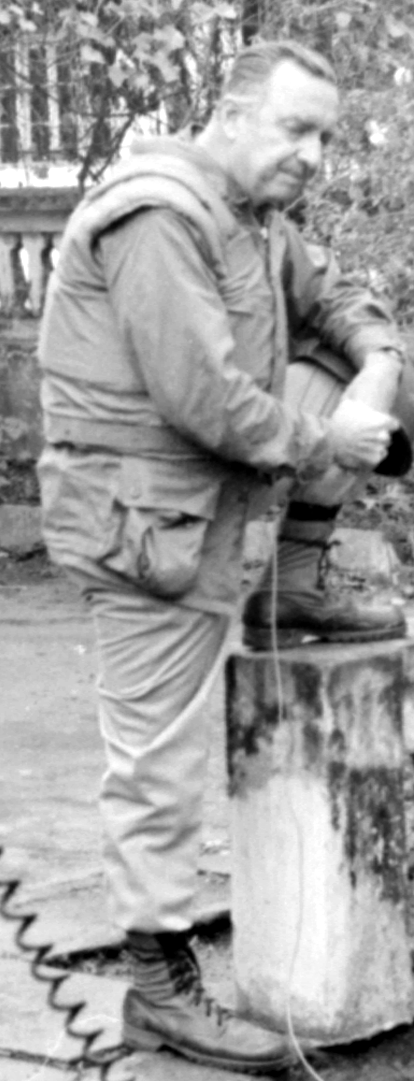
The claims about the presumed power of the “Cronkite Moment” of 1968 — when CBS News anchorman Walter Cronkite declared on-air that the U.S. military was “mired in stalemate” in Vietnam — are expansive and ever-expanding.

What supposedly made the “Cronkite Moment” so powerful and memorable was its effect of President Lyndon Johnson who, upon hearing the anchorman’s assessment, purportedly exclaimed:

“If I’ve lost Cronkite, I’ve lost Middle America.”

Or something to that effect.

Versions vary, markedly.

But as I discuss in my latest book, Getting It Wrong, Johnson did not see the Cronkite show when it aired on February 27, 1968. The president at the time was offering light-hearted remarks at the 51st birthday party of John Connally, then the governor of Texas.

So it’s hard to fathom how Johnson could have been much moved by a program he did not see.

Another expansive claim for the presumptive “Cronkite Moment” was that the “mired in stalemate” assessment turned American public opinion against the war.

Forbes magazine offered up that claim in a recent commentary, which declared:

“After viewing the carnage of a real war on televised nightly news for a few years, Middle America eventually agreed with CBS anchor Walter Cronkite, the ‘most trusted man in America,’ when he declared in 1968 that the war would end in stalemate.”

Agreed with Cronkite? In fact, Cronkite was following rather than leading American public opinion on the war.

As I discuss in Getting It Wrong, support for the war had begun ebbing months before the Cronkite program.

A Gallup poll in October 1967 found for the first time that a plurality of Americans — 47 percent — felt sending troops to fight in Vietnam had been a mistake.

A little more than two years earlier, only 24 percent of respondents said they thought sending American forces to Vietnam had been a mistake.

Not only that, but Cronkite’s “mired in stalemate” was hardly a remarkable or original assessment.

U.S. news media had used “stalemate” to describe the war months before Cronkite used the word in his on-air editorial comment.

For example, syndicated columnist James J. Kilpatrick wrote in August 1967:

“So long as the present ground rules obtain in Vietnam, this war will drag along its indecisive way. … [T]he condition is stalemate.”

And a few weeks before Cronkite’s on-air commentary, the NewYork Times declared in an editorial:

“Politically as well as militarily, stalemate increasingly appears as the unavoidable outcome of the Vietnam struggle.”

The Times’ observation, published February 8, 1968, anticipated Cronkite’s quite similar assessment of February 27, 1968:

“To say we are mired in stalemate seems the only realistic, yet unsatisfactory, conclusion.”

WJC

Recent and related:

‘DNA evidence is all in’ on Jefferson? Got that wrong

In Debunking, Media myths on October 19, 2011 at 12:02 pm

Nearly 13 years have passed since the release of DNA testing evidence that was widely misreported as evidence that Thomas Jefferson had fathered children by a purported slave-mistress, Sally Hemings.

Jefferson (Library of Congress)

That evidence was scarcely so conclusive or definitive.

The testing in 1998 identified the third president as one of more than two dozen Jefferson men who may have been the father of Hemings’ youngest child, Eston.

One of more than two dozen Jefferson men.

Misrepresentations and mischaracterizations of the DNA evidence persist, as suggested by a commentary posted yesterday at the online site of U.S. News and World Report.

The commentary, written by Jamie Elizabeth Stiehm, asserted:

“After his beloved wife Martha died, Jefferson took as his mistress … a beautiful girl named Sally Hemings, decades years [sic] younger than he. At his stately Monticello in Virginia, his mountaintop, he was literally master of all he saw. That meant his two white daughters, horses, gardens, fields, a library of books, fine clothes, and the best of wines he chose during his Paris days.

“Never forget the 100 slaves Jefferson owned to make the wheels of wealthy planter life go round. Among them were the Hemings children born to Sally Hemings — his own, but never recognized as such by Jefferson, even informally. They were the only four slaves he later set free, however, probably by a pact he kept with Sally Hemings. (And the DNA evidence is all in.)”

The “DNA evidence is all in”?

Not so.

As a recently published scholarly study about the controversy notes, the DNA tests “were never designed to prove, and in fact could not have proven, that Thomas Jefferson was the father of any of Sally Hemings’ children.

“The tests merely establish a strong probability that Sally Hemings’ youngest son, Eston, was fathered by one of the more than two dozen Jefferson men in Virginia at the time, seven of whom there is documentary evidence to believe may well have been at Monticello when Eston was conceived.”

One of more than two dozen Jefferson men.

Thomas Jefferson was 64 and ailing at the time Eston Hemings was conceived; Jefferson’s advanced age and infirmities make him an improbable paternity candidate.

The scholarly study, titled The Jefferson-Hemings Controversy: Report of the Scholars Commission, also says:

“The problem [in misinterpreting the DNA evidence] lies not only with a news media prone to over simplifying and sensationalizing complex stories.  Numerous prominent scholars have contributed to the misunderstanding by characterizing the DNA study as ‘confirming’ or ‘clinching’ the case for Thomas Jefferson’s paternity.”

Stiehm’s unsourced and uncritical commentary adds to the confusion.

She stumbles on another point, too, in stating that Hemings’ children “were the only four slaves [Thomas Jefferson] later set free.”

That’s wrong.

Robert Turner, a University of Virginia professor who edited The Jefferson-Hemings Controversy, says that “Thomas Jefferson legally freed (manumitted) seven slaves that we know of.”

They included  Sally Hemings’ brothers, Robert and James, as well as  Burwell Colbert, a son of Sally’s sister, Bett; Sally’s brother, John, and Joseph Fossett, a son of Sally’s sister, Mary.

Jefferson also freed Sally’s youngest children, Madison and Eston, Turner notes.

The reference in The Jefferson-Hemings Controversy to the news media’s “over simplifying and sensationalizing complex stories” deserves additional comment.

Complexity-avoidance often characterizes news coverage, as I note in my latest book, Getting It Wrong.

“All too often,” I write, “the news media seem complexity-adverse and exceedingly eager to simplify and synthesize.

“This tendency is explained in part by the tyranny of deadlines and the limitations of on-air time and newsprint space. Even so, few important events can be explained without recognizing and acknowledging their context and intricacies.”

That certainly holds for the Jefferson-Hemings controversy. News reports and commentary about the matter almost invariably embrace the simplistic but wholly unproven narrative that Jefferson took a slave as a years-long mistress.

WJC

Recent and related:

‘Deep Throat’ didn’t say ‘follow the money’; nor was he vital in Watergate

In Debunking, Media myths, Washington Post, Watergate myth on October 13, 2011 at 12:55 am

It is quite impressive how Watergate’s most famous made-up line — “follow the money” — is so often cited by so many news outlets.

Felt: Not so vital

Canada’s Calgary Herald was the latest to indulge in the myth that “follow the money” was guidance offered by the high-level anonymous source code-named “Deep Throat.” The advice supposedly was offered to Bob Woodward, a Washington Post reporter covering Watergate.

The Herald invoked the made-up line in an article the other day about U.S. charitable organizations making donations to Canadian environmental groups.

“Most of us don’t think much about where organizational funding comes from when we witness well-orchestrated protests against, say, fish farming,” the Herald article said, adding:

“But, as the Watergate-era Deep Throat source once counselled, follow the money.”

“Deep Throat” — who was self-revealed in 2005 to have been W. Mark Felt Jr., formerly the second-ranking official at the FBI — never spoke the line.

It was written into the screenplay of All the President’s Men, the cinematic version of the book by the same title that Woodward and Post colleague Carl Bernstein wrote about their Watergate reporting.

Follow the money” was uttered by Hal Holbrook, the actor who turned in an outstanding performance playing “Deep Throat” in the movie. He delivered the line with such assurance that it really did seem to offer a way through the labyrinth of the Watergate scandal.

Woodward

But even if Woodward had been advised to “follow the money,” the guidance neither would have unraveled Watergate nor led him to Nixon.

What forced Nixon’s resignation in August 1974 was not the misuse of campaign funds but, rather, his attempt to obstruct justice by covering up the signal crime of the Watergate scandal, the break-in at the headquarters of the Democratic National Committee in June 1972.

Although the movie version of All the President’s Men portrays “Deep Throat” as crucial to Watergate’s outcome, his contributions weren’t so vital in real life, as the scandal slowly unfolded.

That assessment was offered the other day by Barry Sussman, who was the Watergate editor for the Washington Post. In an online essay at Huffington Post, Sussman wrote that “Deep Throat/Mark Felt was more myth than reality as a useful Watergate source.”

Sussman’s essay linked to a commentary he wrote in 2005, after the identity of “Deep Throat” was revealed — more than 30 years after Woodward and Bernstein had written about him in All the President’s Men, an immediate best-seller when it appeared in 1974.

“Deep Throat was nice to have around, but that’s about it,” Sussman wrote. “His role as a key Watergate source for the Post is a myth, created by a movie and sustained by hype for almost 30 years.”

That’s very intriguing, especially from someone as close to the Post’s Watergate reporting as Sussman was.

He’s now editor of the Nieman Watchdog Project of the Nieman Foundation for Journalism at Harvard University.

He closed his 2005 commentary by asserting:

“Watergate for many years has been hailed as a victory for the American system, and for the press. It wasn’t. It was a very narrow miss. Woodward and Bernstein did fine work in helping lay out the scandal as it took place. But they have been riding the myth and hype of Deep Throat/Mark Felt for a very long time.”

It deserves emphasizing that Watergate’s dominant narrative notwithstanding, the reporting by Woodward and Bernstein did not, as I discuss in my latest book, Getting It Wrong, take down Nixon’s corrupt presidency.

Unraveling Watergate, as I point out in Getting It Wrong, required “the collective if not always the coordinated forces of special prosecutors, federal judges, both houses of Congress, the Supreme Court, as well as the Justice Department and the FBI.

“Even then,” I add, “Nixon likely would have served out his term if not for the audiotape recordings he secretly made of most conversations in the Oval Office of the White House.

“Only when compelled by the Supreme Court did Nixon surrender those recordings,” which captured him obstructing justice.

Sussman’s right: Watergate was a very narrow miss.

WJC

Recent and related:

Joe McGinniss, ‘Deep Throat,’ and anonymous sources

In Debunking, Washington Post, Watergate myth on October 11, 2011 at 1:02 am

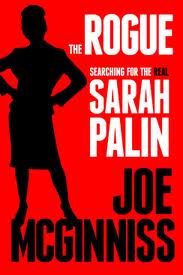
Joe McGinniss, author of a scathing biography about Sarah Palin, yesterday defended using anonymous sources in the book, asserting in a commentary in USA Today that “without Deep Throat, there wouldn’t have been any Watergate hearings, and Richard Nixon would never have resigned.”

'The Rogue,' by McGinniss

Deep Throat” was the anonymous, high-level source who conferred periodically in 1972 and 1973 with Bob Woodward of the Washington Post as the Watergate scandal unfolded.

As memorable as “Deep Throat” may be, his contributions to Watergate’s outcome were hardly as sweeping or decisive as McGinniss claimed.

As Woodward and his reporting colleague Carl Bernstein wrote in the book about their Watergate reporting, All the President’s Men, the principal role of “Deep Throat” was to “confirm information that had been obtained elsewhere and to add some perspective.”

Not only that, but “Deep Throat” and his conversations with Woodward were scarcely pivotal in the U.S. Senate’s decision to empanel a select committee and convene hearings in 1973 about the Watergate scandal.

In The Whole Truth, his memoir about the hearings, Sam Ervin Jr., the Democratic senator who chaired the select committee, saluted a lengthy roster of people who contributed to unwinding Watergate.

The roster included several journalists and news publications. But Ervin made no mention of Woodward’s shadowy “Deep Throat” source, who had been introduced in some detail in 1974, with publication of All the President’s Men.

“One shudders to think,” Ervin wrote in his memoir, “that the Watergate conspirators might have been effectively concealed … had it not been for the courage and penetrating understanding of [U.S. District] Judge [John] Sirica, the thoroughness of the investigative reporting of Carl Bernstein, Bob Woodward, Seymour Hersh, Clark Mollenhoff, and other representatives of a free press, the devotion to their First Amendment responsibilities of the Washington Post, The New York Times, Time magazine, Newsweek, and other publications, the labors of the Senate Select Committee, and the dedication and diligence of Special Prosecutors Archibald Cox and Leon Jaworski and their associates.”

No mention of “Deep Throat,” though.

The shadowy source was self-revealed in 2005 to have been W. Mark Felt Jr., formerly second in command at the FBI. Felt left the agency in 1973 — many months before Watergate reached its denouement in August 1974 with the resignation of Nixon.

All the President’s Men, and the like-titled 1976 movie version, touched off a years-long guessing about the identity of “Deep Throat” — speculation that surely inflated his importance in popular understanding about how Watergate was rolled up.

As I write in my latest book, Getting It Wrong, the speculation about “Deep Throat” brought “periodic and powerful reminders about the Post and its Watergate coverage, serving to keep Woodward and Bernstein in the public eye far longer than they otherwise would have been.

“They and the mysterious ‘Deep Throat’ source became central figures” in what the Philadelphia Inquirer once called “the parlor game that would not die.”

It’s important to keep in mind, too, that Felt hardly was a heroic figure, even though “Deep Throat” is portrayed that way in the cinematic version of All the President’s Men.

Felt in his senior position at the FBI authorized illegal burglaries in the early 1970s as part of the agency’s investigations into leftists linked to the radical Weather Underground.

Felt was convicted in 1980 on felony charges related to the break-ins, but was pardoned by President Ronald Reagan.

WJC

Many thanks to Instapundit
Glenn Reynolds for linking to this post

Recent and related:

NYTimes errs, claims Woodward, Bernstein ‘unraveled’ Watergate

In Debunking, Media myths, Washington Post, Watergate myth on October 10, 2011 at 1:55 am

The New York Times inaccurately declared over the weekend that Bob Woodward and Carl Bernstein, in their reporting for the Washington Post, “unraveled the Watergate affair.”

The Times’ erroneous assertion was made in an obituary published Saturday about a minor figure in the Watergate scandal, Kenneth H. Dahlberg, who died last week. Watergate led to the resignation in 1974 of President Richard M. Nixon.

The obituary noted that Dahlberg was an “unwitting link between the Nixon re-election campaign and the five men … charged with breaking into the Democratic National Committee headquarters at the Watergate complex in Washington,” the scandal’s signal crime.

Dahlberg, the Times added, “had been a fund-raiser for Nixon’s re-election campaign, and his name was on a $25,000 cashier’s check that had been deposited in the bank account of one of the burglars, Bernard L. Barker. The money was to help cover the burglars’ expenses, and Mr. Barker had withdrawn that amount in $100 bills. He was carrying more than $5,000” when arrested at the DNC headquarters June 17, 1972.

The Times then asserted:

“Bob Woodward, a young reporter for The Washington Post who with Carl Bernstein unraveled the Watergate affair, has called the Dahlberg check the ‘connective tissue’ that turned what they thought was a story about a common crime into one of historic dimensions.”

That may be, but the Dahlberg connection was only a small, early step in unwinding the scandal. Interestingly, Dahlberg receives one, passing mention in Stanley I. Kutler’s exhaustive, single-volume work, The Wars of Watergate.

What’s more, Woodward and Bernstein scarcely can be credited with having “unraveled” Watergate — and the Times offered no evidence to support its exaggerated claim.

Rather, the Times effectively sidled up to the beguiling “heroic-journalist myth,”  which, as I write in my latest book,  Getting It Wrong, has become “the most familiar storyline of Watergate.”

What unraveled Nixon’s presidency wasn’t the reporting of Woodward and Bernstein for the Post but the incontrovertible evidence of his culpability in the crimes of Watergate — evidence captured on audiotapes that he secretly made of his conversations at the White House.

The decisive evidence — known as the “Smoking Gun” tape — revealed that Nixon at a meeting with his top aide, H.R. Haldemann, on June 23, 1972, sought to deflect or derail the FBI investigation into the Watergate burglary.

Woodward and Bernstein didn’t reveal the contents of that tape, which Watergate prosecutors had subpoenaed and which Nixon had refused to surrender until 1974, after the U.S. Supreme Court ordered him to do so.

Nixon with tape transcripts, 1974

Nor did Woodward and Bernstein disclose the existence of Nixon’s secret audiotaping system, which proved so crucial to Watergate’s outcome.

The taping system was revealed in July 1973, during hearings of the U.S. Senate Select Committee on Watergate.

In All the President’s Men, their book about their Watergate reporting, Woodward and Bernstein said they had received a tip about the taping system a few days before its existence was made public.

According to All the President’s Men, Ben Bradlee, then the Post‘s executive editor, suggested not expending much energy pursuing the tip. And Woodward and Bernstein didn’t.

What really “unraveled” Watergate, I write in Getting It Wrong, “was the collective if not always the coordinated forces of special prosecutors, federal judges, both houses of Congress, the Supreme Court, as well as the Justice Department and the FBI.

Even then, despite all that scrutiny and pressure, Nixon, I argue, “likely would have served out his term if not for the audiotape recordings he secretly made of most conversations in the Oval Office of the White House.”

WJC

Many thanks to Jack Shafer for linking
to this post

Recent and related:

Gorging on the mythical ‘Cronkite Moment’

In Cronkite Moment, Debunking, Media myths on October 7, 2011 at 1:55 am

Cronkite in Vietnam

The phenomenon of version variability runs rampant across the presumptive “Cronkite Moment,” the mythical broadcast in 1968 when Walter Cronkite’s editorial comment supposedly altered U.S. war policy in Vietnam.

Version variability is the imprecision that alters or distorts an anecdote in its retelling, and it’s a marker of a media-driven myth.

The “Cronkite Moment” supposedly was an epiphany for President Lyndon Johnson, prompting him to declare:

“If I’ve lost Cronkite, I’ve lost Middle America.”

Or: “If I’ve lost Cronkite, I’ve lost the war.”

Or: “If I’ve lost Cronkite, I’ve lost the American people.”

Or: “If I’ve lost Cronkite, I’ve lost the country.”

Or: “If I’ve lost Cronkite, I’ve lost America.”

To that dubious roster, the Irish Independent the other day offered this version:

“It’s said that Lyndon Johnson knew his presidency had imploded when he sat down one evening after a gargantuan Texan dinner to watch Walter Cronkite denounce his Vietnam policy straight to camera.

“Johnson knew that … it was time to start planning the presidential library.”

As I discuss in my latest book, Getting It Wrong, Johnson wasn’t in front of a television set the night Cronkite offered what really was an unremarkable assessment of the Vietnam War.

The CBS News anchorman said at the close of an hour-long special report about Vietnam that the war effort there had become “mired in stalemate” and that negotiations might eventually be the way out for the United States.

Other commentators and news outlets had been turning for months to stalemate” to describe the U.S. war effort. So Cronkite’s assessment was hardly striking, hardly very original. Indeed, it was quite tame compared to other commentaries at the time.

But Johnson didn’t see the Cronkite report when it aired February 27, 1968 (and there’s no evidence he saw it later, on videotape). The president most certainly didn’t gorge on “a gargantuan Texan dinner” before sitting down to watch Cronkite’s program.

As the show aired, Johnson was en route to the University of Texas at Austin, to attend the 51st birthday party of a longtime political ally, Governor John Connally.

Johnson spoke for a few minutes at the party. He didn’t bemoan the loss of Cronkite’s support. Rather, he offered light-hearted comments about Connally’s age.

About the time Cronkite was offering his “mired in stalemate” closing assessment, Johnson was saying:

“Today you are 51, John. That is the magic number that every man of politics prays for — a simple majority.”

I further note in Getting It Wrong that even if Johnson saw the Cronkite’s program on videotape, the president “gave no indication of having taken the anchorman’s message to heart.

“Just three days after the program aired, Johnson vowed in remarks at a testimonial dinner in Texas that the United States would ‘not cut and run’ from Vietnam. ‘We’re not going to be Quislings,’ the president said, invoking the surname of a Norwegian politician who helped the Nazis take over his country. ‘And we’re not going to be appeasers….'”

So under scrutiny, the presumptive “Cronkite Moment” dissolves as illusory— a media-driven myth.

“That it does is not so surprising,” I write in Getting It Wrong, adding:

“Seldom, if ever, do the news media exert truly decisive influences in decisions to go to war or to seek negotiated peace. Such decisions typically are driven by forces and factors well beyond the news media’s ability to shape, alter, or significantly influence. So it was in Vietnam, where the war ground on for years after the ‘Cronkite moment.'”

WJC

Recent and related:

Made-up Watergate line, ‘follow the money,’ crosses into the news

In Cinematic treatments, Debunking, Washington Post, Watergate myth on October 6, 2011 at 4:38 am

Kenneth H. Dahlberg, a minor Watergate figure, died the other day and Minnesota Public Radio recalled his role in the scandal by turning to the famous made-up line, “follow the money” — advice supposedly given to Washington Post reporters working the story.

The public radio station’s “News Cut” feature noted yesterday that “Dahlberg was the Midwest finance chairman for the Committee to Re-elect the President during President Richard M. Nixon’s 1972 campaign.

“A mysterious check, which later would be determined to be from the CEO of Archer Daniels Midland, was given to Dahlberg, who converted it to a cashier’s check. It was money from the campaign, destined for the Watergate burglars.”

The Minnesota Public Radio report added that when the stealthy, high-level “Deep Throat” source told Post reporters Bob Woodward and Carl Bernstein “to ‘follow the money,’ that was the money. And when Woodward called Dahlberg to confirm he handled the check, Dahlberg didn’t lie. … It ended up a critical part of the movie All The President’s Men.”

That last bit is true. Woodward’s telephone interview with Dahlberg became a memorable scene in the 1976 movie.

Otherwise, though, there’s a fair amount of wayward information in the “News Cut” report.

For starters, “Deep Throat” never met with Bernstein during Watergate.

More important, “Deep Throat” (self-revealed in 2005 to have been former FBI official W. Mark Felt) never advised Woodward to “follow the money.”

Felt: Never said it

That line appears nowhere in All the President’s Men, Woodward and Bernstein’s 1974 book about their Watergate reporting — reporting that did not, as I discuss in my latest work, Getting It Wrong, take down Nixon’s corrupt presidency.

Moreover, “follow the money” appeared in no Watergate-related article or editorial in the Washington Post  before 1981 — or long after Nixon resigned the presidency in disgrace.

Rather, “follow the money” was written into the screenplay of the cinematic version of All the President’s Men; the line was memorably uttered not by Felt, the real-life “Deep Throat,” but by Hal Holbrook, the actor who played him in the movie.

As I’ve noted at Media Myth Alert, Holbrook turned in an outstanding performance as a tormented and conflicted “Deep Throat.”

And he delivered his “follow the money” line with such steely assurance that it did seem to offer a way through the labyrinth that was the Watergate scandal.

But even if Woodward had been counseled to “follow the money,” such advice certainly would neither have unraveled Watergate nor led him to Nixon.

What forced Nixon from office in 1974 was not the grubby misuse of campaign funds but, rather, his active role in seeking to obstruct justice by covering up the signal crime of the Watergate scandal, the break-in at the headquarters of the Democratic National Committee in June 1972.

Rolling up the scandal of Watergate’s complexity and dimension was scarcely as straightforward as pursuing misused campaign contributions.

As I write in Getting It Wrong, unraveling Watergate required “the collective if not always the coordinated forces of special prosecutors, federal judges, both houses of Congress, the Supreme Court, as well as the Justice Department and the FBI.

“Even then,” I note “Nixon likely would have served out his term if not for the audiotape recordings he secretly made of most conversations in the Oval Office of the White House.

“Only when compelled by the Supreme Court did Nixon surrender those recordings, which captured him plotting the cover-up” and cost him the presidency.

WJC

Recent and related: