W. Joseph Campbell

Posts Tagged ‘Media-driven myths’

‘Perverse appeal of apocalyptic’ emerged in Gulf spill coverage

In Debunking, Media myths on August 16, 2010 at 6:29 pm

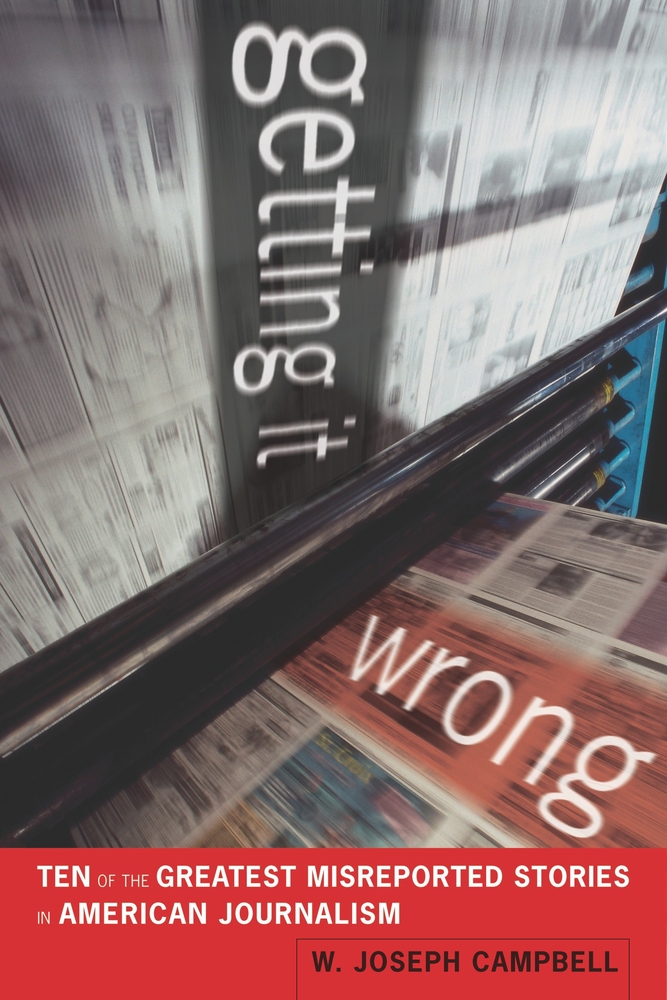
In Getting It Wrong, my new book dismantling prominent media-driven myths, I discuss a phenomenon I call “the perverse appeal of the would-be apocalyptic.”

By that I mean a tendency or eagerness among journalists “to identify and report on trends and developments that seem so exceptional or frightening as to be without precedent.”

This is not to characterize journalists “as morbid or macabre in their newsgathering,” I write in Getting It Wrong. “But they respond with undeniable excitement and energy when trends of exceptional and hazardous proportion seem to being taking hold.”

I invoke “the perverse appeal of the would-be apocalyptic” in chapters devoted to the myth of the crack baby and the myth of superlative reporting in the immediate aftermath of Hurricane Katrina’s landfall.

About Katrina coverage, I write that the hurricane–which struck five years ago this month–seemed to unleash “a disaster of almost biblical proportion: Storms and floods, death and mayhem; criminal gangs run amok in a city collapsing in chaos. New Orleans seemed to promise a descent into the truly apocalyptic. And for a time the reporting matched that premise: It was as if the some of most dreadful events imaginable were taking place in New Orleans.”

But little of the apocalyptic reporting proved true.

The “perverse appeal of the would-be apocalyptic” reemerged in the more recent coverage of BP’s Deepwater Horizon oil spill in the Gulf of Mexico, which President Barack Obama called “the worst environmental disaster America has ever faced.”

News coverage anticipated near-apocalyptic effects, that the BP oil spill could ruin the Gulf, spread across Florida’s beaches, and be propelled by the loop current up the East Coast, “all the way to Cape Hatteras off North Carolina” by July or August.

Hasn’t happened.

A marine scientist named Ivor van Heerden was quoted by Time magazine as saying:

“There’s just no data to suggest this is an environmental disaster. I have no interest in making BP look good—I think they lied about the size of the spill—but we’re not seeing catastrophic impacts.”

Van Heerden was further quoted as saying, “There’s a lot of hype, but no evidence to justify it.”

Time, in a revealing contrarian assessment that asked whether damage from the Gulf spill was exaggerated, offered four reasons why the environmental consequences have been less than dire.

First, the BP oil, unlike that from the Exxon Valdez in 1989, “is unusually light and degradable, which is why the slick in the Gulf is dissolving surprisingly rapidly now that the gusher has been capped. Second, the Gulf of Mexico, unlike Alaska’s Prince William Sound, is very warm, which has helped bacteria break down the oil. Third, heavy flows of Mississippi River water have helped keep the oil away from the coast, where it can do much more damage. And finally, Mother Nature can be incredibly resilient.”

Such assessments are not without challenges, of course. But the near-apocalyptic predictions of spring and early summer simply haven’t held up.

As USA Today noted in an editorial, the Gulf of Mexico “is an enormous and surprisingly resilient place. The spilled oil … would fill the Louisiana Superdome in New Orleans about one-sixth full. If that sounds like a lot—and perhaps to some it doesn’t—consider that it would take about 554 million Superdomes to fill the Gulf of Mexico.”

Now that, the newspaper said, is “a strikingly different image from one emblazoned in people’s mind by the early reaction.”

True enough.

And the sometimes over-the-top coverage of the Gulf spill offers another reminder to journalists about resisting the impulse to indulge in the perverse appeal of the would-be apocalyptic, to recognize that the truly apocalyptic–the “worst environmental disaster” of all time–arrives very rarely.

WJC

Related:

Ignoring the astonishing reporting lapses in Lynch case

In Debunking, Jessica Lynch, Media myths on August 15, 2010 at 9:09 am

It’s astonishing, and a bit dismaying, how readily the Jessica Lynch case is cited as an example as a hoax perpetuated by the Pentagon. And how readily the Washington Post‘s central role in promoting the case is overlooked and ignored.

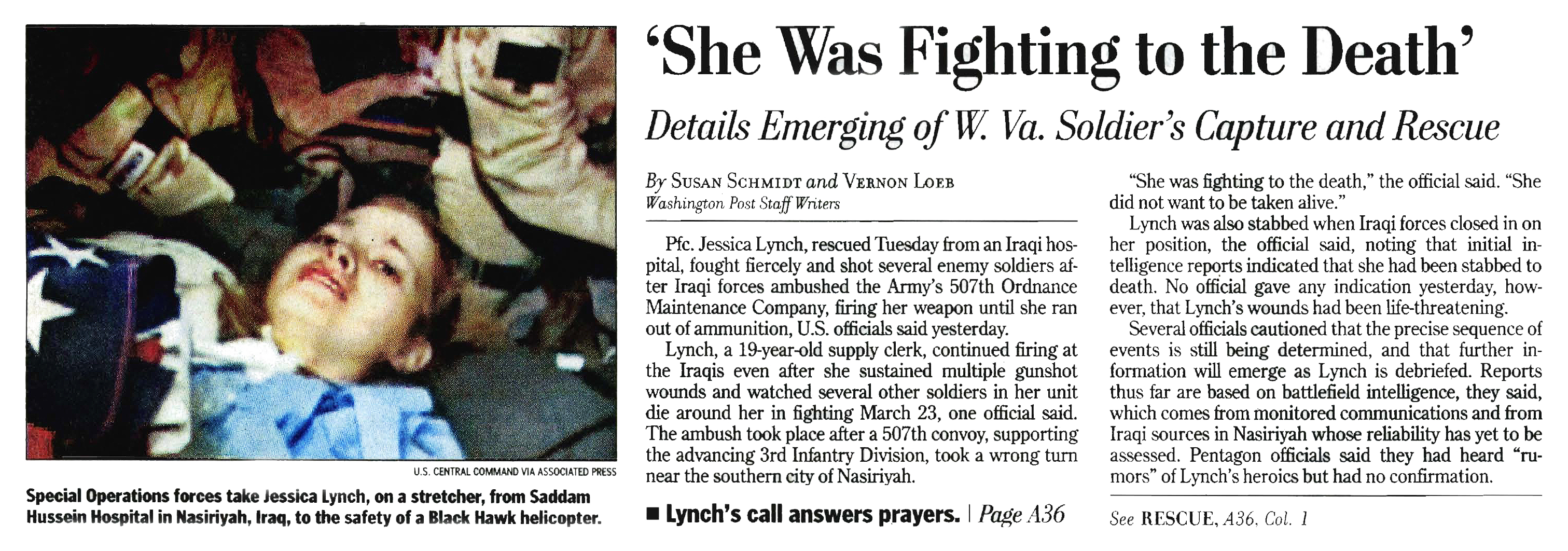
Lynch was the waiflike, 19-year-old Army private whom the Washington Post, in its erroneous reporting, catapulted into sudden and undeserved international fame in April 2003, during the first days of the Gulf War.

As I discuss in Getting It Wrong, my new book debunking prominent media-driven myths, the Post published a sensational, front-page report on April 3, 2003, that  said Lynch had fought with Rambo-like ferocity in an ambush at Nasiriyah in southern Iraq.

Washington Post, April 3, 2003

The Post said Lynch had “shot several enemy soldiers,” had herself been shot and stabbed, but had kept “firing her weapon until she ran out of ammunition.”

The article quoted a U.S. official as saying, anonymously:

“‘She was fighting to the death. She did not want to be taken alive.’”

“It was an electrifying account,” I write, one picked up by news outlets across the United States and around the world.

Only it wasn’t true.

Lynch didn’t fire a shot in the ambush.

She was badly injured not from gunshots and stabbings but from the crash of the Humvee fleeing the attack.

In the years since, the narrative of the Lynch case has shifted. The Post‘s role in injecting the story into the public domain has been largely forgotten–even though the newspaper “never fully acknowledged or explained its extraordinary error about Jessica Lynch,” as I write in Getting It Wrong.

Instead, the dominant narrative now blames the Pentagon for supposedly concocting a story about a heroic female soldier.

There’s scant evidence to support such claims, which reemerged the other day at the Huffington Post, in an interview with author Laura Browder.

The interview was to promote Browder’s book, When Janey Comes Marching Home. And in the interview, Browder declares:

“The Army’s first story about Lynch was that she tried to fight off her captors, then was taken prison[er] and needed to be rescued. Their version of events was pure fiction. And it embodied this stereotype of women in the military: the damsel in distress.”

Let’s see: The “pure fiction” part was that Lynch “tried to fight off her captors,” and that came from the Post, which cited as sources unidentified “U.S. officials.”

The Pentagon was not the source for the Post‘s erroneous account, one of the Post reporters on the story has said.

That reporter, Vernon Loeb, told the Fresh Air radio program in December 2003:

“I could never get anybody from the Pentagon to talk about those reports at all. I got indications that they had, in fact, received those intelligence reports [about Lynch], but the Pentagon was completely unwilling to comment on those reports at all.

“They wouldn’t say anything about Jessica Lynch.”

Loeb added:

“I just didn’t see the Pentagon trying to create a hero where there was none. I mean …they never showed any interest in doing that, to me.”

As I note in Getting It Wrong, Loeb on another occasion was quoted by the New York Times as saying:

“Far from promoting stories about Lynch, the military didn’t like the story.”

While he did not identify the Post’s sources for its “fighting to the death” article about Lynch, Loeb characterized them as “U.S. officials” who were “really good intelligence sources” in Washington, where he was based at the time.

It is little-remembered these days, but the Post‘s stunning story about Lynch’s heroics began unraveling within hours after publication.

I note in Getting It Wrong that Lynch’s father told reporters on the day the Post‘s account appeared that doctors at the U.S. military hospital in Landstuhl, Germany, said Jessica Lynch had suffered neither gunshot nor knife wounds.

If the military were complicit in fabricating the Lynch hero-warrior saga, it defies logic to believe that it would permit its doctors at Landstuhl to impugn that narrative just as it had begun circulating around the world.

WJC

Related:

Country turned against Vietnam before ‘Cronkite Moment’

In Cronkite Moment, Debunking, Media myths, Year studies on August 12, 2010 at 6:33 am

Politico posted an item yesterday asserting that President Barack Obama “has lost the most trusted man in the Hispanic media”–the Univision anchorman, Jorge Ramos.

Ramos and Obama, in chummier times

Ramos, Politico said, “has been called the Walter Cronkite of Spanish-language media, an unparalleled nationwide voice for Hispanics. And just like the famed CBS newsman’s commentary helped turn the country against the Vietnam War, Ramos may be on the leading edge of a movement within the Hispanic media to challenge the president on immigration—a shift that some observers believe is contributing to Obama’s eroding poll numbers among Latino voters.”

There’s no doubt Obama’s poll numbers are sliding. But the Cronkite analogy is in error. And misleading.

Cronkite’s commentary–an on-air assessment in February 1968 that the U.S. military effort was “mired in stalemate”–did little to “turn the country against the Vietnam War.”

That’s because public opinion had been souring on Vietnam for months before Cronkite’s commentary aired on February 27, 1968.

As I write in Getting It Wrong, my new book debunking prominent media-driven myths, the Gallup Organization reported in October 1967 that a plurality of Americans (47 percent to 44 percent) said deploying U.S. troops to Vietnam had been a mistake.

A roughly similar response was reported in early February 1968, three weeks before Cronkite’s offered his “mired in stalemate” assessment.

Anecdotally, journalists also detected a softening in support for the war.

I point out in Getting It Wrong that Don Oberdorfer, then a national correspondent for the Knight newspapers, wrote in December 1967 “that the ‘summer and fall of 1967 [had] been a time of switching, when millions of American voters—along with many religious leaders, editorial writers and elected officials—appeared to be changing their views about the war.'”

More recently, Greg Mitchell, then editor of the trade journal Editor & Publisher, noted in 2005: “Those who claim that [the Cronkite program] created a seismic shift on the war overlook the fact that there was much opposition to the conflict already.”

By late February 1968, then, “Cronkite’s ‘mired in stalemate’ assessment was neither notable nor extraordinary,” I note in Getting It Wrong. I cite Mark Kurlansky’s year-study of the 1968 which said that Cronkite’s view was “hardly a radical position” for the time.

Indeed, just four days before Cronkite’s assessment, the Wall Street Journal declared in an editorial that the U.S. war effort in Vietnam “may be doomed” and that “everyone had better be prepared for the bitter taste of defeat beyond America’s power to prevent.”

So reservations and pessimism were abundant and growing by the time of Cronkite’s commentary (which nowadays is often referred to as the “Cronkite Moment”).

As Jack Gould, the New York Times’ television critic, noted in a column soon after the purported “Cronkite Moment,” the anchorman’s assessment about America’s predicament in Vietnam “did not contain striking revelations.”

WJC

Related:

The wide appeal of the bra-burning meme

In Bra-burning, Debunking, Media myths, Newspapers on August 10, 2010 at 11:34 am

I’ve written from time to time about the striking international appeal of media-driven myths, those dubious and improbable tales about the news media that masquerade as factual.

The Times newspaper in South Africa  underscored that appeal the other day in an interesting and amusing commentary titled, “From A to double D: a history of the bra.”

The commentary included a reference to bra-burning, stating:

At the 'Freedom Trash Can,' 1968

“One of the abiding symbols of the feminist movement is the burning of the bra. As a representation of liberation from the oppression of patriarchy, the alleged incineration of the intimate was meant to signify the death of male domination over women’s self-image. …

“In any case, most sources say the bra-burning never really happened.”

My research indicates otherwise, however.

As the commentary noted–and as I discuss in my new book about media-driven myths, Getting It Wrong–the bra-burning trope stems from the women’s liberation protest of the 1968 Miss America Pageant at Atlantic City.

As I write in Getting It Wrong:

“The demonstrators denounced the pageant as a ‘degrading Mindless-Boob-Girlie symbol’ that placed ‘women on a pedestal/auction block to compete for male approval,’ and promoted a ‘Madonna Whore image of womanhood.'”

They carried placards declaring: “Up Against the Wall, Miss America,” “Miss America Sells It,” and “Miss America Is a Big Falsie.”A centerpiece of the protest was a burn barrel, which the demonstrators dubbed the “Freedom Trash Can.” Into the “Freedom Trash Can” they tossed items and articles they said repressed and demeaned women–bras, girdles, high-heels, as well as copies of Cosmopolitan and Playboy magazines.

The protest’s organizers have long insisted that nothing was set ablaze that day at Atlantic City. The lead organizer, Robin Morgan, has asserted, for example:

“There were no bras burned. That’s a media myth.”

But in researching Getting It Wrong, I found a long-overlooked, contemporaneous account in the Press of Atlantic City that said “bras, girdles, falsies, curlers, and copies of popular women’s magazines burned in the ‘Freedom Trash Can.’”

The Press article was published September 8, 1968, a day after the protest, and appeared beneath the headline:

“Bra-burners blitz boardwalk.”

Its author, a veteran newspaperman named John Boucher, died in 1973.

As I note in Getting It Wrong, Boucher’s article “did not elaborate about the fire and the articles burning in the Freedom Trash Can, nor did it suggest the fire was all that important. Rather, the article conveyed a sense of astonishment that an event such as the women’s liberation protest could take place near the venue of the pageant.”

Separately, I tracked down and interviewed Jon Katz, who also had covered the Miss America protest for the Press.

Katz said in interviews with me that he recalled that bras and other items were set afire during the demonstration and that they burned briefly.

“I quite clearly remember the ‘Freedom Trash Can,’ and also remember some protestors putting their bras into it along with other articles of clothing, and some Pageant brochures, and setting the can on fire. I am quite certain of this,” Katz said.

The contemporaneous Press article and Katz’s recollections represent, I write, “evidence that bras and other items were set afire, if briefly, at the 1968 Miss America protest in Atlantic City.”

At very least, the accounts offer fresh dimension to the widely appealing legend of bra-burning.

WJC

Related:

<!–[if !mso]> They carried placards declaring: “Up Against the Wall, Miss America,” “Miss America Sells It,” “Miss America Is a Big Falsie,”[i] and “Miss America Goes Down.”


[i] Cited in Alice Echols, Daring to be Bad: Radical Feminism in America, 1967–1975 (Minneapolis: University of Minnesota Press, 1989), 96.

‘Getting It Wrong’ plays the Tattered Cover

In Debunking, Furnish the war, Jessica Lynch, Media myths, Washington Post, Watergate myth on August 7, 2010 at 7:28 pm

Denver’s well-known Tattered Cover bookstore was the venue last night for a fine discussion about Getting It Wrong, my new book that addresses and debunks 10 prominent, media-driven myths.

At the Tattered Cover

About 60 people attended the book event, at least a few of whom had learned about it in listening to my in-studio interview Friday morning with David Sirota on KKZN, AM 760, Denver’s progressive talk radio station.

At the Tattered Cover, one of the country’s top independent bookstores, I discussed the myths of Watergate, of the “Cronkite Moment,” of William Randolph Hearst’s purported vow to “furnish the war” with Spain, and of the famous War of Worlds radio dramatization of  1938.

Those stories, I noted, are “all well-known—they are often taught in schools, colleges, and universities. They’re all delicious tales about the power of the news media to bring about change, for good or ill.”

And I proceeded to explain why all of them are media-driven myths–dubious and improbable tales about the news media that masquerade as factual. “They can be thought of as the junk food of journalism,” I noted. “Tasty and alluring, perhaps, but in the end, not terribly healthy or nutritious.”

The surprise of the evening came in discussing the mythical “Cronkite Moment,” in which President Lyndon Johnson supposedly realized U.S. policy in Vietnam was doomed, given the on-air assessment by CBS anchorman Walter Cronkite that the war was “mired in stalemate.”

Among the reasons the “Cronkite Moment” is a media myth, I said, is that Johnson did not see the Cronkite program on Vietnam when it aired on February 27,  1968.

Johnson was not in Washington; he was not in front of a television set. He was in Austin, Texas, making light-hearted comments at a black-tie birthday party for Governor John Connally, who that day turned 51.

“At about the time Cronkite was intoning his ‘mired in stalemate’ commentary,” I said at the Tattered Cover, “Johnson was at the podium at Connally’s birthday party, saying: ‘Today you are 51, John. That is the magic number that every man of politics prays for—a simple majority.'”

And with that, the audience burst into laughter.

Never before had the line prompted so many laughs. For some reason last night, it did.

The audience was attentive and inquisitive. Questions were raised about the media myth associated with coverage of the Jessica Lynch case and of the aftermath of Hurricane Katrina, which battered the Gulf Coast five years ago this month.

Another question was about the cinema’s capacity to promote and propel media myths. It was a good observation, one that I wished I had emphasized earlier in my talk.

A telling example of the how cinematic can solidify media myths is to be found in the 1976 film All the President’s Men, an adaptation of the book by the same name by Carl Bernstein and Bob Woodward about their Watergate reporting.

As I write in Getting It Wrong the cinematic version of All the President’s Men “helped ensure the [heroic-journalist] myth would live on by offering a neat, tidy, and vastly simplified account the Watergate scandal, one that allowed viewers to sidestep the scandal’s complexity while engaging in an entertaining storyline.”

I noted in my talk that Bernstein and Woodward did not uncover the defining and decisive elements of the Watergate scandal—the cover-up and the payment of hush money to the burglars arrested at Democratic national headquarters in June 1972, the signal crime of Watergate. Nor did Woodward and Bernstein uncover the existence of the audiotaping system that Nixon had installed in the Oval Office, which proved decisive in forcing the president’s resignation.

The Tattered Cover was a wonderful venue–comfortable, inviting. Its staff is exceptionally courteous and professional, and the hour-and-a-half went by extremely quickly.

WJC

Related:

Photo credit: Ann-Marie C. Regan

A subsidiary myth: Lynch rescue ‘was played acted’

In Jessica Lynch, Media myths, Washington Post on July 29, 2010 at 12:11 pm

Seven years on, suspicions endure about the rescue of Jessica Lynch, the 19-year-old Army private whom the Washington Post catapulted into unsought, and undeserved, fame and celebrity early in the Iraq War.

Lynch was severely injured an ambush in Nasiriyah on March 23, 2003, and taken prisoner. Nine days later, a U.S. Special Operations team rescued Lynch  from a hospital that also had been a command post for Iraqi irregulars.

Rescuing Jessica Lynch

The Post reported soon after the rescue that Lynch had “fought fiercely” when her unit, the Army’s 507th Maintenance Company, was ambushed, and that she had “shot several enemy soldiers” and kept “firing her weapon until she ran out of ammunition.”

But as I write in Getting It Wrong, my new book about media-driven myths,  it turned out that Lynch was no hero; she never fired a shot at Nasiriyah. Her injuries were suffered not from gunfire but in the crash of a Humvee as she and others sought to flee.

The account of her battlefield derring-do probably was a case of mistaken identity or misattribution.  It wasn’t Lynch who had fought heroically at Nasiriyah, it most likely was Donald Walters, a cook-sergeant in Lynch’s unit who, after running out of ammunition, was captured by Iraqi irregulars, and executed.

I further note in Getting It Wrong that the Post’s sensational but erroneous account about Lynch’s heroics was picked up by news organizations around the world. The tale became what I call “a foundation myth” that enabled and encouraged “the emergence of subsidiary media myths, including the notion that Lynch’s dramatic rescue … a stunt manipulated by the U.S. military to boost morale at home.”

That subsidiary or spinoff myth reemerged yesterday in a commentary in Boston Globe, which declared:

“In April 2003, the American media latched onto the story of Jessica Lynch, a 19 year-old soldier, who, it was said, had been captured and mistreated by Iraqi soldiers. Her ‘rescue’ was play acted.”

Meaning what, “play acted”? That the rescue of Lynch wasn’t authentic? That it was staged? Bogus?

Presumably so. The writer doesn’t elaborate.

The BBC was among the first to claim the rescue was a put-up job. The BBC report’s, “War Spin,” called it “one of the most stunning pieces of news management ever conceived.”

The Pentagon dismissed the BBC’s claims as “void of all facts and absolutely ridiculous.”

Later, at the request of three Democratic members of Congress, the Defense Department’s inspector general investigated the BBC’s allegations and found them baseless.

In testimony to Congress in April 2007, Thomas F. Gimble, then the acting inspector general, reported that no evidence had been uncovered to support the claim that Lynch’s rescue “was a staged media event.”

Instead, Gimble said, the rescue operation was found to have been “a valid mission” to recover a prisoner of war “under combat conditions.”

More than thirty witnesses were interviewed in the inspector general’s inquiry, including members of the Special Operations team that rescued Lynch, Gimble said in his written testimony.

Few if any of those witnesses had been interviewed by news organizations, he noted.

In undertaking the Lynch rescue, Gimble said, the extrication team “fully expected to meet stiff resistance” and had come under enemy fire from the hospital building and areas nearby.

As I note in Getting It Wrong, Gimble’s report came four years after the BBC’s account. By then, the view that the rescue was a stunt had become solidified, a widely accepted element of the Lynch saga.

Gimble’s report in 2007 did not fit what had become the dominant narrative about the rescue.

It made little news.

That’s not so surprising.  After all, the notion of a counterfeit rescue operation fit well with the curdled popular view about the war in Iraq, I note in Getting It Wrong.

WJC

Related:

WikiLeaks disclosure no ‘Cronkite Moment’

In Cronkite Moment, Debunking, Media myths on July 27, 2010 at 9:39 am

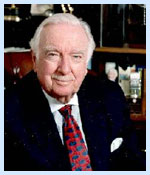
The WikiLeaks disclosure of thousands of secret military documents about the war in Afghanistan has been likened–erroneously–to the mythical “Cronkite Moment” of 1968, when CBS anchorman Walter Cronkite declared the U.S. war effort in Vietnam was “mired in stalemate.”

Cronkite

A commentary posted today at the Huffington Post is among the latest to make the dubious connection. The commentary said Cronkite’s “assessment of the war is often credited as the turning point for American public opinion, moving opposition to the U.S.’s involvement in Vietnam into the mainstream. Reportedly, upon hearing this commentary, President Lyndon Johnson said, ‘If I’ve lost Cronkite, I’ve lost middle America.’

“I can’t help wonder if the release of the Afghan War Logs by WikiLeaks is our Cronkite moment for Afghanistan. In fact, when I consider the totality of the recent news on our efforts in Afghanistan, I can’t reach any other conclusion than that if Cronkite was still alive, he would say we have.”

Given that the WikiLeaks documents contain little that was previously unknown about the conflict, disclosure is unlikely to amount to the “Cronkite moment for Afghanistan.”

More important, the “Cronkite Moment” wasn’t very decisive at all.

It really wasn’t much of a “moment.”

As I discuss in Getting It Wrong, my new book about media-driven myths, Cronkite himself disputed the notion that his assessment about Vietnam had had much effect on Johnson or on U.S. war policy. For example, in promoting his memoir in 1997, Cronkite likened his “mired in stalemate” commentary to a straw on the back of a crippled camel.

He repeated the analogy in 1999, stating in an interview with CNN: “I think our broadcast simply was another straw on the back of a crippled camel.”

Only late in his life did Cronkite embrace the presumptive power of the so-called “Cronkite Moment,” telling Esquire in 2006: “To be honest, I was rather amazed that my reporting from Vietnam had such an effect on history.”

As I further discuss in Getting It Wrong, President Johnson did not see Cronkite’s show when it aired February 27, 1968, and therefore “did not have–could not have had–the abrupt yet resigned reaction that so often has been attributed to him.”

At the time Cronkite intoned his “mired in stalemate” assessment, Johnson was in Austin, Texas, offering light-hearted remarks at the birthday party for Texas Governor John Connally, a longtime political ally.

“Today you are 51, John,” the president said. “That is the magic number that every man of politics prays for—a simple majority. Throughout the years we have worked long and hard—and I might say late—trying to maintain it, too.”

Even if Johnson later saw the Cronkite program on videotape, he “gave no indication of having taken the anchorman’s message to heart,” I write in Getting It Wrong.

Not long after Cronkite’s program, Johnson delivered a rousing speech in Minneapolis, in which he urged “a total national effort” to win the war in Vietnam. That speech was given March 18, 1968, and in it, the president declared:

“We love nothing more than peace, but we hate nothing worse than surrender and cowardice.”

Johnson’s aggressive remarks are quite difficult to square with his supposedly downcast, self-pitying reaction to the supposed “Cronkite Moment.”

Moreover, as I discussed yesterday at MediaMythAlert, public opinion polls show that Americans’ views about the war had begun to shift in 1967, months before the “Cronkite Moment.”

WJC

Related:

‘Lyndon Johnson went berserk’? Not because of Cronkite

In Cronkite Moment, Debunking, Media myths, Year studies on July 21, 2010 at 1:13 pm

President Lyndon Johnson supposedly “went berserk” when he heard Walter Cronkite’s on-air assessment in 1968 that the U.S. war effort in Vietnam was “mired in stalemate.”

So claims Tom Hayden, the 1960s antiwar activist in a commentary posted yesterday at the online site of the Nation magazine.

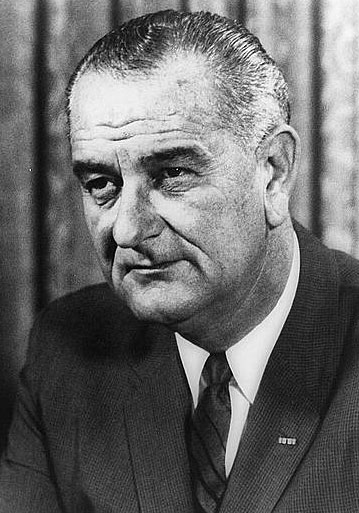
Johnson, unberserk

Hayden’s commentary invoked what often is called the “Cronkite Moment” in saying:

“Cronkite went to Vietnam in April 1968 to survey the state of that war, just as [MSNBC’s Rachel] Maddow spent time in Afghanistan investigating the current reality. When Cronkite pronounced Vietnam as ‘mired in stalemate,’ it is said that Lyndon Johnson went berserk.”

It’s a striking way of describing the mythical “Cronkite Moment”: I’ve never before read that Johnson supposedly “went berserk” in response to Cronkite’s characterization.

In any case, Hayden’s descriptions of Cronkite’s program and Johnson’s reaction are in error.

The trip to which Hayden refers took place not in April 1968 but in February that year. Cronkite went to Vietnam then to gather material for a special report that aired on CBS on February 27, 1968.

Johnson, however, did not see the Cronkite program when it aired.

As I discuss in Getting It Wrong, my new book debunking the “Cronkite Moment” and nine other media-driven myths, Johnson was in Austin, Texas, at the time Cronkite intoned his “mired in stalemate” assessment.

Johnson wasn’t going “berserk” on that occasion. Rather, he was offering light-hearted remarks at the birthday party for Texas Governor John Connally, a longtime political ally.

“Today you are 51, John,” the president said. “That is the magic number that every man of politics prays for—a simple majority. Throughout the years we have worked long and hard—and I might say late—trying to maintain it, too.”

Even if Johnson later saw the Cronkite program on videotape, he “gave no indication of having taken the anchorman’s message to heart,” I write in Getting It Wrong. The show represented no epiphany for the president, no occasion for going “berserk.”

Not long after Cronkite’s program, Johnson delivered a rousing speech in Minneapolis, in which he urged “a total national effort” to win the war in Vietnam. That speech was given March 18, 1968, and in it, the president declared:

“We love nothing more than peace, but we hate nothing worse than surrender and cowardice.”

He criticized war critics as wanting the United States to “tuck our tail and violate our commitments.”

Johnson’s aggressive remarks are quite difficult to square with his supposedly downcast, self-pitying reaction to Cronkite’s assessment about Vietnam.

Moreover, Cronkite’s “mired in stalemate” assessment about Vietnam was an unremarkable characterization by early 1968. Mark Kurlansky said as much in his well-received year-study about 1968.

Indeed, nearly seven months before the “Cronkite Moment,” the New York Times published on its front page a news analysis that said victory in Vietnam “is not close at hand. It may be beyond reach.”

The Times analysis was published in August 1967 beneath the headline “Vietnam: The Signs of Stalemate.”

I’ve noted at Media Myth Alert that former NBC newsman Frank McGee in March 1968 offered an analysis about Vietnam that was more direct and punchier than Cronkite’s “mired in stalemate” characterization.

“The war,” McGee said on an NBC News program that aired March 10, 1968, “is being lost by the [Johnson] administration’s definition.”

No hedging there about the war effort being “mired in stalemate.”

Lost.

Related:

Watergate a Washington Post ‘scoop’? Not quite

In Debunking, Media myths, Washington Post, Watergate myth on July 20, 2010 at 7:08 pm

Among the myths and misunderstandings associated with the sprawling scandal that was Watergate is the notion that the Washington Post owned the story.

The notion was reiterated today in a post at a blog of a North Carolina newspaper. The post, which discussed the Post‘s ongoing investigative series on U.S. intelligence networks, contained this passage:

“Newspaper editors and writers usually consider themselves patriots, but they are aware that government officials sometimes hide their actions behind the national security banner. The issue came up as the Watergate scandal was unfolding during the Nixon administration. That was also a Washington Post scoop.”

A “scoop”? Not exactly.

As I write in Getting It Wrong, my new book about media-driven myths, “rival news organizations such as Los Angeles Times and New York Times did not ignore Watergate as the scandal slowly took dimension during the summer and fall of 1972.”

The Los Angeles Times, for example, published an unprecedented, first-person account in early October 1972 of Alfred C. Baldwin III, a former FBI agent who acted as the lookout man in the burglary at Democratic National Headquarters in June 1972–the signal crime of the Watergate scandal.

And the New York Times was the first news organization to report the payment of hush money to the Watergate burglars, a pivotal disclosure in early 1973 that made clear that efforts were under way to cover up and conceal the crimes and misconduct of others in the scandal.

Unlike most other Watergate-related news reports in 1972 and early 1973, the New York Times story about hush money “hit home!” John Dean, former counsel to President Richard Nixon, recalled years later in a memoir titled Lost Honor. “It had everyone concerned and folks in the White House and at the reelection committee were on the wall,” Dean wrote.

In addition, as Edward Jay Epstein wrote in his classic essay about Watergate and the news media, the Washington Post and other newspapers were joined during the summer of 1972 by the General Accounting Office, the investigative arm of Congress, and Common Cause, a foundation that seeks accountability in government office, in directing public attention to the scandal.

“In short, even in publicizing Watergate,” Epstein wrote, “the press was only one among a number of institutions at work.”

And as I point out in Getting It Wrong:

“Nixon’s Democratic challenger for the presidency, George McGovern, repeatedly invoked Watergate in his campaign appearances in the summer and fall of 1972. At one point, McGovern charged that Nixon was ‘at least indirectly responsible’ for the Watergate burglary.”

So in its reporting on the emergent scandal in the summer and fall of 1972, the Post “was one of several institutions seeking to delineate the reach and contours of Watergate,” I write.

As the scandal unfolded, then, the Post was very much not on its own.

WJC

Related:

Hearst, war, and the international appeal of media myths

In 1897, Debunking, Furnish the war, Media myths, Spanish-American War, Yellow Journalism on July 18, 2010 at 3:24 pm

I wrote the other day about the international appeal of prominent media-driven myths, an observation that was reconfirmed yesterday in the Correio do Brasil.

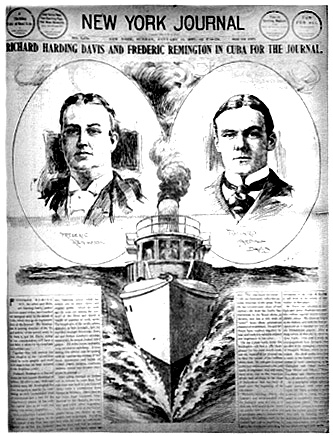
The Correio item recounted the purported exchange of telegrams between the artist Frederic Remington and newspaper publisher William Randolph Hearst, in which Hearst supposedly declared:

“You furnish the pictures, I’ll furnish the war.”

Remington at the time was in Cuba, on assignment for Hearst’s New York Journal to draw illustrations of the rebellion against Spanish colonial rule.

The exchange, if it took place, would have been in January 1897, during Remington’s six-day visit to the island. The anecdote was first recounted in 1901 by James Creelman, a bluff, cigar-chomping journalist who was neither with Hearst nor Remington in early 1897; he was in Europe at the time of the purported exchange, and never explained how he learned of it.

The anecdote Creelman told, though, is rich and delicious, suggesting the malign potential of media power as well as Hearst’s meddling ways. The anecdote often is cited in support of the dubious claim that Hearst and his yellow press fomented the Spanish-American War in 1898.

Trouble is, the “furnish the war” tale is almost certainly apocryphal.

As I discuss in Getting It Wrong, my new book debunking 10 media-driven myths, the reasons for doubting the anecdote are many and include the fact that the purported telegram containing Hearst’s vow has never surfaced; Hearst, himself, denied having sent such a message, and Remington apparently never discussed such an exchange.

Hearst’s purported message, moreover, is incongruous and illogical on its face: It would have made no sense for Hearst to have pledged to “furnish the war” because war–the Cuban rebellion against Spanish rule–was the very reason he sent the artist to Cuba in the first place.

I also note in Getting It Wrong that Remington’s work from Cuba further serves to impugn the anecdote. His sketches for Hearst’s Journal depicted unmistakable (if unremarkable) scenes of rebellion.

His work showed a scouting party of Spanish cavalry with rifles at the ready; a cluster of Cuban non-combatant captives being herded into Spanish lines; a scruffy Cuban rebel kneeling to fire at a small Spanish fort, and a knot of Spanish soldiers dressing a comrade’s wounded leg.

The sketches appeared in the Journal beneath headlines such as “Cuban War Sketches Gathered in the Field by Frederic Remington” and “Frederic Remington Sketches A Familiar Incident of the Cuban War.”

After his return to the United States, Remington wrote a letter to the Journal’s keenest rival, the New York World, in which he disparaged the Spanish colonial regime as a “woman-killing outfit down there in Cuba.”

As I write in Getting It Wrong, “Remington’s sketches and correspondence … leave no doubt that he had seen a good deal of war-related disruption in Cuba.”

In addition, I write, “there was no chance that telegrams such as those Creelman described would have flowed freely between Remington in Havana and Hearst in New York. Spanish control of the cable traffic in Havana was too vigilant and severe to have allowed such an exchange to have gone unnoticed and unremarked upon.

“A vow such as Hearst’s to ‘furnish the war’ surely would have been intercepted and publicized by Spanish authorities as a clear-cut example of Yankee meddling in Cuba.”

That element–because it reputedly suggests Yankee meddling–surely helps explain why the Remington-Hearst anecdote exerts appeal beyond the United States, especially in Latin America.

The anecdote, in addition, is broadly appealing in its simplicity and deliciousness.

Indeed, it is almost too delicious to check out.

WJC

Related: