W. Joseph Campbell

Posts Tagged ‘Nixon’

‘We’re trying to toughen you up’: Never happened with Obama and news media

In Debunking, Media myths on October 7, 2012 at 8:39 am

“We’re trying to toughen you up.”

Remember that?

It was nearly six years ago when New York Times columnist Maureen Dowd made the comment to then-Senator Barack Obama, as his campaign for the presidency was unfolding.
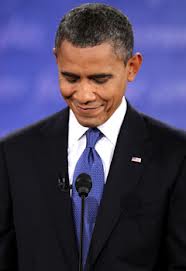
Obama at the debate

Her remark was in reply to Obama’s criticism — uttered perhaps half in jest — about Dowd’s having mentioned his prominent ears. (She wrote in a column in October 2006: “He’s intriguingly imperfect: His ears stick out, he smokes, and he’s written about wrestling with pot, booze and ‘maybe a little blow’ as a young man.”)

“You talked about my ears,” Obama told her later, “and I just want to put you on notice: I’m very sensitive about — what I told them was I was teased relentlessly when I was a kid about my big ears.”

Dowd said in response:

“We’re trying to toughen you up.”

Of course, “toughen up” never happened. The mainstream U.S. news media rarely have treated Obama with anything but swooning deference. He and his policies seldom have been exposed to rigorous and critical assessment. Not in any sustained way, and certainly not during the 2012 election season.

As Andrew Klavan wrote recently in City Journal: “No other president could have … presided over such a crippled economy and such universal failures at war and in foreign policy and escaped almost without mainstream blame.”

The upshot of media deference was on vivid display Wednesday night, when Obama’s economic record was eviscerated by Republican challenger Mitt Romney in a debate stunning for its lopsidedness.

Not even Richard Nixon lost so utterly in 1960 in his debates with John F. Kennedy.

For the first time in his presidency, Obama was called to account publicly and prominently for the economic failings of his administration. And he had nothing in rebuttal: Romney’s unrelenting pressure left Obama looking flustered, hapless.

Since then, the mainstream news media have been inclined to blame Obama’s performance on Romney’s having told nothing but lies, on the clumsy moderation of Jim Lehrer of PBS, and (in Al Gore’s telling) on the altitude in Denver, the debate’s host city.

Even now, the mainstream news media are little inclined to “toughen up” Obama, even with two debates ahead and his presidency very much in the balance.

An inevitable reason for all this can be traced to the dearth of intellectual diversity at leading U.S. news organizations. The ideological imbalance in newsrooms is hardly a secret: News organizations themselves have called attention to this defect from time to time.

For example, the then-ombudsman for the Washington Post, Deborah Howell, wrote in a post-election column in November 2008:

“I’ll bet that most Post journalists voted for Obama. I did. There are centrists at The Post as well. But the conservatives I know here feel so outnumbered that they don’t even want to be quoted by name in a memo.”

Howell’s column quoted Tom Rosenstiel, director of the Project for Excellence in Journalism, as saying:

“The perception of liberal bias is a problem by itself for the news media. It’s not okay to dismiss it. Conservatives who think the press is deliberately trying to help Democrats are wrong. But conservatives are right that journalism has too many liberals and not enough conservatives.

“It’s inconceivable that that is irrelevant.”

More recently, in his farewell column in August, Arthur Brisbane, the New York Times public editor (or ombudsman), chided the newspaper’s “political and cultural progressivism” which, he said, “virtually bleeds through the fabric of The Times.

“As a result,” Brisbane declared, “developments like the Occupy movement and gay marriage seem almost to erupt in The Times, overloved and undermanaged, more like causes than news subjects.”

Rather than treat the “overloved and undermanaged” critique as a matter of serious consideration, the Times’ executive editor, Jill Abramson, rejected it out of hand, dismissing it as obviously erroneous.

Brisbane’s observations, the product of two years as the newspaper’s ombudsman, deserved a reception far more thoughtful and serious-minded than that. Especially given the newspaper’s mostly forgotten internal report in 2005 which said in part:

“Both inside and outside the paper, some people feel we are missing stories because the staff lacks diversity in viewpoints, intellectual grounding and individual backgrounds. We should look for all manner of diversity. We should seek talented journalists who happen to have military experience, who know rural America first hand, who are at home in different faith.” (Emphasis added.)

The critique of the news media’s ideological imbalance is more than impressionistic, more than “perception”: A survey in 2008 of journalists for national news publications reported that 8 percent identified themselves as “conservative,” 32 percent as “liberal,” and 53 percent as “moderate.”

Such imbalance has given rise to the occasional vague promise to promote intellectual diversity in the newsroom.

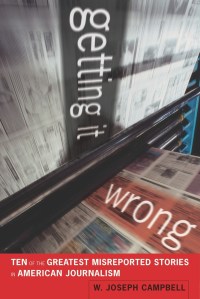
But nothing much changes.  As I pointed out in my 2010 book, Getting It Wrong, “Viewpoint diversity is an issue not much discussed” in American newsrooms — “places that sometimes seem to be bastions of group-think.”

In that regard, I quoted Michael Kelly, former editor of National Journal, who once observed:

“Reporters like to picture themselves as independent thinkers. In truth, with the exception of 13-year-old girls, there is no social subspecies more slavish to fashion, more terrified of originality and more devoted to group-think.”

Obama has thrived for years within the reassuring confines of the media cocoon which, when ripped away as it was Wednesday night, makes for dramatic theater. But it does little for the news media and their sagging credibility.

WJC

Recent or related:

1960 myth ricochets around the media in advance of Obama-Romney debate

In Debunking, Error, Media myths, Media myths and radio, Television on October 3, 2012 at 1:58 pm

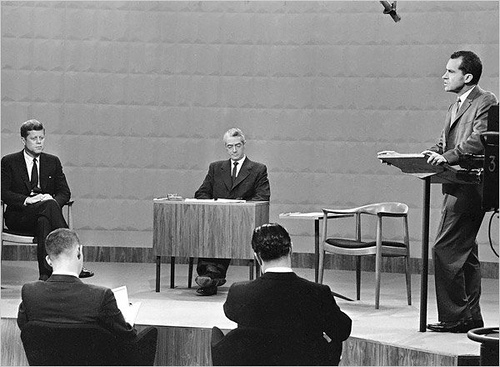
Kennedy, Nixon at their mythical debate

In the hours before tonight’s encounter between President Barack Obama and Republican challenger Mitt Romney, the beguiling myth of the first-ever presidential debate — the notion that image trumped spoken word — has ricocheted across the U.S. news media.

News organizations of all types have been invoking the myth, which has it that television viewers overwhelmingly felt John F. Kennedy won the first televised debate in 1960 while radio listeners thought Richard M. Nixon had the best of it.

Here are a few examples of media indulgence in that fable:

  • The Boston Globe:  “According to those listening on the radio, Nixon won the debate or it was a draw. But most Americans watched it on TV, and they overwhelmingly were impressed by the … collected performance” of Kennedy.
  • The Hartford (Connecticut) Courant:  “Famously, those who listened to the radio thought that Nixon had defeated Kennedy in their famous first debate in 1960. By contrast, those watching on television thought that the dapper and cool Kennedy had won.”
  • Entertainment Weekly: “Radio audiences thought Nixon won the debate, but those who watched on television were convinced that Kennedy dominated.”
  • Huffington Post: “Richard Nixon’s haggard appearance vs. John F. Kennedy’s vigor is widely cited as contributing to a Kennedy victory in the first 1960 debate. But polls showed that was true mostly for those who watched it on TV, while those listening to the radio generally picked Nixon as victor.”
  • NBC Channel 5 in Chicago: “Pollsters found that people who listened to this debate on the radio thought that Nixon, the vice president, beat Kennedy. But those who followed on television … sided with Kennedy, who won the election.”
  • A blog of the Voice of America, the U.S. government’s voice abroad: ” Nixon’s refusal to wear makeup did not hurt him with those listening on the radio. They gave him the edge.  But Kennedy had the advantage with TV viewers and the rest, as they say, is history.”

Make that bad history.

There is quite simply no persuasive evidence to support the notion that television viewers and radio listeners decisively disagreed about the outcome of the first Kennedy-Nixon debate, which took place in Chicago on September 26, 1960.

That such an effect did occur — or must have occurred — is attractive for a number of reasons: It acknowledges the presumptive power of the televised image. It renders uncomplicated the intricacies of an important political moment of long ago. And it offers an enduring though misguided lesson that content matters less than appearance.

Significantly, the broad media embrace of the debate myth ignores the powerful dismantling published 25 years ago by scholars David L. Vancil and Sue D. Pendell.

In their article in Central States Speech Journal, Vancil and Pendell noted that one “of the most perplexing legacies of the first Kennedy-Nixon debate is the claim that radio listeners and television viewers came to opposite conclusions about the debate winners.”

They proceeded to explode that notion, pointing out that accounts of viewer-listener disagreement about the debate typically were anecdotal and impressionistic — hardly representative of the American electorate in 1960.

They also called attention to “a false impression” that “major polling organizations, such as Gallup, concentrated part of their attention on the reactions of radio listeners.” That hardly was the case.

The one polling organization that did identify radio listeners in a post-debate survey was Sindlinger & Co.

Sindlinger reported that poll respondents who listened to the debate on radio thought Nixon won, by a 2-to-1 margin.

But the Sindlinger sub-sample of radio listeners included 282 respondents — of whom only 178 offered an opinion about the debate winner, far too few to permit meaningful generalizations or conclusions.

Not only was the sub-sample unrepresentative, it did not identify from where the sub-sample of radio listeners was drawn. “A location bias in the radio sample,” Vancil and Pendell pointed out, “could have caused dramatic effects on the selection of a debate winner. A rural bias, quite possible because of the relatively limited access of rural areas to television in 1960, would have favored Nixon.”

Those and several other defects render the Sindlinger result meaningless.

It should be noted that the run-up to tonight’s debate has brought some faint recognition about the mythical character of viewer-listener disagreement in the 1960 debate.

For example, the latest Washington Examiner column of political commentator Michael Barone reads as if he had consulted recent posts at Media Myth Alert.

Barone wrote:

“It is generally held that television viewers felt Kennedy won the first debate, while those listening on radio, unaware of Nixon’s improvised makeup, felt Nixon won. That’s probably overstated. Contemporary [news] accounts suggest most viewers felt both candidates did well, while the single poll of radio listeners had a small sample possibly tilted toward pro-Nixon rural areas lacking TV reception.”

Such observations, however well-reasoned, likely are to be of scant effect in countering the present contagion of the 1960 debate myth.

Like many media-driven myths, it is after all almost too delicious not to be true.

WJC

Recent or related:

In run-up to Obama-Romney encounter, myth of first presidential debate circulates anew

In Anniversaries, Debunking, Error, Media myths, Television on September 30, 2012 at 5:20 am

The runup to this week’s televised debate between President Barack Obama and Republican challenger Mitt Romney has, inevitably, spurred the renewed circulation of a hoary media myth centered around the first such presidential debate, in September 1960.

That encounter, between John F. Kennedy and Vice President Richard M. Nixon, gave rise to the media myth of viewer-listener disagreement: Those who watched the debate on television supposedly thought Kennedy got the best of it; those who listened on radio thought Nixon was the winner.

The myth of viewer-listener disagreement was demolished long ago, in a journal article by scholars David L. Vancil and Sue D. Pendell.

But demolition hasn’t killed the myth.

Indeed, the notion that viewers and listeners came away with markedly different impressions of the debate’s outcome is just too delicious, and too appealing, for journalists to sidestep. After all, viewer-listener disagreement suggests the primacy of television and the triumph of image over substance.

And that’s just what the Chicago Tribune suggests, in an article today recalling the first Kennedy-Nixon debate, which took place September 26, 1960.

The Tribune account says Kennedy won an “unexpected and devastating victory” in that encounter — the first of four debates during that campaign.

“Yet,” the Tribune declares, “not everyone thought Kennedy had won the debate. Pollsters found that those who heard the radio broadcast thought Nixon won. The very first televised debate wasted no time in demonstrating that the ‘medium is the message,’ a maxim coined by communications guru Marshall McLuhan a few years later and leveraged by campaign managers ever since. Television viewers experienced a different debate from radio listeners.”

Who the “pollsters” were, the Tribune doesn’t say.

Only one polling organization, Sindlinger & Company, conducted a survey of any size that included a sub-sample of radio listeners.

The Sindlinger survey, taken the day after the Kennedy-Nixon debate, indicated that radio listeners thought Nixon had prevailed, by a margin of 2-to-1.

But in their article published in Central States Speech Journal in 1987, Vancil and Pendell pointed out that the Sindlinger survey included more than 2,100 respondents — of whom only 282 had listened to the debate on radio.

They noted that “a subordinate group of 282 interviews is below the threshold normally required for a national sample.” Not only that, but just 178 of the 282 respondents “expressed an opinion on the debate winner,” Vancil and Pendell wrote.

Moreover, they said, the Sindlinger sample did not specify where the radio listeners lived, adding:

“A location bias in the radio sample … could have [had] dramatic effects on the selection of a debate winner.  A rural bias, quite possible because of the relatively limited access of rural areas to television in 1960, would have favored Nixon.”

Given the defects of the unrepresentative Sindlinger sample, Nixon’s reported 2-to-1 margin over Kennedy among radio listeners dissolves as meaningless.

And was the first debate really such a “devastating victory” for Kennedy?

You wouldn’t know it from reading the Tribune’s day-after coverage.

“It was a battle, not of minds, but of personalities,” the newspaper reported in its main story about the Kennedy-Nixon encounter. The candidates, the newspaper said, “were almost subdued in demeanor.”

The Tribune further noted that the debate produced “no flashes of wit, no memorable phrases, no give-and-take with a personal flavor.”

It was, the Tribune, said, “a political television show familiar to many viewers ….”

WJC

Recent or related:

USA Today invokes Kennedy-Nixon debate myth

In Anniversaries, Debunking, Error, Media myths on September 21, 2012 at 9:17 am

I noted yesterday how the myth of viewer-listener disagreement — that television viewers and radio listeners had clashing interpretations of the outcome of the Kennedy-Nixon debate in September 1960 — tends to surface at the approach of anniversaries of the historic encounter.

And so it does.

In his latest column, Al Neuharth, the founder of USA Today, unreservedly embraces the myth.

He writes that John F. Kennedy “looked relaxed and at ease” during the debate while Richard M. Nixon did not. “The hot TV lights appeared to give him a heavy beard,” Neuharth adds, “even though he had closely shaved before the TV appearance.”

Neuharth further asserts:

“The debate was also broadcast by radio. Listeners generally gave Nixon the nod. But TV viewers strongly favored Kennedy.”

That’s an enticing interpretation, suggesting the decisiveness of televised images in political communication.

But there’s little support for the notion of listener-viewer disagreement.

That notion, in fact, was exploded 25 years ago in an impressive dismantling published by scholars David L. Vancil and Sue D. Pendell.

Writing in Central States Speech Journal, Vancil and Pendell reviewed and dissected the few surveys that hinted at a viewer-listener disconnect in the Kennedy-Nixon debate, the first of four during that campaign.

Vancil and Pendel described how survey samples were too small to be representative — too small to allow confident or sweeping judgments about sharp disagreements among television and radio audiences.

Central to the claim that radio audiences believed Nixon won the debate was a survey conducted by Sindlinger & Company. The survey indicated that radio listeners, by a margin of 2-to-1, thought Nixon had prevailed in the debate, which took place September 26, 1960.

Vancil and Pendell pointed out that the Sindlinger survey, conducted the day after the debate, included more than 2,100 respondents — of whom only 282 had listened on radio.

Of that number, 178 (or fewer than four people per state) “expressed an opinion on the debate winner,” they wrote.

Vancil and Pendell also challenged the claim that Nixon’s appearance was decisive to the debate’s outcome.

They wrote in their article in Central States Speech Journal:

“Media experts, campaign professionals, and the viewing public almost unanimously agree that Nixon had a number of appearance problems in the first debate. His grey suit, perspiring brow, loose fitting shirt, and general sense of discomfort seemed to provoke sympathetic responses from even the most enthusiastic Kennedy supporters.

“However,” they added, “the inference that appearance problems caused Nixon’s loss, or Kennedy’s victory [in the debate], is classic post hoc fallacy.”

They noted that appearance problems such as Nixon’s sweaty brow, “could have had a negative impact on viewer perceptions, but it is also possible for viewers to be sympathetic to such problems ….

“Even if viewers disliked Nixon’s appearance,” they further wrote, “the relative importance of this factor in viewers’ selection of a debate winner is a matter of conjecture.”

Vancil and Pendell identified six factors or criteria which, they said, audiences were apt to rely on in determining the winner of a presidential debate. Those factors were:

Pre-debate preferences; views on issues; candidate advocacy skills; candidate personality (“including image”); blunders, and media labeling.

“Some viewers” in the Kennedy-Nixon debate, they wrote, “may have ignored appearance in favor of an evaluation of advocacy skills.”

That appears to have been the case, at least with the Washington Post, which declared in a post-debate editorial:

“Of the two performances Mr. Nixon’s probably was the smoother.

“He is an accomplished debater with a professional polish, and he managed to convey a slightly patronizing air of a master instructing a pupil.”

Nixon’s advocacy skills, at least for the Post, trumped the ashen, uncomfortable appearance he cut during the debate.

The Vancil-Pendell debunking is thorough and impressive. And it’s a bit surprising that their article is so infrequently recalled these days.

But, then, perhaps it’s not so surprising at all. Not given the appeal of media-driven myths, those prominent tales about and/or by the news media that are widely believed and often retold but which, under scrutiny, dissolve as apocryphal or wildly exaggerated.

Media myths, I wrote in my 2010 book, Getting It Wrong, often seem “almost too good to be false.”

Typically, I noted, media myths “tend to minimize or negate complexity in historical events and offer simplistic and misleading interpretations instead.” Such as the notion that viewer-listener disagreement was prominent in the first-ever televised presidential debate.

WJC

Recent or related:

Some dubious election history from Al Jazeera English

In Anniversaries, Debunking, Error, Media myths, Television on September 20, 2012 at 12:12 pm

First televised presidential debate

The first televised presidential debate in 1960 gave rise to an enduring media myth — the notion that television viewers and radio listeners interpreted the encounter quite differently.

The myth of viewer-listener disagreement lives on despite its thorough dismantling 25 years ago, in an article in Central States Speech Journal by scholars David L. Vancil and Sue D. Pendell.

Vancil and Pendell noted that reports of viewer-listener disagreement in the first of four debates between John F. Kennedy and Richard M. Nixon in 1960 typically were impressionistic and anecdotal.

Moreover, they wrote, the few surveys that hinted at a viewer-listener disconnect were too small and unrepresentative to allow confident or sweeping judgments.

Vancil and Pendell also challenged the notion that Nixon’s haggard appearance and sweaty brow contributed powerfully to television viewers’ perceptions about the debate, which took place September 26, 1960.

“Appearance problems, such as Nixon’s perspiring brow, could have had a negative impact on viewer perceptions,” Vancil and Pendell wrote, “but it is also possible for viewers to be sympathetic to such problems, or to interpret them as evidence of attractive or desirable qualities.”

They also wrote that “the inference that appearance problems caused Nixon’s loss, or Kennedy’s victory [in the debate] is classic post hoc fallacy.”

Their debunking notwithstanding, the myth of viewer-listener disagreement tends to resurface at or near the anniversaries of the first Kennedy-Nixon debate.

Take, for example, a commentary posted today at the English-language online site of Al Jazeera, the Qatar-based Arabic television network.

The commentary describes the first Kennedy-Nixon debate as “a bellwether” and asserts that “listeners tuning in via radio considered the debate a draw or even a slight win for Nixon. But the 65 million who tuned in by TV saw something very different. Kennedy appeared vigorous yet relaxed, while Nixon looked pale and nervous. … Those viewing the debate on television judged Kennedy as the clear winner.”

But as Vancil and Pendell reported years ago, there is no persuasive, compelling evidence to support such claims.

Not only that, but contemporaneous evidence, including public opinion polls, offer scant support for the notion that television audiences “judged Kennedy as the clear winner.”

To be sure, not all observers saw it that way in late September 1960. In its post-debate editorial, the Washington Post declared, for example:

“Of the two performances Mr. Nixon’s probably was the smoother.

“He is an accomplished debater with a professional polish, and he managed to convey a slightly patronizing air of a master instructing a pupil.”

And the Los Angeles Times said in an editorial (beneath the headline “A slow fight to a draw”) that most television viewers of the debate probably “felt as we did: they were disappointed because (a) they could not pick a winner and (b) they could not find that any single issue had been sharpened up by the abrasives of debate.”

The nationally prominent columnist, James Reston, wrote in the New York Times after the debate:

“This TV program did not do any of the dramatic things predicted for it. It did not make or break either candidate. … Who took the first round is a matter of individual opinion. My own view is that Kennedy gained more than Nixon, but it was a fielder’s choice, settling nothing.”

A Gallup poll released in October 1960 reported that 43 percent of the debate’s viewers and listeners thought Kennedy “did the better job.” Twenty-three percent thought Nixon’s performance was better, and 29 percent said the candidates were about the same. Five percent offered no opinion.

But opinions about the debate did not translate into a decisive advantage for Kennedy. The same survey reported Kennedy was narrowly ahead in the race, by 49 percent to 46 percent, with 5 percent undecided.

That result represented a modest change from Gallup’s poll taken just before the debate, which reported Nixon leading narrowly, by 47 percent to 46 percent.

But Gallup described the post-debate shift as too slight to be meaningful.

“The prudent reader can see,” George Gallup, head of the polling organization, wrote in describing the results, “that polling accuracy has not reached the degree of accuracy required to say with certainty which candidate is ahead in a close race such as the present one.”

WJC

Recent or related:

The media myths of Watergate: Part Five

In Anniversaries, Cinematic treatments, Debunking, Media myths, Scandal, Washington Post, Watergate myth on June 21, 2012 at 6:32 am

This is the last of five posts addressing prominent media-driven myths about the Watergate scandal, which began unfolding 40 years ago this week with the foiled burglary at the headquarters in Washington of the
Democratic National Committee.
This installment address the often-stated claim that enrollments in college journalism programs in the United States
soared in the aftermath of Watergate.

Watergate made Gerald Ford president — and made journalism seem sexy

It’s a subsidiary myth of Watergate, that the reporting exploits of Bob Woodward and Carl Bernstein of the Washington Post — made legendary by the cinematic adaptation of their book, All the President’s Men — turned journalism into glamorous and alluring profession.

So alluring and heroic were the depictions of Woodward and Bernstein as they, ahem, toppled a corrupt president that young adult Americans in the 1970s thronged to collegiate journalism programs.

A commentary last week in Post made just that point, declaring that the film had “inspired a generation of journalism school students.” Similarly, a recent essay at Gawker.com said the glowing accounts of Woodward and Bernstein’s work “helped swell enrollments at journalism schools across the nation as eager young college graduates came to view reporting not as a lowly trade but as a noble profession.”

But it’s a media myth that Watergate stimulated journalism school enrollments — a myth that endures despite its thorough repudiation by scholarly research.

As I discuss in my 2010 book, Getting It Wrong (which includes a chapter confronting what I call the heroic-journalist myth of Watergate), two scholarly studies about enrollments in collegiate journalism programs found no evidence that Watergate was much of a stimulus.

Enrollment data are reasonably good proxies as they would surely have reflected heightened interest in careers in the profession. If Watergate and All the President’s Men inspired broad interest in careers in journalism, evidence of the stimulus should be apparent in surging j-school enrollments.

But the evidence just isn’t there.

A study conducted for the Freedom Forum media foundation and released in 1995 found that “growth in journalism education” resulted “not from specific events as Watergate … but rather to a larger extent from the appeal of the field to women, who have been attending universities in record numbers. The growth also in part reflects the applied nature of the field and its link to specific job skills.”

The study’s authors, Lee Becker and Joseph Graf, stated flatly that “students didn’t come rushing to the university because they wanted to follow in the footsteps of Woodward and Bernstein ….”

A separate study, conducted by a senior journalism scholar, Maxwell E. McCombs, reported in 1988 that “the boom in journalism education was underway at least five years before” the Watergate break-in in 1972.

McCombs wrote:

“It is frequently, and wrongly, asserted that the investigative reporting of Woodward and Bernstein provided popular role models for students, and led to a boom in journalism school enrollments. The data … reveal, however, that enrollments already had doubled between 1967 and 1972.”

I point out in Getting It Wrong that the notion that Watergate reporting made journalism appealing and sexy lives on “because it seems irresistibly logical and straightforward— too obvious, almost, not to be true.”

Watergate’s presumed stimulus on journalism school enrollments is an attractive and simplistic construct, easy to grasp, and easy to remember.

And such characteristics — easy to grasp, easy to remember — often are propellants. Propellants of media-driven myths.

WJC

Recent or related:

The media myths of Watergate: Part Four

In Anniversaries, Cinematic treatments, Debunking, Media myths, Newspapers, Quotes, Reviews, Washington Post, Watergate myth on June 20, 2012 at 7:40 am

This is the fourth of five posts addressing prominent media-driven myths about the Watergate scandal, which began unfolding 40 years ago this week, with
the foiled burglary at the headquarters
in Washington of the Democratic National Committee.
This installment addresses the notion that the Watergate reporting of Bob Woodward and Carl Bernstein
placed the reporters in grave danger.

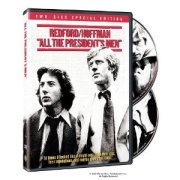
No film or documentary about Watergate has been seen more often by more people than All the President’s Men, the 1976 adaptation of the eponymous book by the Washington Post’s lead reporters on the scandal, Bob Woodward and Carl Bernstein.

The movie won rave reviews. The New York Times called it “a spellbinding detective story” and “an unequivocal smash-hit — the thinking man’s Jaws.”

The Post once immodestly described All the President’s Men as “journalism’s finest 2 hours and 16 minutes” and “the best film ever made about the craft of journalism.”

For all its glowing notices, All the President’s Men was often sluggish in pacing. More than a few scenes showed reporters at their desk, talking into telephones and banging away at typewriters.

Hardly gripping cinema.

But a measure of drama and menace was injected near the close of the movie (see video clip below).

That came when Woodward’s stealthy, high-level “Deep Throat” source, at a meeting in a darkened parking garage, grimly warns the wide-eyed reporter, played by Robert Redford:

“Your lives are in danger.”

But was it even true? Had Woodward and Bernstein, in their reporting about the misdeeds of men close to President Richard Nixon, unknowingly put their lives on the line? Were they targeted by Nixon’s henchmen? Or was this just dramatic license by Hollywood?

The movie leaves such questions hanging. The Woodward/Redford character informs the Bernstein character (played by Dustin Hoffman) about what “Deep Throat” said, and together they confer with the Post’s executive editor character (Jason Robards) — in the middle of the night, in the middle of the editor’s lawn.

But the movie closes before resolving the question of the hazards the reporters faced.

So were their lives really in danger?

Nope.

Not according to the book, All the President’s Men.

The book discusses a late-night meeting between Woodward and “Deep Throat” in mid-May 1973 when the source — W. Mark Felt, a senior official at the FBI, as it turned out — advised the reporter to “be cautious.”

Woodward returned to his apartment and invited Bernstein to stop by. When he did, Woodward typed out a message and handed it to his colleague:

Everyone’s life is in danger.”

Bernstein gave a curious look and Woodward typed another note:

Deep Throat says electronic surveillance is going on and we had better watch it.”

Who was doing the surveillance? Bernstein asked in long hand.

“C-I-A,” Woodward silently mouthed.

For a time afterward, the reporters and senior editors at the Post took precautions to avoid the suspected surveillance of their activities.

Woodward and Bernstein wrote in All the President’s Men that they “conferred on street corners, passed notes in the office, avoided telephone conversations.”

But soon, they said, “it all seemed rather foolish and melodramatic” and they went back to their routines.

No evidence, they wrote, was ever found “that their telephones had been tapped or that anyone’s life had been in danger.”

At a program last week at the Newseum, Woodward said he took Felt’s warning “too literally. I think he was speaking metaphorically” about the hazards.

“I think it was an overreaction,” Woodward said.

On another occasion — an online chat five years ago — Woodward said the “most sinister pressure” he and Bernstein felt during Watergate “was the repeated denial” by Nixon’s White House “of the information we were publishing” as the scandal deepened.

Also in that chat, Woodward said of the cinematic version of All the President’s Men:

“The movie is an incredibly accurate portrait of what happened.”

Oh, sure, it is.

Even that Post review, which called the movie journalism’s finest 2 hours and 16 minutes, noted that All the President’s Men “over-glamorizes reporting, oversimplifies editing and makes power appear the only proper subject for a newsman’s pen.”

WJC

Recent or related:

The media myths of Watergate: Part Three

In Anniversaries, Debunking, Media myths, Newspapers, Quotes, Washington Post, Watergate myth on June 19, 2012 at 5:25 am

This is the third of five posts addressing prominent media-driven myths about the Watergate scandal, which began
unfolding 40 years ago this week with the foiled burglary at the headquarters in Washington of the Democratic National Committee.
This installment discusses the most famous made-up line of Watergate.

“Follow the money.” It’s the best-known, most popular turn-of-phrase associated with the Watergate scandal of 1972-74.

Felt: Never said it

It’s often said that “follow the money” was sage counsel offered by the stealthy, high-level “Deep Throat” source with whom Bob Woodward of the Washington Post periodically met as the scandal unfolded.

The guidance to “follow the money” supposedly proved crucial in understanding and unraveling the labyrinthine scandal that was Watergate.

Except that it really wasn’t.

“Deep Throat” never advised Woodward to “follow the money.”

The passage appears in no Watergate-related article or editorial in the Post until June 1981, nearly seven years after Nixon’s resignation. It doesn’t appear, either, in All the President’s Men, the book Woodward and his Post colleague, Carl Bernstein, wrote about their Watergate reporting.

Follow the money” was written into the screenplay of All the President’s Men, the cinematic adaptation of Woodward and Bernstein’s book.

The line was spoken by Hal Holbrook, the actor who played “Deep Throat” in the movie. (The real “Deep Throat” was self-revealed in 2005 to have been W. Mark Felt, a senior FBI official.)

Holbrook in All the President’s Men turned in a marvelous performance as a twitchy, conflicted, chain-smoking “Deep Throat.”

‘All the President’s Men,’ the movie

He delivered the line, “follow the money,” with such raspy assurance and conviction that it seemed for all the world to be vital to understanding the scandal that began unfolding 40 years ago.

Follow the money” is certainly Watergate’s most memorable and mythical phrase; it is so pithy and emphatic that it seems almost too good not to be true.

Indeed, “follow the money” tends to be treated with reverence by news media. A “credo,” it’s been called.

Take, for example, a recent post at the “Daily Intel” blog of New York Magazine. The blog post began by invoking the famous phrase, with emphasis:

Follow the money. The pithy investigative advice Woodward and Bernstein attributed to Deep Throat is still brilliant and important, whatever else the Watergate reporters may have embellished.”

Brilliant and important?

Made up is more like it.

But even if Woodward had been counseled to “follow the money,” the advice neither would have unraveled the Watergate scandal nor led him to Nixon.

Besides, Woodward and Bernstein already were on the money trail.

One of their most important stories was in reporting that a $25,000 check to Nixon’s reelection campaign had been deposited in the bank account of one of the Watergate burglars.

The scandal, though, was much more than Nixon’s improper use of campaign funds. The president was forced to resign because he obstructed justice by approving a plan to cover up the burglary at the Democratic National Committee.

The simplified, follow-the-money construct not only is inaccurate and misleading: It serves to deflect attention from the array of forces that combined to expose Nixon’s crimes.

As I note in my 2010 book Getting It Wrong, rolling up a scandal of Watergate’s depth and dimension required “the collective if not always the coordinated forces of special prosecutors, federal judges, both houses of Congress, the Supreme Court, as well as the Justice Department and the FBI.

“Even then,” I write, “Nixon likely would have served out his term if not for the audiotape recordings he secretly made of most conversations in the Oval Office of the White House.

“Only when compelled by the Supreme Court did Nixon surrender those recordings, which captured him plotting the cover-up” that cost him the presidency.

WJC

Recent or related:

The media myths of Watergate: Part Two

In Anniversaries, Debunking, Media myths, Newspapers, Scandal, Washington Post, Watergate myth on June 18, 2012 at 5:42 am

This is the second of five posts addressing prominent media-driven myths about the Watergate scandal, which began unfolding 40 years ago this week with
the foiled burglary at the headquarters in Washington
of the Democratic National Committee.
This installment discusses the notion
that the 
Washington Post “uncovered” the Watergate story.

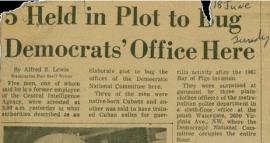
Post’s Watergate story, June 18, 1972 (Ransom Center, University of Texas)

Watergate was America’s gravest political scandal. It began as a police beat story.

News of the scandal’s seminal crime — the thwarted break-in of June 17, 1972, at the headquarters of the Democratic National Committee at the Watergate complex in Washington, D.C. — was circulating within hours.

The opening paragraph of the Posts front-page report about the burglary, published 40 years ago today, made it clear that details had come from investigating authorities. The paragraph read:

“Five men, one of whom said he is a former employee of the Central Intelligence Agency, were arrested at 2:30 a.m. yesterday in what authorities described as an elaborate plot to bug the offices of the Democratic National Committee here.”

So it can’t be said the Post “uncovered” the Watergate story.

Nor can it be said that the newspaper “uncovered” crucial elements of the deepening scandal, which ultimately forced President Richard Nixon to resign the presidency in August 1974.

Take, for example, Nixon’s secret audiotaping system at the White House.

Existence of the tapes was disclosed in July 1973 to a bipartisan select committee of the U.S. Senate (see video clip below).

The tapes were decisive to Watergate’s outcome; Watergate’s leading historian, Stanley I. Kutler, has characterized them as “the gift of the gods.”

The so-called “smoking gun” tape revealed that Nixon had approved a plan to divert the FBI’s investigation of the break-in of DNC headquarters.

He did so in a conversation June 23, 1972, with his top aide, H.R. Haldeman. The contents of the “smoking gun” tape were made public in early August 1974, shortly after the U.S. Supreme Court ordered Nixon to turn it over to investigators.

The “smoking gun” tape sealed Nixon’s fate and led to his resigning the presidency.

(As Kutler has noted, Nixon-White House tapes “released in 1997 clearly reveal” that the president knew about “hush money” payments to the Watergate burglars.)

Interestingly, the Post’s Watergate reporters, Bob Woodward and Carl Bernstein, later claimed to have had a solid lead about Nixon’s taping system — a lead they did not pursue.

They mentioned in their book, All the President’s Men, that Woodward had spoken about the tip with Ben Bradlee, then the Post’s executive editor.

Bradlee advised: “See what more you can find out, but I wouldn’t bust one on it.”

And they didn’t.

Had they, Woodward and Bernstein may well have broken a pivotal story about the scandal.

Principals at the Post often have said that the newspaper’s reporting kept the Watergate story alive during the summer and fall of 1972, a time when few other news organizations seemed interested in pursuing the scandal.

Leonard Downie, who succeeded Bradlee as executive editor, renewed that claim in a recent commentary in the Post.

For “several months after the Watergate burglary in 1972,” Downie wrote, “Woodward, Bernstein and their colleagues on the local news staff of The Post were alone on the story.

“We were ignored and doubted by the rest of the news media and most of the country, and under heavy fire from the Nixon administration and its supporters.”

It’s a heroic interpretation.

But it’s not entirely accurate.

As I point out in my 2010 book, Getting It Wrong, “The Post may well have led other newspapers on the Watergate story — principally was because Watergate at first was a local story, based in Washington, D.C.

“But rival news organizations such as Los Angeles Times and New York Times did not ignore Watergate as the scandal slowly took dimension during the summer and fall of 1972.”

The Los Angeles Times, for example, published a first-person account in early October 1972 of Alfred C. Baldwin III, a former FBI agent who acted as a lookout man in the Watergate burglary.

Significantly, the New York Times was the first news organization to report the payment of hush money to the burglars, a pivotal disclosure in mid-January 1973. The Times report made clear that efforts were under way to cover up and conceal the roles of others in the scandal.

John Dean, Nixon’s former counsel, recalled in a memoir published years later that the Times report about hush-money payments “hit home!”

The disclosure, Dean wrote, “had everyone concerned and folks in the White House and at the reelection committee were on the wall.”

And as Edward Jay Epstein pointed out in a classic essay in 1974, the Post and other newspapers were joined during the summer of 1972 by the General Accounting Office, the investigative arm of Congress, and Common Cause, a foundation that seeks accountability in government office, in directing attention to the scandal.

Moreover, George McGovern, Nixon’s hapless Democratic challenger for the presidency in 1972, not infrequently invoked Watergate in his campaign appearances. At one point in the summer of 1972, McGovern charged that Nixon was “at least indirectly responsible” for the Watergate burglary.

So in the summer and fall of 1972, the Post was one of several institutions seeking to delineate the reach and contours of Watergate.

The Post, as I note in Getting It Wrong, “was very much not alone.”

WJC

Recent or related:

The media myths of Watergate: Part One

In Anniversaries, Cinematic treatments, Debunking, Media myths, Newspapers, Reviews, Scandal, Washington Post, Watergate myth on June 17, 2012 at 6:00 am

This is the first of five posts addressing prominent media-driven myths about the Watergate scandal, which began unfolding 40 years ago with the foiled burglary at the headquarters in Washington of the Democratic National Committee. This installment discusses the tenacious myth
that reporting by the 
Washington Post brought down
Richard Nixon’s corrupt presidency
.

Other posts in this series
may be accessed here, here, here, and here.

For years, the dominant narrative of Watergate has been that the dogged reporting of Bob Woodward and Carl Bernstein for the Washington Post revealed the crimes that forced Richard Nixon to resign the presidency in August 1974.

That’s also a media-driven myth — the heroic-journalist myth, as I called it in my 2010 book, Getting It Wrong.

I note in Getting It Wrong that the media-centric heroic-journalist construct “has become the most familiar storyline of Watergate,” serving as “ready short-hand for understanding Watergate and its denouement, a proxy for grasping the scandal’s essence while avoiding its forbidding complexity.”

The misdeeds of Watergate were many. Twenty men associated with Nixon’s presidency or his 1972 reelection campaign went to jail for crimes such as perjury, obstruction of justice, and conspiracy.

Three powerful and related factors have propelled and solidified the heroic-journalist trope in the popular consciousness.

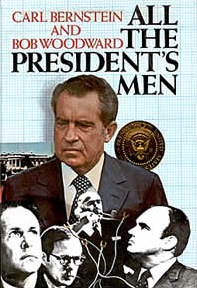
One factor was Woodward and Bernstein’s engaging book about their Watergate reporting, All the President’s Men, which came out in June 1974, just as the scandal was nearing culmination.

As Stanley I. Kutler, Watergate’s preeminent historian, has written, All the President’s Men “offered a journalistic brief to the nation as it prepared to understand and judge for itself” the growing evidence of Nixon’s guilt.

All the President’s Men was quite the success, holding the top spot on the New York Times’ non-fiction best-seller list for 15 weeks — through the climatic days of Watergate and beyond.

“The book’s impeccable timing,” I write in Getting It Wrong, served to “promote an impression that Woodward and Bernstein were central to Watergate’s ultimate outcome.”

The book that helped promote a myth

That impression was deepened in the cinematic version of All the President’s Men, which was released to great fanfare and rave reviews in April 1976.

The movie placed Woodward and Bernstein at the center of Watergate’s unraveling — and minimized or ignored the far more decisive contributions of subpoena-wielding investigators.

Indeed, rolling up a scandal of Watergate’s dimension and complexity required the collective efforts of special prosecutors, federal judges, both houses of Congress, the Supreme Court, as well as the Justice Department and the FBI.

And even then, as I write in Getting It Wrong, Nixon likely would have survived the scandal and served out his term if not for the audiotape recordings he secretly made of conversations in the Oval Office of the White House.

Only when compelled by the Supreme Court did Nixon surrender the recordings, which captured him approving a plan to divert the FBI’s investigation into Watergate’s seminal crime, the break-in June 17, 1972, at the headquarters of the Democratic National Committee.

The third factor in pressing the heroic-journalist myth firmly into the popular consciousness was the 30-year guessing game about the identity of Woodward’s stealthy, high-level source whom a Post editor code-named “Deep Throat.”

Speculation about the identity of “Deep Throat” came not infrequently and was often prominent. The guessing game offered periodic reminders about the Post and its Watergate coverage. The speculation effectively kept Woodward and Bernstein in the public eye far longer than they otherwise might have.

In 2005, W. Mark Felt, formerly second in command at the FBI, disclosed that he had been the “Deep Throat” source — giving rise to yet another round of reminiscing about the heroic journalists  of Watergate.

Such preening was misplaced, of course.

As Max Holland, author of Leak, a recent book about Watergate and “Deep Throat,” has aptly put it:

“Federal prosecutors and agents never truly learned anything germane from The Washington Posts [Watergate] stories — although they were certainly mortified to see the fruits of their investigation appear in print. … The government was always ahead of the press in its investigation of Watergate; it just wasn’t publishing its findings.”

Interestingly, principals at the Post have periodically scoffed at and rejected the heroic-journalist narrative.

For example, Katharine Graham, the Post’s publisher during and after Watergate, said at a program in 1997 marking the scandal’s 25th anniversary:

“Sometimes people accuse us of bringing down a president, which of course we didn’t do. The processes that caused [Nixon’s] resignation were constitutional.”

And Woodward  complained in 1996 that “the mythologizing of our role in Watergate has gone to the point of absurdity, where journalists write … that I, single-handedly, brought down Richard Nixon.

“Totally absurd.”

Indeed. To explain Watergate through the lens of the heroic-journalist is to simplify and misunderstand the scandal. It is to misread history and indulge in a beguiling media-driven myth.

WJC

Recent or related: