W. Joseph Campbell

Posts Tagged ‘Nixon’

National Press Club invokes media myths of Watergate

In Media myths, Newspapers, Scandal, Washington Post, Watergate myth on April 30, 2012 at 5:45 am

The National Press Club indulged in a couple of tenacious media myths about Watergate in announcing the other day it was giving its top award to Bob Woodward, one of the Washington Post’s lead reporters on what was the country’s greatest political scandal.

In its statement that Woodward will receive this year’s Fourth Estate Award, the Press Club declared that his “work on the Watergate scandal led to the resignation of an American president” — an interpretation that not even Woodward embraces.

He once told the PBS “Frontline” program that “the mythologizing of our role in Watergate has gone to the point of absurdity, where journalists write … that I, single-handedly, brought down [President] Richard Nixon. Totally absurd.”

And on another occasion, Woodward declared more bluntly:

To say that the press brought down Nixon, that’s horseshit.”

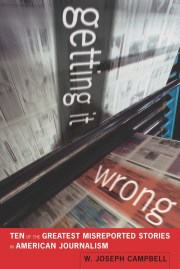
As I note in my latest book, Getting It Wrong, the simplified notion that Woodward’s Watergate reporting for the Post led to Nixon’s resignation serves to diminish “the far more decisive forces that unraveled the scandal and forced Nixon from office.”

To roll up a scandal of the dimension of Watergate required, I write, “the collective if not always the coordinated forces of special prosecutors, federal judges, both houses of Congress, the Supreme Court, as well as the Justice Department and the FBI.

“Even then, Nixon likely would have served out his term if not for the audiotape recordings he secretly made of most conversations in the Oval Office of the White House” — recordings the U.S. Supreme Court ruled that he had to surrender.

So the notion that Woodward’s reporting for the Post was decisive to Watergate’s outcome is absurd.

So, too, is the subsidiary myth that Watergate reporting — and the cinema’s depiction of the Post’s coverage in All the President’s Men — made the field seem so alluring  that enrollments in college journalism programs surged as a result.

The Press Club statement about Woodward’s award invokes that myth, too, asserting that “enrollment in journalism departments rose in the post-Watergate era, especially after ‘All the President’s Men’ was made into a movie.” It was based on a book by the same title, which was written by Woodward and his Post colleague, Carl Bernstein.

As I point out in Getting It Wrong, however, separate scholarly studies have debunked the notion of Watergate’s  propellant effect on college enrollments in journalism.

One study, conducted for the Freedom Forum media foundation and released in 1995, said that “growth in journalism education result[ed] not from specific events as Watergate … but rather to a larger extent from the appeal of the field to women, who ha[d] been attending universities in record numbers.”

The study’s author, Lee Becker and Joseph Graf, stated flatly:

“There is no evidence … that Watergate had any effect on enrollments.”

A separate study, conducted by veteran journalism scholar Maxwell E. McCombs and published in 1988, reported that “the boom in journalism education was underway at least five years before” the Watergate break-in in 1972.

McCombs further wrote:

“It is frequently, and wrongly, asserted that the investigative reporting of Woodward and Bernstein provided popular role models for students, and led to a boom in journalism school enrollments. The data … reveal, however, that enrollments already had doubled between 1967 and 1972….”

So why are these Watergate myths so appealing, and so tenacious, that even the National Press Club embraces them?

One reason is that they’re simplistic, easy-to-remember narratives that locate the news media heroically at the heart of unraveling America’s greatest political scandal.

Indulging in myths such as the heroic-journalist trope of Watergate also offers a subtle way of investing the Press Club award with even greater distinction.

And as I note in Getting It Wrong, the tale about how “the Post and its reporters uncovered Watergate is deeply ingrained in American journalism as one of the field’s most important and self-reverential stories.”

It’s a myth that’s no doubt too resilient, too media-centric, and too widely applicable ever to eradicate.

WJC

Did Watergate’s ‘Deep Throat’ know he was ‘Deep Throat’?

In Anniversaries, Debunking, Scandal, Washington Post, Watergate myth on April 15, 2012 at 11:48 am

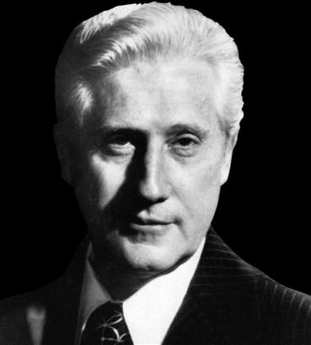
Felt: Did he know he was 'Deep Throat'?

Barry Sussman, the Washington Post’s Watergate editor in the early 1970s, raises a provocative question about the newspaper’s famous high-level source, W. Mark Felt, a senior FBI official when the Watergate scandal was unfolding.

Did Felt realize that the Post regarded him as “Deep Throat,” as a vital source in reporting the unfolding Watergate scandal? Sussman asks.

The question is pertinent and intriguing, Sussman writes in a recent commentary at the Nieman Watchdog blog, because Felt as a source offered “so little” to Bob Woodward, one of the Post’s lead reporters on Watergate.

And yet it is widely believed Felt offered vital information to Woodward about the emergent scandal.

Although Sussman doesn’t specifically address it, the implication of his observation is that “Deep Throat” may have been more composite than a single source — a literary device to infuse drama in All the President’s Men, the book Woodward wrote with Post colleague Carl Bernstein about their Watergate reporting.

It has long been suspected, though never confirmed, that “Deep Throat” was a composite.

Adrian Havill, the author of Deep Truth, a deliciously scathing biography of Woodward and Bernstein, speculated that “Deep Throat” was “a hybrid of three or four main sources.”

Edward Jay Epstein, in his fine 1976 essay about the Post and Watergate, stated he believed “Deep Throat” was “a composite character.”

More recently, James Rosen, chief Washington correspondent for Fox News, speculated in a book review that “‘Deep Throat’ was more than just Mark Felt.”

Prodded by his family, Felt came forward in 2005 and pronounced himself the source who had been “Deep Throat.” Woodward soon confirmed Felt’s self-disclosure.

But Felt was frail and suffering from dementia. He was forgetful and seldom able to carry on prolonged interviews. (Woodward quoted Felt’s daughter as saying in 2002 that Felt “goes in and out of lucidity.”)

Sussman, as he has on other occasions, asserts that “Deep Throat wasn’t an important source at all” to the Post.

“He was nice to have around, helpful on occasion,” Sussman writes, adding that Woodward and Bernstein “have blown up Felt’s importance for almost four decades or nodded in assent when others did….”

Sussman acknowledges he didn’t know that Felt was supposedly “Deep Throat” before 2005. He also notes that Felt, who died in 2008, often denied having been “Deep Throat.”

And that’s true. In a memoir published in 1979, Felt insisted: “I never leaked information to Woodward and Bernstein or to anyone else!”

Years later, Felt told a Connecticut newspaper that had he been “Deep Throat,” he “would have done it better.”

Felt may have been a liar. Or, as Sussman says, he may not have fully understood that he was considered the source whom the Post referred to as “Deep Throat.”

Sussman’s commentary was prompted by a recent book titled Leak, which claims that Felt was a crucial if sometimes duplicitous source for Woodward on Watergate. (Bernstein, by the way, met Felt only weeks Felt’s death.)

Sussman asserts that Leak “is way off base when it comes to the Post.”

The author of Leak, Max Holland, “accepts a key part of the Watergate myth that really is hokum – that Deep Throat was an important, sine qua non source for the Washington Post,” Sussman writes.

“He not only accepts it; it is his basic premise. This is where his book runs into trouble.”

So why does all this matter now, nearly 40 years after the Watergate scandal began unfolding?

It matters because the mystery of “Deep Throat” was central to establishing the heroic-journalist myth of Watergate, the enduring if misleading notion that Woodward and Bernstein, through their dogged reporting, brought down Richard Nixon’s corrupt presidency.

The identity of “Deep Throat,” as I write in my latest book, Getting It Wrong, was the subject of a 30-year, post-Watergate guessing game — a guessing game that “provided periodic and powerful reminders about the Post and its Watergate coverage, serving to keep Woodward and Bernstein in the public eye far longer than they otherwise would have been.”

Those reminders helped solidify the heroic-journalist myth of Watergate, which to this day endures as the dominant thought misleading narrative about the country’s greatest political scandal.

Recent and related:

Carl Bernstein, naive and over the top

In Debunking, Media myths, Washington Post, Watergate myth on February 17, 2012 at 2:20 pm

Rupert Murdoch, the global media mogul beset by scandal at his British tabloids, may be the greatest menace to press freedom in world.

So says Carl Bernstein, the former Watergate reporter for the Washington Post, in an over-the-top characterization of Murdoch and what he calls Murdoch’s “gutter instincts.”

Bernstein: Murdoch a press freedom threat

Bernstein was referring to the police and parliamentary investigations into practices at Murdoch’s London tabloids, inquiries that have led to the arrests of numerous employes and the closure last summer of the Sunday News of the World.

The suspected misconduct in Britain also may have consequences for Murdoch’s News Corp. under U.S. anti-corruption laws.

Bernstein, a frequent and frankly sanctimonious critic of Murdoch since the scandals broke in London last year, declared in a recent interview on CNN:

“It’s really ironic that the greatest threat to freedom of the press in Great Britain today, and around the world today perhaps, has come from Rupert Murdoch because of his own excesses.”

What a foolish, misleading, and naive statement: The “greatest threat to freedom of the press …  around the world today perhaps” is Rupert Murdoch.

Sure, Murdoch’s hard-ball tactics and raunchy media outlets are offensive to polite company.

But the 80-year-old mogul is scarcely the world’s leading menace to press freedom. To suggest that he is is to insult the nearly 180 journalists who are in jail because of their work in Africa, Asia, and the Middle East.

The true contenders for the epithet of the world’s leading press-freedom menace are many, and include the ayatollahs in Iran.

According to the New York-based Committee to Protect Journalists, Iran is the world’s leading jailer of journalists: Forty-two of the 179 journalists behind bars in late 2011 were imprisoned in Iran.

Journalists are in jail typically because their reporting in traditional or online media offended power-wielding authorities or violated censorship laws.

In Iran, CPJ points out, the “authorities seem intent on silencing any independent or critical voices.”

Bernstein’s naive remark also ignores Eritrea and China, where, respectively, 28 and 27 journalists were in jail in late 2011, according to CPJ.

The organization notes that other journalists “may languish” in Chinese jails “without coming to the notice of news organizations or advocacy groups.”

Bernstein’s comment about Murdoch likewise ignores the Castro regime in Cuba, which long has been a jailer of journalists. As many as 29 dissident journalists were arrested in 2003 in a sweeping crackdown on dissent. The last of them was released in April last year.

While CPJ counted no Cuban journalists in jail in late 2011, the organization says authorities there “continue to detain reporters and editors on a short-term basis as a form of harassment.”

Bernstein’s comment also ignored the Stalinist regime in North Korea, which ranks dead last in the annual Freedom House ranking of press freedom in the world.

Freedom House, a New York-based organization that promotes democratic governance, assesses levels of press freedom in more than 190 countries and territories on a scale of zero to 100 points. The more points, the worse the ranking.

Finland ranked first, with 10 points. The United States and Britain were rated “free,” with 17 points and 19 points, respectively.

North Korea ranked last, with 97 points.

The regime in Pyongyang “owns all media, attempts to regulate all communication, and rigorously limits the ability of North Koreans to access information,” Freedom House noted, adding that all journalists “are members of the ruling party, and all media outlets are mouthpieces for the regime.”

His recent remarks about Murdoch’s threat to press freedom were the latest of Bernstein’s over-the-top characterizations of the mogul whose media and entertainment company has holdings around the globe.

As the tabloid scandal in Britain exploded last summer, prompting the closure of the News of the World, Bernstein likened the misconduct to Watergate, the  unprecedented U.S. constitutional crisis that led to Nixon’s departure from office in disgrace in 1974.

But Watergate was sui generis. The scandal not only toppled Nixon but sent to jail 19 men associated with his presidency or his 1972 reelection campaign.

What’s more, as I discuss in my latest book, Getting It Wrong, the Watergate reporting by Bernstein and Washington Post colleague Bob Woodward was neither central to, nor decisive in, bringing down Nixon’s corrupt presidency.

WJC

Recent and related:

‘Getting It Wrong’ goes on ‘One Hour of Hope’

In Anniversaries, Cinematic treatments, Cronkite Moment, Debunking, Jessica Lynch, Media myths, Washington Post, Watergate myth on January 10, 2012 at 12:15 pm

I recently was on “One Hour of Hope,” a satirically named radio show in Gainesville, Florida, to speak about several of the media-driven myths debunked in my latest book, Getting It Wrong.

Among them are the heroic-journalist trope of Watergate, the so-called “Cronkite Moment” of 1968, and the battlefield derring-do misattributed to Jessica Lynch early in the Iraq War.

The host of “One Hour of Hope,” Doug Clifford, noted at the outset of the interview that 2012 marks the 40th anniversary of the Watergate scandal’s signal crime, the breakin in June 1972 at the headquarters of the Democratic National Committee.

I am sure the anniversary will give rise  to a resurgence of the heroic-journalist interpretation of Watergate, which holds that the dogged investigative reporting of Washington Post reporters Bob Woodward and Carl Bernstein uncovered the scandal and brought about President Richard M. Nixon’s resignation in August 1974.

That media myth has become the dominant narrative of Watergate, I noted during the radio interview, which aired on WSKY-FM.

The persistence of that misreading narrative, I said, can be traced to All the President’s Men, Woodward and Bernstein’s 1974 book about their Watergate reporting, and especially to the 1976 movie by the same title.

The movie, by focusing on the exploits of Woodward and Bernstein, projects the notion that the reporters, with help from a the stealthy, high-level source code-named “Deep Throat,” unearthed the evidence that forced Nixon to quit.

That, I said, is a very simplistic interpretation, “a serious misreading of history” that ignores the far more powerful forces and factors that combined to uncover evidence of Nixon’s culpability.

Those forces, I noted, were typically subpoena-wielding and included committees of both houses of Congress, the Justice Department, the FBI, and a federal judge in Washington named John Sirica.

(Interestingly, the Washington Post, in its obituary of Sirica, said the judge’s “persistence in searching for the facts while presiding over the Watergate cases led to President Nixon’s resignation.”)

The myth of the “Cronkite Moment” represents another serious misreading of history, I said.

Clifford summarized the purported “Cronkite Moment,” that President Lyndon Johnson, in reaction to the CBS News anchor Walter Cronkite’s pessimistic assessment of the Vietnam War, said, “If I’ve lost Cronkite, I’ve lost America.”

I noted that versions of what the president said vary markedly and also include:

  • “If I’ve lost Cronkite, I’ve lost Middle America.”
  • “If I’ve lost Cronkite, I’ve lost the country.”
  • “If I’ve lost Cronkite, I’ve lost the war.”

(Version variability of such magnitude, I write in Getting It Wrong, is a revealing marker of a media-driven myth.)

I noted in the interview that there’s no evidence Johnson saw Cronkite’s television report about Vietnam when it aired February 27, 1968. At the time, the president was attending a birthday party for Governor John Connally on the campus of the University of Texas at Austin.

Nor is there any credible evidence that Cronkite’s reporting about Vietnam influenced  Johnson’s decision, announced in late March 1968, not to seek reelection.

Clifford asked about reporting of the Jessica Lynch case, and I said the bogus tale of her battlefield heroics was largely due to “sloppy reporting by the Washington Post.”

I described the newspaper’s electrifying report, published April 3, 2003, that cited otherwise unidentified “U.S. officials” in saying Lynch had fought fiercely in the ambush of Army unit in Iraq, that she had kept firing at Iraqi attackers even as she suffered gunshot and stab wounds.

But none of that proved true. Lynch fired not a shot in the attack. She was wounded not in the firefight with the Iraqis but in the crash of her Humvee as it tried to flee the ambush.

I also noted in the interview how a “false narrative that the military made up the story” has come to define the Lynch tale.

One of the reporters on the Post’s botched story, I pointed out, has said that the Pentagon wasn’t the newspaper’s source, and also has said that far “from promoting stories about Lynch, the military didn’t like the story.”

The false narrative, I added, has had the additional effect of obscuring recognition of the heroics of Donald Walters, a cook-sergeant who apparently performed the heroics deeds wrongly attributed to Lynch.

Walters laid down covering fire as Lynch and others in their unit sought to escape. He was captured when he ran out of ammunition, and soon afterward executed.

Clifford said his show’s title, “One Hour of Hope,” is a satiric gesture; his once-weekly, 60-minute program leans left while much of the rest of the station’s talk-show content is conservative in political orientation.

WJC

Recent and related:

Taking stock: Top mythbusting posts of 2011

In Anniversaries, Bra-burning, Cronkite Moment, Debunking, Jessica Lynch, Media myths, Murrow-McCarthy myth, Quotes, Washington Post, Watergate myth on December 31, 2011 at 4:45 am

Reviewing the year in media-mythbusting reveals a number of memorable posts. Here are the Media Myth Alert five top writeups of 2011, with a roster of other mythbusting posts of note:

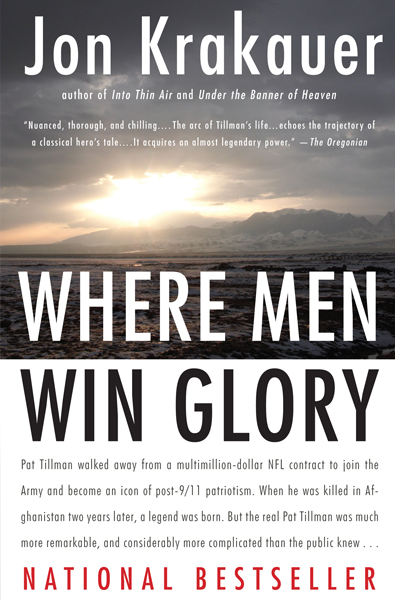
Krakauer retreats from Lynch-source claim (posted November 11): This post revealed author Jon Krakauer’s quiet retreat from claims in a 2009 book that Jim Wilkinson, a former White House official, was the source for the bogus Washington Post report about Jessica Lynch and her supposed battlefield heroics in the Iraq War in 2003.

The claims in Krakauer’s book were unattributed — and vigorously denied by Wilkinson, who sought a correction.

When it came, the correction was inserted unobtrusively in a new printing of the paperback edition of Krakauer’s book, Where Men Win Glory. It read:

“Earlier editions of this book stated that it was Jim Wilkinson ‘who arranged to give the Washington Post exclusive access’ to this leaked intelligence [about Jessica Lynch]. This is incorrect. Wilkinson had nothing to do with the leak.”

I’ve noted that the Post’s enduring silence about its sources on the Lynch story has allowed for the emergence not only of false allegations such as those about Wilkinson, but of a false narrative that the military concocted the tale about Lynch’s derring-do.

The false narrative  also has deflected attention from the soldier whose heroics apparently were misattributed to Lynch. He was Sgt. Donald Walters, a cook in Lynch’s unit.

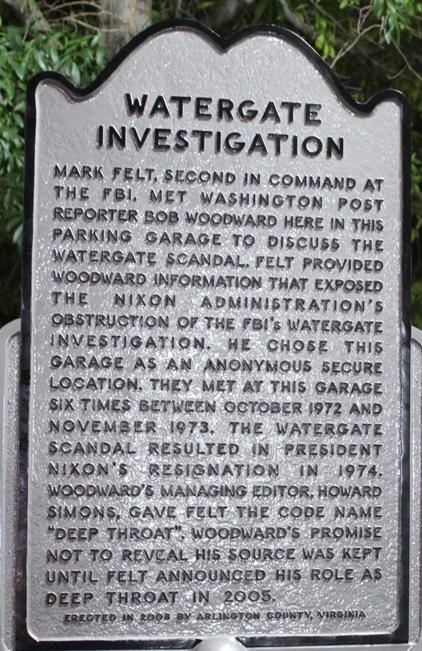
‘Deep Throat’ garage marker errs about Watergate source disclosures (posted August 18): A handsome historical marker went up in August outside the parking garage in Arlington, Virginia, where Bob Woodward of the Post conferred occasionally in 1972 and 1973 with his stealthy Watergate source, “Deep Throat.”

The marker, I pointed out, errs in describing the information Woodward received from the “Deep Throat” source, who in 2005 revealed himself as W. Mark Felt, formerly the FBI’s second in command.

The marker says:

“Felt provided Woodward information that exposed the Nixon administration’s obstruction of the FBI’s Watergate investigation.”

Which just isn’t so.

Such evidence, had “Deep Throat” offered it to Woodward, would have been so damaging and so explosive that it surely would have forced Richard Nixon to resign the presidency well before he did, in August 1974.

Felt didn’t have that sort of information — or (less likely) didn’t share it with Woodward.

I noted in my post about the marker that All the President’s Men, the book Woodward wrote with Carl Bernstein about their Watergate reporting, says Woodward’s conversations with “Deep Throat” were intended “only to confirm information that had been gathered elsewhere and to add some perspective.”

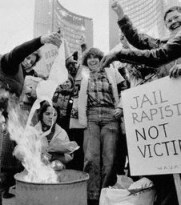
Bra-burning in Toronto: Confirmed (posted February 19): I ascertained in this post that an image of a bra-burning protest in Toronto in 1979 was no hoax, that the photograph was authentic.

I had not seen the photograph before it appeared in February with an article at the online site of  London’s Guardian newspaper.

I had doubts about the photo’s authenticity — given the periodic claims that no bras ever were burned at a feminist protest. The Toronto image, I suspected, might have been unethically altered.

Turns out that was not the case.

I tracked down one of the participants at the Toronto protest and she confirmed the bra-burning, saying by phone from Vancouver:

“The photo is authentic. Absolutely. It happened.”

The participant was Vicki Trerise, who appears at the far right in the photograph above.

The photograph shows a moment of demonstrative bra-burning, although Trerise said it “wasn’t a focal point” of the protest, which took place not far from Toronto’s City Hall.

The bra-burning came near the end of the demonstration, which was called to protest what the organizers said was an illogical report about rape, prepared by the Ontario Provincial Police.

Trerise said the demonstrators in Toronto were media-savvy and “knew that if they burned a bra, someone would take their picture.”

Suspect Murrow quote pulled at Murrow school (posted February 17): The online welcome page of the dean of the Edward R. Murrow College of Communication at Washington State University contained a quotation attributed to Murrow that’s only half-true.

Murrow

The quote reads:

“We must not confuse dissent with disloyalty. When the loyal opposition dies, I think the soul of America dies with it.”

As I’ve reported previously, the first portion of the quote was indeed spoken by Murrow, in his mythical 1954 television program that addressed Senator Joseph McCarthy’s red-baiting ways.

The second part of the quote — “When the loyal opposition dies, I think the soul of America dies with it” — is apocryphal.

In February, I found that the full quotation — accompanied by a facsimile of Murrow’s signature — was posted at the welcome page of Dean Lawrence Pintak of Murrow College at Washington State, Murrow’s alma mater.

I asked the dean what knew about the quote’s provenance, noting that I had consulted, among other sources, a database of historical newspapers which contained no articles quoting the “loyal opposition” passage.

Pintak referred my inquiry to an instructor on his faculty who, a few hours later, sent an email to the dean and me, stating:

“While [the ‘loyal opposition’ quotation] seems to reflect the Murrow spirit, the lack of evidence that he phrased it that way is indeed suspicious.”

He added: “I feel the evidence says no, Murrow did not say this.”

By day’s end, the suspect quote had been pulled from the welcome page. Just the authentic portion — “We must not confuse dissent with disloyalty” — remained posted there.

Mythmaking in Moscow: Biden says WaPo brought down Nixon (posted March 12): Joe Biden, the hapless U.S. vice president, repeated the dominant but misleading narrative about the Watergate scandal in March by telling an audience in Moscow that the Washington Post had “brought down” Richard Nixon’s corrupt presidency.

The gaffe-prone Biden told his audience:

“In my country it was a newspaper, not the FBI, or the Justice Department, it was a newspaper, the Washington Post that brought down a President for illegal actions.”

It’s a version of scandal that few serious historians accept. Not even the Washington Post buys into such a myth-encrusted interpretation.

Indeed, principals at the Post from time to time have sought to distance the newspaper from that misleading assessment.

For example, Katharine Graham, the newspaper’s publisher during and after the Watergate scandal, said in 1997, at a program marking the 25th anniversary of the scandal:

“Sometimes people accuse us of bringing down a president, which of course we didn’t do. The processes that caused [Nixon’s] resignation were constitutional.”

More recently, Michael Getler, then the newspaper’s ombudsman, wrote in 2005:

“Ultimately, it was not The Post, but the FBI, a Congress acting in bipartisan fashion and the courts that brought down the Nixon administration.”

Such comments are not the expressions of false modesty. Instead, they represent a more accurate reading of the history of Watergate than Biden offered up in Moscow.

Even so, in the run-up to the scandal’s 40th anniversary in 2012, the Watergate myth — the heroic-journalist trope — is sure to emerge often and insistently.

But the Post and its reporting of Watergate assuredly did not bring down Nixon, as I discuss in Getting It Wrong, my latest book which was published in 2010.

WJC

Many thanks to Instapundit
Glenn Reynolds for linking to this post.

Other memorable posts of 2011:

The debunking of the year, 2011

In Media myths, Debunking on December 29, 2011 at 5:15 am

Freeman (Middle East Policy Council)

The nod for the most notable debunking of 2011 goes to retired U.S. diplomat Charles W. (Chas) Freeman Jr. for puncturing the popular tale about Zhou Enlai’s remark in 1972 that it was “too early to say” what the effects would be of the French Revolution.

Freeman told a panel in Washington, D.C., in June that the Chinese premier was referring to the turmoil in France in 1968, not the years of revolutionary upheaval that began in 1789.

His remarks debunking the Zhou misinterpretation were first published by London’s Financial Times.

Zhou’s “too early” comment was made during President Richard M. Nixon’s historic visit to China in February 1972. Freeman, then 28-years-old, was the president’s interpreter on the trip and heard Zhou’s remark.

Freeman said during the panel discussion in June that the misinterpretation “was too delightful to set straight” at the time.

In a subsequent interview with me, Freeman said it was “absolutely clear” from the context of the conversation that Zhou’s comment was a reference to the turmoil of 1968.

Freeman described Zhou’s remark as “a classic of the genre of a constantly repeated misunderstanding that has taken on a life of its own.”

(In an oral history interview in 1995, Freeman said Zhou possessed  “enormous grace and charm.”)

The conventional interpretation of Zhou’s “too early” comment lives on because it suggests that Chinese leaders are inclined to a long and patient view of history.

“I cannot explain the confusion about Zhou’s comment except in terms of the extent to which it conveniently bolstered a stereotype (as usual with all stereotypes, partly perceptive) about Chinese statesmen as far-sighted individuals who think in longer terms than their Western counterparts,” Freeman said, adding:

“It was what people wanted to hear and believe, so it took” hold.

Indeed, it did. The misinterpretation persists — and even has been invoked when it’s acknowledged as apocryphal.

The puncturing of the Zhou misinterpretation rates as the “debunking of the year” not only because of its significance but because of its relevance to busting media myths, those delicious but dubious tales that masquerade as factual and offer distorted views of historical events.

In designating Freeman’s disclosure as the “debunking of the year,” I’m reminded of high-minded observations offered in 1998 by Max Frankel, formerly the executive editor of the New York Times.

In observations that go to the heart of the importance of busting media myths, Frankel wrote:

“What’s wrong with a little mendacity — so goes the theory — to give a tale velocity? It is unforgivably wrong to give fanciful stories the luster of fact, or to use facts to let fictions parade as truths.”

Puncturing the Zhou misinterpretation seems in keeping with that objective. The debunking, moreover, offers us a more accurate, more telling, and more realistic view of history and historical figures.

Media Myth Alert‘s first “debunking of the year” went in 2009 to the Spanish researchers who challenged the authenticity of Robert Capa’s iconic “Falling Soldier” image, taken in September 1936 during the Spanish Civil War.

Capa’s photograph purports to show a charging loyalist militiaman at the instant he is fatally death.

No “debunking of the year” was designated in 2010, the year of publication of my latest book, Getting It Wrong, which punctures 10 prominent media-driven myths.

WJC

Many thanks to Instapundit
Glenn Reynolds for linking to this post.

Recent and related:

So it begins: Woodward, Bernstein, and excess in run-up to Watergate’s 40th

In Anniversaries, Debunking, Washington Post, Watergate myth on December 4, 2011 at 12:48 am

American journalists love anniversaries, so expect excess next year at the 40th anniversary of the Watergate break-in, which gave rise to the greatest scandal in U.S. politics — and to the media-driven myth that Washington Post journalists toppled a president.

Woodward: 40th anniversary honor

In fact, Watergate commemorative excess is already scheduled.

The Los Angeles Press Club announced the other day that it plans to recognize the Watergate reporting of Bob Woodward and Carl Bernstein at next year’s Southern California Journalism Awards program.

“Woodward and Bernstein’s series of articles for The Washington Post unraveled the biggest American political scandal to date, culminating in President Richard Nixon’s resignation in 1974. Four decades later, the stories still stand as a bellwether of investigative journalism,” the press club said in a news release.  “To mark the occasion, the Los Angeles Press Club will honor Woodward and Bernstein with the 2012 President’s Award.”

Woodward and Bernstein’s Watergate reporting won a Pulitzer Prize for the Post in 1973. But to say they “unraveled” Watergate is an exaggeration, a misreading of history.

As I discuss in my latest book, Getting It Wrong, the reporting of Woodward and Bernstein was at best a minor factor in bringing down Richard Nixon.

What ended Nixon’s presidency was the incontrovertible evidence of the president’s culpability in the crimes of Watergate — evidence captured on audiotapes that he secretly made of his conversations at the White House.

The decisive evidence — known as the “Smoking Gun” tape — revealed that Nixon at a meeting with his top aide, H.R. Haldemann, on June 23, 1972, sought to deflect or derail the FBI investigation into the break-in several days before at Democratic National headquarters  at the Watergate complex in Washington, DC.

The reporting of Woodward and Bernstein didn’t reveal the contents of that tape, which Watergate prosecutors had subpoenaed and which Nixon had refused to surrender until 1974, after the U.S. Supreme Court ordered him to do so.

Their reporting didn’t disclose the existence of Nixon’s taping system, either. It was revealed in July 1973, during hearings of the U.S. Senate Select Committee on Watergate.

In All the President’s Men, their book about their Watergate reporting, Woodward and Bernstein said they had received a tip about the taping system a few days before its existence was made public.

According to All the President’s Men, Ben Bradlee, then the Post‘s executive editor, suggested not expending much energy pursuing the tip. And Woodward and Bernstein didn’t.

What really “unraveled” Watergate, I write in Getting It Wrong, “was the collective if not always the coordinated forces of special prosecutors, federal judges, both houses of Congress, the Supreme Court, as well as the Justice Department and the FBI.

Even then, despite all that scrutiny and pressure, Nixon, I argue, “likely would have served out his term if not for the audiotape recordings he secretly made of most conversations in the Oval Office of the White House.”

Far more important the reporting of Woodward and Bernstein to the outcome of Watergate was the federal judge who presided at Watergate-related trials, John J. Sirica.

The Post acknowledged Sirica’s decisive role in unraveling Watergate in its obituary of the judge, published in 1992, shortly after his death.

The newspaper said Sirica’s “persistence in searching for the facts while presiding over the Watergate cases led to President Nixon’s resignation,” adding:

“Sirica’s order that tape recordings of White House conversations about the Watergate break-in be made available to prosecutors precipitated Nixon’s resignation in 1974. The tapes revealed that Nixon had approved plans for the Watergate coverup six days after the break-in at the Democratic National Committee’s headquarters in the Watergate complex by men who were working for the Committee to Reelect the President.

“In directing the White House to produce the tapes, Sirica set himself on a constitutional collision course with Nixon, who tried to invoke executive privilege and argue that the tapes were not subject to judicial scrutiny. But in a historic ruling, the U.S. Supreme Court upheld Sirica, ruling unanimously that the judiciary must have the last word in an orderly constitutional system.”

WJC

Recent and related:

A thumbsucker commentary and the Zhou misinterpretation

In Cronkite Moment, Debunking, Furnish the war on December 2, 2011 at 12:49 am

A thumbsucker is what some American journalists call a self-indulgent article or commentary that tends to go on and on, usually about an obscure or time-worn topic.

At its online site yesterday, Britain’s Guardian newspaper posted a thumbsucker that ruminated about the close of historical periods, offering observations such as this:

“Bloodied soldiers didn’t stand around on the battlefield at Bosworth and immediately reflect that, though it had been a hard-fought day, at least the later Middle Ages had now ended.”

Obscure, perhaps, but not altogether uninteresting.

But what caught the eye of Media Myth Alert was the reference to the conventional but erroneous version of Zhou Enlai’s famous and often-quoted comment in 1972, that it was “too early” to assess the implications of the French Revolution.

That version is frequently offered as evidence of China’s sage, patient, and far-sighted ways. That’s rather how the Guardian thumbsucker-commentary referred to it, saying:

“If, as Zhou Enlai said, it is too soon to have a view of the French Revolution, then it is probably too soon to say if the [governing] coalition [in Britain] is a failed government.”

But Zhou was not referring to the French Revolution that began in 1789.

He was speaking about the political turmoil in France of 1968.

We know this from a retired U.S. diplomat, Charles W.  (Chas) Freeman Jr., who was present when Zhou made the comment during President Richard Nixon’s visit to China in 1972.

Freeman, who was Nixon’s interpreter during the historic, weeklong trip, offered the revised interpretation almost six months ago at a panel discussion in Washington.  The discussion’s moderator was Richard McGregor, a journalist and China expert who wrote about Freeman’s comments for the Financial Times of London.

In a subsequent interview with me, Freeman elaborated on his recollection about Zhou’s comment, saying it probably was made over lunch or dinner, during a conversation about revolutions that had succeeded and failed. The discussion, Freeman said, touched on the Prague Spring of 1968 and the Hungarian uprising of 1956, both of which the Soviet Union crushed.

Freeman said it was “absolutely clear” from the context of the discussion that Zhou was speaking about 1968.

Just how Zhou’s remark came to be so dramatically misinterpreted, Freeman was unable to say.

“I cannot explain the confusion about Zhou’s comment except in terms of the extent to which it conveniently bolstered a stereotype (as usual with all stereotypes, partly perceptive) about Chinese statesmen as far-sighted individuals who think in longer terms than their Western counterparts,” Freeman said. “It was what people wanted to hear and believe, so it took” hold.

Stereotyping is but one hazard of dubious quotes like Zhou’s.

Dubious and misinterpreted quotes tend to are falsehoods masquerading as the truth — as suggested by the delicious but apocryphal tale about William Randolph Hearst and his purported vow to “furnish the war” with Spain at the end of the 19th century.

Dubious quotes also dishonor their purported authors — as in the comment often attributed to President Lyndon B. Johnson. Upon hearing newsman Walter Cronkite’s downbeat assessment about the war in Vietnam, Johnson supposedly said:

“If I’ve lost Cronkite, I’ve lost Middle America.”

Or something to that effect.

But as I note in my latest book, Getting It Wrong, there’s no persuasive evidence that Johnson ever made such a comment.

Besides, he didn’t see Cronkite’s report about Vietnam when it aired in late February 1968.

So it’s very difficult to believe the president could have been much moved by a show he didn’t see.

Or that he would have uttered such a comment, if he had seen the program.

WJC

Recent and related:

‘New Yorker’ misinterprets Zhou’s ‘too early’ remark

In Debunking, Media myths on October 14, 2011 at 12:28 am

The New Yorker magazine ruminates in its latest number about the amorphous and bizarre Occupy Wall Street protests and in doing so invokes the mythical quotation about Chinese premier Zhou Enlai and the French Revolution.

About the protest movement, the New Yorker asked:

“[W]hat’s the meaning of it all? So far, the best answer is the one that Zhou Enlai, the Great Helmsman’s great henchman, supposedly gave when President Nixon supposedly asked him to assess the impact of the French Revolution: it’s too early to tell.”

Except that Zhou wasn’t referring to the French Revolution, which began in 1789. Rather, he was alluding to the civil unrest and protests that had seized France in 1968.

We know this from Nixon’s interpreter, a former U.S. diplomat named Charles W. (Chas) Freeman Jr., who was present at the meeting in Beijing in 1972 when Zhou made the remark.

First to call attention the Zhou misinterpretation was London’s Financial Times, which quoted Freeman’s remarks at a panel discussion four months ago in Washington, D.C.

Freeman told me in a subsequent interview that it was “absolutely clear” from the context of the conversation that Zhou’s “too early” comment was in reference to the turmoil of 1968.

Freeman said Zhou’s remark probably was made over lunch or dinner, during a discussion about revolutions that had succeeded and failed. They included, Freeman added, the Prague Spring of 1968 and the Hungarian uprising of 1956, both of which the Soviet Union had crushed.

Freeman characterized Zhou’s remark as “a classic of the genre of a constantly repeated misunderstanding that has taken on a life of its own.”

He’s quite right about that.

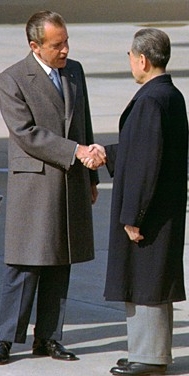
Nixon meets Zhou, 1972

The misinterpretation of Zhou’s remark long ago took on life of its own, offering as it did apparent confirmation about the sagaciousness of China’s leaders and their willingness or inclination to take an exceptionally long view of history.

But the misinterpreted version, Freeman noted, “conveniently bolstered a stereotype … about Chinese statesmen as far-sighted individuals who think in longer terms than their Western counterparts.”

The misconstrued comment, he added, fit nicely with “what people wanted to hear and believe.”

And so it told hold.

As the New Yorker essay suggests, the conventional interpretation — the erroneous version — retains broad appeal, despite Freeman’s well-publicized corrective.

Which does makes you wonder about the New Yorker’s vaunted fact-checkers, though.

WJC

Recent and related:

‘Deep Throat’ didn’t say ‘follow the money’; nor was he vital in Watergate

In Debunking, Media myths, Washington Post, Watergate myth on October 13, 2011 at 12:55 am

It is quite impressive how Watergate’s most famous made-up line — “follow the money” — is so often cited by so many news outlets.

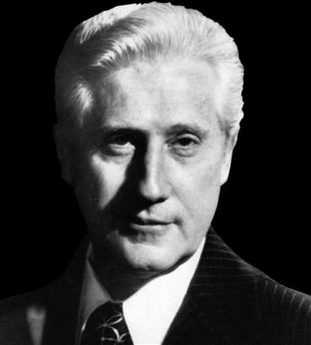
Felt: Not so vital

Canada’s Calgary Herald was the latest to indulge in the myth that “follow the money” was guidance offered by the high-level anonymous source code-named “Deep Throat.” The advice supposedly was offered to Bob Woodward, a Washington Post reporter covering Watergate.

The Herald invoked the made-up line in an article the other day about U.S. charitable organizations making donations to Canadian environmental groups.

“Most of us don’t think much about where organizational funding comes from when we witness well-orchestrated protests against, say, fish farming,” the Herald article said, adding:

“But, as the Watergate-era Deep Throat source once counselled, follow the money.”

“Deep Throat” — who was self-revealed in 2005 to have been W. Mark Felt Jr., formerly the second-ranking official at the FBI — never spoke the line.

It was written into the screenplay of All the President’s Men, the cinematic version of the book by the same title that Woodward and Post colleague Carl Bernstein wrote about their Watergate reporting.

Follow the money” was uttered by Hal Holbrook, the actor who turned in an outstanding performance playing “Deep Throat” in the movie. He delivered the line with such assurance that it really did seem to offer a way through the labyrinth of the Watergate scandal.

Woodward

But even if Woodward had been advised to “follow the money,” the guidance neither would have unraveled Watergate nor led him to Nixon.

What forced Nixon’s resignation in August 1974 was not the misuse of campaign funds but, rather, his attempt to obstruct justice by covering up the signal crime of the Watergate scandal, the break-in at the headquarters of the Democratic National Committee in June 1972.

Although the movie version of All the President’s Men portrays “Deep Throat” as crucial to Watergate’s outcome, his contributions weren’t so vital in real life, as the scandal slowly unfolded.

That assessment was offered the other day by Barry Sussman, who was the Watergate editor for the Washington Post. In an online essay at Huffington Post, Sussman wrote that “Deep Throat/Mark Felt was more myth than reality as a useful Watergate source.”

Sussman’s essay linked to a commentary he wrote in 2005, after the identity of “Deep Throat” was revealed — more than 30 years after Woodward and Bernstein had written about him in All the President’s Men, an immediate best-seller when it appeared in 1974.

“Deep Throat was nice to have around, but that’s about it,” Sussman wrote. “His role as a key Watergate source for the Post is a myth, created by a movie and sustained by hype for almost 30 years.”

That’s very intriguing, especially from someone as close to the Post’s Watergate reporting as Sussman was.

He’s now editor of the Nieman Watchdog Project of the Nieman Foundation for Journalism at Harvard University.

He closed his 2005 commentary by asserting:

“Watergate for many years has been hailed as a victory for the American system, and for the press. It wasn’t. It was a very narrow miss. Woodward and Bernstein did fine work in helping lay out the scandal as it took place. But they have been riding the myth and hype of Deep Throat/Mark Felt for a very long time.”

It deserves emphasizing that Watergate’s dominant narrative notwithstanding, the reporting by Woodward and Bernstein did not, as I discuss in my latest book, Getting It Wrong, take down Nixon’s corrupt presidency.

Unraveling Watergate, as I point out in Getting It Wrong, required “the collective if not always the coordinated forces of special prosecutors, federal judges, both houses of Congress, the Supreme Court, as well as the Justice Department and the FBI.

“Even then,” I add, “Nixon likely would have served out his term if not for the audiotape recordings he secretly made of most conversations in the Oval Office of the White House.

“Only when compelled by the Supreme Court did Nixon surrender those recordings,” which captured him obstructing justice.

Sussman’s right: Watergate was a very narrow miss.

WJC

Recent and related: