W. Joseph Campbell

Archive for the ‘1897’ Category

Where do they get this stuff?

In 1897, Debunking, Furnish the war, Media myths, Spanish-American War, Yellow Journalism on September 24, 2011 at 5:06 am

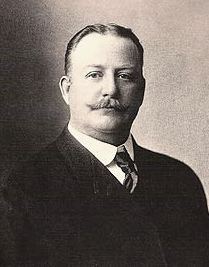
William Randolph Hearst almost surely never vowed to “furnish the war” with Spain, and his newspapers of the late 19th century were much more than rumor-mongering sheets.

Hearst: Never made the vow

None of this is particularly new, though.

The tale about “furnish the war” was debunked as a media myth years ago, for example.

And Hearst’s leading biographer, David Nasaw, noted in his authoritative 2000 work, The Chief, that “Hearst and his staff improved on their product” day by day in the late 1890s.

“Their headlines,” Nasaw wrote, “were more provocative than anyone else’s, their drawings more lifelike … the writing throughout the paper outstanding, if, at times, a bit long-winded. Equally important in attracting new readers, the paper’s layout was excellent, with text and drawing breaking through columns to create new full-page landscapes….”

So it’s a bit baffling just where the exaggerated and cartoonish characterizations about Hearst come from. When they are cited, they’re usually accompanied by little or no sourcing information — as was the case in a commentary posted yesterday at the Technorati news site.

The commentary asserted:

“Media magnate William Randolph Heart once quipped, ‘You furnish the pictures and I’ll furnish the war.’ As the father of yellow journalism, he was well known for providing his stories as a game of Telephone, repeating a rumor of a rumor of a rumor. It made him billions, and lowered the discourse of media to this day.”

I revisit the tale about “furnish the war” in my latest book, Getting It Wrong, noting that it was first recounted in a memoir published in 1901 by James Creelman, a portly, Canadian-born journalist prone to pomposity and exaggeration.

Creelman

Creelman, I write, “never explained how he learned about the anecdote” about Hearst’s purported vow to “furnish the war.” Creelman offered no citation for it in his memoir, On the Great Highway.

According to Creelman, Hearst’s vow was contained in an exchange of telegrams with the artist Frederic Remington, who went to Cuba in early 1897 to draw sketches for Hearst’s newspapers about the rebellion against Spanish colonial rule.

The Cuba rebellion gave rise 15 months later to the Spanish-American War.

At the time Remington was in Cuba, Creelman was in Madrid, which means he had no first-hand knowledge of the purported exchange of telegrams.

I point out in Getting It Wrong that the artifacts — the telegrams supposedly exchanged by Remington and Hearst — have never turned up and that Hearst denied ever having sent such a message.

What’s more, I write, the anecdote “lives on despite an irreconcilable internal inconsistency: It would have been absurd for Hearst to vow to ‘furnish the war’ because war — specifically, the Cuban rebellion against Spain’s colonial rule — was the very reason Hearst sent Remington to Cuba in the first place.”

Interestingly, Creelman recounted Hearst’s purported vow not as a rebuke but, I write, “as a compliment, to commend Hearst and the activist, anticipatory ‘yellow journalism’ that he had pioneered in New York City.”

The anecdote was, to Creelman, illustrative of the power and potential of what Hearst championed as the “journalism of action” — the journalism that gets things done.

It was journalism with a social conscience.

Hearst’s leading newspaper, the New York Journal, insisted in editorials that a newspaper’s duty should not be “confined to exhortation.” Rather, newspapers had an obligation to inject themselves into public life, to right the wrongs that government could not or would not address.

So Hearstian journalism of the late 19th century was scarcely a game of “telephone,” of rumor piled upon rumor.

Why is all this significant?

Because the anecdote about “furnish the war” is often presented as evidence that Hearst did foment the conflict with Spain over Cuba in 1898.

Which is nonsense.

The reasons why the United States went to war in 1898 are far more profound and complex than the supposed manipulative powers of Hearst and his newspapers.

WJC

Media myth infiltrates NYTimes ‘Learning Network’

In 1897, Debunking, Furnish the war, New York Times, Spanish-American War on August 13, 2011 at 12:06 am

The New York Times’ Learning  Network” blog declares says it provides “teaching and learning materials and ideas” based on the newspaper’s archival content.

Its entry yesterday was pegged to the 113th anniversary of the effective end of the Spanish-American War — and offered up a hoary media myth in discussing newspaper coverage of the conflict.

The Times item stated:

Support for the Spanish-American War was stirred by sensationalist accounts of Spanish wrongdoing in the newspapers of [William] Randolph Hearst and Joseph Pulitzer; according to legend, Hearst told an illustrator covering the war, ‘You furnish the pictures and I will furnish the war.'”

It’s highly debatable whether much support for the war was generated by the newspapers of Hearst and Pulitzer. There is considerable evidence to suggest that their newspapers had little if any agenda-setting effect on the administration of President William McKinley on the question of going to war with Spain over Cuba in 1898.

And it’s virtually certain that Hearst’s purported vow to “furnish the war” is apocryphal.

As I discuss in my latest book, Getting It Wrong, the anecdote about “furnish the war” is a hardy media myth that lives on despite concerted attempts to dismantle and debunk it.

The vow supposedly was contained in a telegram sent to the artist, Frederic Remington, who was in Cuba on assignment for Hearst’s New York Journal. Remington and the correspondent Richard Harding Davis were there to cover the rebellion against Spain’s harsh colonial rule — a rebellion that gave rise in 1898 to the Spanish-American War.

Remington and Davis reached Havana in early January 1897; Remington stayed just six days.

Before leaving for New York by passenger steamer, Remington supposedly cabled Hearst, stating:

“Everything is quiet. There will be no war. I wish to return.”

Hearst is said to have replied:

Please remain. You furnish the pictures, and I’ll furnish the war.”

But Remington didn’t remain in Cuba.

He promptly returned to New York, where his sketches received prominent display in Hearst’s Journal. They appeared beneath such flattering headlines as:

“Cuban War Sketches Gathered in the Field by Frederic Remington; The Gifted Artist, Visiting Cuba Especially for the Journal.”

That’s scarcely the kind of tribute Hearst would have given a wayward artist who ignored instructions to “remain” in Cuba.

I further note in Getting It Wrong that the myth about Hearst’s vow “lives on despite an irreconcilable internal inconsistency: It would have been absurd for Hearst to vow to ‘furnish the war’ because war — specifically, the Cuban rebellion against Spain’s colonial rule — was the very reason Hearst sent Remington to Cuba in the first place.”

Anyone reading U.S. newspapers in early 1897 “would have been well aware,” I point out, “that Cuba was a theater of a nasty war” of rebellion.

Not only that, but the artifacts — the telegrams reputedly exchanged by Remington and Hearst — have never surfaced. Spanish censors closely monitored incoming and outgoing telegraphic traffic in Havana and they surely would have intercepted and called attention to Hearst’s incendiary message, had it been sent.

For those and other reasons, the tale about the Remington-Hearst exchange is surely apocryphal — a myth too often presented as fact.

The “Learning Network” isn’t off the hook by couching its reference to the purported Remington-Hearst exchange as “legend.” If the blog had doubts about the veracity of Heart’s purported vow, then it ought not have mentioned it in the first place.

WJC

Recent and related:

‘Economist’ indulges in media myth

In 1897, Debunking, Media myths, Spanish-American War, Yellow Journalism on July 22, 2011 at 8:31 am

The latest issue of Britain’s Economist newsweekly carries a column that presents an intriguing discussion of “the madness of great men” — an affliction it says is common among media tycoons.

To buttress that point, the usually well-reported Economist turns to a media myth — the discredited notion that press baron William Randolph Hearst, the timeless bogeyman of American journalism, fomented the Spanish-American War of 1898.

Such claims about Hearst are often made but rarely supported by persuasive explanations as to how the contents of Hearst’s newspapers were transformed into U.S. policy and military action.

The Economist column offers no such explanation: Its assertion about Hearst is supported by no evidence.

The column, titled “Great bad men as bosses,” considers the serious recent troubles of media mogul Rupert Murdoch and introduces Hearst with a brief discussion of “what Norwegians call stormannsgalskap, the madness of great men.” (It also can be translated to “megalomania.”)

Stormannsgalskap,” the Economist says, “is particularly common among media barons, not least because they frequently blur the line between reporting reality and shaping it. William Randolph Hearst is widely suspected of stirring up the Spanish-American war to give his papers something to report.”

Widely suspected by whom?

No serious historian of the Spanish-American war period gives much credence to such claims.

As I wrote in my 2001 book, Yellow Journalism: Puncturing the Myths, Defining the Legacies, the yellow press of Hearst and Joseph Pulitzer “is not to blame for the Spanish-American-War. It did not force — it could not have forced—the United States into hostilities with Spain over Cuba in 1898.

“The conflict was, rather, the result of a convergence of forces far beyond the control or direct influence of even the most aggressive of the yellow newspapers, William Randolph Hearst’s New York Journal.”

The proximate cause of the war was the humanitarian crisis created by Spain’s bungled attempts to quell a rebellion that had begun in Cuba in 1895 and had spread across the island by 1898.

To deprive the Cuban rebels of support, Spain’s colonial rulers herded Cuban women, children, and old men into garrison towns, where thousands of them died from starvation and disease.

While mostly forgotten nowadays, that humanitarian crisis was widely reported in the U.S. press, and widely condemned by the U.S. government.

The disaster on Cuba “inevitably stirred outrage and condemnation in the United States,” I noted in Yellow Journalism.

And as a leading historian of that period, Ivan Musicant, has correctly noted, the ill-advised and destructive policy toward Cuban non-combatants “did more to bring on the Spanish-American War than anything else the Spanish could have done.”

The Economist’s additional claim, that Hearst stirred up the war “to give his papers something to report,” is laughable.

Quite simply, there was no shortage of news to cover in the run-up to the Spanish-American War.

As I wrote in Yellow Journalism, a “variety of other events figured prominently on the Journal’s front page in the months before the Spanish-American War,” including the inauguration in March 1897 of President William McKinley;  the brief war between Greece and Turkey; the headless torso murder mystery that gripped New York in the summer of 1897; the Klondike gold rush; New York’s vigorously contested mayoral election, and the Journal-sponsored New Year’s Eve gala to celebrate the political consolidation of the five boroughs of New York City.

WJC

Tarring Murdoch with Hearst’s evil ‘vow’ to ‘furnish the war’

In 1897, Debunking, Furnish the war, Media myths, Spanish-American War on July 20, 2011 at 8:28 am

Rupert Murdoch’s much-anticipated hearing yesterday before a Parliament committee was hardly very dramatic — save for the assault on the tough old media mogul by a chucklehead wielding a shaving cream-pie.

The hearing, which centered around the misconduct of journalists formerly in Murdoch’s employ, was more farce and tedium than high-noon encounter that threatened Murdoch’s far-reaching media empire.

Murdoch, who is 80 and clearly doddering, even won a measure of sympathy as victim of the none-too-bright shaving cream-pie attack.

What was fairly remarkable was that in the hearing’s aftermath at least a couple of U.S. commentators turned credulously to a hoary media myth to make points about Murdoch’s supposedly evil ways.

Hearst: Made no vow

The media myth is the tale that press baron William Randolph Hearst, in an exchange of telegrams with the artist Frederic Remington, vowed to “furnish the war” with Spain in the late 19th century.

I describe in my latest book, Getting It Wrong, why that tale is almost surely apocryphal for reasons that include Hearst’s denial and the improbable context in which his message supposedly was sent.

One of the pundits invoking the media myth was Milos Stehlik, a commentator on WBEZ, an FM radio station in Chicago.

Stehlik likened Murdoch to Hearst and Charles Foster Kane, the fictional media baron in Citizen Kane, the 1941 movie loosely based on Hearst’s life.

“Kane, Hearst and Murdoch … share a political activism which pretends to help the media-consuming masses while, in reality, mostly helped their own privileged class,” Stehlik declared, before invoking the “furnish the war” myth as if it were genuine.

“Hearst,” he said, “told artist Frederic Remington, who was in Cuba, to send dispatches about the war. Remington sent Hearst a telegram saying there was no war in Cuba. Hearst famously told Remington to just provide him the pictures, and he would furnish the war.”

Meanwhile in Seattle, Jon Talton, a newspaper columnist on economic issues, posted a commentary that began this way:

“Press lord Rupert Murdoch isn’t accused of doing anything some of his notorious forebears wouldn’t have attempted given the technology. ‘You supply the pictures and I’ll supply the war,’ William Randolph Hearst is said to have instructed his Cuba correspondents as he ginned up circulation on the eve of the Spanish-American War.”

If Hearst had made the vow, it wouldn’t have been “on the eve of the Spanish-American War,” as Talton wrote in his column for the Seattle Times. It would have been in January 1897 — 15 months before the war began.

That was when Remington arrived in Havana, on a brief assignment for Hearst’s New York Journal to draw sketches of the Cuban rebellion against Spanish colonial rule.

Remington soon tired of the assignment and, the myth has it, cabled Hearst, stating:

“Everything is quiet. There will be no war. I wish to return.”

Hearst, in New York, supposedly replied by stating:

“Please remain. You furnish the pictures, and I’ll furnish the war.”

The anecdote’s sole original source was a blustering, cigar-chomping journalist named James Creelman, who recounted the tale in his 1901 memoir, On the Great Highway.

Creelman, though, did not explain how he heard about the Remington-Hearst exchange. It couldn’t have been first hand because at the time Remington was in Cuba, Creelman was in Spain, on assignment for the Journal.

That means Creelman could only have learned about the tale second-hand or, as is more likely, just made it up.

Significantly, the context of the supposed Remington-Hearst exchange makes no sense.

I write in Getting It Wrong that “it would have been absurd for Hearst to vow to ‘furnish the war’ because war — specifically, the Cuban rebellion against Spain’s colonial rule — was the very reason Hearst sent Remington to Cuba in the first place.”

The rebellion was a vicious conflict that began in early 1895; by early 1897, it had reached islandwide proportion. As such, the rebellion attracted much attention in U.S. newspapers, including those published by Hearst.

So what may prompt pundits to turn credulously and not infrequently to the anecdote about Hearst and his supposed wickedness?

Because it’s arguably the most deliciously evil tale in journalism history, a tale that reveals Hearst’s ruthlessness and his warmongering. It’s a tale about journalism at its most sinister and malign, a tale wrapped in a dark and arrogant pledge to bring on a war the country otherwise wouldn’t have fought.

And these days, it’s a handy if indirect way of tarring Murdoch, by associating him with Hearst in the exclusive club of vile and villainous media magnates.

WJC

Many thanks to Instapundit
Glenn Reynolds for linking to this post

Recent and related:

BBC calls Hearst vow apocryphal, quotes it anyway

In 1897, Debunking, Furnish the war, Media myths, Spanish-American War, Yellow Journalism on July 15, 2011 at 10:28 am

Apocryphal but still quotable.

That’s how Britain’s venerable broadcaster, the BBC, treated the mythical anecdote about media titan William Randolph Hearst and his purported vow to “furnish the war” with Spain in the late 19th century.

In an article posted online yesterday, the BBC described Hearst as the “definitive [news] baron” and declared:

“He’s credited with the invention of tabloid journalism in the 1890s when his New York Journal began a bitter circulation war with Joseph Pulitzer’s New York World. He also had a reputation as a warmonger.

“‘You furnish the pictures and I’ll furnish the war,’ goes an apocryphal instruction he was supposed to have sent in a telegram to an illustrator in Havana.”

That’s right, the line is apocryphal. What, then, is the point in using it? As a none-too-clever, back-handed way of buttressing the dubious notion that Hearst and his newspapers were capable of fomenting a war?

That’s sloppy journalism from a leading international news organization.

As I discuss in my latest book, Getting It Wrong, Hearst’s purported vow to “furnish the war” with Spain is a particularly tenacious media-driven myth — a prominent but dubious tale about journalism that masquerades as factual.

I note that the tale about Hearst’s vow “has achieved unique status as an adaptable, hardy, all-purpose anecdote, useful in illustrating any number of media sins and shortcomings.

“It has been invoked to illustrate the media’s willingness to compromise impartiality, promote political agendas, and indulge in sensationalism. It has been used, more broadly, to suggest the media’s capacity to inject malign influence into international affairs.”

Hearst: Didn't say it

Reasons for doubting the presumptive Hearstian vow are many, I point out in Getting It Wrong, and include the fact that the telegram in which Hearst supposedly made the statement — in an exchange with the artist Frederic Remington, on assignment to Cuba — has never turned up.

Plus, Hearst denied making such a vow.

Not only that, but the anecdote lives on lives on despite what I call “an irreconcilable internal inconsistency.” That is, it would have been absurd for Hearst to vow to “furnish the war” because war— specifically, the Cuban rebellion against Spanish colonial rule— was the reason he sent Remington to Cuba in the first place.

The artist was in Cuba for just six days in January 1897. By that time, the Cuban rebellion — a war for political independence — had reached islandwide proportions. “Anyone reading U.S. newspapers in early 1897 would have been well aware that Cuba was a theater of a nasty war,” I write in Getting It Wrong.

Given the context, Hearst’s purported vow is utterly illogical.

And to invoke the anecdote knowing that it’s apocryphal is little short of disingenuous.

The BBC’s reference to Hearst’s being “credited with the invention of tabloid journalism in the 1890s” also is questionable.

Hearst’s style of flamboyant journalism certainly helped inspire the epithetyellow journalism,” but he was no father of tabloid journalism.

If anything, Hearst was a latecomer to that genre.

As David Nasaw wrote in The Chief, his admirably even-handed biography of Hearst, the press baron didn’t embrace the tabloid until the 1920s “because he was not comfortable with the format.

“He  had no interest in publishing a picture newspaper that had little room for political coverage, columns, cartoons, and the editorials he cared so much about.”

WJC

Many thanks to Instapundit
Glenn Reynolds for linking to this post.

Recent and related:

‘News of World’ closure breaks link to 19th century yellow journalism

In 1897, Debunking, Year studies on July 10, 2011 at 12:04 am

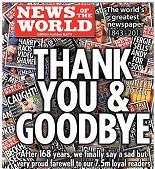
The abrupt closure of Britain’s largest Sunday tabloid, Rupert Murdoch’s raunchy, scandal-ridden News of the World, breaks a link to the yellow journalism that flared in urban America at the end of the 19th century.

Jail-breaking journalism

I’m not referring to the News of the World’s tabloid flamboyance, which certainly evoked the typographic boldness of William Randolph Hearst’s New York Journal, a broadsheet that was the leading exemplar of American yellow journalism.

The link went deeper than appearances.

The News of the World was an heir to Hearst’s activist-oriented, participatory journalism — a self-engaging, self-promoting style of newspapering unheard of these days in the United States.

As I note in my book The Year That Defined American Journalism: 1897 and the Clash of Paradigms, Hearst’s Journal at the end of the 19th century sought to set a standard for the American press, insisting, I write, “that newspapers were obliged to inject themselves, conspicuously and vigorously, in righting the wrongs of public life, and in filling the void of government inaction and incompetence.”

The year 1897 brought memorable evidence of Hearst’s style of activist journalism.

In the summer that year, Hearst deployed a phalanx of Journal reporters to solve the grisly case of headless torso murder in New York.

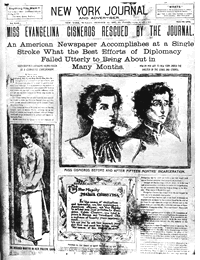
Later that year, a reporter for the Journal broke from jail in Havana a 19-year-old political prisoner named Evangelina Cisneros. The Journal — and more than a few other U.S. newspapers — celebrated the breathtaking breach of international law.

For the Journal, the Cisneros jailbreak (see image, above) was “epochal” and represented the “supreme achievement” of its paradigm of activist journalism.

It acknowledged that freeing Cisneros had violated Spanish law and flouted international convention — and the Journal seemed delighted to have done so, saying:

“The Journal is quite aware of the rank illegality of its action. It knows very well that the whole proceeding is lawlessly out of tune with the prosaic and commercial nineteenth century. We shall not be surprised at international complications, nor at solemn and rebuking assurances that the age of knight errantry is dead. To that it can be answered that if innocent maidens are still imprisoned by tyrants, the knight errant is yet needed.”

That sort of willingness to wink at illegality was demonstrated by the News of the World well before it became swept up in a cellphone-voicemail hacking scandal that brought about its demise.

Final edition

The News of the World, which published its final issue today, had been for years one of the world’s most controversial titles, due in part to its activist-oriented undercover operations, ostensibly undertaken to bring drug dealers, fugitive financiers, and other criminals to justice.

As I noted in my 2001 book, Yellow Journalism: Puncturing the Myths, Defining the Legacies, the targets of the News of the World often were “small-time celebrities and wayward sports figures dabbling in modest quantities of illegal drugs. The undercover methods were criticized as entrapment and dismissed as ‘a kind of investigative reporting without much investigating.'”

I also described a notorious case in 1999, in which reporters for News of the World “posed as wealthy Arabs and enticed a British earl to buy cocaine and share the drug with them. A detailed report about the peer’s conduct — he was depicted as drunkenly snorting cocaine with a £5 note — soon after was splashed across News of the World. He was arrested and convicted of selling drugs.

“But the presiding judge declined to send the peer to jail, citing the subterfuge of the News of the World. If not for the journalists’ sting, the judge observed, the crimes likely would not have been committed.”

Such outlandishness hinted at the tabloid’s more recent and more egregious misconduct of breaking into the cellular phone voicemail of hundreds of people, including members of Britain’s royal family and perhaps victims of the terror attack on London’s subway system July 2005.

Phone-hacking, of course, wasn’t an element in the repertoire of the yellow press of Hearst or of his mean-spirited rival, Joseph Pulitzer. Nor did they did bring on the war with Spain in 1898, as is often alleged.

But on occasion they turned to deception, misrepresentation, and self-motivated activism in pursuit of their lusty brand of big-time journalism.

WJC

Recent and related:

Noting the anniversary of Twain’s ‘report of my death’ comment

In 1897, Anniversaries, Debunking, Media myths, Newspapers, Yellow Journalism on June 1, 2011 at 7:02 am

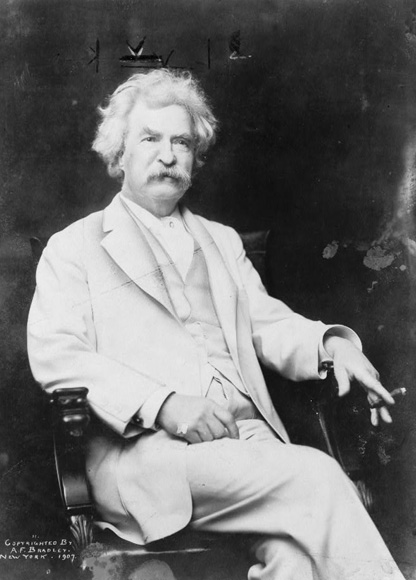
Tomorrow marks the 114th anniversary of Mark Twain‘s well-known, much-quoted, often-distorted observation: “The report of my death was an exaggeration.”

As is discussed in my 2006 book, The Year That Defined American Journalism, Twain’s remark was prompted by an article published June 1, 1897, in the New York Herald.

Mark Twain, 1907

The Herald, which then was regarded as one of the top daily newspapers in America, reported Twain, then 61, to be “grievously ill and possibly dying. Worse still, we are told that his brilliant intellect is shattered and that he is sorely in need of money.”

Twain was in London then, preparing to cover Queen Victoria’s Diamond Jubilee for William Randolph Hearst’s flamboyant New York Journal. That association allowed the Journal to puncture the Herald’s account as false.

In an article published June 2, 1897, beneath the headline, “Mark Twain Amused,” the Journal skewered the Herald’s story and offered Twain’s timeless denial: “The report of my death was an exaggeration.”

Twain’s line is often quoted as “the news of my death has been greatly exaggerated” and, sometimes, the Journal is said to have been the source for the erroneous report rather than the agent of its swift debunking.

According to the Journal, Twain said the likely source of the Herald’s error was the serious illness of his cousin, J.R. Clemens, who had been in London a few weeks before.

Ever eager to indulge in self-promotion, Hearst’s Journal enthusiastically embraced its brief association with Twain. Even so, it couldn’t have been much pleased with what the humorist filed about Victoria’s Jubilee.

As I wrote in The Year That Defined American Journalism, “Twain’s reporting about Victoria’s jubilee seemed half-hearted and hardly inspired. The spectacle was easily the most regal international story of 1897, and came at a time when the British empire was at or near its height. But Twain found the celebration overwhelming,” calling it “a spectacle for the kodak [camera], not the pen.”

Twain’s dispatch to the Journal also included this strange observation:

“I was not dreaming of so stunning a show. All the nations seemed to be filing by. They all seemed to be represented. It was a sort of allegorical suggestion of the Last Day, and some who live to see that day will probably recall this one if they are not too much disturbed in the mind at the time.”

Lining up Twain to cover the Jubilee was emblematic of Hearst’s inclination to spend lavishly to recruit big-name talent, if only for spot assignments.

Hearst was the leading practitioner of yellow journalism, or what he called the “journalism of action,” which embraced an activist vision for American newspapering.

His Journal argued that “a newspaper may fitly render any public service within its power. Acting on this principle, it has fed the hungry, brought criminals to justice and enforced by legal methods the responsibility of public officials.”

Not everyone was comfortable with or admired such an activist vision, especially as it came with such heavy and frequent doses of acute self-promotion.

Twain didn’t much like it, either. In his autobiography, he likened Hearstian yellow journalism to “that calamity of calamities.”

WJC

Related:

<!–[if !mso]> –> Twain’s reporting about Victoria’s jubilee seemed half-hearted and hardly inspired. The spectacle was easily the most regal international story of 1897, and came at a time when the British empire at or near its height. But Twain found the celebration overwhelming—“a spectacle for the kodak [camera], not the pen.”[i] His dispatch included this strange observation: “I was not dreaming of so stunning a show. All the nations seemed to be filing by. They all seemed to be represented. It was a sort of allegorical suggestion of the Last Day, and some who live to see that day will probably recall this one if they are not too much disturbed in mind at the time.”


[i]. Mark Twain, “The Great Jubilee As Described by the Journal’s Special Writers: Mark Twain’s Pen Picture of the Great Pageant in Honor of Victoria’s Sixtieth Anniversary,” New York Journal (23 June 1897): 1.

As if Hearst were ‘back with us,’ vowing to ‘furnish the war’

In 1897, Debunking, Furnish the war, Media myths, Spanish-American War, Yellow Journalism on May 10, 2011 at 2:26 am

Nieman Watchdog, a blog that “seeks to encourage more informed reporting,” indulged yesterday in the mythical tale of William Randolph Hearst‘s famous vow to “furnish the war” with Spain in the late 19th century.

Remington in Cuba for Hearst

It was a case of the blog’s turning to a fiction about Hearst and treating it as if it were fact.

The occasion for invoking “furnish the war” was to call attention to inaccuracies in news graphics accompanying reports last week about the slaying of terror mastermind Osama bin Laden.

“Journalism is a serious business where credibility is paramount,” the blog post asserted. “Editors need, first and foremost, to get the facts right, in graphics as well as text and video.”

The post further noted that “some publications presented as facts what was just fiction. Sometimes there was no factual support whatsoever. It’s as though William Randolph Hearst was back with us, saying once again, ‘You furnish the pictures and I’ll furnish the war.'”

As I discuss in my latest book, Getting It Wrong, the tale about Hearst’s vow to “furnish the war” is a hardy media-driven myth that lives on despite concerted attempts to discredit and dismantle it.

The vow supposedly was contained in a telegram sent to the famous artist, Frederic Remington, who was on assignment in Cuba for Hearst’s flamboyant New York Journal (see image, above). Remington and the correspondent Richard Harding Davis were assigned there to cover the insurrection against Spanish colonial rule — the conflict that gave rise in 1898 to the Spanish-American War.

They arrived in Havana in early January 1897; Remington stayed only six days.

Before leaving by passenger steamer for New York, Remington supposedly sent Hearst a cable, stating:

“Everything is quiet. There will be no war. I wish to return.”

Hearst replied with his famous vow:

Please remain. You furnish the pictures, and I’ll furnish the war.”

But Remington didn’t stay.

He promptly returned to New York, where his sketches were given prominent display in Hearst’s Journal. They appeared with such flattering headlines as: “Cuban War Sketches Gathered in the Field by Frederic Remington; The Gifted Artist, Visiting Cuba Especially for the Journal.”

That’s hardly the sort of tribute Hearst would have granted a wayward artist who ignored specific instructions to “remain” in Cuba.

I further note in Getting It Wrong that the anecdote about Hearst’s vow “lives on despite an irreconcilable internal inconsistency: It would have been absurd for Hearst to vow to ‘furnish the war’ because war — specifically, the Cuban rebellion against Spain’s colonial rule — was the very reason Hearst sent Remington to Cuba in the first place.”

Anyone reading U.S. newspapers in early 1897 “would have been well aware,” I write, “that Cuba was a theater of a nasty war,” which gave rise in April 1898 to the Spanish-American War.

Not only that, but the artifacts themselves — the telegrams reputedly sent by Remington and Hearst — have never surfaced. And Spanish censors monitored incoming and outgoing telegraphic traffic in Havana, and they surely would have intercepted Hearst’s incendiary message — had it been sent.

For those and other reasons, the tale about the Remington-Hearst exchange is surely apocryphal — fiction that too often masquerades as fact.

WJC

Recent and related:

Talking media myths at the alma mater

In 1897, Cronkite Moment, Debunking, Furnish the war, Media myths, Spanish-American War, Washington Post, Watergate myth on March 19, 2011 at 9:06 am

I gave a talk about media-driven myths yesterday on the campus of Ohio Wesleyan University, where years ago I earned my undergraduate degree in journalism and history.

The talk focused on three of the media myths debunked in my latest book, Getting It Wrong, which is dedicated to Verne E. Edwards Jr., my journalism professor at Ohio Wesleyan.

I was delighted that Edwards and his wife attended yesterday’s talk, during which I discussed the myths of Watergate, of the “Cronkite Moment,” of William Randolph Hearst’s purported vow to “furnish the war” with Spain.

These, I said, all are well-known tales about the power of the news media that often are taught in schools, colleges, and universities. All of them are delicious stories that purport to offer lessons about the news media’s power to bring about change, for good or ill.

I described media-driven myths as I often do — as “the junk food of journalism, meaning that they’re tasty and alluring, but in the end, not terribly healthy or nutritious.”

Because it debunks prominent media myths, Getting It Wrong, I said, should not be considered “yet another media-bashing book.”

Rather, I said, Getting It Wrong is aligned with a fundamental objective of American journalism — that of getting it right.

I noted that the book is provocative and edgy — inevitably so, given that it dismantles several of the most-cherished stories in American journalism.

Among them is the notion that the Watergate reporting of the Washington Post exposed the crimes of the administration of President Richard Nixon and forced his resignation in 1974.

I noted that the Post and its reporting “was really peripheral to the outcome” of Watergate, pointing out that even senior officials at the newspaper have insisted as much over the years.

Among them was Katharine Graham, publisher of the Post during Watergate, who said on the scandal’s 25th anniversary in 1997:

“Sometimes people accuse us of bringing down a president, which of course we didn’t do. The processes that caused [Nixon’s] resignation were constitutional.”

I also pointed out that Bob Woodward, one the lead reporters for the Post on Watergate, has expressed much the same sentiment, only in earthier terms. In an interview in 2004 with American Journalism Review, Woodward declared:

To say the press brought down Nixon, that’s horseshit.”

I also reviewed the “Cronkite Moment” of February 27, 1968 — that legendary occasion when the on-air assessment of CBS News anchorman Walter Cronkite supposedly altered American policy on the Vietnam War. At the end of a special report about Vietnam, Cronkite asserted that the U.S. war effort was “mired in stalemate.”

President Lyndon Johnson supposedly watched Cronkite’s program and, upon hearing the anchorman’s “mired in stalemate” analysis, snapped off the television set and declared:

“If I’ve lost Cronkite, I’ve lost Middle America.”

Or something to that effect.

I pointed out that Johnson did not see the Cronkite program when it aired, that the president then was in Austin, Texas, at the 51st birthday party of Governor John Connally.

“About the time Cronkite was intoning his ‘mired in stalemate’ commentary,” I told the audience at Ohio Wesleyan, “Johnson was at the podium at Connally’s birthday party, saying: ‘Today, you are 51, John. That is the magic number that every man of politics prays for — a simple majority.’

“Now that may not have been the greatest presidential joke ever told,” I said, “but it is clear that Johnson at that time wasn’t lamenting his fate, wasn’t lamenting the supposed loss of Cronkite’s support” for the war in Vietnam.

Clearly, I added, the so-called “‘Cronkite Moment’ was of little importance or significance for Johnson. Especially since he didn’t even see the show when it aired.”

I described how Hearst’s purported vow to “furnish the war” lives on despite Hearst’s denial and despite an array of reasons that point to the anecdote’s falsity.

Hearst supposedly made the vow in an exchange of telegrams with the artist Frederic Remington, whom Hearst had sent to Cuba in early 1897 to draw sketches of the Cuban rebellion against Spanish colonial rule — the nasty conflict that gave rise in 1898 to the Spanish-American War.

The tale “lives on despite an irreconcilable internal inconsistency,” I said. “It would have been absurd for  Hearst to have vowed to ‘furnish the war’ because war — the Cuban rebellion against Spanish rule — was the very reasons he sent Remington to Cuba in the first place.”

Still, that anecdote and other media myths live on because they are “deliciously good stories — too good, almost, to be disbelieved,” I said. Too good, almost, to check out.

The university president, Rock Jones, introduced my talk, which was organized by Lesley Olson, general manager of the OWU bookstore, and by Cole E. Hatcher, the university’s director of media and community relations.

Two college buddies of mine, Hugh D. Pace and Tom Jenkins, also attended the talk.

WJC

Recent and related:

‘Furnish the war’ finds a place in sports

In 1897, Debunking, Furnish the war, Media myths, Newspapers, Spanish-American War, Yellow Journalism on February 28, 2011 at 8:13 am

Hearst: Didn't say it

William Randolph Hearst’s famous vow to “furnish the war” with Spain is one of American journalism’s most enduring myths. It’s a stunningly hardy though dubious tale that has been deployed in discussing journalistic sins and shortcomings of all sorts.

As I write in my myth-debunking book Getting It Wrong, the Hearstian vow “has been invoked to illustrate the media’s willingness to compromise impartiality, promote political agendas, and indulge in sensationalism.

“It has been used, more broadly, to suggest the media’s capacity to inject malign influence into international affairs.”

It even has application in news about collegiate sports.

An online sports-news site, Bleacher Report, turned to “furnish the war” in a commentary posted yesterday about the whiff of scandal around Auburn University’s championship football program.

Hearst’s reputed vow was a way to set up the commentary, which defended the program from what it called “the incessant beating of the investigation drum by Auburn detractors” suspicious of player-recruitment violations.

Of interest to Media Myth Alert is the commentary’s total buy-in of the Hearst anecdote, which, as evidence offered in Getting It Wrong clearly shows, is counterfeit, a discredited media myth.

The Bleacher Report commentary declared:

“When photographer Frederic Remington was dispatched to Cuba in the late 1800s to document a war and found none, he sent a message to publisher William Randolph Hearst: ‘There is no war.’

“Hearst allegedly responded: ‘Please remain. You furnish the pictures and I’ll furnish the war.’

“In the ensuing months Hearst’s newspaper fanned the flames with sensationalized front page articles that were of dubious accuracy and in many cases patently false. His articles stirred passions among a readership that neither knew nor cared if the reports were accurate. His relentless attacks eventually helped push U.S. administration into declaring war on Spain.  Hearst got his war.

“Since October, the Auburn football program has endured a similar smear campaign. …”

Reasons for doubting that Hearst ever made such a vow are many, and include the anecdote’s breathtaking illogic.

War was the reason Hearst, owner of the flamboyant New York Journal, sent Remington (an artist, not a “photographer”) to Cuba in the first place. That war was the Cuban rebellion against Spain’s colonial rule, which began in February 1895.

Remington

Remington was in Cuba briefly in January 1897.

By that time, I note in Getting It Wrong, newspaper readers “would have been well aware that Cuba was a theater of a nasty war. By then, the Cuban rebellion had reached island-wide proportion and not a single province had been pacified by Spain’s armed forces.”

It would have made no sense for Hearst to vow to “furnish the war.”

In addition, Hearst denied having made such a statement. Remington, apparently, never discussed it. And the telegrams bearing the content of the purported Remington-Hearst exchange have never surfaced.

Moreover, as I point out in Getting It Wrong, “there was no chance” that the telegrams “would have flowed freely between Remington in Havana and Hearst in New York.

“Spanish control of the cable traffic in Havana was too vigilant and severe to have allowed such an exchange to have gone unnoticed and unremarked upon,” I write, adding:

“A vow such as Hearst’s to ‘furnish the war‘ surely would have been intercepted and publicized by Spanish authorities as a clear-cut example of Yankee meddling in Cuba.”

Like many media myths, the tale of the Hearstian vow is accessible, pithy, and easily recalled. It supposedly illuminates larger lessons about the news media — in this case, the media’s malign potential to bring about a war the country otherwise wouldn’t have fought.

Which is nonsense, and historically inaccurate.

The Spanish-American War of 1898 was hardly a matter of Hearst’s having “got his war.” Rather, the conflict was the consequence of an intractable, three-sided standoff.

Cuba’s rebels would settle for nothing short of political independence. Spain refused to grant self-rule to the most important remnant of its once-sprawling American empire. And the United States, for economic and humanitarian reasons, could no longer tolerate an inconclusive war just 90 miles from its shores.

Simply put, Hearst and newspaper content were non-factors in the decision to go to war.

WJC

Recent and related: