So unoriginal.
Hardly exceptional.
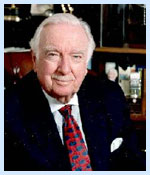
Those are ways to characterize Walter Cronkite’s famous assessment–offered in a special televised report in February 1968–that the U.S. war effort in Vietnam was “mired in stalemate.”
 Cronkite’s characterization supposedly represented a moment of such stunning clarity and insight that it forced President Lyndon Johnson to realize his war policy was a shambles.
“If I’ve lost Cronkite,” Johnson supposedly said to an aide or aides after seeing the special report, “I’ve lost Middle America.”
And a month later, Johnson announced he was not running for election–a decision often linked, if erroneously, to Cronkite’s “mired in stalemate” analysis about Vietnam.
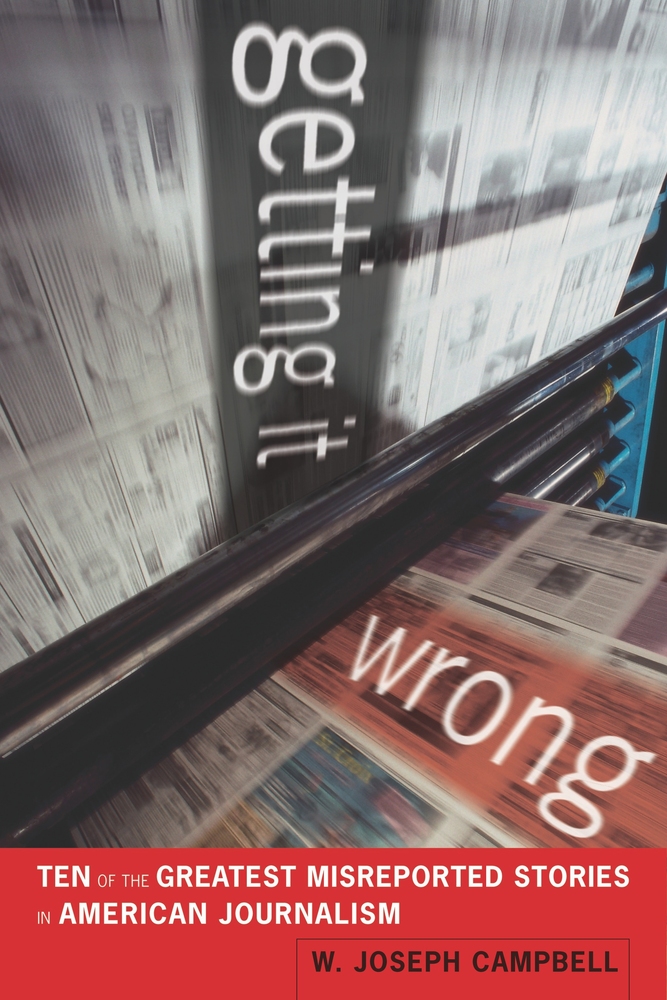
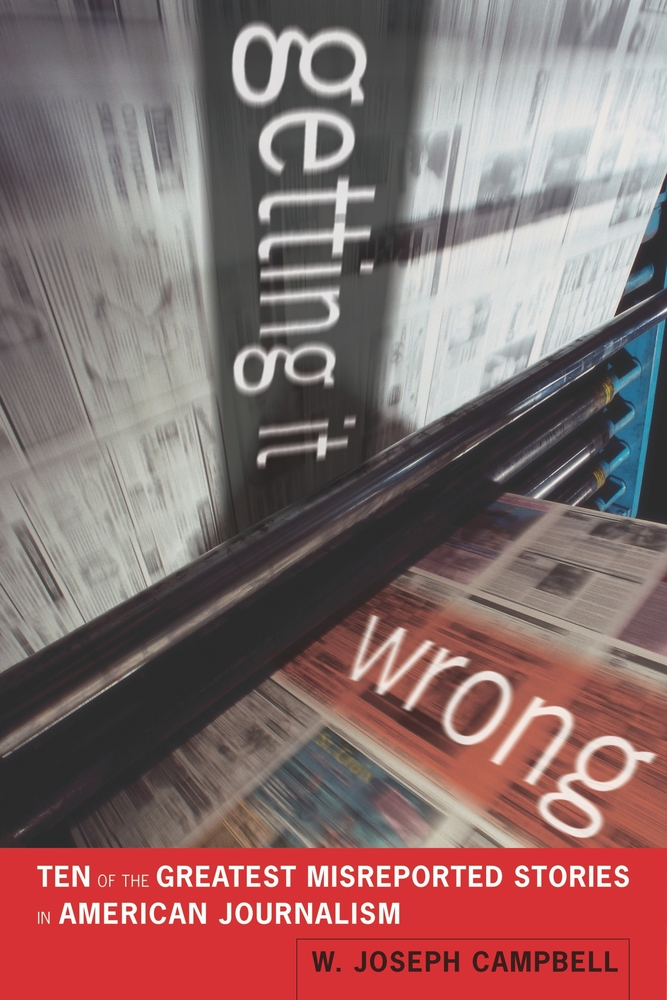
I dispute the power and impact of the so-called “Cronkite Moment” in my latest book, Getting It Wrong, which addresses and debunks 10 prominent media-driven myths. I point out that Johnson didn’t even see the Cronkite program when it aired on CBS on February 27, 1968.
I further note in Getting It Wrong that “stalemate” had been invoked months before the “Cronkite Moment” to describe the war in Vietnam. Notably, the New York Times published a front-page analysis on August 7, 1967, that declared “the war is not going well. Victory is not close at hand.”
The Times report was published on its front page beneath the headline:
Vietnam: The Signs of Stalemate.
And that wasn’t only occasion in 1967 and early 1968 when the Times turned to “stalemate” to characterize the war.
A review of database articles reveals that “stalemate” was raised not infrequently, and that the Johnson administration disputed the characterization.
And all this was months before the supposed insight offered by Cronkite.
For example, in a news analysis published July 4, 1967, the Times said of the war effort:
“Many officers believe that despite the commitment of 466,000 United States troops now in South Vietnam … the military situation there has developed into a virtual stalemate.”
The Times report of August 7, 1967, which was filed from Saigon, elaborated on that view and included this observation:
“‘Stalemate’ is a fighting word in Washington. President Johnson rejects it as a description of the situation in Vietnam. But it is the word used by almost all Americans here, except the top officials, to characterize what is happening. They use the word for many reasons ….”
Johnson was confronted with that “fighting word” during a news conference August 18, 1967. He was asked whether “we have reached a stalemate in the Vietnam war.”
The president gave a rambling answer, but ended up rejecting the characterization of stalemate as “nothing more than propaganda.”
Johnson also said, apparently in reference to the communist North Vietnamese and their Viet Cong allies: “I think that our–there are those who are taking a pretty tough drubbing out there that would like for our folks to believe there’s a stalemate.”
Moreover, four months before Cronkite’s report, the Times said in an editorial that the Johnson administration should embrace stalemate in Vietnam as a way of enabling peace talks and a negotiated settlement of the war.
The logic was intriguing if not entirely persuasive. Here’s what the Times said in that editorial, published October 29, 1967:
“Instead of denying a stalemate in Vietnam, Washington should be boasting that it has imposed a stalemate, for that is the prerequisite–on both sides–to a negotiated settlement. That settlement, if it is to be achieved, will have to be pursued with the same ingenuity and determination that have been applied to fighting the war.”
Three months later, the Times anticipated Cronkite’s “mired in stalemate” commentary, stating in an editorial published February 8, 1968:
“Politically as well as militarily, stalemate increasingly appears as the unavoidable outcome of the Vietnam struggle.”
Cronkite said in wrapping up his special report on February 27, 1968:
“To say that we are mired in stalemate seems the only realistic, yet unsatisfactory, conclusion.”
So why does all this matter? Why is it important to trace the use of “stalemate” to describe a long-ago war?
Doing so demonstrates how unexceptional Cronkite’s commentary was. And how middling it was, too. It’s scarcely the stuff of dramatic insight, scarcely the sort of comments that would have decisive effect.
Tracing the use of “stalemate” also serves to underscore the inconsequential nature of the purported “Cronkite Moment, which nonetheless remains among the hardiest myths of American journalism.
Recent and related:


 Media Myth Alert