The Los Angeles Times indulged the other day in the tenacious media myth about the Pentagon’s concocting the hero-warrior tale about Jessica Lynch early in the Iraq War.
It was in fact the Washington Post that thrust the erroneous account about Lynch’s supposed battlefield heroics into the public domain, in a sensational front-page report published April 3, 2003. The article appeared beneath the headline: “‘She was fighting to the death.'”
The hero-warrior tale offered by the Post–which said Lynch had fought fiercely in an ambush in southern Iraq before being shot, stabbed, and taken prisoner–was picked up by news organizations around the world and turned Lynch into the best-known Army private of the war.
But the story wasn’t true.
Lynch never fired a shot in the ambush in Nasiriyah on March 23, 2003. Her gun jammed, she later said. She was neither shot nor stabbed; she suffered shattering injuries in the crash of a Humvee as it tried to flee the attack.
A U.S. special forces team rescued Lynch from a hospital in Iraq two days before the Post‘s erroneous hero-warrior tale was published.
In invoking the Lynch case, in an article examining why few Medals of Honor have been awarded in the Iraq and Afghan wars, the Los Angeles Times said:
“The medals process was tarnished when the Pentagon was caught creating false narratives to justify medals awarded in the high-profile cases of Army Ranger Pat Tillman and Army Pfc. Jessica Lynch.”
The matter of “false narratives” in the Tillman case is murky. The unrelated Lynch case is more clear-cut.
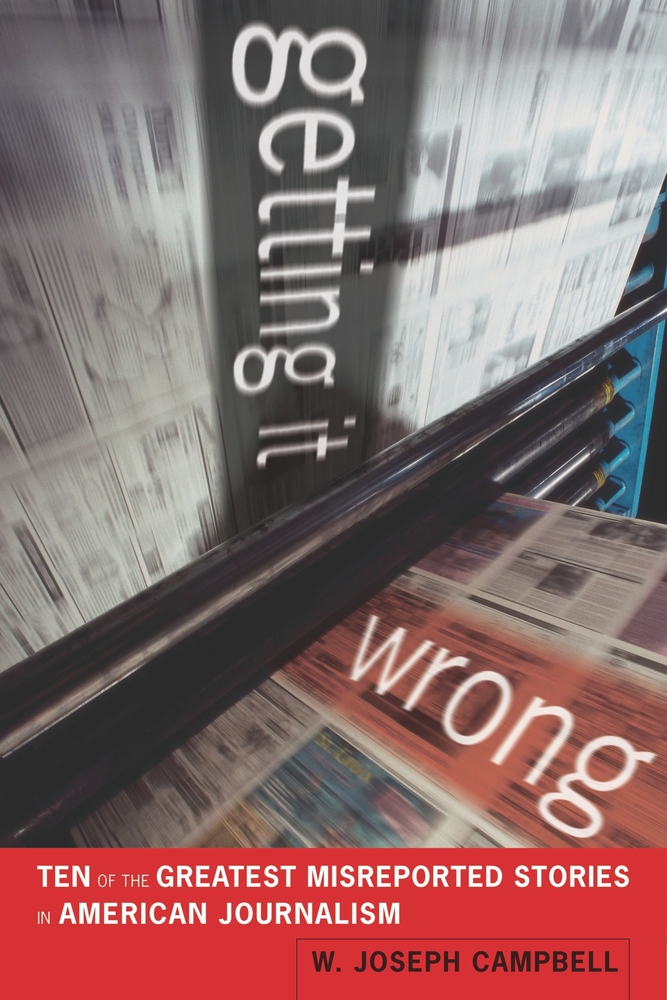
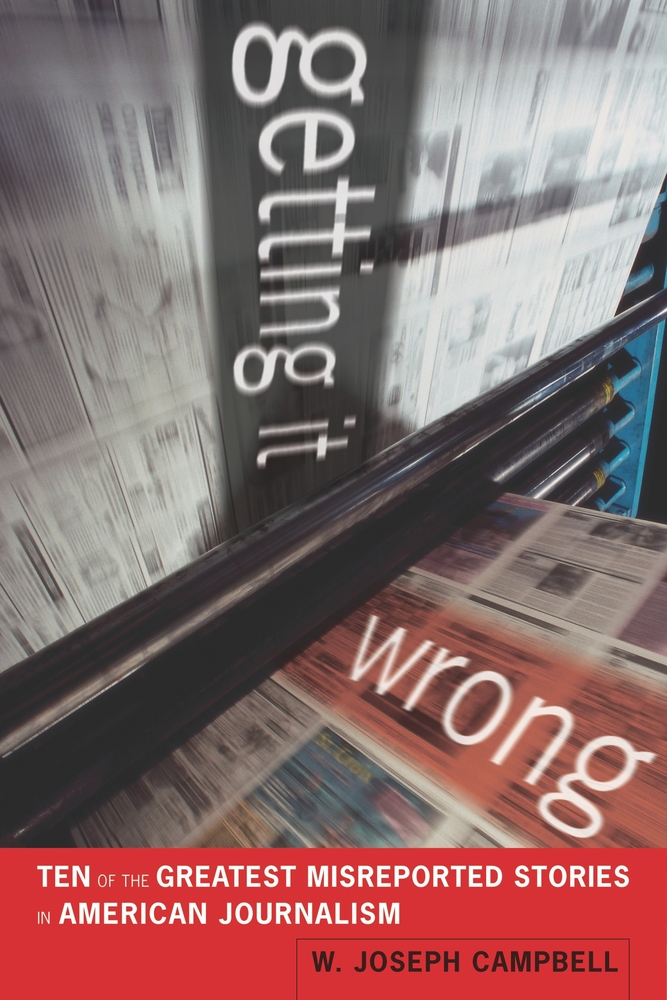
As I discuss in Getting It Wrong, my new book debunking 10 prominent media-driven myths, the Pentagon was not the source for the Post‘s botched hero-warrior report. Vernon Loeb, one of the authors of the “fighting to the death” story, was quite explicit on that point.
Loeb, who then was the Washington-based defense correspondent for the Post, said in an interview on NPR’s Fresh Air program in December 2003:
“I could never get anybody from the Pentagon to talk about those reports at all.”
He added that “the Pentagon was completely unwilling to comment on those reports at all. They wouldn’t say anything about Jessica Lynch.”
Loeb also said that the Post had been “told by some really good intelligence sources here in Washington that, you know, there were indications that she had, you know, fired back and resisted her capture and actually been shot and possibly stabbed doing so.”
Those sources have never been identified. But Loeb, who now is a senior editor for the Philadelphia Inquirer, scoffed at the interviewer’s suggestion that the Post‘s erroneous “fighting to the death” report was the result of clever manipulation by the Pentagon.
“I just didn’t see the Pentagon trying to create a hero where there was none,” Loeb said. “I mean …they never showed any interest in doing that, to me.”
On another occasion, Loeb was quoted in a commentary in the New York Times as saying:
“Far from promoting stories about Lynch, the military didn’t like the story.”
 Lynch, who still struggles with the effects of injuries suffered in the Humvee crash, never claimed to have fought heroically in Iraq. She has suggested, though, that “it would have been easy for me” to have adopted the hero’s mantle and embraced the accounts about her supposed derring-do.
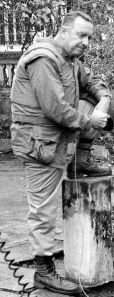
She was honorably discharged from the military in 2003–and was awarded the bronze star (see photo) for meritorious combat service, a decision that prompted low-level controversy.
The Lynch case–and the Post‘s hero-warrior tale–gave rise to another dispute about medals for valor.
According to Michael DeLong, a Marine lieutenant general who was deputy commander of U.S. Central Command in 2003, “politicians from her home state, West Virginia,” pressed the military “to award her the Medal of Honor.”
The requests were based on the Post‘s hero-warrior tale and “rose up the ladder until finally it reached me,” DeLong recalled in 2007 in a commentary in the New York Times, adding:
“In the case of Private Lynch, additional time was needed, since she was suffering from combat shock and loss of memory; facts, therefore, had to be gathered from other sources. The military simply didn’t know at that point whether her actions merited a medal.
“This is why, when the request landed on my desk, I told the politicians that we’d need to wait. I made it clear that no one would be awarded anything until all of the evidence was reviewed.
“The politicians did not like this,” DeLong added. “They called repeatedly, through their Congressional liaison, and pressured us to recommend her for the medal, even before all the evidence had been analyzed. I would not relent and we had many heated discussions.”
DeLong did not identify the politicians who lobbied for Lynch to be awarded the Medal of Honor but he wrote that they “repeatedly said that a medal would be good for women in the military; I responded that the paramount issue was finding out what had really happened.”
Recent and related:
- Lynch heroics ‘ginned up by Bush era Pentagon’?
- Ignoring the astonishing reporting lapses in Lynch case
- Recalling the overlooked heroism of Sgt. Walters
- On the high plateau of media distrust
- Obama, journalism history, and ‘folks like Hearst’
- Kennedy-Nixon debate myth emerges–as predicted
- On media myths and the ‘golden age’ fallacy








 Media Myth Alert