The irresistible but entirely made-up line from the Watergate scandal–the supposed advice to the Washington Post by the anonymous source “Deep Throat” to “follow the money”–made an appearance the other day in Spokane Spokesman-Review.
The newspaper invoked the passage in a commentary about priorities of Washington’s state legislature which yesterday opened its 2011 session.
 During the session, the commentary said, “important state policy will seem to adhere to Deep Throat’s admonition on Watergate: It will follow the money.”
Follow the money.
It’s a wonderfully evocative and appealing line. But it never figured in the Watergate coverage of the Washington Post–a topic of a chapter in my latest book, Getting It Wrong.
As I’ve noted at Media Myth Alert, electronic archives containing issues of the Post show that the phrase “follow the money” never made it into print during the period of the Watergate scandal–June 1, 1972, to October 1, 1974.
Indeed, no Post article or editorial invoked “follow the money” in a Watergate-related context until June 1981–long after Richard Nixon had resigned the presidency, long after the successor who pardoned him, Gerald Ford, had lost reelection. (And the article in June 1981 merely noted the line’s use in a fifth grade play.)
“Follow the money” was, however, spoken in the movie All the President’s Men, by the character who played the anonymous and mysterious source called “Deep Throat.” The film, which dramatized the Watergate reporting of Post reporters Bob Woodward and Carl Bernstein, was based on their non-fiction book by the same title.
The actor Hal Hollbrook played “Deep Throat,” and invoked the phrase rather insistently in All the President’s Men.
In a scene showing a late-night meeting in a parking garage, Holbrook tells the Woodward character, played by Robert Redford:
“I have to do this my way. You tell me what you know, and I’ll confirm. I’ll keep you in the right direction, if I can, but that’s all. Just follow the money.”
The line’s probable author was William Goldman, the screenwriter of All the President’s Men. He told a New York Times columnist in 2005 that he had invented “follow the money” for the movie.
So why bother with all this? What difference does it make if “follow the money” is a made-up line?
For starters, misattributing “follow the money” bolsters a misleading and simplistic interpretation of the sprawling scandal that was Watergate–a scandal that sent nearly 20 of Nixon’s men to jail.
And that interpretation is what I call the heroic-journalist myth of Watergate–that it was the dogged investigative reporting of Woodward and Bernstein that brought down Nixon’s corrupt presidency.
I write in Getting It Wrong that to consider Watergate “through the lens of the heroic-journalist is to abridge and misunderstand the scandal and to indulge in a particularly beguiling media-driven myth.
“The heroic-journalist interpretation,” I add, “minimizes the far more decisive forces that unraveled the scandal and forced Nixon from office.”
And those forces included subpoena-wielding agencies and entities such as the FBI, federal grand juries, special Watergate prosecutors, bipartisan congressional panels, and ultimately the U.S. Supreme Court.
Their contributions to unraveling the Watergate scandal are minimized, and even denigrated, in the cinematic treatment of All the President’s Men, which came out in 1976 and effectively promoted, and solidified, the heroic-journalist myth.
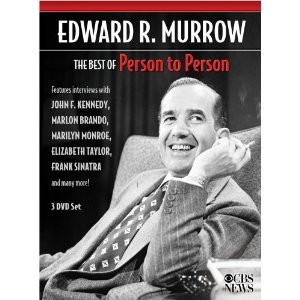
I point out in Getting It Wrong how media myths like the heroic-journalist meme “tend to minimize or negate complexity in historical events and offer simplistic and misleading interpretations instead. Edward Murrow no more took down Joseph McCarthy than Walter Cronkite swayed a president’s views about the war in Vietnam. Yet those and other media myths endure, because in part they are reductive: They offer unambiguous, easily remembered explanations about complex historic events.”
Speaking of reductive: I’ve meant to share this fine observation from the Financial Times commentary over the weekend that called Woodward and Bernstein’s Watergate coverage the “defining moment” in investigative reporting. The commentary was topic of a couple of recent posts at Media Myth Alert.
The essay, which was titled “The new power of the press,” noted:
“Any journalist not too full of himself to admit it reali[z]es, sooner or later, that the trade demands a facility for simplification that squeezes the most complex events, trends and characters into a limited form with limited, stereotypical narratives.”
So it is with “follow the money”: To invoke the passage is to reach for simplification, to seek an ostensibly telling phrase that can be applied widely, even to the often-dry business of a state legislature.
Recent and related:
- Anniversary journalism and media-driven myths in 2011
- Didn’t: A Watergate primer
- The Watergate myth: Why debunking matters
- Jimmy Carter fumbles Watergate history
- Excess praise for Edward R. Murrow
- Cinema and the tenacity of media myths
- WaPo ‘didn’t like Nixon’ and that’s ‘how we got Watergate’: Huh?
- Sniffing out media myths
- Media myths, the junk food of journalism
H/T to Kenton Bird for correcting the publication city
of the Spokesman-Review (January 14, 2011).







 Media Myth Alert