W. Joseph Campbell

Those ‘warmongering’ papers of William Randolph Hearst

In 1897, Debunking, Furnish the war, Media myths, Spanish-American War, Yellow Journalism on May 1, 2012 at 5:35 am

The first major engagement of the Spanish-American War took place 114 years ago today — in the Philippines, where U.S. warships attacked and destroyed a Spanish naval squadron in Manila Bay.
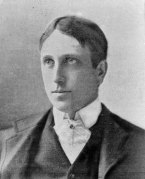
Warmonger?

The battle was a thoroughly unexpected development in a conflict fought over Spain’s harsh rule of Cuba, a conflict often but inaccurately blamed on the yellow press of William Randolph Hearst.

A commentary in the Tennessean newspaper took up that hoary myth the other day and added for good measure the apocryphal tale of Hearst’s having vowed to bring on the war.

The commentary said of Hearst:

“His most infamous manipulation was the warmongering his papers did in pushing the U.S. into war with Spain in 1898. He sent artist Frederick Remington to Cuba to cover the native uprising against Spain. Remington reportedly cabled Hearst that there was no war in Cuba. Hearst responded, ‘You get me the pictures; I’ll get you the war.’ He was true to his word.”

No serious historian embraces the notion that Hearst’s newspapers were decisive or much of a factor at all in the U.S. declaration of war against Spain in April 1898. That is a simplistic explanation about a war that was fought largely on humanitarian grounds — those of ending Spain’s long and harsh rule of Cuba.

As often is the case when such mediacentric claims are advanced, the commentary in the Tennessean left wholly unaddressed the method or mechanism by which the content of Hearst’s newspapers — he published three in 1898 —  was transformed into military action.

Three was, in fact, no such mechanism.

As I pointed out in my 2001 book, Yellow Journalism: Puncturing the Myths, Defining the Legacies, top officials in the administration of President William McKinley largely disregarded the content of the Hearst press. They certainly didn’t turn to it for policy guidance.

“If the yellow press did foment the war,” I wrote in Yellow Journalism, “researchers should be able to find some hint of, some reference to, that influence in the personal papers and the reminiscences of policymakers of the time.

“But neither the diary entries of Cabinet officers nor the contemporaneous private exchanges among American diplomats indicate that the yellow newspapers exerted any influence at all. When it was discussed within the McKinley administration, the yellow press was dismissed as a nuisance or scoffed at as a complicating factor.”

Advocates of the mediacentric interpretation of the Spanish-American War invariably cite — as the Tennessean did — the tale about Hearst’s vowing to furnish the war. It’s their Exhibit A.

While colorful, the tale of the purported Hearstian vow is a media-driven myth, one of the hardiest in American journalism.

It’s more than 110-years-old; during that time, no compelling evidence has ever emerged to support or document the tale.

Hearst denied making such a vow, which he purportedly sent in a telegram to Remington, an artist on assignment to Spanish-ruled Cuba in early 1897 for Hearst’s New York Journal.

The telegram to Remington has never surfaced. And Remington apparently never discussed the tale, which was first recounted in 1901, in a brief, unsourced passage in memoir by James Creelman, a blowhard journalist known for frequent exaggeration.

Creelman

Perhaps the most compelling reason for doubting Creelman’s undocumented account rests on an irreconcilable internal inconsistency.

As I write in my latest book, Getting It Wrong, it “would have been absurd for Hearst to vow to ‘furnish the war’ because war — specifically, the Cuban rebellion against Spain’s colonial rule — was the very reason Hearst sent Remington to Cuba in the first place.

“Anyone reading U.S. newspapers in early 1897 would have been well aware that Cuba was a theater of a nasty war.”

WJC

Recent and related:

National Press Club invokes media myths of Watergate

In Media myths, Newspapers, Scandal, Washington Post, Watergate myth on April 30, 2012 at 5:45 am

The National Press Club indulged in a couple of tenacious media myths about Watergate in announcing the other day it was giving its top award to Bob Woodward, one of the Washington Post’s lead reporters on what was the country’s greatest political scandal.

In its statement that Woodward will receive this year’s Fourth Estate Award, the Press Club declared that his “work on the Watergate scandal led to the resignation of an American president” — an interpretation that not even Woodward embraces.

He once told the PBS “Frontline” program that “the mythologizing of our role in Watergate has gone to the point of absurdity, where journalists write … that I, single-handedly, brought down [President] Richard Nixon. Totally absurd.”

And on another occasion, Woodward declared more bluntly:

To say that the press brought down Nixon, that’s horseshit.”

As I note in my latest book, Getting It Wrong, the simplified notion that Woodward’s Watergate reporting for the Post led to Nixon’s resignation serves to diminish “the far more decisive forces that unraveled the scandal and forced Nixon from office.”

To roll up a scandal of the dimension of Watergate required, I write, “the collective if not always the coordinated forces of special prosecutors, federal judges, both houses of Congress, the Supreme Court, as well as the Justice Department and the FBI.

“Even then, Nixon likely would have served out his term if not for the audiotape recordings he secretly made of most conversations in the Oval Office of the White House” — recordings the U.S. Supreme Court ruled that he had to surrender.

So the notion that Woodward’s reporting for the Post was decisive to Watergate’s outcome is absurd.

So, too, is the subsidiary myth that Watergate reporting — and the cinema’s depiction of the Post’s coverage in All the President’s Men — made the field seem so alluring  that enrollments in college journalism programs surged as a result.

The Press Club statement about Woodward’s award invokes that myth, too, asserting that “enrollment in journalism departments rose in the post-Watergate era, especially after ‘All the President’s Men’ was made into a movie.” It was based on a book by the same title, which was written by Woodward and his Post colleague, Carl Bernstein.

As I point out in Getting It Wrong, however, separate scholarly studies have debunked the notion of Watergate’s  propellant effect on college enrollments in journalism.

One study, conducted for the Freedom Forum media foundation and released in 1995, said that “growth in journalism education result[ed] not from specific events as Watergate … but rather to a larger extent from the appeal of the field to women, who ha[d] been attending universities in record numbers.”

The study’s author, Lee Becker and Joseph Graf, stated flatly:

“There is no evidence … that Watergate had any effect on enrollments.”

A separate study, conducted by veteran journalism scholar Maxwell E. McCombs and published in 1988, reported that “the boom in journalism education was underway at least five years before” the Watergate break-in in 1972.

McCombs further wrote:

“It is frequently, and wrongly, asserted that the investigative reporting of Woodward and Bernstein provided popular role models for students, and led to a boom in journalism school enrollments. The data … reveal, however, that enrollments already had doubled between 1967 and 1972….”

So why are these Watergate myths so appealing, and so tenacious, that even the National Press Club embraces them?

One reason is that they’re simplistic, easy-to-remember narratives that locate the news media heroically at the heart of unraveling America’s greatest political scandal.

Indulging in myths such as the heroic-journalist trope of Watergate also offers a subtle way of investing the Press Club award with even greater distinction.

And as I note in Getting It Wrong, the tale about how “the Post and its reporters uncovered Watergate is deeply ingrained in American journalism as one of the field’s most important and self-reverential stories.”

It’s a myth that’s no doubt too resilient, too media-centric, and too widely applicable ever to eradicate.

WJC

Digitally scrubbing WaPo’s embarrassment on Jessica Lynch?

In Debunking, Jessica Lynch, Media myths, Washington Post on April 27, 2012 at 2:15 pm

The Washington Post carried a fine story yesterday about Vogue magazine’s apparent removal from its online site of an unaccountably flattering profile of Asma al-Assad, wife of Syrian dictator Bashar al-Assad.

Where's the digital version?

The Post said the 3,200-word puff piece in Vogue “apparently proved so embarrassing to the magazine that it scrubbed it from its Web site, an almost-unheard-of step for a mainstream media organization and a generally acknowledged violation of digital etiquette.”

That observation — “violation of digital etiquette” — evoked for me the unavailability online of the Post’s embarrassingly wrong-headed reports in 2003 about Jessica Lynch and her supposed heroism early in the Iraq War.

In an electrifying account published on its front page April 3, 2003, the Post reported that Lynch, then a 19-year-old Army private, had fought fiercely in the ambush of her unit in Nasiriyah, in southern Iraq.

Lynch, according to the Post,  “continued firing at the Iraqis even after she sustained multiple gunshot wounds and watched several other soldiers in her unit die around her in the fighting,” which took place March 23, 2003.

The hero-warrior tale about Lynch turned out to be utterly wrong in all crucial details. She was neither shot nor stabbed, as the Post reported; she suffered shattering injuries in the crash of a Humvee fleeing the ambush.

Lynch was taken prisoner and moved to an Iraqi hospital where she lingered near death until her rescue by U.S. special forces on April 1, 2003.

The Post’s hero-warrior tale appeared two days later.

But try finding the Post’s digitized version of that story. Here’s the link; but clicking through turns up the article’s headline, byline, date of publication, and page placement. But no text.

(The Post’s story is available in full at the online site of the Pittsburgh Post-Gazette.)

Later in April 2003, the Post’s then-ombudsman, Michael Getler, published a critical column about the hero-warrior story, noting that “several readers wrote to complain, saying they did not doubt ‘the gravity of Lynch’s situation,’ as one put it, but that The Post, ‘using unnamed sources,’ was ‘creating a sensationalist story riddled with inaccuracies.’ ‘I smell an agenda,’ said one reader, suspecting wartime ‘propaganda.’ Another was suspicious of the ‘Hollywood-like telling of the story.'”

Try finding Getler’s column online.

Here’s the link; but in this case, too, just the headline, byline, publication date, and page reference are available.

In mid-June 2003, the Post revisited and grudgingly walked back from aspects of its hero-warrior story about Lynch. One media critic characterized the article as “the journalistic equivalent of Napoleon’s retreat from Moscow.”

(And as I point out in my latest book, Getting It Wrong, the walk-back story “included a nervy attempt by the Post to deflect blame from its central role in spreading the hero-warrior myth of Jessica Lynch.”

(The Post, I note, “faulted the U.S. military and the administration of President George Bush for failing to correct an error for which the Post was responsible. ‘Neither the Pentagon nor the White House publicly dispelled the more romanticized initial version of her capture,’ the Post said, ‘helping to foster the myth surrounding Lynch and fuel accusations that the Bush administration stage-managed parts of Lynch’s story.’  It was an astounding assertion: The Post, alone, was responsible for propagating the ‘romanticized initial version’ that created the hero-warrior myth. To claim the Pentagon and the White House should have done more to dispel that report was, in short, exceedingly brazen.”)

Well, good luck in finding the Post’s walk-back story online.

Here’s the link; but, again, only the headline, byline, publication date, and page reference show up.

So has the Post excised the digital reminders of an embarrassing misstep, of a dramatic story that it thoroughly and singularly botched? Has it, at a minimum, committed a “violation of digital etiquette”?

Rather looks like it. (The Post’s ombudsman, Patrick Pexton, promised to “check into” my questions. He also said in an email today: “It’s very hard to trace some of this back when The Post has gone through several computer systems since that time, but I’ll make an effort.”)

Separately, I’ve been told that Post stories published before 2005 have largely been placed behind a paywall. For the most part, that is, they’re not freely available online.

But some special sections are accessible online without payment — and they include the Post’s link-rich “War in Iraq” digital archive.

And in a box at the lower right corner of the digital archive is an Army photograph of none other than Jessica Lynch.

Lynch photo at WaPo's Iraq War archive

The box carries the headline, “Saving Pfc Lynch,” and offers a link to an article published in the Post April 4, 2003, a day after the botched hero-warrior tale.

The April 4 article ran to 1,500 words in discussing the Iraqi lawyer who helped set in motion Lynch’s rescue.

And that article is available in full.

WJC

Recent and related: