W. Joseph Campbell

Posts Tagged ‘1968’

Oprah as ‘this generation’s Walter Cronkite’?

In Cronkite Moment, Debunking, Error, Media myths, Television on January 13, 2013 at 3:26 pm

Here’s a good one: Oprah Winfrey is a latter-day Walter Cronkite, a television personality “capable of massively shifting public sentiment.”

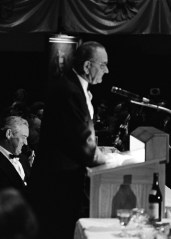
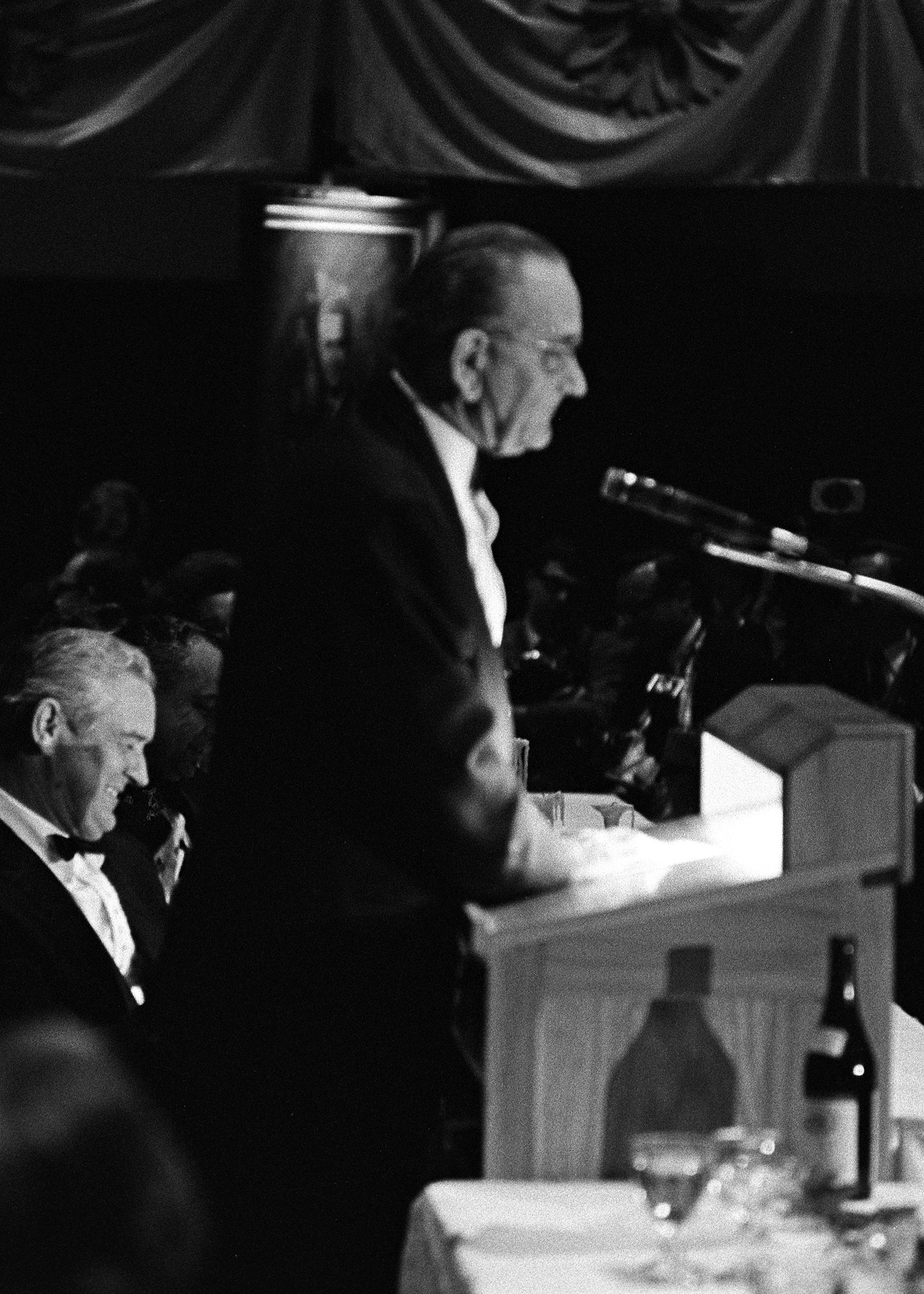
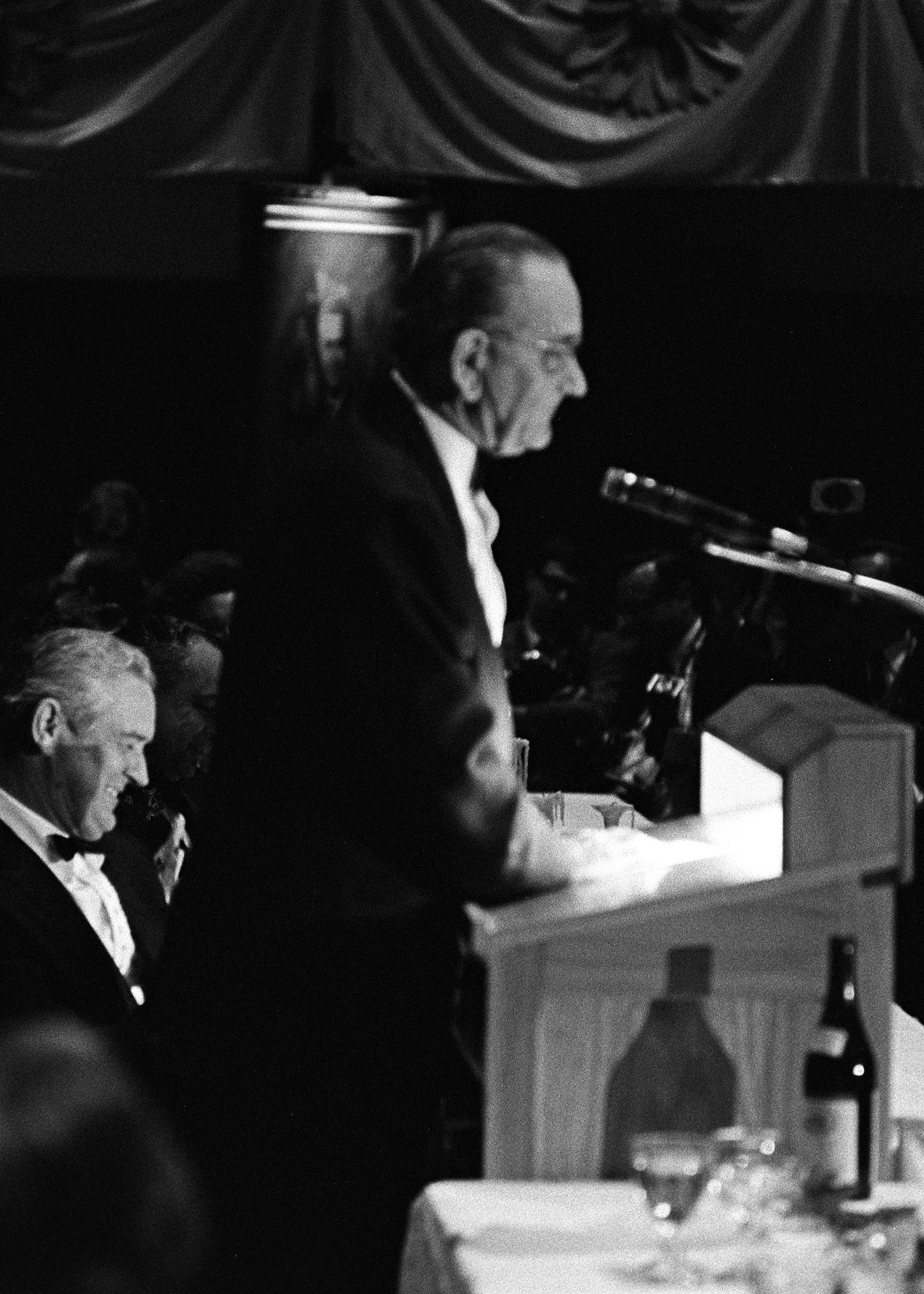
LBJ in Austin

Lyndon Johnson in Austin, February 27, 1968

So writes a sports columnist for the Detroit Free Press.

It’s a ridiculous claim, but not for reasons that may immediately come to mind.

Walter Cronkite was the avuncular anchorman on the CBS Evening News from 1962-81. Oprah Winfrey is an iconic talk-show host, whose appeal may or may not be ebbing.

Her clout is formidable. Cronkite’s was overstated.

But to return to the columnist’s claim:

Drew Sharp, writing in the Free Press about Oprah’s upcoming interview with disgraced international cycling star Lance Armstrong, notes that it’ll be an occasion for “staged news.”

Armstrong, he observes, “made the smart move, agreeing to a 90-minute taped interview with Oprah, which will air on her OWN cable network Thursday. It no doubt will be well watched.”

Sharp also declares, in a passage of particular interest to Media Myth Alert, that Oprah “has become this generation’s Walter Cronkite, capable of massively shifting public sentiment.

“It was,” Sharp adds, “the late CBS anchorman’s pointed commentary 45 years [ago,] following the North Vietnamese’s Tet Offensive in which he argued in a rare editorial that the U.S. couldn’t win the Vietnam War. President Lyndon B. Johnson famously said afterward that if he lost Cronkite, he lost Middle America.

“Not long afterward, LBJ opted not to run for reelection in the 1968 presidential campaign.”

In his claims about the effects of Cronkite’s report about Vietnam, the columnist indulges in one of American journalism’s most prominent and tenacious media myths.

As I discuss in my mythbusting book, Getting It Wrong, there is no evidence that Johnson saw the Cronkite program when it aired on the night of February 27, 1968, or that he viewed it afterward on videotape.

So it’s hard to argue that Johnson could have been much moved by a television report he didn’t see.

The president wasn’t in front of a television set that night. He was in Austin, Texas, at a black-tie party (see photo, above) to mark the 51st birthday of Governor John Connally, a longtime political ally.

About the time Cronkite was offering his pessimistic, on-air assessment about the war in Vietnam — that the U.S. military was “mired in stalemate” — Johnson wasn’t bemoaning a loss of Cronkite’s support; he was saying:

“Today you are 51, John. That is the magic number that every man of politics prays for — a simple majority.”

Johnson did announce, a month later, that he was not running for reelection to the presidency. But his reasons had little, if anything, to do with Cronkite and the anchorman’s comments about Vietnam.

More significant to Johnson’s decision was his eroding political strength. By late March 1968, he was facing insurgent challenges within his own party from senators Eugene McCarthy and Robert F. Kennedy.

Not only that, but Johnson may have decided long before March 1968 not to seek reelection.

“Long before I settled on the proper forum to make my announcement,” Johnson wrote in his memoir, The Vantage Point, “I had told a number of people of my intention not to run again.”

The memoir, by the way, has nothing to say about the Cronkite program of February 1968.

What’s more, there’s no evidence that Cronkite’s “mired in stalemate” comment influenced public opinion “massively” or otherwise.

Indeed, as I point out in Getting It Wrong, polls signaled shifts in public opinion against Vietnam months before Cronkite’s program. The anchorman followed rather than led deepening popular doubts about the wisdom of the war.

And until late in his life, Cronkite pooh-poohed the notion that his assessment of the war had much effect, saying it was akin to “another straw on the back of a crippled camel.”

To liken Oprah to Cronkite is, of course, more than a little incongruous. But it has been done before.

In a commentary published at Huffington Post in 2007 and titled “Oprah is to Iraq what Cronkite was to Vietnam,” Marty Kaplan asserted that “Oprah may actually be the twenty-first century’s de facto national anchor.”

A more frequent if similarly imprecise comparison is to identify Jon Stewart as a latter-day Cronkite.

But both comparisons are strained and feeble: They seek to reapportion to contemporary contexts influence the legendary Cronkite never really possessed. As such, they succeed only in promoting a media-driven myth.

WJC

More from Media Myth Alert:

Taking stock: Top mythbusting posts of 2012

In Anniversaries, Cronkite Moment, Debunking, Error, Jessica Lynch, Media myths, New York Times, New Yorker, Photographs, Television, Washington Post on December 30, 2012 at 6:25 am

Media Myth Alert reported in 2012 on the appearance of many prominent media-driven myths and errors. Here are the year’s five top writeups, followed by a roster of other mythbusting posts of note.

Calling out the New York Times on ‘napalm girl’ photo error (posted June 3): The 40th anniversary of the famous “napalm girl” photograph — one of the most memorable images of the Vietnam War — fell in early June.

NapalmGirl photo_AP

Nick Ut/Associated Press

In an obituary a few weeks before, the New York Times had referred to the photograph of terror-stricken Vietnamese children and claimed, erroneously, that it showed “the aftermath of one of the thousands of bombings in the countryside by American planes.”

That passage suggested U.S. forces were responsible for the aerial napalm attack that gave rise to the photograph, taken by Nick Ut of the Associated Press. I pointed this out in an email to the Times, noting that the bombing was a misdirected attack by the South Vietnamese Air Force, as news reports at the time had made clear.

The newspaper’s assistant obituary editor, Peter Keepnews, replied, and offered some baffling logic in doing so:

“You are correct that the bombing in question was conducted by the South Vietnamese Air Force. However, the obituary referred only to ‘American planes,’ and there does not seem to be any doubt that this plane was American –- a Douglas A-1 Skyraider, to be precise.”

As if the aircraft’s manufacturer was at all relevant in the attack.

Independent of my efforts, two former Associated Press journalists also called on the Times to correct its error about “American planes.”

The Times resisted doing so until late August, when it issued a sort-of correction that embraced Keepnews’ tortured reasoning and stated:

“While the planes that carried out that attack were ‘American planes’ in the sense that they were made in the United States, they were flown by the South Vietnamese Air Force, not by American forces.”

It was, I noted, a begrudging and less-than-forthright acknowledgement of error. It hardly was in keeping with the declaration by the newspaper’s then-executive editor, Bill Keller. He asserted in a column in 2011 that “when we get it wrong, we correct ourselves as quickly and forthrightly as possible.”

hagiographic treatment of the “Cronkite Moment” (posted May 31): Few media-driven myths are as tenacious and desperately held as the so-called “Cronkite Moment” of 1968, when CBS News anchorman Walter Cronkite declared on air that the U.S. military was “mired in stalemate” in Vietnam.

Cronkite in Vietnam, 1968

Cronkite in Vietnam, 1968

For years, journalists have sought to attach great significance to Cronkite’s assessment, even though it was thoroughly unoriginal and was, as I discuss in my latest book, Getting It Wrong, of little demonstrable impact. Even Cronkite, until late in his life, pooh-poohed its importance.

But all that scarcely deterred Douglas Brinkley from presenting in a hefty biography about Cronkite a decidedly hagiographic — and misleading — interpretation of the “Cronkite Moment.”

Brinkley offered little persuasive evidence in asserting that the “aftershock” of Cronkite’s report about Vietnam, which aired February 27, 1968, “was seismic” and “signaled a major shift in the public’s view of the war.”

In discussing the supposed “seismic” effects of Cronkite’s assessment, Brinkley wrote:

“Even the conservative Wall Street Journal editorial page said, ‘The whole Vietnam effort may be doomed.’”

But the Journal editorial that  said so was published four days before Cronkite’s broadcast. To cite the editorial as evidence of a “seismic” effect of the “Cronkite Moment” was certainly misleading.

What’s more, Cronkite’s characterization of stalemate in Vietnam hardly “signaled a major shift in the public’s view of the war.”  Public opinion polls indicated that the shift had begun several months earlier.

If anything, Cronkite followed rather than led public opinion on Vietnam.

Uneven availability of WaPo’s online content about Jessica Lynch (posted April 27): On April 4, 2003, the Washington Post published a front-page report about an Iraqi lawyer who helped set in motion the rescue from captivity of Jessica Lynch, a wounded, 19-year-old Army private.

That report ran to 1,500 words and is freely available at the Post’s online site.

The day before that article appeared, the Post published an electrifying but far more problematic story about Jessica Lynch — an account that claimed she had fought fiercely against Iraqi attackers and had suffered gunshot and stab wounds before running out of ammunition and being taken prisoner.

Lynch_headline_Post

That article was published on the Post’s front page beneath the headline:

“‘She was fighting to the death.'”

It was a stunning report that proved wrong in all important details: Lynch was neither shot nor stabbed; she did not fire a shot in the attack in Iraq. She was badly injured in the crash of her Humvee in attempting to flee.

But try finding the “fighting to the death” story at the Post’s online site.

Unlike the far less embarrassing report of April 4, 2003, the “fighting to the death” story is not freely available online. Clicking on the story’s URL opens what essentially is an empty link.

Also unavailable online are the scathing reviews of the hero-warrior tale published by the newspaper’s then-ombudsman in April and June 2003.

Such inconsistencies suggest a digital scrubbing of embarrassing content. I asked the newspaper’s incumbent ombudsman, Patrick Pexton, about this matter.

He took several weeks to reply, finally stating in an email in August that he had found “nothing nefarious about this.” He added that the Post since 2003 “has gone through several changes of content management systems,” by which articles are posted online.

He further noted that the “fighting to the death” story about Lynch and related content are available in the Post’s fee-based archive.

So why not make the “fighting to the death” story freely available? Why not remove the fee to access a singularly memorable article about the Iraq War, a mistaken report that made Jessica Lynch something of a celebrity and gave rise to misguided suspicions that the U.S. military concocted the hero-warrior tale and somehow fed it to the Post?

“Restoring the digital version of the article of April 3, 2003, would represent a contribution to the record about the case of Jessica Lynch, which the Post is solely responsible for having placed in the public domain,” I wrote in an email to Pexton in mid-August.

He has not replied.

Kennedy-Nixon debate myth lives on (posted September 30): The run-up to the televised presidential campaign debates in October prompted numerous references to the purported lesson of the first such encounter, between John F. Kennedy and Richard M. Nixon in late September 1960.

That lesson is about the presumptive power of the televised image: Supposedly, television viewers thought Kennedy won the first debate in 1960 while radio listeners felt Nixon got the better of it.

This notion of viewer-listener disagreement has become an enduring media myth, even though it was thoroughly dismantled 25 years ago by scholars David L. Vancil and Sue D. Pendell.

Dismantling, though, hasn’t destroyed the myth. The notion of viewer-listener disagreement remains hardy and irresistible.

For example, in the runup to the debates in October between President Barack Obama and his Republican challenger, Mitt Romney, the founder of USA Today, Al Neuharth, wrote a column that recalled the first Kennedy-Nixon debate.

“Listeners,” Neuharth said, “generally gave Nixon the nod. But TV viewers strongly favored Kennedy.”

And the Chicago Tribune declared that “not everyone thought Kennedy had won the debate. Pollsters found that those who heard the radio broadcast thought Nixon won. … Television viewers experienced a different debate from radio listeners.”

Only one polling organization, Sindlinger & Company, had conducted a survey of any size that included a sub-sample of radio listeners. The Sindlinger survey, taken the day after the first Kennedy-Nixon debate, indicated that radio listeners felt Nixon prevailed, by a margin of 2-to-1.

But Vancil and Pendell, in their article in Central States Speech Journal in 1987, noted that the Sindlinger survey included more than 2,100 respondents, of whom just 282 had listened to the debate on radio.

They noted that “a subordinate group of 282 interviews is below the threshold normally required for a national sample.” Not only that, but only 178 of the 282 respondents “expressed an opinion on the debate winner,” Vancil and Pendell wrote.

Given the shortcomings of the unrepresentative Sindlinger sample, Nixon’s supposedly decisive margin among radio listeners dissolves as meaningless — and renders viewer-listener disagreement a media myth.

George Romney’s “brainwashing” — and Gene McCarthy’s retort (posted September 4): Mitt Romney’s ill-fated run for the presidency prompted reminders of his father’s failed presidential campaign in 1968 — a campaign done in by a memorably clumsy gaffe.

The gaffe, in turn, is said to have inspired one of the most devastating putdowns in American political history. But as my research has found, the context of the supposed putdown is unclear at best.

The gaffe was committed in late August 1967 by George Romney, then governor of Michigan and a presumptive leading candidate for the Republican presidential nomination in 1968.

In an interview with a Detroit television reporter, Romney referred to his visit to South Vietnam in 1965 and said:

“You know, when I came back from Vietnam, I’d just had the greatest brainwashing that anybody could get. … Well, not only by the generals but by the diplomatic corps over there. They do a very thorough job.”

Romney’s claim that he had been duped into supporting America’s war effort in Vietnam suggested muddled thinking, gullibility, and an uncertain command of foreign policy. His abbreviated presidential campaign never recovered from the self-inflicted wound; he ended his  run for the presidency at the end of February 1968.

Sealing the gaffe’s unforgettable quality was the supposed witty putdown by Democratic Senator Eugene McCarthy. Rather than a “brainwashing,” McCarthy supposedly said, a “light rinse” would have sufficed for Romney.

So telling was McCarthy’s “light rinse” quip that it “essentially finished Romney.”

But when, or even whether, McCarthy made the “light rinse” comment is unclear.

A database search of leading U.S. newspapers — including the New York Times, the Washington PostChicago Tribune, Los Angeles Times, and Baltimore Sun — turned up no published reference to the “light rinse” quip in 1967 or 1968. Or for years afterward.

The first reference was in 1983, a column in the Baltimore Sun that did not say when, where, or to whom McCarthy uttered the remark.

It seems improbable that journalists in 1967 or 1968 would have failed to report a retort as delicious as McCarthy’s.

But that’s what An American Melodrama: The Presidential Campaign of 1968, a hefty book published in 1969 would have us believe.

American Melodrama described McCarthy’s remark as off-handed and said the senator’s aides persuaded reporters to hush it up.

While intriguing, American Melodrama doesn’t say when McCarthy made the comment, where, or specifically to whom.

WJC

Many thanks to Instapundit
Glenn Reynolds for linking to this post

Other memorable posts of 2012:

Lessons unlearned: Indulging in the ‘Cronkite Moment’ myth

In Cronkite Moment, Debunking, Media myths, Quotes, Television on December 6, 2012 at 4:50 am
Johnson: Not in front of a TV

Johnson: Not at the White House

The wide applicability of the mythical “Cronkite Moment” — that occasion in 1968 when Walter Cronkite’s observations about the Vietnam War supposedly altered opinions of the president and the American public — is nothing less than astonishing.

The myth’s resistance to debunking is similarly impressive.

Just yesterday, for example, two media outlets in the American heartland invoked elements of the “Cronkite Moment” as if they were genuine, as if they were instructive.

The sports director of WHO TV in Des Moines, Iowa, asserted in a blog post that “Walter Cronkite didn’t oppose the Vietnam War initially, but when he started questioning what we were doing over there, public opinion turned – correctly – against the war.”

And an item posted yesterday at the online site of the Oklahoma Gazette  arts and entertainment weekly declared: “Lyndon Johnson once remarked that he knew he’d lost Middle America’s support for the Vietnam War when he lost the support of CBS news anchor Walter Cronkite.”

Both are inaccurate elements of the larger, mythical interpretation of what Cronkite, the CBS News anchor, said about Vietnam and what President Lyndon Johnson said in reaction.

The “Cronkite Moment”  is the short-hand phrase for Cronkite’s editorial comment, offered February 27, 1968, at the end of a special report about the Vietnam War.

Cronkite said that the U.S. military had become “mired in stalemate” in Vietnam and suggested that negotiations eventually might offer to be a way out.

At the White House, Johnson supposedly watched the Cronkite report and, upon hearing the “mired in stalemate” assessment, suddenly realized his war policy had received a devastating blow. “If I’ve lost Cronkite,” the president is said to have told an aide, or aides, “I’ve lost Middle America.”

Or something to that effect.

Versions vary markedly.

In reality, Johnson did not see the Cronkite program when it aired. Nor is there any persuasive evidence that he watched the show on videotape at some later date.

As I discuss in my latest book, Getting It Wrong, Johnson was not at the White House but in Austin, Texas, at a black-tie affair marking the 51st birthday of his longtime political ally, Governor John Connally (see photo, above).

At the time Cronkite was intoning “mired in stalemate,” Johnson wasn’t lamenting the loss of the anchorman’s support. He wasn’t wringing his hands or bemoaning that he had “lost Middle America.”

The president was making lighthearted comments about Connally’s age, saying:

“Today you are 51, John. That is the magic number that every man of politics prays for— a simple majority.”

As for Cronkite’s assessment being so powerful as to shift public opinion — that, too, is mistaken: Popular views about the war had begun shifting months before the “Cronkite Moment.”

By October 1967, 47 percent of Americans, a plurality, maintained that U.S. military presence in Vietnam was a mistake, according to Gallup surveys. The plurality climbed to 49 percent, according to a Gallup Poll completed the day of Cronkite’s program about Vietnam.

So not only that, but Cronkite’s “mired in stalemate” observation was scarcely  remarkable.

Or novel. Journalists had been using the term “stalemate” for months in commentaries, analyses, and news reports about the war.

For example, syndicated columnist James J. Kilpatrick wrote in August 1967:

“So long as the present ground rules obtain in Vietnam, this war will drag along its indecisive way. … [T]he condition is stalemate.”

Also in August 1967, the New York Times said in a news analysis that the war in Vietnam “is not going well.”

U.S. victory, the Times said, “is not close at hand. It may be beyond reach.”

The analysis was published on the front page, beneath the headline: “Vietnam: The Signs of Stalemate.”

Not only did Cronkite’s views of the war lag public opinion, they trailed those offered by rival news organizations.

What, then, accounts for the tenacity of the mythical “Cronkite Moment”?

It’s an accessible tale, easily told and readily understood. It has broad applicability, as the myth’s appearance at WHO TV and in the Oklahoma Gazette suggest.

And it’s unreservedly media-centric: In a period of declining audience share and declining perceived influence, it’s reassuring to media practitioners that there were better, more powerful times when the likes of Cronkite supposedly told truth to power — and supposedly altered policy as a result.

WJC

Recent and related:

‘Cronkite Moment’ morphing ‘into a general civic belief’? Why should it?

In Cronkite Moment, Debunking, Media myths, Reviews, Television on September 9, 2012 at 4:06 pm

Robert MacNeil writes in today’s Washington Post that the presumptive power and influence of  Walter Cronkite, the former CBS News anchorman, “has morphed into a general civic belief.”

Let’s hope not.

Let’s hope the opposite effect is becoming more pronounced — that Cronkite’s presumed influence is slowly being recognized for the myth that it is.

MacNeil, the former co-anchor of the PBS News Hour program, takes up the notion of Cronkite’s power to move national events in a review of the Cronkite biography that came out at the end of May.

The biography, written by Douglas Brinkley and titled Cronkite, appeared for a short time on the New York Times list of non-fiction best-sellers.  I found the book hagiographic, especially its treatment of the so-called “Cronkite Moment” of late February 1968.

That was when Cronkite declared on the air that the U.S. military was “mired in stalemate” in Vietnam and suggested that negotiations might lead to a way out.

But as I pointed out in my 2010 book, Getting It Wrong, Cronkite’s “stalemate” characterization was hardly novel and exerted little demonstrable effect on the policy or decisions of the administration of President Lyndon B. Johnson. The myth also has it that Cronkite’s “mired in stalemate” commentary prompted Johnson not to seek reelection in 1968.

MacNeil in his review notes the doubts about whether Cronkite’s assessment exerted much influence on Johnson but asserts nonetheless the “idea [that it did] has morphed into a general civic belief.”

It’s regrettable that MacNeil didn’t pause to consider the implications of the morphing, or reflect on why the myth of the “Cronkite Moment” is so appealing and so eagerly retold, despite the considerable evidence that can be arrayed in debunking it.

Cronkite himself (until late in his life) rejected the notion that his “mired in stalemate” assessment was all that influential, likening the effect to that merely of a “straw on the back of a crippled camel.”

Indeed, other news organizations in February 1968 were offering assessments far more pointed that Cronkite’s. For example, the Wall Street Journal said a few days before Cronkite’s “mired in stalemate” commentary that the U.S. war effort in Vietnam “may be doomed.”

National political figures likewise were expressing downbeat opinions about the war that month. George Romney, then a long-shot Republican candidate for president, declared in mid-February 1968:

“We haven’t been told the truth about Vietnam. They’re winning; we’re not winning: we’re losing, thus far.”

Such observations obviously were more emphatic than Cronkite’s tentative “mired in stalemate” assessment.

And yet, MacNeil in his review favorably notes a passage from Cronkite, that “America asked for truth about Vietnam, and Cronkite dutifully delivered.”

Americans in February 1968 had many sources other than Cronkite for analysis about Vietnam — analysis that was far sharper and far less equivocal.

WJC

Recent or related:

Chris Matthews invokes the ‘if I’ve lost Cronkite’ myth in NYT review

In Cronkite Moment, Debunking, Media myths, New York Times, Quotes, Reviews on July 9, 2012 at 7:29 am

The New York Times lined up Chris Matthews, voluble host of cable television’s Hardball program, to review Douglas Brinkley’s Cronkite, the new biography about legendary CBS News anchorman Walter Cronkite.

LBJ wasn’t watching Cronkite’s report

Matthews turned in a fluffy review, published yesterday, that invoked one the American journalism’s best-known media myths — the claim that President Lyndon B. Johnson was dramatically moved by Cronkite’s on-air assessment about the war in  Vietnam.

“Cronkite never shied away from telling hard truths,” Matthews writes in his review. “Recall his half-hour ‘Report From Vietnam’ on Feb. 27, 1968, in which he declared the Vietnam War a ‘stalemate.’ It was a verdict the veteran war correspondent didn’t relish delivering, but Cronkite, who had recently returned from reporting on the Tet offensive, now believed that the war was unwinnable and indefensible.”

Matthews then repeats Brinkley’s thinly supported claim that Cronkite’s “stalemate” pronouncement had “seismic” effects.

Matthews adds, presumably as evidence of such an effect: “President Johnson reportedly said, ‘If I’ve lost Cronkite, I’ve lost the country.'”

But as I discuss in my latest book, Getting It Wrong, there’s no persuasive evidence that Johnson ever uttered such a remark.

Indeed, the president’s purported comment is defined by what I call acute version variability. That is, there is no agreed-upon version of what Johnson supposedly said in reacting to Cronkite’s “stalemate” assessment.

Other versions include:

“If I’ve lost Cronkite, I’ve lost Middle America.”

“If I’ve lost Cronkite, I’ve lost the war.”

“If I’ve lost Cronkite, I’ve lost the American people.”

“If I’ve lost Cronkite, I’ve lost the nation.”

And so on. (The Richmond Dispatch in a review published yesterday of Cronkite said Johnson exclaimed: “My God, if I’ve lost Cronkite, I’ve lost the country.”)

As I’ve noted previously at Media Myth Alert, if anyone’s words should be captured with precision, they ought to be the president’s. Especially on matters as critical as support for war policy. The wide variance as to what Johnson supposedly said is, then, a marker of a media myth.

Even more injurious to the case that Cronkite’s pronouncement was of great significance is that Johnson didn’t see the program when it was broadcast.

The president was not at the White House on February 27, 1968; nor was he in front of a television set when Cronkite’s program aired.

And about the time Cronkite intoned his “stalemate” assessment, Johnson was offering light-hearted remarks in Austin, Texas, at the 51st birthday party of Texas Governor John Connally (see photo, above).

“Today you are 51, John,” the president said. “That is the magic number that every man of politics prays for — a simple majority.”

I further note in Getting It Wrong that there is no compelling evidence that Johnson saw the Cronkite program later, on videotape.

Even if he had, Cronkite’s characterization of the was as a “stalemate” would have come as old news to the president. What Cronkite said about Vietnam on February 27, 1968, hardly earth-shaking, stunning, or original.

In no way did it alter the course of the war or influence American policy.

If anything, Cronkite’s observation about a “stalemate” was a rehash of what other news organizations, such as the New York Times, had been saying for months.

For example, the Times said in a news analysis published July 4, 1967:

“Many officers believe that despite the commitment of 466,000 United States troops now in South Vietnam … the military situation there has developed into a virtual stalemate.”

And in a report from Saigon that appeared on August 7, 1967, the Times noted:

“‘Stalemate’ is a fighting word in Washington. President Johnson rejects it as a description of the situation in Vietnam. But it is the word used by almost all Americans here, except the top officials, to characterize what is happening.”

So why bother calling out Matthews for casually invoking the central component of the mythical “Cronkite Moment”?

Doing so serves to highlight how insidious the myth has become, how blithely it is marshalled to support the notion that courageous and motivated journalists can do marvelous things.

Doing so also demonstrates anew that not even prominent and presumably fact-checked news organizations such as the Times are resistant to the intrusion of hoary media myths.

And doing so indicates that at least some high-profile contemporary journalists possess a shaky command of the history of their field.

WJC

Many thanks to Instapundit
Glenn Reynolds for linking to this post

Recent or related:

‘Getting It Wrong’ receives major shout-out in ‘New Yorker’

In Cronkite Moment, Debunking, Media myths, Murrow-McCarthy myth, Reviews on July 5, 2012 at 1:30 pm

The “critic at large” essay in the latest number of the New Yorker includes references to my myth-busting latest book, Getting It Wrong.

Cronkite: His ‘moment’ wasn’t so special

The essay by Louis Menand is largely a searching review of Cronkite, the recent, so-so biography about legendary CBS News anchorman, Walter Cronkite.

Menand calls the book “long and hastily written.”

He discusses in detail the so-called “Cronkite Moment” of February 27, 1968, when Cronkite’s on-air assessment that the Vietnam War was stalemated supposedly was so powerful that it influenced American war policy and moved American public opinion. The Cronkite biography says as much.

But Menand scoffs at the notion the “Cronkite Moment” was very important at all, writing:

“The trouble with this inspiring little story is that most of it is either invented or disputed.”

He specifically refers to Getting It Wrong in dismissing the supposed effects of Cronkite’s pronouncement about the war — notably, that Cronkite’s assessment prompted President Lyndon B. Johnson to declare something to the effect of, “If I’ve lost Cronkite, I’ve lost Middle America.”

Menand notes that Johnson did not see the Cronkite report about Vietnam when it aired, pointing out that the president was in Austin, Texas, “attending a birthday celebration for Governor John Connally. … There is no solid evidence that Johnson ever saw the show on tape, either, though the White House did tape it.”

Further drawing on Getting It Wrong, which includes a chapter debunking the mythical “Cronkite Moment,” Menand writes that even after Cronkite “stalemate” assessment, “Johnson’s speeches on Vietnam … were as hawkish as ever.

“Not only is there little evidence that the broadcast had an effect on Johnson; there is little evidence that it had an effect on public opinion.” And that’s certainly true.

Menand also notes that the author of the Cronkite biography, Douglas Brinkley, “implies that it was Cronkite’s commentary that emboldened the [Wall Street] Journal to criticize the war, but the Journal editorial appeared four days before the broadcast.”

The Journal’s editorial of February 23, 1968, said “everyone had better be prepared for the bitter taste of a defeat [in Vietnam] beyond America’s power to prevent.”

The editorial was strong stuff. And it undeniably preceded Cronkite’s on-air assessment which, given the times, was tepid and unoriginal. Leading U.S. news organizations such as the New York Times, had taken to calling the war a “stalemate” months before Cronkite’s program.

As Menand observes: “In 1968, you did not need an anchorman to know which way the wind blew” on Vietnam.

Menand’s essay also challenges the notion that Cronkite was “the most trusted man in America,” dissecting a 1972 survey that rated the anchorman more trustworthy than the leading national politicians of the time. Not much of a comparison, that. As media critic Jack Shafer wrote in 2009, shortly after Cronkite’s death, the anchorman’s score in the survey “seemed impressive until you considered the skunks polled alongside him.”

Menand touches on Edward R. Murrow’s famous program in 1954 that addressed the smears and bullying tactics of the red-baiting U.S. senator, Joseph R. McCarthy. Menand notes that Getting It Wrong describes how Murrow’s televised assessment of McCarthy came “very late in the day.” By 1954, Menand writes, “McCarthy had been hunting witches for four years….”

He also offers a thoughtful and telling assessment about why media myths take hold.

“Journalism and history,” Menand writes, “are about getting things right. But the past has many uses, and one of them is to inspire the present. … More honorably, if not necessarily more accurately, we imagine our predecessors as nobler and braver than our small selves — as men and women who stuck up for principle and, by their righteousness, moved the world.”

That’s well said, and offers revealing insight about the tenacity of such myths as the “Cronkite Moment.”

WJC

Recent or related:

A glowing, hagiographic treatment of the ‘Cronkite Moment’

In Cronkite Moment, Debunking, Media myths on May 31, 2012 at 8:41 am

The evidence that the mythical “Cronkite Moment” was of minor consequence is compelling and multidimensional.

The “Cronkite Moment” was the televised report in February 1968 when CBS News anchorman Walter Cronkite said the U.S. war effort in Vietnam was “mired in stalemate.” Legend has it that President Lyndon B. Johnson was profoundly moved by Cronkite’s assessment.

Among the elements of the minor-consequence brief are these:

  • Cronkite said nothing about the war that hadn’t been said by leading journalists many times before. By early 1968, “stalemate” was a decidedly unoriginal way of characterizing the conflict.
  • Public opinion had begun shifting against the war months before Cronkite’s commentary. Indeed, Cronkite followed rather than led the changing views about Vietnam.
  • Johnson did not see the Cronkite program when it aired on February 27, 1968, and remained publicly hawkish about the war in the days afterward.
  • Cronkite, until late in his life, pooh-poohed the notion his pronouncement had much effect on Johnson, likening its impact to that of a straw.

But little in the minor-consequence brief has kept historian Douglas Brinkley from offering in his new book about Cronkite a glowing, hagiographic interpretation of the “Cronkite Moment.”

Brinkley’s hefty biography is eager to find exceptionality in the “Cronkite Moment,” asserting that it “guaranteed” Cronkite’s “status as a legend.”

Brinkley, however, offers more assertion than compelling evidence in writing that the “aftershock” of Cronkite’s report about Vietnam “was seismic” and in declaring that the report “signaled a major shift in the public’s view of the war.”

As evidence of the purported “seismic” effect, Brinkley claims that Cronkite’s assessment “opened the door for NBC News’ Frank McGee to take a similar stand in a documentary on Vietnam that aired two weeks later.”

But as I point out in my 2010 book, Getting It Wrong, Cronkite’s “stalemate” characterization was “far less emphatic” McGee’s on-air remarks on March 10, 1968. “The war,” McGee declared on that occasion, “is being lost by the administration’s definition.”

So McGee’s interpretation wasn’t  “similar” to Cronkite’s at all; he didn’t hedge and invoke the safe characterization of “stalemate.” McGee said the war was being lost.

Brinkley also writes in discussing the supposed “seismic” effect: “Even the conservative Wall Street Journal editorial page said, ‘The whole Vietnam effort may be doomed.'”

The Journal certainly said so — four days before Cronkite’s broadcast. To invoke the Journal’s editorial as evidence of the “seismic” effect of the “Cronkite Moment” is misleading, to say the least.

Brinkley’s writes that “Cronkite had grabbed America’s attention about Vietnam in a way that would have been impossible for Johnson” to have missed. But, again, supporting evidence is thin.

Did opinion polls at the time suggest that “Cronkite had grabbed America’s attention about Vietnam”?

Brinkley offers no such evidence.

Public opinion polling about the war did show that Americans had begun turning against the war by fall 1967, well before the “Cronkite Moment.”

Specifically, Gallup surveys found in October 1967 that a plurality of Americans (47%) said sending U.S. forces to Vietnam had been a mistake. That question was often asked by Gallup and was a sort of proxy for gauging popular sentiment about the war.

In August-September 1965, only 24 percent of Gallup’s respondents said it was a mistake to send troops. Thereafter, as I discuss in Getting It Wrong, the percentage of respondents saying the U.S. military presence in Vietnam was a mistake increased steadily, reaching a plurality in October 1967.

That moment was 3½ months before the communist Tet offensive across South Vietnam, an extensive and coordinated series of attacks that prompted Cronkite to pay a reporting trip to southeast Asia in early February 1968.

Brinkley, moreover, dismisses as insignificant the pronounced version variability that characterizes Lyndon Johnson’s supposed reaction to Cronkite’s report about Vietnam.

Depending on the source, the president is said to have said in reacting to Cronkite’s assessment:

“If I’ve lost Cronkite, I’ve lost Middle America.”

Or, “If I’ve lost Cronkite, I’ve lost the war.”

Or, “If I’ve lost Cronkite, I’ve lost the American people.”

Or, “If I’ve lost Cronkite, I’ve lost the country.”

Or, “If I’ve lost Cronkite, I’ve lost the nation.”

Or, “If I’ve lost Cronkite, I’ve lost America.”

Or, “Well, that’s the end of the war.”

Brinkley doesn’t interpret these varying versions indicating the apocryphal quality of Johnson’s purported reaction. He waves it off, writing:

“It doesn’t make any real difference.”

Oh, but it does.

As I discuss in Getting It Wrong, “version variability” of such dimension “signals implausibility.

“It is a marker of a media-driven myth.”

Indeed, if anyone’s words should be captured with precision, they  should be the president’s. Especially on matters as important as shifting popular support for war policy.

It is quite interesting that Cronkite never spoke with Johnson about the purported “Cronkite Moment” and, as Brinkley notes, the president had nothing to say about it in his memoir.

There’s little contemporaneous evidence that the “Cronkite Moment” was profoundly shocking or moving. Or seismic. But there are plenty of claims to its significance, years after the fact.

The “Cronkite Moment” took on importance not in 1968 but by 1979, when David Halberstam wrote in The Powers That Be that Cronkite’s report “was the first time in American history a war had been declared over by an anchorman.” Which was nonsense, of course.

But Halberstam’s over-the-top characterization signaled how the “Cronkite Moment” was becoming a memorable and supposedly revealing example about how journalists can have powerful and immediate effects, how they can bring to bear decisive impacts on major issues facing the country.

Even Cronkite embraced the presumptive power of the “Cronkite Moment.” It took him a while, though.

In his 1997 memoir, Cronkite characterized the program in modest terms, saying that his “stalemate” assessment was, for Johnson, “just one more straw in the increasing burden of Vietnam.” He repeated the analogy in the years immediately afterward, saying on a CNN program in 1999, for example:

“I think our broadcast simply was another straw on the back of a crippled camel.”

But in the years before his death in 2009, Cronkite claimed greater significance for the program. For example, he told Esquire magazine in an interview in 2006:

“To be honest, I was rather amazed that my reporting from Vietnam had such an effect on history.”

WJC

Many thanks to Instapundit
Glenn Reynolds for linking to this post

Recent and related:

Kurtz invokes ‘if I’ve lost Cronkite’ myth in reviewing new Cronkite biography

In Cronkite Moment, Debunking, Media myths on May 21, 2012 at 3:50 pm

Media critic Howard Kurtz invokes one of American journalism’s most tenacious media myths in a review today about the forthcoming biography of Walter Cronkite, the CBS News anchorman from 1962-81.

Out soon

Kurtz writes in the review, which is posted at the Daily Beast:

“As everyone from presidents to astronauts catered to him, Cronkite used that access to drive unflinching coverage of civil rights, corruption, and especially the morass of Vietnam — when his own reporting led him to declare that ill-fated conflict a stalemate. When LBJ said that ‘if I’ve lost Cronkite, I’ve lost the country,’ he was acknowledging that a single newsman had the power to change a national narrative.”

It’s highly arguable whether Cronkite “had the power to change a national narrative.”

But first, that mythical “I’ve lost Cronkite” quotation.

As I discuss in my latest my book, Getting It Wrong, there is no compelling, first-hand evidence that LBJ — President Lyndon B. Johnson — ever uttered the comment about losing Cronkite.  (Douglas Brinkley, author of the Cronkite biography, writes in the latest issue of American Heritage magazine that Johnson “probably didn’t” make such a statement. The evidence is far more persuasive than “probably didn’t,” though.)

Legend has it that Johnson said something of the sort in reacting to Cronkite’s special televised report about Vietnam, which aired February 27, 1968. At the close of the broadcast, Cronkite declared the U.S. war effort was “mired in stalemate.”

Johnson, supposedly, watched the program at the White House. Upon hearing Cronkite’s assessment, the president snapped off the television set and declared to an aide or aides:

“If I’ve lost Cronkite, I’ve lost Middle America.”

Or, as Kurtz writes, the president said: “If I’ve lost Cronkite, I’ve lost the country.”

Or: “If I’ve lost Cronkite, I’ve lost the war.”

Or: “If I’ve lost Cronkite, I’ve lost the American people.”

Or something to that effect. Versions vary (and version variability of such magnitude is a signal of a media myth).

The power of that broadcast stems from the immediate and visceral effect the anchorman’s critique supposedly had on the president.

It is, though, exceedingly unlikely that Johnson had any reaction of the sort. After all, as I discuss in Getting It Wrong, the president wasn’t in front of a television set that night.

He was on the campus of the University of Texas at Austin, attending the 51st birthday party of Governor John Connally.

About the time the anchorman intoned his “mired in stalemate” comment, Johnson wasn’t lamenting any loss of support from Cronkite. Johnson was making light of Connally’s age, saying:

“Today you are 51, John. That is the magic number that every man of politics prays for — a simple majority.”

So it’s difficult to fathom how Johnson could have had much moved by a television program he didn’t see. Or ever discussed with Cronkite.

I further note in Getting It Wrong that Johnson’s supposedly “self-pitying reaction to Cronkite’s on-air assessment clashes sharply” with his contemporaneous characterizations of the war.

“Hours before the Cronkite program,” I write, “Johnson delivered a little-recalled but rousing speech on Vietnam, a speech cast in Churchillian terms. It seems inconceivable that Johnson’s views would have pivoted so swiftly and dramatically, upon hearing the opinion of a television news anchor, even one as esteemed as Cronkite.”

In that speech, Johnson declared:

“Persevere in Vietnam we will, and we must.” The militancy of the president’s remarks render the purported despairing comment about having “lost Cronkite” all the more improbable.

Even if Johnson later heard — or heard about— Cronkite’s “stalemate” assessment, it would have come as no epiphany. “Stalemate,” after all, had been bruited for months in Washington policy circles and in South Vietnam.

Indeed, less than three weeks before Cronkite’s televised commentary, the New York Times declared in an editorial:

“Politically as well as militarily, stalemate increasingly appears as the unavoidable outcome of the Vietnam struggle.”

The phrasing seemed to anticipate Cronkite’s on-air assessment, in which he declared:

“To say that we are mired in stalemate seems the only realistic, yet unsatisfactory, conclusion.”

In any case, Johnson didn’t turn dovish in the days following Cronkite’s report. Not long after the program, the president delivered a lectern-thumping speech in Minnesota in which he urged a “total national effort to win the war” in Vietnam.

“We love nothing more than peace,” Johnson said on that occasion, “but we hate nothing worse than surrender and cowardice.”

So publicly, at least, Johnson remained hawkish in the immediate aftermath of the Cronkite program.

And as for Kurtz’s claim that Cronkite possessed singular power “to change a national narrative”? Cronkite, himself, didn’t much buy into that notion, not in the context of his 1968 report on Vietnam.

For example, Cronkite said in 1997 in promoting his memoir that the program’s effect on Johnson was akin to “a very small straw on a very heavy load he was already carrying.” Hardly narrative-changing.

(In the years just before his death in 2009, Cronkite did begin to embrace the purported impact of his 1968 program.)

In any event, public opinion polls indicated that Americans were turning against the Vietnam War by autumn 1967, well before the Cronkite report.

As Daniel C. Hallin memorably wrote in the former Media Studies Journal in 1998:

“Lyndon Johnson had essentially lost Mr. Average Citizen months before Cronkite’s broadcast.”

WJC

Recent and related:

Cronkite biographer on the ‘Cronkite Moment’: A bit muddled

In Cronkite Moment, Debunking, Media myths on May 20, 2012 at 8:53 am

Historian Douglas Brinkley will be out soon with an 800-page biography of Walter Cronkite, the prominent CBS News anchorman from 1962-1981.

In a cover story in the latest issue of American Heritage, Brinkley indicates how his biography will treat the mythical “Cronkite Moment” of 1968, when the anchorman’s televised “mired in stalemate” assessment about the Vietnam War supposedly sent shock waves through the administration of President Lyndon Johnson.

Judging from the American Heritage article, Brinkley’s take on the “Cronkite Moment” is a bit muddled.

And even somewhat misleading.

Brinkley writes, for example, that Cronkite’s opinion about the war “was widely quoted in the press …. Even the conservative Wall Street Journal’s editorial page said, ‘The whole Vietnam effort may be doomed.'”

But the Journal took no leads from Cronkite. It published its “may be doomed” editorial four days before the Cronkite program.

The editorial appeared February 23, 1968, and said “everyone had better be prepared for the bitter taste of a defeat beyond America’s power to prevent.”

Strong stuff.

Far stronger than the fairly tepid “Cronkite Moment” commentary, which the anchorman offered on February 27, 1968, near the close of a 30-minute special program, “Report from Vietnam.”

Cronkite declared that night: “To say that we are closer to victory today is to believe, in the face of the evidence, the optimists who have been wrong in the past. To suggest we are on the edge of defeat is to yield to unreasonable pessimism.

“To say that we are mired in stalemate seems the only realistic, yet unsatisfactory, conclusion.”

Brinkley’s article notes that Cronkite’s “calling the war a ‘stalemate’ was a middling position in 1968.” Indeed, it was hardly novel. As I point out in my latest book, Getting It Wrong:

“By late February 1968 … Cronkite’s ‘mired in stalemate’ assessment was neither notable nor extraordinary.” I point out that “nearly seven months before the program, the New York Times correspondent R.W. Apple Jr. had cited ‘disinterested observers’ in reporting that the war in Vietnam ‘is not going well.’ Victory, Apple wrote, ‘is not close at hand. It may be beyond reach.’

“Apple’s analysis was published on the Times’ front page, beneath the headline: ‘Vietnam: The Signs of Stalemate.'”

The Times’ analysis also noted: “‘Stalemate’ is a fighting word in Washington. President Johnson rejects it as a description of the situation in Vietnam. But it is the word used by almost all Americans here, except the top officials, to characterize what is happening” in the war.

While Brinkley concedes the unremarkable character of “mired in stalemate,” he nonetheless writes that “Cronkite’s ‘Report from Vietnam’ represented a turning point.”

To support that claim, Brinkley turns to the exaggerated assertion in David Halberstam’s The Powers That Be, that the Cronkite program marked “the first time in American history that a war had been declared over by a commentator.” (In my edition of Halberstam’s book, the closing portion of that sentence reads: “the first time in American history a war had been declared over by an anchorman.”)

Of course, though, the war dragged on for years.

In no way was the “Cronkite Moment” anything approaching a turning point. American public opinion notably had clearly begun shifting against the war by fall 1967, months before the Cronkite report on Vietnam.

And as journalist Don Oberdorfer noted in December 1967, the “summer and fall of 1967 [had] been a time of switching, when millions of American voters — along with many religious leaders, editorial writers and elected officials — appeared to be changing their views about the war.”

So if anything, Cronkite’s program trailed the shifts in American public opinion.

It is often said that Cronkite’s “stalemate” assessment exerted a powerful effect on Johnson, that the president exclaimed upon hearing the anchorman’s interpretation:

“If I’ve lost Cronkite, I’ve lost Middle America” (or, “If I’ve lost Cronkite, I’ve lost the war”; or, “If I’ve lost Cronkite, I’ve lost the country”; or something to that effect).

But it’s quite clear Johnson did not see the Cronkite report when it was shown on CBS and there is no certain evidence that he ever saw it later, on videotape.

The night of the Cronkite program, the president was on the campus of the University of Texas at Austin, at birthday party for Governor John Connally, a longtime political ally.

About the time Cronkite was intoning his “mired in stalemate” assessment, Johnson was offering light-hearted remarks about Connally’s age, saying: “Today you are 51, John. That is the magic number that every man of politics prays for — a simple majority.”

Even so, Brinkley’s article speculates that “Johnson must have known that the Cronkite broadcast — while stating the obvious — had done him major political damage.”

But Cronkite for many years rejected the notion that his “Report from Vietnam” had had much effect on Johnson. Indeed, Brinkley’s article quotes Cronkite as saying as much:

“‘No one has claimed, and I certainly don’t believe, that our broadcast changed his mind about anything. I do believe it may have been the back-breaking piece of straw that was heaped on the heavy load he was already carrying.'”

But even the “piece of straw” metaphor seems to overstate the effects of a program the president did not see, and never discussed with Cronkite.

Brinkley’s article does include intriguing references to Cronkite’s having
“given speeches promoting Johnson’s Great Society domestic policies, including Medicaid-Medicare, wilderness preservation, civil rights, and a hopper full of antipoverty measures.”

I was unaware that Cronkite had been such an open advocate of Johnson’s domestic policy initiatives.

WJC

Recent and related:

CBS marks a Cronkite anniversary, invokes a tenacious media myth

In Anniversaries, Cronkite Moment, Debunking, Media myths on April 17, 2012 at 3:23 pm

CBS News yesterday marked what has to be among the more obscure anniversaries in broadcast journalism — the 50th anniversary of the debut of Walter Cronkite’s old evening news show.

Cronkite in Vietnam, 1968

And in a flattering writeup recalling the occasion, CBS invoked a prominent media-driven myth — the notion that Cronkite’s on-air assessment in 1968 about the war in Vietnam exerted enormous influence. Until late in his life, not even Cronkite believed that was the case.

Even so, the CBS article declared:

“Cronkite’s intense focus on objectivity gave his rare dose of opinion — especially his 1968 assessment of the war in Vietnam — an enormous weight.”

The writeup quoted an executive producer, Susan Zirinsky, as saying:

“Lyndon Johnson remarked, because he looked at that broadcast, and he said, ‘If I’ve lost Walter Cronkite, I’ve lost the country.'”

President Lyndon Johnson’s purported comment lies at the heart of this tenacious media myth — one of the 10 I address and debunk in my latest book, Getting It Wrong.

Interestingly, the comment so often attributed to Johnson has been described in so many ways. That is, there is no single version of what the president supposedly said in reacting to Cronkite’s assessment that the war was stalemated.

There’s the version Zirinsky invoked: “‘If I’ve lost Walter Cronkite, I’ve lost the country.”

More common is: “If I’ve lost Walter Cronkite, I’ve lost Middle America.”

Another variant has the president saying: “If I’ve lost Cronkite, I’ve lost the war.”

And so on.

As I point out in Getting It Wrong, “Version variability of that magnitude signals of implausibility. It is a marker of a media-driven myth.”

And it’s highly likely that Johnson said nothing of the sort.

He did not, after all, not see Cronkite’s report about Vietnam when it aired on CBS on February 27, 1968. The president that night was not in front of a television set when, near the close of the program, Cronkite declared that the U.S. military was “mired in stalemate” in Vietnam.

Johnson: Not in front of a TV

Johnson at that moment was at a black-tie birthday party for Texas Governor John Connally. The president poked fun at Connally, who was marking his 51st birthday.

“Today you are 51, John,” the president said. “That is the magic number that every man of politics prays for — a simple majority.”

It is difficult to fathom how Johnson could have been much moved by a program he did not see. And the power of what often is called the “Cronkite Moment” stems from the supposedly immediate and visceral effect the anchorman’s assessment had on the president.

But what Cronkite had to say on air that night was hardly earth-shaking, hardly stunning or novel.

If anything, Cronkite’s observation about “stalemate” was a rehash of what other news organizations, such as the New York Times, had been saying for months.

For example in August 1967, the Times inserted “stalemate” into the headline over a front-page news analysis about the war. The Times headline read:

Vietnam: The Signs of Stalemate.”

The newspaper’s analysis was filed from the South Vietnamese capital, Saigon, and noted:

“‘Stalemate’ is a fighting word in Washington. President Johnson rejects it as a description of the situation in Vietnam. But it is the word used by almost all Americans here, except the top officials, to characterize what is happening” in the war.

Before that, on July 4, 1967, the Times published a news analysis that said of the war effort:

“Many officers believe that despite the commitment of 466,000 United States troops now in South Vietnam … the military situation there has developed into a virtual stalemate.”

So in the context of the war in Vietnam, “stalemate” was hardly new by the time Cronkite turned to the word.

WJC

Recent and related: