I suspected it would be dreadful, but I was still curious about how the Bay of Pigs invasion of 50 years ago would be treated. So I tuned in yesterday afternoon to part of a marathon showing of the Reelz television miniseries, The Kennedys.
 I watched the Bay of Pigs installment, a turgidly acted episode that played fast and loose with the historical record.
Blessedly, the episode did not take up the New York Times-Bay of Pigs suppression myth, as I thought it might.
That topic no doubt was too intricate for set-piece drama that depicts President John F. Kennedy as mirthless and insecure; his wife as clueless, and his father as domineering and routinely intrusive.
Only the president’s brother, Robert (played by Barry Pepper), put in a strong performance in the Bay of Pigs episode, dressing down an insolent Air Force general and lording it over J. Edgar Hoover.
But surely no one turned to The Kennedys miniseries for historical insight; it’s no documentary and its inaccuracies came as little surprise. Still, they were striking — and deserve to be called out.
The president was depicted as upset that Fidel Castro’s military was not caught unawares when U.S.-trained Cuban exiles came ashore at the Bay of Pigs on April 17, 1961.
In reality, preparations for the invasion were much an open secret, especially in Miami, where the Cuban exile community had buzzed for weeks about a pending assault on Castro’s regime. And Kennedy knew that very well.
As I note in my media-mythbusting book, Getting It Wrong, pre-invasion news coverage reached a point where Kennedy, a week before the assault, told his press secretary, Pierre Salinger:
“I can’t believe what I’m reading! Castro doesn’t need agents over here. All he has to do is read our papers. It’s all laid out for him.”
Salinger, himself, noted: “To declare in mid-April of 1961 that I knew nothing of the impending military action against Cuba except what I read in the newspapers or heard on the air was to claim an enormous amount of knowledge.”
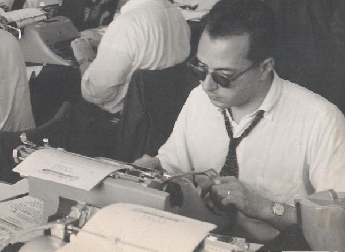
Tad Szulc, a veteran New York Times reporter who covered the invasion and its run-up, recalled in June 1961 that it had been “the most open operation which you can imagine.”
A surprise the invasion was not.
The Reelz episode also claimed a full moon helped Castro’s forces thwart the ill-fated landings at the Bay of Pigs.
That’s a nice bit of detail.
But it’s pure invention.
There was no full moon the day of the invasion. The lunar phase on April 17, 1961, was waxing crescent. The next full moon was on April 30, 1961.
The Reelz episode also depicted Kennedy as a stand-up guy, bravely taking blame at a news conference for an assault that had failed.
Kennedy in fact did no such thing.

Took no questions on Cuba
He declined to take questions about Cuba at his news conference that followed invasion. He told newsmen:
“I know that many of you have further questions about Cuba. I made a statement on that subject yesterday afternoon. … I do not think that any useful national purpose would be served by my going further into the Cuban question this morning. I prefer to let my statement of yesterday suffice for the present.”
That news conference was on April 21, 1961, four days after the invasion was launched and two days after the assault had been rolled up by Castro’s forces.
Kennedy did talk at length about Cuba the day before, in a speech to the American Society of Newspaper Editors.
But he was hardly penitent or conciliatory. The transcript of his speech makes clear that Kennedy that day was in full Cold Warrior mode.
He didn’t apologize for the failed the invasion. He said the United States did “not intend to be lectured on ‘intervention’ by those whose character was stamped for all time on the bloody streets of Budapest” — a reference to the Soviet-backed crackdown in Hungary in 1956.
Kennedy said the Bay of Pigs invasion was “not the first time that Communist tanks have rolled over gallant men and women fighting to redeem the independence of their homeland. Nor is it by any means the final episode in the eternal struggle against tyranny anywhere on the face of the globe, including Cuba itself.”
The president was emphatic about the communist threat in the Western Hemisphere, asserting: “We and our Latin friends will have to face the fact that we cannot postpone any longer the real issue of survival of freedom in this hemisphere itself.”
So Kennedy was scarcely apologetic in the invasion’s aftermath. He wasn’t the wounded, wimpish, repentant character depicted in the mind-numbing miniseries.
Recent and related:
- Inspirations to journalists: Woodward, Bernstein — and Gaga?
- Busting the NYTimes suppression myth, 50 years on
- No one-off story: Reporting the run-up to Bay of Pigs
- Fact-checking Keller on NYT-Bay of Pigs suppression myth
- NYT-Bay of Pigs suppression myth: Check out new trailer
- NYTimes practices ‘yellow journalism’? How so?
- Cinematic treatments can solidify media myths
- Exaggerating Cleveland as ’70s Belfast on the lake
- Woah, WaPo: Mythmaking in the movies
- Mythmaking in Moscow: Biden says WaPo brought down Nixon
- Time for WaPo to disclose sources on bogus Lynch story
- ‘Cronkite Moment’ makes ‘Best of the Web’
- ‘Lyndon Johnson went berserk’? Not because of Cronkite
- Meaning what, ‘all the bra-burning’?
- Bra-burning ‘never happened’?
- ‘Getting It Wrong’ goes on Q-and-A



 Media Myth Alert
Bay of Pigs, Commentary, Cuba, Debunking, Fact-checking, Getting It Wrong, History, Journalism, Keller, Media, Media-driven myths, New York Times, News, Research
Fact-checking Keller on NYT-Bay of Pigs suppression myth
In Anniversaries, Bay of Pigs, Debunking, Media myths, New York Times on January 28, 2011 at 11:57 am'Publish it did'
In an article to be published Sunday, Bill Keller, executive editor of the New York Times, rubs shoulders with a tenacious media myth linked to the newspaper’s reporting in the run-up to the Bay of Pigs invasion nearly 50 years ago.
I devote a chapter to the New York Times-Bay of Pigs suppression myth in my latest, mythbusting book, Getting It Wrong.
The suppression myth has it that the Times, at the request of President John F. Kennedy, suppressed or emasculated its reporting about the pending Bay of Pigs invasion of Cuba.
But as I discuss in Getting It Wrong, in the 10 days before the ill-fated assault, the Times published several detailed reports on its front page discussing an invasion and exiles’ calls to topple Fidel Castro. And, I note, there is no evidence that Kennedy either asked or persuaded the Times to suppress, hold back, or dilute any of its pre-invasion reporting.
“The anecdote about the Times’ self-censorship is potent, compelling, instructive, and timeless,” I write in Getting It Wrong . “It also is apocryphal, a media-driven myth.”
Keller, though, repeats the myth in a lengthy article to run in the Times Sunday magazine about his newspaper’s dealings with Julian Assange, head of Wikileaks, which not long ago disclosed the contents of thousands of classified U.S. diplomatic cables.
Keller invokes the Bay of Pigs as an example of the newspaper’s having erred “on the side of keeping secrets.”
He writes:
“I’m the first to admit that news organizations, including this one, sometimes get things wrong. We can be overly credulous (as in some of the prewar reporting about Iraq’s supposed weapons of mass destruction) or overly cynical about official claims and motives. We may err on the side of keeping secrets (President Kennedy reportedly wished, after the fact, that The Times had published what it knew about the planned Bay of Pigs invasion, which possibly would have helped avert a bloody debacle) or on the side of exposing them. We make the best judgments we can.”
Had Keller consulted the newspaper’s database of reporting about the run-up to the Bay of Pigs invasion in April 1961, he would have found that the Times reported in detail, if not always accurately, about the preparations to infiltrate a U.S.-trained brigade of Cuban exiles in an attempt to topple Fidel Castro.
The invasion failed, and the anti-Castro exiles were mostly killed or captured. The foreign policy debacle came less than three months into Kennedy’s presidency.
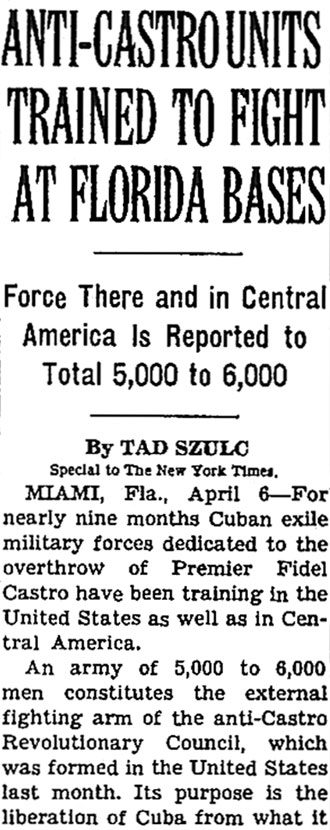
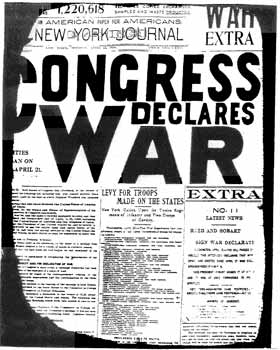
As I write in Getting It Wrong, “the notion that Kennedy asked or persuaded the Times to suppress, hold back, or dilute any of its reports about the pending Bay of Pigs invasion is utter fancy. There is no evidence that Kennedy or his administration knew in advance about the Times report of April 7, 1961, a front-page article that lies at the heart of this media myth” (see image, above).
The report was filed from Miami by veteran Timesman Tad Szulc who, I write, “pieced together the outline of CIA-backed plans to attempt to topple Castro with an invasion force of Cuban exiles who had been trained in Guatemala.”
The invasion plans, Szulc found, were an open secret in Miami. “It was,” he was later to say, “the most open operation which you can imagine.”
On April 6, 1961, Szulc filed a dispatch to New York, reporting that 5,000 to 6,000 Cuban exiles had been trained in a plan to overthrow Castro, that invasion plans were in their final stages, and that the operation had been organized and directed by the CIA.
Szulc’s dispatch report ran more than 1,000 words and, I write in Getting It Wrong, “set off a flurry of intense consultations among senior editors.” Their deliberations revolved around three elements: Szulc’s characterization that the invasion was imminent, the reference to the operation being CIA-directed, and the prominence the report should receive on the Times front page.
In the end, the references to the invasion’s imminence were dropped; it was more prediction than fact, as James Reston, the Times Washington bureau chief at time, pointed out. (The invasion was launched April 17, 1961, 11 days after Szulc filed his dispatch.)
The reference to CIA also was dropped, in favor of the more nebulous terms phrases, “U.S. officials” and “U.S. experts. The then-managing editor, Turner Catledge, later wrote that the decision was based on the reality the government had more than a few intelligence agencies, “and I was hesitant to specify the CIA when we might not be able to document the charge.”
As for the report’s prominence, the decision was to publish Szulc’s story on the front page, beneath a single-column headline, instead of a four-column headline. Given that the invasion wasn’t deemed imminent, a four-column headline was difficult to justify.
I write in Getting It Wrong that although “the headline size was modified, Szulc’s report hardly can be said to have been played down. It certainly had not been spiked, diluted, or emasculated. Szulc’s report, as Catledge wrote, made ‘perfectly clear to any intelligent reader that the U.S. government was training an army of Cuban exiles who intended to invade Cuba.'”
As Timesman Harrison Salisbury wrote in Without Fear or Favor, his insider’s account of the Times:
“The government in April 1961 did not … know that The Times was going to publish the Szulc story, although it was aware that The Times and other newsmen were probing in Miami. … The action which The Times took [in editing Szulc’s report] was on its own responsibility,” the result of internal discussions and deliberations recognizable to anyone familiar with the give-and-take of newsroom decision-making.
But most important, as Salisbury pointed out, “The Times had not killed Szulc’s story. … The Times believed it was more important to publish than to withhold.
“Publish it did.”
As for Kennedy’s remark, that he wished the Times “had run everything on Cuba”: The comment was vague and self-serving, an attempt to deflect blame from his administration’s first-rate foreign policy disaster.
Besides, what was it that the Times supposedly held back? The president didn’t specify.
Nor does Keller.
WJC
Many thanks to Instapundit Glenn Reynolds for linking to this post
Recent and related:
[i] Arthur Schlesinger, the historian and Kennedy adviser, claimed that Szulc’s story had been “emasculated” by Times editors. See “Rebuttal Is Made by Schlesinger,” New York Times (14 June 1966): 15.
Share this: