W. Joseph Campbell

Posts Tagged ‘Debunking’

‘Yes, Virginia’ special on CBS a sad distortion of a timeless newspaper reply

In 1897, Debunking, Error, Media myths, New York Sun, Quotes, Television on December 13, 2012 at 7:29 am

CBS will demonstrate anew tomorrow night that repeat performance is no measure of quality. Or accuracy.

The network will air for the fourth successive Christmas season its charmless, half-hour animated special, “Yes Virginia.”

The show is an unrelieved distortion of  the story behind the New York Sun’s classic editorial reply to 8-year-old Virginia O’Hanlon who implored in a letter to the newspaper in 1897:

“Please tell me the truth; is there a Santa Claus?”
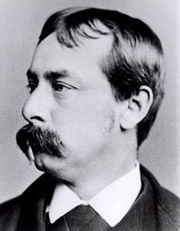
Church

The Sun’s reply, by a veteran editorial writer named Francis P. Church, declared in part:

“Yes, Virginia, there is a Santa Claus. He exists as certainly as love and generosity and devotion exist, and you know that they abound and give to your life its highest beauty and joy. Alas! how dreary would be the world if there were no Santa Claus. It would be as dreary as if there were no Virginias.”

The tiresome CBS show offers none of the charm of Church’s timeless paean to childhood and the Christmas spirit.

Indeed, the program distorts all major elements of the back story of the “Yes, Virginia,” editorial.
Holiday Programming

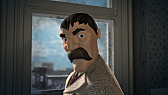
CBS’ Church: Scowling, loud, irritable

It depicts Virginia is a waddling, round-headed girl annoyingly obsessed about the existence of Santa Claus. It portrays Church as scowling, loud, and irritable.

Neither portrayal is convincing, nor very accurate.

Church is cast as the editor of the Sun, which is shown as a tabloid newspaper. Church wasn’t the editor; he was an editorial writer who relished the anonymity the position allowed.

And the Sun of 1897 was no tabloid.

Not only that, but the CBS show has Virginia writing her letter, and the Sun publishing its reply, in December, as Christmas approached.

That’s far from accurate.

As I discussed in my 2006 book, The Year That Defined American Journalism: 1897 and the Clash of Paradigms, Virginia wrote the letter not long after her birthday in July 1897.

The Sun published its editorial-reply on page 6 of its issue of September 21, 1897.

In first appearance, the editorial that has become the most famous in American journalism was inconspicuous and obscure. It was placed in the third of three columns of editorials. It certainly was not introduced with large headlines on the front page, as the CBS show has it.

The headline accompanying the Sun’s editorial posed the timeless question:

“Is There A Santa Claus?”

The editorial was no instant sensation, no immediate hit. And the Sun did not reprint the editorial at Christmastime every year after 1897, as is commonly believed.

It took years for the newspaper to warm to and embrace “Is There A Santa Claus?”

As I noted in The Year That Defined American Journalism, it wasn’t until the mid-1920s when the Sun began routinely publishing the essay at Christmastime.

What helped kept the editorial alive were the newspaper’s readers. They found it appealing and memorable. They found solace and inspiration in its passages.

In untold numbers over the years, readers asked the Sun to reprint the essay.

A letter-writer told the newspaper in 1926 that “Is There A Santa Claus” offered “fine relief from the commercialism and unsentimental greed” of the Christmas season.

In 1940, a writer to the Sun likened the essay to “a ray of hope on the path to human understanding in our troubled times.”

The CBS program hints at none of that. It offers no indication that the editorial’s fame rests at least in part on generations of readers who collectively proved to be far more perceptive than editors in identifying and affirming the essay’s significance and enduring appeal.

If anything, the vapid CBS show demonstrates that history’s back story can be richer, and far more charming, than repeat holiday fare on television.

WJC

Many thanks to Instapundit
Glenn Reynolds for linking to this post

Recent and related:

Lessons unlearned: Indulging in the ‘Cronkite Moment’ myth

In Cronkite Moment, Debunking, Media myths, Quotes, Television on December 6, 2012 at 4:50 am
Johnson: Not in front of a TV

Johnson: Not at the White House

The wide applicability of the mythical “Cronkite Moment” — that occasion in 1968 when Walter Cronkite’s observations about the Vietnam War supposedly altered opinions of the president and the American public — is nothing less than astonishing.

The myth’s resistance to debunking is similarly impressive.

Just yesterday, for example, two media outlets in the American heartland invoked elements of the “Cronkite Moment” as if they were genuine, as if they were instructive.

The sports director of WHO TV in Des Moines, Iowa, asserted in a blog post that “Walter Cronkite didn’t oppose the Vietnam War initially, but when he started questioning what we were doing over there, public opinion turned – correctly – against the war.”

And an item posted yesterday at the online site of the Oklahoma Gazette  arts and entertainment weekly declared: “Lyndon Johnson once remarked that he knew he’d lost Middle America’s support for the Vietnam War when he lost the support of CBS news anchor Walter Cronkite.”

Both are inaccurate elements of the larger, mythical interpretation of what Cronkite, the CBS News anchor, said about Vietnam and what President Lyndon Johnson said in reaction.

The “Cronkite Moment”  is the short-hand phrase for Cronkite’s editorial comment, offered February 27, 1968, at the end of a special report about the Vietnam War.

Cronkite said that the U.S. military had become “mired in stalemate” in Vietnam and suggested that negotiations eventually might offer to be a way out.

At the White House, Johnson supposedly watched the Cronkite report and, upon hearing the “mired in stalemate” assessment, suddenly realized his war policy had received a devastating blow. “If I’ve lost Cronkite,” the president is said to have told an aide, or aides, “I’ve lost Middle America.”

Or something to that effect.

Versions vary markedly.

In reality, Johnson did not see the Cronkite program when it aired. Nor is there any persuasive evidence that he watched the show on videotape at some later date.

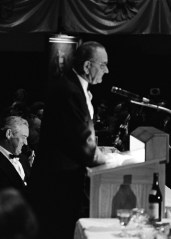
As I discuss in my latest book, Getting It Wrong, Johnson was not at the White House but in Austin, Texas, at a black-tie affair marking the 51st birthday of his longtime political ally, Governor John Connally (see photo, above).

At the time Cronkite was intoning “mired in stalemate,” Johnson wasn’t lamenting the loss of the anchorman’s support. He wasn’t wringing his hands or bemoaning that he had “lost Middle America.”

The president was making lighthearted comments about Connally’s age, saying:

“Today you are 51, John. That is the magic number that every man of politics prays for— a simple majority.”

As for Cronkite’s assessment being so powerful as to shift public opinion — that, too, is mistaken: Popular views about the war had begun shifting months before the “Cronkite Moment.”

By October 1967, 47 percent of Americans, a plurality, maintained that U.S. military presence in Vietnam was a mistake, according to Gallup surveys. The plurality climbed to 49 percent, according to a Gallup Poll completed the day of Cronkite’s program about Vietnam.

So not only that, but Cronkite’s “mired in stalemate” observation was scarcely  remarkable.

Or novel. Journalists had been using the term “stalemate” for months in commentaries, analyses, and news reports about the war.

For example, syndicated columnist James J. Kilpatrick wrote in August 1967:

“So long as the present ground rules obtain in Vietnam, this war will drag along its indecisive way. … [T]he condition is stalemate.”

Also in August 1967, the New York Times said in a news analysis that the war in Vietnam “is not going well.”

U.S. victory, the Times said, “is not close at hand. It may be beyond reach.”

The analysis was published on the front page, beneath the headline: “Vietnam: The Signs of Stalemate.”

Not only did Cronkite’s views of the war lag public opinion, they trailed those offered by rival news organizations.

What, then, accounts for the tenacity of the mythical “Cronkite Moment”?

It’s an accessible tale, easily told and readily understood. It has broad applicability, as the myth’s appearance at WHO TV and in the Oklahoma Gazette suggest.

And it’s unreservedly media-centric: In a period of declining audience share and declining perceived influence, it’s reassuring to media practitioners that there were better, more powerful times when the likes of Cronkite supposedly told truth to power — and supposedly altered policy as a result.

WJC

Recent and related:

Media myth distorts Chicago Tribune timeline of newspaper history

In Debunking, Error, Media myths, Newspapers, Washington Post, Watergate myth on November 20, 2012 at 9:24 am

The Chicago Tribune the other day published a timeline of American newspaper history over the past 50 years — a chronology tainted by the inclusion of a prominent media myth.

The Tribune declared “the daily paper remains vital to an informed citizenry” in presenting the timeline, which it said demonstrated “how newspapers expose — and occasionally commit — wrongdoing.”

The myth appears in the timeline entry for 1974, which says: “A corrupt U.S. president, Richard Nixon, is brought down by a newspaper, The Washington Post.”

Brought down by a newspaper.

Now, that may be the popular dominant narrative of the Watergate scandal — that the dogged reporting of Washington Post reporters Bob Woodward and Carl Bernstein exposed the corruption that forced Nixon’s resignation.

But it’s a mythical, media-centric interpretation, a trope that not even the Post embraces.

In fact, Woodward once dismissed such characterizations as “horseshit.” And for good reason.

As I discuss in a chapter in my 2010 book, Getting It Wrong, unraveling a scandal of the dimension and complexity of Watergate demanded the collective if not always coordinated efforts of special prosecutors, federal judges, both houses of Congress, the Supreme Court, as well as the Justice Department and the FBI.

Even then, as I note in Getting It Wrong, Nixon likely would have survived the scandal and served out his term had it not been for the audiotape recordings he secretly made of conversations in the Oval Office of the White House.

Only when compelled by the Supreme Court did Nixon surrender the telltale recordings, which captured him approving a plan to divert the FBI’s investigation into Watergate’s seminal crime, the break-in June 17, 1972, at the headquarters of the Democratic National Committee.

It is interesting to note that the Post in its Watergate reporting did not disclose the existence of the Watergate tapes, nor did the newspaper identify or unravel the coverup of Watergate-related crimes.

To assert that the Post brought down Nixon is, as I write in Getting It Wrong, “to abridge and misunderstand the scandal and to indulge in a particularly beguiling media-driven myth.”

What, then, accounts for the tenacity of this hoary media myth? Why does it persist, despite the evidence that can be arrayed against it?

A number of reasons offer themselves.

The Watergate myth, after all, offers a simplistic, easy-to-grasp interpretation of a scandal that was intimidating in its complexity: The web of misconduct that took down Nixon also landed nearly 20 of his top aides, associates, and cabinet officers in jail.

Media myths often spring from simplicity, from the desire for tidy and uncomplicated versions of history. Not only that, but the notion that the Post brought down Nixon fits neatly into a timeline.

A feel-good component buoys the Watergate myth, too: The myth affirms the notion that newspapers, beleaguered though they are, really can make a difference in American politics and in American democracy.

Which, itself, is something of a media myth.

WJC

Recent or related:

The subtlety of media myths: A ‘New Yorker’ brief and the napalm-attack myth

In Debunking, Error, Media myths, New Yorker, Photographs on November 19, 2012 at 6:53 pm

Media myths can emerge in blithe and subtle ways, as a brief item in the November 19 issue of the New Yorker testifies.

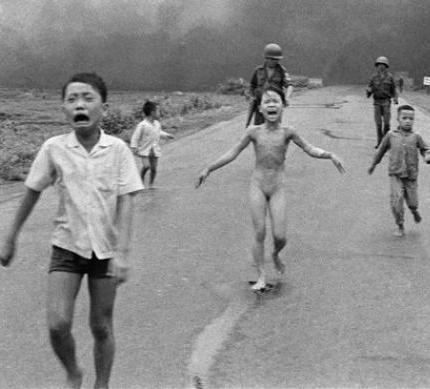
‘Napalm girl,’ 1972 (Nick Ut/AP)

The myth the New Yorker insinuates is especially pernicious: It suggests U.S. forces dropped the napalm that wounded and terrified a group of Vietnamese children — a moment captured by Associated Press photographer Nick Ut in one of the most memorable images of the Vietnam War.

In a brief retrospective review of Alfred Hitchcock’s 1963 film, The Birds, the New Yorker said a scene in that movie of “screaming schoolkids fleeing down a lonely road disturbingly presage[d] the iconic news image of Vietnamese children escaping from American napalm attacks.”

The reference to “iconic news image of Vietnamese children” running from “napalm attacks” points unmistakably to Ut’s Pulitzer Prize-winning photograph, which was taken June 8, 1972, not far from the village of Trang Bang, in what was then South Vietnam.

The centerpiece of Ut’s photograph shows a naked, 9-year-old girl screaming in pain and terror as she fled the attack.

The media myth associated with the image is that U.S. forces carried out the aerial napalm attack that terrorized and injured the children near Trang Bang.

But that interpretation — or, perhaps, the reflexive inclination to blame the American military — is in error: The napalm was dropped in a misdirected attack by the South Vietnamese Air Force, as news reports of the time made clear.

In the 40 years since, however, the erroneous interpretation has emerged not infrequently.

A notable example came six months ago, in an obituary published in the New York Times that referred to Ut’s photograph and said it depicted “the aftermath of one of the thousands of bombings in the countryside by American planes: a group of terror-stricken children fleeing the scene, a girl in the middle of the group screaming and naked, her clothes incinerated by burning napalm.”

For weeks, the Times resisted correcting its error about “American planes” having carried out the attack, torturing logic as it defended its phrasing.

In reply to my email pointing out the error, the correction expert on the Times obituary staff, Peter Keepnews, wrote:

“You are correct that the bombing in question was conducted by the South Vietnamese Air Force. However, the obituary referred only to ‘American planes,’ and there does not seem to be any doubt that this plane was American –- a Douglas A-1 Skyraider, to be precise.”

As if the plane’s manufacturer were of crucial importance to the napalm attack. Which it wasn’t. The Times clearly had meant that American forces were responsible. Which they weren’t.

Finally, in late August, the Times published what I called “a sort-of correction,” invoking Keepnews’ baffling logic in stating:

“While the planes that carried out that attack were ‘American planes’ in the sense that they were made in the United States, they were flown by the South Vietnamese Air Force, not by American forces.”

It was a begrudging, less-than-sincere acknowledgement of error.

Independently of my efforts, two senior former journalists for the Associated Press also had pressed the Times to correct the error about the napalm attack. They were Richard Pyle, a veteran AP correspondent who was the news agency’s Saigon bureau chief from 1970-73, and Hal Buell, a retired AP vice president who for years directed the agency’s photo service. (Pyle directed my attention to the New Yorker brief that alludes to the napalm-attack myth.)

In July, Pyle and Buell sent a joint letter by email to the Times, noting that the error, if left uncorrected, could solidify into wide popular acceptance.

Their fears were hardly unfounded — as the New Yorker’s movie brief suggests, in its blithe, almost casual invoking of the napalm-attack myth.

WJC

Many thanks to Instapundit
Glenn Reynolds for linking to this post.

Recent or related:

Social-media triumphalism and its myth-busting limits

In Anniversaries, Debunking, Error, Media myths, Media myths and radio, War of the Worlds on October 31, 2012 at 3:50 pm

Social media’s capacity to demolish media myths soon after they emerge was impressively on display this week as megastorm Sandy swept ashore in New Jersey and disrupted life throughout the Northeast and Mid-Atlantic.

Got it notably wrong

Erroneous reports were many as the storm reached the East Coast on Monday. As the Guardian of London noted today, “the spread of such misinformation was abetted by journalists, who were once taught the importance of verifying every source.”

Notably wrong was the report on CNN’s “Piers Morgan Tonight” news program Monday that Sandy had breached the heart of American capitalism and covered the floor of the New York Stock Exchange in Manhattan with three feet of water.

But that account and a similar report on the hype-prone Weather Channel were promptly disputed, and soon repudiated, in a barrage of posts on Twitter.

In demolishing the bogus reports, Twitter demonstrated a capacity for “savage self-correction,” as John Herrman declared in a post yesterday at the BuzzFeed online site.

Herrman wrote:

“In response to thousands of retweets of erroneous Weather Channel and CNN reports that the New York Stock Exchange had been flooded with ‘three feet’ of water, Twitter users, some reporters and many not, were relentless: photos of the outside of the building, flood-free, were posted. Knowledgeable parties weighed in.”

And the misreporting soon was corrected.

Herrman hailed Twitter as “a fact-processing machine on a grand scale, propagating then destroying rumors at a neck-snapping pace. To dwell on the obnoxiousness of the noise is to miss the result: that we end up with more facts, sooner, with less ambiguity.”

His point is well-taken. On more than a few occasions, Twitter has demonstrated a striking capacity to debunk embryonic media myths — including those myths it helped set loose.

The bogus quotation attributed to the Rev. Dr. Martin Luther King after the slaying last year of terrorist leader Osama bin Laden comes to mind. The made-up passage — “I will mourn the loss of thousands of precious lives, but I will not rejoice in the death of one, not even an enemy” — circulated widely on Facebook and Twitter before their corrective forces effectively demolished it.

But limits to social-media triumphalism must be noted.  The corrective power of platforms such as Twitter reaches only so far.

Once established, media myths are exceedingly difficult to uproot. These myths have amply demonstrated that they can withstand the power of social media.

Welles and ‘War of the Worlds’

Take, for example, Halloween’s most famous media myth — the notion that Orson Welles’ War of the Worlds radio dramatization in 1938 touched off nationwide panic and mass hysteria. It’s a hoary media myth that’s just too embedded — and too delicious — to be destroyed.

No amount of Tweeting is likely to dismantle this myth, one of 10 that I debunk in my latest book, Getting It Wrong. It’s too engrained in popular culture — and in the news media — to go the way of CNN’s botched report about the flooded stock exchange floor.

The 74th anniversary of the original broadcast of The War of the Worlds was yesterday and Twitter percolated with reminders about the program and references to the panic it supposedly created. Tweets challenging the narrative of panic and hysteria were in a distinct minority.

Linked to more than a few Tweets yesterday was a tip sheet describing seven lessons that The War of the Worlds dramatization holds for social media.

The tip sheet seems more than a little convoluted, though. Among its observations was this:

“If you are lucky, the publicity often exceeds the actual event  …. The panic [of The War of the Worlds program] has become legendary, even though there is quite a bit of evidence to suggest it wasn’t nearly as widespread as reported at the time. But, it put the program on the map, and launched a relatively unknown 23-year old name[d] Orson Welles into the public eye.”

Even that’s not quite true. Although he was 23 at the time of the broadcast, Welles’ had already made the cover of Time magazine.

WJC

Recent and related:

Debates are over, media myth lives on

In Debunking, Media myths on October 28, 2012 at 12:05 pm

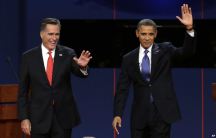
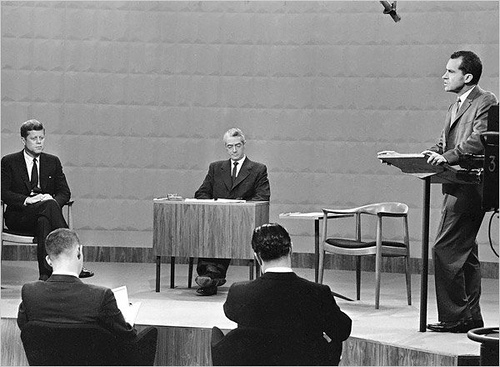
The runup to the three presidential debates this month inevitably was accompanied by references to the 1960 encounter between John F. Kennedy and Richard M. Nixon — and to references to the media myth distorts understanding of the historic confrontation 52 years ago.

Debates are over, myth lives on

Even days after the final debate between President Barack Obama and Republican challenger Mitt Romney, the 1960 debate myth still swirls.

The myth has it that television viewers thought Kennedy won the first debate of that campaign while radio listeners believed Nixon prevailed.

It’s a dubious bit of political lore that long ago became a defining feature of that debate. And it lives on as a reminder about how appearances supposedly trump substance in American presidential politics.

The notion of viewer-listener disagreement in the first Kennedy-Nixon debate is implausible for several reasons, including the absence of representative polling data that confirmed such a disparity.

What likely was more decisive than appearance in that debate was Nixon’s willingness to be conciliatory, to concur with Kennedy. In his opening statement, Nixon seemed to second the points raised by Kennedy, who had spoken first.

Nixon said:

“The things that Senator Kennedy has said many of us can agree with. … There is no question but that this nation cannot stand still; because we are in a deadly competition, a competition not only with the men in the Kremlin, but the men in Peking. We’re ahead in this competition, as Senator Kennedy, I think, has implied. But when you’re in a race, the only way to stay ahead is to move ahead. And I subscribe completely to the spirit that Senator Kennedy has expressed tonight, the spirit that the United States should move ahead.”

But in discussing the debate more than 50 years later, it’s far easier to reach for the myth of viewer-listener disagreement than it is to recall Nixon’s ill-advised tactics.

This was suggested in a lengthy commentary about the Obama-Romney debates, posted the other day at the online site of the liberal American Prospect political magazine.

The commentary invoked the first Kennedy-Nixon debate in stating:

“As for wishing these suckers were serious policy discussions, I can’t think of a single presidential debate that’s ever been decided on those grounds. Even in 1960, when the jousting between Kennedy and Nixon was relatively substantive, JFK triumphed purely on image, one proof being that people who only heard their confrontations on radio famously thought Nixon had cleaned his clock.”

The commentary offered no evidence to support the claim of clock-cleaning-on-the-radio.

That’s because there is no persuasive, contemporaneous evidence to that effect.

The notion of viewer-listener disagreement was demolished in a journal article published 25 years ago by scholars David L. Vancil and Sue D. Pendell.

Their article, published in Central States Speech Journal, noted that accounts of viewer-listener disagreement about the Kennedy-Nixon debate invariably were anecdotal and impressionistic — and hardly representative of the American electorate in 1960.

The polling organization Sindlinger & Co. did report that its survey respondents who listened to the debate on radio thought Nixon won, by a 2-to-1 margin.

But as  Vancil and Pendell pointed out, Sindlinger’s sample of radio listeners included just 282 respondents — of whom 178 offered an opinion about the debate winner. The numbers were far too few to permit meaningful generalizations or conclusions.

Like many media myths, the notion of listener-viewer disagreement is so delicious that it must have been true.

The New Republic hinted at such sentiment on Monday, the day of the final Obama-Romney debate, in an essay that stated: “[P]erhaps it’s safe to say that 1960 was the year we learned that looks and demeanor, as seen on TV, were just as important as speech when it came to winning over voters.”

In making the claim, the New Republic essay cited an intriguing experiment, reported in 2003, in which 171 summer students at the University of Minnesota either viewed a video of the first Kennedy-Nixon debate or listened to an audio recording of the encounter.

None of the participants had prior knowledge about the Kennedy-Nixon debate, according to the researcher, James Druckman.

He reported finding that television viewers in his experiment “were significantly more likely to believe Kennedy won the debate than audio listeners.”

This, he declared, represented “the first clear empirical evidence consistent with the widespread assertion of viewer-listener disagreement in the first Kennedy-Nixon debate.”

But in a footnote, Druckman reported that 81 percent of the viewers in his experiment thought Kennedy won; so did 60 percent of listeners.

That finding is inconsistent with the central element of alleged viewer-listener disagreement — that Kennedy won among television viewers while Nixon won among radio listeners.

What’s more, participants in Druckman’s experiment skewed Democratic: The “sample did underrepresent Republicans,” he wrote in another footnote. As such, participants may have been more readily sympathetic to Kennedy, the Democratic candidate, than to Nixon, the Republican.

Druckman also acknowledged that “younger people”  in the early 21st century may have processed “televised information differently” from viewers in 1960. To be sure, applying the experiment’s results to viewers and listeners of the presidential debate in 1960 is impossible.

WJC

Recent and related:

1960 myth ricochets around the media in advance of Obama-Romney debate

In Debunking, Error, Media myths, Media myths and radio, Television on October 3, 2012 at 1:58 pm

Kennedy, Nixon at their mythical debate

In the hours before tonight’s encounter between President Barack Obama and Republican challenger Mitt Romney, the beguiling myth of the first-ever presidential debate — the notion that image trumped spoken word — has ricocheted across the U.S. news media.

News organizations of all types have been invoking the myth, which has it that television viewers overwhelmingly felt John F. Kennedy won the first televised debate in 1960 while radio listeners thought Richard M. Nixon had the best of it.

Here are a few examples of media indulgence in that fable:

  • The Boston Globe:  “According to those listening on the radio, Nixon won the debate or it was a draw. But most Americans watched it on TV, and they overwhelmingly were impressed by the … collected performance” of Kennedy.
  • The Hartford (Connecticut) Courant:  “Famously, those who listened to the radio thought that Nixon had defeated Kennedy in their famous first debate in 1960. By contrast, those watching on television thought that the dapper and cool Kennedy had won.”
  • Entertainment Weekly: “Radio audiences thought Nixon won the debate, but those who watched on television were convinced that Kennedy dominated.”
  • Huffington Post: “Richard Nixon’s haggard appearance vs. John F. Kennedy’s vigor is widely cited as contributing to a Kennedy victory in the first 1960 debate. But polls showed that was true mostly for those who watched it on TV, while those listening to the radio generally picked Nixon as victor.”
  • NBC Channel 5 in Chicago: “Pollsters found that people who listened to this debate on the radio thought that Nixon, the vice president, beat Kennedy. But those who followed on television … sided with Kennedy, who won the election.”
  • A blog of the Voice of America, the U.S. government’s voice abroad: ” Nixon’s refusal to wear makeup did not hurt him with those listening on the radio. They gave him the edge.  But Kennedy had the advantage with TV viewers and the rest, as they say, is history.”

Make that bad history.

There is quite simply no persuasive evidence to support the notion that television viewers and radio listeners decisively disagreed about the outcome of the first Kennedy-Nixon debate, which took place in Chicago on September 26, 1960.

That such an effect did occur — or must have occurred — is attractive for a number of reasons: It acknowledges the presumptive power of the televised image. It renders uncomplicated the intricacies of an important political moment of long ago. And it offers an enduring though misguided lesson that content matters less than appearance.

Significantly, the broad media embrace of the debate myth ignores the powerful dismantling published 25 years ago by scholars David L. Vancil and Sue D. Pendell.

In their article in Central States Speech Journal, Vancil and Pendell noted that one “of the most perplexing legacies of the first Kennedy-Nixon debate is the claim that radio listeners and television viewers came to opposite conclusions about the debate winners.”

They proceeded to explode that notion, pointing out that accounts of viewer-listener disagreement about the debate typically were anecdotal and impressionistic — hardly representative of the American electorate in 1960.

They also called attention to “a false impression” that “major polling organizations, such as Gallup, concentrated part of their attention on the reactions of radio listeners.” That hardly was the case.

The one polling organization that did identify radio listeners in a post-debate survey was Sindlinger & Co.

Sindlinger reported that poll respondents who listened to the debate on radio thought Nixon won, by a 2-to-1 margin.

But the Sindlinger sub-sample of radio listeners included 282 respondents — of whom only 178 offered an opinion about the debate winner, far too few to permit meaningful generalizations or conclusions.

Not only was the sub-sample unrepresentative, it did not identify from where the sub-sample of radio listeners was drawn. “A location bias in the radio sample,” Vancil and Pendell pointed out, “could have caused dramatic effects on the selection of a debate winner. A rural bias, quite possible because of the relatively limited access of rural areas to television in 1960, would have favored Nixon.”

Those and several other defects render the Sindlinger result meaningless.

It should be noted that the run-up to tonight’s debate has brought some faint recognition about the mythical character of viewer-listener disagreement in the 1960 debate.

For example, the latest Washington Examiner column of political commentator Michael Barone reads as if he had consulted recent posts at Media Myth Alert.

Barone wrote:

“It is generally held that television viewers felt Kennedy won the first debate, while those listening on radio, unaware of Nixon’s improvised makeup, felt Nixon won. That’s probably overstated. Contemporary [news] accounts suggest most viewers felt both candidates did well, while the single poll of radio listeners had a small sample possibly tilted toward pro-Nixon rural areas lacking TV reception.”

Such observations, however well-reasoned, likely are to be of scant effect in countering the present contagion of the 1960 debate myth.

Like many media-driven myths, it is after all almost too delicious not to be true.

WJC

Recent or related:

In run-up to Obama-Romney encounter, myth of first presidential debate circulates anew

In Anniversaries, Debunking, Error, Media myths, Television on September 30, 2012 at 5:20 am

The runup to this week’s televised debate between President Barack Obama and Republican challenger Mitt Romney has, inevitably, spurred the renewed circulation of a hoary media myth centered around the first such presidential debate, in September 1960.

That encounter, between John F. Kennedy and Vice President Richard M. Nixon, gave rise to the media myth of viewer-listener disagreement: Those who watched the debate on television supposedly thought Kennedy got the best of it; those who listened on radio thought Nixon was the winner.

The myth of viewer-listener disagreement was demolished long ago, in a journal article by scholars David L. Vancil and Sue D. Pendell.

But demolition hasn’t killed the myth.

Indeed, the notion that viewers and listeners came away with markedly different impressions of the debate’s outcome is just too delicious, and too appealing, for journalists to sidestep. After all, viewer-listener disagreement suggests the primacy of television and the triumph of image over substance.

And that’s just what the Chicago Tribune suggests, in an article today recalling the first Kennedy-Nixon debate, which took place September 26, 1960.

The Tribune account says Kennedy won an “unexpected and devastating victory” in that encounter — the first of four debates during that campaign.

“Yet,” the Tribune declares, “not everyone thought Kennedy had won the debate. Pollsters found that those who heard the radio broadcast thought Nixon won. The very first televised debate wasted no time in demonstrating that the ‘medium is the message,’ a maxim coined by communications guru Marshall McLuhan a few years later and leveraged by campaign managers ever since. Television viewers experienced a different debate from radio listeners.”

Who the “pollsters” were, the Tribune doesn’t say.

Only one polling organization, Sindlinger & Company, conducted a survey of any size that included a sub-sample of radio listeners.

The Sindlinger survey, taken the day after the Kennedy-Nixon debate, indicated that radio listeners thought Nixon had prevailed, by a margin of 2-to-1.

But in their article published in Central States Speech Journal in 1987, Vancil and Pendell pointed out that the Sindlinger survey included more than 2,100 respondents — of whom only 282 had listened to the debate on radio.

They noted that “a subordinate group of 282 interviews is below the threshold normally required for a national sample.” Not only that, but just 178 of the 282 respondents “expressed an opinion on the debate winner,” Vancil and Pendell wrote.

Moreover, they said, the Sindlinger sample did not specify where the radio listeners lived, adding:

“A location bias in the radio sample … could have [had] dramatic effects on the selection of a debate winner.  A rural bias, quite possible because of the relatively limited access of rural areas to television in 1960, would have favored Nixon.”

Given the defects of the unrepresentative Sindlinger sample, Nixon’s reported 2-to-1 margin over Kennedy among radio listeners dissolves as meaningless.

And was the first debate really such a “devastating victory” for Kennedy?

You wouldn’t know it from reading the Tribune’s day-after coverage.

“It was a battle, not of minds, but of personalities,” the newspaper reported in its main story about the Kennedy-Nixon encounter. The candidates, the newspaper said, “were almost subdued in demeanor.”

The Tribune further noted that the debate produced “no flashes of wit, no memorable phrases, no give-and-take with a personal flavor.”

It was, the Tribune, said, “a political television show familiar to many viewers ….”

WJC

Recent or related:

USA Today invokes Kennedy-Nixon debate myth

In Anniversaries, Debunking, Error, Media myths on September 21, 2012 at 9:17 am

I noted yesterday how the myth of viewer-listener disagreement — that television viewers and radio listeners had clashing interpretations of the outcome of the Kennedy-Nixon debate in September 1960 — tends to surface at the approach of anniversaries of the historic encounter.

And so it does.

In his latest column, Al Neuharth, the founder of USA Today, unreservedly embraces the myth.

He writes that John F. Kennedy “looked relaxed and at ease” during the debate while Richard M. Nixon did not. “The hot TV lights appeared to give him a heavy beard,” Neuharth adds, “even though he had closely shaved before the TV appearance.”

Neuharth further asserts:

“The debate was also broadcast by radio. Listeners generally gave Nixon the nod. But TV viewers strongly favored Kennedy.”

That’s an enticing interpretation, suggesting the decisiveness of televised images in political communication.

But there’s little support for the notion of listener-viewer disagreement.

That notion, in fact, was exploded 25 years ago in an impressive dismantling published by scholars David L. Vancil and Sue D. Pendell.

Writing in Central States Speech Journal, Vancil and Pendell reviewed and dissected the few surveys that hinted at a viewer-listener disconnect in the Kennedy-Nixon debate, the first of four during that campaign.

Vancil and Pendel described how survey samples were too small to be representative — too small to allow confident or sweeping judgments about sharp disagreements among television and radio audiences.

Central to the claim that radio audiences believed Nixon won the debate was a survey conducted by Sindlinger & Company. The survey indicated that radio listeners, by a margin of 2-to-1, thought Nixon had prevailed in the debate, which took place September 26, 1960.

Vancil and Pendell pointed out that the Sindlinger survey, conducted the day after the debate, included more than 2,100 respondents — of whom only 282 had listened on radio.

Of that number, 178 (or fewer than four people per state) “expressed an opinion on the debate winner,” they wrote.

Vancil and Pendell also challenged the claim that Nixon’s appearance was decisive to the debate’s outcome.

They wrote in their article in Central States Speech Journal:

“Media experts, campaign professionals, and the viewing public almost unanimously agree that Nixon had a number of appearance problems in the first debate. His grey suit, perspiring brow, loose fitting shirt, and general sense of discomfort seemed to provoke sympathetic responses from even the most enthusiastic Kennedy supporters.

“However,” they added, “the inference that appearance problems caused Nixon’s loss, or Kennedy’s victory [in the debate], is classic post hoc fallacy.”

They noted that appearance problems such as Nixon’s sweaty brow, “could have had a negative impact on viewer perceptions, but it is also possible for viewers to be sympathetic to such problems ….

“Even if viewers disliked Nixon’s appearance,” they further wrote, “the relative importance of this factor in viewers’ selection of a debate winner is a matter of conjecture.”

Vancil and Pendell identified six factors or criteria which, they said, audiences were apt to rely on in determining the winner of a presidential debate. Those factors were:

Pre-debate preferences; views on issues; candidate advocacy skills; candidate personality (“including image”); blunders, and media labeling.

“Some viewers” in the Kennedy-Nixon debate, they wrote, “may have ignored appearance in favor of an evaluation of advocacy skills.”

That appears to have been the case, at least with the Washington Post, which declared in a post-debate editorial:

“Of the two performances Mr. Nixon’s probably was the smoother.

“He is an accomplished debater with a professional polish, and he managed to convey a slightly patronizing air of a master instructing a pupil.”

Nixon’s advocacy skills, at least for the Post, trumped the ashen, uncomfortable appearance he cut during the debate.

The Vancil-Pendell debunking is thorough and impressive. And it’s a bit surprising that their article is so infrequently recalled these days.

But, then, perhaps it’s not so surprising at all. Not given the appeal of media-driven myths, those prominent tales about and/or by the news media that are widely believed and often retold but which, under scrutiny, dissolve as apocryphal or wildly exaggerated.

Media myths, I wrote in my 2010 book, Getting It Wrong, often seem “almost too good to be false.”

Typically, I noted, media myths “tend to minimize or negate complexity in historical events and offer simplistic and misleading interpretations instead.” Such as the notion that viewer-listener disagreement was prominent in the first-ever televised presidential debate.

WJC

Recent or related:

Some dubious election history from Al Jazeera English

In Anniversaries, Debunking, Error, Media myths, Television on September 20, 2012 at 12:12 pm

First televised presidential debate

The first televised presidential debate in 1960 gave rise to an enduring media myth — the notion that television viewers and radio listeners interpreted the encounter quite differently.

The myth of viewer-listener disagreement lives on despite its thorough dismantling 25 years ago, in an article in Central States Speech Journal by scholars David L. Vancil and Sue D. Pendell.

Vancil and Pendell noted that reports of viewer-listener disagreement in the first of four debates between John F. Kennedy and Richard M. Nixon in 1960 typically were impressionistic and anecdotal.

Moreover, they wrote, the few surveys that hinted at a viewer-listener disconnect were too small and unrepresentative to allow confident or sweeping judgments.

Vancil and Pendell also challenged the notion that Nixon’s haggard appearance and sweaty brow contributed powerfully to television viewers’ perceptions about the debate, which took place September 26, 1960.

“Appearance problems, such as Nixon’s perspiring brow, could have had a negative impact on viewer perceptions,” Vancil and Pendell wrote, “but it is also possible for viewers to be sympathetic to such problems, or to interpret them as evidence of attractive or desirable qualities.”

They also wrote that “the inference that appearance problems caused Nixon’s loss, or Kennedy’s victory [in the debate] is classic post hoc fallacy.”

Their debunking notwithstanding, the myth of viewer-listener disagreement tends to resurface at or near the anniversaries of the first Kennedy-Nixon debate.

Take, for example, a commentary posted today at the English-language online site of Al Jazeera, the Qatar-based Arabic television network.

The commentary describes the first Kennedy-Nixon debate as “a bellwether” and asserts that “listeners tuning in via radio considered the debate a draw or even a slight win for Nixon. But the 65 million who tuned in by TV saw something very different. Kennedy appeared vigorous yet relaxed, while Nixon looked pale and nervous. … Those viewing the debate on television judged Kennedy as the clear winner.”

But as Vancil and Pendell reported years ago, there is no persuasive, compelling evidence to support such claims.

Not only that, but contemporaneous evidence, including public opinion polls, offer scant support for the notion that television audiences “judged Kennedy as the clear winner.”

To be sure, not all observers saw it that way in late September 1960. In its post-debate editorial, the Washington Post declared, for example:

“Of the two performances Mr. Nixon’s probably was the smoother.

“He is an accomplished debater with a professional polish, and he managed to convey a slightly patronizing air of a master instructing a pupil.”

And the Los Angeles Times said in an editorial (beneath the headline “A slow fight to a draw”) that most television viewers of the debate probably “felt as we did: they were disappointed because (a) they could not pick a winner and (b) they could not find that any single issue had been sharpened up by the abrasives of debate.”

The nationally prominent columnist, James Reston, wrote in the New York Times after the debate:

“This TV program did not do any of the dramatic things predicted for it. It did not make or break either candidate. … Who took the first round is a matter of individual opinion. My own view is that Kennedy gained more than Nixon, but it was a fielder’s choice, settling nothing.”

A Gallup poll released in October 1960 reported that 43 percent of the debate’s viewers and listeners thought Kennedy “did the better job.” Twenty-three percent thought Nixon’s performance was better, and 29 percent said the candidates were about the same. Five percent offered no opinion.

But opinions about the debate did not translate into a decisive advantage for Kennedy. The same survey reported Kennedy was narrowly ahead in the race, by 49 percent to 46 percent, with 5 percent undecided.

That result represented a modest change from Gallup’s poll taken just before the debate, which reported Nixon leading narrowly, by 47 percent to 46 percent.

But Gallup described the post-debate shift as too slight to be meaningful.

“The prudent reader can see,” George Gallup, head of the polling organization, wrote in describing the results, “that polling accuracy has not reached the degree of accuracy required to say with certainty which candidate is ahead in a close race such as the present one.”

WJC

Recent or related: