W. Joseph Campbell

Posts Tagged ‘Kennedy’

Why they get it wrong

In Bay of Pigs, Cronkite Moment, Debunking, Furnish the war, Jessica Lynch, Media myths, New York Times, Newspapers, Washington Post, Watergate myth on June 3, 2011 at 6:49 am

It’s striking how several well-known journalists and news outlets have indulged over last six months in media-driven myths, those dubious tales about the news media that masquerade as factual.

The lineup of myth-indulgers is impressive and, among others, includes:

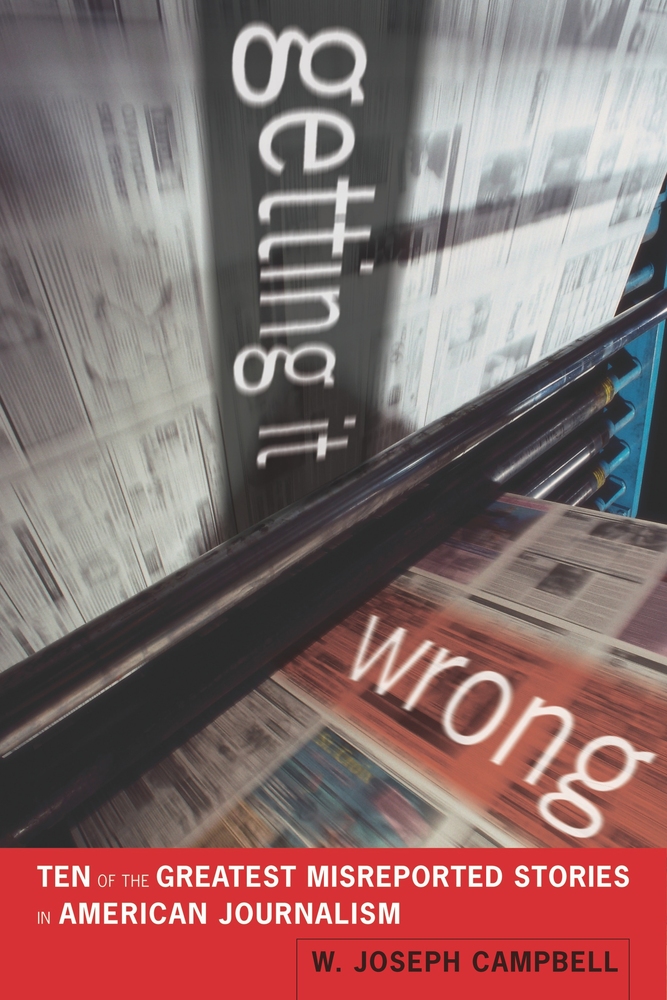
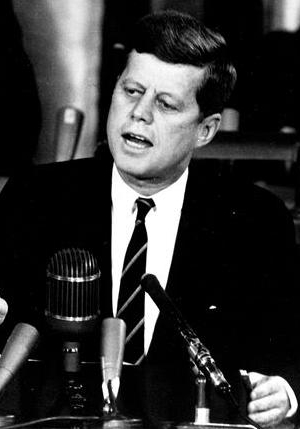
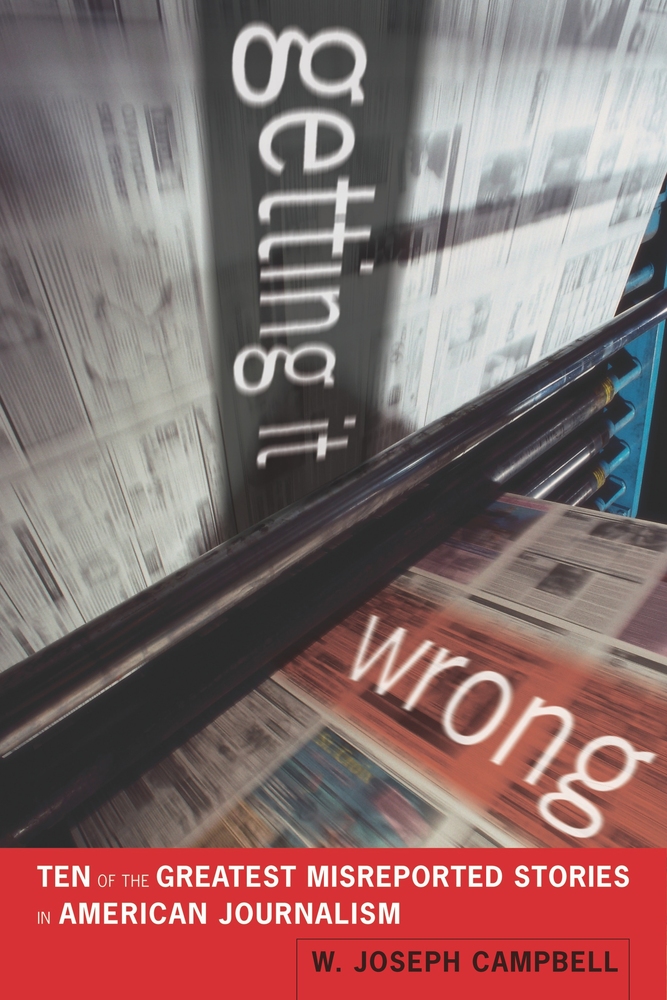
  • Bill Keller, executive editor of the New York Times, who rubbed shoulders with the Bay of Pigs suppression myth in a column in the Times in January. The suppression myth holds that at the behest of President John F. Kennedy, the Times killed or emasculated its report about the pending Bay of Pigs invasion in 1961. That tale is unfounded, as I discuss in my latest book, Getting It Wrong.
  • Mother Jones magazine which, in its May/June cover story by Rick Perlstein, offered up a rare two-fer — two media myths discussed in a single article. One of the myths was the hoary and surely apocryphal tale about William Randolph Hearst and his reputed vow to “furnish the war” with Spain. The other was about the so-called the “Cronkite Moment” of 1968, in which Walter Cronkite’s on-air assessment that the U.S. military was “mired in stalemate” in Vietnam was so powerful as to alter U.S. policy.
  • Keith Olbermann, the acerbic cable television commentator who, as he quit his prime-time Countdown show in January, referred to the  “exaggerated rescue” of Army private Jessica Lynch in the early days of the Iraq War. Such claims, raised as long ago as 2003, were unsubstantiated by an inquiry of the Defense Department’s inspector general who found the rescue operation was found to have been “a valid mission” to recover Lynch, a prisoner of war, “under combat conditions.”

What accounts for such lapses by prominent journalists and their outlets? Why do these and other media-driven myths often find their way into news reports and commentaries?

Some media myths are just too good not to be true; they almost are too good to take time to check out. The tale about Hearst’s vowing to “furnish the war” certainly falls into this category. It shouldn’t be at all difficult to locate references to the dubious character of the anecdote, which has been the subject of repeated debunking over the years.

Likewise, it can be far easier to invoke a media myths that to commit to the tedium of research and legwork. Media myths are convenient, readily at hand. Poking into their details takes time, and a willingness to challenge what are accepted as consensus narratives.

As I noted in discussing Keller’s column that invoked the Bay of Pigs suppression myth:

“Had Keller consulted the newspaper’s database of reporting about the run-up to the Bay of Pigs invasion in April 1961, he would have found that the Times reported in detail, if not always accurately, about the preparations to infiltrate a U.S.-trained brigade of Cuban exiles in an attempt to topple Fidel Castro.”

Similarly, some media myths (such as the illusory “Cronkite Moment“) may be too ingrained, too dearly held by journalists, ever to be uprooted or thoroughly repudiated.

Unlearning such tales is no small challenge, after all. The conundrum of unlearning was addressed a few months ago in a Wall Street Journal column, which noted:

“For adults, one of the most important lessons to learn in life is the necessity of unlearning. We all think that we know certain things to be true beyond doubt, but these things often turn out to be false and, until we unlearn them, they get in the way of new understanding.”

Media myths also can be convenient means of scoring political points. The two-fer in Mother Jones magazine, for example, were presented as part of a sneering attack about “fact-free” Republicans.

Moreover, media myths — the most prominent of them, anyway — resonate in contemporary contexts.

History, it has been said, is “what we decide to remember,” and journalism history is not an exception. Recalling and celebrating the memory of Cronkite’s supposedly telling truth to power about Vietnam — or of Bob Woodward and Carl Bernstein’s bringing down a corrupt presidency — is to offer reassurance to contemporary journalists at a time of confusion and upheaval in their field.

Deciding to remember such mythical tales is understandable if not justifiable, given that those tales bring solace and reassurance amid sweeping uncertainty.

WJC

Recent and related:

Bay of Pigs suppression myth too rich and delicious to die away

In Anniversaries, Bay of Pigs, Debunking, Media myths, New York Times on May 7, 2011 at 5:31 am

The tale of the New York Times censoring itself in the runup to the Bay of Pigs invasion 50 years ago supposedly offers timeless lessons about the perils of journalists surrendering to the agenda of government.

That anecdote, I write in my latest book, Getting It Wrong, is “often cited as an object lesson … about what can happen when independent news media give in to power-wielding authorities.”

Supposedly, in early April 1961, the Times spiked or emasculated a detailed report about the invasion preparations — and did so at the urging of President John F. Kennedy.

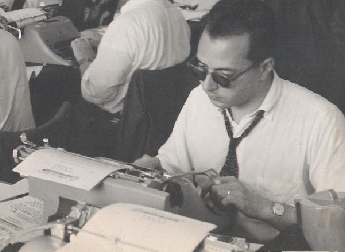
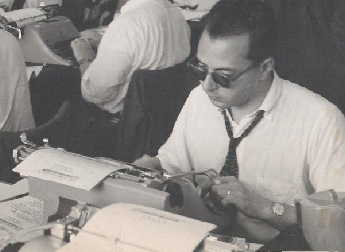
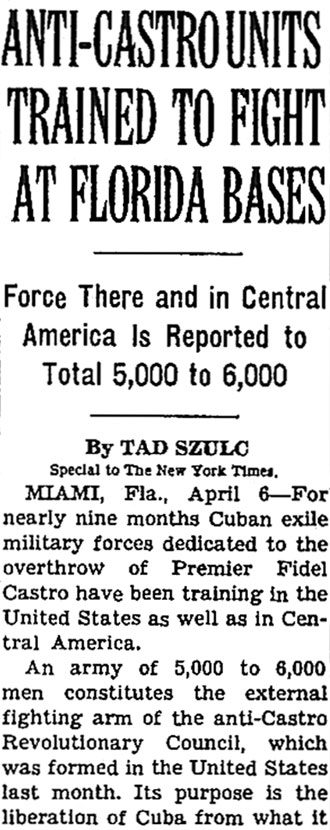
But as I discuss in detail in Getting It Wrong, neither Kennedy nor anyone in his administration asked or lobbied the Times to kill or tone down that report — which was written by a veteran correspondents named Tad Szulc, ran to more than 1,000 words, and was published April 7, 1961, above the fold on the newspaper’s front page.

Like many consensus narratives and media-driven myths, though, the Times-Bay of Pigs suppression tale is too neat and tidy, too rich and delicious, ever to die away.

A hint of that came yesterday at the online site of CounterPunch, which touts itself as “America’s best political newsletter.”

CounterPunch posted an essay that referred to the Times’ purported act of self-censorship, stating:

“Back in April 1961, the Times deleted from Tad Szulc’s story the time and place of landing of the CIA-backed Bay of Pigs invasion because President Kennedy told the Times’ publisher it would not serve U.S. National Security interests. (David Halberstam, The Powers That Be, p. 448).”

It’s neat the passage was cited. But the citation doesn’t render it accurate.

Halberstam‘s Powers That Be, after all, is no authoritative source on the tale of the Times‘ self-censorship. Far from it.

Halberstam’s account claimed that Kennedy called James (“Scotty”) Reston, the Times’ Washington bureau chief, “and tried to get him to kill” the Szulc story.

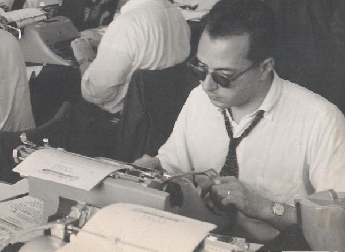
Szulc of the Times

According to Halberstam, Kennedy “argued strongly and passionately about what the Szulc story would do to his policy” and president warned that the Times would risk having blood on its hands were the article published and the invasion a failure.

Heady stuff, but it never happened.

As I note in Getting It Wrong, there is “no evidence that Kennedy spoke with anyone at the Times” on April 6, 1961, the day Szulc’s dispatch was written, edited, and prepared for publication.

“The Kennedy Library in Boston says that the White House telephone logs reveal no calls were placed to Reston” or other Times executives that day, I write, adding:

“Kennedy had almost no chance to speak with those executives during the interval from when Szulc’s story arrived at the Times building in midtown Manhattan and when it was set in type.”

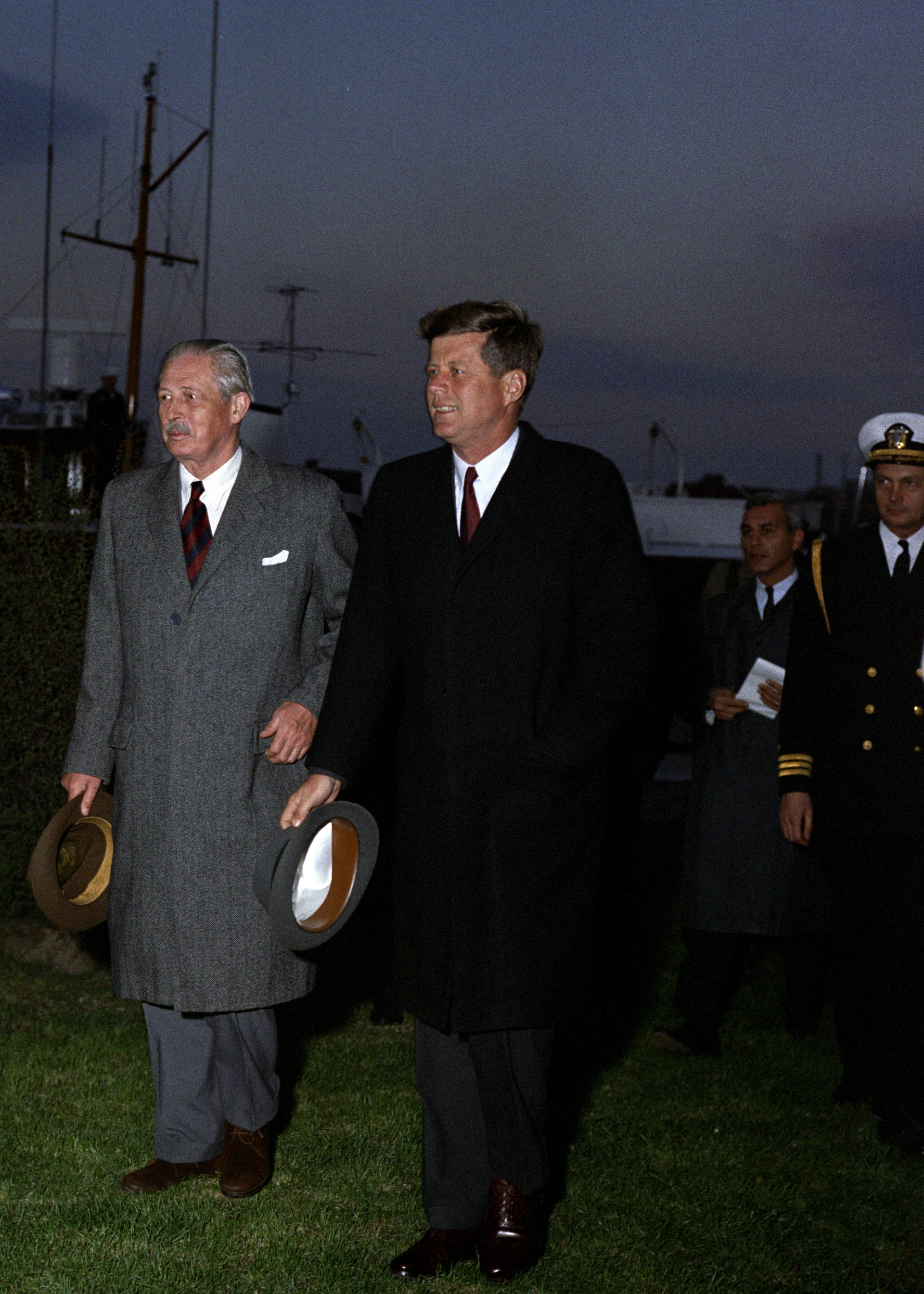
That’s because the president spent the last half of the afternoon of April 6, 1961, playing host to Harold Macmillan, the British prime minister, on a lengthy cruise down the Potomac River to Mount Vernon.

The outing ended around 6:30 p.m., leaving Kennedy only a tiny window of opportunity to call Times executives before the first edition of the newspaper hit the streets.

Harrison Salisbury, a Pulitzer-winning Times correspondent and editor, offered in his book, Without Fear of Favor the most detailed account of the Times’ deliberations on the Szulc article. And Salisbury was unequivocal:

“The government in April 1961,” he wrote, “did not … know that The Times was going to publish the Szulc story, although it was aware that The Times and other newsmen were probing in Miami. Nor did President Kennedy telephone [Times President Orvil] Dryfoos, Scotty Reston or [Managing Editor] Turner Catledge about the story.”

The editing that Szulc’s story received served to improve its accuracy. The reference to the invasion’s imminence was removed, as it represented “a prediction and not a fact,” as Reston wrote years later.

(The story Szulc submitted included no reference to “place of landing.”)

The invasion at the Bay of  Pigs was launched April 17, 1961, or 10 days after Szulc’s story appeared.

In the interim, as I point out in Getting It Wrong, the Times “did not abandon the Cuba-invasion story ….  Subsequent reporting in the Times, by Szulc and others, kept expanding the realm of what was publicly known about a coming assault against Castro.”

So Szulc’s article of April 7, 1961, was no one-off effort. And it wasn’t sanitized at the request of the Kennedy administration, either.

WJC

Many thanks to Little Miss Attila
for linking to this post

Recent and related:

CBC modifies its Bay of Pigs claim — but still has it wrong

In Anniversaries, Bay of Pigs, Debunking, Media myths, New York Times on April 19, 2011 at 2:03 pm

After my post Sunday that called attention to its erroneous characterization of  the New York Times reporting in the run-up to the Bay of Pigs invasion, CBC News in Canada modified its claim that at “the direct request” of the President John F. Kennedy, the Times “played down” its story about the pending invasion of 50 years ago.

The CBC now says the Times “played down their story at the direct request of the Kennedy administration.” It’s a slight modification, but a significant shift in storyline, away from Kennedy to an unnamed person or persons in his administration.

Even so, the CBC offered no compelling evidence about who in the Kennedy administration made such a request to the Times, when, to whom, or how.

The modification does little more than muddy matters.

And the CBC still doesn’t have it right about Kennedy, the Times, and the run-up to the ill-fated Bay of Pigs invasion.

As I point out in Getting It Wrong, my media-mythbusting book that devotes a chapter to the New York Times-Bay of Pigs suppression myth, there is no compelling evidence that Kennedy or anyone in his administration pressured, lobbied, or persuaded the Times to modify, emasculate, or sanitize the article it published April 7, 1961, which lies at the heart of this media-driven myth.

Szulc of the Times

That article was written by a veteran correspondent named Tad Szulc, who reported that a force of Cuban exiles had been training in the United States and Central America, preparing to launch an armed assault on the regime of Fidel Castro.

I point out in Getting It Wrong that the recollections of none of the principal figures in the Times-suppression episode say that Kennedy pressured the newspaper’s editors about the Szulc story.

These recollections, I write, “include the memoirs of Turner Catledge, then the managing editor of the Times; of James (Scotty) Reston, then the chief of the Times’ Washington bureau; of Pierre Salinger, Kennedy’s press secretary, and of Arthur M. Schlesinger Jr., an award-winning Harvard historian who was a White House adviser to Kennedy.”

It’s highly improbable that a such juicy detail as Kennedy’s purported interference with the Times’ news judgment would have been so thoroughly ignored by such a disparate cast.

Moreover, the compelling insider’s account written by Harrison E. Salisbury, a former Times senior editor and Pulitzer Prize-winning correspondent, asserted that the Kennedy White House neither knew about, nor meddled in, the newspaper’s deliberations about its pre-invasion coverage.

Salisbury was unequivocal about that, writing in his 1980 work, Without Fear or Favor:

“The government in April 1961, did not … know that The Times was going to publish the Szulc story, although it was aware that The Times and other newsmen were probing in Miami. Nor did President Kennedy telephone Dryfoos, Scotty Reston or Turner Catledge about the story…. The action which The Times took [in editing Szulc’s report] was on its own responsibility,” the result of its internal discussions and deliberations.

“Most important,” Salisbury added, “The Times had not killed Szulc’s story.” The newspaper, he wrote, “believed it was more important to publish than to withhold. Publish it did.”

Even with the modification of its article about the Bay of Pigs, the CBC was not inclined to abandon entirely the notion that Kennedy, somehow, took a direct role in meddling with the Times. In a sidebar article posted Sunday, the CBC asserted:

“Numerous sources say that President Kennedy spoke with someone at the New York Times about their reporting there was going to be an invasion of Cuba.”

Many sources may have made such a claim. But assertion is not evidence. And none of the sources mentioned by the CBC offered documentation for their claims.

The CBC sidebar referred specifically to David Halberstam, who wrote The Powers That Be, and Peter Wyden, author of Bay of Pigs: The Untold Story.

Halberstam offered a highly colorful  yet uncorroborated claim that Kennedy called Reston “and tried to get him to kill” Szulc’s article.

Kennedy “argued strongly and passionately about what the Szulc story would do to his policy,” Halberstam wrote, adding that the president warned that the Times would risk having blood on its hands were the article published and the invasion a failure.

Wyden claimed that Orvil Dryfoos, then the Times president, “was in touch with” Kennedy, and the president “was upset” by plans to publish the report.

In a footnote, Wyden added: “It can no longer be determined whether Dryfoos contacted the President or whether Kennedy was told about the story and took the initiative.”

The CBC sidebar referred to yet another version, offered in a history of the Times titled The Trust: The Private and Powerful Family Behind the New York Times. According to that account, Reston took the initiative to call the CIA director, Allen Dulles, to speak with him about Szulc’s story as it was being prepared for publication.

“Dulles advised Scotty [Reston] that, for national security reasons, it would be best not to publish the story,” according to The Trust’s version. “However, if the Times decided it absolutely must publish, it should keep [references to] the CIA out of it.”

Such a conversation, however, was neither mentioned nor hinted at by Reston in his memoir, Deadline, which discussed in some detail the Times’ handling of the Szulc story.

And if it Dulles did offer such pre-invasion advice, the suggestions were made in response to Reston’s inquiry — which is quite apart from the Kennedy administration’s calling on, and lobbying, the Times.

Significantly, the versions of Halberstam, Weyden, and The Trust do not agree on who called whom, or what was discussed. Collectively, they offer a great deal of version variability — shifting accounts of what Kennedy supposedly said, and with whom at the Times he supposedly spoke.

Version variability of such magnitude can be a marker of a media-driven myth, as I point out in Getting It Wrong.

That Kennedy took the initiative and called on the Times to encourage the newspaper to tread lightly in its pre-invasion reporting is at the heart of this media myth. And there’s no evidence to support that claim — as the CBC’s modification indicates.

WJC

Recent and related:

Canada’s CBC invokes Bay of Pigs suppression myth

In Anniversaries, Bay of Pigs, Debunking, Media myths, New York Times, Newspapers on April 17, 2011 at 2:38 am

CBC News in Canada invoked the hardy New York Times-Bay of Pigs suppression myth this weekend in a lengthy online article recapping the failed invasion of Cuba, which was launched 50 years ago today.

The suppression myth has it that the Times, at the behest of President John F. Kennedy, spiked or emasculated its detailed report about invasion preparations.

But as I discuss in Getting It Wrong, my media-mythbusting book that came out last year, neither Kennedy nor anyone in his administration asked or lobbied the Times to kill or tone down the pre-invasion report, which was published on the newspaper’s front page on April 7, 1961.

Moreover, the Times coverage of the pending invasion was not confined to that article.

As I point out in Getting It Wrong: “The suppression myth … ignores that several follow-up stories and commentaries appeared in the Times during the run-up to the invasion.”

The CBC, however, invoked the hoary suppression myth as if it were genuine. It declared, in reference to the Times report of April 7, 1961:

“The Times had actually played down their story at the direct request of Kennedy, something both he and The Times’ editors later regretted. Shortly after the invasion, Kennedy reportedly told a Times editor, ‘if you had printed more about the operation, you would have saved us from a colossal mistake.'”

No call to the Times

While Kennedy did not call on Times editors before the invasion, he did say on separate occasions in the months afterward that had the newspaper printed more details about the pending invasion, it “would have saved us from a colossal mistake.”

Of course, such comments were quite self-serving. I note in Getting It Wrong that they “represented an attempt to deflect blame for the debacle” at the Bay of Pigs, where the invasion force of CIA-trained exiles was rolled up within three days.

James (“Scotty”) Reston of the Times later characterized Kennedy’s comments as “a cop-out,” adding:

“It is ridiculous to think that publishing the fact that the invasion was imminent would have avoided this disaster. I am sure the operation would have gone forward” nonetheless.

I note in Getting It Wrong that the Times’ pre-invasion coverage cited no prospective date for the invasion. But the newspaper’s front-page reports in April 1961 unmistakably signaled that something was afoot, that an attempt to oust Castro by arms was forthcoming. And on April 17, 1961, at the Bay of Pigs in southern Cuba, the invasion force of some 1,400 exiles launched their ill-fated attack.

The Times wasn’t alone, either, in reporting about the pending invasion. Its competition on the pre-invasion story included the Miami Herald, the New York Herald Tribune, and Time magazine.

According to a critique published in May 1961 in The Reporter, a journalists’ trade publication, the pre-invasion story “was covered heavily if not always well” by the U.S. news media.

So what, then, accounts for the emergence and tenacity of the Times-Bay of Pigs suppression myth?

I write in Getting It Wrong that the myth’s most likely derivation lies in confusion with a separate episode during the Cuban Missile Crisis in October 1962, when Kennedy did ask the Times to hold off publishing a report about the Soviets having deployed nuclear-tipped weapons in Cuba.

On that occasion, when the prospect of a nuclear exchange seemed in the balance, the Times complied, holding off publication 24 hours.

“What likely has happened is that, over the years, distinctions between the separate incidents surrounding the Times and Cuba became blurred,” I write. “That is, it was mistakenly thought that Kennedy had called the Times executives about the newspaper’s coverage in the days before the Bay of Pigs invasion when, in fact, his call came on an entirely different matter in 1962.”

WJC

Recent and related:

A fiasco for the press, too: Error, hype marked Bay of Pigs reporting

In Anniversaries, Bay of Pigs, Debunking, New York Times, Newspapers, Washington Post on April 15, 2011 at 3:17 am

The Wall Street Journal told of at least three landings in “a land, air and sea struggle” to topple Fidel Castro’s regime in Cuba.

Miami Herald headline

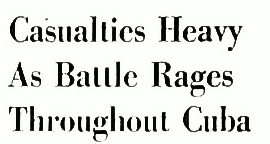
The Miami Herald spoke of battles raging “throughout” the island.

The United Press International wire service said invading “revolutionaries … appeared to have knocked back Fidel Castro’s forces in the initial assault.”

Thus, a sampling of some of the erroneous first U.S. news reports about the ill-fated invasion of Cuba, launched 50 years ago this weekend at the Bay of Pigs.

Castro’s military overwhelmed the assault in less than three days; the CIA-trained invasion force of some 1,400 Cuban exiles never gained much more than a bitterly contested beachhead.

The thwarted invasion entrenched Castro’s dictatorship and represented a major foreign policy setback for the United States and the three-month-old administration of President John F. Kennedy.

It was something of a fiasco for the U.S. news media as well.

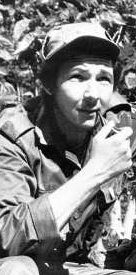
Raul Castro: Not captured

No correspondents were with the invading forces and Castro’s regime imposed a blackout on U.S. correspondents assigned to Cuba. The first news accounts of the invasion of April 17, 1961, as a result were wildly inaccurate and, in some cases, highly colorful and imaginative.

Those initial reports, while still interesting on their face, offer timeless testimony to the extraordinary difficulties of covering conflict from afar.

They also offer a lesson the U.S. news media seem intent on never remembering: First reports from the battlefield, or from the scene of a disaster, almost reliably will be in error. Cautious reporting and scrutiny of sources are thus always advisable amid uncertain and shifting conditions.

Such lessons tend to remain unlearned, however — as was apparent in the highly exaggerated news reports about violence and mayhem that supposedly swept New Orleans in the immediate aftermath of Hurricane Katrina’s landfall in 2005.

As I note in my media-mythbusting book, Getting It Wrong, “the erroneous and exaggerated reporting [about post-Katrina New Orleans] had the cumulative the effect of painting for America and the rest of the world a scene of surreal violence and terror, something straight out of Mad Max or Lord of the Flies.”

I further note that “initial and worst-case estimates of disaster casualties almost always are exaggerated. … Recognition of this tendency may well have helped to temper or curb the exaggerated reports of lawlessness and violence” in Katrina’s wake.

Revisiting the Bay of Pigs coverage also demonstrates how wished-for outcomes can color and distort news coverage.

The Miami Herald, which clearly wanted Castro gone, was eager to report imagined gains by the undermanned exile force, while offering no sources at all in its breathless accounts.

Beneath a banner headline that read, “Invaders Slug Into Interior,” the Herald reported on April 18, 1961, that the anti-Castro rebels “were pushing into the interior of Cuba” after launching assaults “at several key points” on the island.

“It was brother against brother,” the Herald said of the fighting, adding, “A virtual blackout was stretched across Cuba since the first shot of the civil war was fired.”

The newspaper further reported — while citing no sources — that it had “learned that the rebel troops are paying heavily for every mile gained.”

The Herald also attempted to divine the invaders’ strategy, asserting: “Rebels pouring in from Las Villas in the soft underbelly of Cuba were headed towards Central Highway in an apparent attempt to control the strategic road and cut the island in two.”

While somewhat more cautious than the colorful account in the Miami Herald, the Wall Street Journal of April 18, 1961, reported that at “least three widely scattered landings” had “brought an immediate state of emergency and brisk fighting inside Cuba and rapid repercussions around the globe.”

The Journal noted that the “cutoff of telephone and cable communications by the Castro government and conflicting battle reports made the tide of fighting difficult to assess,” but added:

“The invaders seem bent on cutting Cuba in half, then wheeling westward to Havana, about 100 miles from their original beachhead.”

The Journal didn’t hold back from publishing what it acknowledged were unverified reports that anti-Castro forces had captured the Isle of Pines and freed 10,000 political prisoners; had taken Santiago de Cuba, the country’s second-largest city, and had seized Raul Castro, Fidel’s brother.

“None of these reports were confirmed, however,” the Journal added — as if such a disclaimer were of much value after having offered up what proved to be wild and fanciful rumors.

The Washington Post of April 18, 1961, turned to wire service dispatches in compiling its first account of the invasion. It led with a United Press International report that breathlessly declared:

“Invading Cuban revolutionary troops, landed from the sea and dropped from planes, fought a bloody battle yesterday in the swamps 90 miles southeast of Havana and appeared to have knocked back Fidel Castro’s forces in the initial assault.

“There were reports that segments of the Cuban Navy had revolted.

“The revolutionary front directed by former Castro Premier Jose Miro Cardona in a secret United States headquarters was estimated to have thrown 5,000 anti-Castro Cubans into action in 48 hours on the east and south coasts.”

The Post’s report incorporated an Associated Press dispatch that said “the invaders hit the beaches in four of Cuba’s six provinces.”

Within weeks of the failed invasion, one of the leading journalists in America, James (“Scotty”) Reston of the New York Times, charged in a column that U.S. government officials and the CIA had fed reporters erroneous information about the assault on Cuba.

“When the landings started,” Reston wrote, “American reporters in Miami were told that this was an ‘invasion’ of around 5,000 men — this for the purpose of creating the impression among the Cuban people that they should rise up to support a sizable invasion force.

“When the landing … began to get in trouble, however,” Reston added, “officials here in Washington put out the story — this time to minimize the defeat in the minds of the American people — that there was no ‘invasion’ at all, but merely a landing of some 200-400 men to deliver supplies to anti-Castro guerrillas already in Cuba.

“Both times the press was debased for the Government’s purpose.”

Could be, but journalists amply demonstrated in their reporting that they were inclined to be gullible accomplices — eager at least to embrace wishful scenarios about the invasion. Official disinformation only partly explains the media credulity in reporting the Bay of Pigs.

News outlets bear a far heavier burden for botching the coverage.

WJC

Recent and related:

Fast and loose: ‘Kennedys’ miniseries and Bay of Pigs history

In Bay of Pigs, Debunking, Media myths, New York Times on April 10, 2011 at 7:35 am

I suspected it would be dreadful, but I was still curious about how the Bay of Pigs invasion of 50 years ago would be treated. So I tuned in yesterday afternoon to part of a marathon showing of the Reelz television miniseries, The Kennedys.

I watched the Bay of Pigs installment, a turgidly acted episode that played fast and loose with the historical record.

Blessedly, the episode did not take up the New York Times-Bay of Pigs suppression myth, as I thought it might.

That topic no doubt was too intricate for set-piece drama that depicts President John F. Kennedy as mirthless and insecure; his wife as clueless, and his father as domineering and routinely intrusive.

Only the president’s brother, Robert (played by Barry Pepper), put in a strong performance in the Bay of Pigs episode, dressing down an insolent Air Force general and lording it over J. Edgar Hoover.

But surely no one turned to The Kennedys miniseries for historical insight; it’s no documentary and its inaccuracies came as little surprise. Still, they were striking — and deserve to be called out.

The president was depicted as upset that Fidel Castro’s military was not caught unawares when U.S.-trained Cuban exiles came ashore at the Bay of Pigs on April 17, 1961.

In reality, preparations for the invasion were much an open secret, especially in Miami, where the Cuban exile community had buzzed for weeks about a pending assault on Castro’s regime. And Kennedy knew that very well.

As I note in my media-mythbusting book, Getting It Wrong, pre-invasion news coverage reached a point where Kennedy, a week before the assault, told his press secretary, Pierre Salinger:

“I can’t believe what I’m reading! Castro doesn’t need agents over here. All he has to do is read our papers. It’s all laid out for him.”

Salinger, himself, noted: “To declare in mid-April of 1961 that  I knew nothing of the impending military action against Cuba except what I read in the newspapers or heard on the air was to claim an enormous amount of knowledge.”

Tad Szulc, a veteran New York Times reporter who covered the invasion and its run-up, recalled in June 1961 that it had been “the most open operation which you can imagine.”

A surprise the invasion was not.

The Reelz episode also claimed a full moon helped Castro’s forces thwart the ill-fated landings at the Bay of Pigs.

That’s a nice bit of detail.

But it’s pure invention.

There was no full moon the day of the invasion. The lunar phase on April 17, 1961, was waxing crescent. The next full moon was on April 30, 1961.

The Reelz episode also depicted Kennedy as a stand-up guy, bravely taking blame at a news conference for an assault that had failed.

Kennedy in fact did no such thing.

Took no questions on Cuba

He declined to take questions about Cuba at his news conference that followed invasion. He told newsmen:

“I know that many of you have further questions about Cuba. I made a statement on that subject yesterday afternoon. … I do not think that any useful national purpose would be served by my going further into the Cuban question this morning. I prefer to let my statement of yesterday suffice for the present.”

That news conference was on April 21, 1961, four days after the invasion was launched and two days after the assault had been rolled up by Castro’s forces.

Kennedy did talk at length about Cuba the day before, in a speech to the American Society of Newspaper Editors.

But he was hardly penitent or conciliatory. The transcript of his speech makes clear that Kennedy that day was in full Cold Warrior mode.

He didn’t apologize for the failed the invasion. He said the United States did “not intend to be lectured on ‘intervention’ by those whose character was stamped for all time on the bloody streets of Budapest” — a reference to the Soviet-backed crackdown in Hungary in 1956.

Kennedy said the Bay of Pigs invasion was “not the first time that Communist tanks have rolled over gallant men and women fighting to redeem the independence of their homeland. Nor is it by any means the final episode in the eternal struggle against tyranny anywhere on the face of the globe, including Cuba itself.”

The president was emphatic about the communist threat in the Western Hemisphere, asserting: “We and our Latin friends will have to face the fact that we cannot postpone any longer the real issue of survival of freedom in this hemisphere itself.”

So Kennedy was scarcely apologetic in the invasion’s aftermath. He wasn’t the wounded, wimpish, repentant character depicted in the mind-numbing miniseries.

WJC

Recent and related:

No one-off story: Reporting the run-up to Bay of Pigs

In Anniversaries, Bay of Pigs, Debunking, Media myths, New York Times, Newspapers on April 7, 2011 at 7:46 am

The tenacious New York Times-Bay of Pigs suppression myth centers around a single story that the Times supposedly bungled or censored in its issue 50 years ago today.

But reporting about the pending assault on Fidel Castro’s Cuba went beyond a single story. The Times and other U.S. news outlets reported frequently —  if not always accurately — about the run-up to the Bay of Pigs invasion, which was launched April 17, 1961, and was rolled up within three days.

The suppression myth has it that at President John F. Kennedy’s behest, the Times spiked or emasculated a story telling of preparations by U.S.-trained Cuban exiles to attack Cuba.

The suppression tale is untrue, however. The Times of April 7, 1961, was no artifact of censorship: It reported what it knew about the unfolding invasion preparations.

Szulc, undated photo (Courtesy Anthony Szulc)

Best testimony to that comes from reading what was published: Doing so reveals that the news report at heart of the myth appeared beneath the byline of a veteran correspondent named Tad Szulc; the article was displayed above the newspaper’s front-page fold.

The Times, didn’t thereafter drop the invasion-preparations story, either. Szulc’s report of 50 years ago was no one-off effort.

As I point out in Getting It Wrong, my media-mythbusting book that came out last year:

“The suppression myth fails to recognize or acknowledge that the Times coverage was not confined to Szulc’s article ten days before the invasion. It ignores that several follow-up stories and commentaries appeared in the Times during the run-up to the invasion.”

Reporting by Szulc and others for the Times after April 7, 1961, “kept expanding the realm of what was publicly known about a coming assault against Castro,” I write.

For example, on April 8, 1961, the Times published a front-page article about the Cuban exiles and their eagerness to toppled Castro.

That report, which appeared beneath the headline, “Castro Foe Says Uprising Is Near,” quoted the president of the U.S.-based umbrella group of exiles, the Cuban Revolutionary Council, as saying that a revolt against the Castro regime was “imminent.”

The following day, the Times published two articles about Cuba on its front page. One of them was the lead story, which appeared beneath the headline, “Castro Foes Call Cubans To Arms; Predict Uprising,” and discussed the vow of the exiled Cuban Revolutionary Council to topple Castro.

“Duty calls us to the war against the executioners of our Cuban brethren,” the Revolutionary Council declared. “Cubans! To victory! For democracy! For the Constitution! For social justice! For liberty!”

The Times front page of April 9, 1961, also carried a report by Szulc, who described how the exile leaders were attempting to cover over rivalries and divisions in advance of what Szulc termed the coming “thrust against Premier Fidel Castro.”

The “first assumption” of the leaders’ plans, Szulc wrote, “is that an invasion by a ‘liberation army,’ now in the final stages of training in Central America and Louisiana, will succeed with the aid of internal uprising in Cuba. It is also assumed that a provisional ‘government in arms’ will be established promptly on the island.”

With those sentences, Szulc effectively summarized the strategic objectives of what became the Bay of Pigs invasion.

As I point out in Getting It Wrong, none of the Times’ pre-invasion reports included a prospective date for the invasion. But they unmistakably signaled that something was afoot, that an attempt to oust Castro by arms was forthcoming.

Moreover, on April 11, 1961, James Reston, the Washington bureau chief, reported on the Times’ front page that Kennedy administration officials were divided “about how far to go in helping the Cuban refugees to overthrow the Castro Government.”

Reston described in detail how the president had been receiving conflicting counsel from advisers at the White House, the Central Intelligence Agency, and the State and Defense departments. Reston also identified the time pressures confronting the president, writing:

“It is feared that unless something is done fairly soon nothing short of direct military intervention by United States forces will be enough to shake the Castro Government’s hold over the Cuban people.”

Reston, I note in Getting It Wrong, “followed that report the next day with a commentary that addressed the moral dimensions of an armed attempt to topple Castro. His column noted that ‘while the papers have been full of reports of U.S. aid to overthrow Castro, the moral and legal aspects of the question have scarcely been mentioned.'”

Nor was the Times alone in reporting about invasion preparations. Its competition on the pre-invasion story included the Miami Herald, the New York Herald Tribune, and Time magazine.

According to a critique published in May 1961 in The Reporter, a journalists’ trade publication, the pre-invasion story “was covered heavily if not always well.” The Reporter added:

“Remarkably detailed reports were published and broadcast describing the stepped-up preparations” for the assault on Cuba.

Indeed, reporting and commentary about invasion plans reached such  intensity that according to Kennedy’s press secretary, Pierre Salinger, the president complained a week before the invasion, saying:

“I can’t believe what I’m reading! Castro doesn’t need agents over here. All he has to do is read our papers. It’s all laid out for him.”

The CIA’s planning for the Bay of Pigs invasion was cloaked in secrecy of the skimpiest kind. In the days and weeks before the assault, the Cuban exile community in Miami teemed with talk about an invasion.

“It was,” Szulc recalled about two months later, in testimony before a closed session of a Senate Foreign Relation subcommittee,  “the most open operation which you can imagine.”

WJC

Recent and related:

Busting the NYTimes suppression myth, 50 years on

In Anniversaries, Bay of Pigs, Debunking, Media myths, New York Times on April 6, 2011 at 7:30 am

Few tales in American journalism offer such rich, potent, and timeless lessons as that of the New York Times’ censoring itself in the run-up to the Bay of Pigs invasion 50 years ago this month.

Had the Times reported all it knew about the planned assault on Fidel Castro’s Cuba, had the Times not held back, the ill-fated invasion may well have been called off and the United States would have been spared an acute foreign policy reversal.

Or so the media myth has it.

The New York Times-Bay of Pigs suppression myth — one of 10 media-driven myths debunked in my latest book, Getting It Wrong — endures as a telling reminder about the hazards that can befall journalists when they yield to the government’s agenda on national security.

Indeed, the Times’ purported spiking has been called the “symbolic journalistic event of the 1960s.”

Only the Times didn’t censor itself.

It didn’t kill, spike, or otherwise emasculate the news report published 50 years ago tomorrow that lies at the heart of this media myth.

That article was written by a veteran Times correspondent named Tad Szulc, who reported that 5,000 to 6,000 Cuban exiles had received military training for a mission to topple Fidel Castro’s regime; the actual number of invaders was about 1,400.

But overstatement was hardly the article’s most controversial or memorable element.

Supposedly, editors at the Times caved in to pressure from the White House of President John F. Kennedy and eviscerated Szulc’s article, removing key elements about the invasion plans.

That Kennedy intervened in the Times’ editorial decisionmaking in April 1961 is widely believed, and lives on as a cautionary tale. As the trade publication Editor & Publisher put it a few years ago:

“The Times, of course, famously held off on the story at the request of President John F. Kennedy, who later regretted the decision.”

Even the Times has bought into this erroneous meme.

The newspaper’s executive editor, Bill Keller, wrote in a column a few weeks ago:

“We may err on the side of keeping secrets (President Kennedy reportedly wished, after the fact, that The Times had published what it knew about the planned Bay of Pigs invasion, which possibly would have helped avert a bloody debacle) or on the side of exposing them. We make the best judgments we can.”

Had Keller taken time to consult a database of issues of his newspaper, he would have found that the Times reported in detail about preparations to infiltrate the CIA-trained exiles into Cuba, in hopes of sparking an uprising that would overthrow Castro.

As I write in Getting It Wrong, “the notion that Kennedy asked or persuaded the Times to suppress, hold back, or dilute any of its reports about the pending Bay of Pigs invasion is utter fancy. There is no evidence that Kennedy or his administration knew in advance” about Szulc’s dispatch, which was filed from Miami on April 6, 1961.

The article was published the following day – above the fold on the Times front page.

Nor, I write, is there any evidence “that Kennedy or anyone in his administration lobbied or persuaded the Times to hold back or spike that story, as so many accounts have said.”

After the cruise

Indeed, while Szulc’s dispatch was edited in New York on the afternoon of April 6, 1961, Kennedy was playing host to Harold Macmillan, the British prime minister, on a lengthy cruise down the Potomac River to Mount Vernon.

Kennedy returned to the White House around 6:30 that evening, leaving almost no time for the president to have intervened and negotiated with Times editors before the newspaper’s first edition hit the streets around 7 p.m.

According to the Kennedy presidential library, White House telephone logs reveal that no calls were placed on April 6, 1961, to top Times executives such as President Orvil E. Dryfoos, Managing Editor Turner Catledge, or Washington bureau chief James “Scotty” Reston. (In The Powers That Be, David Halberstam depicted Kennedy as having called Reston to argue “strongly and passionately” against the Times’ publishing Szulc’s story.)

In his book, Without Fear or Favor, an insider’s look at the Times, Harrison Salisbury offered a detailed account about the handling of Szulc’s dispatch.

“The government in April 1961,” Salisbury wrote, “did not … know that The Times was going to publish the Szulc story, although it was aware that The Times and other newsmen were probing in Miami. Nor did President Kennedy telephone Dryfoos, Scotty Reston or Turner Catledge about the story…. The action which The Times took [in editing Szulc’s report] was on its own responsibility,” the result of internal discussions and deliberations.

The editing was conservative but not unreasonable.

A reference to the invasion’s imminence was removed, serving to improve its accuracy. The force of Cuban exiles did not launch the assault until April 17, 1961, 10 days after Szulc’s report appeared. Such an interval hardly suggests “imminence.”

Besides, as Reston pointed out in his memoir, “imminence” is a prediction, not a fact.

References to the CIA’s role in training the Cuban exiles were omitted in favor of the more nebulous terms “U.S. officials” and “U.S. experts.” Catledge, the managing editor, said he reasoned that the U.S. government had more than a few intelligence agencies, “more than most people realize, and I was hesitant to specify the CIA when we might not be able to document the charge.”

An entirely defensible if cautious editorial decision.

The prominence given the Szulc report also was modified, from a planned four-column display to a single column. If the invasion was not imminent, then a four-column headline was difficult to justify, Catledge reasoned.

Those decisions were judicious, not unreasonable, and had the effect of improving the accuracy of Szulc’s dispatch.

“Most important,” as Salisbury wrote, “The Times had not killed Szulc’s story. … The Times believed it was more important to publish than to withhold. Publish it did.”

The Times-suppression myth, I point out in Getting It Wrong, likely stems from confusion with a separate episode during the Cuban Missile Crisis in October 1962, when Kennedy did ask the Times to postpone publication of a report about the Soviets having deployed nuclear-tipped weapons in Cuba.

On that occasion, when the prospect of a nuclear exchange seemed in the balance, the Times complied, holding off publication 24 hours.

WJC

Many thanks to Instapundit
Glenn Reynolds for linking to this post

Recent and related:

Of media myths and false lessons abroad: Biden’s Moscow gaffe

In Bay of Pigs, Debunking, Media myths, New York Times, Newspapers, Washington Post, Watergate myth on March 14, 2011 at 7:57 am

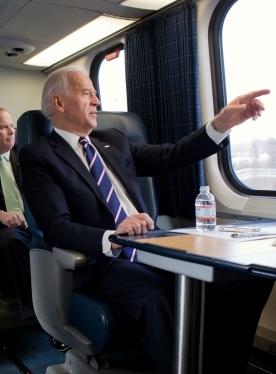
Biden shows the way (White House photo)

Vice President Joe Biden embraced in Moscow last week one of American journalism’s most tenacious myths — the notion that reporting by the Washington Post brought down” Richard Nixon’s corrupt presidency in the Watergate scandal.

Unwittingly or otherwise, Biden offered up the Watergate myth as a telling example of the values and virtues of a free press. The vice president said in remarks at Moscow State University:

“Journalists must be able to publish without fear of retribution. In my country it was a newspaper, not the FBI, or the Justice Department, it was a newspaper, the Washington Post that brought down a President for illegal actions.”

As I’ve noted, not even the Post endorses that superficial and misleading reading of Watergate history. (Ben Bradlee, the newspaper’s executive editor during Watergate, has said for example: “[I]t must be remembered that Nixon got Nixon. The Post didn’t get Nixon.”)

The significance of Biden’s mischaracterization of Watergate goes beyond being merely curious; it’s more than just another example of the gaffe-prone vice president slipping up again.

His remarks demonstrated anew that media myths are not just intriguing curiosities of history. They showed how false lessons can worm their way into diplomacy and policymaking.

Biden’s speech represented pointed criticism of — and recommendations for — Russia and its legal and political systems.  Biden offered a laundry list of democratic reforms that autocratic Russia ought to undertake, stating that courts “must be empowered to uphold the rule of law and protect those playing by the rules.

“Non-governmental watchdogs should be applauded as patriots, not traitors. …

“Journalists,” he added, “must be able to publish without fear of retribution.” To buttress his point about a robust free press, he invoked the claim that “the Washington Post … brought down a President for illegal actions.”

Biden offered that anecdote as an example of the benefits of press freedom, which he called “the greatest guarantee of freedom there is….”

Invoking the myth that the Post “brought down” Nixon is to offer an international audience a false lesson about the power of the news media. Invoking the myth is to suggest, wrongly, that that news media can, when circumstances are right, force a sitting president from office.

As I note in my latest book, Getting It Wrong, rolling up a scandal of the sweep and dimension of Watergate “required the collective if not always the coordinated forces of special prosecutors, federal judges, both houses of Congress, the Supreme Court, as well as the Justice Department and the FBI.”

Even then, I write, “Nixon likely would have served out his term if not for the audiotape recordings he secretly made of most conversations in the Oval Office of the White House.

“Only when compelled by the Supreme Court did Nixon surrender those recordings, which captured him plotting the cover-up” of Watergate’s signal crime — the break-in at the headquarters of the Democratic National Committee in June 1972.

Considered against the tableau of subpoena-wielding investigators and special prosecutors, the Watergate reporting of the Post recedes in significance.

As Michael Getler, the newspaper’s ombudsman wrote in 2005: “Ultimately, it was not The Post, but the FBI, a Congress acting in bipartisan fashion and the courts that brought down the Nixon administration.”

I also note in Getting It Wrong that “media-driven myths are neither trivial nor innocuous. They can and do have adverse consequences.”

They tend to offer simplistic and misleading interpretations of important historical events, and they “can blur lines of responsibility and deflect blame away from makers and sponsors of flawed public policy,” I write, citing as a case in point the New York Times-Bay of Pigs suppression myth.

Had the New York Times had reported all it knew 50 years ago about the run-up to the pending Bay of Pigs invasion of Cuba, the administration of President John F. Kennedy likely would have scuttled the operation–thus sparing the country a stunning foreign policy reversal.

Or so the media myth has it.

As I discuss in Getting It Wrong, that interpretation is not only misleading but it diverts responsibility away from Kennedy and his flawed decision to go ahead with the invasion.

The Times, after all, published a number detailed, front-page reports about the anticipated invasion in the days before the ill-fated assault. And there is no evidence that the newspaper censored itself under White House pressure in the run-up to the Bay of Pigs invasion.

And in the final analysis, I note, ” it was Kennedy, not American journalists, who gave the go-ahead in April 1961, sending a brigade of Cuban exiles to a disastrous rendezvous in the swamps of southwestern Cuba.”

The cause of independent-minded journalism in Russia would have been better served had Biden skipped the myth and urged the Kremlin to pursue serious investigations into unresolved cases of journalists who’ve been killed because of their work.

The New York-based Committee to Protect Journalists says 19 journalists have been killed in Russia since 2000.

The country, CPJ says, has a “record of rampant impunity in resolving the killings of journalists.”

WJC

Recent and related:

JHistory: ‘Getting It Wrong’ deserves to be ‘required reading’

In Bay of Pigs, Bra-burning, Cronkite Moment, Debunking, Hurricane Katrina, Media myths, New York Times, Newspapers, Reviews, War of the Worlds, Washington Post, Watergate myth on February 7, 2011 at 9:51 am

JHistory, the listserv devoted to issues in journalism history, posted yesterday a very insightful and favorable review of my latest book, Getting It Wrong, saying it “should be required reading for journalism students as well as journalists and editors.”

Getting It Wrong “reinforces the necessity of healthy skepticism; a commitment to fully understanding the implications of one’s research; and the importance of cultivating diverse, credible sources and viewpoints for probing, quality journalism,” the review says.

Getting It Wrong, which was published in summer 2010 by University of California Press, addresses and debunks 10 prominent media-driven myths — those dubious tales about and/or by the news media that masquerade as factual.

The reviewer for JHistory, Jeanette McVicker of SUNY-Fredonia, says Getting It Wrong is a “compelling book” that “generated a minor sensation in journalism circles all summer, with good reason.”

McVicker, whom I do not know, notes:

“In each chapter, Campbell delivers pithy, well-researched correctives for each sensational claim.

“No,” she writes, “Orson Welles’s ‘War of the Worlds‘ radio broadcast did not induce a national panic in October 1938. Yes, there was symbolic bra burning in the Freedom Trash Can at the 1968 protest of the Miss America pageant in Atlantic City, but no mass stripping of undergarments by wild women’s liberationists. No, the Kennedy administration did not request the New York Times to spike or delay a report on the imminent Bay of Pigs invasion: ‘utter fancy,’ Campbell writes.”

McVicker adds:

“The deconstruction of these cherished media myths by Campbell’s archival, source-driven research is praiseworthy, and makes for fascinating reading.”

She further notes:

“In most of these examples, the devastating legacy of the mythmaking media machine continues far beyond attempts to backpedal and correct the erroneous reporting: sensational stories tend to remain in public consciousness for years and sometimes decades.”

Indeed.

Getting It Wrong, McVicker adds, “demonstrates with tremendous force how discrete instances of media reporting and mythmaking have built up a golden age fallacy of journalism’s self-importance, and his work goes a long way toward deflating such heroic myths and consensus-narratives at the heart of modern journalism history.”

Her principal challenge to Getting It Wrong lies in my view that stripping away and debunking prominent media myths “enhances a case for limited news media influence. Media power tends to be modest, nuanced, diffused, and situational.”

Too often, I write, “the ubiquitous presence of the news media is mistaken for power and influence. … The influence of the news media is typically trumped by other forces.”

It’s an accurate assessment, especially given that media myths — such as the notion that investigative reporting by the Washington Post brought down Richard Nixon’s corrupt presidency in the Watergate scandal — often seek to “ascribe power, significance, and sometimes great courage to the news media and their practitioners.”

Puncturing media myths thus serves to deflate the notion of sweeping media power.

McVicker tends to disagree, writing that “it is surely not the case that the combined effects of such narratives are ‘modest, nuanced, diffused, and situational.'”

She notes as an example “the ongoing legacy of mainstream media’s failure to hold members of the Bush administration accountable during the buildup to the invasion of Iraq, a devastating correlate to Campbell’s spot-on analysis of the distorted, erroneous reporting of what was happening in the streets of New Orleans following Hurricane Katrina.”

There is, though, a fair amount of evidence that the news media were neither gullible nor comatose in the run-up to the war in Iraq, that tough questions were raised of the Bush administration’s pre-war plans.

While the notion of a docile news media has hardened into conventional wisdom about the pre-war coverage, that view has been challenged, notably by David Gregory of NBC News, who has asserted:

“I think the questions were asked [in the run-up to the war].  I think we pushed. I think we prodded. I think we challenged the president. I think not only those of us the White House press corps did that, but others in the rest of the landscape of the media did that.

“If there wasn’t a debate in this country” about going to war in Iraq, Gregory has said, “then maybe the American people should think about, why not?  Where was Congress? Where was the House? Where was the Senate? Where was public opinion about the war?”

I find quite telling this observation, offered in 2007 by Reason magazine:

“The ‘we should have done more to head off this war’ arguments assumes too much, exaggerates the media’s power to influence, removes the onus from politicians and infantilizes news consumers. … many in the media did ask tough questions of the administration, but the public wasn’t paying much attention.”

That the news media were comatose in the run-up to the Iraq War may be yet another media-driven myth.

WJC

Recent and related:


Campbell’s

book should be required reading for journalism students as well as

journalists and editors, for it reinforces the necessity of healthy

skepticism; a commitment to fully understanding the implications of one’s

research; and the importance of cultivating diverse, credible sources and

viewpoints for probing, quality journalism. There is an even greater lesson

here, however, pertinent for all readers: consistent with the rise of

“modern” journalism from the late 1800s to the present, the institution of

journalism has bolstered itself with narratives celebrating its own

strategic importance to society, even when the narratives turn out to be

fictions.