W. Joseph Campbell

Posts Tagged ‘Murrow’

Murrow, Cronkite myths cited in Poland’s top paper

In Cronkite Moment, Debunking, Media myths, Murrow-McCarthy myth, New York Times, Newspapers, Watergate myth on January 4, 2011 at 10:25 am

I’ve discussed from time to time at Media Myth Alert how media-driven myths about the U.S. news media have a way of traveling well and finding expression in news outlets overseas.

Watergate-related myths are notable examples of this tendency.

A couple of prominent media myths popped up yesterday in an article posted at the online site of Gazeta Wyborca, the leading daily in Poland and a newspaper with a remarkable past.

Gazeta Wyborca traces its lineage to what was the leading underground newspaper in Poland of the 1980s, Tygodnik Mazowsze. The clandestine title appeared under the noses of Poland’s communist authorities, week after week, from 1982 to 1989–some 290 issues in all.

Tygodnik Mazowsze was run almost entirely by women affiliated with Poland’s then-banned Solidarity opposition. When the country’s communist rulers permitted Solidarity candidates to stand in elections in 1989, one of the conditions was that the movement be permitted to publish an above-ground newspaper.

So the staff of Tygodnik Mazowsze moved up from the underground to launch Gazeta Wyborca, which means “electoral newspaper.” In the years since, Gazeta has become the dominant news outlet in Poland, which now is a thriving democracy.

Gazeta yesterday referred to the debate that bubbled last week in U.S. news media over a New York Times article that likened TV comedian Jon Stewart to legendary CBS newsman Edward R. Murrow.

Gazeta noted that U.S. news media “triumphantly” mentioned “cases in which journalists have changed the course of history” and referred to Murrow’s “instrumental” role in ending Senator Joseph McCarthy’s communists-in-government witch-hunt.

It also noted CBS anchorman Walter Cronkite’s criticism of the Vietnam War in 1968, which supposedly forced President Lyndon Johnson to realize his war policy was a shambles.

It’s too bad Gazeta didn’t point out that both cases are media-driven myths.

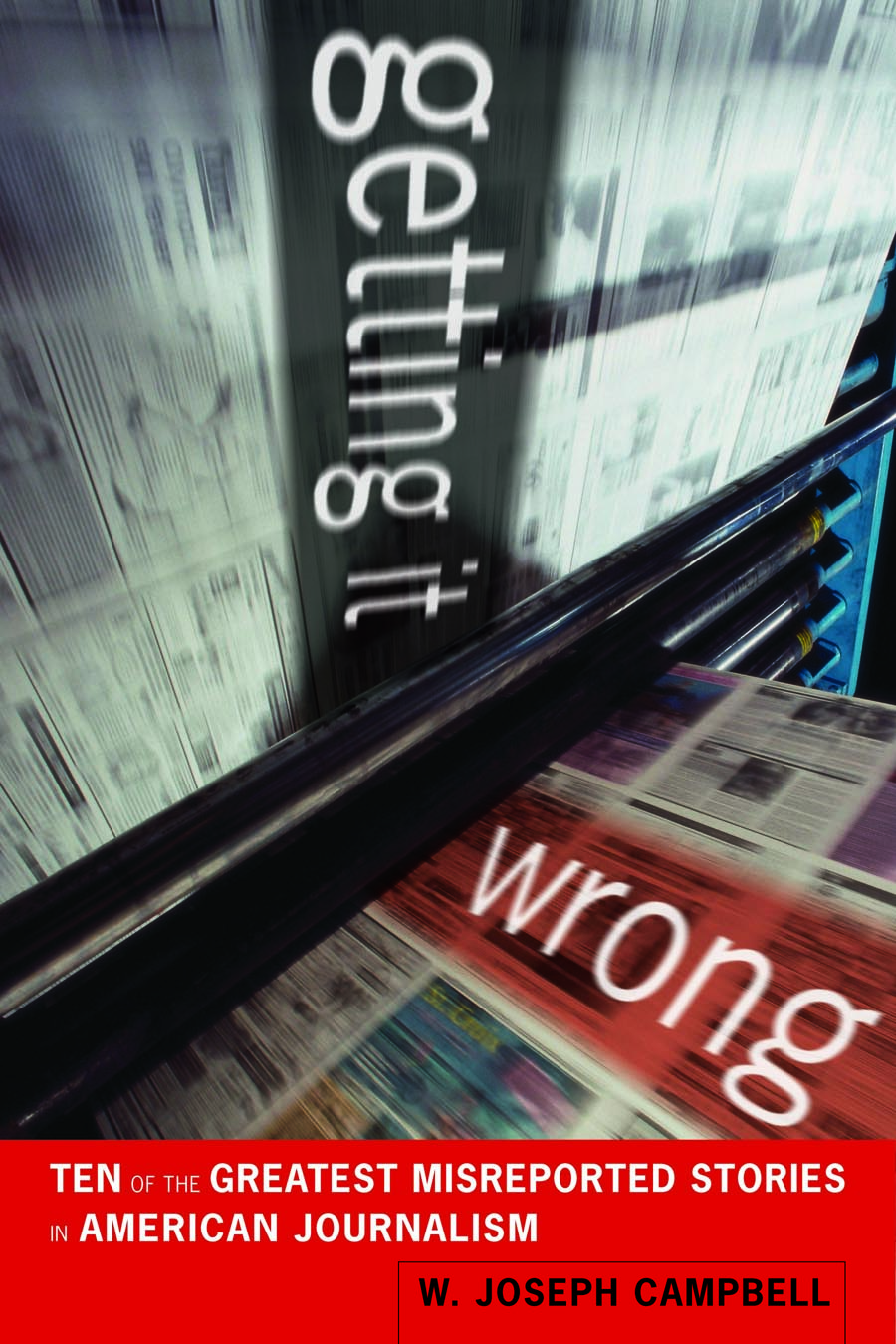
As I discuss in my latest book, Getting It Wrong, Murrow was quite late in confronting McCarthy, doing so most prominently in a half-hour television program that aired March 9, 1954.

That show came months, even years after other American journalists–notably, syndicated columnist Drew Pearson–had reported critically, closely, and often about McCarthy and his exaggerated charges.

“To be sure,” I write in Getting It Wrong, “it wasn’t as if Americans in early 1954 were hoping for someone to step up and expose McCarthy, or waiting for a white knight like Murrow to tell them about the toxic threat the senator posed.”

By then, they knew all too well.

Nor was Cronkite at the cutting edge of criticism of the U.S. war effort in Vietnam.

Far from it.

The CBS anchorman declared in a televised special report on February 27, 1968, that the U.S. military was “mired in stalemate” in Vietnam.
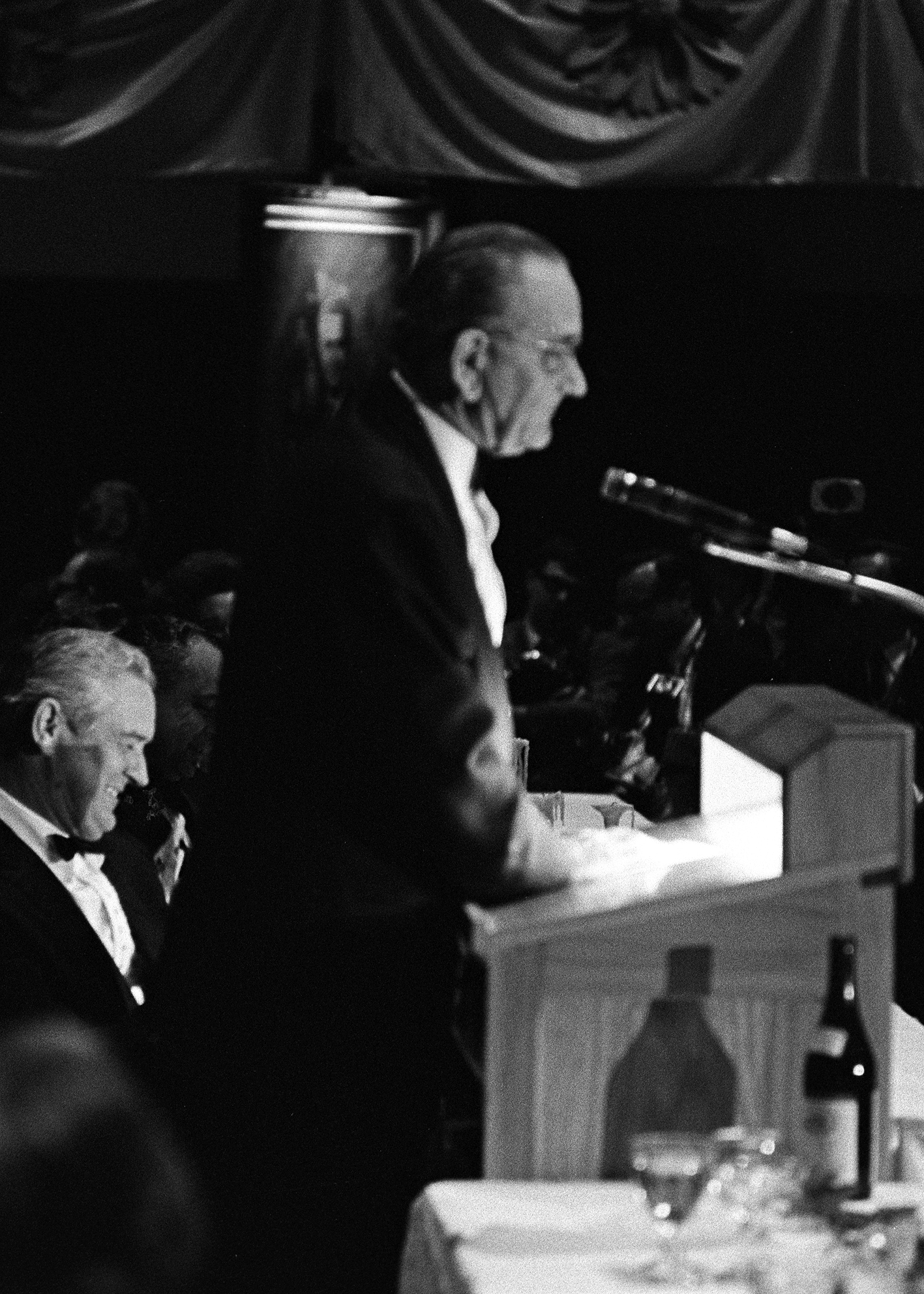
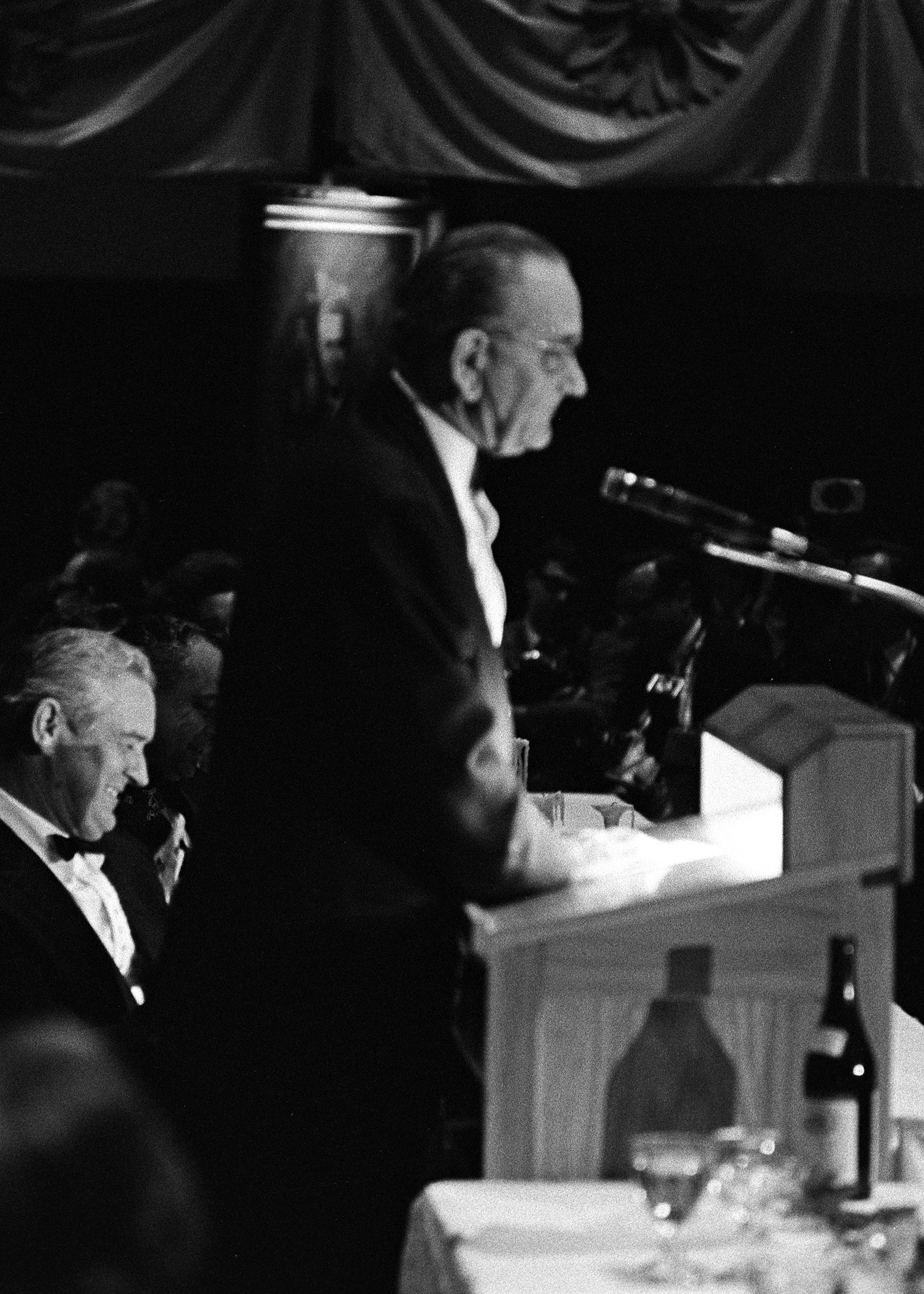
LBJ in Texas, February 27, 1968

But that scarcely was a remarkable assertion.

As I note in Getting It Wrong, stalemate” had been appearing as early as the summer of 1967 in New York Times editorials and analyses about the war.

What supposedly made the Cronkite characterization stand out is that President Johnson saw the program and, as it ended, said to an aide or aides, “If I’ve lost Cronkite, I’ve lost Middle America.”

Or something to that effect.

But in fact, Johnson wasn’t in front of a television set that night. He didn’t see the Cronkite program when it aired.

At the time Cronkite was intoning his “mired in stalemate” assessment, Johnson was offering light-hearted banter in Austin, Texas, at the 51st birthday party of one of his longtime political allies, Governor John Connally.

So it’s difficult to fathom how Johnson could have been much moved by a program that he hadn’t seen.

WJC

Recent and related:

Excess praise for Edward R. Murrow

In Debunking, Media myths, Murrow-McCarthy myth, New York Times on January 2, 2011 at 10:59 am

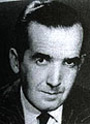
Edward R. Murrow, the legendary CBS newsman who died in 1965, has been back in the news of late, owing to the facile suggestion by the New York Times that TV comedian Jon Stewart is Murrow’s “modern-day equivalent.”

Murrow the legendary

Absurd though it was, the comparison in the Times served to train attention anew on Murrow and on his famous 30-minute television program of March 9, 1954, which supposedly helped end the communists-in-government witch-hunt of Senator Joseph R. McCarthy.

The latest iteration of that theme find expression today in a commentary in South Bend Tribune in Indiana, which revisits the Times-Stewart-Murrow tempest and asserts that “in broadcast journalism history, Murrow was a giant of his time, honored for turning the spotlight in 1954 on the witch-hunt excesses of Sen. Joseph McCarthy, ‘McCarthyism,’ and helping to bring the demagogue’s downfall.”

Murrow certainly was a preeminent figure in American broadcast journalism, having won fame for his radio reports from London during World War II and for his weekly, documentary-style television program, See It Now, which was launched in 1951.

But to argue that Murrow turned the spotlight on the excesses of McCarthyism, and to claim Murrow helped bring about McCarthy’s downfall–well, that’s excess praise.

As I point out in Getting It Wrong, my mythbusting book published last year, the See It Now program on McCarthy in 1954 was neither pivotal nor decisive, in part because Murrow was following the spotlight when he turned attention to McCarthy and his excesses.

That is, Murrow was quite late in taking on McCarthy, doing so long after other journalists–among them muckraking columnist Drew Pearson–had become persistent and searching critics of the senator, his record, and his tactics.

As I write in Getting It Wrong,  Murrow’s friend and CBS colleague Eric Sevareid chafed at the misleading interpretation attached to the See It Now program on McCarthy which, he noted, “came very late in the day.”

Sevareid said in 1978:

“The youngsters read back and they think only one person in broadcasting and the press stood up to McCarthy and this has made a lot of people feel very upset, including me, because that program came awfully late.”

And in the days and weeks following the See It Now program on McCarthy, Murrow acknowledged the show’s contributions were modest, that it had at best reinforced what others had long said about McCarthy.

Jay Nelson Tuck, the television critic for the New York Post, wrote in April 1954 that Murrow felt “almost a little shame faced at being saluted for his courage in the McCarthy matter. He said he had said nothing that … anyone might not have said without a raised eyebrow only a few years ago.”

And Murrow’s collaborator and co-producer, Fred W. Friendly, rejected claims the See It Now program was decisive. Friendly wrote in his memoir, Due to Circumstances Beyond Our Control:

“To say that the Murrow broadcast of March 9, 1954, was the decisive blow against Senator McCarthy’s power is as inaccurate as it is to say that Joseph R. McCarthy … single-handedly gave birth to McCarthyism.”

These were not assertions of false modesty. McCarthy’s tactics, after all, had become quite well-known by March 1954. As I write in Getting It Wrong, it wasn’t as if Americans then “were waiting for a white knight like Murrow to tell them about the toxic threat the senator posed.”

From the work of Pearson and other journalists, they already knew.

'Best of Person to Person'

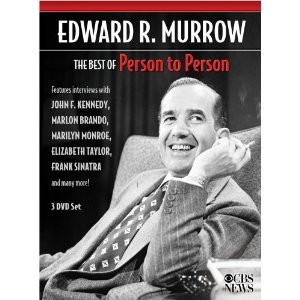
While Murrow may have been a giant in American broadcasting, he did a fair share of puff-ball journalism, too. Besides the See It Now program, Murrow conducted mushy interviews with the likes of Marilyn Monroe, Elizabeth Taylor, Marlon Brando, and other celebrities of the 1950s on his highly rated Person to Person show on CBS.

As Jack Shafer of slate.com has argued: “If we’re going to praise Murrow for producing fearless TV news, we should also be ready to damn him for paving the way for Barbara Walters, Oprah Winfrey, and all the celebrity bootlickers on red carpets.”

It should be noted that Murrow was no white knight, either. He privately tutored Adlai Stevenson, the Democratic presidential candidate in 1956, on speaking to the TV camera. In addition, Murrow claimed a master’s degree that he never earned, and inflated his speech major at Washington State University to a degree in international relations and political science.

I mention this not to dismiss Murrow’s contributions, but to argue for context about an important though flawed figure in American journalism–and to challenge as one-dimensional and misleading the mythic image of Murrow as “a giant of his time.”

WJC

Recent and related:

Only Murrow had the bona fides? Nonsense

In Debunking, Media myths, Murrow-McCarthy myth, New York Times, Newspapers on December 30, 2010 at 11:31 am

The New York Times certainly was casual and superficial in likening TV comedian Jon Stewart to Edward R. Murrow. Not only that, but the discussion about the absurd comparison has been accompanied by the appearance of media-driven myth.

Notably, a post yesterday at the Atlantic online site invoked the dubious notion that Murrow stood up to Joseph R. McCarthy, the red-baiting senator from Wisconsin, when no one else could or would.

The Atlantic post said of Stewart and Murrow:

“Both men stuck their necks out. Both went first into a sort of no-man’s-land. It is probably true that only Murrow in his time had the bona fides to stand up to McCarthy (and don’t forget, Murrow waited years before doing so).” [Emphasis added in bold.]

That claim is just absurd.

While Murrow did take on McCarthy, in a much-celebrated half-hour television program in March 1954, he was scarcely alone in challenging the senator and his communists-in-government witch-hunt. And certainly not the first.

As I point out in my latest book, Getting It Wrong, other journalists in the early 1950s had the bona fides, and had the guts, to take on McCarthy when the risks of doing so were quite pronounced.

Pearson: Had the bona fides

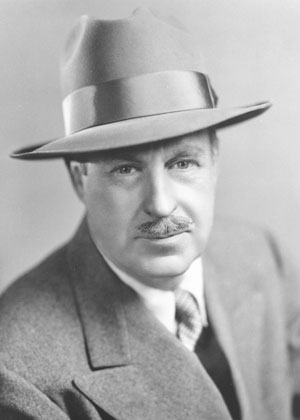
Among these journalists with the bona fides was the Washington-based syndicated columnist Drew Pearson.

As I note in Getting It Wrong: “During the four years of his communists-in-government campaign, McCarthy had no more relentless, implacable, or scathing foe in the news media” than the muckraking Pearson, who wrote the widely published “Washington Merry-Go-Round” column and had a radio show.

Pearson was no saint. Jack Shafer of slate.com not long ago described Pearson as “one of the skuzziest journalists to ever write a story.” Pearson was intrusive and overbearing. He readily made enemies, and almost seemed to relish doing so.

But there’s no denying that he was quick off the dime, that he went after McCarthy hard and relentlessly, and that he immediately recognized the dubious quality of McCarthy’s claims about communists in high places in the U.S. government and military.

Pearson first wrote about McCarthy’s allegations on February 18, 1950, just days after McCarthy had begun raising them, notably in a speech in Wheeling, West Virginia. Pearson called McCarthy the “harum-scarum” senator and said that when he “finally was pinned down, he could produce … only four names of State Department officials whom he claimed were communists.”

Two of the four people named by McCarthy had resigned years earlier; another had been cleared, and the fourth had never worked for the State Department, Pearson wrote.

Pearson followed up with another column, writing that “the alleged communists which he claims are sheltered in the State Department just aren’t.”

Pearson also noted that he had covered the State Department for years, during which time he had been “the career boys’ severest critic. However, knowing something about State Department personnel, it is my opinion that Senator McCarthy is way off base.”

As he was.

Pearson leveled not just a few, scattered shots at McCarthy. His challenges in print became a near-barrage. Pearson scrutinized the senator’s tax troubles in Wisconsin, his accepting funds from a government contractor, and his taking suspicious campaign contributions back in Wisconsin.

The probing angered McCarthy, and in December 1950, the hulking senator physically assaulted Pearson after a dinner at the hush-hush Sulgrave Club on DuPont Circle in Washington, D.C.

McCarthy confronted Pearson in the Sulgrave’s coat check room and either slapped, kneed, or punched the columnist.

Richard Nixon, who recently had been sworn in as a U.S. Senator, intervened to break up the encounter. Nixon, in his memoir RN, said Pearson “grabbed his coat and ran from the room. McCarthy said, ‘You shouldn’t have stopped me, Dick.’”

So Pearson had the bona fides.

So did James A. Wechsler, editor of the New York Post.

In 1951, the Post published a 17-part, bare-knuckle series about McCarthy. The installments of the series addressed McCarthy’s tax troubles, his hypocrisy, and his recklessness in raising allegations about communists in government.

The closing installment likened McCarthy to “a drunk at a party who was funny half an hour ago but now won’t go home. McCarthy is camped in America’s front room trying to impress everybody by singing all the dirty songs and using all the four-letter words he knows. The jokes are pointless, the songs unfunny, the profanity a bore.”

The series was published 2½ years before Murrow’s television program on McCarthy.

And Wechsler paid a price for it, too. He was hauled before McCarthy’s investigative subcommittee and grilled about his dalliance years before in the Communist Youth League.

Wechsler characterized the closed-door hearing as “a reprisal against a newspaper and its editor for their opposition to the methods of this committee’s chairman.” But he complied, reluctantly, with the subcommittee’s demand to produce names of people he had known to be communists during his time in the Youth League.

By the time Murrow took on McCarthy in March 1954, the senator’s favorable ratings had crested and entered a terminal decline.

And Americans by then weren’t “waiting for a white knight like Murrow to tell them about the toxic threat the senator posed,” I write in Getting It Wrong.

Thanks to the work of Pearson and Wechsler and other journalists, they already knew.

WJC

Recent and related:

Two myths and today’s New York Times

In Cronkite Moment, Debunking, Media myths, Murrow-McCarthy myth, New York Times on December 27, 2010 at 1:33 am

Today’s New York Times offers up a double-myth story, a rare article that incorporates two prominent media-driven myths.

The Times invokes the Murrow-McCarthy and “Cronkite Moment” myths in suggesting that TV comedian Jon Stewart is a latter-day equivalent of Edward R. Murrow for advocating congressional approval of a health-aid package for first responders to the terror attacks of September 11, 2001.

That’s certainly a stretch.

But here’s what the Times says in presenting its double dose of media myths–both of which are addressed and debunked in my latest book, Getting It Wrong:

  • “Edward R. Murrow turned public opinion against the excesses of Senator Joseph McCarthy in the 1950s.”
  • “Walter Cronkite’s editorial about the stalemate in the war in Vietnam after the Tet Offensive in 1968 convinced President Lyndon B. Johnson that he had lost public support and influenced his decision a month later to decline to run for re-election.”

Both claims are delicious, and often invoked as evidence of the power of the news media.

But both claims are specious.

As I discuss in Getting It Wrong, public opinion began turning against McCarthy well before Murrow’s often-recalled half-hour television report in March 1954 that scrutinized the senator and his communists-in-government witch-hunt.

Specifically, I note Gallup Poll data showing McCarthy’s appeal having crested in December 1953, when 53 percent of Americans said they had a favorable view of him. The senator’s favorable rating fell to 40 percent by early January 1954, and to 39 percent in February 1954, when an almost identical number of Americans viewed him unfavorably.

“To be sure,” I write in Getting It Wrong, “it wasn’t as if Americans in early 1954 were hoping for someone to step up and expose McCarthy, or waiting for a white knight like Murrow to tell them about the toxic threat the senator posed.

“By then, McCarthy and his tactics were well-known and he had become a target of withering ridicule—a sign of diminished capacity to inspire dread.”

On March 9, 1954, the day Murrow’s See It Now program on McCarthy was aired, former president Harry Truman reacted to reports of an anonymous threat against McCarthy’s life by quipping:

“We’d have no entertainment at all if they killed him.”

And long before Murrow took on McCarthy, “several prominent journalists—including the Washington-based syndicated columnist Drew Pearson—had become persistent and searching critics of McCarthy, his record, and his tactics,” I note.

A media-driven myth even more tenacious than the Murrow-McCarthy tale is the legendary “Cronkite Moment” of February 1968, when CBS anchorman Cronkite declared on-air that the U.S. military was “mired in stalemate” in Vietnam.

I point out in Getting It Wrong that by early 1968, Cronkite’s assessment was neither novel nor exceptional.

Indeed, the Times had reported August 1967, months before Cronkite’s on-air assessment, that the war effort was not going well.

Victory in Vietnam, the Times said then, “is not close at hand. It may be beyond reach.”

The article appeared on the front page August 7, 1967, beneath the headline:

Vietnam: The Signs of Stalemate

That wasn’t only occasion in 1967 when the Times invoked “stalemate” to characterize the war. In a news analysis published July 4, 1967, the newspaper stated:

“Many officers believe that despite the commitment of 466,000 United States troops now in South Vietnam … the military situation there has developed into a virtual stalemate.”

Moreover, the Times anticipated Cronkite’s “mired in stalemate” commentary in an editorial published February 8, 1968.

“Politically as well as militarily,” the editorial declared, “stalemate increasingly appears as the unavoidable outcome of the Vietnam struggle.”

So “stalemate” was much in the air weeks and months before Cronkite invoked the word on television.

Moreover, as I note in Getting It Wrong, President Johnson didn’t even see the Cronkite program when it aired February 27, 1968.

Johnson wasn’t at the White House that night. And he wasn’t in front of a TV set.

The president was in Austin, Texas, offering light-hearted remarks at the 51st birthday party of a longtime political ally, Governor John Connally.

About the time Cronkite was intoning his “mired in stalemate” assessment, Johnson was saying in jest:

“Today, you are 51, John. That is the magic number that every man of politics prays for—a simple majority.”

It’s difficult to make a persuasive case that the president could have been much moved by a television report he didn’t see.

Not only that, but Johnson may have decided in 1967 or even earlier against seeking reelection in 1968. He wrote in his memoir, The Vantage Point: “Long before I settled on the proper forum to make my announcement, I had told a number of people of my intention not to run again.”

Johnson’s memoir, by the way, has nothing to say about the Cronkite program of February 1968.

WJC

Recent and related:

Many thanks for Ed Driscoll and Jim Romenesko for linking to this post

Remembering when Joe McCarthy beat up a columnist

In Anniversaries, Debunking, Media myths, Murrow-McCarthy myth on December 9, 2010 at 12:09 am

It may seem unimaginable these days, but a U.S. Senator once assaulted a prominent newspaper columnist at an exclusive club in Washington, D.C.

Assaulted a columnist

The brief but violent confrontation between Joe McCarthy and columnist Drew Pearson took place December 12, 1950, at the end of a dinner at the Sulgrave Club, which occupies a Gilded Age Beaux Arts mansion on DuPont Circle.

I recount this episode in my book, Getting It Wrong — in a chapter puncturing the myth about CBS newsman Edward R. Murrow and his half-hour television report on McCarthy in March 1954. The myth has it that Murrow confronted and single-handedly took down McCarthy, the Red-baiting Republican senator from Wisconsin.

I note in Getting It Wrong that “the evidence is overwhelming” that Murrow’s television report on McCarthy “had no such decisive effect, that Murrow in fact was very late in confronting McCarthy, that he did so only after other journalists had challenged the senator and his tactics for months, even years.”

Notable among those journalists was Pearson, a veteran, Washington-based syndicated columnist and radio commentator who, long before Murrow’s show, raised pointed and repeated challenges to McCarthy’s claims that communists had infiltrated high positions in the State Department, the Army, and other American institutions.

McCarthy, I write in Getting It Wrong, “had no more relentless, implacable, or scathing foe in the news media than Drew Pearson.”

The columnist readily made enemies, “and almost seemed to relish doing so,” I note. (Jack Shafer, the inestimable media critic, once referred to Pearson not long ago as “one of the skuzziest journalists to ever write a story.”)

Pearson became a target of McCarthy and his threats after writing repeatedly and critically about the senator’s bullying tactics, his tax troubles, and his thinly documented allegations about subversives in government.

In May 1950, McCarthy approached the columnist at a Gridiron Club dinner in Washington, placed a hand on his arm and muttered, “Someday I’m going to get a hold of you and really break your arm….”

The threat was in effect a prelude to the encounter at the Sulgrave Club, then a hush-hush meeting place for Washington socialites and powerbrokers.

In December 1950, a 27-year-old socialite named Louise Tinsley (“Tinnie”) Steinman invited Pearson and McCarthy to join her guests at dinner at the Sulgrave. She seated the men at the same table and they traded barbs and insults throughout the evening.

Pearson and McCarthy “are the two biggest billygoats in the onion patch, and when they began butting, all present knew history was being made,” Time magazine said about their encounter, which took place on the eve of Pearson’s 53rd birthday. The columnist was born December 13, 1897.

At the Sulgrave, McCarthy repeatedly warned Pearson that he planned to attack the columnist in a speech in the Senate. Pearson in turn chided McCarthy on his tax troubles in Wisconsin.

As the evening ended, McCarthy confronted Pearson in the Sulgrave’s coat check room. Accounts differ about what happened.

Pearson said McCarthy pinned his arms to one side and kneed him twice in the groin. McCarthy said he slapped Pearson, hard, with his open hand. A third account, offered by a radio broadcaster friendly to McCarthy, said the senator slugged Pearson, a blow so powerful that it lifted Pearson three feet into the air.

Richard Nixon, who had recently been sworn in as a U.S. Senator and who was guest at Tinnie Steinman’s party, intervened and broke up the encounter.

Nixon, in his memoir RN, said Pearson “grabbed his coat and ran from the room. McCarthy said, ‘You shouldn’t have stopped me, Dick.'”

Pearson

Pearson said he was embarrassed by McCarthy’s assault but insisted the senator had caused no harm.

In his 1999 book, Joseph McCarthy: Reexamining the Life and Legacy of America’s Most Hated Senator, a revisionist treatment of McCarthy, Arthur Herman wrote of the encounter:

“If some were horrified and disgusted with what McCarthy had done, many were not,” given the many enemies that Pearson had made.

The encounter certainly didn’t stir the outrage that such an attack would cause today.

Soon after, McCarthy followed through on his threat to attack Pearson verbally.

From the libel-proof confines of the Senate floor, McCarthy  delivered a vicious speech denouncing his nemesis as the “diabolically” clever “voice of international communism,” a “prostitute of journalism,” and a “Moscow-directed character assassin.”

McCarthy’s speech about Pearson was given December 15, 1950–more than three years before Murrow’s television report about the senator.

WJC

Recent and related:

That made-up Watergate line resonates abroad

In Cinematic treatments, Cronkite Moment, Debunking, Furnish the war, Murrow-McCarthy myth, Newspapers, Washington Post, Watergate myth on November 30, 2010 at 9:38 am

Watergate’s most famous made-line up — “follow the money,” which was a cinematic invention not the revealing words of guidance — is often invoked by U.S. news outlets. Surprisingly, it resonates as well in news media abroad.

“Follow the money” is often attributed to “Deep Throat,” the stealthy, anonymous source to whom Bob Woodward of the Washington Post frequently turned during the newspaper’s Watergate investigation.

But the phrase “follow the money” never figured in the Post’s Watergate coverage, which is the topic of a chapter in my mythbusting book, Getting It Wrong.

What’s more, a search of the electronic archive of all issues of the Post from June 1, 1972, to October 1, 1974, the period embracing the Watergate scandal, produced no returns for the phrase “follow the money.”

The line, however, was uttered in the cinematic version of All the President’s Men by the character who played “Deep Throat.” The movie, which was released in 1976, was an adaptation of Woodward and Carl Bernstein’s book by the same title.

The most likely inventor of “follow the money” was the screenwriter of All the President’s Men, William Goldman.

Testimony to the line’s impressive adaptability abroad appeared yesterday in an item posted at a South Africa news outlet called the Daily Maverick. The item included this passage:

“‘Follow the money,’ as the informant ‘Deep Throat’ famously told Bob Woodward and Carl Bernstein during the Watergate scandal.”

The line also popped up not long ago in Le Devoir, a French-language daily newspaper in Quebec. The article in Devoir stated:

“Comme Deep Throat disait dans l’affaire du Watergate: follow the money.” [As Deep Throat said in the Watergate affair: follow the money.]

So why does this made-up line from a long-ago motion picture possess such international appeal?

In a way, “follow the money” is like media-driven myths that have gained popularity abroad–among them, the mythical Cronkite Moment, the Murrow-McCarthy tale, the famous “furnish the war” vow attributed to William Randolph Hearst. And, of course, the heroic-journalist myth, according to which the investigative reporting of Woodward and Bernstein brought down Richard Nixon’s corrupt presidency in the Watergate scandal.

They are decidedly American tales that offer reductive, mediacentric interpretations of important historical moments.  News outlets abroad–intrigued as they often are by American culture and politics–are scarcely immune from the temptation to offer up these tales. Or pithy lines like “follow the money,” which sums up fairly well an important path of inquiry in the Watergate scandal.

Pithiness can be a powerful propellant of movie lines–and media myths.

Besides, these tales are straightforward, unambiguous, and as such memorable. They can be readily invoked to make a telling point, usually about the power and importance of the news media.

But often, that message is misleading.

As I write in Getting It Wrong, “media-driven myths are neither trivial nor innocuous. They can and do have adverse consequences. Notably, they tend to distort understanding about the role and function of journalism in American society, conferring on the news media far more power and influence than they necessarily wield.”

Media myths, I add, “often emerge from an eagerness to find influence and lasting significance in what journalists do….”

Debunking these myths helps to place media influence in a more coherent context.

WJC

Recent and related:

Thoughts on why journalists can get it badly wrong

In Debunking, Hurricane Katrina, Jessica Lynch, Media myths, Washington Post on November 27, 2010 at 6:34 am

I mentioned in a blog post yesterday the Time magazine essay about journalists getting it wrong.

It’s a fine and thoughtful discussion, written by Kathryn Schulz, who maintains: “Reporters make serious mistakes routinely, and we do so not because we are immoral, but because of the nature of journalism, and of the human mind.”

Schulz, author of Being Wrong: Adventures in the Margin of Error, refers in the essay to what she says are “two rich sources of error”–the echo-chamber effect and “the double whammy of journalism’s shrinking profit margin and growing news hole.”

As an example of the first, she describes what in effect is the phenomenon of inter-media agenda-setting, which I discuss in my latest book, Getting It Wrong.

Inter-media agenda-setting typically occurs when large news organizations with resources to cover events far from home effectively set the news agenda for smaller outlets. “Journalists,” Schulz writes in the Time essay, “…often just replicate one another’s conclusions.

“That goes some way toward explaining how the massive myth of Pfc. Jessica Lynch’s Iraq heroics grew out of a single inaccurate story in the Washington Post.”

It’s refreshing to see such an acknowledgement.

As I’ve periodically noted at Media Myth Alert, the singular role of the Washington Post in propelling Lynch into unimagined and undeserved fame has receded in favor of the false narrative that accuses the Pentagon of having concocted the hero-warrior story about Lynch in Iraq to bolster Americans’ support for the war.

As I discuss in Getting It Wrong, the Pentagon wasn’t the source for the botched report in the Post about Lynch’s supposed heroics. The U.S. military was loath to discuss Lynch’s reputed derring-do. And yet, the false story line has since become entrenched as the dominant narrative about the Lynch case.

In writing about “the double whammy of journalism’s shrinking profit margin and growing news hole,” Schulz points out that thorough investigations cost news organizations a lot in time and money, but that reporters these days “increasingly resemble doctors in an understaffed emergency room, working under immense time pressure with inadequate resources.

“Those conditions,” she adds, “are not exactly conducive to the stodgy, time-consuming business of accuracy: verifying quotes, contacting additional sources, fact-checking claims.”

I’m not so sure about that: Why wouldn’t the reality of time pressures make fact-checking even more imperative in newsrooms? Blaming times pressures of course doesn’t exonerate journalists or excuse them from their errors.

The observation is reminiscent of excuses offered for the highly exaggerated, over-the-top reporting about mayhem and violence in New Orleans in the aftermath of Hurricane Katrina in 2005. Telecommunication networks were down. Telephone service was out. Cell phones didn’t function. Electricity was scarce.

But as I write in Getting It Wrong, those conditions do not let journalists off the hook for the inaccurate reporting about the horrific violence supposedly unleashed by the hurricane.

“It would not have been unreasonable for the collapse of communication networks to have given reporters pause, leaving them more cautious and more wary about what they heard and reported, and thus less likely to traffic in wild and dubious claims” of apocalyptic violence in Katrina’s immediate aftermath, I point out in the book.

Schulz mentions the flawed reporting of the hurricane, referring in her essay to “the quasi-hysterical coverage of Katrina: the uncritical regurgitation by reporters of claims of mass murder, children being raped, gang wars in the Superdome.”

And she notes the Katrina-related research I discuss in Getting It Wrong, writing:

“Those claims proved hyperbolic to the point of sheer invention: according to journalist W. Joseph Campbell in Getting It Wrong, only six people died in the Superdome (four of natural causes, one of a drug overdose, one an apparent suicide), and not a single claim of sexual assault was ever substantiated.”

Indeed.

To Schulz’s short list of the causes of major error in journalism, I would add, at a minimum, the fog of war.

I note in Getting It Wrong that it’s scarcely surprising that war and conflict can be breeding grounds for media-driven myth. After all, I write, “The stakes in war are quite high, and the shock of combat is alien and unfamiliar to most people.

“Given their limited first-hand experience with war, media audiences usually find themselves in no position to challenge reports from the battlefield. The confusion and intensity inherent in warfare can lead journalists to place fragmented information that emerges from conflict into recognizable if sometimes misleading frames.”

The Lynch case is one of a number of war-related myths addressed and debunked in Getting It Wrong.

WJC

Recent and related:

Koppel goes on NPR, indulges in media myth

In Cronkite Moment, Debunking, Media myths, Murrow-McCarthy myth on November 18, 2010 at 6:19 am

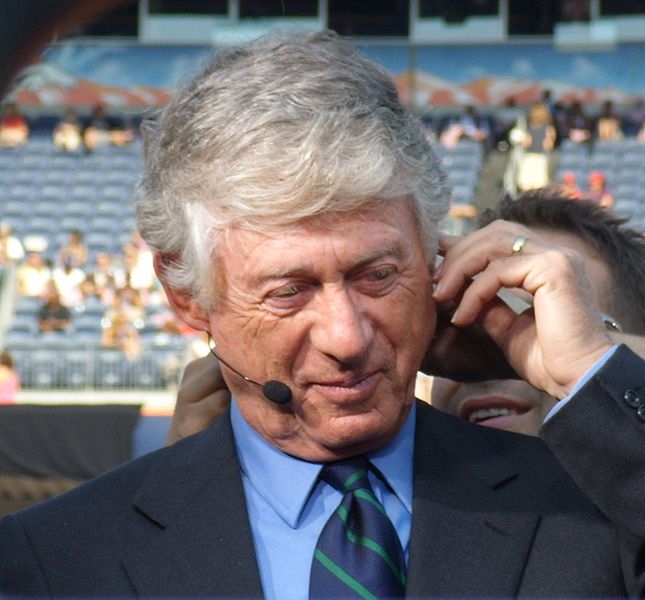
Ted Koppel, the former host of ABC’s Nightline program, has been back in the public eye of late, following his smug but widely noted lament in the Washington Post about the partisanship of cable TV news.

Koppel (Wikicommons)

Koppel renewed his complaint in an interview the other day on NPR’s Talk of the Nation–during which he indulged in some of American journalism’s most alluring mythology.

Specifically, Koppel embraced the mythical “Cronkite Moment” of 1968 and saluted Edward R. Murrow’s legendary report about Senator Joseph McCarthy in 1954–much as Keith Olbermann, Koppel’s nemesis of late, did the other night on his MSNBC show, Countdown.

In the interview on Talk of the Nation, Koppel said one of the most memorable programs in Cronkite’s years as CBS News anchorman was “the piece that he did when he came back after a couple of weeks in Vietnam and of which President Johnson famously said, ‘If I’ve lost Walter Cronkite, I’ve lost the country.'”

As for Murrow, Koppel said that “what is most remembered about what Ed Murrow did is the extraordinary See It Now piece that he did on Joseph McCarthy.”

Let’s unpack both dubious claims.

Cronkite first.

As I write in my latest book, Getting It Wrong, President Lyndon Johnson “did not have—could not have had—the abrupt yet resigned reaction that so often has been attributed to him. That’s because Johnson did not see the [Cronkite] program when it was aired.”

And there’s no evidence he ever saw it on videotape, either.

As such, it’s quite difficult to make a case that Johnson was much moved by a program he didn’t see.

Cronkite closed his report on Vietnam, which aired February 27, 1968, with an editorial comment that the U.S. military effort  was “mired in stalemate” and that negotiations might eventually offer a way out.

Media myth has it that Johnson, at the White House, saw the Cronkite program and, upon hearing the anchorman’s “mired in stalemate” assessment, leaned over, snapped off the television set, and said to an aide or aides:

“If I’ve lost Cronkite, I’ve lost the country.”

Another, more common version quotes Johnson as saying, “If I’ve lost Cronkite, I’ve lost Middle America.”

There are other versions, too, of what the president supposedly said in reaction.

But Johnson wasn’t at the White House that night. He wasn’t in front of a television set, either.

Johnson at Austin

At the time Cronkite offered his downbeat commentary, Johnson was offering light-hearted banter in Austin, Texas, at the 51st birthday party of Governor John Connally.

The president wasn’t agonizing about his policy in Vietnam. He wasn’t wringing his hands about losing the country. He was teasing Connally about his age: “Today you are 51, John,” the president said. “That is the magic number that every man of politics prays for—a simple majority.”

What’s more, Cronkite’s “mired in stalemate” opinion was, by February 1968, neither exceptional nor stunning. Indeed, nearly seven months before Cronkite’s program, the  New York Times published a front-page report that cited “disinterested observers” as saying the war in Vietnam was “not going well.” Victory, the Times reported, “is not close at hand. It may be beyond reach.”

That analysis was published in August 1967, beneath the headline:

“Vietnam: The Signs of Stalemate.”

As for Murrow’s “extraordinary” show about McCarthy: It wasn’t all that extraordinary. It aired March 9, 1954–years after other journalists had begun scrutinizing the senator’s exaggerated claims and hard-ball tactics in campaigning against communists in government.

Long before the See It Now program,” I note in Getting It Wrong, “several prominent journalists—including the Washington-based syndicated columnist Drew Pearson—had become persistent and searching critics of McCarthy, his record, and his tactics.”

Some critics at the time pointed out that the See It Now program had offered nothing new about McCarthy.

“Murrow said nothing, and his cameras showed nothing, that this and some other newspapers have not been saying—and saying more strongly—for three or four years,” Jay Nelson Tuck, the New York Post’s television writer, wrote after the program. He was referring to the 17-part series on McCarthy that ran in the Post in 1951.

“The news” in Murrow’s program, Tuck added, “was in the fact that television was saying it at all.”

Murrow’s collaborator and co-producer, Fred W. Friendly, also rejected claims the See It Now program about Murrow was exceptional or decisive.

Friendly wrote in his memoir:

“To say that the Murrow broadcast of March 9, 1954, was the decisive blow against Senator McCarthy’s power is as inaccurate as it is to say that Joseph R. McCarthy … single-handedly gave birth to McCarthyism.”

Interestingly, a book that Murrow and Friendly compiled in 1955 about the best of the See It Now omitted the 1954 show on McCarthy, the one that Koppel claims was so “extraordinary.”

WJC

Recent and related:

Media history with Olbermann: Wrong and wrong

In Cronkite Moment, Debunking, Media myths, Murrow-McCarthy myth on November 17, 2010 at 7:15 am

MSNBC host Keith Olbermann invoked media history the other night in a blustering, on-air response to criticism by Ted Koppel, the former host of ABC’s Nightline, about hyperpartisanship on cable TV news.

Trouble is, Olbermann got it wrong in the two history lessons he cited–the mythical “Cronkite Moment” of 1968 and the Murrow-McCarthy encounter of 1954.

In both cases, Olbermann bought into tenacious media-driven myths.

The so-called “Cronkite Moment” came on February 27, 1968, when CBS News anchorman said in an on-air commentary that the U.S. war effort in Vietnam was “mired in stalemate” and suggested that negotiations might offer a way out of the morass.

Declared Olbermann: “All that newscast did was convince the 36th president of the United States to not seek reelection.”

It had no such effect.

The media-driven myth surrounding the “Cronkite Moment”–one of 10 media myths debunked in my latest book, Getting It Wrong–has it that Lyndon Johnson, the 36th president, saw the program and, upon hearing the anchorman’s commentary, told an aide or aides, “If I’ve lost Cronkite, I’ve lost Middle America.”

Or words to that effect.

But Johnson didn’t see the show when it aired. He was in Austin, Texas, at the time, offering light-hearted banter at the 51st birthday party of Governor John Connally, a longtime political ally.

The president couldn’t have been much moved by–or decided his political future on–a show he hadn’t seen. And there’s no evidence that he watched it on videotape at some later date.

Johnson announced at the end of March 1968 that he would not seek reelection. It was a stunning development–but the Cronkite show had nothing to do with the president’s decision.

Johnson’s announcement came a couple of weeks after his surprisingly poor showing as a write-in candidate in the Democratic primary in New Hampshire. The president won the primary with 49 percent of the vote. But Senator Eugene McCarthy won 42 percent, an unexpectedly strong result.

Within days, Senator Robert F. Kennedy entered the race for the Democratic presidential nomination. So Johnson faced a brutal course to winning the party’s nomination, not to mention reelection.

Moreover, there’s strong evidence that Johnson never intended to seek another term, that in 1967, or even earlier, he had decided against another campaign for the presidency. (Johnson wrote in his memoir, The Vantage Point: “Long before I settled on the proper forum to make my announcement, I had told a number of people of my intention not to run again.”)

Given those factors, Cronkite’s show at the end of February 1968 recedes into trivial insignificance as a factor in Johnson’s decision not to stand for reelection.

Olbermann in his commentary referred to Edward R. Murrow as “a paragon of straight reporting” and claimed the American press “stood idly by” as Senator Joseph R. McCarthy pursued his communists-in-government witch-hunt.

But on March 9, 1954, on a 30-minute television show called See It Now, “Murrow slayed the dragon,” Olbermann declared.

But neither Murrow, nor his producer Fred Friendly, bought the dragon-slaying interpretation. (The latter wrote in his memoir, Due to Circumstances Beyond Our Control: “To say that the Murrow broadcast of March 9, 1954, was the decisive blow against Senator McCarthy’s power is as inaccurate as it is to say that Joseph R. McCarthy … single-handedly gave birth to McCarthyism.”)

And it’s quite clear that the American press did not stand “idly by” as the scourge of McCarthyism emerged.

Drew Pearson

As I write in Getting It Wrong:

“Long before the See It Now program, several prominent journalists—including the Washington-based syndicated columnist Drew Pearson—had become persistent and searching critics of McCarthy, his record, and his tactics.”

Indeed, Pearson was McCarthy’s most relentless and implacable media foe during the senator’s witch-hunt.

In his widely read column, Pearson ridiculed McCarthy as the “harum-scarum” senator and dismissed his allegations “way off base.” And those characterizations came in February 1950–more than four years before Murrow’s See It Now show on McCarthy.

Pearson was unrelenting in his scrutiny of McCarthy, calling attention to the senator’s tax troubles in Wisconsin and to questionable payments McCarthy received from a government contractor.

McCarthy was so annoyed by Pearson’s probing that he threatened the columnist at a Gridiron Club dinner in Washington, D.C., in May 1950. On that occasion, McCarthy placed a hand on Pearson’s arm and muttered:

“Someday I’m going to get a hold of you and really break your arm….”

That was a prelude to a violent encounter in December 1950, when McCarthy cornered Pearson in the cloakroom of the hush-hush Sulgrave Club in Washington and either kneed the columnist in the groin or slapped him hard across the face.

So, no, the press didn’t stand “idly by” in face of the McCarthy menace.

As I write in Getting It Wrong, by March 1954 Americans weren’t “waiting for a white knight like Murrow to tell them about the toxic threat the senator posed.”

They already knew, from the work of Pearson and others.

And Pearson took on McCarthy when doing was not risk-free.

WJC

Recent and related:

Murrow: No white knight–and not above the political fray

In Debunking, Media myths, Murrow-McCarthy myth on November 16, 2010 at 8:52 am

In the hand-wringing of late about the partisanship of cable news, Edward R. Murrow, the patron saint of American broadcasting, has been invoked as a brave and exemplary journalist who remained properly above the sordid fray.

That was just the sentiment expressed the other day by a commentator for CNN’s online site, who wrote:

“In the current hyperpartisan media environment, it’s easy to forget that it hasn’t always been this way.

“Broadcast icon Edward R. Murrow was not a registered Democrat or Republican–he was an independent. Before courageously taking on Sen. Joe McCarthy, he was considered an anti-communist, supporting, for example, the execution of the Rosenbergs as spies for the Soviet Union. He wouldn’t have dreamed of giving donations to political candidates.”

To say Murrow he was studiously nonpartisan is to misread history. Murrow wasn’t so above the fray, and he was no white knight.

Notably, he donated time and expertise to helping the 1956 Democratic presidential candidate, Adlai Stevenson.

In my latest book, Getting It Wrong, I cite A.M. Sperber, one of Murrow’s leading biographers, in noting how Murrow privately counseled Stevenson on “the finer points of speaking to the camera.”

Sperber wrote in her 1986 work, Murrow: His Life and Times, that although the 1956 presidential election was a foregone conclusion, that Republican incumbent Dwight D. Eisenhower was certain to win,  Murrow agreed “to help the Democrats.” Sperber called Murrow’s decision  “a radical departure from his usual practice.”

The idea, Sperber wrote, was “to effect a liaison between the broadcaster and the candidate, to discuss the use of TV in the forthcoming campaign.”

She noted that the Murrow-Stevenson “connection was kept under wraps,” that the “understanding” between the broadcaster and Stevenson advisers was that Murrow “was acting as a private citizen” and that the matter was to be “kept quiet.”

Why did Murrow do it?

“He wouldn’t say,” Sperber wrote, adding that Murrow’s “friends, knowing his detestation of [John] Foster Dulles, were not surprised.” Dulles, a political conservative, was Eisenhower’s secretary of state and Time magazine’s “Man of the Year” in 1954.

In the end, Murrow’s coaching of Stevenson came to little, Sperber wrote. They met in a New York studio in June 1956 and Murrow “sweated over the candidate, trying to inculcate the finer points of speaking to the camera. Stevenson barely endured it, chiding campaign manager George Ball about the money this was costing the Democrats.”

Sperber added that Murrow also “dictated a few ideas for issue-oriented TV spots” that were “never put to use.”

I write in Getting It Wrong that there is “no small irony in journalism’s veneration of Murrow, who died in 1965. He was in some respects a flawed character—and hardly a ‘journalist above reproach.’ On his employment application at CBS, Murrow added five years to his age and claimed to have majored in college in international relations and political science. In fact, he had been a speech major at Washington State.”

“Murrow,” I added, “also passed himself off as the holder of a master’s degree from Stanford University, a degree he never earned.”

Given those lapses, Murrow wouldn’t qualify for high positions in mainstream American journalism today, I write in Getting It Wrong.

Not only that, but Murrow wasn’t especially courageous in taking on the red-baiting Joe McCarthy in a famous report in 1954 on the CBS program, See It Now.

As I discuss in Getting It Wrong, Murrow “was very late in confronting McCarthy,” doing so “after other journalists had challenged the senator and his tactics for months, even years.”

WJC

Recent and related: