W. Joseph Campbell

Posts Tagged ‘News’

LOC honor stirs references to Watergate myth

In Cinematic treatments, Debunking, Media myths, Newspapers, Washington Post, Watergate myth on December 29, 2010 at 11:31 am

All the President’s Men, the movie that helped solidify the heroic-journalist myth of Watergate, was among 25 American motion pictures chosen for the 2010 National Film Registry, the Library of Congress announced yesterday.

I have no serious quarrel with the LOC’s selection. All the President’s Men is an entertaining and imaginative film, adapted from Bob Woodward and Carl Bernstein’s book by the same title about their Watergate reporting for the Washington Post.

The cinematic version of All the President’s Men came out in 1976, just as the wounds of Watergate were beginning to heal, and has aged quite well.

But as I discuss in my latest book, Getting It Wrong, All the President’s Men “offers an unmistakable assertion of the power and centrality of the press” in the fall of Richard Nixon’s corrupt presidency. The movie promotes the misleading yet beguiling heroic-journalist interpretation of Watergate.

I note in Getting It Wrong that All the President’s Men “allows no other interpretation: It was the work Woodward and Bernstein that set in motion far-reaching effects that brought about the first-ever resignation of a U.S. president.”

And that message that “has endured,” I write. “More than thirty-five years later, what remains most vivid, memorable, and accessible about Watergate is the cinematic version of All the President’s Men.”
Nonetheless, as I discuss in Getting It Wrong, the Watergate reporting of Woodward and Bernstein was at best marginal to the outcome of the scandal, in which 19 men associated with Nixon’s presidency or his 1972 reelection campaign went to jail.

Nixon resigned in 1974, to avoid certain impeachment and conviction for his role in Watergate.

Rolling up a scandal of such dimension, I write in Getting It Wrong, “required the collective if not always the coordinated forces of special prosecutors, federal judges, both houses of Congress, the Supreme Court, as well as the Justice Department and the FBI.”

But the cinematic version of All the President’s Men portrays none of that collective effort. In fact, the movie downplays, even denigrates, the contributions of investigative agencies such as the FBI.

The LOC’s announcement inevitably stirred references in mainstream media and the blogosphere to the heroic-journalist interpretation of Watergate.

The New York Post, for example, said in referring to the movie’s recognition that the work of Woodward and Bernstein “led to the resignation of President Nixon.”

And in a lengthy and glowing post at Houston’s CultureMap blog, a film critic described Woodward and Bernstein as “fearless and relentless seekers of truth who helped to bring down the most corrupt President in U.S. history.”

He also wrote that All the President’s Men stood as “first among equals” among the movies selected for the National Film Registry and added that Woodward and Bernstein “set new standards for American journalism, and inspired thousands of idealists — along with more than a few amoral glory-hounds — to follow in their paths.”

Just what were those “new standards” was left unsaid.

And the work of Woodward and Bernstein may have “inspired thousands of idealists” to enter American journalism, but there’s only anecdotal support for such claims.

And scholarly research has shown that Woodward, Bernstein, and All the President’s Men did not cause enrollments to climb at journalism and mass communication programs at U.S. college and universities.

One such study was financed by the Freedom Forum media foundation and conducted by researchers Lee B. Becker and Joseph D. Graf. They reported in 1995 that “growth in journalism education result[ed] not from specific events as Watergate … but rather to a larger extent from the appeal of the field to women, who ha[d] been attending universities in record numbers. The growth also in part reflect[ed] the applied nature of the field and its link to specific job skills.”

Becker and Graf added:

“There is no evidence … that Watergate had any effect on enrollments.”

A final note about All the President’s Men and the National Film Registry: As the MovieNation blog at the Boston Globe pointed out, “It has to be the only film on the list that includes a scene set in the Library of Congress.”

That scene depicts Woodward and Bernstein at a table in the Library’s spectacular Main Reading Room, sorting through records of materials checked out by the Nixon White House. As they thumb through stacks of cards, the camera pulls away, slowly and upward, toward the Reading Room’s gold-inlaid dome. The effect is to suggest the lonely earnestness of the reporters’ work.

WJC

Recent and related:

Likening Jon Stewart to Murrow: ‘Ignorant garbage’

In Cronkite Moment, Debunking, Media myths, Murrow-McCarthy myth, New York Times on December 28, 2010 at 12:04 am

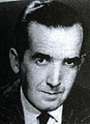
Murrow

The New York Times piece that extravagantly compared TV comedian Jon Stewart to Edward R. Murrow stirred considerable discussion yesterday in the blogosphere and beyond.

The most incisive and inspired characterization I encountered was that of Todd Gitlin, a professor of journalism and sociology at Columbia University. He was quoted by ABC News as saying that likening Stewart to Murrow or legendary CBS anchorman Walter Cronkite “is childish, it is garbage, it is ignorant garbage.”

Ignorant garbage: Scathing but accurate, indeed.

Gitlin, whom I do not know, also was quoted as saying, quite correctly, that Stewart “is not a news person. He’s a satirist and when he chooses to be blunt, he has the luxury of being blunt.” Stewart is host of Comedy Central’s Daily Show with Jon Stewart.

Embedded in the Times article were two prominent media-driven myths, both of which I address and debunk in my latest book, Getting It Wrong.

One was the notion that Murrow’s half-hour television report on Senator Joseph R. McCarthy in 1954 turned public opinion against the senator and his communists-in-government witch-hunt. In fact, however, McCarthy’s favorable ratings had been falling for a few months before Murrow’s program, which aired March 9, 1954.

The other embedded myth was the allusion to the “Cronkite Moment” of February 1968. That was when Cronkite declared on-air that the U.S. military was “mired in stalemate” in Vietnam. Supposedly, Cronkite’s analysis was an epiphany for President Lyndon Johnson, who suddenly realized his war policy was a shambles.

But as I note in Getting It Wrong, Cronkite’s “mired in stalemate” assessment was scarcely novel or stunning at the time. And Johnson didn’t even see the Cronkite report when it aired. He was in Austin, Texas, attending a birthday party for a longtime political ally, Governor John Connally (see photo).

LBJ didn't see Cronkite show

As such, it is very difficult to believe the president was much moved by a program that he hadn’t watched.

Left largely unaddressed in the discussion of the Times claim about Stewart, Murrow, and Cronkite is why–what accounts for the appeal of such extravagant characterizations?

In part, they are driven by an understandable urge to distill and simplify history–to be able to grasp the essence of important historical events while sidestepping their inherent complexity, messiness, and nuance.

Characterizations such as those in the Times yesterday also seek to ratify the importance of contemporary television personalities, to locate in them the virtues and values that supposedly animated the likes of Murrow and Cronkite.

Such an impulse skirts, if not indulges in, the “golden age” fallacy.

But it should be noted that Murrow, in particular, was no white knight, no paragon of journalistic virtue.

As I point out in Getting It Wrong, Murrow’s biographers have acknowledged that the broadcasting legend added to his employment application at CBS five years to his age and claimed to have majored in college in international relations and political science.

He had been a speech major at Washington State University.

Murrow also passed himself off as the holder of a master’s degree from Stanford University–a degree he never earned.

And Cronkite for years pooh-poohed the notion that his 1968 program on Vietnam had much effect on Johnson and U.S. war policy. Cronkite said in his memoir, A Reporter’s Life, that his  “mired in stalemate” assessment represented for Johnson “just one more straw in the increasing burden of Vietnam.”

Cronkite later told the CNBC cable network that he doubted the program “had a huge significance.

“I think it was a very small straw on a very heavy load [Johnson] was already carrying.”

Only late in his life, as the so-called “Cronkite Moment” gained legendary dimension, did Cronkite begin to embrace the anecdote’s purported power.

“It never occurred to me,” Cronkite said in 2004, that the 1968 program “was going to have the effect it had.”

But Cronkite’s initial interpretation was most accurate: The show had little to no effect on policy or public opinion.

WJC

Recent and related:

Two myths and today’s New York Times

In Cronkite Moment, Debunking, Media myths, Murrow-McCarthy myth, New York Times on December 27, 2010 at 1:33 am

Today’s New York Times offers up a double-myth story, a rare article that incorporates two prominent media-driven myths.

The Times invokes the Murrow-McCarthy and “Cronkite Moment” myths in suggesting that TV comedian Jon Stewart is a latter-day equivalent of Edward R. Murrow for advocating congressional approval of a health-aid package for first responders to the terror attacks of September 11, 2001.

That’s certainly a stretch.

But here’s what the Times says in presenting its double dose of media myths–both of which are addressed and debunked in my latest book, Getting It Wrong:

  • “Edward R. Murrow turned public opinion against the excesses of Senator Joseph McCarthy in the 1950s.”
  • “Walter Cronkite’s editorial about the stalemate in the war in Vietnam after the Tet Offensive in 1968 convinced President Lyndon B. Johnson that he had lost public support and influenced his decision a month later to decline to run for re-election.”

Both claims are delicious, and often invoked as evidence of the power of the news media.

But both claims are specious.

As I discuss in Getting It Wrong, public opinion began turning against McCarthy well before Murrow’s often-recalled half-hour television report in March 1954 that scrutinized the senator and his communists-in-government witch-hunt.

Specifically, I note Gallup Poll data showing McCarthy’s appeal having crested in December 1953, when 53 percent of Americans said they had a favorable view of him. The senator’s favorable rating fell to 40 percent by early January 1954, and to 39 percent in February 1954, when an almost identical number of Americans viewed him unfavorably.

“To be sure,” I write in Getting It Wrong, “it wasn’t as if Americans in early 1954 were hoping for someone to step up and expose McCarthy, or waiting for a white knight like Murrow to tell them about the toxic threat the senator posed.

“By then, McCarthy and his tactics were well-known and he had become a target of withering ridicule—a sign of diminished capacity to inspire dread.”

On March 9, 1954, the day Murrow’s See It Now program on McCarthy was aired, former president Harry Truman reacted to reports of an anonymous threat against McCarthy’s life by quipping:

“We’d have no entertainment at all if they killed him.”

And long before Murrow took on McCarthy, “several prominent journalists—including the Washington-based syndicated columnist Drew Pearson—had become persistent and searching critics of McCarthy, his record, and his tactics,” I note.

A media-driven myth even more tenacious than the Murrow-McCarthy tale is the legendary “Cronkite Moment” of February 1968, when CBS anchorman Cronkite declared on-air that the U.S. military was “mired in stalemate” in Vietnam.

I point out in Getting It Wrong that by early 1968, Cronkite’s assessment was neither novel nor exceptional.

Indeed, the Times had reported August 1967, months before Cronkite’s on-air assessment, that the war effort was not going well.

Victory in Vietnam, the Times said then, “is not close at hand. It may be beyond reach.”

The article appeared on the front page August 7, 1967, beneath the headline:

Vietnam: The Signs of Stalemate

That wasn’t only occasion in 1967 when the Times invoked “stalemate” to characterize the war. In a news analysis published July 4, 1967, the newspaper stated:

“Many officers believe that despite the commitment of 466,000 United States troops now in South Vietnam … the military situation there has developed into a virtual stalemate.”

Moreover, the Times anticipated Cronkite’s “mired in stalemate” commentary in an editorial published February 8, 1968.

“Politically as well as militarily,” the editorial declared, “stalemate increasingly appears as the unavoidable outcome of the Vietnam struggle.”

So “stalemate” was much in the air weeks and months before Cronkite invoked the word on television.

Moreover, as I note in Getting It Wrong, President Johnson didn’t even see the Cronkite program when it aired February 27, 1968.

Johnson wasn’t at the White House that night. And he wasn’t in front of a TV set.

The president was in Austin, Texas, offering light-hearted remarks at the 51st birthday party of a longtime political ally, Governor John Connally.

About the time Cronkite was intoning his “mired in stalemate” assessment, Johnson was saying in jest:

“Today, you are 51, John. That is the magic number that every man of politics prays for—a simple majority.”

It’s difficult to make a persuasive case that the president could have been much moved by a television report he didn’t see.

Not only that, but Johnson may have decided in 1967 or even earlier against seeking reelection in 1968. He wrote in his memoir, The Vantage Point: “Long before I settled on the proper forum to make my announcement, I had told a number of people of my intention not to run again.”

Johnson’s memoir, by the way, has nothing to say about the Cronkite program of February 1968.

WJC

Recent and related:

Many thanks for Ed Driscoll and Jim Romenesko for linking to this post

Virginia’s descendants: ‘Ambassadors of Christmas spirit’

In 1897, Debunking, New York Sun, Newspapers, Year studies on December 26, 2010 at 9:11 am

The New York Times carried a fine article Christmas Day about how descendants of Virginia O’Hanlon “have quietly become ambassadors of the Christmas spirit,” offering ties to the girl who long ago inspired American journalism’s best-known editorial.

Young Virginia O'Hanlon (Courtesy Jim Temple)

Virginia’s letter to the old New York Sun in 1897 gave rise to the essay, “Is There A Santa Claus?” No other editorial has been as often recalled or reprinted as that tribute to childhood and the Christmas spirit.

Her letter implored: “Please tell me the truth; is there a Santa Claus?”

The editorial written in reply declares in its most memorable and familiar passage:

“Yes, Virginia, there is a Santa Claus. He exists as certainly as love and generosity and devotion exist, and you know that they abound and give to your life its highest beauty and joy.”

The Times article yesterday wasn’t much overstating matters in observing that Virginia, who died in 1971, “has become as much a symbol of Christmas as Ebenezer Scrooge or Rudolph the Red-Nosed Reindeer.”

The heart of the article described how Virginia’s descendants “have quietly become ambassadors of the Christmas spirit, crossing the country to appear at events honoring her, and reading the letter and the response to children in schools and to their own children at home. … Come December, their names and faces turn up in newspapers and on television programs around the world, as well as in the company newsletters of their various workplaces.”

I became acquainted with the hospitality of some of Virginia’s descendants while researching my 2006 book, The Year That Defined American Journalism: 1897 and the Clash of Paradigms, and know first-hand how helpful and accommodating they can be.

They are by no means pushy or mercenary in keeping alive the memory of Virginia O’Hanlon.

Jim Temple, Virginia’s only grandson, is perhaps the family’s point person in responding to requests for information.

In 2005, Temple welcomed me to his home in upstate New York where he and I reviewed the contents of a large cardboard box in which he kept newspaper clippings, photographs, and other totems about Virginia.

He was generous with his time, recollections, and artifacts.

My visit allowed me to unravel a small but persistent mystery about “Is There A Santa Claus?” That was why a Christmastime editorial had been published in late summer.

The essay (which the Sun in 1906 revealed had been written by a veteran and childless journalist named Francis P. Church) appeared on September 21, 1897, in the third of three columns of editorials.

In Temple’s box of memorabilia was clipping of a Connecticut newspaper article that had been published in December 1959. The article–a key to resolving the question of the editorial’s odd timing–described Virginia O’Hanlon’s talk to a high school audience in Fall River, Connecticut.

She was quoted as having said:

“After writing to the Sun, I looked every day for the simple answer I expected. When it didn’t appear, I got disappointed and forgot about it.”

As I noted in The Year That Defined American Journalism, Virginia’s letter, after arriving at the Sun, probably was overlooked or misplaced for an extended period. “That there was such a gap seems certain, given both O’Hanlon’s recollections about having waited for a reply and the accounts that say Church wrote the famous editorial in ‘a short time,'” I pointed out.

What reconciles the two accounts—O’Hanlon’s extended wait and Church’s quickly written response—is that the Sun had misplaced the little girl’s letter.

That means Virginia wrote her letter to the Sun well before September 1897.

The 1959 newspaper article also quoted Virginia as saying:

“My birthday was in July and, as a child, I just existed from July to December, wondering what Santa Claus would bring me. I think I was a brat.”

Thus, as I wrote in The Year That Defined American Journalism, the most plausible explanation for the editorial’s odd timing “lies in the excited speculation of a little girl who, after celebrating her birthday in mid-summer, began to wonder about the gifts she would receive at Christmas.”

The “excited speculation” gave rise to Virginia’s letter to the Sun.

WJC

Recent and related:

What became of Virginia O’Hanlon?

In 1897, New York Sun, New York Times, Newspapers, Year studies on December 25, 2010 at 8:13 am

Virginia

Virginia O’Hanlon was 8-years-old when she gained a measure of fame that would last her lifetime.

Shortly after her birthday in July 1897, young Virginia wrote to the New York Sun, posing the timeless question: “Is there a Santa Claus?

It took several weeks, but her innocent letter gave rise to the most famous editorial in American journalism. The Sun answered Virginia’s query on September 21, 1897, in an essay destined to become a classic.

The essay was assigned an inconspicuous place in the Sun, appearing in the third of three columns of editorials beneath the headline, “Is There A Santa Claus?

Its most memorable passage sought to reassure Virginia–and, as it turned out, generations of youngsters since then.

“Yes, Virginia,” it declared, “there is a Santa Claus. He exists as certainly as love and generosity and devotion exist, and you know that they abound and give to your life its highest beauty and joy. Alas! how dreary would be the world if there were no Santa Claus. It would be as dreary as if there were no Virginias.”

The editorial closed with further reassurance:

“No Santa Claus! Thank God! he lives, and he lives forever. A thousand years from now, Virginia, nay, ten times ten thousand years from now, he will continue to make glad the heart of childhood.”

As I note in my 2006 book, a year-study titled The Year That Defined American Journalism: 1897 and the Clash of Paradigms, Virginia O’Hanlon as an adult embraced the recognition and modest fame that came with her part in inspiring “Is There A Santa Claus?” (She once said in jest that she was “anonymous from January to November.”)

The editorial, she told an interviewer in 1959, when she was 67, “gave me a special place in life I didn’t deserve. It also made me try to live up to the philosophy of the editorial and to try to make glad the heart of childhood.”

She occasionally read the editorial at Christmas programs, as she did in 1933 and 1937 at Hunter College, her alma mater. Virginia earned a bachelor’s degree there in 1910 and a master’s degree two years later at Columbia University.

She was a teacher in the New York City schools, and became a principal at a school for handicapped children after earning a doctorate from Fordham University in 1935.

At her retirement in 1959, the New York Times observed that Virginia was “one of those rare persons whose given name alone has instant meaning for millions.”

In December 1960, Virginia went on the Perry Como Show and said she had lived “a wonderfully full life.” She told Como in a brief interview that her letter to the Sun had been “answered for me thousands of times.”

She was married for a time to Edward Douglas by whom she had a daughter, Laura Temple. For two years in the 1930s, Temple worked in the advertising office of the Sun.

“They all knew who I was,” she was quoted years as saying about the Sun staff. “And we all had the same feeling about the editorial that my mother had—that it was a classic.”

Virginia O’Hanlon Douglas was 81 when she died at a nursing home in upstate New York.

Her death in May 1971 was reported on the front page of the New York Times beneath the headline:

Virginia O’Hanlon, Santa’s friend, dies.”

Virginia's gravesite (Photo by George Vollmuth, 2009)

She was buried in North Chatham, New York.

At the approach of Christmas in recent years, the North Chatham Historical Society has conducted a reading at Virginia’s gravesite of the letter that brought her fame and of the editorial that it inspired.

WJC

Recent and related:

At Christmas: The remarkable trajectory of an 1897 editorial

In 1897, Debunking, Media myths, New York Sun, Newspapers on December 24, 2010 at 7:52 am

WJC and pal: Merry Christmas

Christmas Eve is a fine occasion to consider how an obscure essay published more than 120 years ago in a combative New York City newspaper became the most memorable editorial in American journalism.

The editorial is the timeless tribute to childhood and the Christmas spirit, “Is There A Santa Claus?

Its trajectory from obscurity is remarkable.

The essay appeared in the New York Sun, in response to a letter from 8-year-old Virginia O’Hanlon, who implored:

“Please tell me the truth; is there a Santa Claus?”

The Sun in reply was reassuring.

“Yes, Virginia,” the editorial declared, “there is a Santa Claus. He exists as certainly as love and generosity and devotion exist, and you know that they abound and give to your life its highest beauty and joy. Alas! how dreary would be the world if there were no Santa Claus. It would be as dreary as if there were no Virginias.”

The editorial was published not at Christmas but in September 1897, in the third of three columns of editorials in the Sun–a newspaper that relished the rough and tumble of late 19th century American journalism.

As I noted in my 2006 book, The Year That Defined American Journalism: 1897 and the Clash of Paradigms, the Sun in its editorials in the late 19th century “was more inclined to vituperation and personal attack than to evoke the eloquence and lyricism” that distinguished “Is There A Santa Claus?”

Indeed, the trade journal Fourth Estate observed in 1897 that the Sun was never happy unless it was on the attack. Given such tendencies, I wrote, “the delicate charm of ‘Is There A Santa Claus?’ was decidedly out of place” in the columns of the Sun.

Moreover, the Sun was slow–reluctant, even–to embrace the editorial, usually rebuffing readers’ requests to reprint “Is There A Santa Claus?”

After its initial appearance on September 21, 1897, the essay was not published again in the Sun until December 1902.  The newspaper did so then with a trace of annoyance, declaring:

“Since its original publication, the Sun has refrained from reprinting the article on Santa Claus which appeared several years ago, but this year requests for its reproduction have been so numerous that we yield.

“Scrap books,” the Sun added in a gratuitous swipe, “seem to be wearing out.”

Over the years, though, readers persisted in their requests, asking the Sun every year at Christmastime to reprint “Is There A Santa Claus?”

And as I wrote in The Year That Defined American Journalism, the newspaper ultimately gave in, “tacitly acknowledging that editors are not always as perceptive as their readers in identifying journalism of significance and lasting value.”

In 1924, the newspaper’s then-owner, Frank Munsey, ordered “Is There A Santa Claus?” to appear as the lead editorial on Christmas Eve. In the years that followed, until the newspaper folded in 1950, “Is There A Santa Claus?” was the lead editorial in the Sun on December 23 or 24.

It remains a favorite, 113 years on.

Reasons for the editorial’s enduring popularity are several. Among them are:

  • The editorial is a cheering, reaffirming story, one without villains or sinister elements.
  • It represents a connection to distant time: It is reassuring, somehow, to know that what was appealing in 1897 remains appealing today.
  • It offers a reminder to adults about Christmases past, and the time when they, too, were believers.
  • It has been a way for generations of parents to address the skepticism of their children about Santa Claus. They can point to the editorial and its timeless answer to an inevitable question–and not have to fib much about Santa’s existence.

Interestingly, the essay was written by a veteran and childless journalist named Francis P. Church whose authorship wasn’t widely known until soon after his death in April 1906.

The Sun revealed that Church had written the editorial in what was an eloquent, posthumous tribute.

“At this time,” the newspaper said, “with the sense of personal loss strong upon us, we know of no better or briefer way to make the friends of the Sun feel that they too have lost a friend than to violate custom by indicating him as the author of the beautiful … editorial article affirming the existence of Santa Claus, in reply to the question of a little girl.”

WJC

Recent and related:

‘The newspaper that uncovered Watergate’?

In Debunking, Media myths, Washington Post, Watergate myth on December 23, 2010 at 12:40 pm

The Huffington Post online news site, in a thoughtful piece today about the Kaplan Higher Education subsidiary that makes the Washington Post profitable, offers up a mistaken claim about the newspaper and the Watergate scandal.

The Huffington Post item states that “the same company bearing the name of the newspaper that uncovered Watergate, that published the Pentagon Papers, and more recently revealed the existence of secret CIA-operated prisons in Eastern Europe now draws its largest share of revenues from an enterprise that seems on par with subprime mortgage lending in terms of its commitment to public welfare.”

As I say, it’s a thoughtful piece.

Of particular interest to Media Myth Alert is the reference to Watergate–that the Washington Post “uncovered” the scandal.

Simply put, that’s erroneous. Erroneous to say the Post “uncovered Watergate.”

This is not to quibble, but rather to insist on extending credit where credit is due.

As I note in my latest book, Getting It Wrong, the Watergate reporting of Post reporters Bob Woodward and Carl Bernstein had at best a marginal effect on the outcome of the scandal, in which 19 men associated with Richard Nixon’s presidency or his 1972 reelection campaign went to jail.

Nixon resigned in 1974, in face of certain impeachment and conviction for his role in Watergate.

Rolling up a scandal of such dimension, I write in Getting It Wrong, “required the collective if not always the coordinated forces of special prosecutors, federal judges, both houses of Congress, the Supreme Court, as well as the Justice Department and the FBI.” [Note: An expanded second edition of Getting It Wrong was published in late 2016.]

I point out that the reporting of the Post “did not uncover defining and decisive elements” of Watergate—notably the cover-up of the break-in” at the Watergate complex in June 1972.

The Watergate cover-up was exposed incrementally in 1973 and 1974 by such subpoena-wielding entities as federal prosecutors, federal grand juries, and investigators for the U.S. Senate select committee on Watergate.

It was the select committee, not the Post, that disclosed the existence of the White House audiotaping system that proved so critical to determining Nixon’s fate.

Only when ordered by the Supreme Court did Nixon to surrender audiotapes of Watergate-related conversations recorded at the White House–conversations that clearly demonstrated his guilty role in the scandal’s cover-up and forced his resignation.

This is not to say the reporting by the Post on Watergate was without distinction. It won a Pulitzer Prize in 1973, after all.

And I note in Getting It Wrong that as “the scandal slowly unfolded in the summer and fall of 1972, Woodward and Bernstein progressively linked White House officials to a secret fund used to finance the burglary.”

The Post was the first news organization to report a connection between the Watergate burglars and the White House, the first to demonstrate that campaign funds to for Nixon’s reelection were used to finance the break-in, and the first to implicate John Mitchell, the former U.S. attorney general, in the scandal.

Those reports were published in the Post during the four months immediately after the break-in at the Watergate. By late October 1972, however, the newspaper’s investigation into Watergate was “out of gas,” as Barry Sussman, then the city editor for the Post, later put it.

In early November 1972, Nixon was reelected to the presidency, defeating the hapless Democratic candidate, George McGovern, in a 49-state landslide.

WJC

Recent and related:

Knocking down the ‘Cronkite Moment’

In Cronkite Moment, Debunking, Media myths, New York Times on December 22, 2010 at 9:28 am

That’s more like it.

A blog sponsored by the Hollywood Reporter yesterday invoked–and parenthetically disputed–the so-called “Cronkite Moment” of 1968, when CBS news anchorman Walter Cronkite declared on-air that the U.S. war effort in Vietnam was “mired in stalemate.”

The media myth has it that President Lyndon Johnson watched the Cronkite report and, upon hearing the anchorman’s “mired in stalemate” assessment, snapped off the television set and told an aide or aides:

“If I’ve lost Cronkite, I’ve lost Middle America.” Or something to that effect.

As I discuss in my latest book, Getting It Wrong, the tale almost certainly is a media myth.

Johnson didn’t see the Cronkite report when it aired on February 27, 1968. The president at the time was in Austin, Texas, attending the 51st birthday party of Governor John Connally, one of his longtime allies.

About the time Cronkite was intoning “mired in stalemate,” Johnson wasn’t lamenting the loss of the anchorman’s support. Johnson was making light-hearted comments about Connally’s age, saying:

“Today you are 51, John. That is the magic number that every man of politics prays for—a simple majority.”

Moreover, there is no compelling evidence that Johnson saw the Cronkite program later, on videotape.

And as I point out in Getting It Wrong, “The power of the ‘Cronkite moment’ resides in the sudden, unexpected, and decisive effect it supposedly had on the president: Such an effect would have been absent, or greatly diminished, had Johnson had seen the program on videotape at some later date.”

So here’s what the Hollywood Reporter blog said yesterday, in a column that discussed leading candidates for best motion picture of 2010:

“They say that when President LBJ saw newscaster Walter Cronkite editorialize against Vietnam, he said, ‘If I’ve lost Cronkite, I’ve lost the war.’ (Actually, this is an urban legend, but it’s a fine metaphor so it endures.)”

While it’s not entirely clear why the writer felt compelled to invoke the “Cronkite Moment,” that he promptly knocked it down is commendable.

Calling it out as dubious is necessary if the myth ever is to be unmade.

The “Cronkite Moment,” despite its wobbly and improbable elements, is a delicious story of a journalist telling truth to power–and producing a powerful effect. As such, it probably will live on.

It certainly will live on if efforts aren’t made repeatedly to call attention to its improbability: A news anchorman’s brief editorial statement was sufficient to alter a president’s thinking?

Come on.

It doesn’t work that way.

Besides, as I point out in Getting It Wrong, Cronkite’s assessment of the U.S. war effort was hardly original.

Nearly seven months before the “Cronkite Moment,” the New York Times had reported the war in Vietnam “is not going well.”

Victory, the Times said in August 1967, “is not close at hand. It may be beyond reach.”

This analysis was published on the Times’ front page beneath the headline:

Vietnam: The Signs of Stalemate.”

WJC

Recent and related:

Recalling Mark Twain and the ‘calamity of calamities’

In 1897, Debunking, Media myths, Reviews, Year studies, Yellow Journalism on December 21, 2010 at 10:18 am

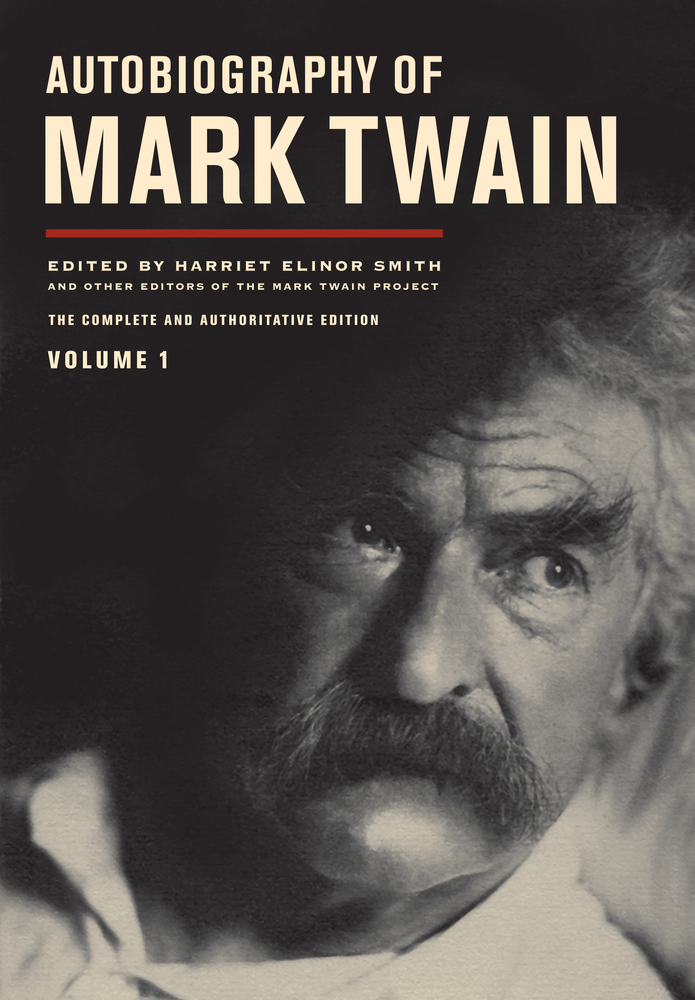
The first volume of Autobiography of Mark Twain–published 100 years after his death–has been a best-seller for the University of California Press, the publisher that brought out my latest book, Getting It Wrong.

The Twain volume has received largely favorable reviews, although the New York Times did say, in a critique the other day by the insufferable Garrison Keillor, that “there’s precious little frankness and freedom here and plenty of proof that Mark Twain, in the hands of academics, can be just as tedious as anybody else when he is under the burden of his own reputation.”

A more generous review, posted online yesterday by the North County Times in California, caught my eye–mostly for its reference to Twain (Samuel Clemens) and yellow journalism. The review quoted this passage from Twain’s autobiography:

“I was converted to a no-party independence by the wisdom of a rabid Republican. This was a man who was afterward a United States Senator, and upon whose character rests no blemish that I know of, except that he was the father of the William R. Hearst of to-day, and therefore grandfather of Yellow Journalism–that calamity of calamities.”

The reference was to George Hearst, an adventurer-miner who struck it rich in the silver fields of the 19th century American West. After securing his fortune, George Hearst became a U.S. senator from California, serving from 1886-1891.

Twain’s reference to “a rabid Republican” is puzzling, though, because George Hearst was a committed Democrat, as was his son, William Randolph Hearst.

More interesting was Twain’s characterization of yellow journalism as “that calamity of calamities.”

It’s an amusing line, but it ignores the generosity young Hearst extended to Twain in 1897, when the writer was down on his luck in London.

Hearst by then was running the provocative and activist-oriented New York Journal — the newspaper that helped give rise in 1897 to the sneer, “yellow journalism.”

The Journal preferred the term “journalism of action” and asserted that a newspaper had an obligation to inject itself routinely and conspicuously into civic life, to address the ills that government wouldn’t or couldn’t.

As I wrote in my 2006 year-study, The Year That Defined American Journalism: 1897 and the Clash of Paradigms, Hearst arranged for Twain, then 51, to report for the Journal on Queen Elizabeth’s Diamond Jubilee in June 1897.

Lining up Twain to cover the Jubilee was emblematic of Hearst’s willingness to spend money lavishly to recruit big-name talent, if only for spot assignments.

In Twain, though, Hearst must have been disappointed.

As I wrote in The Year That Defined American Journalism:

“Twain’s reporting about Victoria’s jubilee seemed half-hearted and hardly inspired. The spectacle was easily the most regal international story of 1897, and came at a time when the British empire at or near its height. But Twain found the celebration overwhelming—’a spectacle for the kodak [camera], not the pen,’” as he wrote in a dispatch published June 23, 1897.

Twain’s dispatch to the Journal included this odd observation:

“I was not dreaming of so stunning a show. All the nations seemed to be filing by. They all seemed to be represented. It was a sort of allegorical suggestion of the Last Day, and some who live to see that day will probably recall this one if they are not too much disturbed in mind at the time.”

Twain’s association with the Journal in 1897 did give rise to one of his most memorable lines–and allowed the newspaper to puncture rumors about the writer’s health.

In early June 1897, the New York Herald reported that Twain was “grievously ill and possibly dying. Worse still, we are told that his brilliant intellect is shattered and that he is sorely in need of money.”

The Journal promptly exposed the Herald report as erroneous, and published Twain famous, if often-misquoted, denial:

“The report of my death was an exaggeration,” Twain said.

He lived until 1910.

WJC

Recent and related:

Mythmaking on Blu-ray?

In Cinematic treatments, Debunking, Media myths, Washington Post, Watergate myth on December 20, 2010 at 11:11 am

All the President’s Men, the most-seen movie about the Watergate scandal, may be released on Blu-ray early next year, according to a post yesterday at a blog sponsored by a Canadian newspaper.

“Word is that Warner Bros. will release the Watergate movie … in a feature loaded  Blu-ray book in February,” said the item at the Leader-Post newspaper in Saskatchewan.

Now at best, the Blu-ray version of All the President’s Men is of mild interest to Media Myth Alert. What caught the  eye, though, was this characterization in the Leader-Post item:

“The 1976 movie is perhaps the greatest ever on newspaper journalism. It tells the true story of how Washington Post reporters Carl Bernstein and Bob Woodward exposed the real story behind the break-in at Democratic Party offices in the Watergate building by Republican political operatives. Their exposé, fed by a mysterious source called ‘Deep Throat,’ led to the resignation of President Richard Nixon.”

I placed the words in bold for emphasis.

As I note in my latest book, Getting It Wrong, Woodward and Bernstein didn’t expose the Watergate scandal. It was at first a police beat story that spiraled into an intricate and sprawling scandal that sent to jail nearly 20 men associated with Nixon’s presidency or his 1972 reelection campaign.

And the reporting of Woodward and Bernstein didn’t lead to Nixon’s resignation.

As I point out in Getting It Wrong:

“To roll up a scandal of such dimension [as Watergate] required the collective if not always the coordinated forces of special prosecutors, federal judges, both houses of Congress, the Supreme Court, as well as the Justice Department and the FBI.

“Even then, Nixon likely would have served out his term if not for the audiotape recordings he secretly made of most conversations in the Oval Office of the White House. Only when compelled by the Supreme Court [in 1974] did Nixon surrender those recordings, which captured him plotting the cover-up and authorizing payments of thousands of dollars in hush money.”

Against the tableau of subpoena-wielding investigative authorities, the work of Woodward and Bernstein for the Washington Post fades into relative insignificance.

Even so, as I write in Getting It Wrong, the heroic-journalist interpretation of Watergate–the endlessly appealing notion that the  reporting of Woodward and Bernstein did bring down Nixon’s  presidency–“has become the most familiar storyline of Watergate.”

The heroic-journalist interpretation is, I note, “a proxy for grasping the scandal’s essence while avoiding its forbidding complexity.”

Perhaps the factor most important in propelling and solidifying the heroic-journalist meme of Watergate was the movie All the President’s Men, an adaptation of Woodward and Bernstein’s 1974 book by the same title.

“The book in fact had been written with the cinema in mind,” I write in Getting It Wrong, noting that the actor Robert Redford “had taken keen interest in the Woodward-Bernstein collaboration in reporting the scandal and encouraged the reporters to structure the book around their experiences.”

Redford paid $450,000 for the rights to All the President’s Men, and he played Woodward in the movie.

The cinematic version of All the President’s Men focuses on the work of Woodward and Bernstein while mostly ignoring, and even denigrating, the efforts of investigative agencies like the FBI.

I further note that the movie All the President’s Men allows no interpretation other than it was the work Woodward and Bernstein that set in motion far-reaching effects that brought about the first-ever resignation of a U.S. president.

The movie, I write, helped ensure the heroic-journalist myth “would live on by offering a neat, tidy, and vastly simplified account the Watergate scandal, one that allowed viewers to sidestep the scandal’s complexity while engaging in an entertaining storyline.”

The myth is solidly entrenched in popular culture. It is one of the heartiest of media-driven myths, those dubious, media-centric tales that masquerade as factual.

The Blu-ray version of All the President’s Men may serve to introduce the myth of Watergate to yet another generation of movie-goers.

WJC

Recent and related: